
Construction progress recommendation method and device, computer equipment and readable storage medium
A technology of construction schedule and recommended method, applied in the direction of calculation, office automation, instruments, etc., can solve the problems of unfavorable project progress unified and standardized management, error-prone, low reliability, etc., and achieve the effect of rapid construction schedule arrangement
Patent Information
- Authority / Receiving Office
- CN · China
- Patent Type
- Applications(China)
- Current Assignee / Owner
- Publication Date
- 2021-04-09
Smart Images
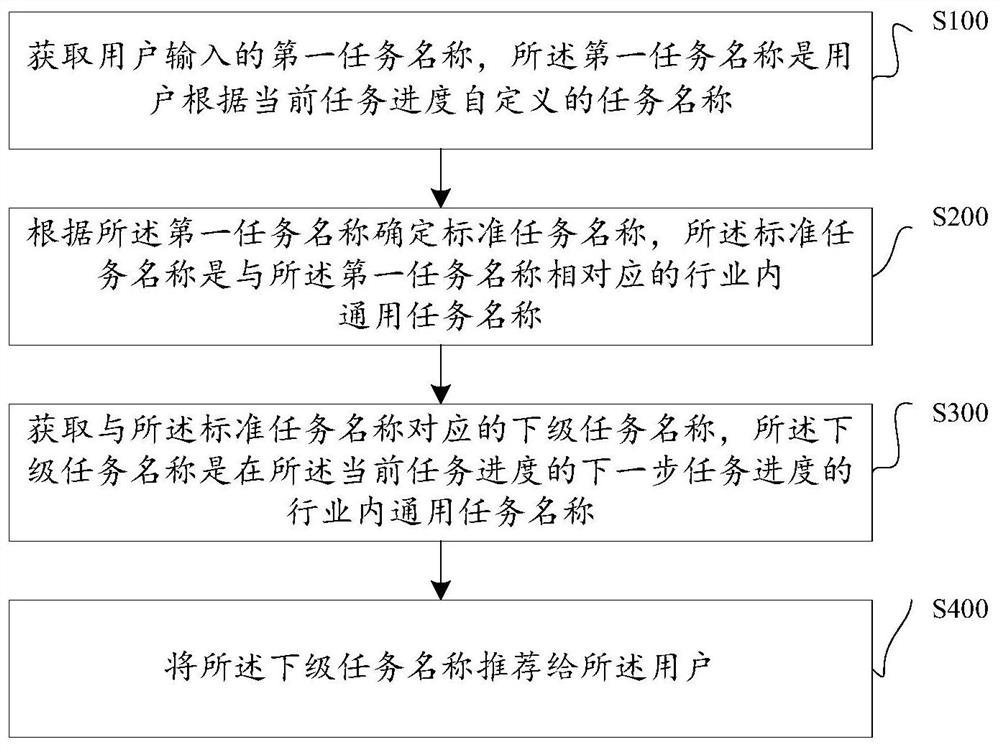
Figure 1 
Figure 2 
Figure 3
Abstract
Description
technical field
[0001] The invention relates to the technical field of construction progress management, in particular to a construction progress recommendation method and recommendation device. Background technique
[0002] In the process of building construction, the design and arrangement of the schedule plan is a very important link. Reasonable planning and arrangement can avoid rework operations, speed up construction progress, ensure construction quality, and improve construction efficiency. At present, most of the arrangements for the construction schedule are manually designed, which requires engineers to have rich engineering experience, be able to coordinate the overall situation, effectively allocate engineering resources, and arrange each task reasonably. But in fact, manual design is more or less subjective and one-sided, which is not conducive to the unified and standardized management of project progress, and has low reliability and is prone to errors. There...
Examples
Embodiment 1
[0042] see figure 1 , this embodiment proposes a construction schedule recommendation method, including the following steps:
[0043] S100: Obtain the first task name input by the user, where the first task name is a task name customized by the user according to the progress of the current task.
[0044] Construction progress refers to the various task stages that need to be experienced to complete a project, and each task stage has its own task name. For example, the completion of project 1 requires three task stages, namely task stage 1, task stage 2, and task stage 3. The relationship between task stage 1, task stage 2 and task stage 3 is progressive over time, that is, the next step after completing task stage 1 needs to complete task stage 2, and the next step after completing task stage 2 needs to complete task stage 3. Each task stage corresponds to a task name, for example, task stage 1 corresponds to task name 1, task stage 2 corresponds to task name 2, and task sta...