
Combined nasal speculum and aspirator
a technology of nasal speculum and aspirator, which is applied in the field of nasal instruments, can solve the problems of profuse bleeding, limited operation and visual area, and difficulty and problems encountered
Patent Information
- Authority / Receiving Office
- US · United States
- Current Assignee / Owner
- Publication Date
- 2002-09-19
- Estimated Expiration
- Not applicable · inactive patent
Smart Images
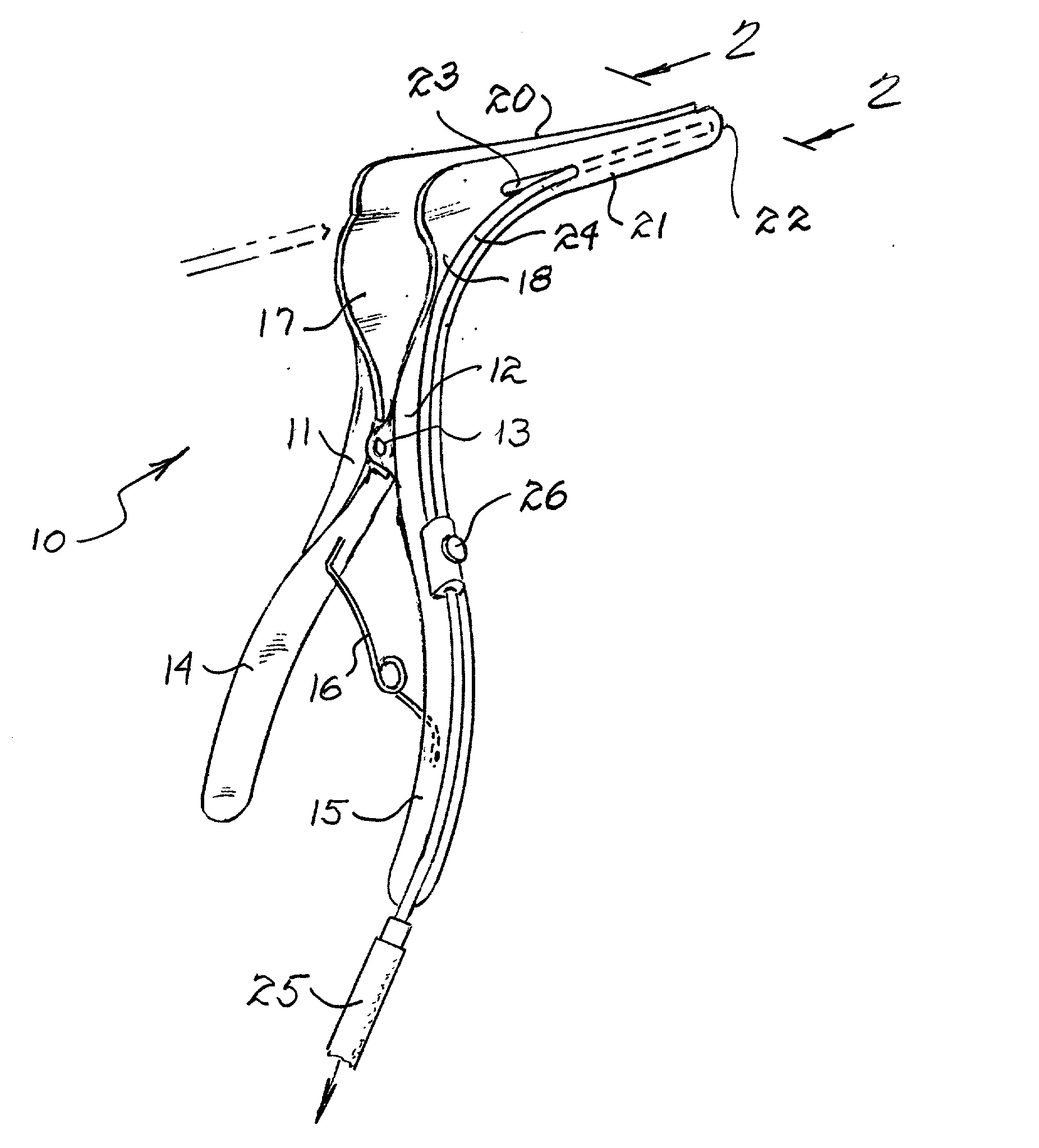
Figure 1 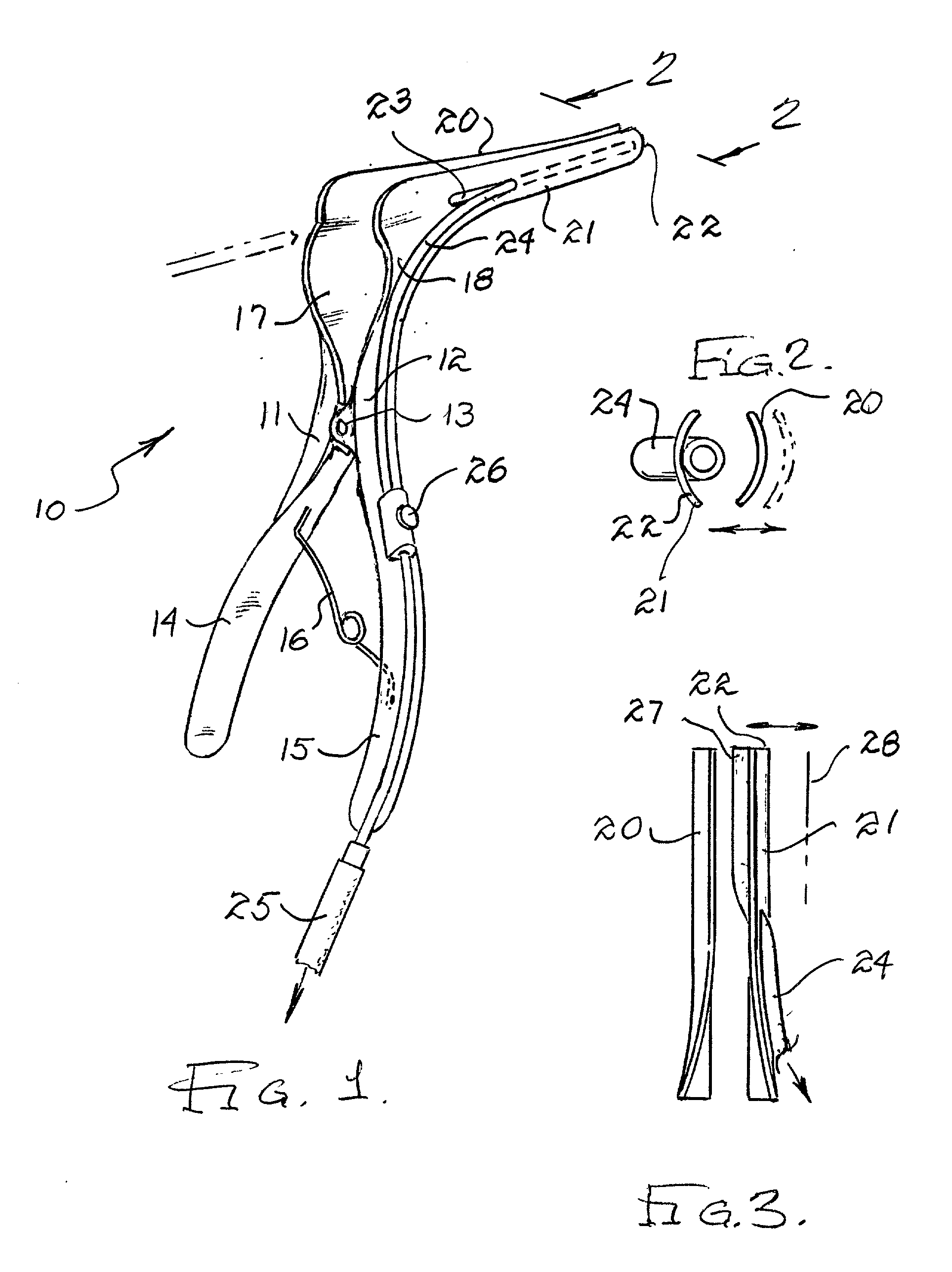
Figure 2 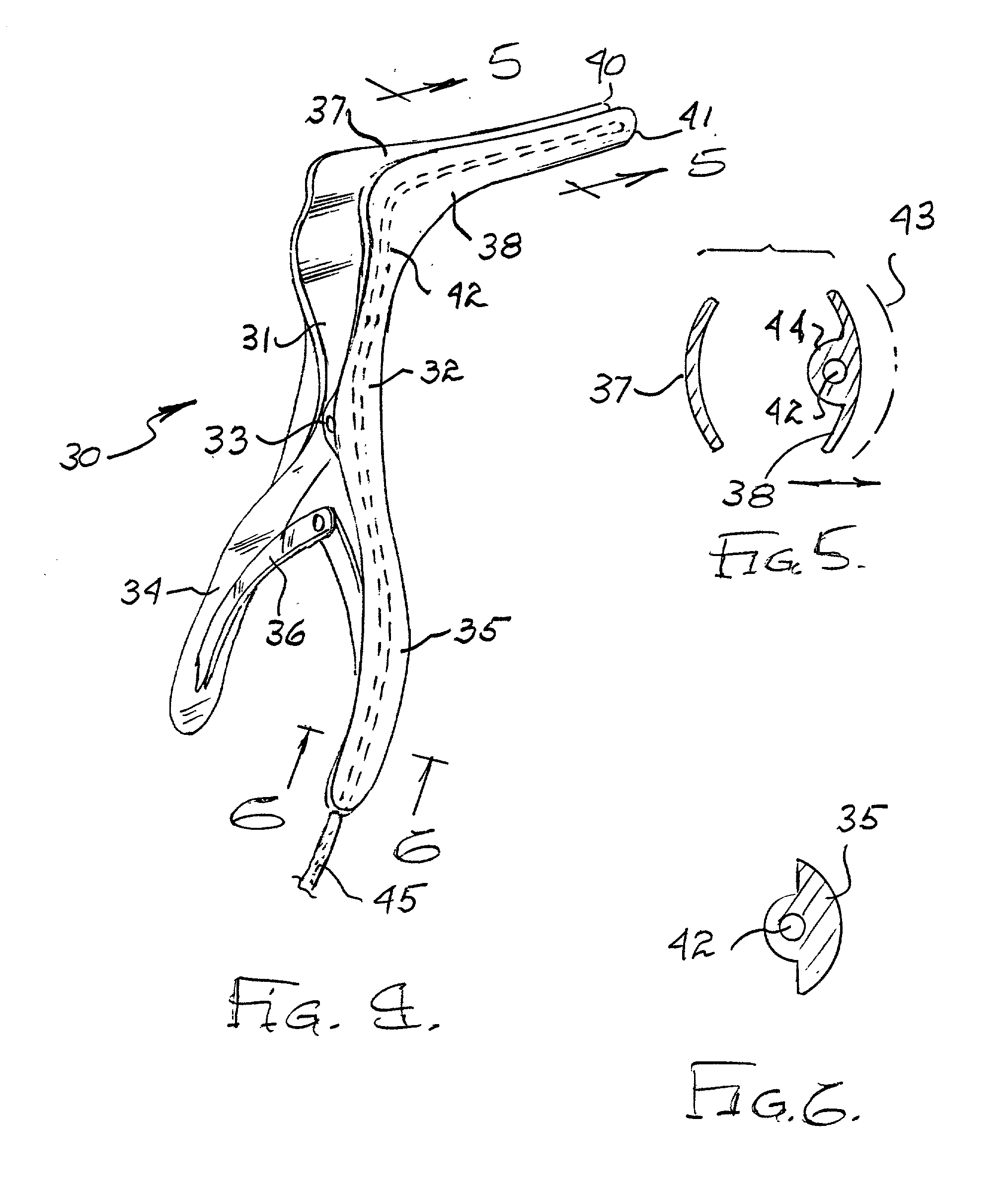
Figure 3
Abstract
Description
[0001] Priority Based on Ser. No. 60-275,123 filed Mar. 13, 2001.
[0002] 1. Field of the Invention
[0003] The present invention relates to the field of nasal instruments employed in otorhinolaryngological surgical procedures and, more particularly, to a novel combined nasal speculum with a built-in aspirator allowing surgery to be performed while providing simultaneous suctional removal of blood and fluids.
[0004] 2. Brief Description of the Prior Art
[0005] During the performance of nasal surgery, several separate instruments are required to be inserted through a very narrow nasal opening. Not only is the operating and visual area limited, but such portions of the anatomy as the maxillary crest and the vomer are a source of blood which can profusely bleed. It is for the bleeding from these structures that one of the inserted instruments is an aspirator for removing blood by suctional techniques. Another inserted instrument is a nasal speculum having a pair of manually spreadable prongs...
Examples
Embodiment Construction
[0021] Accordingly, the above problems and difficulties are avoided by the present invention which provides a novel combined nasal speculum and aspirator which is illustrated in the general direction of arrow 10 that includes a pair of tongs 11 and 12 that are joined together by a pivot 13. One end of each of the respective tongs includes a handle portion 14 and handle portion 15. A spring biasing mechanism 16 is illustrated as expanding against the inside or opposing surfaces of the respective handle portions so that the opposite end of the tongs 11 and 12 are normally biased together. This opposite end of the tongs includes arms 17 and 18 which terminate in prongs 20 and 21 that curve at a 90.degree. angle and lever outwardly from the instrument 10 at the distal end in curvatures such as curved tip 22. It is to be particularly noted that a selected one of the prongs 20 and 21 is provided with an elongated slot 23 for accommodating passage of a suction tube 24. One end of the sucti...