
Achieving convergent light rays emitted by planar array of light sources
a technology of light sources and convergent light, applied in the field of illumination of objects with convergent light rays, can solve the problems of difficult implementation, high production cost, mounting and interconnection of four separate circuit board assemblies, etc., and achieve the effect of reducing parts count, assembly time and assembly cost, and reducing assembly cos
Patent Information
- Authority / Receiving Office
- US · United States
- Patent Type
- Applications(United States)
- Current Assignee / Owner
- Publication Date
- 2007-01-18
- Estimated Expiration
- Not applicable · inactive patent
Smart Images
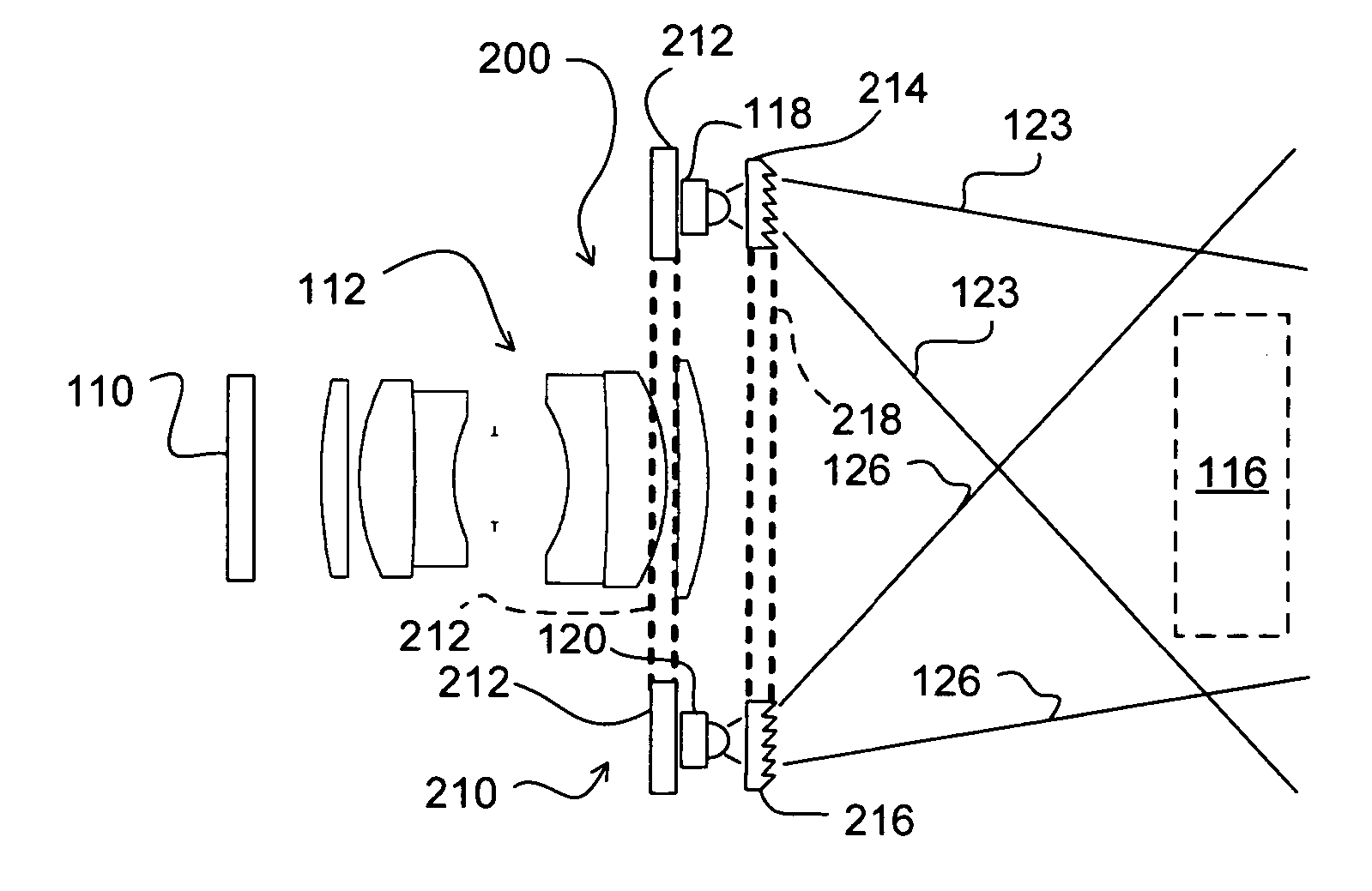
Figure 1 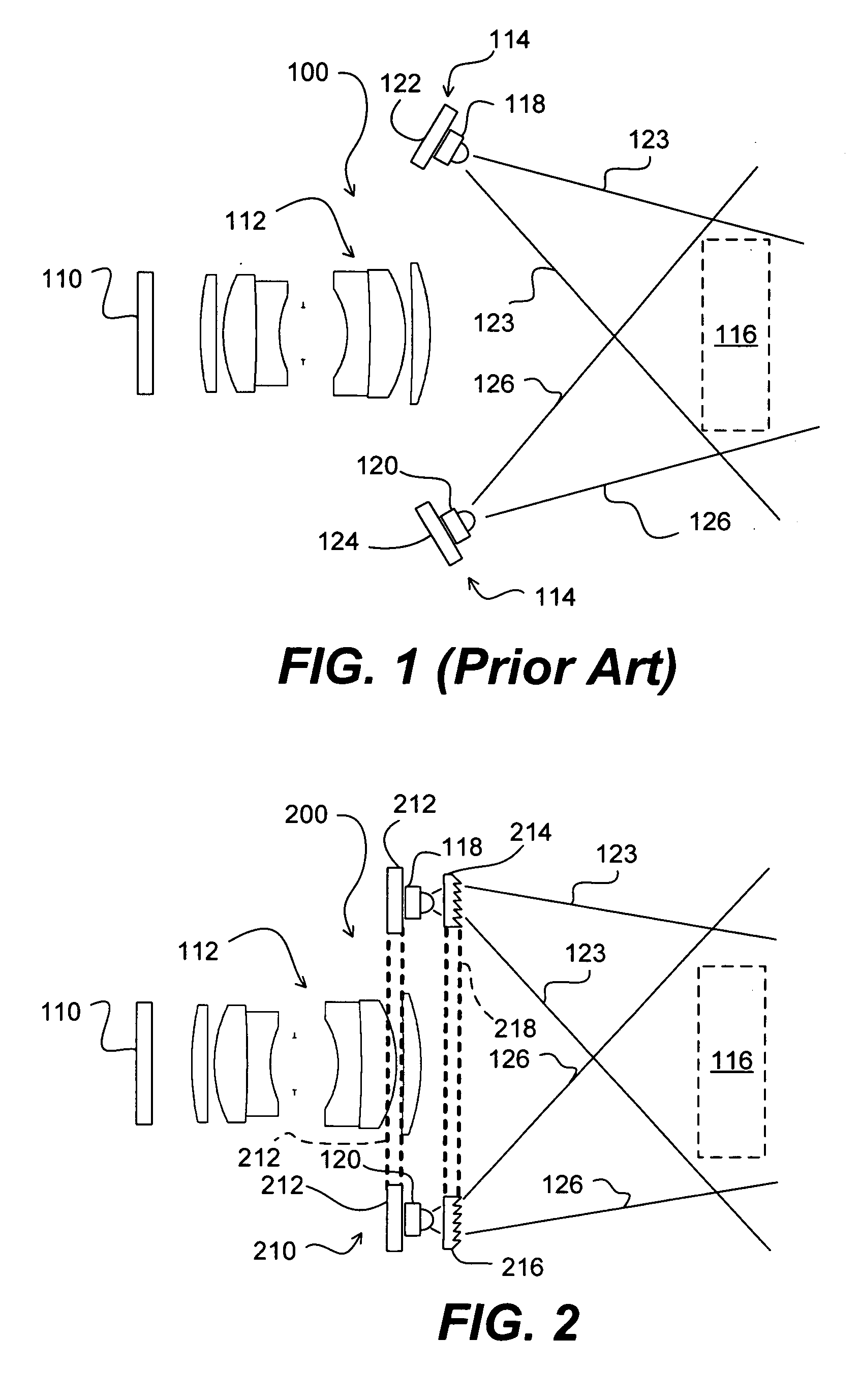
Figure 2 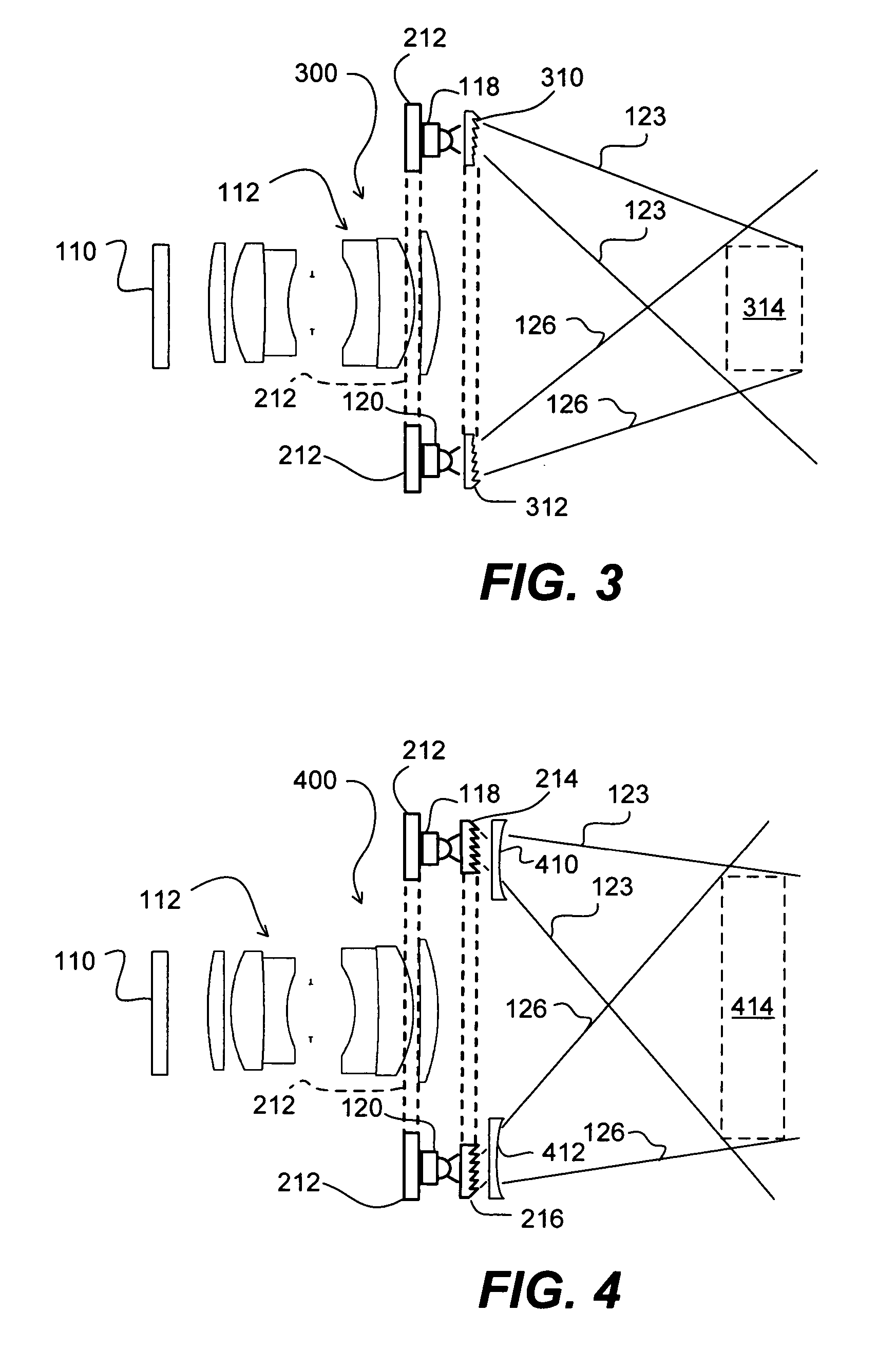
Figure 3
Abstract
Description
RELATED APPLICATION
[0001] This application claims the benefit under 35 U.S.C. § 119(e) of U.S. Provisional Application No. 60 / 697,651, filed Jul. 8, 2005, which is hereby incorporated by reference herein in its entirety.TECHNICAL FIELD
[0002] This disclosure relates to illuminating objects with convergent light rays. BACKGROUND INFORMATION
[0003] The way in which an object reflects light can vary from perfectly diffuse, known in the art as Lambertian (after Lambert), to perfectly specular (after speculum, a mirror). If an object is substantially Lambertian in nature in that the surfaces reflect light with an efficiency which is essentially independent of angle, then the illumination of such an object is relatively simple. In such a case, the uniformity of an image of an object relies only upon the uniformity and intensity of the incident illumination. An example of a Lambertian object would be paper, which can be adequately illuminated by a single point-like source of light.
[0004] ...
Examples
Embodiment Construction
[0018] In one embodiment, light rays are emitted by a planar array of light sources and directed so as to illuminate an object under observation. Typically, although the present disclosure is not so limited, the planar array of light sources may be employed for the automated characterization and / or inspection of manufactured parts. These manufactured parts include semiconductors. Classes of semiconductors may have a nontrivial bi-directional reflectance distribution function thereby presenting varying illumination properties from Lambertian to specular. It is well understood that the time necessary to accurately inspect certain manufactured parts such as semiconductors is limited with any error reducing the efficiency of the overall production rate. An illumination device, according to one embodiment, reduces errors in inspection associated with illumination and thereby contributes to the overall efficiency of the manufacturing process.
[0019] Reference is now made to the figures in...