

Illumination device
a technology of illumination device and led light, which is applied in the direction of instruments, waveguides, lighting and heating apparatus, etc., can solve the problems of reducing the ability of low power leds to properly illuminate objects, coupling remains, etc., and achieves the effects of high coupling efficiency, high light output, and simplified mechanical design and size of illumination devi
Patent Information
- Authority / Receiving Office
- US · United States
- Patent Type
- Applications(United States)
- Current Assignee / Owner
- Publication Date
- 2009-05-14
- Estimated Expiration
- Not applicable · inactive patent
Smart Images
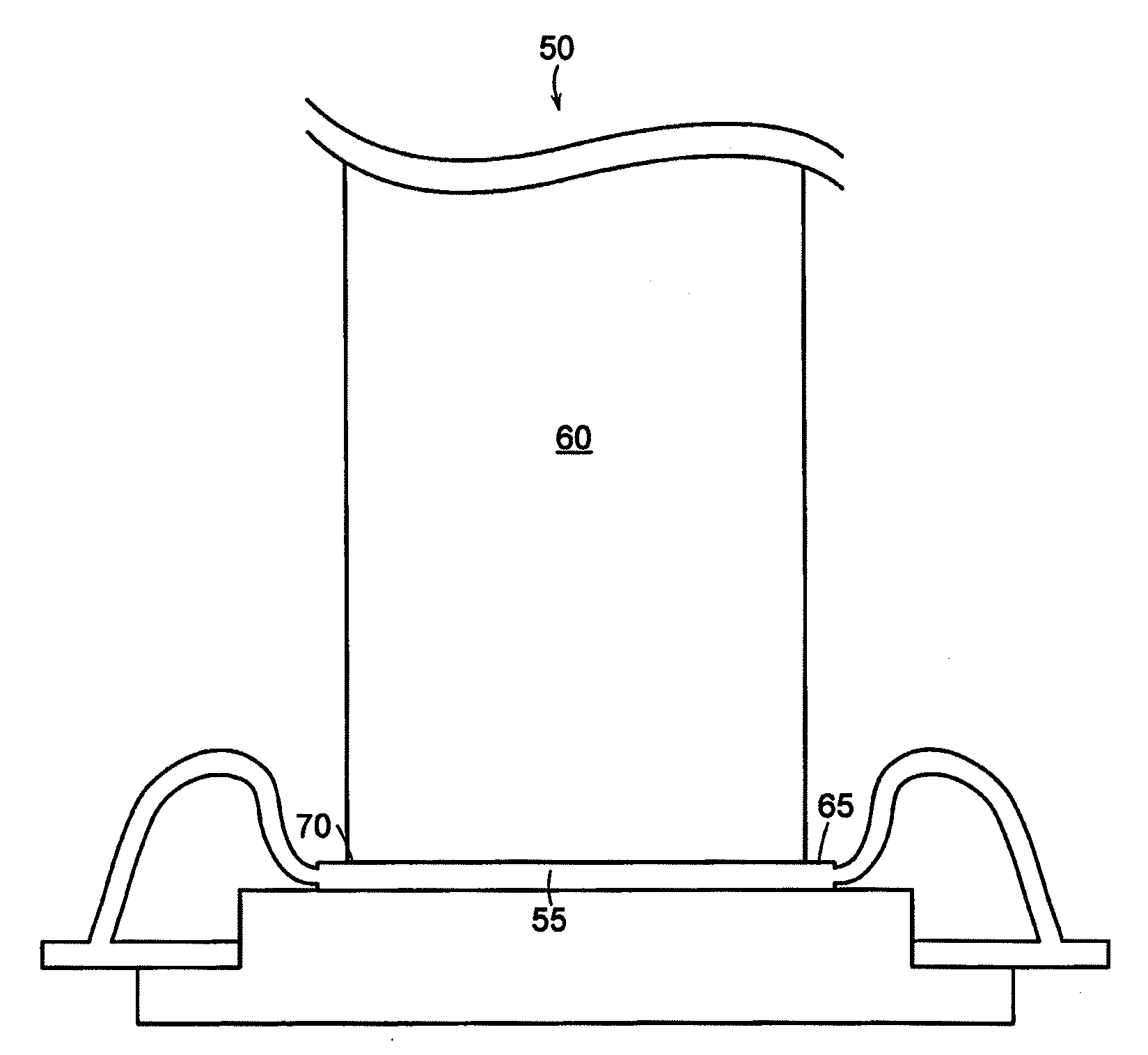
Figure 1 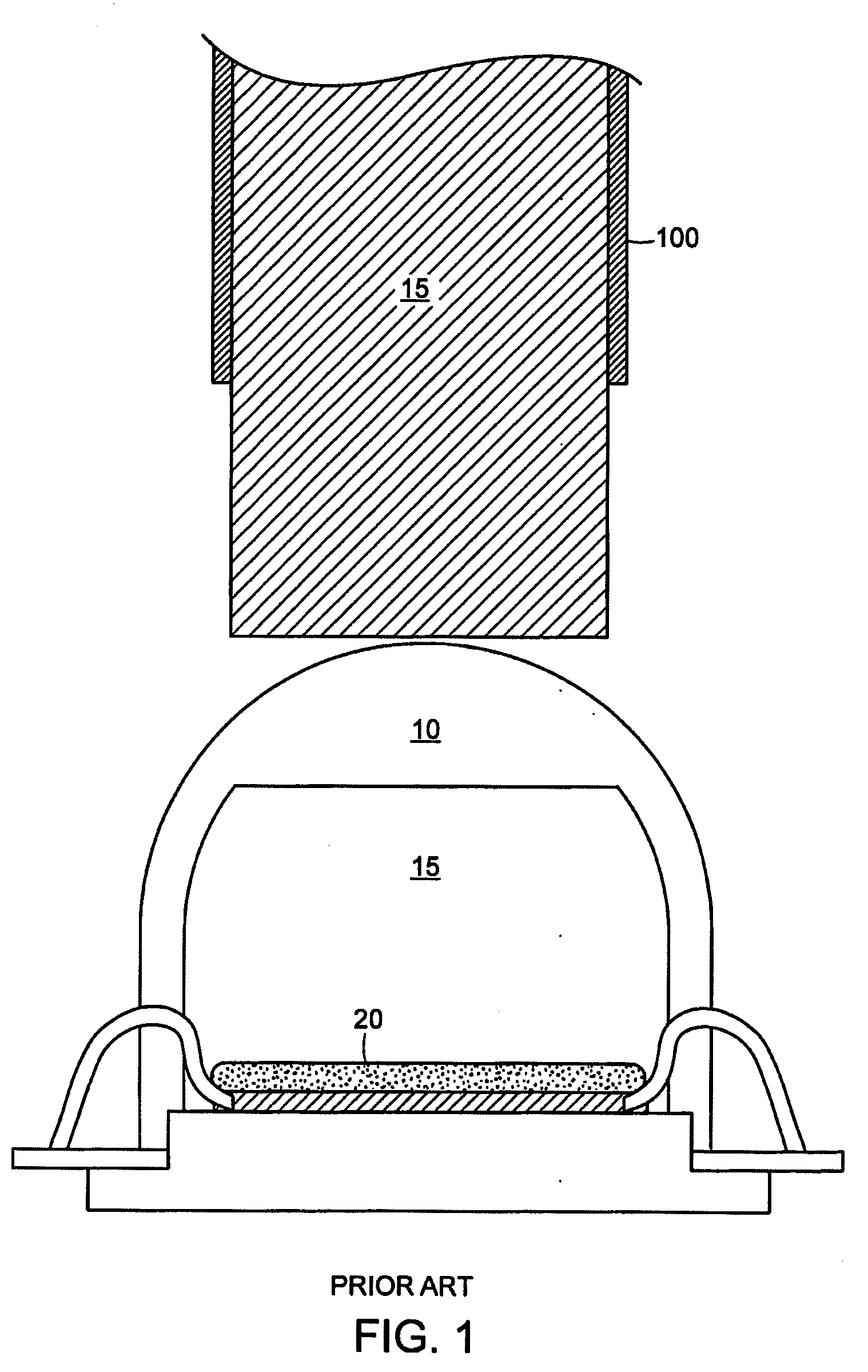
Figure 2 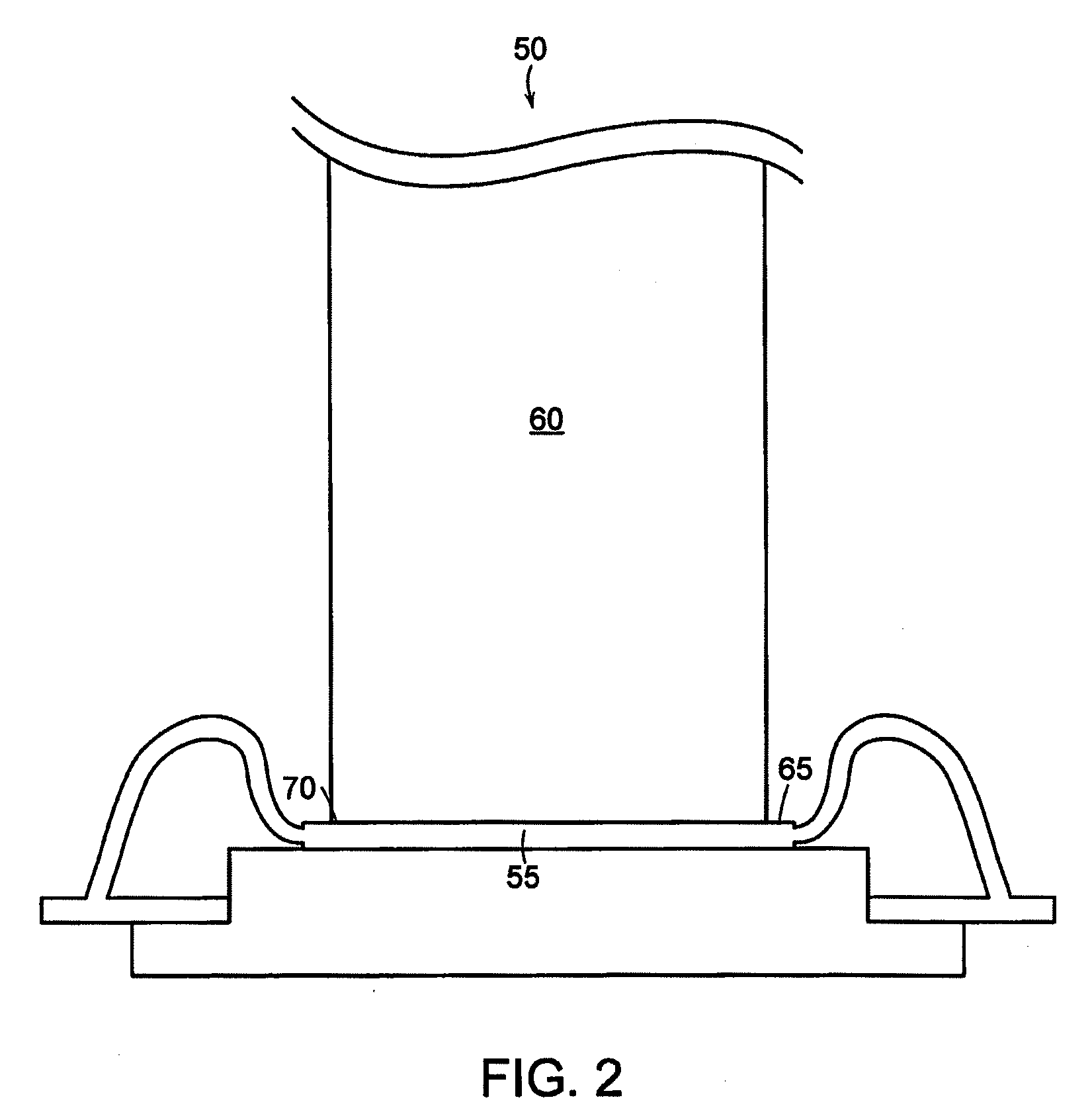
Figure 3
Abstract
Description
RELATED APPLICATIONS
[0001] This application is a divisional application of U.S. patent application Ser. No. 11 / 323,481 filed on Dec. 30, 2005. U.S. patent application Ser. No. 11 / 323,481 is a continuation-in-part of U.S. patent application Ser. No. 10 / 810,504 filed on Mar. 26, 2004, which claims the benefit of U.S. Provisional Application No. 60 / 457,672, filed on Mar. 26, 2003. The entire disclosure of which is incorporated herein by reference.FIELD OF THE INVENTION
[0002] This invention relates to an illumination device including a substantially planar light-emitting surface coupled to an optical rod or optical taper.BACKGROUND OF THE INVENTION
[0003] Advances in light source technology, such as, for example, light-emitting diode (LED) technology, have led to very bright and reliable solid state lamps. However, challenges remain with respect to coupling LEDs to optical transmission media, such as, for example, optical rods and optical tapers. While there have been numerous attempts to u...
Examples
Embodiment Construction
[0020]Prior art illumination devices, such as, for example, the illumination device shown in FIG. 1, include a light source 5 having a dome-shaped lens 10 optically coupled to transmission media 15. With this coupling arrangement, light is ineffectively transmitted to the transmission media 15 because the light emitting portion 20 of the light source 5 is not sufficiently close to the transmission media 15 (i.e., due to the curvature of the dome lens 10, the light emitting portion 20 is spaced at an unacceptable distance away from the transmission media). In addition, the dome shape lens 10 provides a convex light-emitting surface. As a result, a portion of the light passing through an interface between the light source 5 and the transmission media 15 is lost, thereby decreasing the light strength and efficiency of conventional illumination devices.
[0021]Illumination devices of the present invention include a substantially planar light-emitting surface which is proximate to either a...