
User Extensible Form-Based Data Association Apparatus
a form-based data and user technology, applied in multimedia data retrieval, instruments, computing, etc., can solve the problems of not providing a method to attach structured data to a comment, attach dynamically updated data, and only contain static and unstructured text for user comments, so as to improve the ability of users to retrieve and manag
Patent Information
- Authority / Receiving Office
- US · United States
- Patent Type
- Applications(United States)
- Current Assignee / Owner
- Publication Date
- 2009-08-27
- Estimated Expiration
- Not applicable · inactive patent
Smart Images
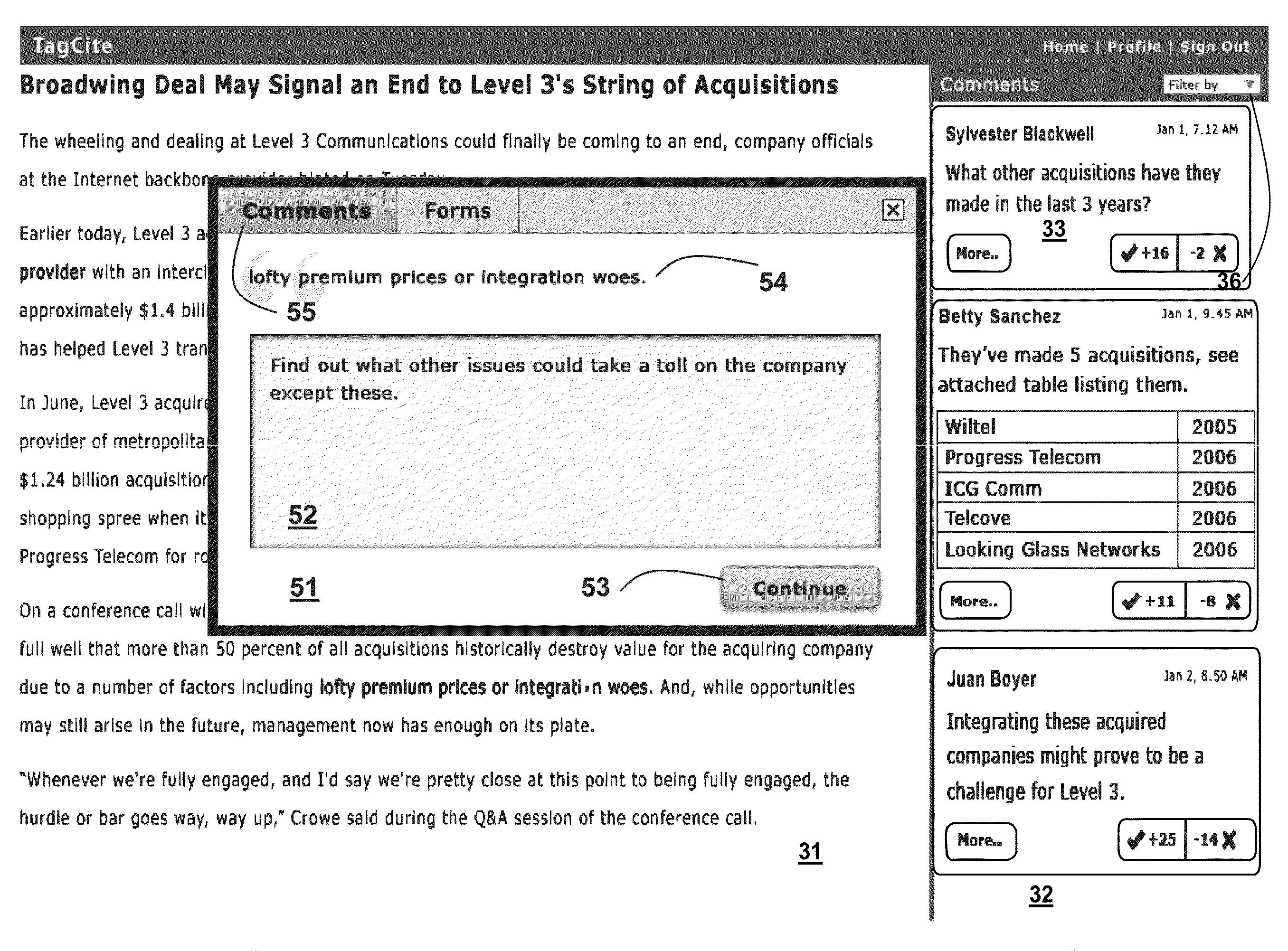
Figure 1 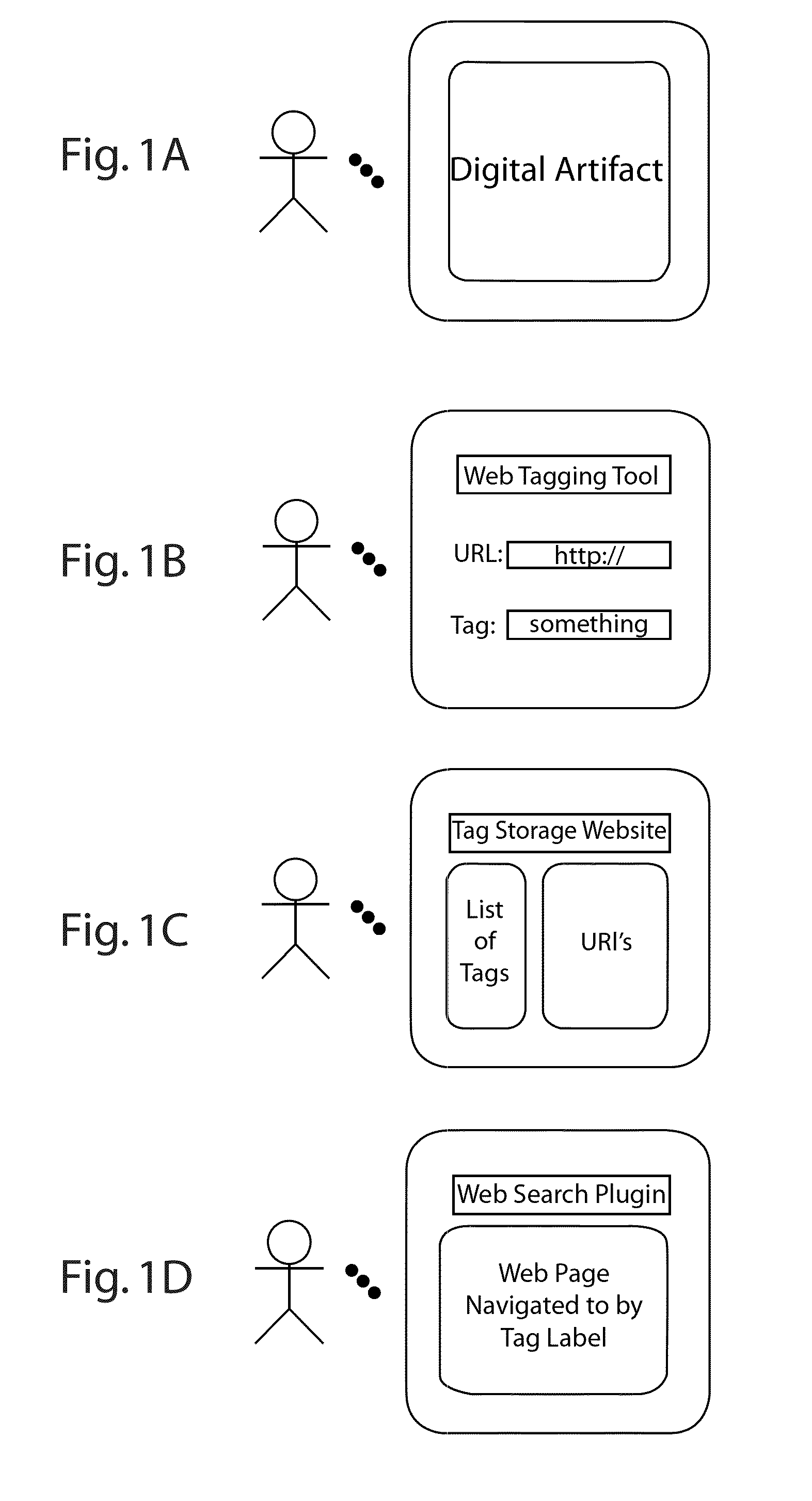
Figure 2 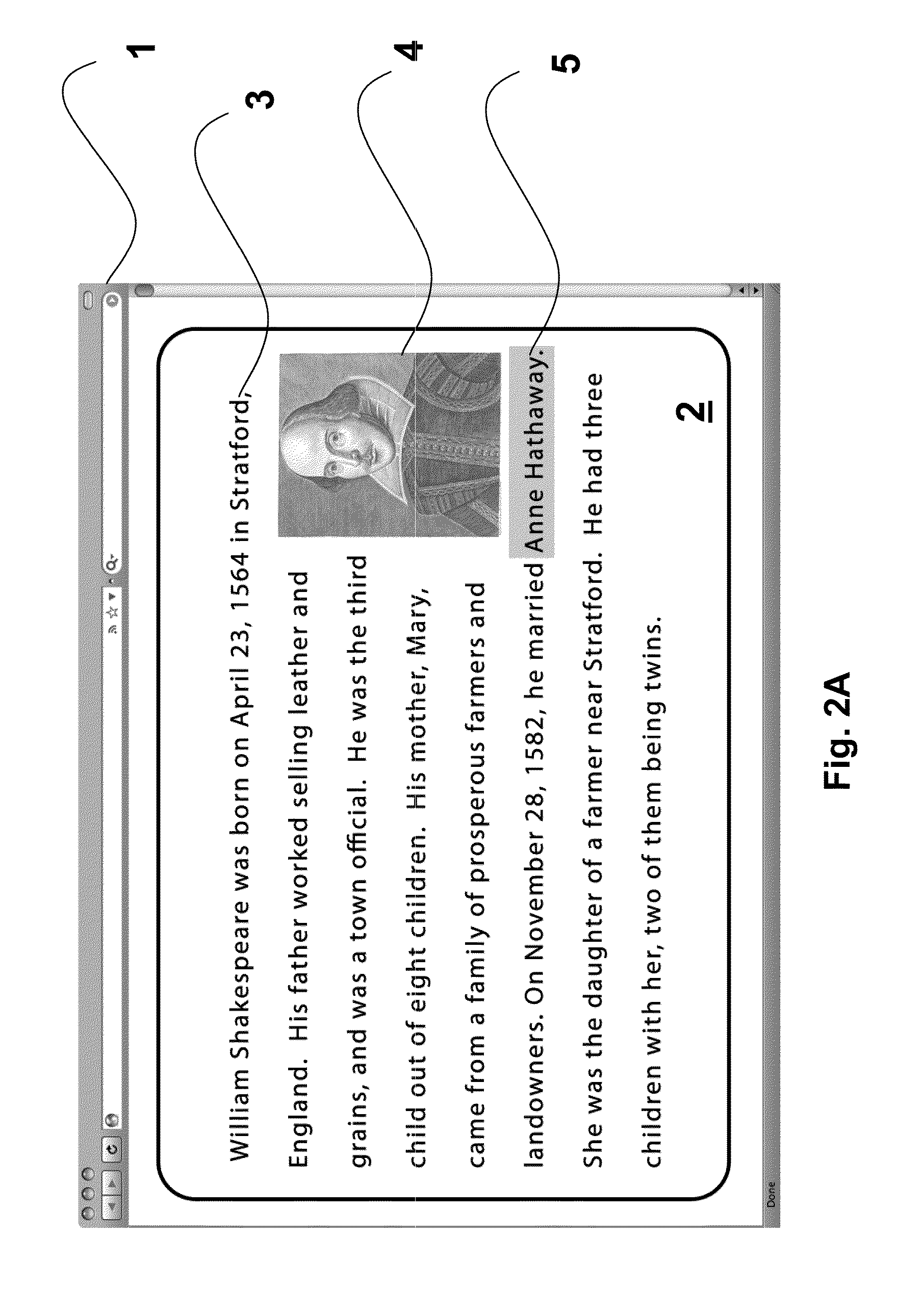
Figure 3
Abstract
Description
CROSS-REFERENCE TO RELATED APPLICATIONS
[0001] This application claims priority from U.S. Provisional Patent Application No. 61 / 027,361, filed Feb. 8, 2008, the entire content of which is hereby incorporated by reference.BACKGROUND OF THE INVENTION
[0002] Tags are known in the art as a relevant keyword or term associated with or assigned to a piece of information (e.g., a picture, a geographic map, a blog entry, a video clip etc.), thus describing the item and enabling keyword-based classification and search of information. Tags serves as metadata labels or keywords for and a means to organize information and data objects making them findable via search, browsing and other content retrieval and navigation methods. Metadata is generally known as data that provides information about or describes other data.
[0003] Tagging, also known as collaborative tagging, folksonomy, social classification, social indexing, etc., is generally known in the art as the practice and method of collaboratively...
Examples
Embodiment Construction
[0031]The present invention provides a method to harness the potential of collaboration, in order to produce, discover and present useful information. Embodiments of the present invention provide mechanisms that enable a user or group of users to accurately select, pinpoint and define the context of any kind of referent data object they are annotating, commenting, or otherwise associating data sets, tags, and files with referent content items (e.g., users need to be able to comment not just on an entire news article but comment on a specific word, phrase, sentence paragraph, system user name or profile, part of a photo or another comment).
[0032]Referring now to FIG. 2A, there is shown an example of a digital artifact to be processed in accordance with embodiments of the invention. FIG. 2A shows a browser display 1 of a web page, the web page representing a digital artifact 2 to be processed. In this example the digital artifact 2 includes textual data 3 and a graphical image 4, but ...