
Mechanism for providing controllable angular orientation while transmitting torsional load
a technology of torsional load and angular orientation, which is applied in the direction of directional drilling, surveying, and borehole/well accessories, etc., can solve the problems of complex construction and operation of devices, and the inability of devices to control and adjust orientation, etc., and achieve the effect of relieving stress
Patent Information
- Authority / Receiving Office
- US · United States
- Patent Type
- Applications(United States)
- Current Assignee / Owner
- Publication Date
- 2011-03-31
- Estimated Expiration
- Not applicable · inactive patent
Smart Images
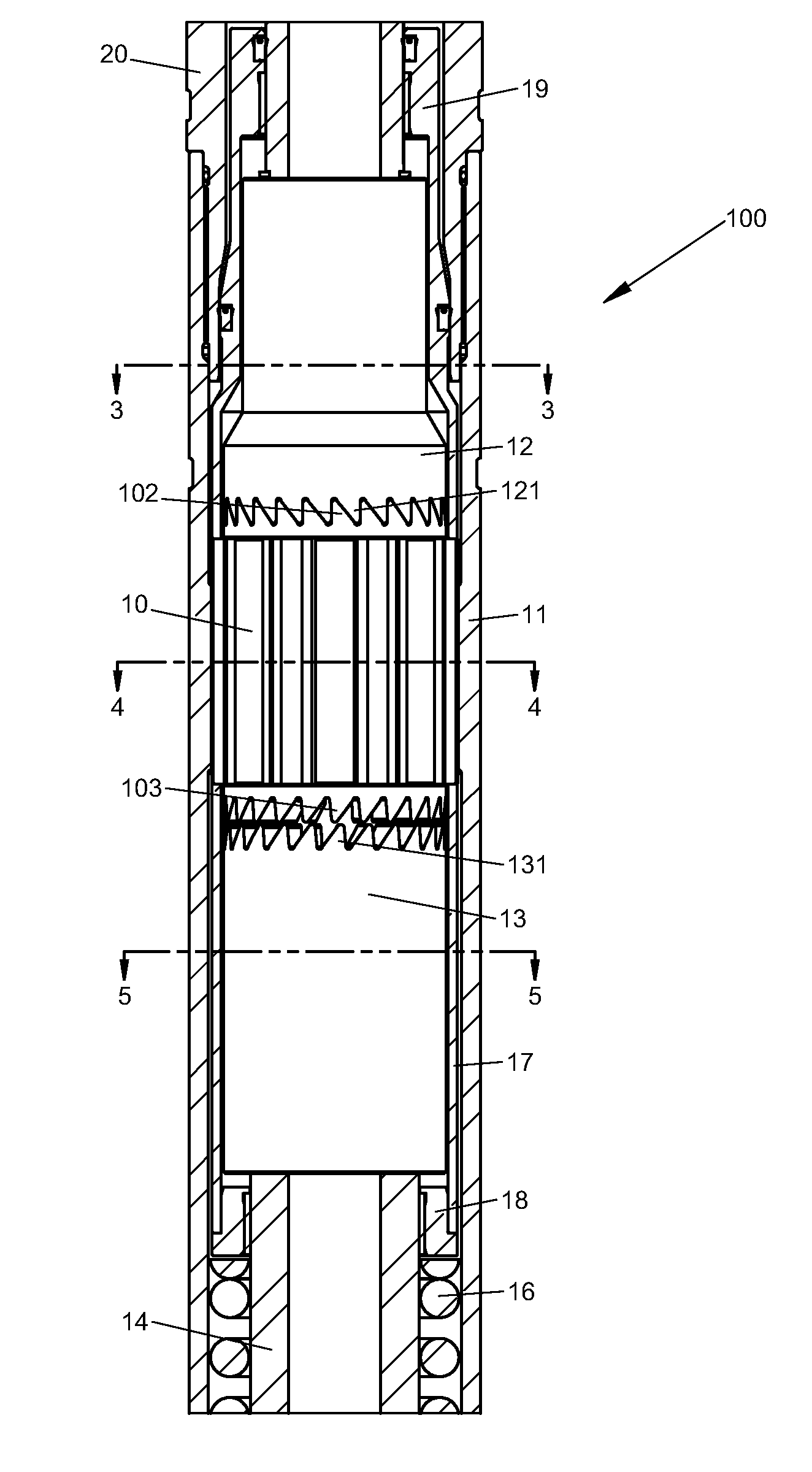
Figure 1 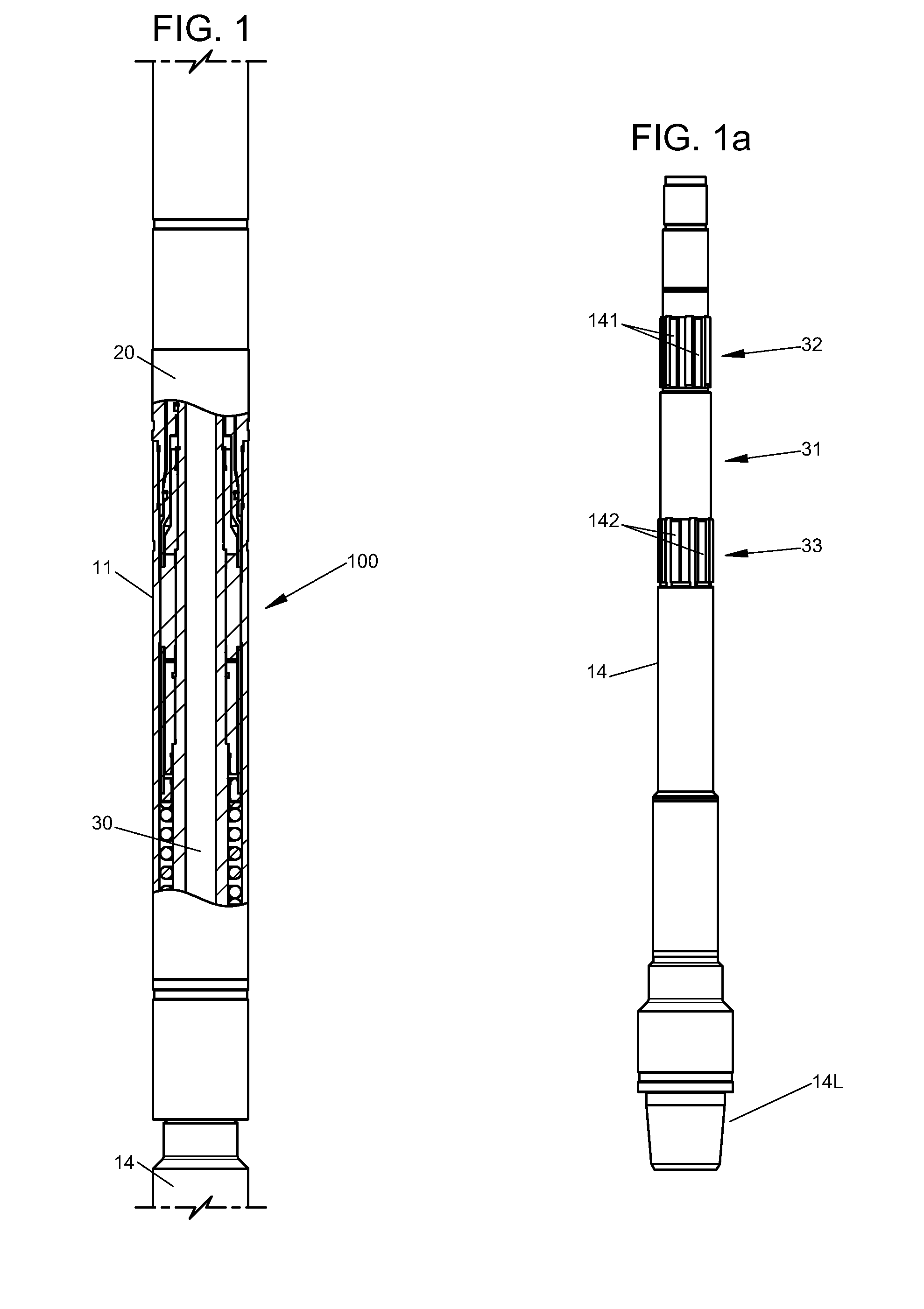
Figure 2 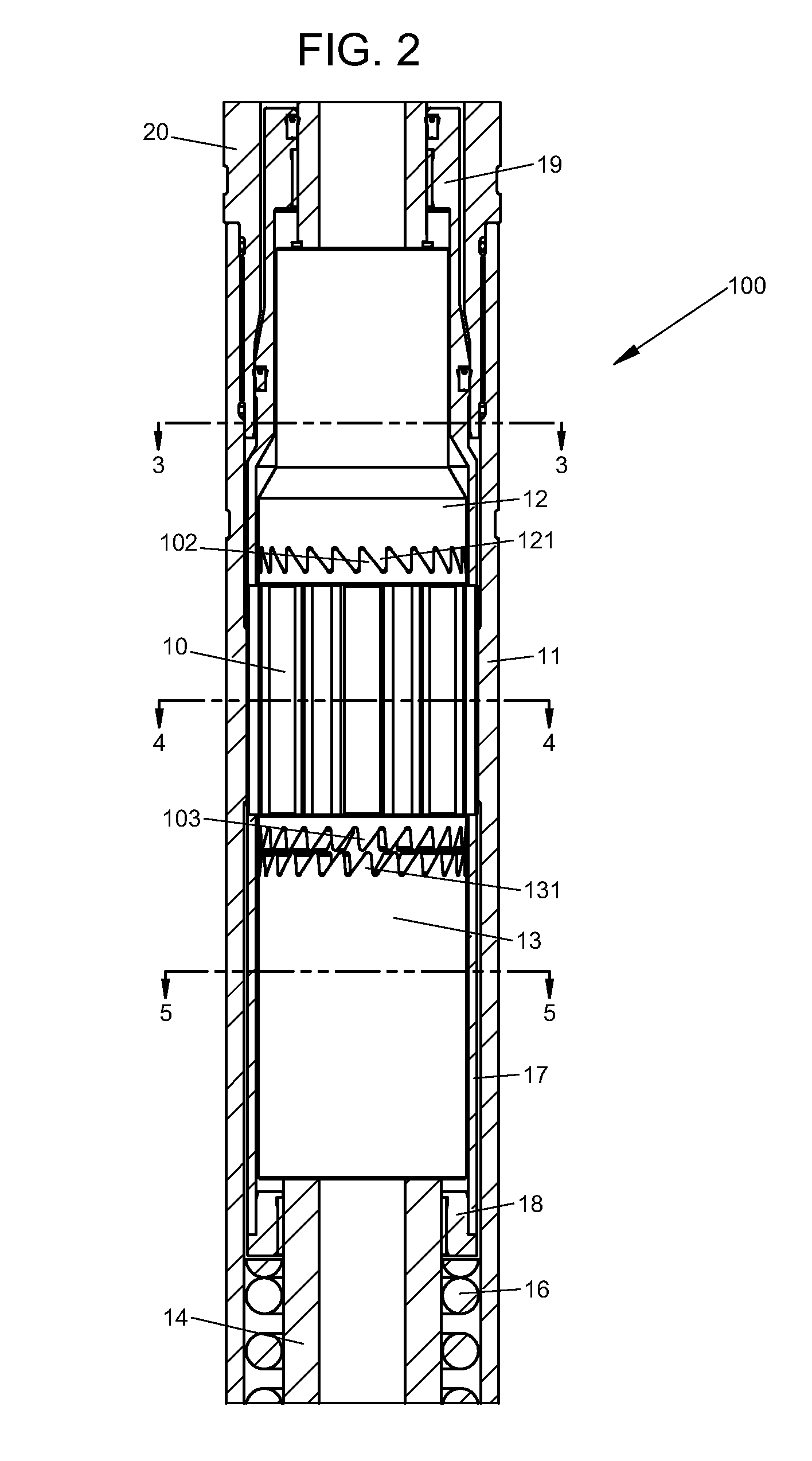
Figure 3
Abstract
Description
[0001] This application is the U.S. National Stage under 35 U.S.C. §371 of International Patent Application No. PCT / US2009 / 045490 filed May 28, 2009, which claims the benefit of U.S. Provisional Patent Application Ser. No. 61 / 057,110 filed May 29, 2008, entitled “Mechanism For Providing Controllable Angular Orientation While Transmitting Torsional Load.”STATEMENT REGARDING FEDERALLY SPONSORED RESEARCH OR DEVELOPMENT
[0002] Not applicable.FIELD OF THE INVENTION
[0003] The present invention relates in general to mechanisms for providing controllable angular orientation between an outer tubular element and a coaxial inner tubular element while transmitting torsional load between the outer and inner tubular elements. More particularly, the invention is directed to such mechanisms which can be incorporated in a downhole tool coupled within a drill string in a wellbore to provide controllable angular orientation between the sections of the string above and below the tool, while the mechanism i...
Examples
Embodiment Construction
[0042]FIG. 1 illustrates an angular orientation mechanism 100 in accordance with one embodiment of the present invention, incorporated within a string of tubular elements constituting a downhole tool. FIG. 1 depicts one possible orientation of the downhole tool relative to a wellbore, with the tool comprising a cylindrical tool housing 20 (typically made up from a plurality of tool housing members) having an upper end 20U which may be coupled to the lower end of a pipe string or coiled tubing string (not shown), or to other tools or components that are coupled to the lower end of the string. For convenience, the adjectives “upper” and “lower” are used in this patent specification in reference to various components as if mechanism 100 were at all times vertically oriented as in FIG. 1. It will be appreciated, however, that these terms are used in a relative sense only, as the mechanism may be used in a variety of different orientations (such as during directional drilling operations)...