
Window Curtain
a window blind and curtain technology, applied in the field of window blinds, can solve the problems of blind aesthetics, potential danger, serious damage or even death, etc., and achieve the effects of enhancing the needs of window blind decoration, reducing blind aesthetics, and enhancing aesthetics
Patent Information
- Authority / Receiving Office
- US · United States
- Patent Type
- Applications(United States)
- Current Assignee / Owner
- Publication Date
- 2011-04-21
- Estimated Expiration
- Not applicable · inactive patent
Smart Images
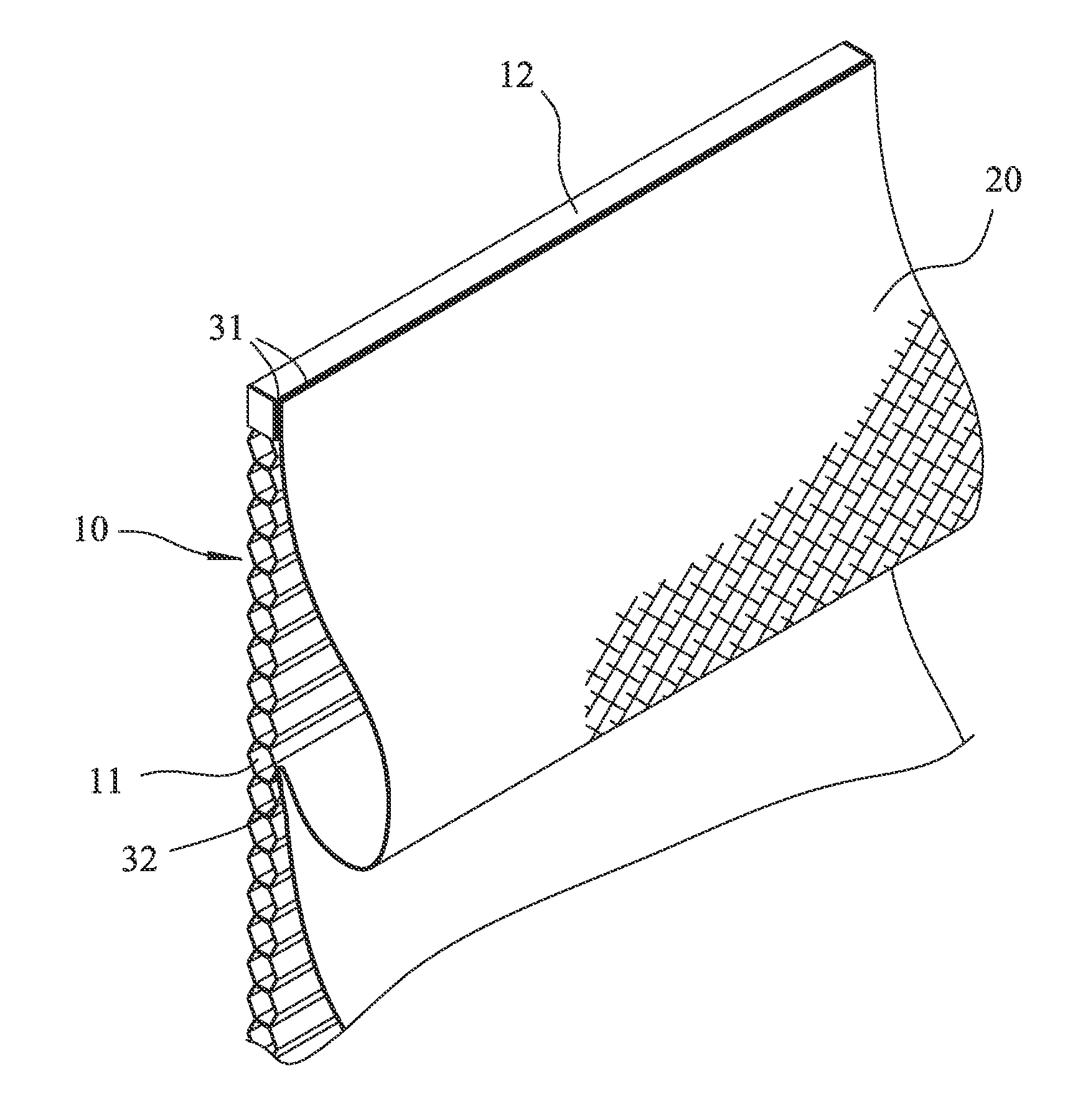
Figure 1 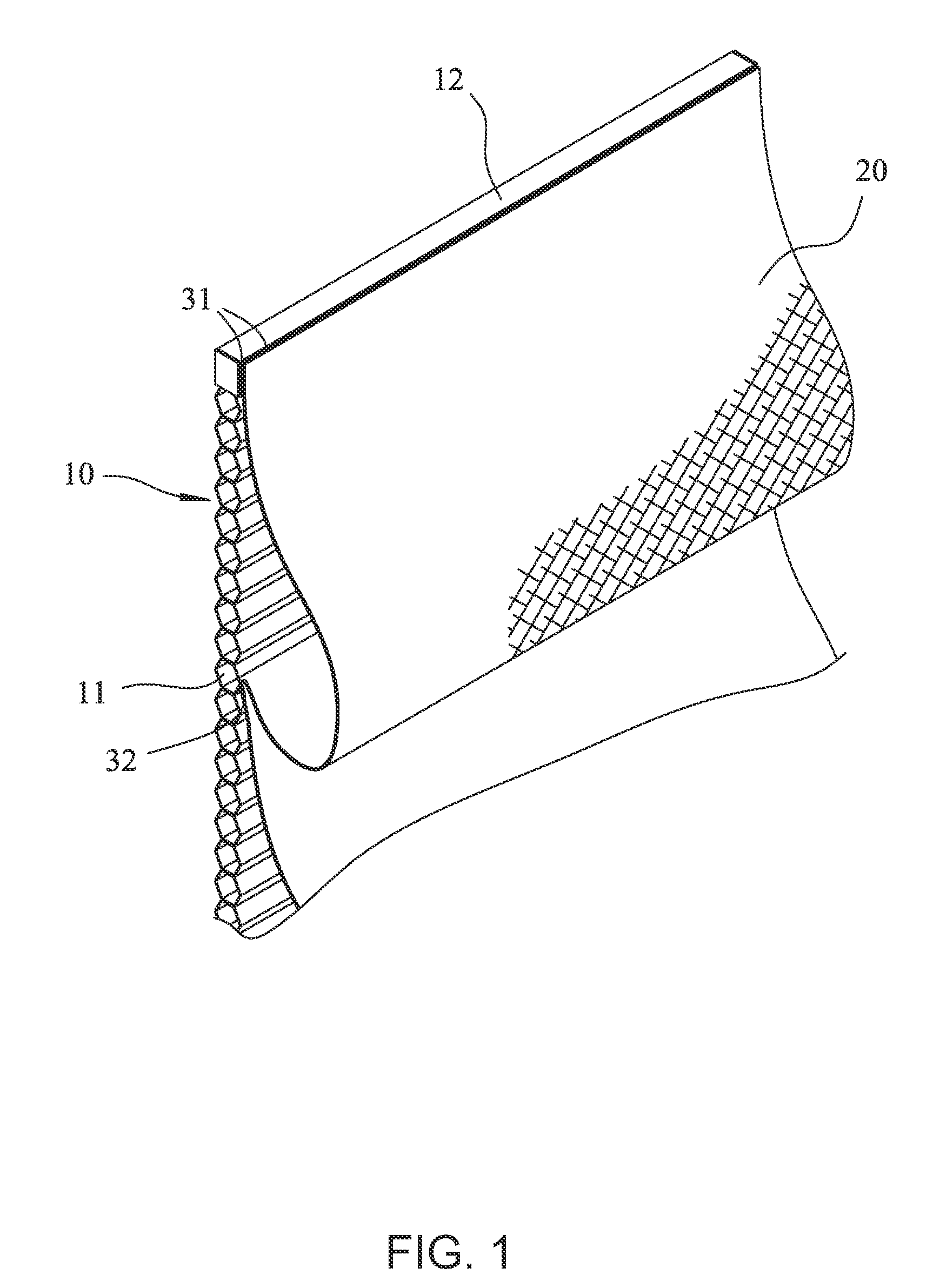
Figure 2 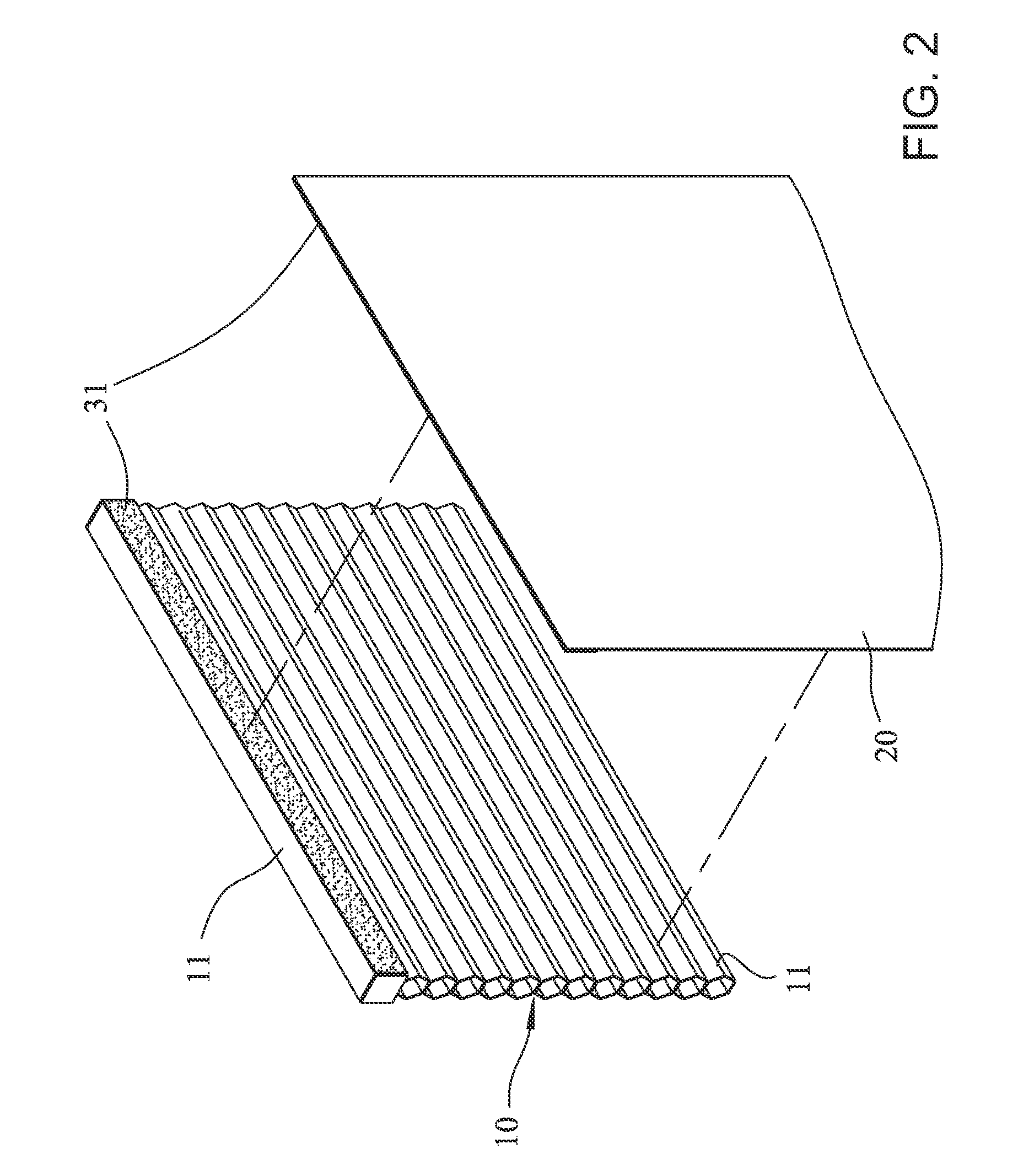
Figure 3
Abstract
Description
BACKGROUND OF THE PRESENT INVENTION1. Field of InventionThe present invention relates to window blind, and more particularly to a Roman blind, wherein a blind controlling cord is provided in the blind structure in a hidden manner for controllably operating the Roman blind, so as to enhance the safety feature thereof.2. Description of Related ArtsWindow blind is a common indoor decoration provided for shading, protecting privacy, and decorating purposes. In general, the folding operation of the blind is either horizontally or vertically. For the horizontally folding operation of the window blind, a controlling cord is actuated for driving the blind to move horizontally from side to side so as to complete the opening operation of the window blind. The blind may also be manually operated by the user directly moving the curtains left and right to complete the horizontal operation of the window blind. For the vertically folding operation of the window blind, the blind is provided between...
Examples
Embodiment Construction
Referring to FIGS. 1 to 10 of the drawings, a window curtain of the present invention is illustrated, wherein the window curtain comprises a blind body 10, a curtain cover 20, and a connecting unit 30.
The blind body 10 comprises a plurality of honeycomb shaped blind elements 11, which is extendable and foldable for operating the blind body 10, an upper supporting mount 12 for coupling at a top of the blind body 10, and a controlling cord 13 downwardly hanging at and extending from the upper supporting mount 11 through each of the honeycomb shaped blind elements 11 in a hidden manner. An opposed end of the controlling cord 13 is connected to a lower end portion of the curtain cover 20 via a ring 14 and a strain 15. Therefore, the honeycomb shaped blind elements 11 preferably equal sized and shaped are able to be controllably operated in response to the operation of lifting up and dropping down the controlling cord 13 for foldably driving each of the honeycomb shaped blind elements 11...