
Compositions and methods for detecting s-nitrosylation and s-sulfinylation
a technology of s-nitrosylation and s-sulfinylation, which is applied in the detection of post translational modifications, instruments, material analysis, etc., can solve the problems of unstable and transient modifications, introduce false positives, and the selectivity of organomercury enrichment has not been thoroughly explored, so as to reduce the loading buffer and reduce the sulfenic acid. , the effect of reducing the sulfenic acid concentration
Patent Information
- Authority / Receiving Office
- US · United States
- Patent Type
- Applications(United States)
- Current Assignee / Owner
- Publication Date
- 2017-07-06
Smart Images
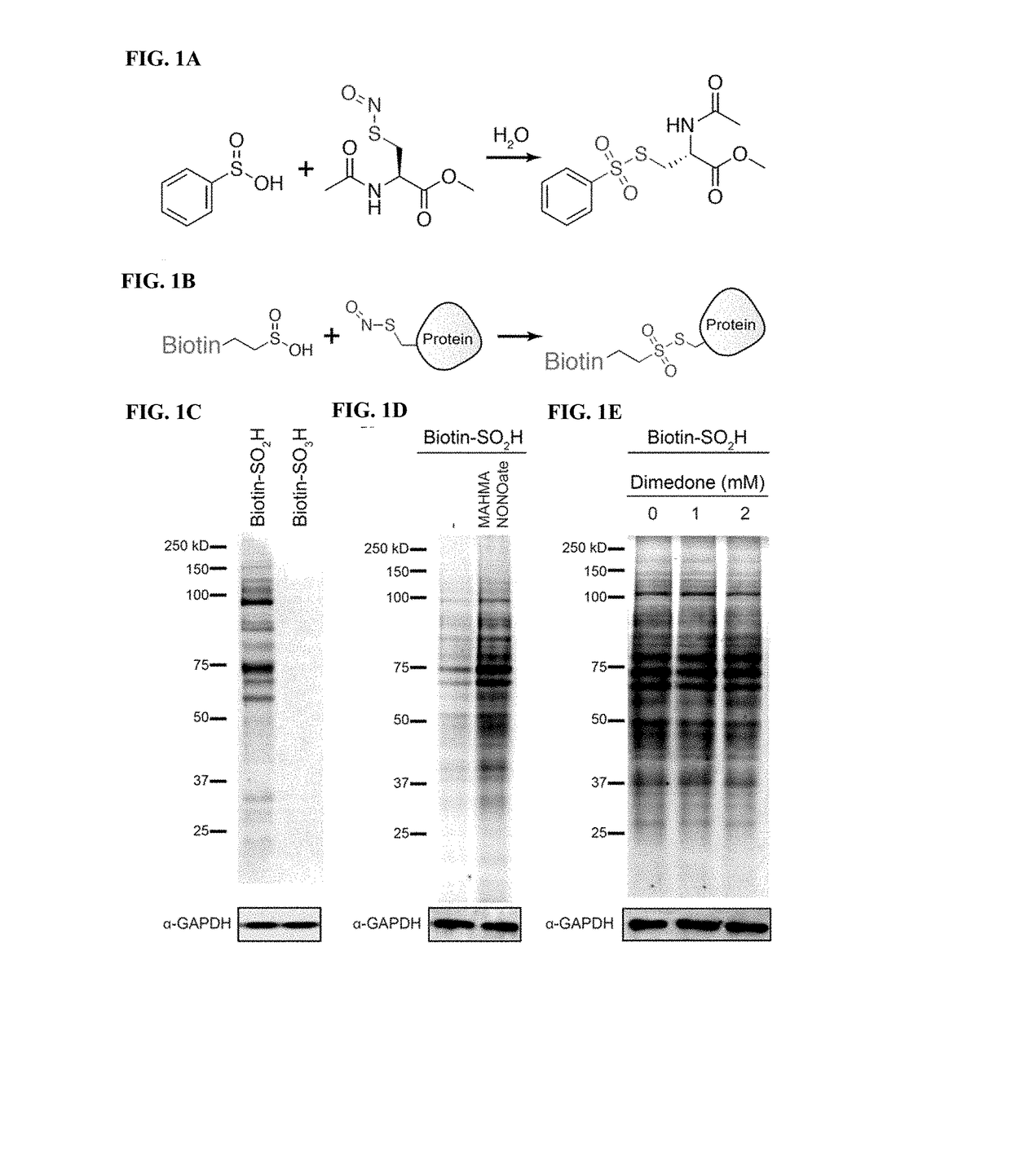
Figure 1 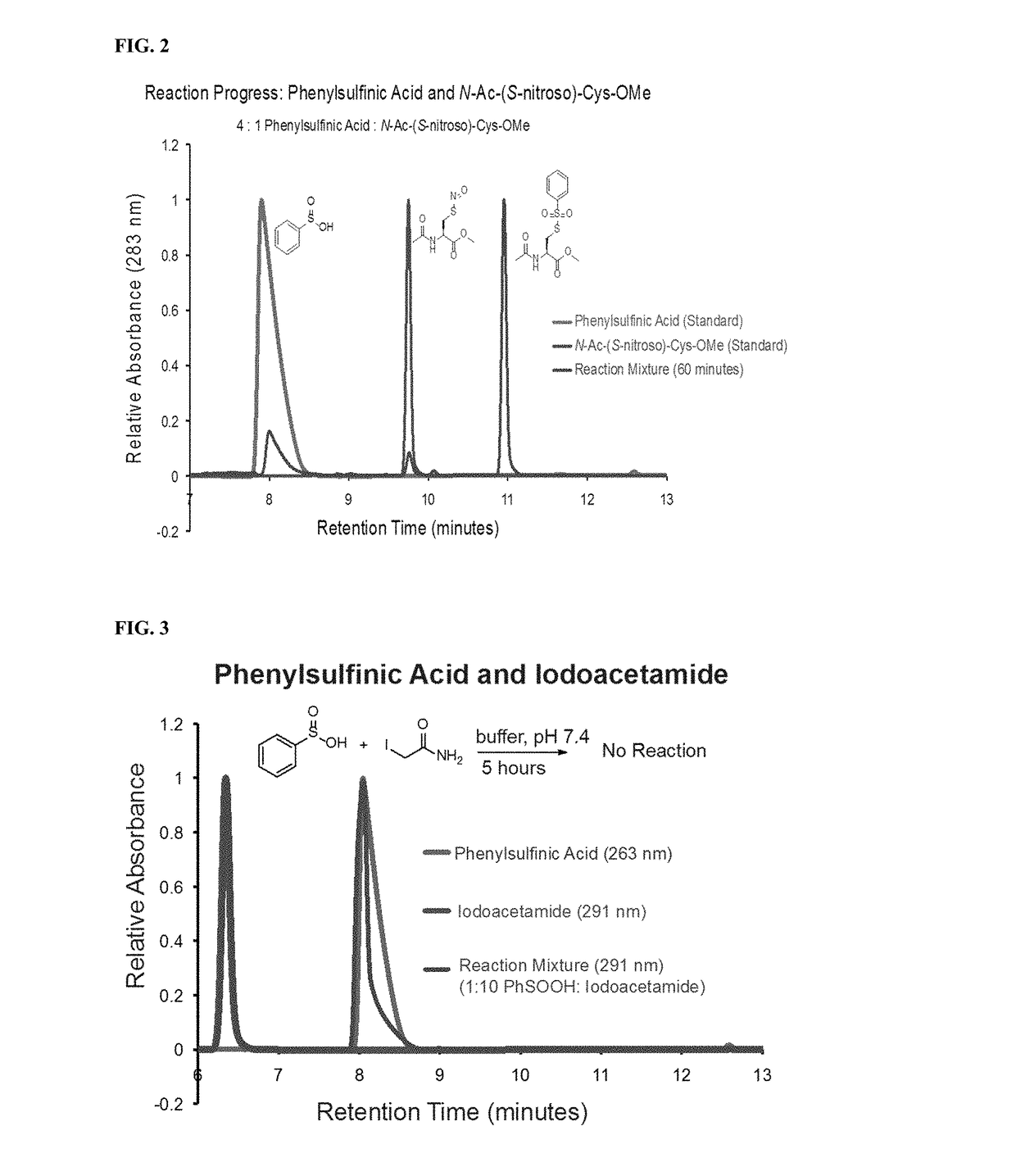
Figure 2 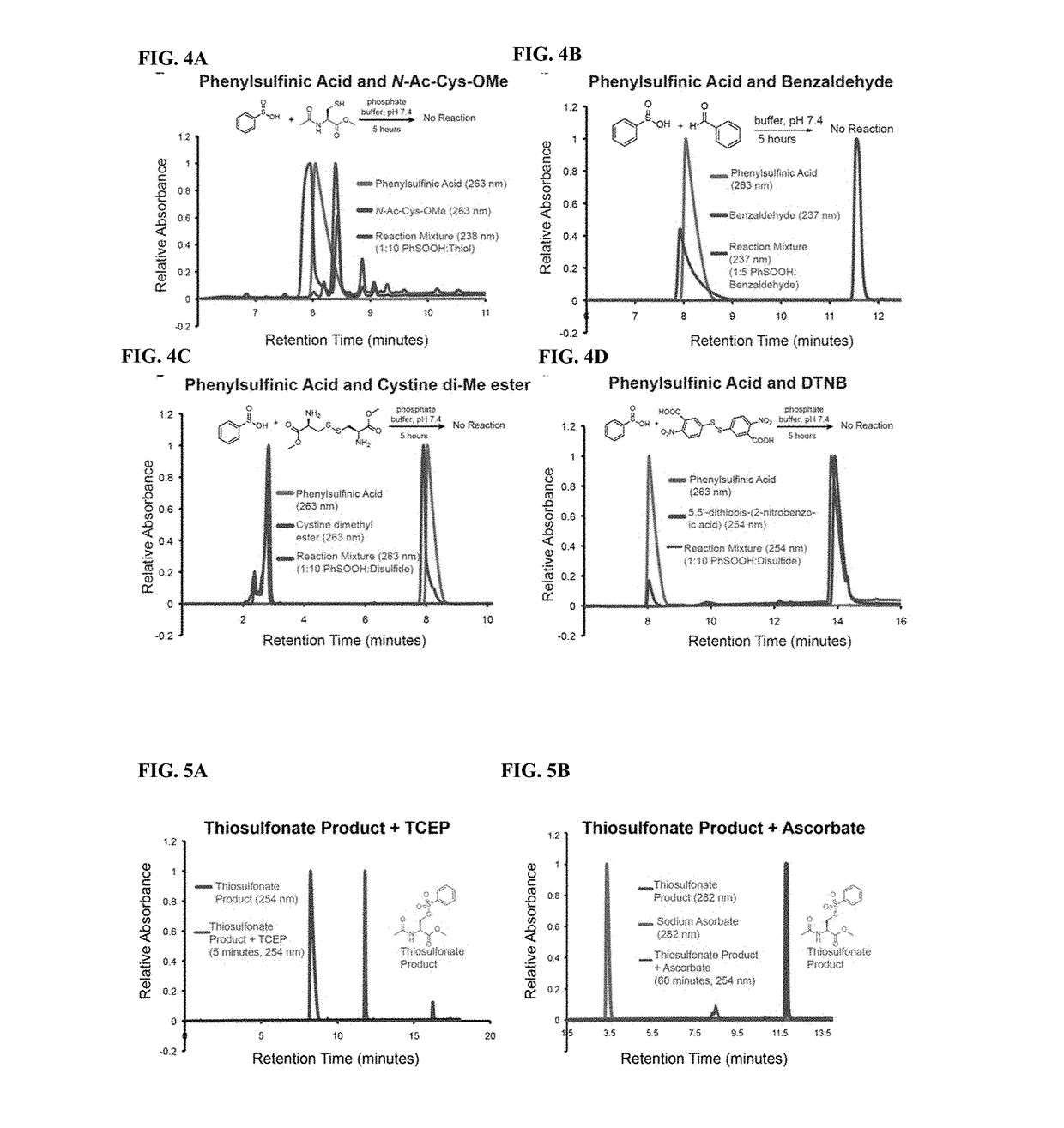
Figure 3
Abstract
Description
CROSS-REFERENCE TO RELATED APPLICATION
[0001] This application is a continuation of U.S. patent application Ser. No. 14 / 888,904, filed Nov. 3, 2015, which is a 371 U.S. National Phase Entry of International Application No. PCT / US2014 / 037111, filed May 7, 2014, which claims priority to U.S. Provisional Patent Application No. 61 / 820,401, filed May 7, 2013, the contents of which are incorporated by reference in their entireties.FIELD OF THE INVENTION
[0002] The present invention relates to methods for detecting protein S-nitrosylation and S-sulfinylation within thiol groups in proteins, metabolites, or materials.BACKGROUND OF THE INVENTION
[0003] Reversible redox post-translational modifications on protein thiols have been implicated in several signaling pathways of biological importance. Protein S-nitrosylation and proteins S-sulfinylation are two of these modifications that play critical roles in maintaining the redox balance of proteins. Redox imbalance has recently been shown to play a c...
Examples
example i
[0086]While exploring the interplay of cysteine post-translational modifications, a reported reaction between phenylsulfinic acid and S-nitrosocysteine was identified, leading to thiosulfonate formation in aqueous buffers at room temperature (see, e.g., Hart. T. W. Tetrahedron Letters 26, 2013-2016 (1985)) (FIG. 1a, FIG. 2). Thiosulfonates are readily exchangeable with thiols, serving as the basis for the cysteine capping agent methyl methanethiosulfonate (MMTS). To prevent such exchange, it was found that sulfinic acids do not react with iodoacetamide, enabling orthogonal alkylation of thiols without perturbing nitrosothiols or sulfinic acids (FIG. 3). Furthermore, it was found that sulfinic acids do not react with thiols (cysteine), disulfides (cystine or 5,5′-dithiobis-(2-nitrobenzoic acid) (DTNB)), or aldehydes (benzaldehyde) (FIG. 4). Additionally, the thiosulfonate product is unaffected by ascorbate, but reduced by tris(2-carboxyethyl)phosphine (TCEP) (FIG. 5). Most S-sulfinyl...
example ii
[0095]This example describes synthetic methods pertaining to Example I.
[0096]All compounds were purchased from Sigma-Aldrich, unless otherwise noted. NMR analysis was performed using a Varian 400 MHz NMR instrument. Small molecule high-resolution mass spectrometry was performed using an electrospray Agilent Q-TOF mass spectrometer (accuracy 1-5 ppm). Low-resolution mass spectrometry was performed using an electrospray Micromass LCT time-of-flight mass coupled to a HPLC pump with a rheodyne loop injector. Compounds were purified by normal phase silica column chromatography or by semi-prep High-Performance Column Chromatography (HPLC). HPLC purifications were performed using a Waters semi-preparative 1525 binary pump system coupled to a photodiode array detector, an autosampler, and an automatic fraction collector. Separations were carried out on an Atlantis prep T3 C18 column (10×250 mm), in 95 / 5 water / acetonitrile 0.1% formic acid for 2 minutes, followed by a 40 minute gradient incr...
example iii
[0109]This example describes materials and methods pertaining to Examples I and II.
Rate Constant Determination.
[0110]S-nitrosoglutathione (GSNO, Cayman) and sodium phenylsulfinate (Sigma-Aldrich) were used for rate-determination studies at four pH values: pH 1.0 (0.2 N HCl / KCl buffer), pH 4.0 (0.1 M Sodium acetate / Acetic Acid buffer), pH 7.0 (0.1 M potassium phosphate buffer) and pH 10.0 (0.1 M Sodium bicarbonate / Sodium hydroxide buffer). The purity of S-nitrosoglutathione was calculated as 94±1.3% by absorbance at 334 nm using the molar extinction coefficient of 900 M−1 cm−1. Assays were performed using a plate reader (Tecan Infinite F500) monitoring absorbance of 2 mM GSNO at 340 nm over a course of 90 minutes in the presence of varying concentrations of sodium phenylsulfinate. Additional experiments confirmed thiosulfonate stability for >5 hours at pH 1, 4, and 7, but hydrolysis at pH 10. GSNO was stable in 6 M urea / PBS for >1 hour. Absorbance data was imported into KaleidaGraph ...