

Thin walled electrochemical cell
Patent Information
- Authority / Receiving Office
- US · United States
- Current Assignee / Owner
- Publication Date
- 2000-03-28
- Estimated Expiration
- Not applicable · inactive patent
Smart Images
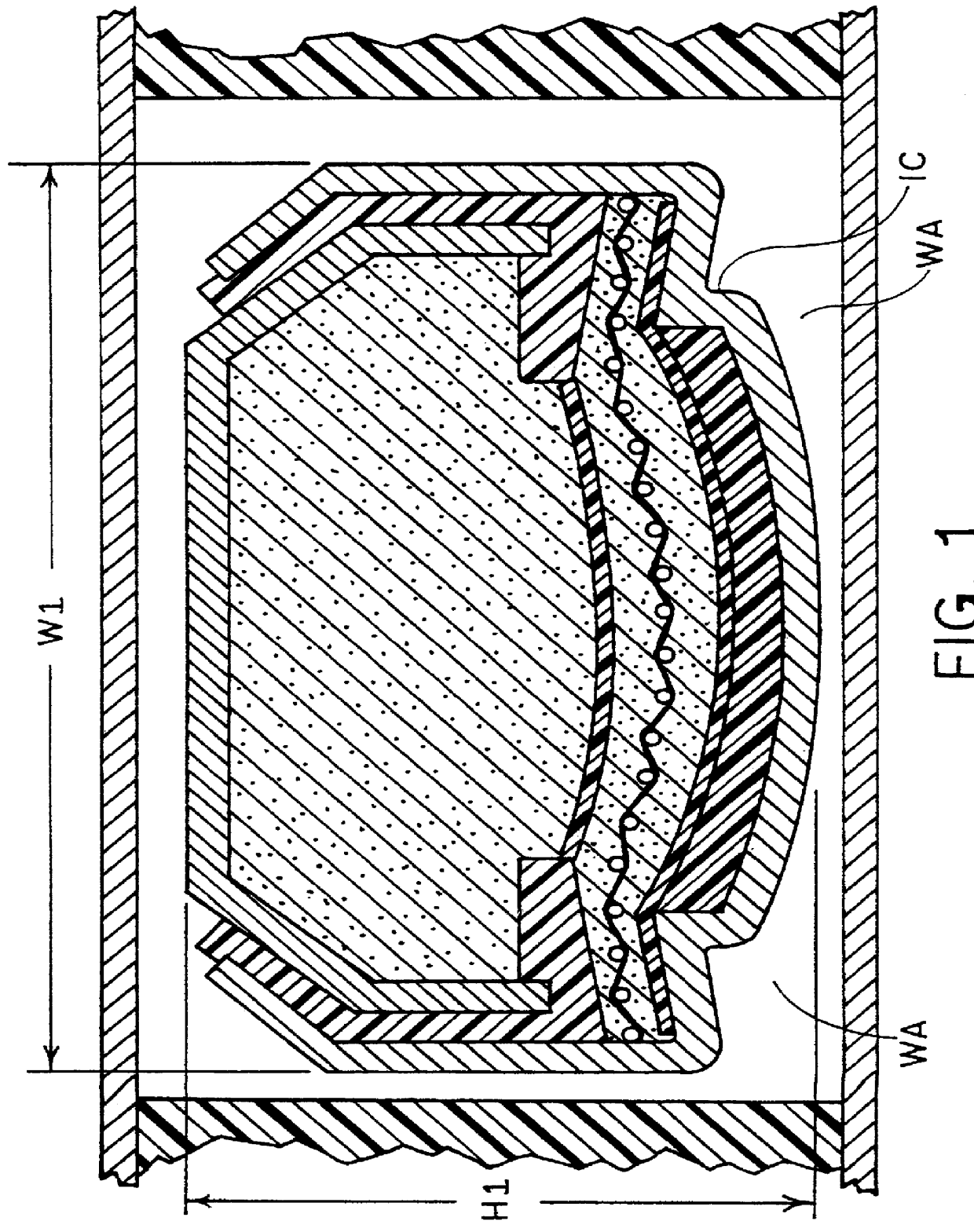
Figure 1 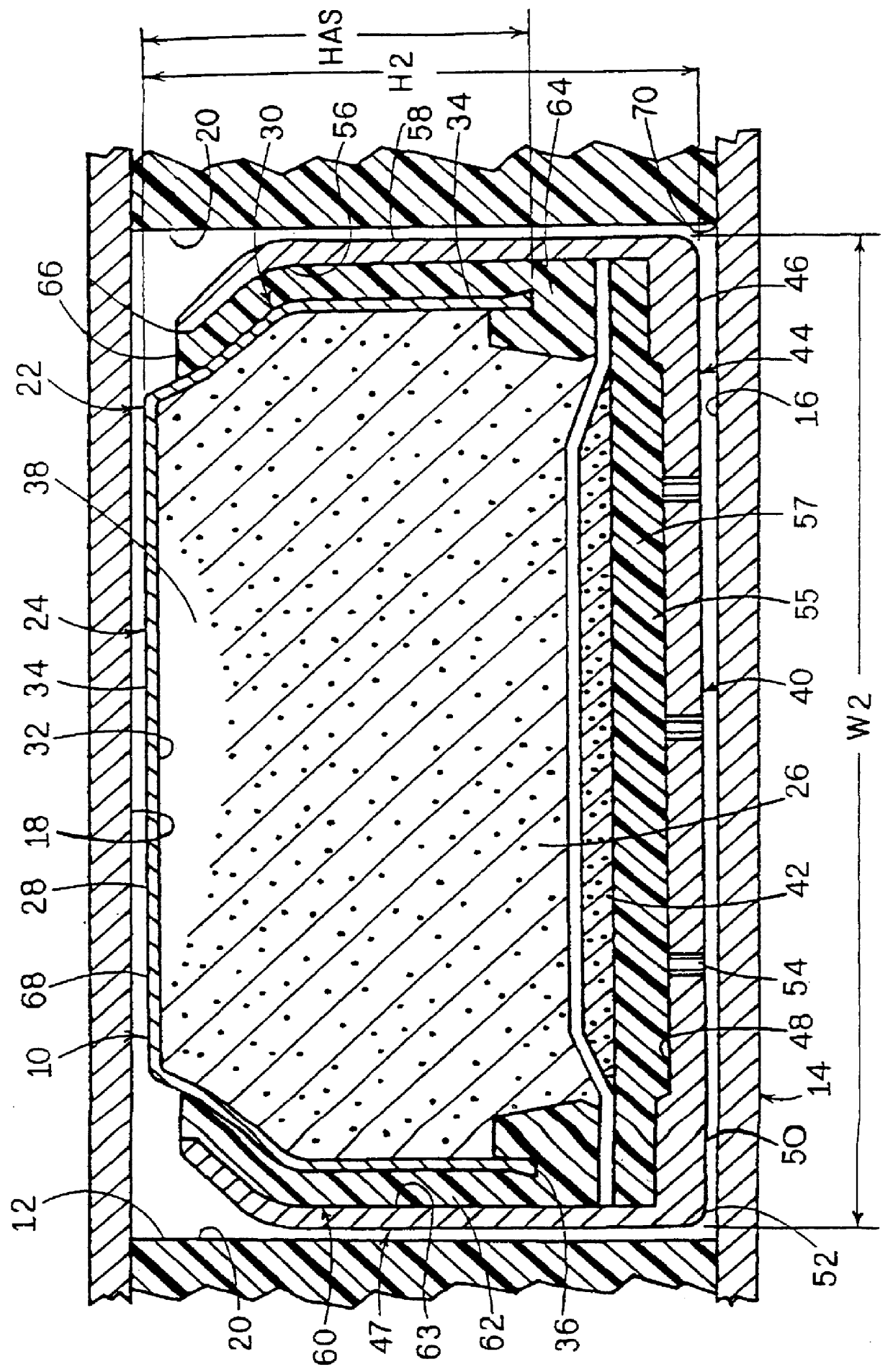
Figure 2 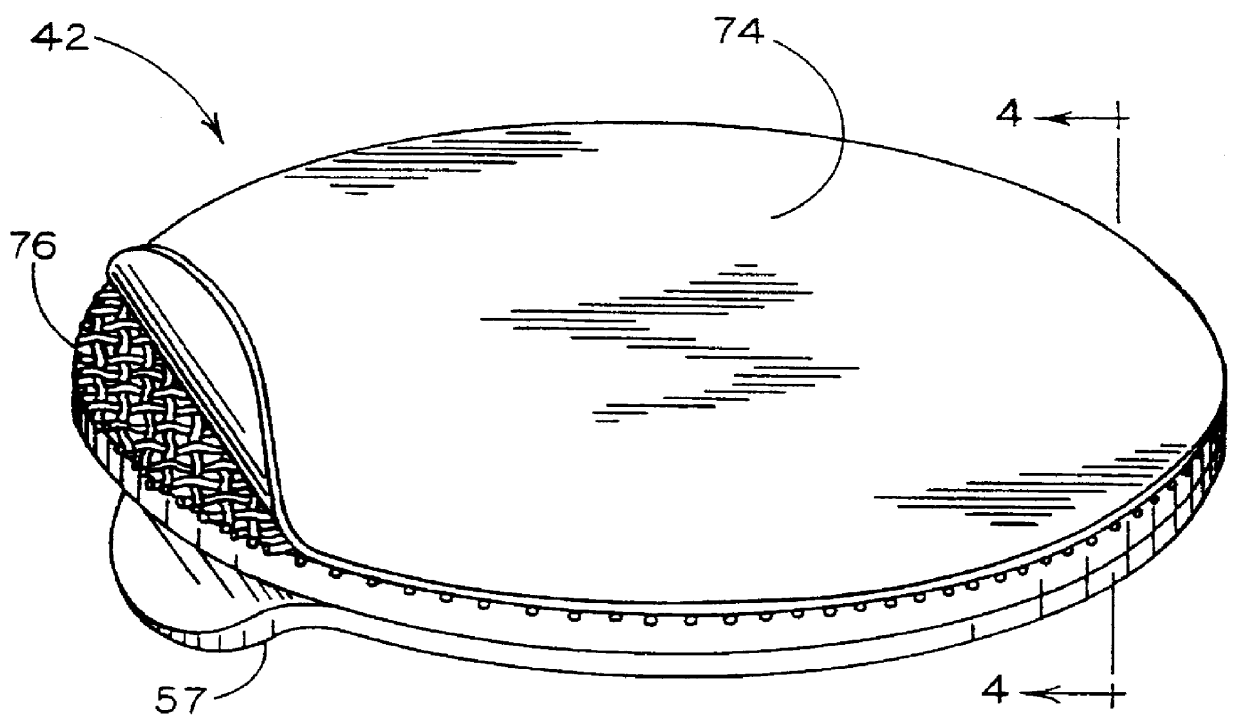
Figure 3
Abstract
Description
Not ApplicableThis invention relates to alkaline electrochemical cells. Typically, such cells have metal-containing anode materials, and air cathodes, and are commonly known as metal-air cells. More particularly, this invention relates to the composition and structure of the several components from which the cell is assembled, and to the overall structure of the cell itself, and generally addresses the efficient use of the three-dimensional volume available for use by such cells in electrical appliances. The invention addresses efficient use of non-reactive e.g. structural materials in preserving as much space as possible for occupation by the electrochemically reactive anode material used by the cell for generating electrical energy. Such efficient use provides an increase in the fraction of the overall volume of the cell which can be allocated to / occupied by the electrochemically reactive anode material.The growth in use of small electrically-powered devices has increased the dema...
Examples
examples 2 , 9 , 16
Examples 2, 9, 16, and 23 represent generally the upper portion of the range of volume efficiencies that can be achieved using the teachings herein, wherein the upper portion of the range is generally represented by the equation shown as a first line in FIG. 9 and expressed as
0.77+Log.sup.10 (Overall Volume)*0.20.
Linear Regression Analysis of the values represented by Examples 2, 9, 16, and 23 is shown as a second line in FIG. 9, represented by the equation
0.80+Log.sup.10 (Overall Volume)*0.281.
A third line, generally connecting the points for Examples 2 and 16, suggests an equation of
0.77+Log.sup.10 (Overall Volume)*0.20.
A fourth line, representing the equation
0.69+Log.sup.10 (Overall Volume)*0.22
represents generally an incremental step in improving Volume Efficiency, using the concepts of the invention.
The equation
0.65+Log.sup.10 (Overall Volume)*0.20
generally represents a line showing a minimum improvement over all prior art cells.
Table 3 gives representative values for the sever...
examples 3 , 10 , 17
Examples 3, 10, 17, and 24, and are generally represented by the equation
0.69+Log.sup.10 (Overall Volume)*0.22.