
Method, apparatus and computer program product for interfacing a TDM link with a cell-switched network
a cell-switched network and time domain multiplexing technology, applied in data switching networks, multiplex communication, digital transmission, etc., can solve the problems of rust and corrosion of metallic links, ineffective channel dedication of 1.544 mbps capacity of t1 links, and relatively chemically inert fibers
Patent Information
- Authority / Receiving Office
- US · United States
- Current Assignee / Owner
- Publication Date
- 2003-10-14
- Estimated Expiration
- Not applicable · inactive patent
Smart Images
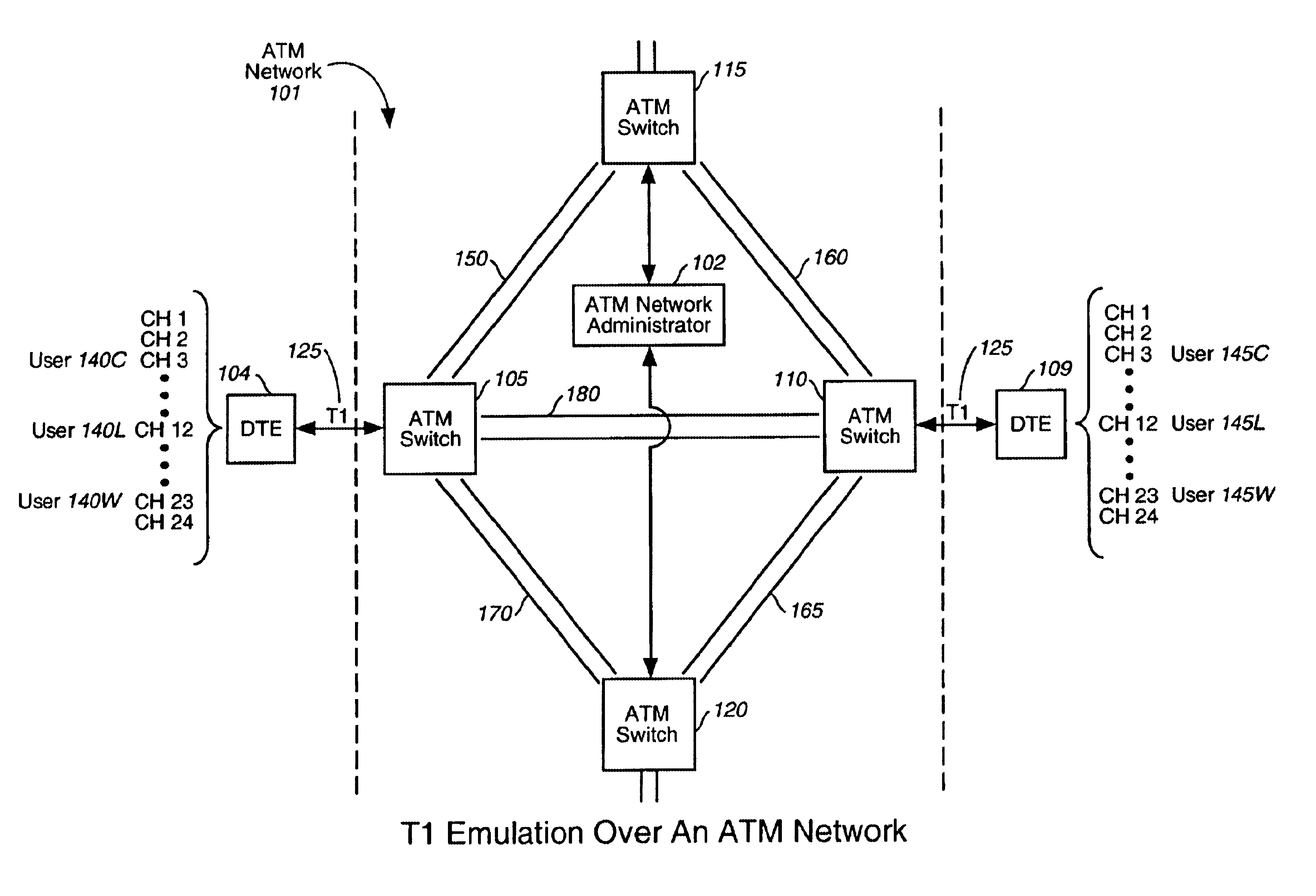
Figure 1 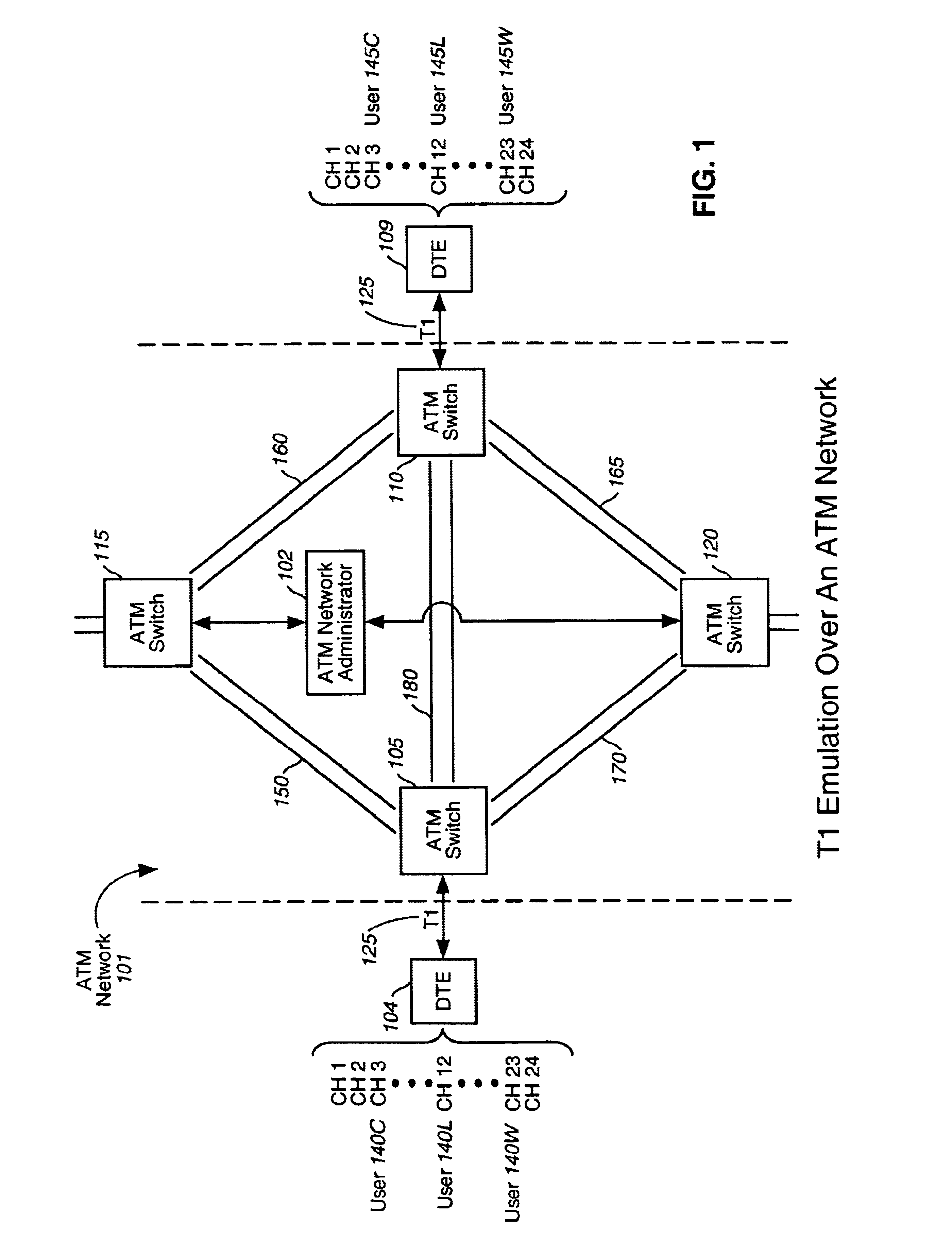
Figure 2 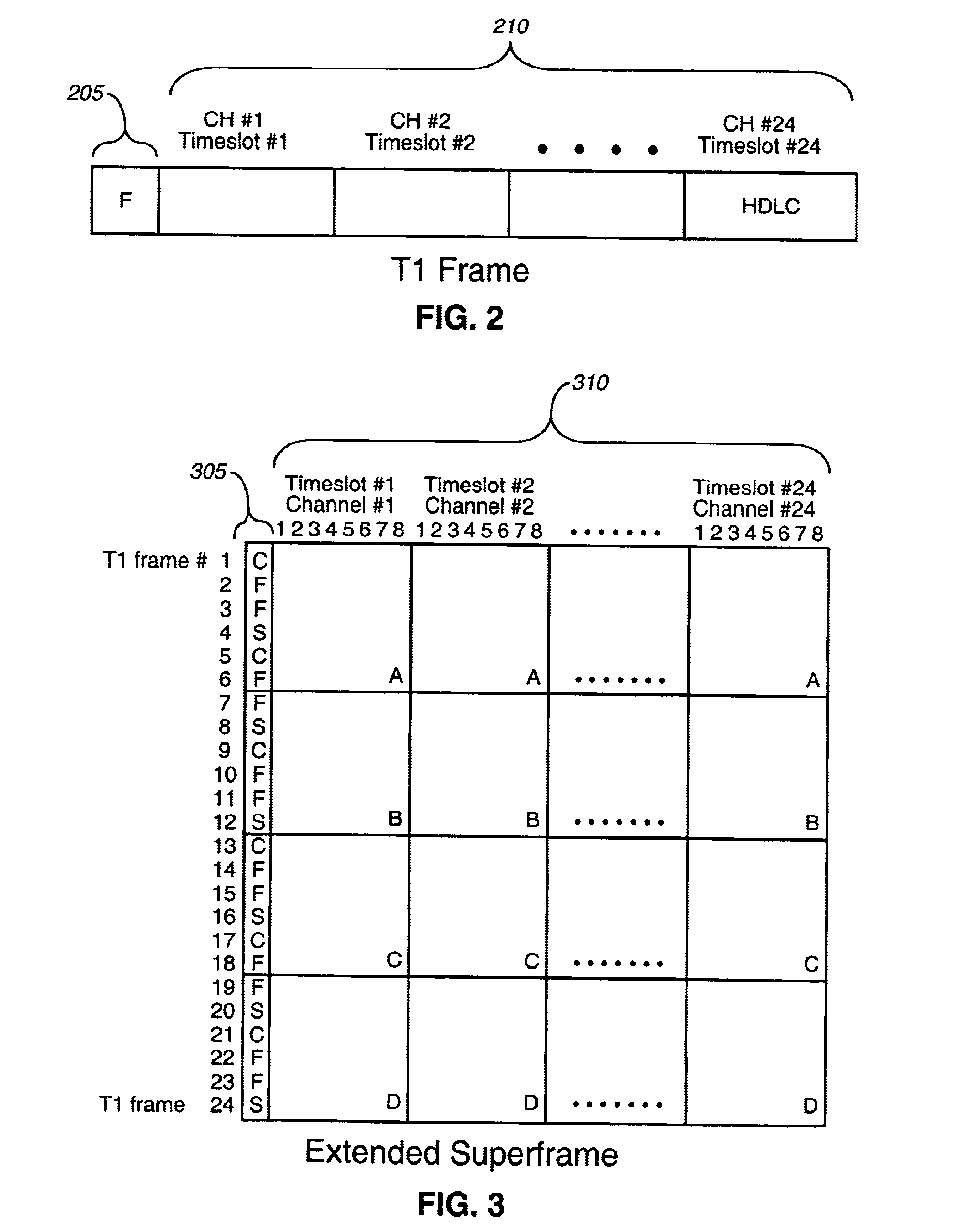
Figure 3
Abstract
Description
1. Field of the InventionThe present invention relates generally to digital communications over a communications network. In particular, the present invention is directed toward interfacing a time domain multiplexed (TDM) link with a cell-switched network.2. Related ArtA communications network serves to transport information among a number of locations. The information is usually presented to the network in the form of time domain electrical signals and can represent any combination of voice, video, or computer data. A typical communications network consists of various physical sites called "nodes", interconnected by conduits called "links". Each link carries information from one node to another node. End user nodes contain data terminating equipment (DTE) for combining, separating, and transforming data and voice. As such, a DTE can be a voice switch, data switch, or a combination of the two. A series of non-DTE nodes interconnected to each other with ATM links is often referred to...
Examples
Embodiment Construction
XI. Conclusion
I. Overview
The present invention is directed toward interfacing a time domain multiplexed (TDM) link with a cell-switched network. In one embodiment, the TDM link is a standard T1 link and the cell switched network is an Asynchronous Transfer Mode (ATM) network. The T1 link supports one or more active channels and one or more idle channels. The T1 link supplies T1 frames which carry a sample of each channel in a dedicated timeslot. During frame transmission, a port card removes the idle timeslots from each T1 frame to create compressed T1 frames. The compressed T1 frames are then loaded into ATM cells which are sent over the ATM network. During reception, a port card restores the idle timeslots that were removed during transmission.
II. Terminology
To more clearly delineate the present invention, an effort is made throughout the specification to adhere to the following term definitions as consistently as possible. These definitions may be discussed throughout the specifi...