
Method and apparatus for performing minimally invasive surgical procedures
a surgical procedure and minimally invasive technology, applied in the field of robotic systems and surgical instruments, can solve the problems of prolonging the recovery period of patients, reducing the precision of positioning, and reducing the trauma of patients, so as to reduce the trauma of patients and prolong the recovery period. , the effect of reducing the time of operation
Patent Information
- Authority / Receiving Office
- US · United States
- Patent Type
- Patents(United States)
- Current Assignee / Owner
- Publication Date
- 2005-06-14
- Estimated Expiration
- Not applicable · inactive patent
Smart Images
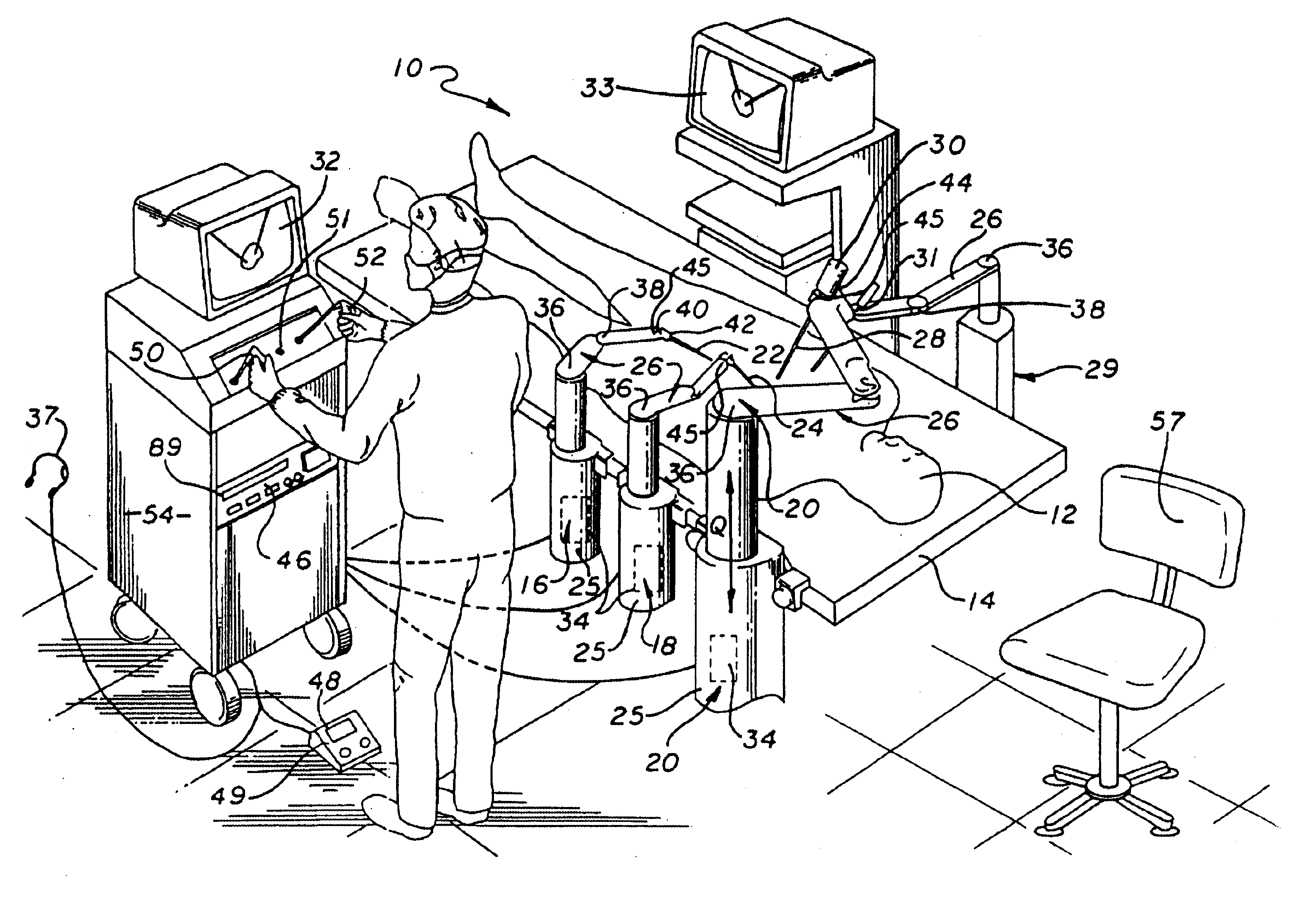
Figure 1 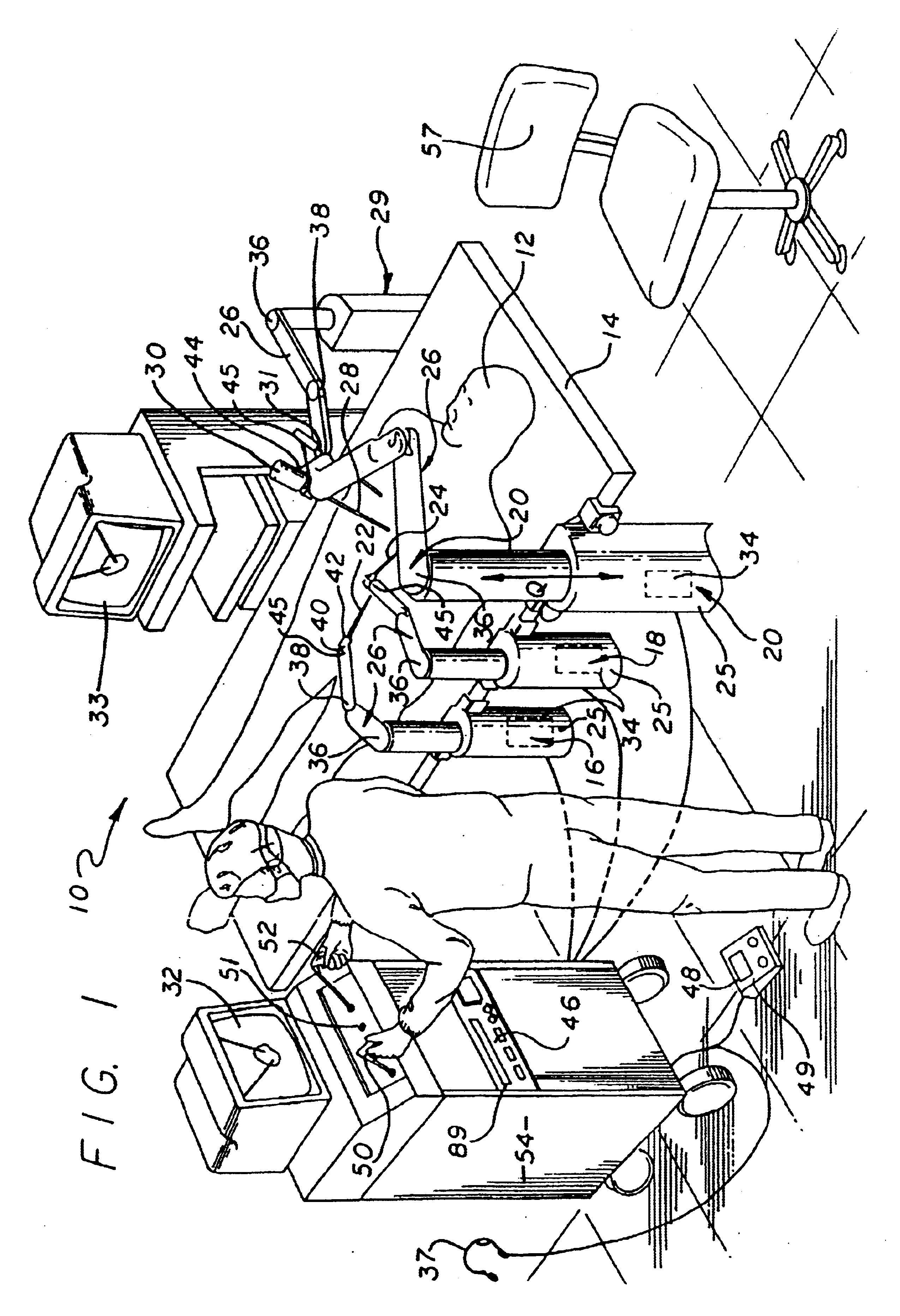
Figure 2 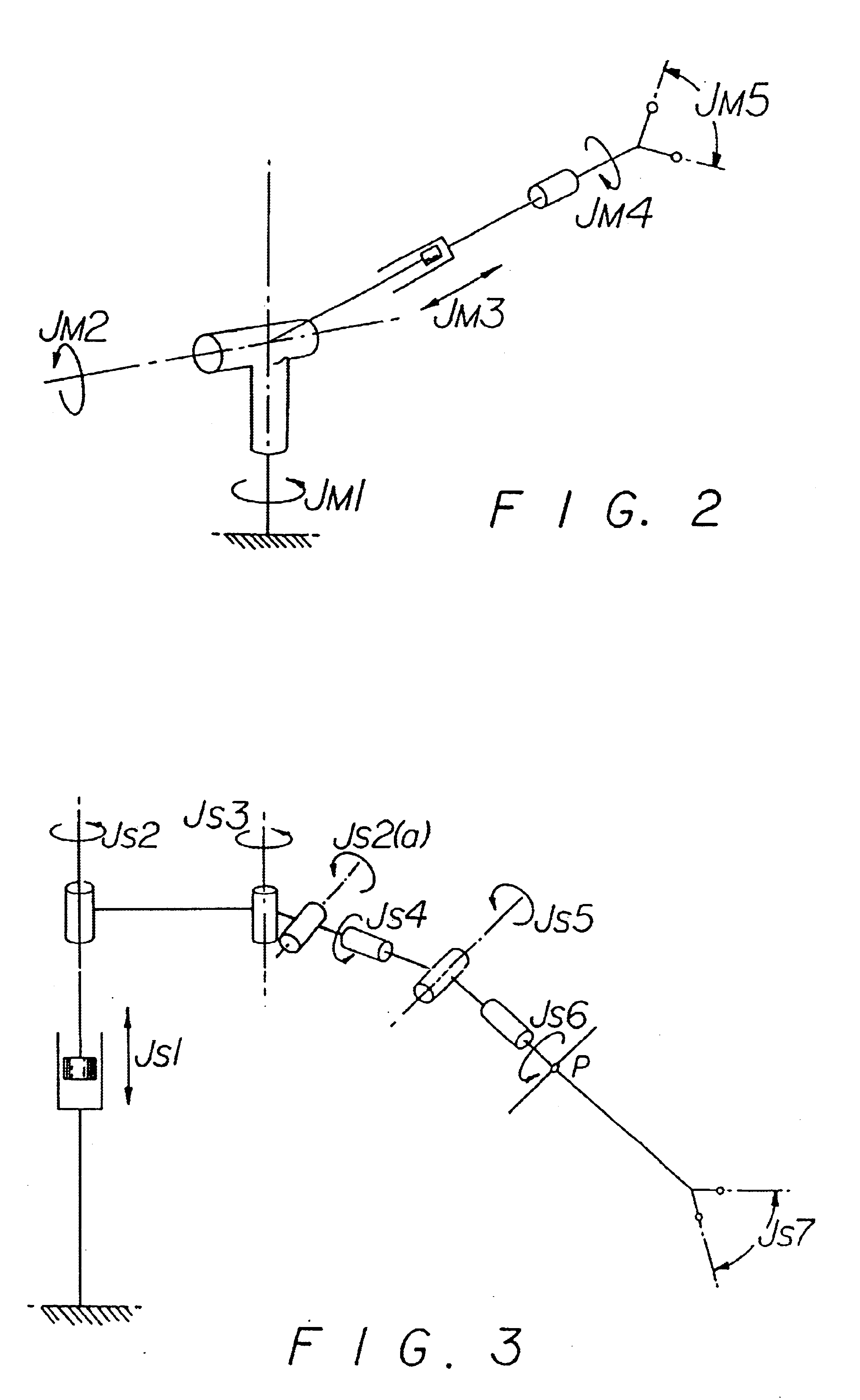
Figure 3
Abstract
Description
RELATION TO PREVIOUSLY FILED APPLICATIONS
[0001] The present application is a continuation of U.S. patent application Ser. No. 09 / 557,950 filed on Apr. 24, 2000 (now U.S. Pat. No. 6,699,177); which is a continuation of U.S. patent application Ser. No. 08 / 873,190 filed on Jun. 11, 1997 (now U.S. Pat. No. 6,102,850); which is a continuation-in-part of U.S. patent application Ser. No. 08 / 755,063 filed on Nov. 22, 1996 (now U.S. Pat. No. 5,855,583); and which is a continuation-in-part of U.S. patent application Ser. No. 08 / 603,543 was filed on Feb. 20, 1996 (now U.S. Pat. No. 5,762,458).BACKGROUND OF THE INVENTION
[0002] 1. Field of the Invention
[0003] The present invention relates to a system and method for performing minimally invasive cardiac procedures. More particularly, the present invention relates to a robotic system and surgical instruments that may be removably attached thereto, wherein said system aids in performing minimally invasive surgical procedures.
[0004] 2. Description of Re...
Examples
Embodiment Construction
[0065]Referring to the drawings more particularly by reference numbers, FIG. 1 shows a system 10 that can be used to perform minimally invasive surgery. In a preferred embodiment, the system 10 may be used to perform a minimally invasive coronary artery bypass graft, or Endoscopic coronary artery bypass graft (E-CABG) and other anastomostic procedures. Although a MI-CABG procedure is shown and described, it is to be understood that the system may be used for other surgical procedures. For example, the system can be used to suture any pair of vessels as well as cauterizing, cutting, and radiating structures within a patient.
[0066]The system 10 is used to perform a procedure on a patient 12 that is typically lying on an operating table 14. Mounted to the operating table 14 is a first articulate arm 16, a second articulate arm 18 and a third articulate arm 20. The articulate arms 16-20 are preferably mounted to the table so that the arms are in a plane proximate the patient. It is to b...