

Mail delivery system
Patent Information
- Authority / Receiving Office
- US · United States
- Current Assignee / Owner
- Publication Date
- 2006-11-28
- Estimated Expiration
- Not applicable · inactive patent
Smart Images
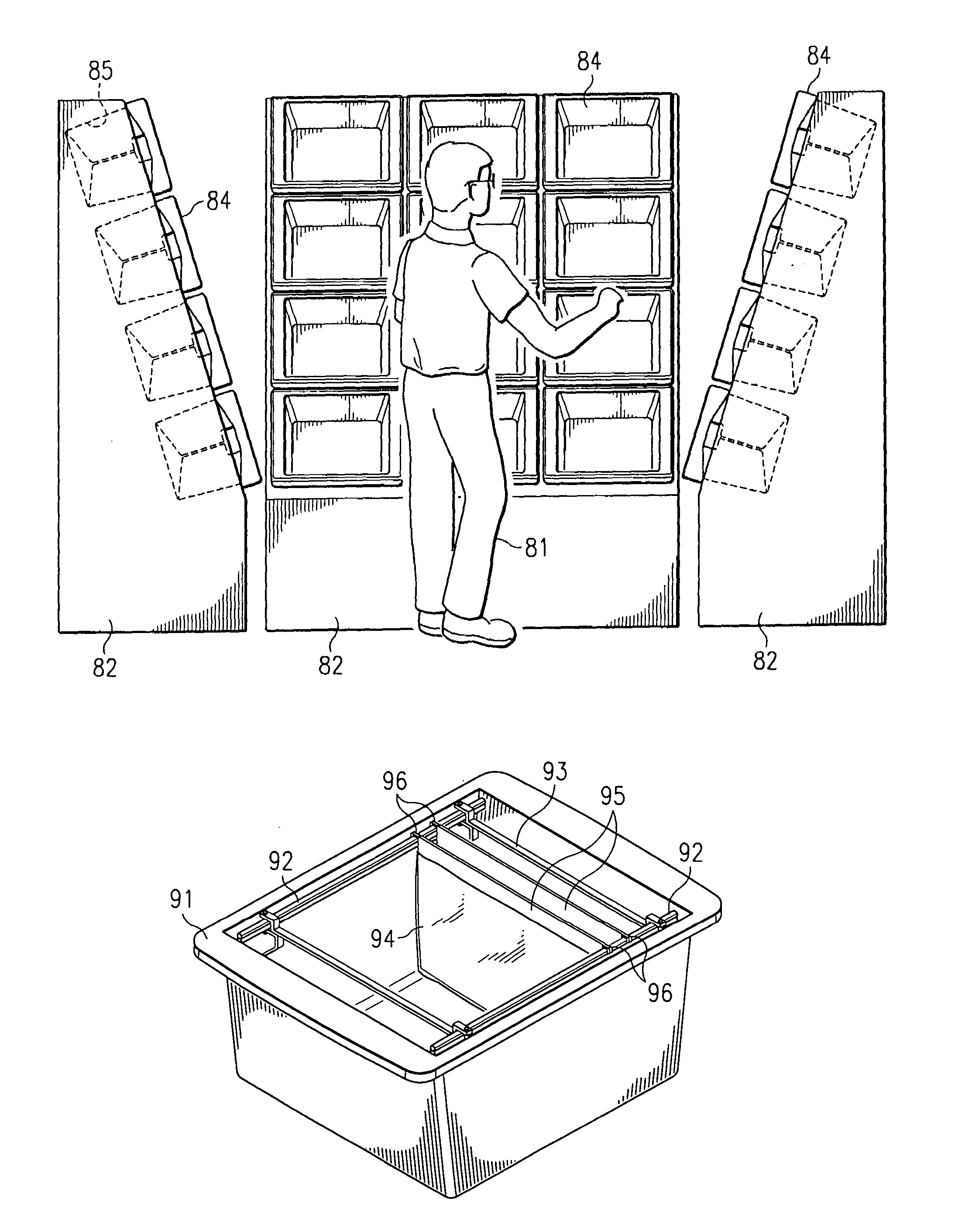
Figure 1 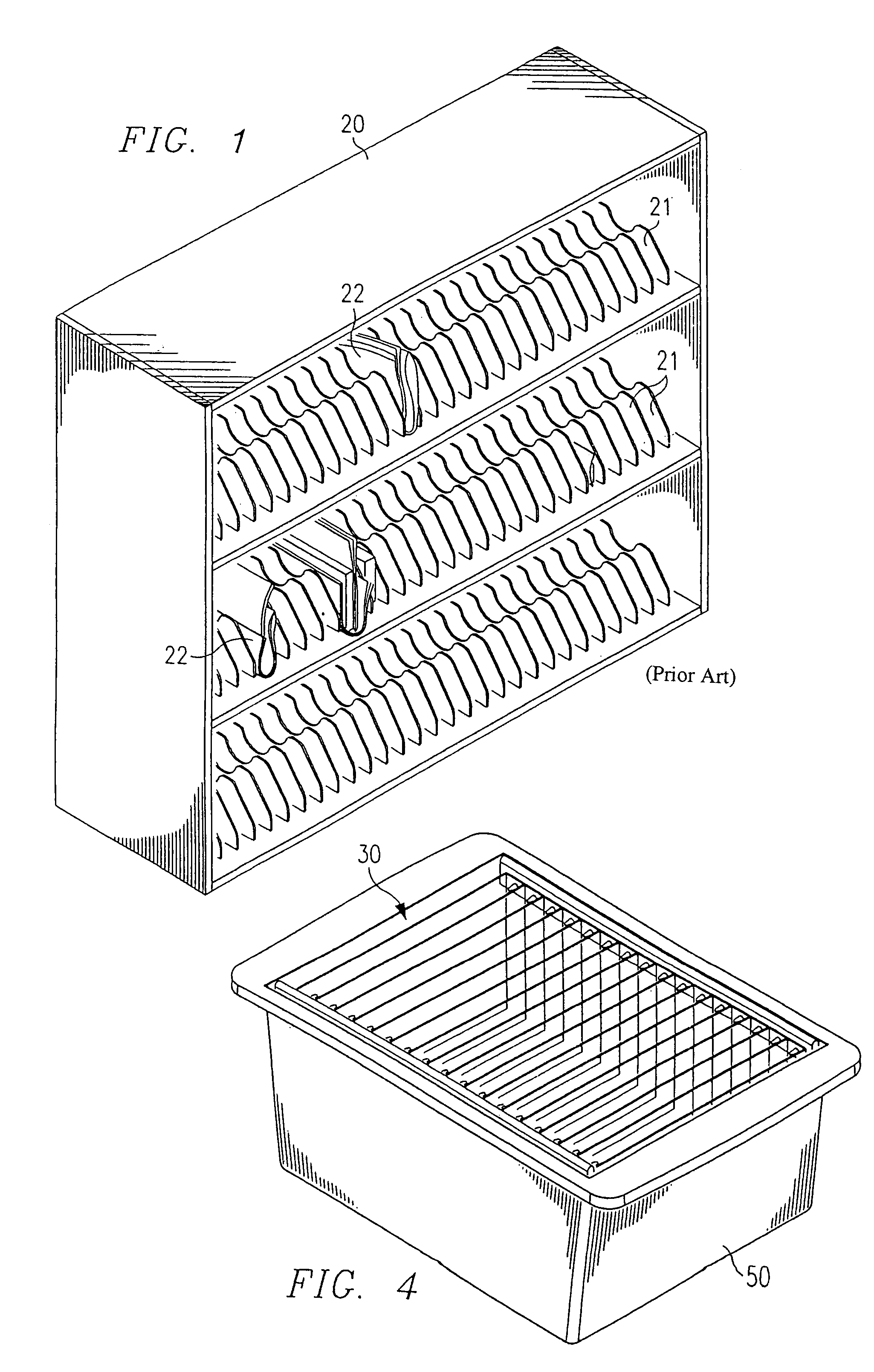
Figure 2 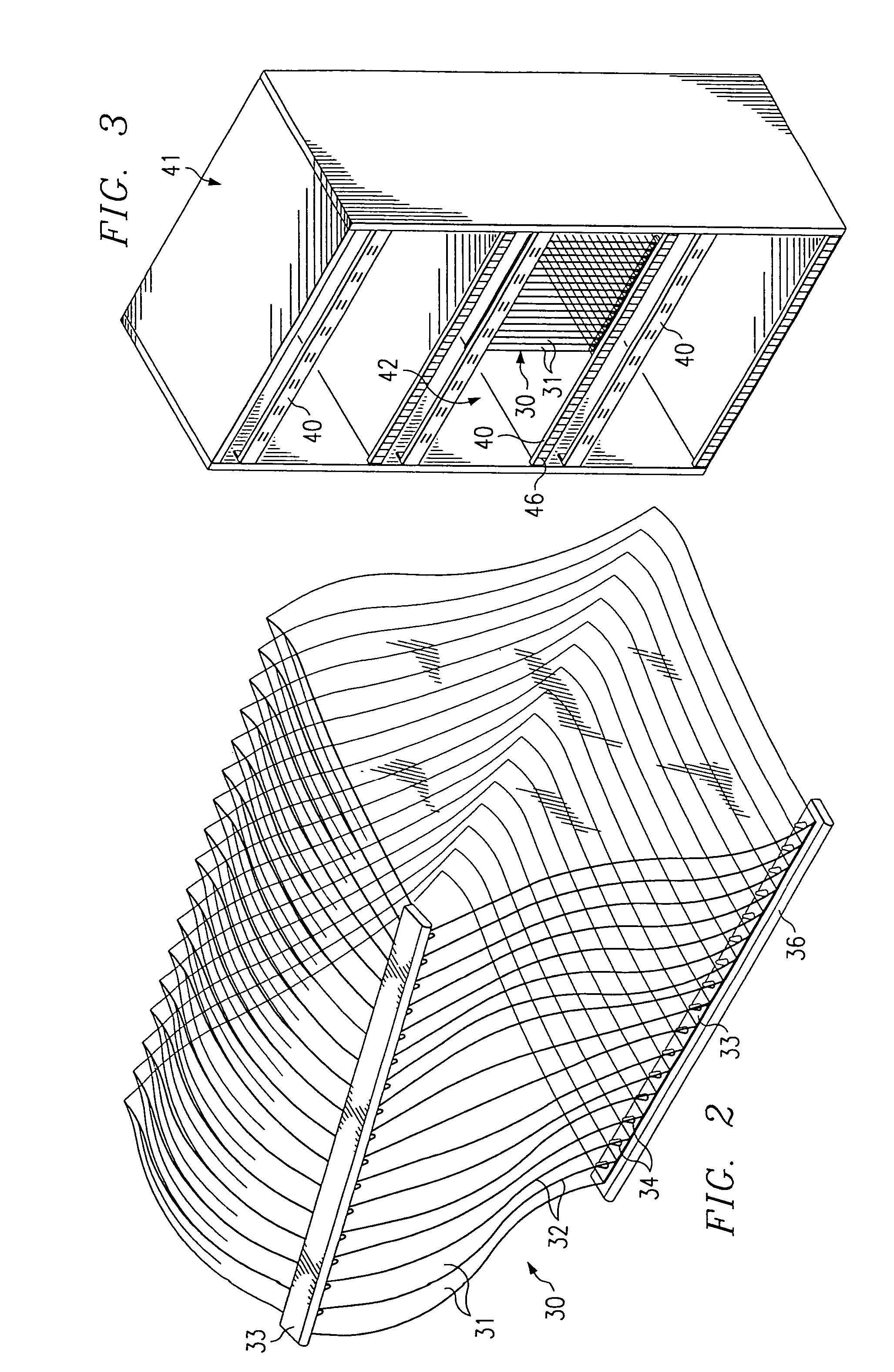
Figure 3
Abstract
Description
[0001] This application is a divisional of U.S. patent application Ser. No.: 09 / 924,155, filed Nov. 26, 2001, now U.S. Pat. No. 6,715,614.BACKGROUND OF THE INVENTION
[0002] Each day more than 200,000 United States Postal Service (USPS) carriers deliver mail to approximately 100 million individual domestic addresses. Mail generally consists of three broad types of items, namely letters, flat mail that is larger than letter mail, and parcels. Before a carrier begins to walk through or drive through his or her delivery route, it is the carrier's responsibility to put all of this mail into an appropriate sequence for efficient delivery.
[0003] Under the present USPS procedure, the carrier assembles at least three sequenced stacks of mail, including letters, flats (including enveloped and non-enveloped magazines), and parcels. The carrier may also have one or more additional sequenced stacks, e.g., pre-sorted mass-mail items to be delivered to many or all of the stops on the delivery route. T...
Examples
case 350
[0076]Case 350 operates as follows. When in a first position in which the movable shelf is positioned upwardly from that shown in FIG. 31, the distance between flanges 390, 396 is slightly less than the width of the multi-bags 300. Bottom shelf 364a is supported by a spring loaded stop 380. Stop 380 biases movable frame 354 toward its upper position. Multi-bags 300 may then be manually inserted into case 350 and mounted along opposite sides onto flanges 390, 396 as shown. When the case is fully loaded, the operator then locks the bags 300 into position for sorting by pulling on a handle 384 of a cord 378 or similar device.
[0077]Cord 378 is connected to a series of levers 386, 388 which are in turn connected to the lowermost hinge 374. Pulling on cord 378 causes lever 388 to pull down on hinge 374 and hence on bottom shelf 364a, moving the entire shelf assembly including holder 373 downwardly. A series of links 375 interconnect hinges 374 of each successive shelf 364, preferably at b...