
Bi-directional messaging for an emergency services network
a technology of emergency services and bi-directional messaging, applied in the field of emergency services, can solve the problems of limited information in the text stream, inability of psap-ali to adequately service emergency calls, and inability to effectively communicate with users, etc., to achieve the effect of improving communication and information delivery, broadening the number of participants, and improving services
Patent Information
- Authority / Receiving Office
- US · United States
- Patent Type
- Patents(United States)
- Current Assignee / Owner
- Publication Date
- 2007-02-13
Smart Images
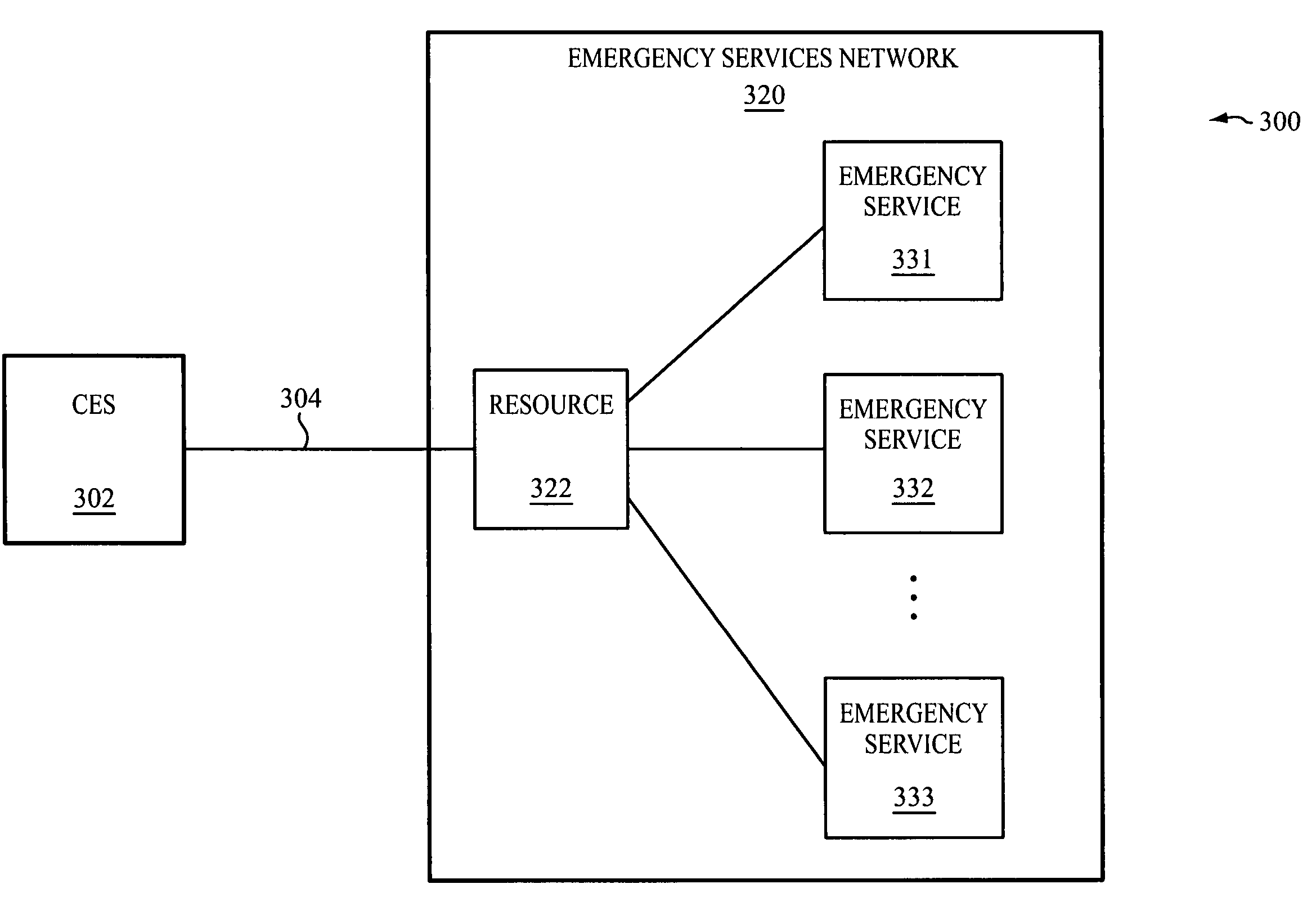
Figure 1 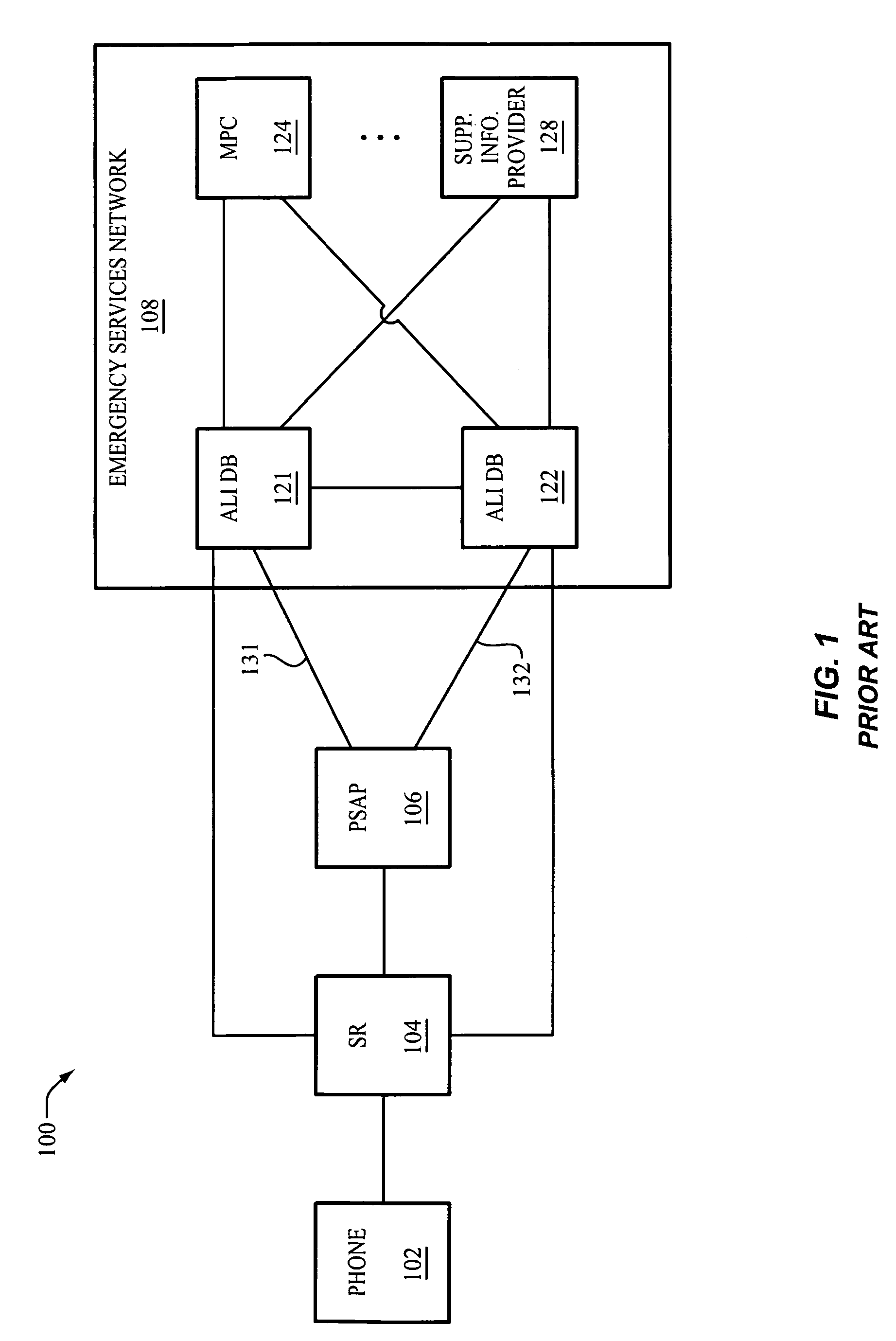
Figure 2 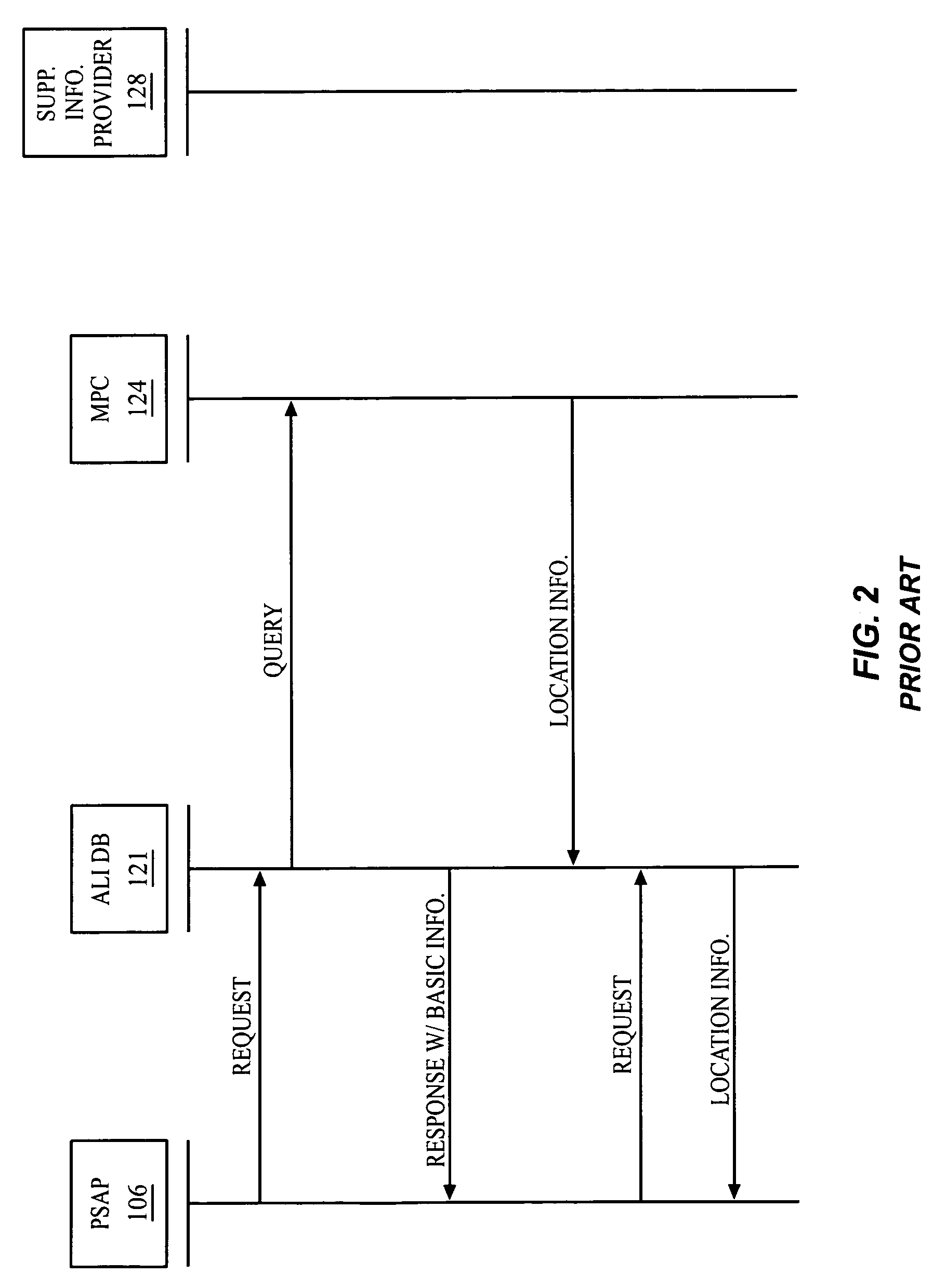
Figure 3
Abstract
Description
RELATED APPLICATIONS
[0001] This non-provisional application claims priority to U.S. provisional application 60 / 552,870, which was filed on Mar. 13, 2004.BACKGROUND OF THE INVENTION
[0002] 1. Field of the Invention
[0003] The invention is related to the field of emergency services, and in particular, to networks, methods, and systems using bi-directional messaging for an emergency services network. More particularly, a conforming emergency system, such as a Public Safety Answering Point (PSAP), and a resource of an emergency services network establish an emergency event session during which either device may initiate and transmit multiple messages.
[0004] 2. Statement of the Problem
[0005] In the United States, basic 9-1-1 service is an emergency reporting service where a calling party can dial 9-1-1 in emergency situations. The call is answered at a Public Safety Answering Point (PSAP, also known as a “Public Safety Access Point”). An operator at the PSAP converses with the calling party to ...
Examples
Embodiment Construction
Description of the Prior Art
[0020]FIG. 1 illustrates a prior art communication network 100 that provides emergency services. Communication network 100 includes a telephone 102, a selective router (SR) 104, a Public Safety Answering Point (PSAP) 106, and an emergency services network 108. Emergency services network 108 includes two ALI databases 121–122, a Mobile Positioning Center (MPC) 124 (or a Gateway Mobile Location Center (GMLC)), a supplemental information provider 128, and other backend resources (not shown). Although a single MPC 124 and a single supplemental information provider 128 are illustrated in FIG. 1, emergency services network 108 generally includes multiple MPCs and supplemental information providers. As shown in FIG. 1, telephone 102 is connected to selective router 104. Selective router 104 is connected to PSAP 106 and ALI databases 121–122. PSAP 106 is connected to ALI databases 121–122. ALI database 121 is connected to ALI database 122, MPC 124, and supplement...