
Synthesis gas process comprising partial oxidation using controlled and optimized temperature profile
a technology of partial oxidation and temperature profile, which is applied in the direction of physical/chemical process catalysts, bulk chemical production, combustible gas production, etc., can solve the problems of large potential explosion risks associated with mixing hydrocarbon and molecular oxygen, the ratio of hsub>2/, and the prediction of natural gas outliving oil reserves by a significant margin. , to achieve the effect of reducing the risk of explosion associated with mixing hydrocarbon and molecular oxygen, the ratio ratio
Patent Information
- Authority / Receiving Office
- US · United States
- Patent Type
- Patents(United States)
- Current Assignee / Owner
- Publication Date
- 2007-08-28
Smart Images
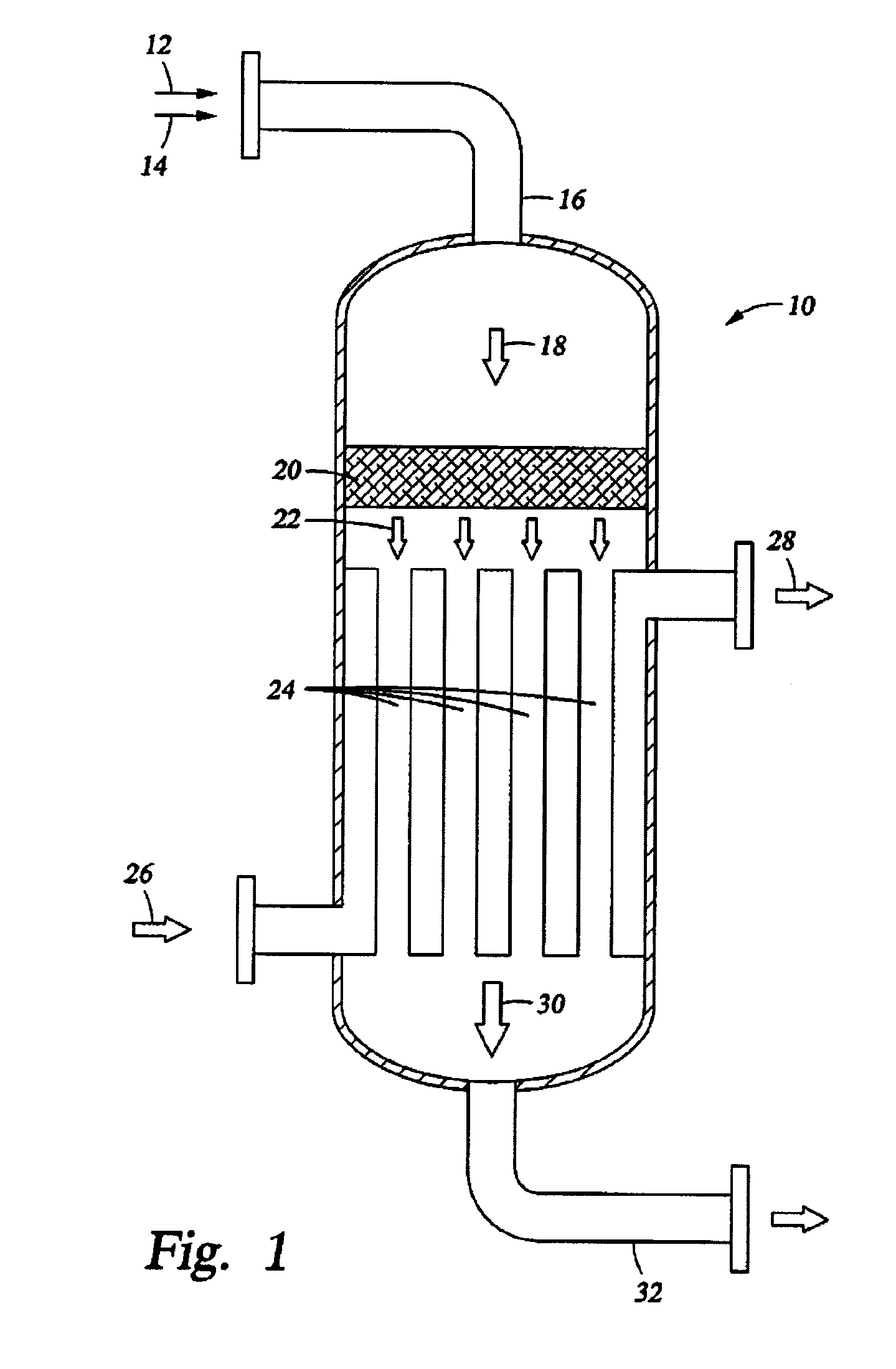
Figure 1 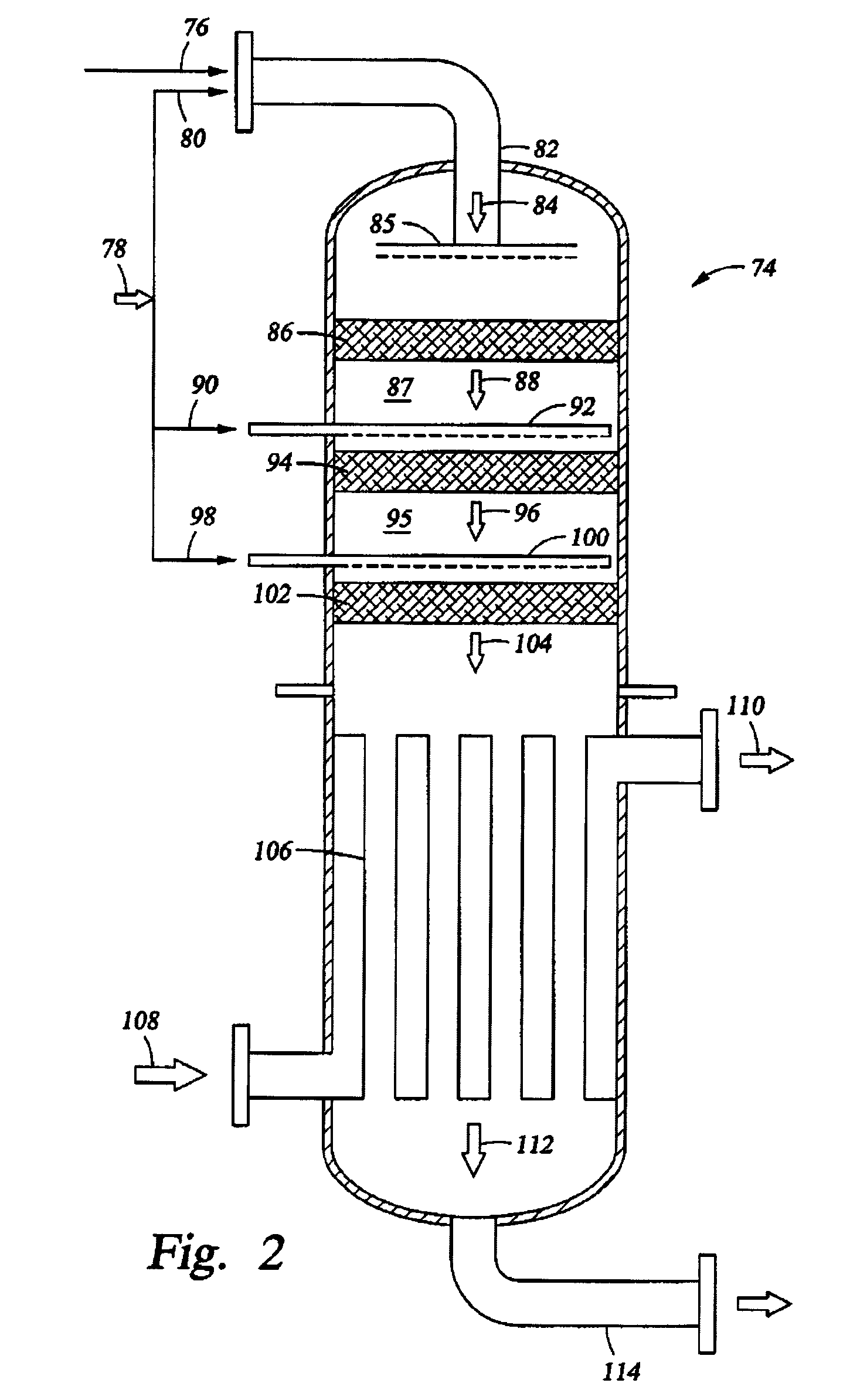
Figure 2 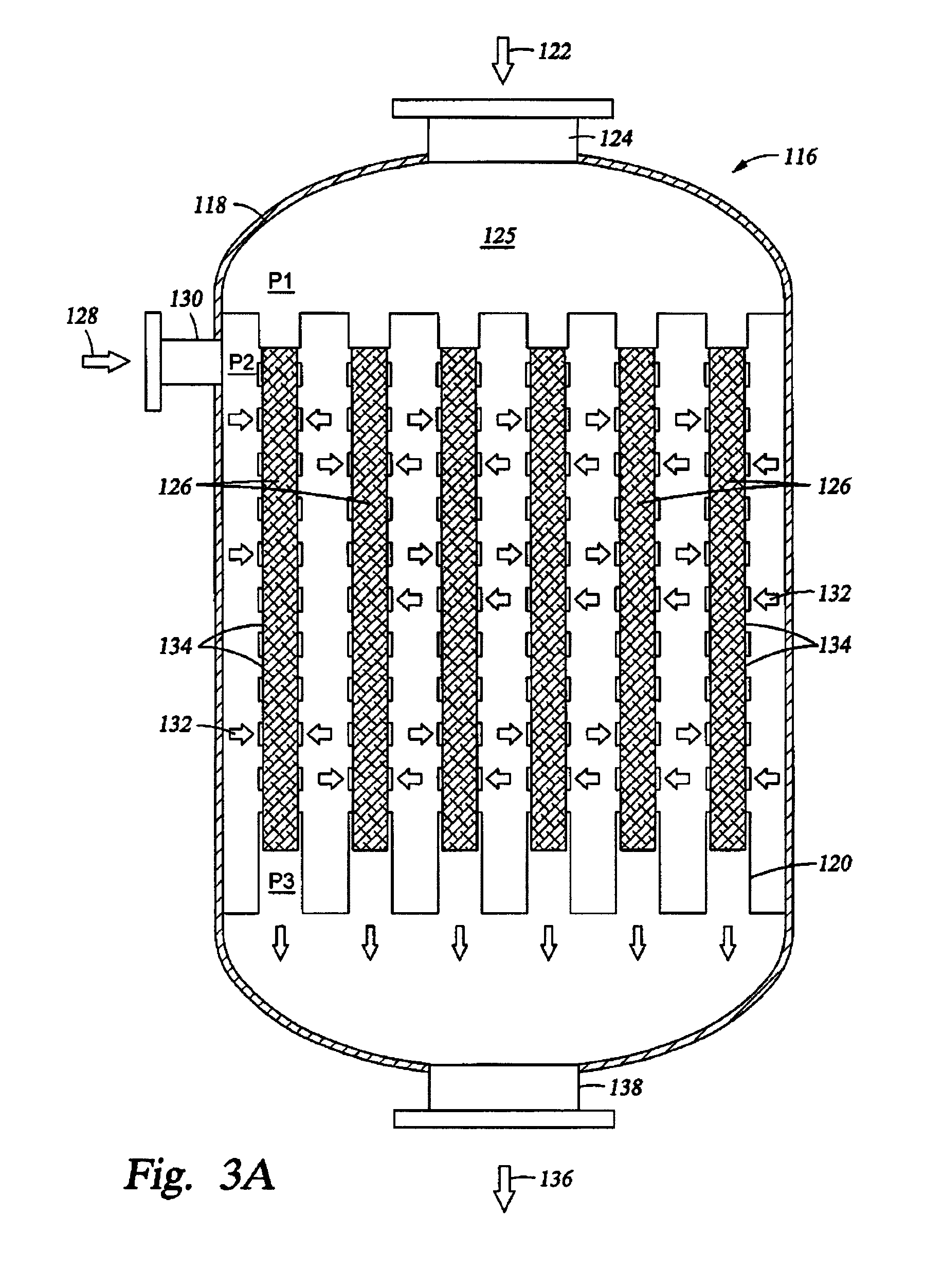
Figure 3
Abstract
Description
CROSS-REFERENCE TO RELATED APPLICATIONS
[0001] Not applicable.STATEMENT REGARDING FEDERALLY SPONSORED RESEARCH OR DEVELOPMENT
[0002] Not applicable.TECHNICAL FIELD OF THE INVENTION
[0003] The present invention relates generally to methods and apparatus for performing a catalytic partial oxidation process. More specifically, the present invention relates to methods and apparatus for a catalytic partial oxidation reactor using controlled and optimized temperature profile.BACKGROUND OF THE INVENTION
[0004] Many refineries face an abundant supply of lower alkanes, i.e., C1-C5 alkanes such as methane, and relatively few means of converting them to more valuable products. Moreover, vast reserves of methane, the main component of natural gas, are available in many areas of the world, and natural gas is predicted to outlast oil reserves by a significant margin. Thus, there is great incentive to exploit these natural gas formations. However, most natural gas formations are situated in areas that are...
Examples
examples
[0087]Simulation tests based on computer modeling were performed to estimate the performance of multiple-oxygen injections to a multi-bed catalytic partial oxidation reactor to find the optimum concentration of oxygen in each stage and the optimum ranges of temperature at the inlet of each bed. For these Examples, the numbers of stages are 1 (for comparison purposes), 2, 3, and 5. In all cases, the hydrocarbon gas is methane, and the oxygen-containing stream is substantially pure molecular oxygen. For single-bed Examples (Ex. 1,2) used for comparison, methane and O2 are premixed upstream of the sole catalyst bed to form a reactant gas stream with a molar ratio of carbon to molecular oxygen (C:O2) of approximately 1.8:1 or 2.49:1. For more than two-oxygen injections and multiple-bed reactors (Examples 3-16), methane and O2 are premixed upstream of the first catalyst bed (or first stage) to form a reactant gas stream with a molar ratio of carbon to molecular oxygen (C:O2) of about 3:1...