
Method of preventing and/or treating oxidant injury in neurodegenerative and oxidative diseases
a neurodegenerative and oxidative disease, preventing and/or treating oxidant injury, can solve the problems of aging-related dementia, a major public health problem, and only about 0.5% of all mutations, and achieve the effects of reducing choline acetyltransferase activity, reducing acetyltransferase activity, and reducing acetyltransferase activity
Patent Information
- Authority / Receiving Office
- US · United States
- Patent Type
- Patents(United States)
- Current Assignee / Owner
- Publication Date
- 2010-04-27
Smart Images
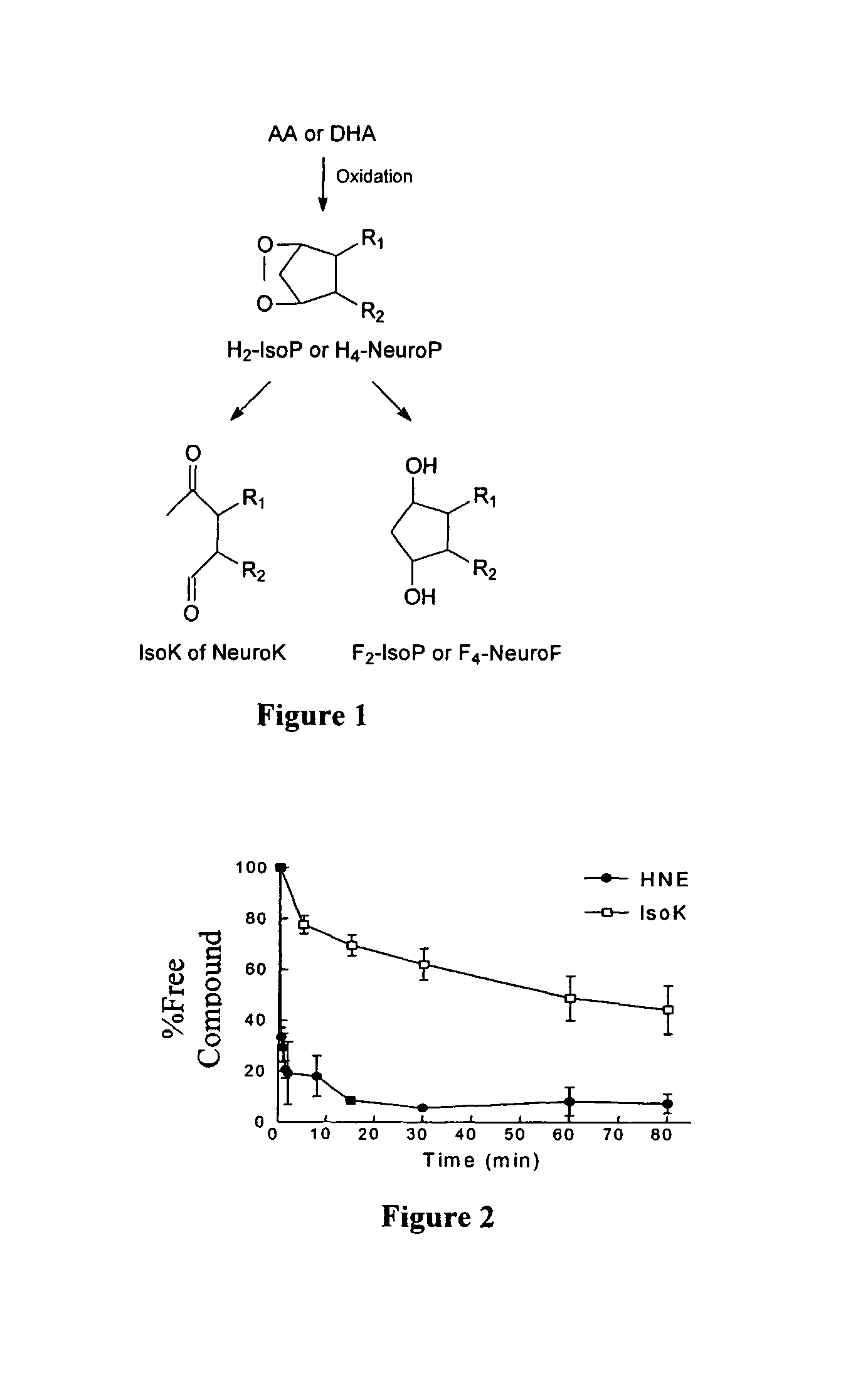
Figure 1 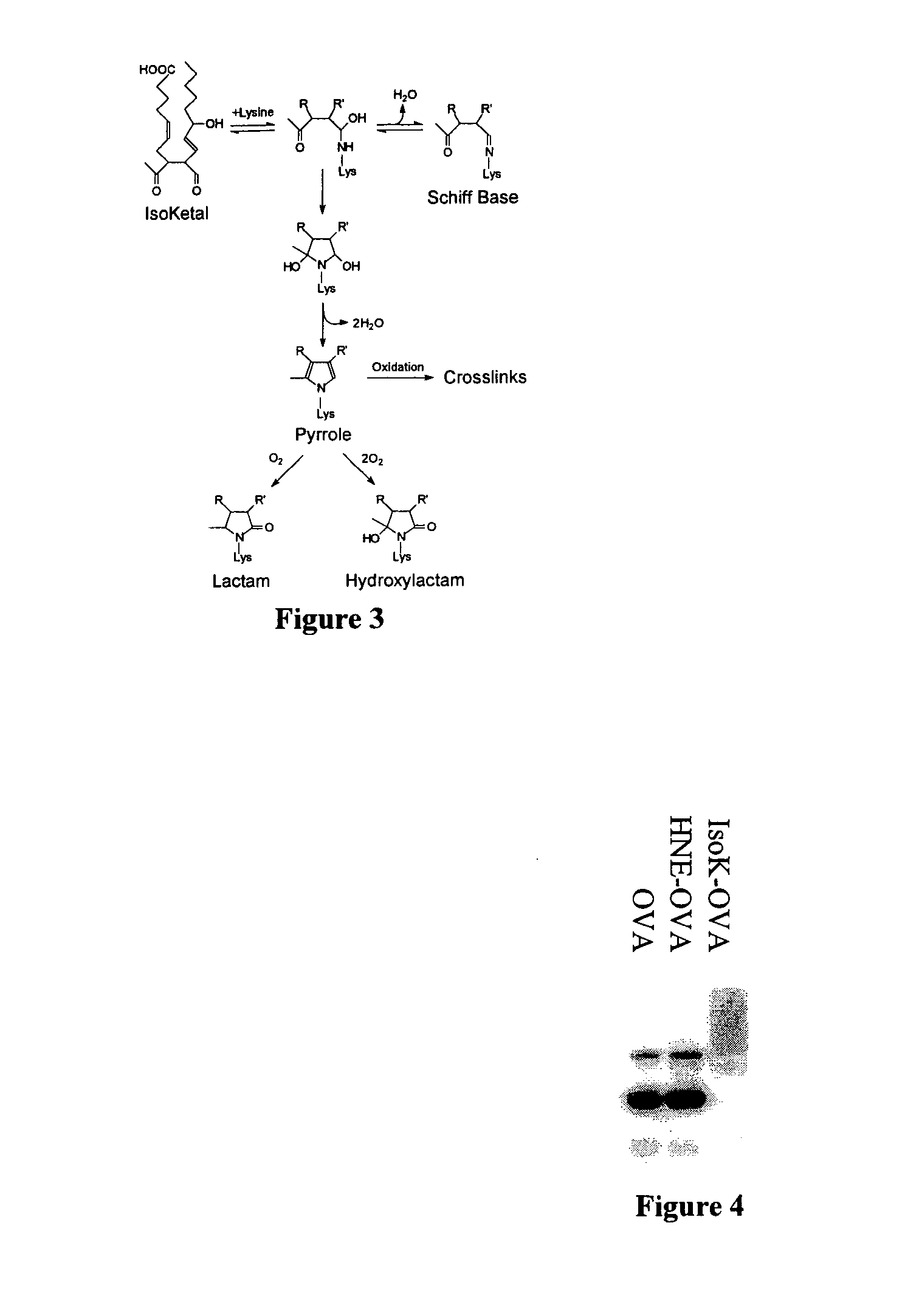
Figure 2 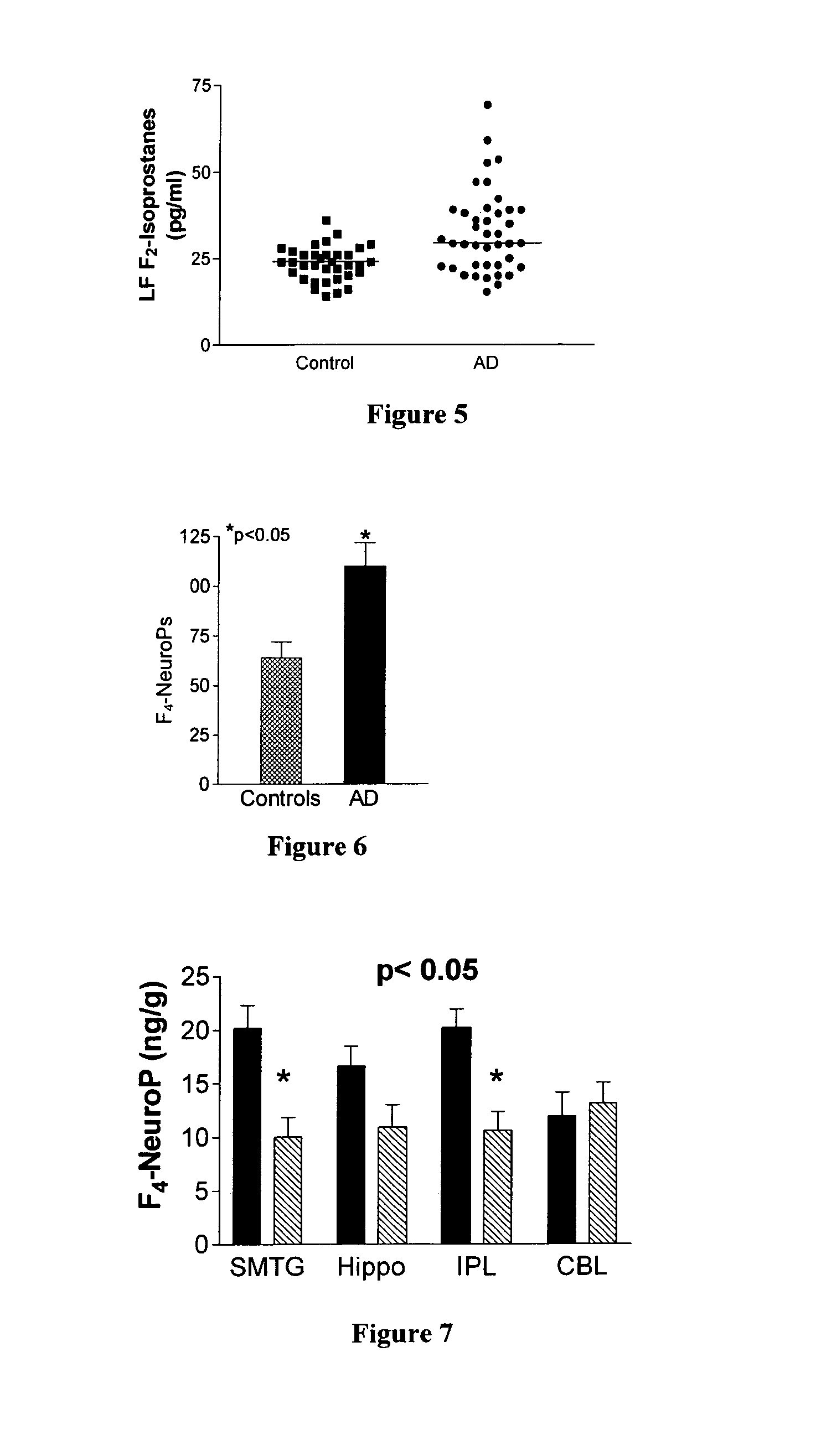
Figure 3
Abstract
Description
PRIORITY INFORMATION
[0001] This application claims priority to U.S. Patent Application No. 60 / 620,307, filed Oct. 20, 2004, the contents of which are incorporated herein by reference.GOVERNMENT SUPPORT
[0002] The present invention was made with support from National Institutes of Health Grant Numbers GM42056 and HL79365. The Government may have rights to this invention.FIELD OF THE INVENTION
[0003] The present invention relates generally to the field of treating neurodegenerative and cardiovascular diseases, and more specifically to the field of controlling isoketals and neuroketals.BACKGROUND AND SUMMARY OF THE INVENTION
[0004] The present inventors have discovered a substantial body of evidence for the occurrence of oxidant injury in neurodegenerative and cardiovascular diseases, in particular Alzheimer's disease (AD) and ventricular fibrillation (VF), by demonstrating overproduction of isoprostanes (IsoPs) and neuroprostanes (NeuroPs). IsoPs and NeuroPs are prostaglandin-like compounds ...
Examples
Embodiment Construction
[0071]As stated above, a first embodiment of the present invention is to provide a method for accessing the formation of IsoK and NeuroK adducts quantitatively and qualitatively in AD brain. This embodiment can comprise determining whether levels of IsoK and NeuroK protein adducts are increased in CSF from patients with AD compared to age-matched controls. This method may be used to obtain a single chain antibody against NeuroK lysyl adducts and / or determine the localization of IsoK and NeuroK adducts in AD brain and other age-related dementias.
[0072]The present inventors have discovered that levels of F2-IsoPs and F4-NeuroPs are significantly increased in AD brain, and that in studies both in vitro and in vivo, IsoK and NeuroK formation parallels the formation of F2-IsoPs and F4-NeuroPs, respectively. FIG. 5 shows CSF F2—ISOP concentrations in 41 living patients with probable AD and 35 aged matched controls. The average time since diagnosis for the AD patients was less than two yea...