

Anatomical marker for x-ray orientation
a technology of anatomical markers and x-rays, applied in optics, instruments, electrical equipment, etc., can solve the problems of difficult to ascertain the body position of a patient in a given fluoroscopy image, difficult to quickly, clearly, and confidently delineate left, right, and cranio-caudal positions, and markers in the related art consistently do not provide simultaneous orientation as to antero-posterior and cranio
Patent Information
- Authority / Receiving Office
- US · United States
- Patent Type
- Patents(United States)
- Current Assignee / Owner
- Publication Date
- 2011-07-12
- Estimated Expiration
- Not applicable · inactive patent
Smart Images
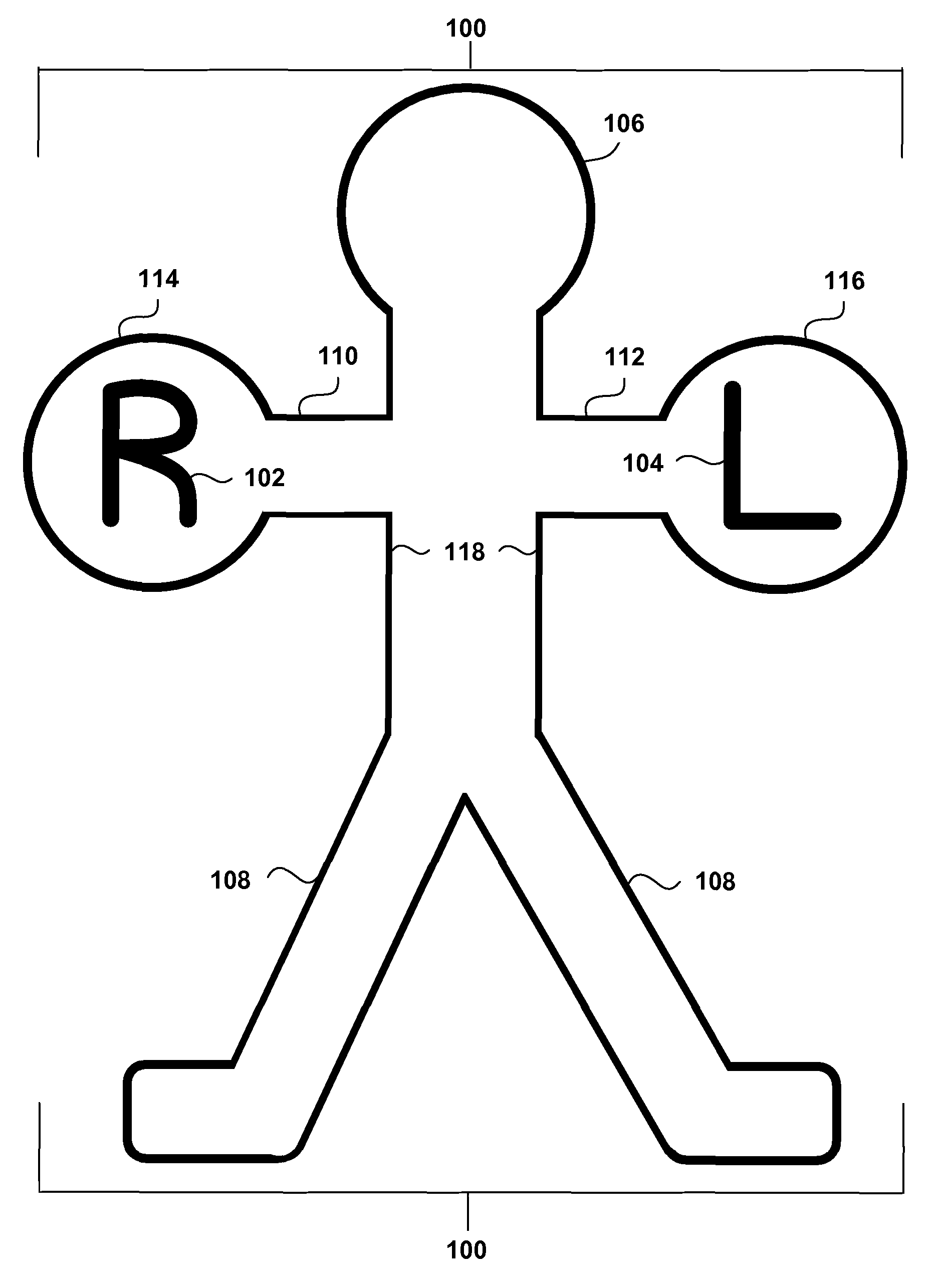
Figure 1 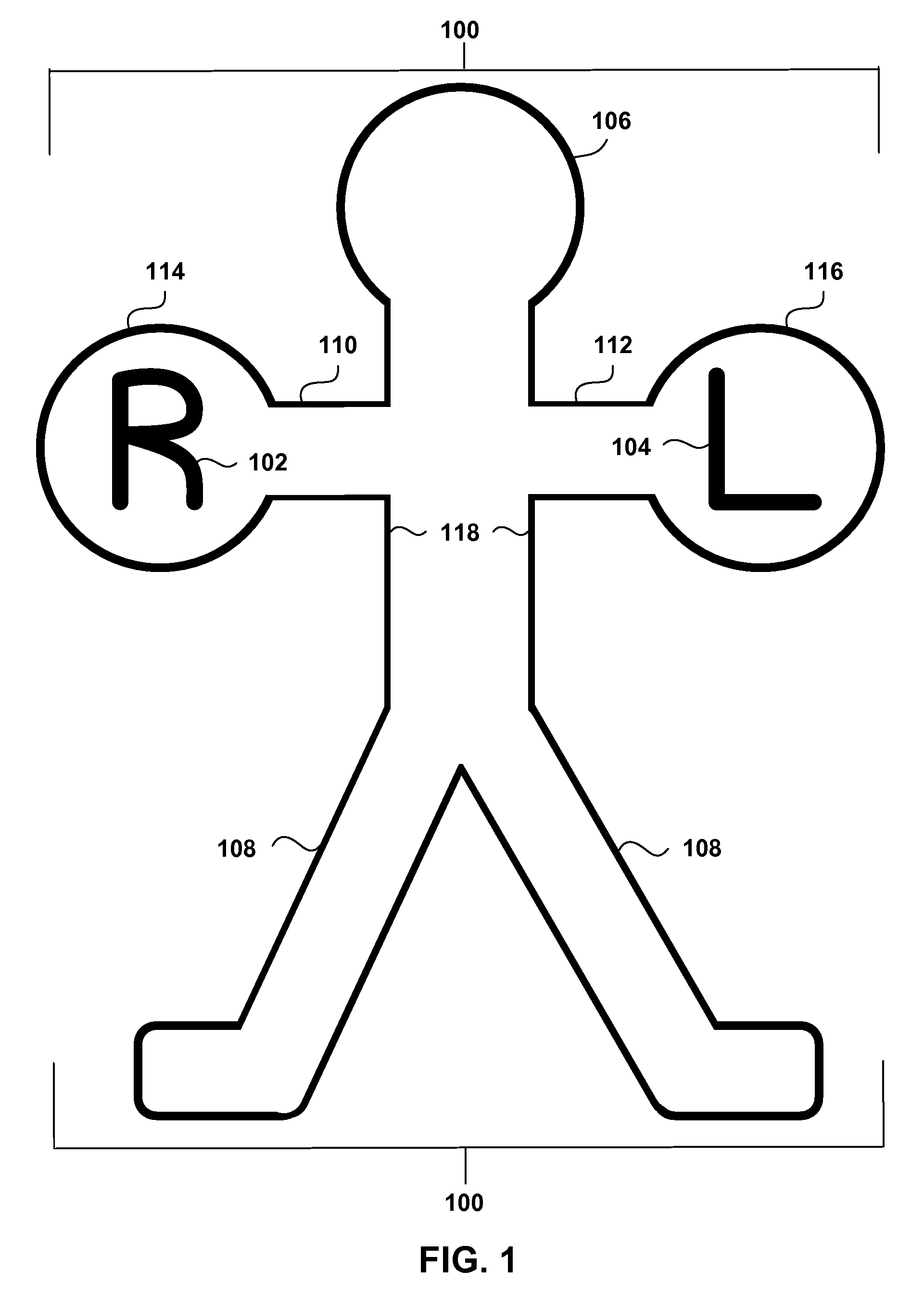
Figure 2 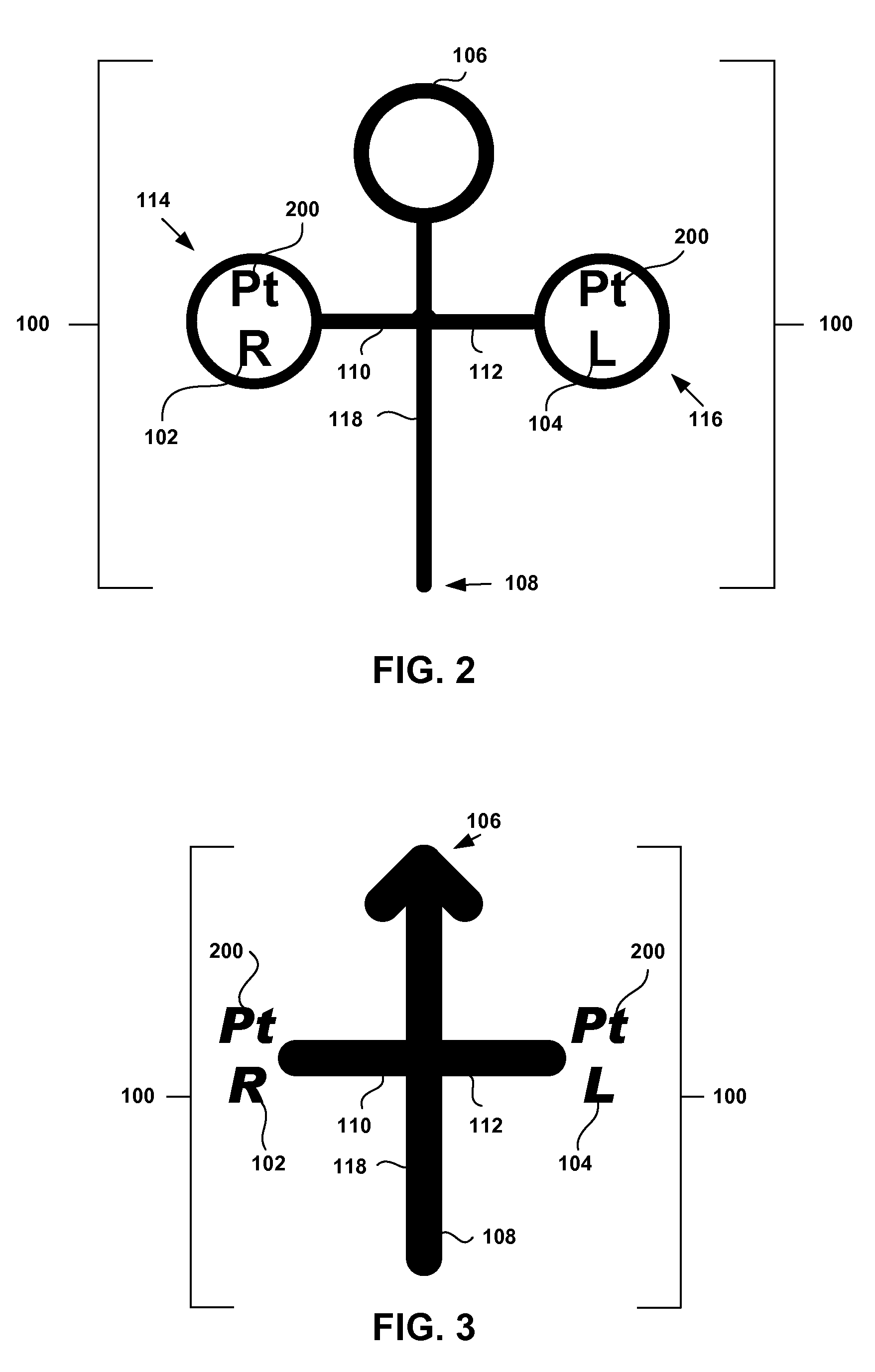
Figure 3
Abstract
Description
BACKGROUND OF THE INVENTION
[0001] 1. Field of the Invention
[0002] The present invention relates in general to markers used in radiology, and in particular to an anatomical marker used to orient to a patient's anatomical position in x-ray and fluoroscopy procedures.
[0003] 2. Description of the Related Art
[0004] Markers are often used to identify a body part shown in an x-ray image. X-rays which are absorbed by markers do not appear on x-ray sensitive media. In fluoroscopy, real-time x-ray images are displayed on a video monitor. Fluoroscopy is often combined with other medical procedures.
[0005] Paramount to fluoroscopy is initially orienting the x-ray image to the patient's body position. One problem is that images must be oriented in left-right, cranio-caudal, and antero-posterior position before a procedure can begin. Although bony landmarks are often used to orient the patient's body position with the image, fluoroscopy images typically do not include the entirety of a patient's body. ...
Examples
Embodiment Construction
[0036]In the following description of the preferred embodiments, reference is made to the accompanying drawings that form a part hereof, and in which is shown by way of illustration specific embodiments in which the invention may be practiced. It is to be understood that other embodiments may be utilized and structural changes may be made without departing from the scope of the present invention.
[0037]To aid in a basic understanding of a possible simplified embodiment of the present invention, and referring generally to the figures and numeric references throughout, marker 100 can be embedded in radiolucent material 400 with first side indicator 102, second side indicator 104, cranial indicator 106, caudal indicator 108, anterior indicator 600, and posterior indicator 700.
[0038]It will be understood that “x-ray” can refer to any radiological technique. It will be understood that “radiological image,”“fluoroscopy image,”“x-ray image,” and “image” can be used interchangeably and can e...