
Bioderived compatibilizer for biopolymers
a biopolymer and compatibilizer technology, applied in the field of bioderived plasticizers, can solve the problems of limiting the use of large manufacturers of base resins, affecting affecting the modulus of biopolymers, so as to improve the flexibility of biopolymers, not adversely affecting their modulus, and melt viscosity
Patent Information
- Authority / Receiving Office
- US · United States
- Patent Type
- Patents(United States)
- Current Assignee / Owner
- Publication Date
- 2015-09-22
Smart Images
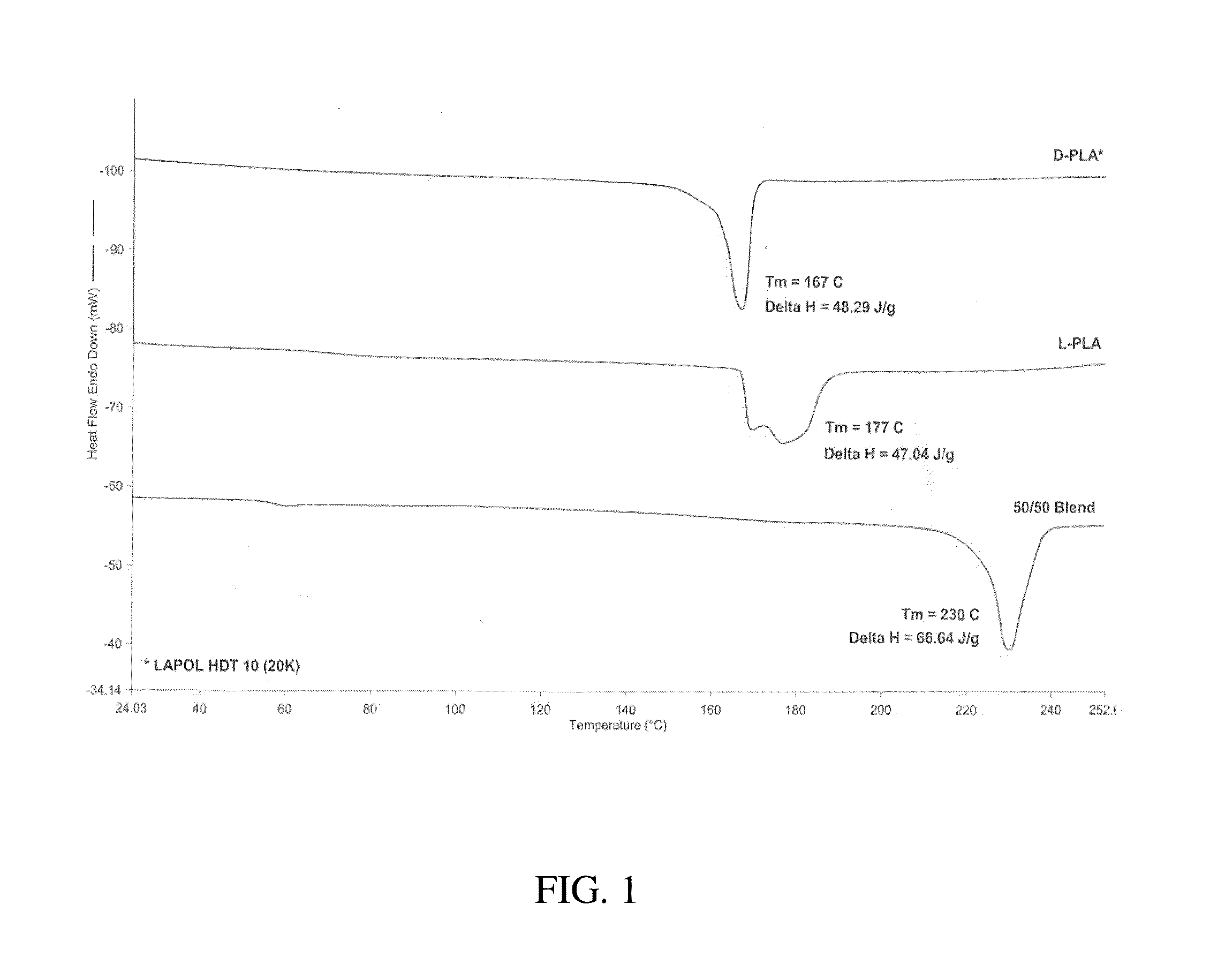
Figure 1 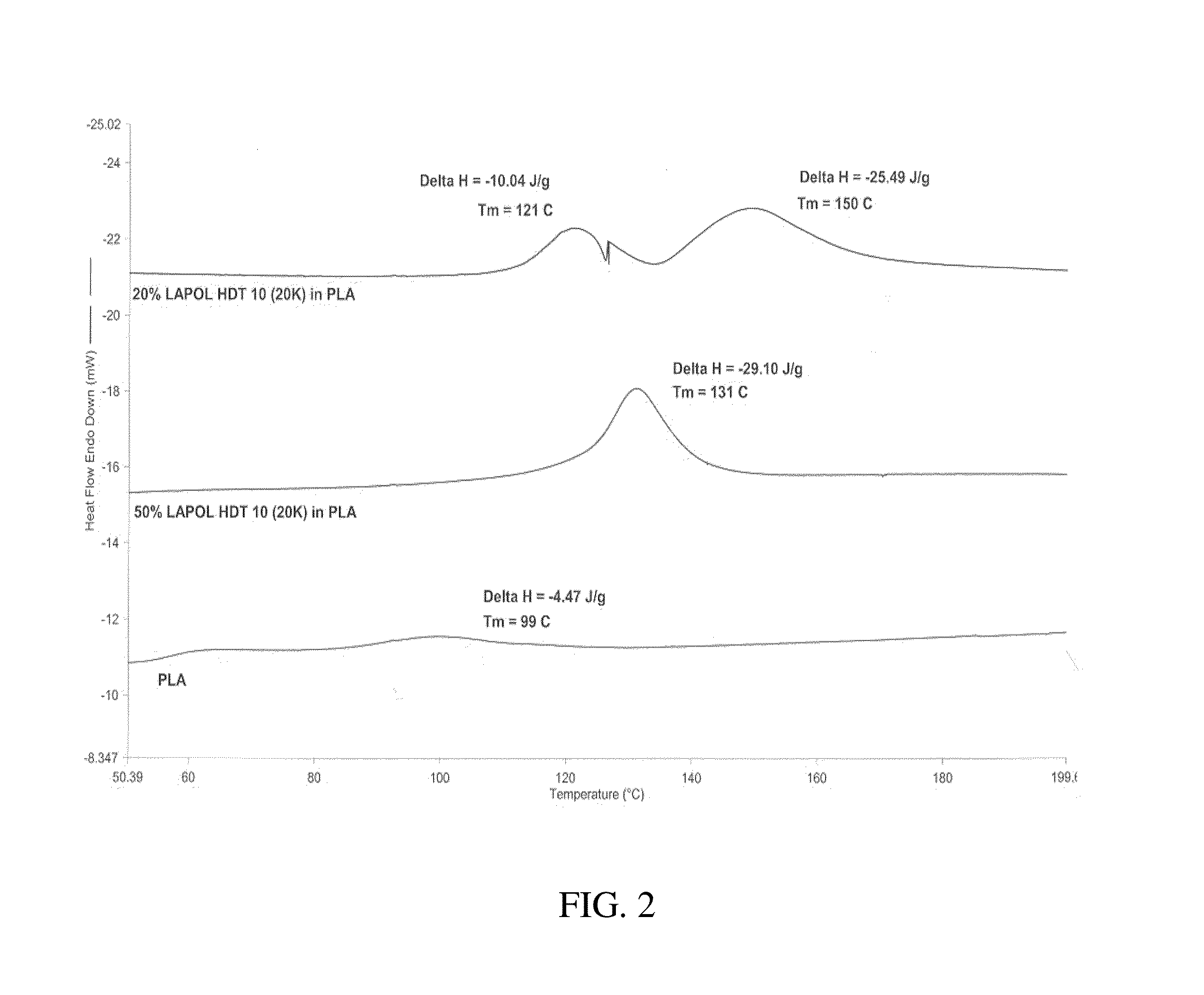
Figure 2 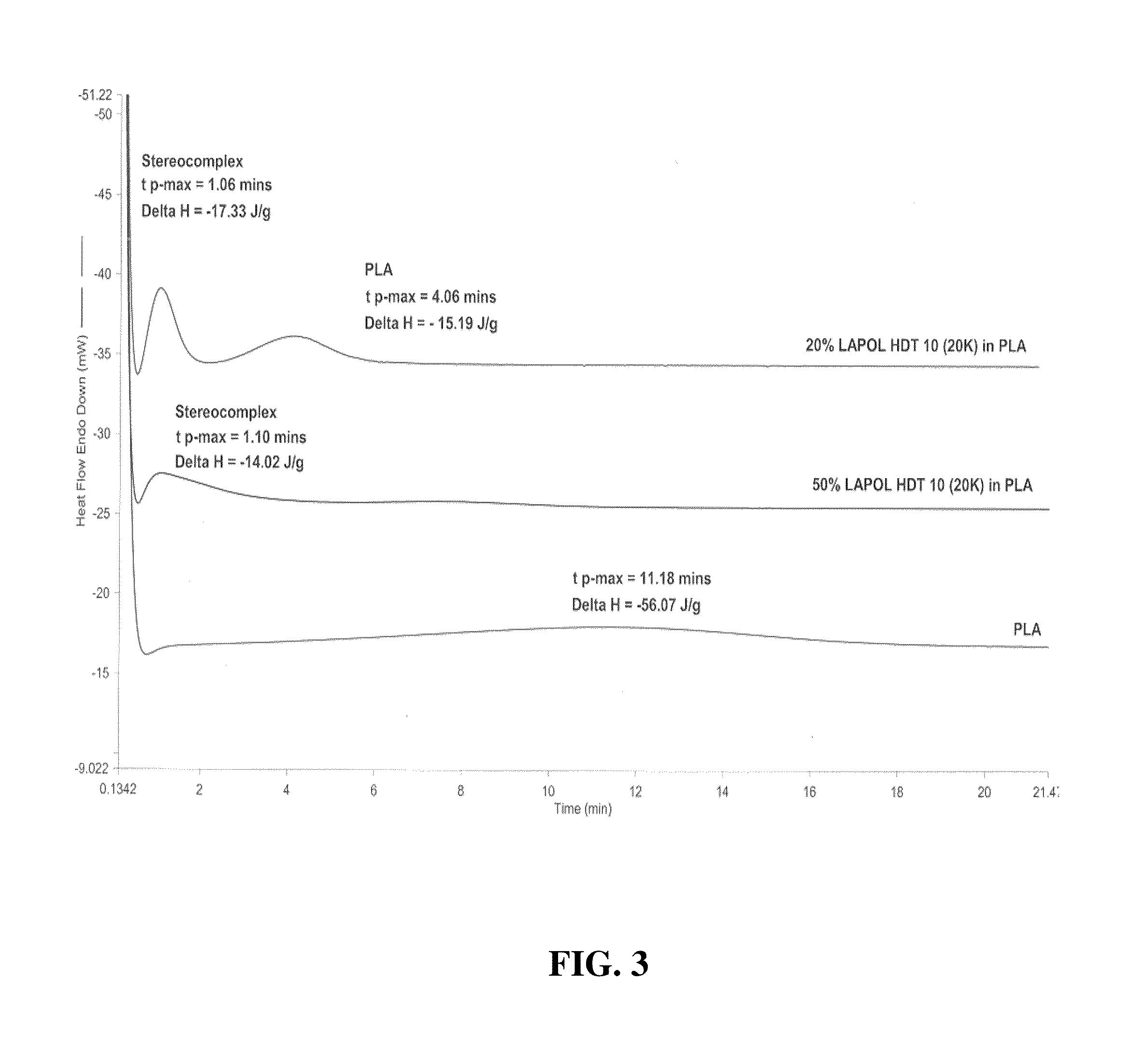
Figure 3
Abstract
Description
RELATED APPLICATIONS
[0001] This application is claims priority to U.S. Provisional Patent Application Ser. No. 61 / 597,715, filed Feb. 10, 2012 the contents of which are incorporated herein by reference in their entirety.BACKGROUND OF THE INVENTION
[0002] This invention relates to bioderived plasticizers for use with biopolymers. As used herein the term “bioderived” means made from plant-made molecules that are either directly expressed from plants, such as sugars, starches or fats, or fermented from plant-made molecules, such as sugars, starches, or fats. As used herein the term “biopolymers” means polymers made from plant derived molecules.
[0003] The disclosed bioderived plasticizers act as modifiers that change the flexural properties and thermomechanical properties, such as the heat deflection temperature, of biopolymers while maintaining miscibility between the plasticizer additive and the parent biopolymer. As used herein the term plasticizer means a molecule that improves physical...
Examples
Embodiment Construction
[0034]Reference throughout this specification to “one embodiment,”“an embodiment,” or similar language means that a particular feature, structure, or characteristic described in connection with the embodiment is included in at least one embodiment of the present invention. Thus, appearances of the phrases “in one embodiment,”“in an embodiment,” and similar language throughout this specification may, but do not necessarily, all refer to the same embodiment.
[0035]Furthermore, the described features, structures, or characteristics of the invention may be combined in any suitable manner in one or more embodiments. In the following description, numerous specific details are provided, such as examples of alcohols, aromatic and aliphatic anhydrides and equivalents thereof, lower alkyl organic acids, and so forth. One skilled in the relevant art will recognize, however, that the invention may be practiced without one or more of the specific details or method steps, or with other methods, co...