

Low-power interface and method of operation
a low-power interface and low-power technology, applied in the field of electronic devices, can solve the problems of slow mobile device performance, low power consumption, and difficulty in achieving both fast operation of the processor and low-power operation of the high-speed interface, and achieve the effects of fast processor operation, low latency, and fast performan
Patent Information
- Authority / Receiving Office
- US · United States
- Patent Type
- Patents(United States)
- Current Assignee / Owner
- Publication Date
- 2015-12-01
Smart Images
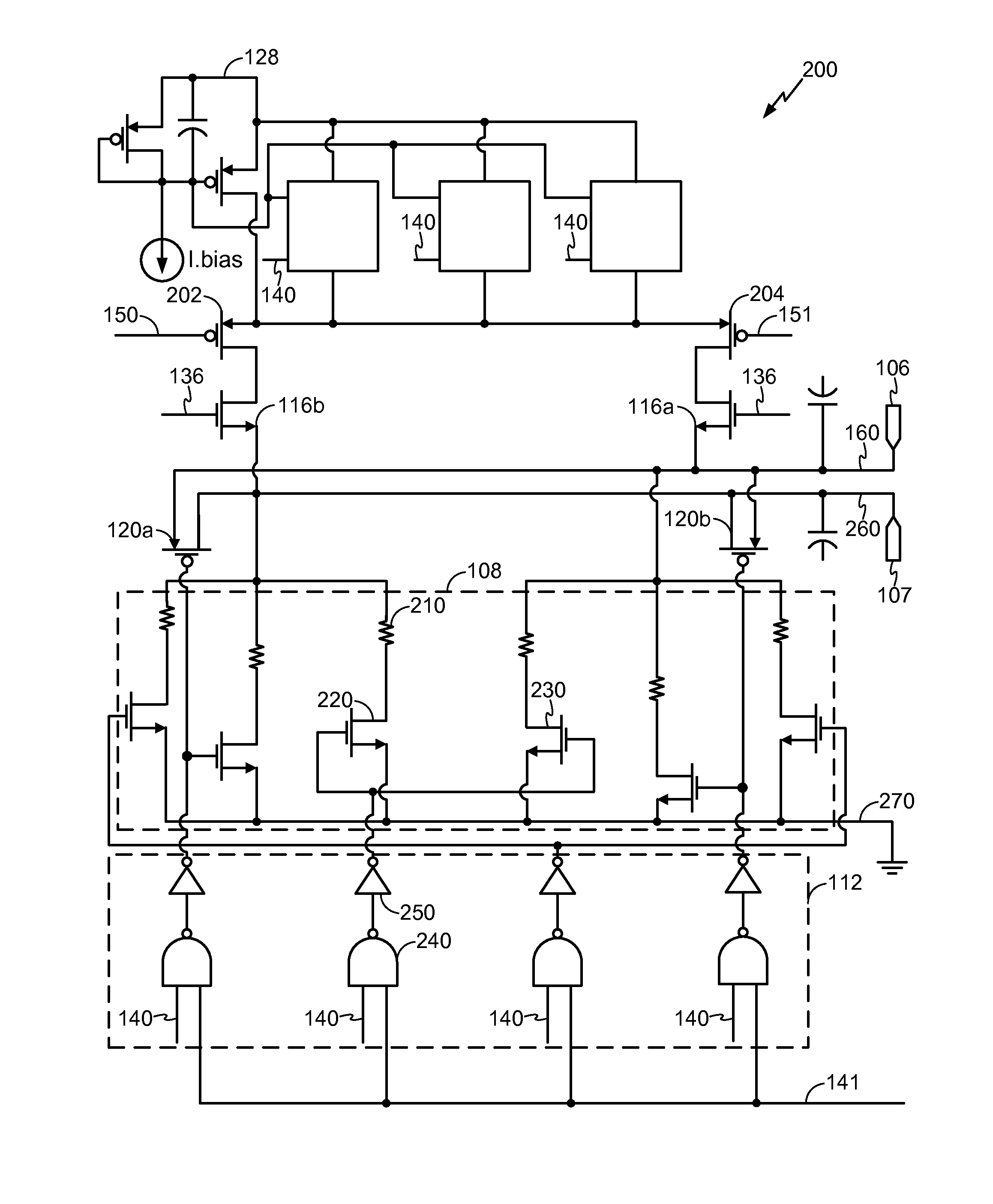
Figure 1 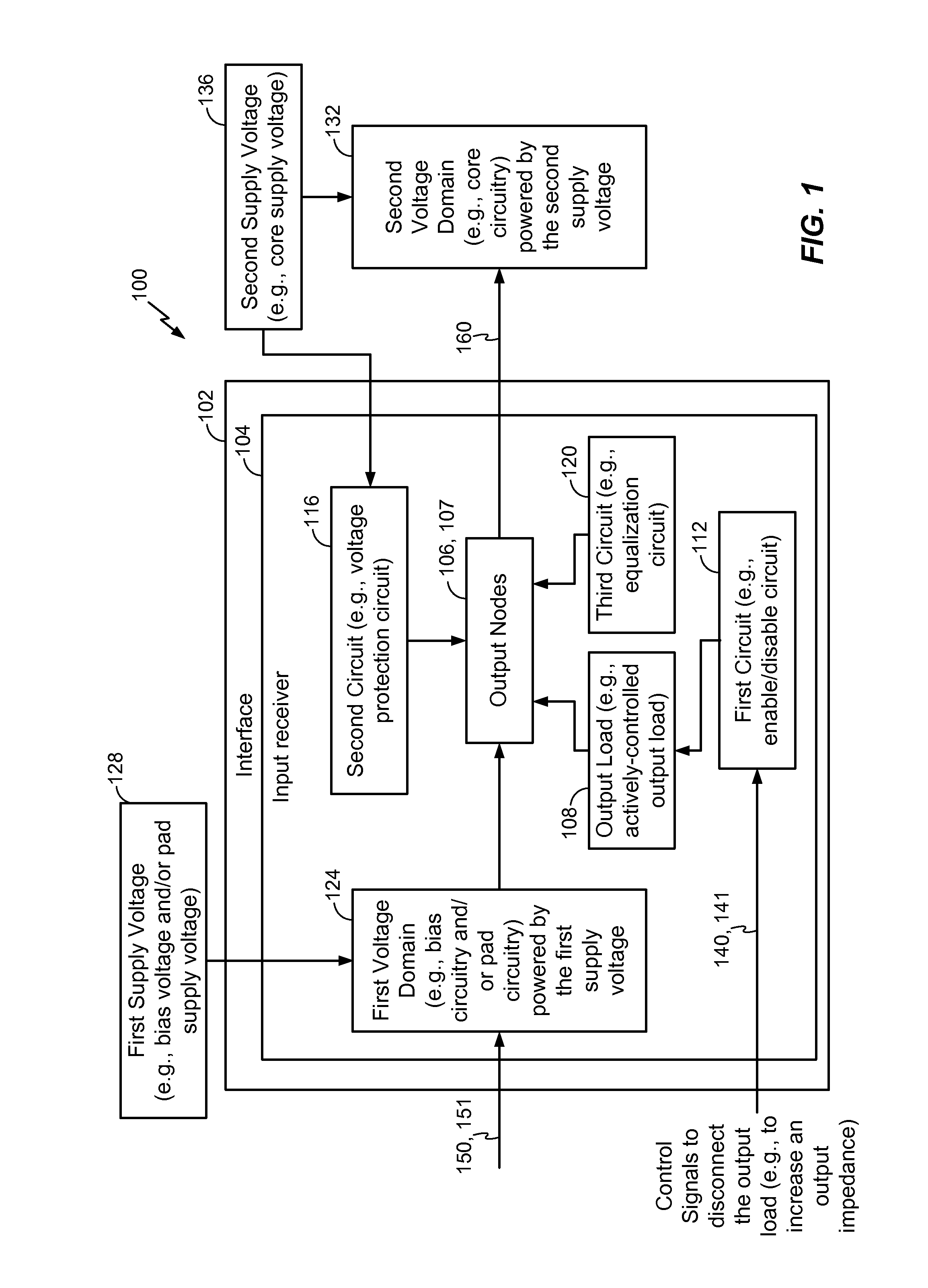
Figure 2 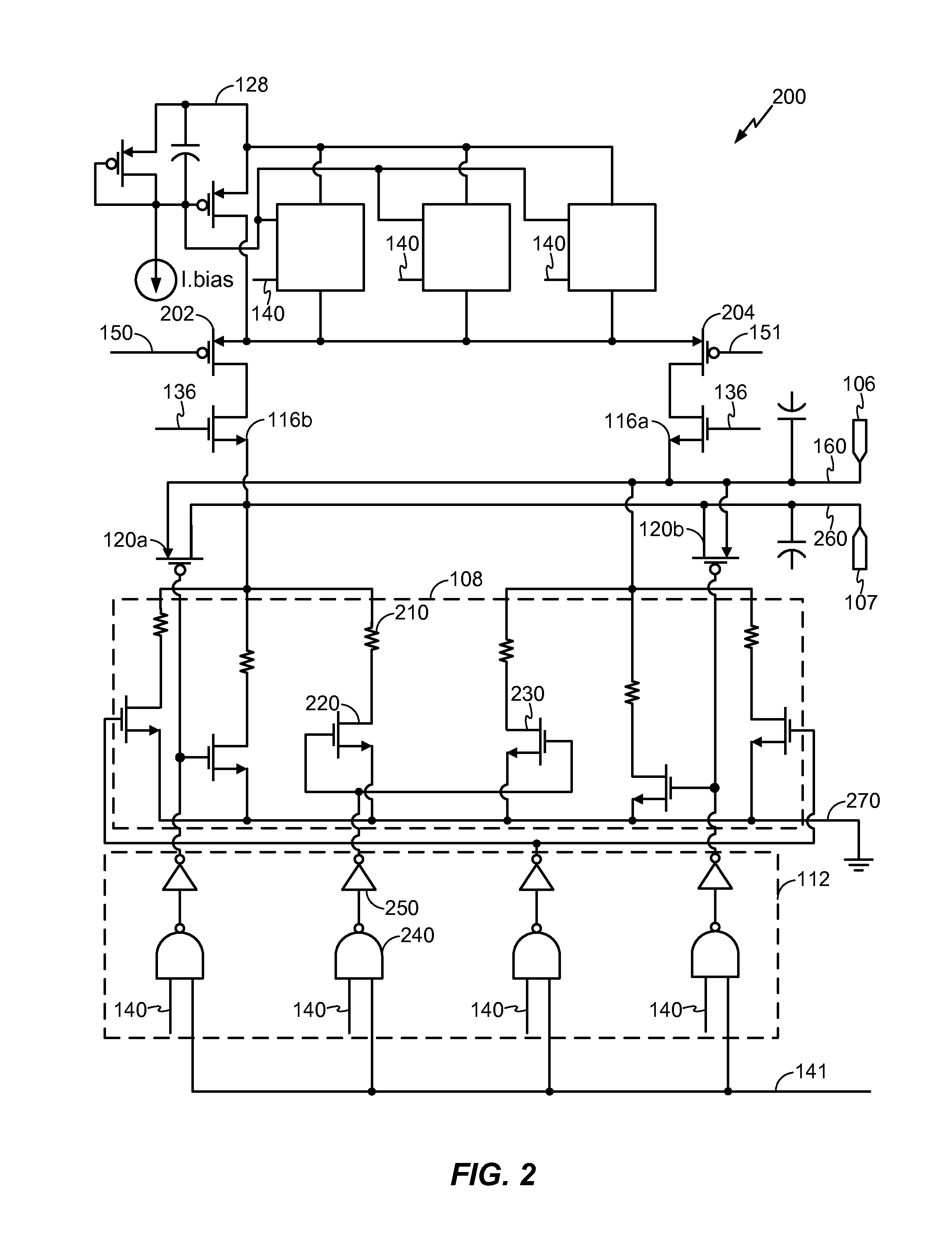
Figure 3
Abstract
Description
I. FIELD
[0001] The present disclosure is generally related to electronic devices and more particularly to electronic device interfaces.II. DESCRIPTION OF RELATED ART
[0002] Advances in technology have resulted in smaller and more powerful electronic devices. For example, there currently exist a variety of mobile devices, such as wireless telephones, personal digital assistants (PDAs), and paging devices. The mobile devices may be small, lightweight, and easily carried by users. Wireless telephones, such as cellular telephones and Internet Protocol (IP) telephones, can communicate voice and data packets over wireless networks. Further, many such wireless telephones include other types of devices that are incorporated therein. For example, a wireless telephone can also include a digital still camera, a digital video camera, a digital recorder, and an audio file player. Also, such wireless telephones can process executable instructions, including software applications, such as a web brows...
Examples
Embodiment Construction
[0017]Referring to FIG. 1, a particular illustrative embodiment of a device is depicted and generally designated 100. The device 100 includes an interface 102. The interface 102 includes an input receiver 104. The input receiver 104 includes an output load 108, a first output node 106, and a second output node 107. The first output node 106 is configured to generate a first output voltage 160. In a particular embodiment, the output nodes 106, 107 correspond to a differential pair of output nodes configured to generate differential output voltages.
[0018]The device 100 further includes a first circuit 112 (e.g., an enable / disable circuit configured to enable / disable the output load 108), a second circuit 116 (e.g., a voltage protection circuit to restrict the first output voltage 160 from reaching or exceeding a threshold), and a third circuit 120 (e.g., an equalization circuit configured to equalize at least the first output voltage 160 when the output load 108 is disconnected). The ...