
Self-conforming plates for capacitive machines such as electrostatic motors and generators
a capacitive machine and self-conform technology, applied in the field of capacitive machines, can solve the problems of limited plate spacing and parallel alignment, low power density, and presently rarely used capacitive machines
Patent Information
- Authority / Receiving Office
- US · United States
- Current Assignee / Owner
- Publication Date
- 2016-10-25
Smart Images
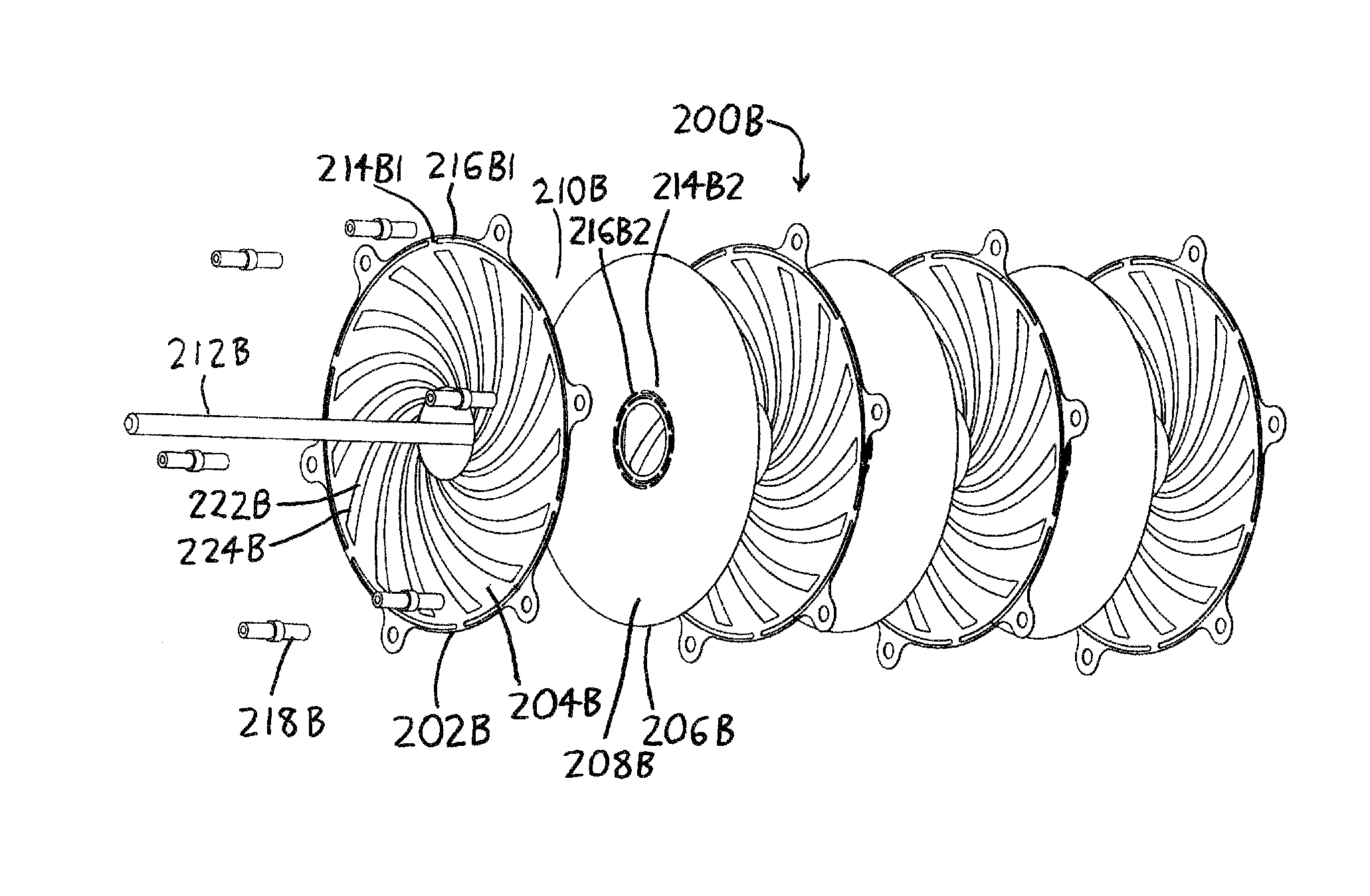
Figure 1 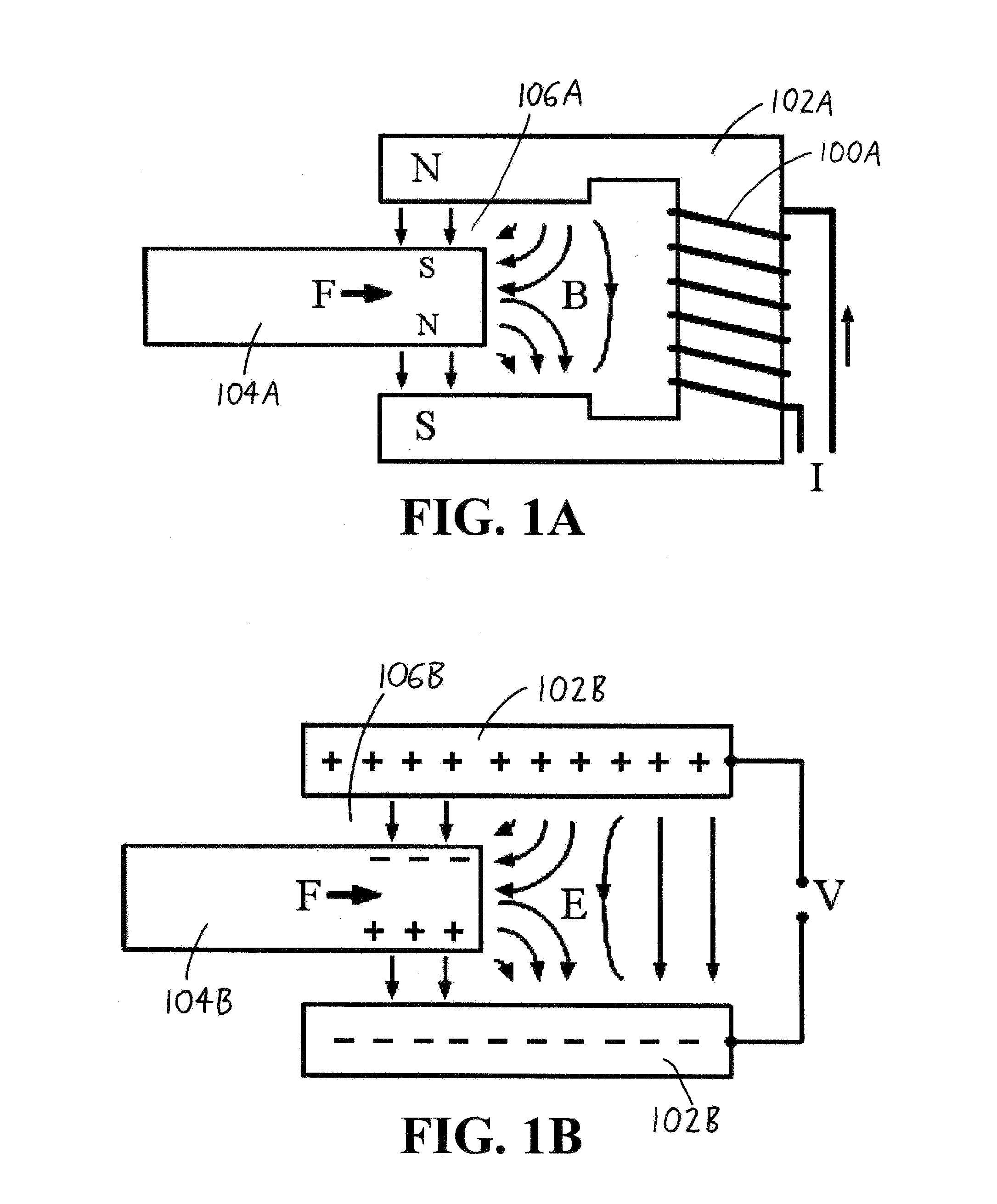
Figure 2 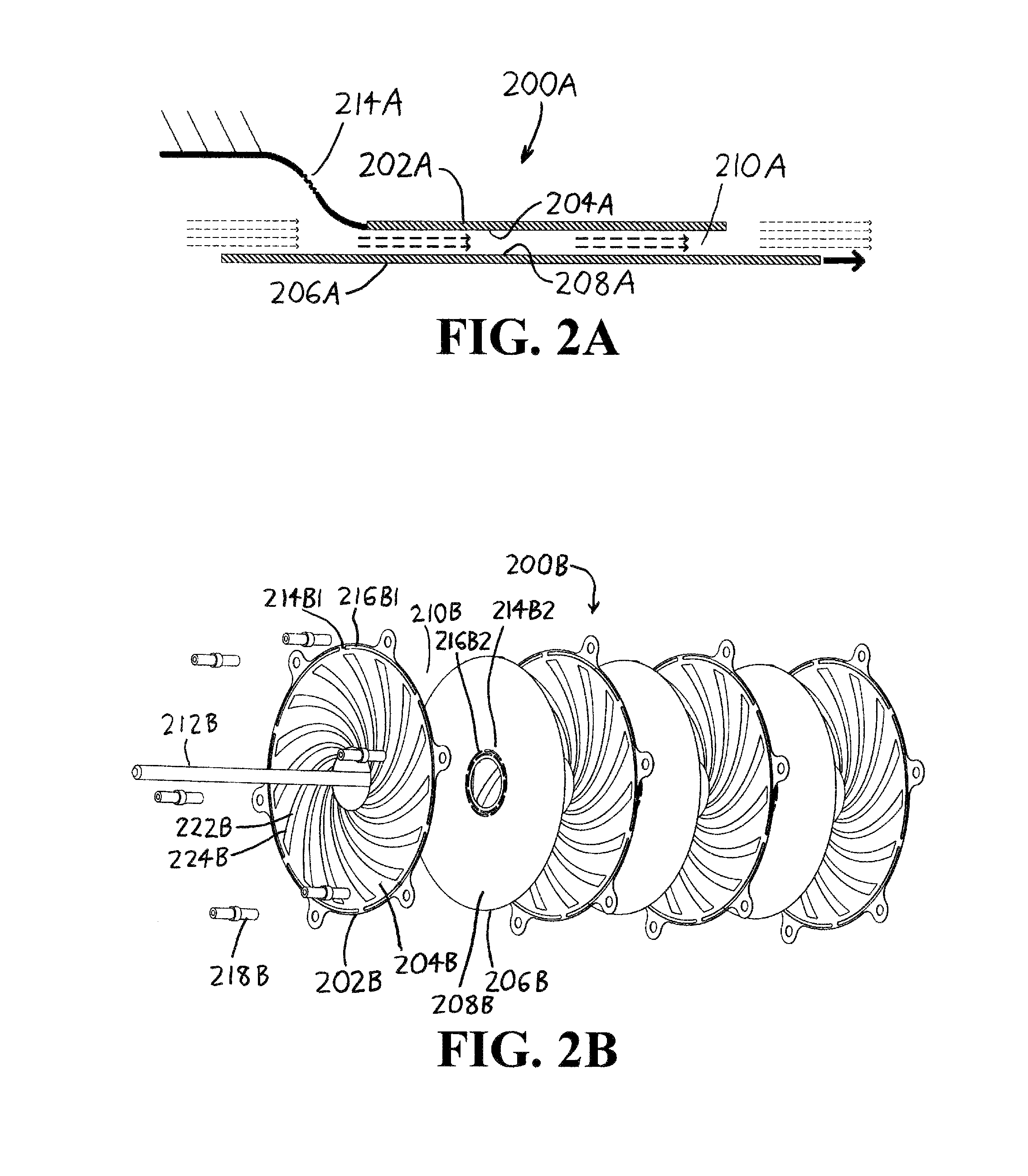
Figure 3
Abstract
Description
CROSS-REFERENCE TO RELATED APPLICATIONS
[0001] This application claims priority under 35 USC §119(e) to U.S. Provisional Patent Application 61 / 701,607 filed 15 Sep. 2012, the entirety of which is incorporated by reference herein.FIELD OF THE INVENTION
[0002] This document concerns an invention relating generally to capacitive machines, e.g., electrostatic motors, and more specifically to capacitive machines having parallel plates which self-conform during machine operation to maintain a parallel spaced relationship between plates.BACKGROUND OF THE INVENTION
[0003] Common electric motors and / or generators operate on electromagnetic principles, and use magnetic fields from permanent magnets and / or wound-wire electromagnets to generate current or mechanical motion. A simple example of this principle is shown in FIG. 1A, where a coil 100A carrying current I winds about a U-shaped “core”102A made of iron (or another ferromagnetic material, i.e., one which is magnetizable), and which has an iro...
Examples
Embodiment Construction
[0032]Expanding on the discussion begin in the “Summary of the Invention” above, preferred versions of the capacitive machines utilize two features. Initially, the machines exploit the fluid boundary layer effects that occur at the interface between a moving surface and a fluid: while in motion, the surface “drags” fluid along with it. If moving and stationary parallel plates are sufficiently close, the moving plate will effectively “pump” fluid between them, with the pressure of the fluid (which is dependent on the speed of plate motion) then helping to maintain separation between the plates. Discontinuities in the plates in the form of flexures and / or flow-modifying walls may then be provided to further assist in maintaining the walls in spaced parallel relationship (where it should be understood that the term “parallel” encompasses both literally parallel and at least substantially parallel alignments). Flexures can be situated on a capacitive machine's plates such that the plate...