
Auxiliary bearing for magnetically suspended rotor system
a technology of auxiliary bearings and rotors, which is applied in the direction of magnetic bearings, sliding contact bearings, mechanical equipment, etc., can solve the problems of insufficient load carrying capacity of sleeves, high cost of bearings, and inability to handle high sliding speeds, so as to reduce wear and damage of sleeves
Patent Information
- Authority / Receiving Office
- US · United States
- Patent Type
- Patents(United States)
- Current Assignee / Owner
- Publication Date
- 2017-07-04
Smart Images
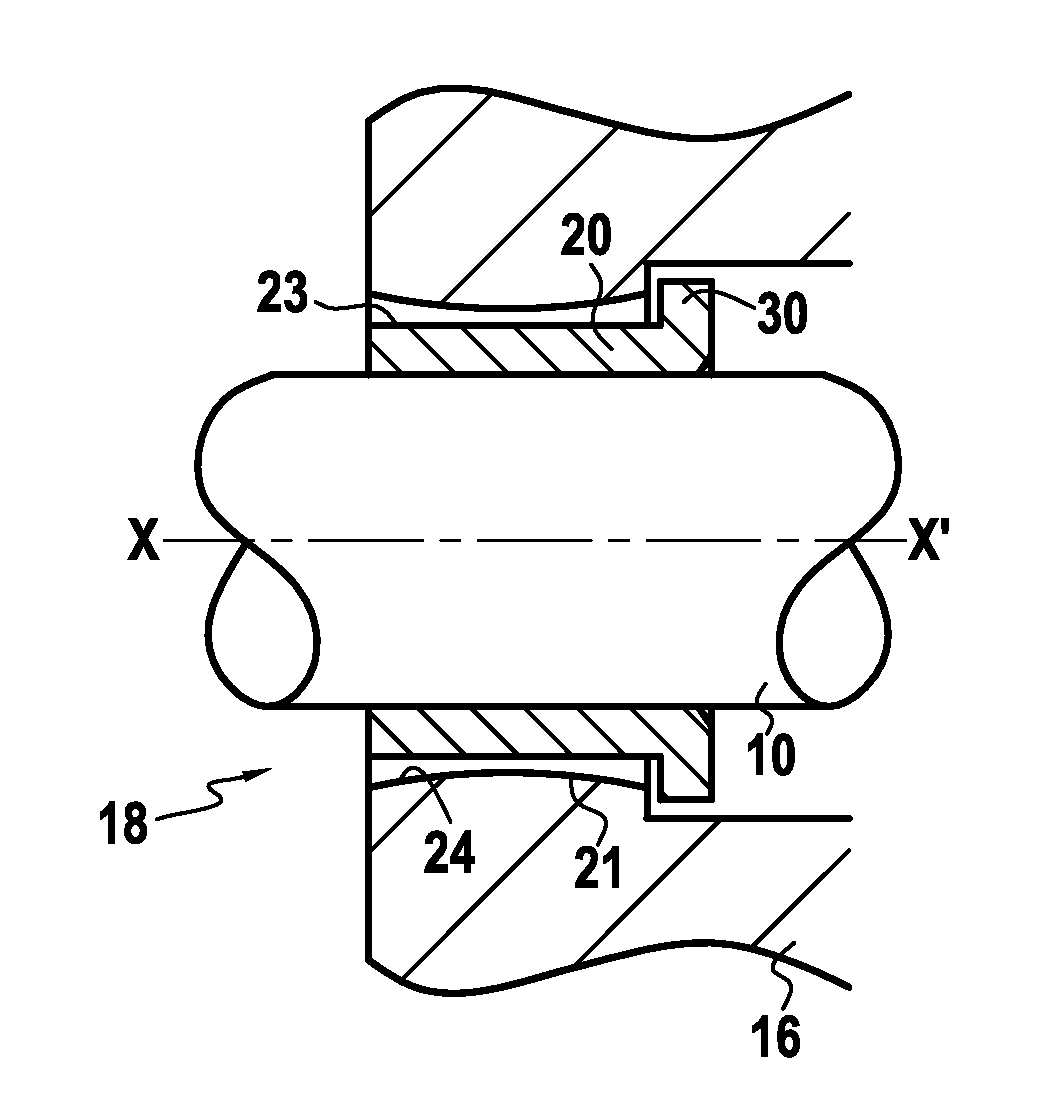
Figure 1 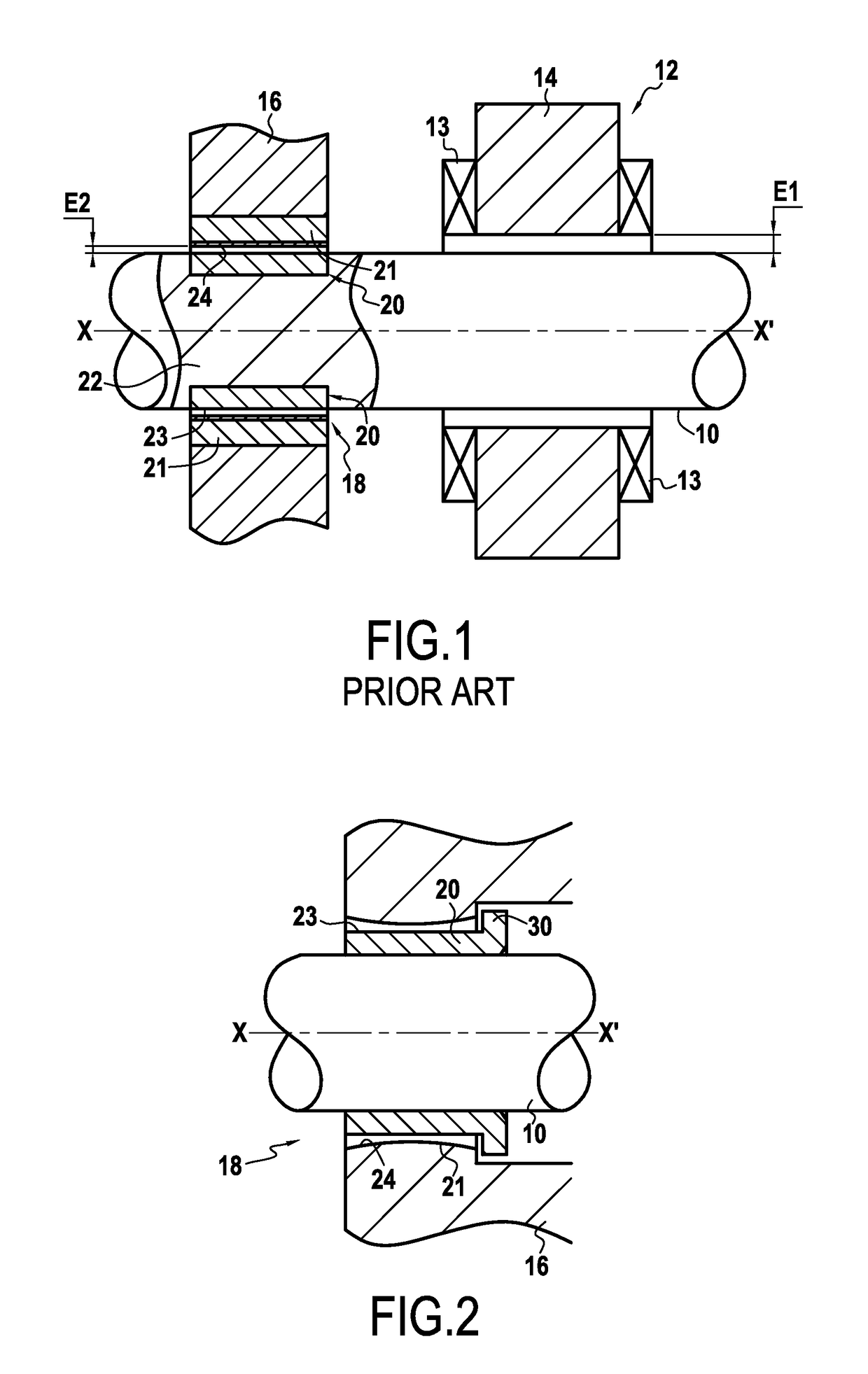
Figure 2 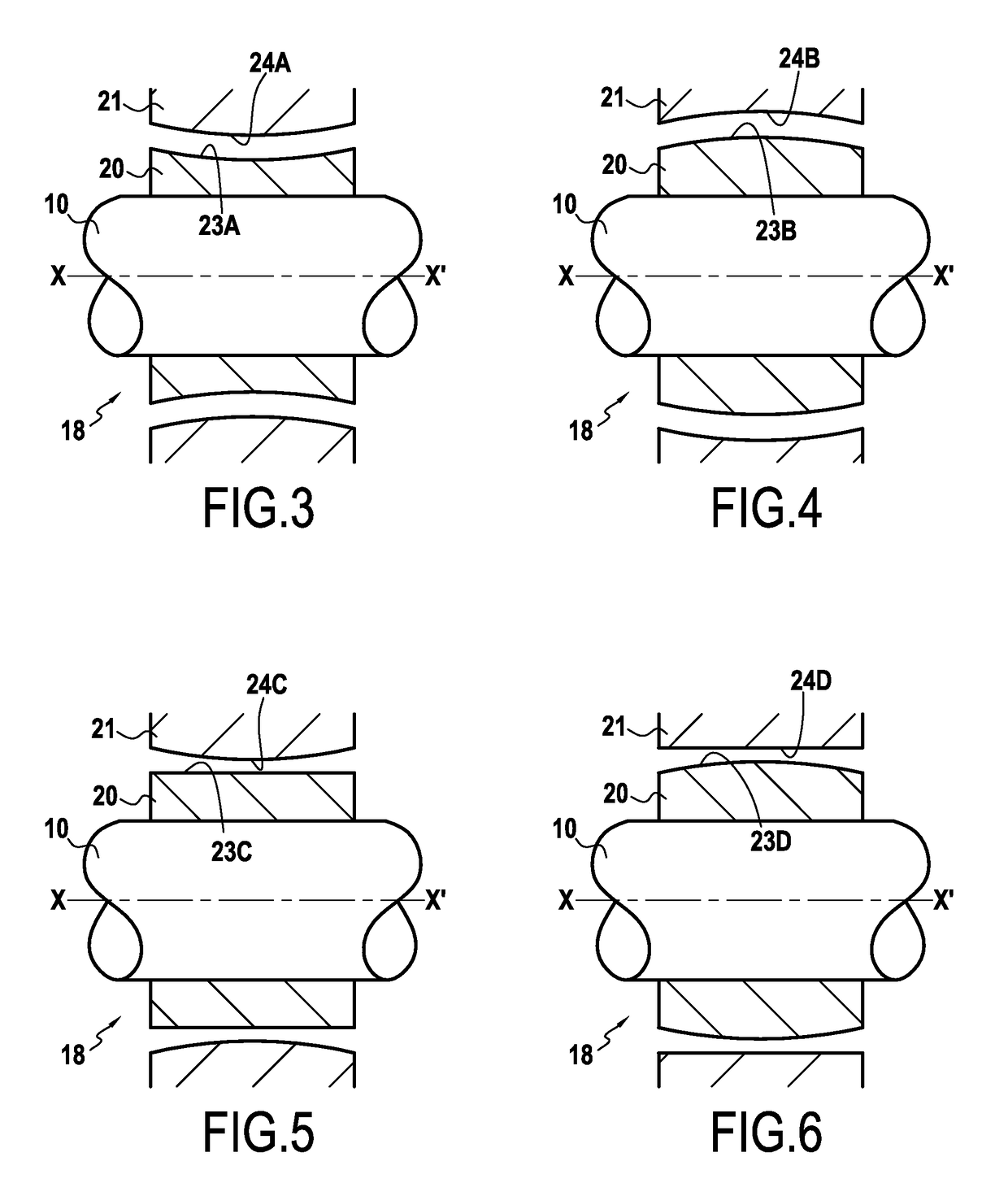
Figure 3
Abstract
Description
CROSS-REFERENCE TO RELATED APPLICATIONS
[0001] This application claims priority to European Patent Application EP13305701.8 filed May 29, 2013, which is herein fully incorporated by reference.FIELD OF THE INVENTION
[0002] The present invention relates to an auxiliary bearing for a magnetically suspended rotor system and to a magnetic suspension incorporating such auxiliary bearing.BACKGROUND OF THE INVENTION
[0003] Magnetic bearings operate without mechanical friction, but require continuous supply with electrical power. In case of a power failure, the shaft needs to be supported by a so-called auxiliary bearing, which is also called landing bearing, emergency bearing or back-up bearing.
[0004] Thus rotary machines equipped with active magnetic bearings include mechanical auxiliary bearings which act if one of the magnetic bearings is overloaded or if the electrical or electronic control circuit fails or else in the event of stoppage or of suspension overload.
[0005] An auxiliary device provi...
Examples
Embodiment Construction
[0060]The present invention will be described in connection with preferred embodiments which are given by way of examples.
[0061]As already mentioned, FIG. 1 shows a typical arrangement of an assembly comprising a radial magnetic bearing 12 defining an air gap E1 and of an auxiliary bearing 18 having a bushing 21 and a sleeve 20 defining a clearance E2 there between which is less than the mean air gap E1. During normal operation, the shaft 10 is supported by the magnetic bearing 12 without contact with the stator 13, 14 of the magnetic bearing 12 and with the bushing 21 of the auxiliary bearing 18, whereas in case of a failure in the operation of the magnetic bearing 12, such as a power failure, the sleeve 20 of the shaft 10 lands on the bushing 21 of the auxiliary bearing 18. When the sleeve 20 and bushing 21 both have the same conventional cylindrical shape with a symmetry around the longitudinal axis of the shaft 10 whilst having the same straight profile in a longitudinal cross-s...