
Cosmetic composition comprising at least one alkanolamine, at least one amino acid, and at least one alkali metal or alkaline earth metal or ammonium hydroxide
A cosmetic composition combining alkanolamines, amino acids, and alkali metal hydroxides addresses the challenge of achieving long-lasting hair smoothing and straightening while maintaining hair health, delivering effective curl relaxation and frizz reduction.
Patent Information
- Application Number
- PCT/EP2024/070347
- Authority / Receiving Office
- WO · WO
- Patent Type
- Applications
- Current Assignee / Owner
- Priority Date
- 2023-07-20
- Filing Date
- 2024-07-18
- Publication Date
- 2025-01-23
AI Technical Summary
Existing hair smoothing and straightening treatments often fail to provide long-lasting results while maintaining hair health, especially in terms of shape retention, frizz reduction, and color preservation.
A cosmetic composition comprising at least one alkanolamine, one or more amino acids or their derivatives, and one or more alkali metal, alkaline earth metal, or ammonium hydroxides, with specific ratios of these components to achieve effective hair smoothing and straightening.
The composition achieves long-lasting relaxation of curls, maintaining smoothness and reducing frizz for several weeks after treatment, while being gentle on all hair types, including sensitive hair, and preserving natural shine and manageability.
Smart Images
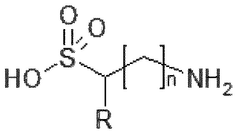
Figure IMGF000006_0001 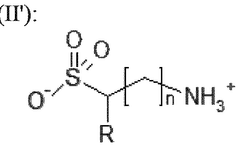
Figure IMGF000006_0002 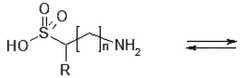
Figure IMGF000006_0003
Abstract
Description
[0001]DESCRIPTION TITLE: Cosmetic composition comprising at least one alkanolamine, at least one amino acid, and at least one alkali metal or alkaline earth metal or ammonium hydroxide The present invention relates to a cosmetic composition comprising at least one alkanolamine, at least one compound chosen from amino acids and their derivatives, and at least one alkali metal, alkaline earth metal or ammonium hydroxide. The invention also relates to a method for smoothing / straightening keratin fibres, in particular the hair, employing the composition of the invention. The invention further relates to the use of the composition for smoothing / straightening keratin fibres, in particular the hair. In the hair field, consumers wish to have available compositions which make it possible to introduce a temporary change to their head of hair, while targeting good shape retention of the effect produced. In general, it is desired for the change to withstand shampooing for at least fifteen days, indeed even more, depending on the nature of said change. Heat treatments are generally used to modify the shape of the head of hair in a long-lasting manner. These treatments make possible a visual modification of the appearance of the hairstyle, combining a decrease in the degree of frizziness, a reduction in overall volume of the head of hair, a decrease in little curls, a gain in manageability, a smoother visual appearance, a substantial gain in sheen, and a resistance to humidity and to heat for maintenance of the hairstyle throughout the day. Moreover, this type of treatment has the advantage of facilitating the daily maintenance of the head of hair, with the use of fewer care products, in particular of rinse-out care products, such as conditioners or masks, or of leave-in care products, such as sera, care creams or balms, or taming mousses. Drying of the hair is facilitated, with a markedly shortened blow-drying time and a decrease in the daily use of flat tongs, in terms both of time and of intensity. This thus makes it possible to limit the risks of damaging the hair through combined factors of mechanical and thermal stress. Several techniques are associated with these heat treatments. A first technique is based on the use of compositions based on thiol-comprising reducing agents. These techniques require strict adherence to the application conditions recommended by the suppliers, in particular in terms of amounts and of leave-in time. In addition, they may be contra-indicated on hair which is too sensitized and may not be compatible with the same-day application of other treatments, such as dyeing or bleaching operations. Moreover, they have an unpleasant smell. Another technique is based on the use of compositions based on acids, and very particularly on the use of glyoxylic acid. Patent Application WO 2011 / 104282 has thus proposed a novel method for semi-permanently smoothing the hair, which consists in applying an α-keto acid solution to the hair for 15 to 120 minutes, in then drying and finally in smoothing the head of hair with an iron at a temperature of approximately 200°C. The α-keto acid employed is preferably glyoxylic acid. However, it has been noted that glyoxylic acid may not be well tolerated, in particular when the scalp is sensitive and / or irritated. Its volatility, accentuated by the use of heat from the iron, can also present a problem. Furthermore, the compositions of the prior art may adversely affect the hair and / or adversely affect its colour. Treatments using a composition comprising a base combined with a heat treatment for smoothing the hair have also been proposed. Such treatments make it possible to obtain good relaxation of curls but can lead to adverse changes in the hair fibre. The document EP 1837010 describes in particular a smoothing / straightening method using a composition comprising sodium hydroxide and a heat treatment. The document WO 2007 / 144707 describes a smoothing / straightening method using a composition comprising a non-hydroxylated base, such as monoethanolamine or ethylenediamine, combined with a heat treatment. The document WO 2009 / 117344 also describes a smoothing / straightening method using a composition comprising a non-hydroxylated base and a protein-denaturing agent, combined with a heat treatment. In order to limit adverse changes to the hair fibres, it has also been proposed to use compositions comprising weak acids at alkaline pH, combined with a heat treatment. The document WO 2010 / 049434 describes, for example, a smoothing / straightening method in which a composition comprising a dicarboxylic acid, such as maleic acid, and a heat treatment are applied. Such treatments are not always satisfactory in terms of results and / or of persistence. There still exists a need to perfect compositions, in particular for smoothing / straightening keratin fibres, which make it possible to smooth / straighten and / or to reduce the frizziness of the hair in an effective and long-lasting manner while limiting the damage to the hair. Thus, the present invention relates to a cosmetic composition comprising: i) one or more alkanolamines, ii) one or more compounds chosen from amino acids and their derivatives chosen from aminosulfonic acids and their derivatives, and iii) one or more alkali metal, alkaline earth metal or ammonium hydroxides, in which the ratio by weight of the total content of alkanolamine(s) to the total content of compounds chosen from amino acids and their derivatives is greater than 1; in which the ratio by weight of the total content of alkanolamine(s) to the total content of alkali metal, alkaline earth metal or ammonium hydroxides is between 2 and 10. The composition of the invention makes it possible to achieve a relaxation of curls, i.e. a smoothing of the keratin fibres, in an effective and long-lasting manner, the effect withstanding shampooing operations and persisting for up to several weeks after treatment. The composition of the invention can additionally be applied to all types of hair, even very sensitized hair, while preserving, indeed even while improving, the cosmetic qualities of the fibre, such as sheen, smooth feel and ease of styling (reduction in volume and little curls), and also its natural appearance with loose and light hairs, and also a natural feel. The composition according to the invention makes it possible in particular to improve the cosmetic feel of the hair, in particular by making it smoother to the touch. In addition, the composition of the invention does not emit any bad smell during use. The invention also relates to a method for smoothing / straightening keratin fibres, in particular the hair, employing the composition of the invention. The invention further relates to the use of the composition for smoothing / straightening keratin fibres, in particular the hair. In the context of the present invention, the term "smoothing / straightening" is understood to mean a method which makes it possible to reduce the level of curling of the hair; it also generally makes it possible to reduce the volume of the hair. The reduction in the level of curling can extend as far as the complete smoothing of the hair. Other characteristics and advantages of the invention will become more clearly apparent on reading the description and the examples which follow. In that which follows, the expression "at least one" is equivalent to the expression "one or more". Alkanolamines The composition according to the invention comprises at least one alkanolamine. Alkanolamine is understood to mean an organic amine comprising a primary, secondary or tertiary amine function and one or more linear or branched C1-C8alkyl groups carrying one or more hydroxyl radicals. Alkanolamines chosen from mono-, di- or trialkanolamines, comprising from 1 to 3 identical or different C1-C4hydroxyalkyl radicals, are suitable in particular for implementing the invention. In particular, the alkanolamine(s) are chosen from monoethanolamine (MEA), diethanolamine, triethanolamine, monoisopropanolamine, diisopropanolamine, N,N-dimethylethanolamine, 2-amino-2-methyl-1-propanol, triisopropanolamine, 2-amino-2-methyl-1,3-propanediol, 3-amino-1,2-propanediol, 3- dimethylamino-1,2-propanediol, tris(hydroxymethyl)aminomethane and their mixtures. Preferably, the alkanolamine is monoethanolamine. Preferably, the alkanolamine(s) are present in a total content ranging from 0.5% to 15% by weight, preferentially from 1% to 10% by weight, more preferentially from 2% to 8% by weight, better still from 3% to 7% by weight, with respect to the total weight of the composition. Preferably, the alkanolamine(s) chosen from monoethanolamine (MEA), diethanolamine, triethanolamine, monoisopropanolamine, diisopropanolamine, N,N- dimethylethanolamine, 2-amino-2-methyl-1-propanol, triisopropanolamine, 2-amino- 2-methyl-1,3-propanediol, 3-amino-1,2-propanediol, 3-dimethylamino-1,2- propanediol, tris(hydroxymethyl)aminomethane and their mixtures are present in a total content ranging from 0.5% to 15% by weight, preferentially from 1% to 10% by weight, more preferentially from 2% to 8% by weight, better still from 3% to 7% by weight, with respect to the total weight of the composition. Preferably, monoethanolamine is present in a total content ranging from 0.5% to 15% by weight, preferentially from 1% to 10% by weight, more preferentially from 2% to 8% by weight, better still from 3% to 7% by weight, with respect to the total weight of the composition. Amino acids and their derivatives The composition according to the invention additionally comprises at least one compound chosen from amino acids and their derivatives. The amino acid derivatives can be chosen from their betaine forms, their optical isomers, their solvates, such as the hydrates, and their organic or inorganic acid or base salts, and their mixtures. The amino acids and their derivatives are chosen from aminosulfonic acids and their derivatives. The amino acid can be chosen from the amino acids of following formulae (II), and also their betaine forms, their optical isomers, their solvates, such as the hydrates, and their organic or inorganic acid or base salts: in which formulae (II): - R represents a hydrogen atom or a linear or branched, preferably linear, C1- C5alkyl group, said alkyl group being optionally substituted by at least one group chosen from hydroxyl, amino, -C(O)-OH, -S(O)2-OH, -C(O)-O-M+or -S(O)2-O-M+, with M+representing a cationic counterion, such as an alkali metal, alkaline earth metal or ammonium counterion, - n has the value 0 or 1. In the composition containing them, the amino acid(s) can be in their non- ionized form (II) or in their ionized or betaine form in which formulae R represents a hydrogen atom or a linear or branched C1- C5alkyl group, optionally substituted by a hydroxyl, amino group or carboxylate group, and n has the value 0 or 1. The amino acid(s) or their salt(s) can be chosen from taurine, and their salts, in particular sodium taurate. Preferably, the amino acids are chosen from aminosulfonic acids, of formula (II), more preferentially taurine. In particular, the composition according to the invention comprises at least one compound chosen from taurine, and also its betaine forms, its optical isomers, its solvates, such as the hydrates, and its organic or inorganic acid or base salts, and their mixtures. Taurine, or 2-aminoethanesulfonic acid, is an amino acid of formula NH2- CH2-CH2-SO3H. Taurine can be present in the non-ionized form (II’) or in the ionized form (II’’), as are defined above. Preferably, the compound(s) chosen from taurine and its derivatives are chosen from taurine and its salts, in particular sodium taurate, potassium taurate or magnesium taurate, and their mixtures, more preferentially taurine. Preferably, the compound(s) chosen from amino acids and their derivatives are present in a total content ranging from 0.5% to 15% by weight, preferably from 0.75% to 10% by weight, preferentially from 1% to 6% by weight, better still from 2% to 5% by weight, with respect to the total weight of the composition. Preferably, the compound(s) chosen from aminosulfonic acids and their derivatives are present in a total content ranging from 0.5% to 15% by weight, preferably from 0.75% to 10% by weight, preferentially from 1% to 6% by weight, better still from 2% to 5% by weight, with respect to the total weight of the composition. Preferably, the compound(s) chosen from taurine and its derivatives are present in a total content ranging from 0.5% to 15% by weight, preferably from 0.75% to 10% by weight, preferentially from 1% to 6% by weight, better still from 2% to 5% by weight, with respect to the total weight of the composition. Preferably, taurine, its betaine forms, its optical isomers, its solvates, such as the hydrates, and its organic or inorganic acid or base salts, and their mixtures, are present in a total content ranging from 0.5% to 15% by weight, preferably from 0.75% to 10% by weight, preferentially from 1% to 6% by weight, better still from 2% to 5% by weight, with respect to the total weight of the composition. Preferably, potassium taurate, sodium taurate, magnesium taurate and taurine, and preferentially taurine, are present in a total content ranging from 0.5% to 15% by weight, preferably from 0.75% to 10% by weight, preferentially from 1% to 6% by weight, better still from 2% to 5% by weight, with respect to the total weight of the composition. Alkali metal, alkaline earth metal or ammonium hydroxides The composition according to the invention additionally comprises one or more alkali metal, alkaline earth metal or ammonium hydroxides. Alkali metal or alkaline earth metal hydroxide is understood to mean a compound of formula M(OH)xin which M is a metal chosen from alkali metals or alkaline earth metals and x is equal to 1 or 2. The alkali metal hydroxides can in particular be chosen from sodium hydroxide, potassium hydroxide and their mixtures. The alkaline earth metal hydroxides can in particular be chosen from magnesium hydroxide, calcium hydroxide and their mixtures. Ammonium hydroxide is the compound of formula NH4OH. Preferably, alkali metal or alkaline earth metal hydroxide(s) will be used. Preferably, the alkali metal or alkaline earth metal hydroxide(s) are chosen from alkali metal hydroxides and their mixtures, preferentially from sodium hydroxide, potassium hydroxide and their mixtures. Preferably, the alkali metal, alkaline earth metal or ammonium hydroxide(s) are present in a total content ranging from 0.05% to 10% by weight, preferably from 0.1% to 5% by weight, preferentially from 0.5% to 3% by weight, better still from 0.6% to 2% by weight, with respect to the total weight of the composition. Preferably, the alkali metal or alkaline earth metal hydroxide(s) are present in a total content ranging from 0.05% to 10% by weight, preferably from 0.1% to 5% by weight, preferentially from 0.5% to 3% by weight, better still from 0.6% to 2% by weight, with respect to the total weight of the composition. Preferably, the composition according to the invention comprises at least one alkali metal hydroxide which can be present in a total content ranging from 0.05% to 10% by weight, preferably from 0.1% to 5% by weight, preferentially from 0.5% to 3% by weight, better still from 0.6% to 2% by weight, with respect to the total weight of the composition. Preferably, sodium hydroxide, potassium hydroxide and their mixtures are present in a total content ranging from 0.05% to 10% by weight, preferably from 0.1% to 5% by weight, preferentially from 0.5% to 3% by weight, better still from 0.6% to 2% by weight, with respect to the total weight of the composition. According to the invention, the ratio by weight of the total content of alkanolamine(s) to the total content of compounds chosen from amino acids and their derivatives is greater than 1. Preferably, the ratio by weight of the total content of alkanolamine(s) to the total content of compounds chosen from amino acids and their derivatives is greater than 1.1, preferentially strictly greater than 1.2. Preferably, the ratio by weight of the total content of alkanolamine(s) to the total content of compounds chosen from amino acids and their derivatives is between 1.1 and 5, preferentially between 1.2 and 3, better still between 1.3 and 2. Preferably, the ratio by weight of the total content of alkanolamine(s) to the total content of compounds chosen from aminosulfonic acids and their derivatives is strictly greater than 1, preferentially strictly greater than 1.1, better still greater than 1.2. Preferably, the ratio by weight of the total content of alkanolamine(s) to the total content of compounds chosen from aminosulfonic acids and their derivatives is between 1.1 and 5, preferentially between 1.2 and 3, better still between 1.3 and 2. Preferably, the ratio by weight of the total content of alkanolamine(s) to the total content of compounds chosen from taurine and its derivatives is greater than 1, preferentially greater than 1.1, better still greater than 1.2. Preferably, the ratio by weight of the total content of alkanolamine(s) to the total content of compounds chosen from taurine and its derivatives is between 1.1 and 5, preferentially between 1.2 and 3, better still between 1.3 and 2. Preferably, the ratio by weight of the total content of monoethanolamine to the total content of potassium taurate, sodium taurate, magnesium taurate, taurine and their mixtures is greater than 1, preferentially greater than 1.1, better still greater than 1.2. Preferably, the ratio by weight of the total content of monoethanolamine to the total content of potassium taurate, sodium taurate, magnesium taurate, taurine and their mixtures is between 1.1 and 5, preferentially between 1.2 and 3, better still between 1.3 and 2. Preferably, the ratio by weight of the total content of monoethanolamine to the total content of taurine is greater than 1, preferentially greater than 1.1, better still greater than 1.2. Preferably, the ratio by weight of the total content of monoethanolamine to the total content of taurine is between 1.1 and 5, preferentially between 1.2 and 3, better still between 1.3 and 2. The ratio by weight of the total content of alkanolamine(s) to the total content of alkali metal, alkaline earth metal or ammonium hydroxides is between 2 and 10, preferentially between 4 and 8. Preferably, the ratio by weight of the total content of alkanolamine(s) to the total content of alkali metal or alkaline earth metal hydroxides is between 2 and 10, more preferentially between 4 and 8. Preferably, the ratio by weight of the total content of monoethanolamine to the total content of sodium hydroxide and / or potassium hydroxide is between 2 and 10, more preferentially between 4 and 8. Preferably, the ratio by weight of the total content of alkanolamine(s) to the total content of compounds chosen from amino acids and their derivatives and of alkali metal, alkaline earth metal or ammonium hydroxide(s) is greater than 1, preferentially is between 1.1 and 3, more preferentially between 1.1 and 2. Preferably, the ratio by weight of the total content of alkanolamine(s) to the total content of compounds chosen from taurine and its derivatives and of alkali metal hydroxide(s) is greater than 1, preferentially is between 1.1 and 3, more preferentially between 1.1 and 2. Preferably, the composition of the invention is an aqueous composition. It can in particular comprise water or water and one or more solvents. Preferably, the water content generally ranges from 10% to 99% by weight, preferably from 30% to 95% by weight, preferentially from 40% to 90% by weight, with respect to the total weight of the composition. Organic solvents are preferred as solvents. Mention may in particular be made of water-soluble solvents, such as C1-C7alcohols; mention may in particular be made of C1-C7aliphatic monoalcohols, such as, for example, ethanol, or C6-C7aromatic monoalcohols, or also C2-C6polyols, such as, for example, glycerol or pentylene glycol, which can be employed alone or as a mixture with water. When the composition is aqueous, the pH preferably varies from 7 to 13, preferentially from 8 to 12.5, better still from 9 to 12 and even better still from 10 to 11.5. Preferably, the cosmetic composition according to the invention comprises: - at least one alkanolamine, - at least one compound chosen from taurine and its derivatives, and - at least one alkali metal or alkaline earth metal hydroxide, preferably at least one alkali metal hydroxide; with the ratio by weight of the total content of alkanolamine(s) to the total content of taurine and / or its derivatives greater than 1 with the ratio by weight of the total content of alkanolamine(s) to the total content of alkali metal or alkaline earth metal hydroxides between 2 and 10. Preferably, the alkanolamine(s) are chosen from the group consisting of monoethanolamine, diethanolamine and triethanolamine, monoisopropanolamine, diisopropanolamine and their mixtures, more preferentially monoethanolamine. Preferably, the alkali metal hydroxide(s) is / are chosen from the group consisting of sodium hydroxide, potassium hydroxide and their mixtures. Thickening agents The composition according to the invention can also comprise one or more thickening agents. Within the meaning of the present invention, the term “thickening agent” is understood to mean an agent which, by its presence in the composition, makes it possible to increase the viscosity of said composition by at least 10 cPs, preferably by at least 200 cPs, at 25°C and at a shear rate of 1 s-1. This viscosity can be measured using a cone / plate viscometer (Haake R600 rheometer or the like). The thickening agent(s) can be chosen from amides of fatty acids obtained from C10-C30carboxylic acid (monoisopropanol-, diethanol- or monoethanolamide of coconut acids, monoethanolamide of ethoxylated alkyl ether carboxylic acid), polymeric thickeners and especially polysaccharides, in particular the cellulose-based polymers as described below, guar gums, gum arabic, gums of microbial origin (scleroglucan gum), crosslinked or non-crosslinked homo- and copolymers based on acrylic acid, on methacrylic acid or on acrylamidopropanesulfonic acid, and their mixtures. According to one alternative form, the thickening polymer is a polysaccharide of natural or synthetic origin. The polysaccharide polymers of use in the invention are cationic, non-ionic, anionic or amphoteric polymers, preferably non-ionic polymers. The term "polysaccharide polymers" is understood to mean polymers containing sugar units. Within the meaning of the present invention, the term “sugar unit” is understood to mean a unit resulting from a carbohydrate of formula Cn(H2O)n-1or (CH2O)nwhich can be optionally modified by substitution and / or by oxidation and / or by dehydration. As sugar units of the polymers of use in the invention are preferably resulting from the following sugars: glucose, galactose, arabinose, rhamnose, mannose, xylose, fucose, anhydrogalactose, galacturonic acid, glucuronic acid, mannuronic acid, galactose sulfate, anhydrogalactose sulfate and fructose. Mention may in particular be made, as polysaccharide polymers, of those resulting from native gums, such as: a) tree or shrub exudates, including: - gum arabic (branched polymer of galactose, arabinose, rhamnose and glucuronic acid); - ghatti gum (polymer resulting from arabinose, galactose, mannose, xylose and glucuronic acid); - karaya gum (polymer resulting from galacturonic acid, galactose, rhamnose and glucuronic acid); - gum tragacanth (polymer of galacturonic acid, galactose, fucose, xylose and arabinose); b) gums resulting from algae, including: - agar (polymer resulting from galactose and anhydrogalactose); - alginates (polymers of mannuronic acid and glucuronic acid); - carrageenans and furcellerans (polymers of galactose sulfate and anhydrogalactose sulfate); c) gums resulting from seeds or tubers, including: - guar gum (polymer of mannose and galactose); - locust bean gum (polymer of mannose and galactose); - fenugreek gum (polymer of mannose and galactose); - tamarind gum (polymer of galactose, xylose and glucose); - konjac gum (polymer of glucose and mannose); d) microbial gums, including: - xanthan gum (polymer of glucose, mannose acetate, mannose / pyruvic acid and glucuronic acid); - gellan gum (polymer of partially acylated glucose, rhamnose and glucuronic acid); - scleroglucan gum (glucose polymer); e) plant extracts, including: - cellulose (glucose polymer); - starch (glucose polymer) and - inulin. These polymers can be physically or chemically modified. Mention may in particular be made, as physical treatment, of the temperature. Mention may be made, as chemical treatments, of esterification, etherification, amidation or oxidation reactions. These treatments make it possible to result in polymers which can be in particular non-ionic, anionic or amphoteric. Preferably, these chemical or physical treatments are applied to guar gums, locust bean gums, starches and celluloses. Such non-ionic guar gums optionally modified by hydroxyalkyl groups are sold, for example, under the trade names Jaguar HP8, Jaguar HP60, Jaguar HP105 and Jaguar HP120 by Rhodia Chimie. The polysaccharide polymers can be cellulose-based polymers. Thus, the cellulose-based polymers can be chosen from unsubstituted celluloses, including in a microcrystalline form, and cellulose ethers. Among these cellulose-based polymers, cellulose ethers, cellulose esters and cellulose ether esters are distinguished. Cellulose esters include inorganic cellulose esters (cellulose nitrates, sulfates, phosphates, and the like), organic cellulose esters (cellulose monoacetates, triacetates, amidopropionates, acetate butyrates, acetate propionates or acetate trimellitates, and the like), and mixed organic / inorganic cellulose esters, such as cellulose acetate butyrate sulfates and cellulose acetate propionate sulfates. Mention may be made, among cellulose ether esters, of hydroxypropyl methylcellulose phthalates and ethylcellulose sulfates. Mention may be made, among non-ionic cellulose ethers devoid of a C10-C30fatty chain, i.e. which are “non-associative”, of (C1-C4)alkylcelluloses, such as methylcelluloses and ethylcelluloses (for example, Ethocel Standard 100 Premium from Dow Chemical); (poly)hydroxy(C1-C4)alkylcelluloses, such as hydroxymethylcelluloses, hydroxyethylcelluloses (for example, Natrosol 250 HHR provided by Aqualon) and hydroxypropylcelluloses (for example, Klucel EF from Aqualon); mixed (poly)hydroxy(C1-C4)alkyl (C1-C4)alkylcelluloses, such as hydroxypropyl methylcelluloses (for example, Methocel E4M from Dow Chemical), hydroxyethyl methylcelluloses, hydroxyethyl ethylcelluloses (for example, Bermocoll E 481 FQ from Akzo Nobel) and hydroxybutyl methylcelluloses. The polysaccharide(s) according to the invention can be chosen from microbial gums. The microbial gums can be chosen from scleroglucan gums, gellan gums, pullulan gums, curdlan gums, xanthan gums, grifolan gums, lentinan gums, schizophyllan gums, spirulinan gums and krestin gums. Mention may in particular be made of the scleroglucan gums produced by Sclerotium rolfsii, the gellan gums produced by Pseudomonas elodea or Sphingomonas, the pullulan gums produced by Aureobacidium pullulens, the curdlan gums produced by Alcaligenes of Faecalis myxogenes type, the xanthan gums produced by numerous organisms, including Leuconostoc mesenteroides and Leuconostoc dextrantum, the grifolan gums produced by Grifola frondara, the lentinan gums produced by Lentinus edodes, the schizophyllan gums produced by Schizophyllum commine, the spirulinan gums produced by Spirulina sybsyla and the krestin gums produced by Coriates versicolor. Preferably, the thickening agent(s) are chosen from polysaccharides, preferentially from guar gums, better still from non-ionic guar gums optionally modified by hydroxyalkyl groups. When they are present, the thickening agent(s) is (are) generally present in a content ranging from 0.1% to 10% by weight and preferably from 0.5% to 5% by weight, better still from 1% to 3% by weight, with respect to the total weight of the composition. When they are present, the polysaccharide polymer(s) is (are) generally present in a content ranging from 0.1% to 10% by weight and preferably from 0.5% to 5% by weight, better still from 1% to 3% by weight, with respect to the total weight of the composition. Cationic polymers The composition according to the invention can also comprise one or more cationic polymers, preferably non-silicone polymers, different from the thickening agents described above. The cationic polymer(s) which can be used can be chosen from associative cationic polymers, non-associative cationic polymers and their mixtures. Within the meaning of the present invention, the term “cationic polymer” is understood to mean any polymer comprising cationic groups and / or groups which can be ionized to give cationic groups. The preferred cationic polymers are chosen from those which contain units comprising primary, secondary, tertiary and / or quaternary amine groups which can either form part of the main polymer chain or be carried by a side substituent directly connected to the latter. The cationic polymers optionally present in the composition according to the invention can be chosen from all those already known per se as improving the cosmetic properties of the hair, namely in particular those described in Patent Application EP- A-337354 and in French Patents FR-2270846, 2383660, 2598611, 2470596 and 2519863. The polymer(s) are chosen from non-silicone polymers. The preferred cationic polymers are chosen from those which contain units comprising primary, secondary, tertiary and / or quaternary amine groups which can either form part of the main polymer chain or be carried by a side substituent directly connected to the latter. Mention may more particularly be made, among the cationic polymers, of the polymers of the polyamine, polyaminoamide and polyquaternary ammonium types. These are known products. They are described in particular in French Patents Nos.2505348 and 2542997. Preferably, the cationic polymer(s) used in the smoothing composition is or are chosen from the dimethyldiallylammonium chloride homopolymer, of INCI name Polyquaternium-6, such as the product sold under the name Merquat 100 by Nalco (and its homologues of low weight-average molecular weight), and the copolymers of diallyldimethylammonium chloride and of acrylamide, of INCI name Polyquaternium- 7, such as the products sold under the names Merquat 550 and Merquat 7SPR. The cationic polymer(s) used in the composition according to the invention can be present in a content ranging from 0.05% to 10% by weight, preferably in a content ranging from 0.1% to 5% by weight, preferentially from 0.2% to 3% by weight, with respect to the total weight of the composition. According to an alternative form, the composition of the invention comprises at least one thickening agent chosen from polysaccharides and at least one cationic polymer as are defined above. Surfactants The composition according to the invention can optionally also comprise one or more surfactants, preferably chosen from non-ionic surfactants and cationic surfactants. Preferably, the composition comprises one or more surfactants, preferentially chosen from non-ionic surfactants. Use may be made, among the non-ionic surfactants, of oxyalkylenated, in particular oxyethylenated, fatty alcohols, preferably C8-C24fatty alcohols comprising from 1 to 50 moles of ethylene oxide. When it (they) is (are) present, the total content of surfactant(s) can range from 0.1% to 20% by weight, preferably from 1% to 15% by weight, preferentially from 2% to 10% by weight, with respect to the total weight of the composition. Fatty substances The composition according to the invention can additionally comprise one or more fatty substances. The fatty substance(s) are preferably chosen from liquid hydrocarbons comprising more than 6 carbon atoms, C8-C30fatty alcohols, silicones and their mixtures. By way of example, the liquid hydrocarbons comprising more than 6 carbon atoms can be chosen from liquid C6to C16hydrocarbons; the latter can be linear, branched, optionally cyclic, and preferably saturated. Mention may be made of hexane, cyclohexane, undecane, dodecane, isododecane, tridecane, isoparaffins, such as isohexadecane or isodecane, and their mixtures. The liquid hydrocarbons comprising more than 6 carbon atoms can also be chosen from liquid hydrocarbons comprising more than 16 carbon atoms which are linear or branched, are of mineral or synthetic origin, and are preferably chosen from liquid paraffins or liquid petrolatum (or mineral oil), polydecenes, hydrogenated polyisobutene, such as Parleam®, and their mixtures. The liquid hydrocarbons comprising more than 6 carbon atoms can also be chosen from mixtures of alkanes having from 8 to 28 carbon atoms, more particularly from 15 to 28 carbon atoms; mention may be made of mixtures, the INCI names of which are, for example, the following: C15-19 Alkane, C18-C21 Alkane, C21-C28 Alkane, such as, for example, the products Gemseal 40, Gemseal 60 and Gemseal 120 sold by Total, Emogreen L19 sold by SEPPIC and Emogreen L15 sold by SEPPIC, more particularly Emogreen L19 sold by SEPPIC. The C8-C30fatty alcohols are preferably chosen from C8-C24fatty alcohols, preferentially C12-C22fatty alcohols. The fatty alcohols can be chosen from cetyl alcohol, stearyl alcohol and their mixtures, such as cetearyl alcohol. Preferably, the composition according to the invention comprises one or more fatty substances, preferably chosen from liquid hydrocarbons comprising more than 6 carbon atoms, C8-C30fatty alcohols, silicones and their mixtures, preferentially from liquid hydrocarbons comprising more than 6 carbon atoms, C8-C30fatty alcohols and their mixtures. When it (they) is (are) present, the total content of fatty substance(s) can range from 0.1% to 20% by weight, preferably from 1% to 15% by weight, preferentially from 5% to 10% by weight, with respect to the total weight of the composition. The composition according to the invention can be provided in all the formulation forms conventionally used, and in particular in the form of an aqueous, alcoholic or aqueous-alcoholic, or oily, solution or suspension; of a solution or of a dispersion of the lotion or serum type; of an emulsion, in particular of liquid or semi- liquid consistency, of the O / W, W / O or multiple type; of a suspension or emulsion of soft consistency of O / W or W / O cream type; of an aqueous or anhydrous gel, of a cream or of any other cosmetic form. Method The present invention also relates to a method for smoothing and / or straightening keratin fibres, in particular the hair, employing the composition as described above. More particularly, the method for smoothing and / or straightening keratin fibres, in particular the hair, comprises: a) a stage of application, to said keratin fibres, of a composition as described above, b) at least one stage of rinsing said fibres, c) optionally a stage of drying said fibres, and d) a stage of smoothing / straightening the keratin fibres, during which at least one heat treatment is applied to said fibres. Preferably, the straightening / smoothing stage is carried out at a temperature of greater than 50°C, preferably of between 80 and 250°C. Stage a) can optionally be preceded by a stage of washing with a shampoo and / or by a stage of rinsing, preferably with water. The composition according to the invention can be applied to dry or wet keratin fibres, preferably to wet fibres, it having been possible for said fibres to be shampooed and / or rinsed beforehand, in particular with water, before application of said composition according to the invention. Preferably, the composition according to the invention is applied to dry or wet hair, more preferentially wet hair, it having been possible for said hair to be shampooed and / or rinsed beforehand, in particular with water, before application of said composition according to the invention. The application of the composition in stage a) can be carried out by any means, such as by means of a brush or of a comb or also with the fingers. Preferably, the leave-on time of the composition on the keratin fibres in stage i) ranges from 10 to 90 minutes, preferentially from 10 to 60 minutes, more preferentially from 15 to 45 minutes. Within the meaning of the present invention, the leave-on time is the contact time of the composition on the keratin fibres. Preferably, the composition according to the invention is left to stand on the keratin fibres at ambient temperature. Within the meaning of the present invention, the term “ambient temperature” is understood to mean a temperature varying from 20°C to 37°C. Preferably, the rinsing stage b) is a rinsing with water. The rinsing stage b) can be carried out one or more times. Preferably, the method according to the invention comprises a stage c) of drying the keratin fibres carried out after the rinsing stage b) and before the smoothing / straightening stage d). The drying stage c) can be carried out by drying in the open air or using a conventional drying means, such as a hand-held hair dryer or a hood dryer. Preferably, the drying stage c) is carried out at a temperature of less than 100°C, preferentially at a temperature ranging from 40 to 95°C. The smoothing / straightening stage d) comprises at least a heat treatment applied to said keratin fibres, that is to say that heat is applied to said keratin fibres during the implementation of the smoothing / straightening stage at a temperature preferably of greater than or equal to 110°C, preferentially at a temperature ranging from 110°C to 280°C, more preferentially ranging from 110°C to 250°C, simultaneously with or sequentially to a mechanical action. In other words, such a device can be a heating device imposing a mechanical action on the keratin fibres in order to produce the smoothing / straightening, it being possible for this mechanical action to be employed simultaneously with or sequentially to the application of heat. This heat treatment can be carried out by a device imposing a mechanical action on the keratin fibres in order to produce the smoothing / straightening. By way of example, mention may be made of blow drying using a brush and a hand-held hair dryer, the smoothing iron, the smoothing iron capable of generating steam at the time of the treatment, such as the Steampod© smoothing device which makes it possible to apply steam to the fibres and then to smooth them, or heating polyester films. Preferably, the smoothing / straightening stage d) is carried out with at least one smoothing iron or one smoothing iron capable of generating steam on the keratin fibres, at a temperature of greater than or equal to 110°C. The heat treatment of the fibres can also be carried out using a hand-held hair dryer or a heating hood dryer, for example of blowing Climazon® type or an infrared heating hood dryer, the flattening of the fibres in order to obtain the smoothing then being carried out manually, for example with a comb or a brush. Preferably, the heat treatment of stage d) is carried out at a temperature of greater than or equal to 110°C, preferentially at a temperature ranging from 110°C to 280°C, more preferentially ranging from 110°C to 250°C. The application of heat can vary, for example, from 5 to 30 minutes, preferably from 10 to 20 minutes. The implementation of the method of the invention can be followed by a stage of shaping the keratin fibres, for example a blow drying, that is to say that stage d) can be followed by a stage of shaping the keratin fibres, for example a blow drying. When the smoothing / straightening stage is carried out using a smoothing iron, it may be necessary to carry out several passes of the smoothing iron, generally between 1 and 10 passes, preferably between 3 and 5 passes, each pass being carried out between 5 and 40 seconds. According to a particular embodiment with the smoothing iron, the total duration of the treatment of the locks of hair is at most 1 minute. The method according to the invention can be carried out on sensitized or non- sensitized keratin fibres. Preferably, the method for smoothing and / or straightening keratin fibres, in particular human keratin fibres, such as the hair, successively comprises: (i) a stage of application, to wet keratin fibres, of at least one composition comprising at least one alkanolamine, at least one compound chosen from taurine and its derivatives and at least one alkali metal or alkaline earth metal hydroxide; the ratio by weight of alkanolamine to the compound chosen from taurine and its derivatives is greater than 1, and the ratio by weight of the total content of alkanolamine(s) to the total content of alkali metal or alkaline earth metal hydroxides is between 2 and 10; preferably, the leave-on time of the composition varies from 5 to 90 minutes, ii) at least one stage of rinsing the keratin fibres, iii) optionally a stage of drying the keratin fibres, iv) a stage of smoothing / straightening the keratin fibres, during which at least one heat treatment is applied to said fibres. Preferably, in accordance with this preferred embodiment, the heat treatment varies from 110°C to 280°C, more preferentially ranging from 110°C to 250°C. Preferably, in accordance with this preferred embodiment, the alkanolamine is chosen from mono-, di- or trialkanolamines, in particular monoethanolamine. The invention also relates to the use of the composition as defined above for smoothing and / or straightening keratin fibres, in particular the hair. The following examples serve to illustrate the invention without, however, exhibiting a limiting nature. Examples In the examples which follow, all the amounts are shown as percentage by weight of active material (AM), with respect to the total weight of the composition (unless otherwise mentioned). Example 1 a) Composition The compositions A to E according to the invention and the comparative compositions F and G were prepared from the ingredients shown in the table below: [Table 1] Invention Comparative A B C D E F Taurine 3.375 3.75 3.75 3.375 3.75 5.625 Monoethanolamine 6 5.625 4.5 6 5.625 3.75 Sodium hydroxide 0.875 0.875 0.875 - - 0.875 Potassium - - - 1.125 1.125 - hydroxide Water q.s. q.s. q.s. q.s. q.s. q.s. for 100 for for for for for 100 100 100 100 100 MEA / Taurine ratio 1.8 1.5 1.2 1.8 1.5 0.7 The performances of the compositions A, B (according to the invention) and F (comparative) were then evaluated according to the protocol detailed below. b) Protocol Locks of Curl Type V curly hair (2.7 g) are washed beforehand with a shampoo. The composition A, B or F is subsequently applied to wet hair in a proportion of 1 g of composition per gram of lock. A leave-on time of the compositions on the locks of 30 minutes in the open air and at ambient temperature is observed. The locks are rinsed with water at the rate of 20 passes of fingers under water. The locks are dried with a hand-held hair dryer and then smoothed using a smoothing iron at a temperature of 230°C (5 passes). An evaluation of the reduction in the curls is carried out after 1 shampooing operation and after 5 shampooing operations. c) Results The results are presented in the table below: [Table 2] Time Evaluation Composition A Composition B Composition F After 1 Reduction Smoothed hair, Smoothed hair, Presence of shampooing in curls without curls without curls curls and / or operation of waves After 5 Reduction Smoothed hair, Smoothed hair, - shampooing in curls without curls without curls operations The compositions A and B according to the invention (with a monoethanolamine / taurine ratio greater than 1) make it possible to obtain better relaxing of the curls compared with the comparative composition F. In addition, the curl relaxation obtained with the compositions A and B according to the invention is lasting and resistant to shampooing operations. Example 2 The composition H according to the invention was prepared from the ingredients shown in the table below: [Table 3] Ingredients Amount as % of AM Taurine 3.75 Monoethanolamine 5.625 Sodium hydroxide 0.875 C13-16Isoalkane 5 Fatty alcohol 2.5 Dimethicone 0.1 Hydroxypropyl guar 1.5 Non-ionic surfactants 4 Organic solvents 10 Water q.s. for 100 The composition H according to the invention exhibits a pH of 10.7. When the composition H is applied according to the application protocol described above, there is obtained a smoothing which is lasting, without smell during the application of the composition H. After 15 shampooing operations, the hair is still smooth, well-behaved, individualized and easy to style. Example 3 a) Compositions Compositions A1 and A2 according to the invention and comparative compositions B1 and B2 were prepared from the ingredients indicated in Table 3 below: [Table 3] A1B1 A2 B2 invention comparative invention comparative Taurine 3.75 - 3.75 3.75 Arginine - 3.75 - - Monoethanolamine 5.62 5.62 4.72 3.5 Sodium hydroxide 0.87 0.87 1.68 2.9 Eau Qs 100 Qs 100 Qs 100 Qs 100 Ratio MEA / NaOH 6.43 6.43 2.8 1.3 pH 10.9 13 12.9±0.2 13.1±0.2 b) Protocol 5 Locks of Curl Type V curly hair (2.7 g) are washed beforehand with a shampoo. Composition A1, B1, A2 or B2 is then applied to wet hair in a proportion of 1 g of composition per gram of lock. A leave-on time of the composition on the locks of 30 minutes in the open air 10 and at ambient temperature is observed. The locks are rinsed with water at the rate of 20 passes of fingers under water. The locks are dried with a hand-held hair dryer and then smoothed with a smoothed iron at a temperature of 230°C (5 passes). To assess the ease of detangling after one shampoo, the locks were washed with a shampoo and then air-dried. c1) Results – Composition A1 vs. Composition B1 Detangling performance on dry hair was assessed by 6 experts on a scale from 20 0 (difficult) to 5 (easy). The scale for detangling performance was as follows: DifficultQuiteModeratelyModeratelyQuiteEasydifficult 25 easy To assess detangling, each expert slides the comb through the lock of hair from root to tip, and rates how easy it is to comb through. The grades attributed by the experts are displayed in the following Table 4 below: [Table 4] A1 B1 invention comparative Expert 1 4 3 Expert 24 2Expert 3 3 2 Expert 43 2Expert 5 3 2 Expert 63 2Mean value3.33 2.17Standard deviation (SD)0.5 0.4In 100% of cases, lock of hair treated with composition A1 according to the invention was considered being easier to detangle on dry hair than when treated with the comparative composition B1. These results are significant in terms of standard deviations. [Fig1] is a picture illustrating the detangling performances of a composition A1 according to the invention and a comparative composition B1. A fine comb passes through the lock from top to bottom. As it passes through, the earlier it blocks, the more difficult it will be to detangle the lock. Figure 1 illustrates that the lock of hair treated with composition A1 according to the invention is easier to detangle than a lock hair treated with comparative composition B1. Indeed, this picture shows that the comb is blocked earlier when treated with comparative composition B1 than with composition A1 according to the invention. Especially, the comb is blocked at the very end of the lock treated with composition A1 whereas the comb blocks at two-thirds (2 / 3) of the lock when the lock is treated with comparative composition B1. The comb blocks earlier with the comparative composition than with the invention. Therefore, the composition according to the invention improves hair detangling. c2) Results – Composition A2 vs. Composition B2 Detangling performance on dry hair was assessed by 6 experts on a scale from 0 (difficult) to 5 (easy). The scale for detangling performance was as follows: 5DifficultQuiteModeratelyModeratelyQuiteEasydifficult easy To assess detangling, each expert slides the comb through the lock of hair from root to tip, and rates how easy it is to comb through. 10 The grades attributed by the experts are displayed in the following Table 5 below: [Table 5] A2 B2 invention comparative Expert 1 4 2 Expert 2 4 3 Expert 3 4 2 Expert 4 3 2 Expert 5 4 2 Expert 6 3 2 Mean value 3.7 2.2 Standard deviation 0.5 0.4 To assess smoothness, the expert grasps the lock of hair between thumb and forefinger and glides his fingers along the lock from the top to the tips. 15 The grades attributed by the experts are displayed in the following Table 6 below: [Table 6] A2 B2 invention comparative Expert 1 4 2 Expert 2 4 2 Expert 3 3 2 Expert 4 3 2 Expert 5 4 2 Expert 6 4 3 Mean value 3.7 2.2 Standard deviation 0.5 0.4 All the experts considered that the lock of hair treated with composition A2 according to the invention were smoother and offered better detangling than those treated with composition B2 according to the prior art.
Claims
CLAIMS 1. Cosmetic composition comprising: i) one or more alkanolamines, ii) one or more compounds chosen from amino acids and their derivatives chosen from aminosulfonic acids and their derivatives, and iii) one or more alkali metal, alkaline earth metal or ammonium hydroxides, in which the ratio by weight of the total content of alkanolamine(s) to the total content of compounds chosen from amino acids and their derivatives is greater than 1, in which the ratio by weight of the total content of alkanolamine(s) to the total content of alkali metal, alkaline earth metal or ammonium hydroxides is between 2 and 10.
2. Composition according to the preceding claim, characterized in that the alkanolamine(s) are chosen from monoethanolamine (MEA), diethanolamine, triethanolamine, monoisopropanolamine, diisopropanolamine, N,N- dimethylethanolamine, 2-amino-2-methyl-1-propanol, triisopropanolamine, 2-amino- 2-methyl-1,3-propanediol, 3-amino-1,2-propanediol, 3-dimethylamino-1,2- propanediol, tris(hydroxymethyl)aminomethane and their mixtures; preferably, the alkanolamine is monoethanolamine.
3. Composition according to either one of the preceding claims, characterized in that the alkanolamine(s) are present in a total content ranging from 0.5% to 15% by weight, preferably from 1% to 10% by weight, preferentially from 2% to 8% by weight, better still from 3% to 7% by weight, with respect to the total weight of the composition.
4. Composition according to any one of the preceding claims, characterized in that the compound(s) chosen from aminosulfonic acids and their derivatives are chosen from taurine and its derivatives, preferentially from taurine and its salts, better still from taurine, sodium taurate, potassium taurate, magnesium taurate and their mixtures; more preferentially, the compound chosen from amino acids and their derivatives is taurine.
5. Composition according to any one of the preceding claims, characterized in that the compound(s) chosen from amino acids and their derivatives are present in a total content ranging from 0.5% to 15% by weight, preferably from 0.75% to 10% byweight, preferentially from 1% to 6% by weight, better still from 2% to 5% by weight, with respect to the total weight of the composition.
6. Composition according to any one of the preceding claims, characterized in that the alkali metal, alkaline earth metal or ammonium hydroxide(s) are chosen from alkali metal hydroxides and their mixtures, preferentially from sodium hydroxide, potassium hydroxide and their mixtures.
7. Composition according to any one of the preceding claims, characterized in that the alkali metal, alkaline earth metal or ammonium hydroxide(s) are present in a total content ranging from 0.05% to 10% by weight, preferably from 0.1% to 5% by weight, preferentially from 0.5% to 3% by weight, better still from 0.6% to 2% by weight, with respect to the total weight of the composition.
8. Composition according to any one of the preceding claims, characterized in that the ratio by weight of the total content of alkanolamine(s) to the total content of compounds chosen from amino acids and their derivatives is between 1.1 and 5, preferentially between 1.2 and 3, better still between 1.3 and 2.
9. Composition according to any one of the preceding claims, characterized in that the ratio by weight of the total content of alkanolamine(s) to the total content of alkali metal, alkaline earth metal or ammonium hydroxides is between 4 and 8.
10. Composition according to any one of the preceding claims, characterized in that that the ratio by weight of the total content of alkanolamine(s) to the total content of compounds chosen from amino acids and their derivatives and of alkali metal, alkaline earth metal or ammonium hydroxides is greater than 1, preferentially is between 1 and 3, more preferentially between 1.1 and 2.
11. Method for smoothing and / or straightening keratin fibres, in particular the hair, employing at least one composition as defined according to any one of the preceding claims.
12. Use of at least one composition as defined according to any one of Claims 1 to 10, for smoothing and / or straightening keratin fibres, in particular the hair.
Citation Information
Patent Citations
Low-irritation detergent composition
EP0337354A1
Process for relaxing or straightening hair
EP1837010A2
FR2270846A1
composition AND METHOD FOR TREATMENT OF KERATINIC MATERIALS WITH CATIONIC AND ANIONIC POLYMERS
FR2383660A1
Composition for the treatment of keratin fibred based on amphoteric polymers and cationic polymers
FR2470596A1