Active Alignment for Precision in Digital Platforms
APR 15, 20269 MIN READ
Generate Your Research Report Instantly with AI Agent
Patsnap Eureka helps you evaluate technical feasibility & market potential.
Active Alignment Technology Background and Precision Goals
Active alignment technology has emerged as a critical paradigm in digital platform engineering, representing a fundamental shift from passive system coordination to dynamic, real-time precision management. This technology addresses the inherent challenges of maintaining operational accuracy across distributed digital infrastructures where multiple components, services, and data streams must work in perfect synchronization.
The evolution of active alignment stems from the limitations of traditional static alignment approaches that relied on predetermined configurations and periodic manual adjustments. As digital platforms grew in complexity and scale, these conventional methods proved inadequate for handling the dynamic nature of modern computing environments, where system states change rapidly and unpredictably.
The core principle of active alignment involves continuous monitoring, real-time adjustment, and predictive correction mechanisms that ensure all platform components maintain optimal precision levels. Unlike passive systems that react to misalignments after they occur, active alignment technologies proactively identify potential precision degradation and implement corrective measures before performance impacts manifest.
Historical development of this technology can be traced back to early distributed computing challenges in the 1990s, where researchers first recognized the need for dynamic coordination mechanisms. The advent of cloud computing and microservices architectures in the 2000s accelerated the demand for more sophisticated alignment solutions, leading to the development of automated orchestration and self-healing systems.
The precision goals of active alignment technology encompass multiple dimensions of system performance. Primary objectives include maintaining sub-millisecond synchronization across distributed components, achieving 99.99% accuracy in data consistency operations, and ensuring seamless service continuity during system scaling events. These goals extend beyond mere technical metrics to encompass user experience quality, where precision translates to reduced latency, improved reliability, and enhanced overall platform performance.
Modern active alignment implementations target specific precision benchmarks that vary by application domain. Financial trading platforms require nanosecond-level precision for transaction processing, while content delivery networks focus on geographic load balancing precision to optimize user experience. The technology's adaptability to diverse precision requirements represents one of its most significant advantages over traditional alignment approaches.
The strategic importance of active alignment technology continues to grow as digital platforms become increasingly central to business operations across industries, driving ongoing innovation in precision management methodologies.
The evolution of active alignment stems from the limitations of traditional static alignment approaches that relied on predetermined configurations and periodic manual adjustments. As digital platforms grew in complexity and scale, these conventional methods proved inadequate for handling the dynamic nature of modern computing environments, where system states change rapidly and unpredictably.
The core principle of active alignment involves continuous monitoring, real-time adjustment, and predictive correction mechanisms that ensure all platform components maintain optimal precision levels. Unlike passive systems that react to misalignments after they occur, active alignment technologies proactively identify potential precision degradation and implement corrective measures before performance impacts manifest.
Historical development of this technology can be traced back to early distributed computing challenges in the 1990s, where researchers first recognized the need for dynamic coordination mechanisms. The advent of cloud computing and microservices architectures in the 2000s accelerated the demand for more sophisticated alignment solutions, leading to the development of automated orchestration and self-healing systems.
The precision goals of active alignment technology encompass multiple dimensions of system performance. Primary objectives include maintaining sub-millisecond synchronization across distributed components, achieving 99.99% accuracy in data consistency operations, and ensuring seamless service continuity during system scaling events. These goals extend beyond mere technical metrics to encompass user experience quality, where precision translates to reduced latency, improved reliability, and enhanced overall platform performance.
Modern active alignment implementations target specific precision benchmarks that vary by application domain. Financial trading platforms require nanosecond-level precision for transaction processing, while content delivery networks focus on geographic load balancing precision to optimize user experience. The technology's adaptability to diverse precision requirements represents one of its most significant advantages over traditional alignment approaches.
The strategic importance of active alignment technology continues to grow as digital platforms become increasingly central to business operations across industries, driving ongoing innovation in precision management methodologies.
Market Demand for High-Precision Digital Platform Solutions
The global digital transformation landscape has created unprecedented demand for high-precision digital platform solutions, driven by industries requiring sub-millimeter accuracy and real-time responsiveness. Manufacturing sectors, particularly semiconductor fabrication, aerospace component production, and precision medical device assembly, represent the primary market drivers for active alignment technologies. These industries face mounting pressure to achieve higher yields, reduce defect rates, and maintain consistent quality standards across increasingly complex production environments.
Enterprise adoption patterns reveal a significant shift toward integrated digital platforms that combine hardware precision with intelligent software control systems. Organizations are moving beyond traditional static alignment methods, recognizing that dynamic, real-time adjustment capabilities provide substantial competitive advantages. The convergence of Industry 4.0 initiatives with precision manufacturing requirements has amplified market interest in solutions that can adapt to environmental variations, equipment wear, and process drift without human intervention.
Market segmentation analysis indicates strong demand across multiple application domains. Optical systems manufacturers require nanometer-level positioning accuracy for lens assembly and laser alignment applications. Robotics companies seek precision platforms for automated assembly operations where component placement tolerances directly impact product functionality. Additionally, emerging sectors including augmented reality hardware production and quantum computing component manufacturing are establishing new precision requirements that exceed traditional capabilities.
Regional market dynamics show concentrated demand in technology-intensive geographic clusters. Asian manufacturing hubs demonstrate particularly strong growth trajectories, driven by high-volume electronics production and increasing quality standards. European markets emphasize precision engineering applications, while North American demand focuses on advanced research and development applications requiring cutting-edge accuracy specifications.
The economic value proposition for high-precision digital platforms extends beyond immediate accuracy improvements. Organizations report significant returns through reduced waste, improved first-pass yields, and decreased manual intervention requirements. Market research indicates that companies implementing active alignment solutions typically observe measurable improvements in production efficiency within the first operational quarter, creating strong business cases for technology adoption across diverse industrial applications.
Enterprise adoption patterns reveal a significant shift toward integrated digital platforms that combine hardware precision with intelligent software control systems. Organizations are moving beyond traditional static alignment methods, recognizing that dynamic, real-time adjustment capabilities provide substantial competitive advantages. The convergence of Industry 4.0 initiatives with precision manufacturing requirements has amplified market interest in solutions that can adapt to environmental variations, equipment wear, and process drift without human intervention.
Market segmentation analysis indicates strong demand across multiple application domains. Optical systems manufacturers require nanometer-level positioning accuracy for lens assembly and laser alignment applications. Robotics companies seek precision platforms for automated assembly operations where component placement tolerances directly impact product functionality. Additionally, emerging sectors including augmented reality hardware production and quantum computing component manufacturing are establishing new precision requirements that exceed traditional capabilities.
Regional market dynamics show concentrated demand in technology-intensive geographic clusters. Asian manufacturing hubs demonstrate particularly strong growth trajectories, driven by high-volume electronics production and increasing quality standards. European markets emphasize precision engineering applications, while North American demand focuses on advanced research and development applications requiring cutting-edge accuracy specifications.
The economic value proposition for high-precision digital platforms extends beyond immediate accuracy improvements. Organizations report significant returns through reduced waste, improved first-pass yields, and decreased manual intervention requirements. Market research indicates that companies implementing active alignment solutions typically observe measurable improvements in production efficiency within the first operational quarter, creating strong business cases for technology adoption across diverse industrial applications.
Current State and Challenges of Active Alignment Systems
Active alignment systems in digital platforms have reached a critical juncture where traditional static calibration methods are proving insufficient for modern precision requirements. Current implementations primarily rely on periodic manual adjustments and rule-based correction mechanisms, which struggle to maintain accuracy in dynamic operational environments. The existing landscape is dominated by reactive approaches that address misalignment issues after they manifest, rather than preventing them proactively.
The technological foundation of contemporary active alignment systems centers around sensor fusion architectures, machine learning algorithms for pattern recognition, and real-time feedback control loops. However, these systems face significant integration challenges when deployed across heterogeneous digital platform ecosystems. Legacy infrastructure constraints limit the implementation of advanced alignment protocols, while compatibility issues between different vendor solutions create fragmented operational environments.
Latency remains one of the most pressing technical challenges, particularly in high-frequency trading platforms and real-time data processing systems where microsecond-level precision is essential. Current active alignment solutions typically exhibit response times ranging from milliseconds to seconds, which proves inadequate for applications requiring sub-millisecond accuracy. This temporal limitation stems from computational overhead in alignment algorithms and communication delays between distributed system components.
Scalability constraints present another significant hurdle, as existing active alignment architectures struggle to maintain performance consistency when deployed across large-scale distributed platforms. The computational complexity increases exponentially with the number of alignment points, creating bottlenecks that compromise system-wide precision. Resource allocation inefficiencies further exacerbate these challenges, particularly in cloud-based environments where dynamic resource provisioning affects alignment stability.
Data quality and reliability issues compound the technical challenges, as active alignment systems depend heavily on accurate sensor inputs and reference signals. Environmental factors, electromagnetic interference, and hardware degradation introduce noise that current filtering mechanisms cannot adequately address. The lack of standardized calibration protocols across different platform architectures creates inconsistencies in alignment accuracy and reliability metrics.
Geographically, active alignment technology development is concentrated in North America and Europe, with significant research initiatives in Silicon Valley, Boston, and Munich. Asian markets, particularly Japan and South Korea, focus primarily on hardware-level precision solutions, while emerging markets lag considerably in both development and implementation capabilities.
The technological foundation of contemporary active alignment systems centers around sensor fusion architectures, machine learning algorithms for pattern recognition, and real-time feedback control loops. However, these systems face significant integration challenges when deployed across heterogeneous digital platform ecosystems. Legacy infrastructure constraints limit the implementation of advanced alignment protocols, while compatibility issues between different vendor solutions create fragmented operational environments.
Latency remains one of the most pressing technical challenges, particularly in high-frequency trading platforms and real-time data processing systems where microsecond-level precision is essential. Current active alignment solutions typically exhibit response times ranging from milliseconds to seconds, which proves inadequate for applications requiring sub-millisecond accuracy. This temporal limitation stems from computational overhead in alignment algorithms and communication delays between distributed system components.
Scalability constraints present another significant hurdle, as existing active alignment architectures struggle to maintain performance consistency when deployed across large-scale distributed platforms. The computational complexity increases exponentially with the number of alignment points, creating bottlenecks that compromise system-wide precision. Resource allocation inefficiencies further exacerbate these challenges, particularly in cloud-based environments where dynamic resource provisioning affects alignment stability.
Data quality and reliability issues compound the technical challenges, as active alignment systems depend heavily on accurate sensor inputs and reference signals. Environmental factors, electromagnetic interference, and hardware degradation introduce noise that current filtering mechanisms cannot adequately address. The lack of standardized calibration protocols across different platform architectures creates inconsistencies in alignment accuracy and reliability metrics.
Geographically, active alignment technology development is concentrated in North America and Europe, with significant research initiatives in Silicon Valley, Boston, and Munich. Asian markets, particularly Japan and South Korea, focus primarily on hardware-level precision solutions, while emerging markets lag considerably in both development and implementation capabilities.
Current Active Alignment Solutions for Digital Applications
01 Vision-based alignment systems and image processing
Active alignment precision can be enhanced through advanced vision systems that utilize image processing algorithms to detect and correct misalignment. These systems employ cameras and sensors to capture real-time images of components during assembly, analyzing position data to achieve precise alignment. Machine vision techniques including pattern recognition and edge detection enable automated adjustment of component positions to meet stringent alignment tolerances.- Vision-based alignment systems and image processing: Active alignment precision can be enhanced through advanced vision systems that utilize image processing algorithms to detect and correct misalignment. These systems employ cameras and sensors to capture real-time images of components during assembly, analyzing position data to achieve precise alignment. Machine vision techniques enable automated detection of alignment errors and provide feedback for correction, significantly improving manufacturing accuracy and reducing manual intervention.
- Optical fiber alignment mechanisms: Precision alignment of optical fibers requires specialized mechanisms that enable micro-scale adjustments in multiple axes. These systems incorporate piezoelectric actuators, fine-pitch adjustment stages, and feedback control loops to achieve sub-micron alignment accuracy. The alignment process involves optimizing optical coupling efficiency by monitoring transmitted power and adjusting component positions accordingly. Such mechanisms are critical for telecommunications and photonics applications where alignment tolerances are extremely tight.
- Automated alignment control systems with feedback: Active alignment systems employ closed-loop control mechanisms that continuously monitor alignment status and make real-time adjustments. These systems integrate sensors, actuators, and control algorithms to maintain optimal alignment during assembly and operation. Feedback mechanisms measure alignment parameters such as position, angle, or optical power, and automatically compensate for deviations. This approach ensures consistent alignment precision even in the presence of environmental variations or component tolerances.
- Multi-axis positioning and adjustment platforms: Achieving high precision in active alignment requires sophisticated multi-axis positioning platforms capable of independent control in multiple degrees of freedom. These platforms utilize precision stages, linear actuators, and rotational mechanisms to enable fine adjustments in X, Y, Z axes as well as angular orientations. The integration of high-resolution encoders and motion control systems allows for nanometer-level positioning accuracy. Such platforms are essential for applications requiring complex spatial alignment of optical, mechanical, or electronic components.
- Laser-based alignment measurement and calibration: Laser-based measurement systems provide non-contact, high-precision methods for alignment verification and calibration. These systems utilize laser interferometry, autocollimation, or beam profiling techniques to measure alignment parameters with extreme accuracy. The laser-based approach enables real-time monitoring of alignment status and provides quantitative data for adjustment decisions. Integration of laser measurement with active positioning systems creates a comprehensive solution for achieving and maintaining precise alignment in manufacturing and assembly processes.
02 Optical fiber and photonic device alignment
Precision alignment techniques for optical fibers and photonic components involve monitoring optical power or signal quality during the alignment process. Active alignment methods maximize coupling efficiency by adjusting the relative positions of optical elements while measuring transmitted light intensity. These techniques are critical for achieving optimal performance in fiber optic communications and photonic integrated circuits, where sub-micron alignment accuracy is required.Expand Specific Solutions03 Multi-axis positioning and motion control systems
High-precision active alignment relies on sophisticated multi-axis positioning systems that provide fine control over component movement in multiple degrees of freedom. These systems incorporate precision actuators, stages, and motion control algorithms to achieve nanometer-level positioning accuracy. Feedback mechanisms and closed-loop control enable real-time correction of positioning errors during the alignment process.Expand Specific Solutions04 Automated alignment processes and robotics
Automation of alignment procedures through robotic systems and programmable controllers improves both precision and throughput in manufacturing environments. Automated active alignment systems integrate sensing, computation, and actuation to perform complex alignment tasks without manual intervention. These systems can execute predefined alignment sequences while adapting to variations in component characteristics, significantly reducing alignment time and improving repeatability.Expand Specific Solutions05 Measurement and calibration techniques
Achieving high active alignment precision requires accurate measurement systems and calibration methods to characterize and compensate for systematic errors. Metrology techniques including interferometry and coordinate measurement are employed to verify alignment accuracy and provide feedback for process optimization. Calibration procedures account for thermal drift, mechanical tolerances, and other factors that affect alignment stability over time.Expand Specific Solutions
Key Players in Active Alignment and Digital Platform Industry
The active alignment technology for digital platforms represents a rapidly evolving sector within the precision manufacturing and semiconductor industries. The market is currently in a growth phase, driven by increasing demand for high-precision optical components in smartphones, automotive sensors, and industrial automation systems. Market size has expanded significantly due to proliferation of camera modules and sensor applications across consumer electronics and autonomous vehicles. Technology maturity varies considerably among market participants, with established players like TDK Corp., QUALCOMM Inc., Sony Group Corp., and Mitsubishi Electric Corp. demonstrating advanced capabilities in precision alignment systems. Specialized companies such as Automation Engineering Inc. and isMedia Co. Ltd. focus specifically on active alignment solutions, while component manufacturers like Fujikura Ltd. and OMRON Corp. integrate these technologies into broader product portfolios. The competitive landscape includes both mature multinational corporations and emerging technology companies, indicating a dynamic market with opportunities for innovation and differentiation in precision alignment methodologies.
QUALCOMM, Inc.
Technical Solution: Qualcomm implements active alignment technologies primarily in mobile device camera systems and RF components for digital platforms. Their approach utilizes closed-loop feedback systems with integrated sensors and actuators to maintain optimal alignment of camera modules during manufacturing and operation. The technology incorporates machine learning-based calibration algorithms that adapt to component variations and environmental changes. Their active alignment platform features real-time adjustment capabilities for lens positioning, sensor alignment, and optical image stabilization. The system includes automated testing and verification protocols to ensure consistent performance across high-volume manufacturing processes. Additionally, they develop active alignment solutions for 5G antenna arrays and mmWave beamforming systems.
Strengths: High-volume manufacturing expertise, strong integration with mobile platforms. Weaknesses: Limited to consumer electronics applications, less precision compared to specialized optical systems.
Mitsubishi Electric Corp.
Technical Solution: Mitsubishi Electric develops active alignment technologies for industrial control systems, precision machinery, and electronic manufacturing equipment. Their approach integrates advanced servo control systems with high-resolution encoders and feedback mechanisms to maintain precise positioning and alignment in digital manufacturing platforms. The technology features multi-axis coordination capabilities with real-time error correction algorithms and adaptive control parameters. Their active alignment platform includes sophisticated calibration procedures using laser measurement systems and automated adjustment protocols. The solution incorporates predictive maintenance algorithms that monitor system performance and proactively adjust alignment parameters to prevent drift and maintain optimal accuracy. Mitsubishi's technology is designed for high-reliability industrial applications with comprehensive diagnostic capabilities and remote monitoring features.
Strengths: Strong industrial automation background, reliable long-term performance in manufacturing environments. Weaknesses: Less specialized in ultra-high precision applications, limited consumer electronics integration.
Core Patents in Active Alignment Precision Technologies
Active alignment using continuous motion sweeps and temporal interpolation
PatentActiveEP2836869A1
Innovation
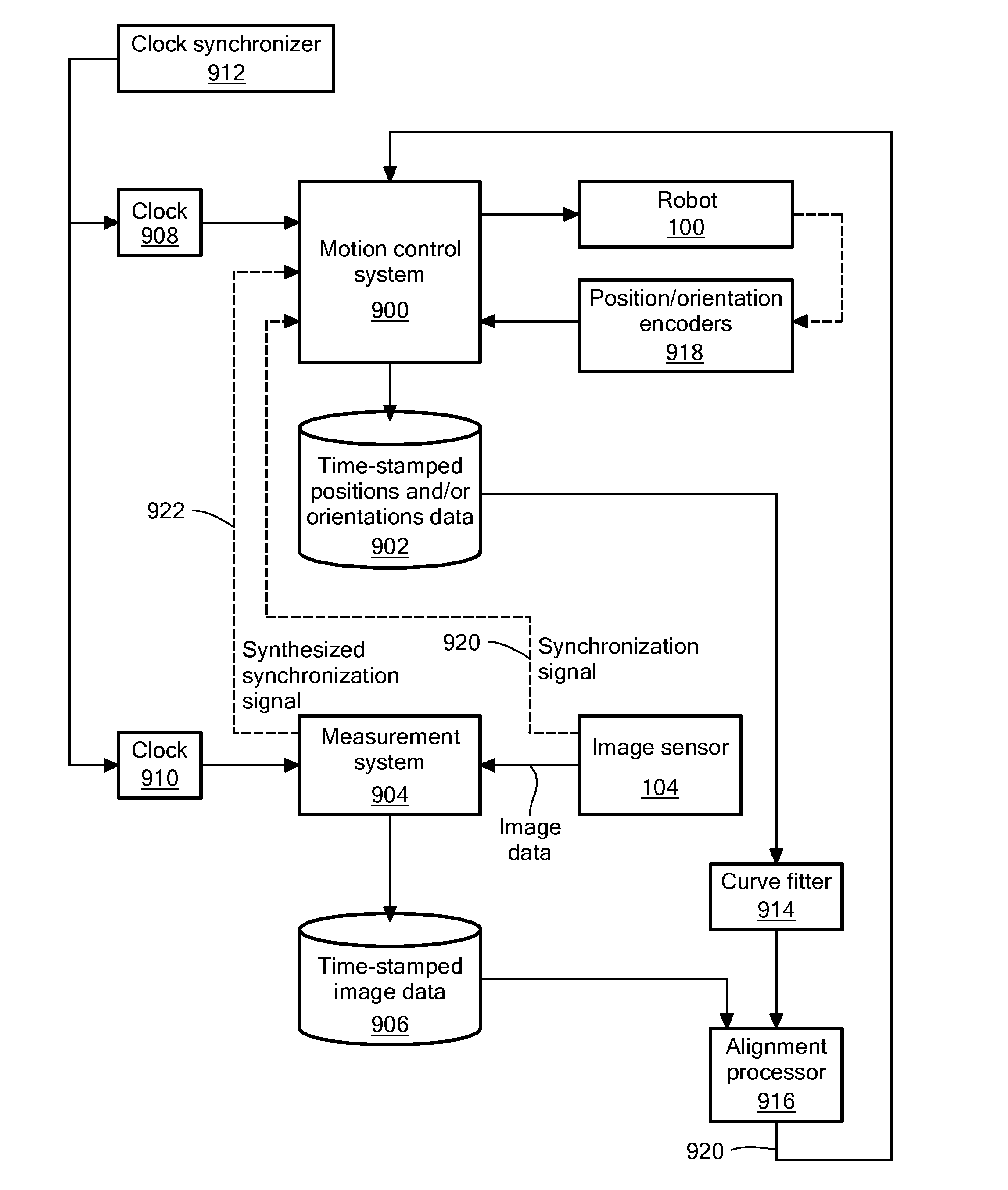
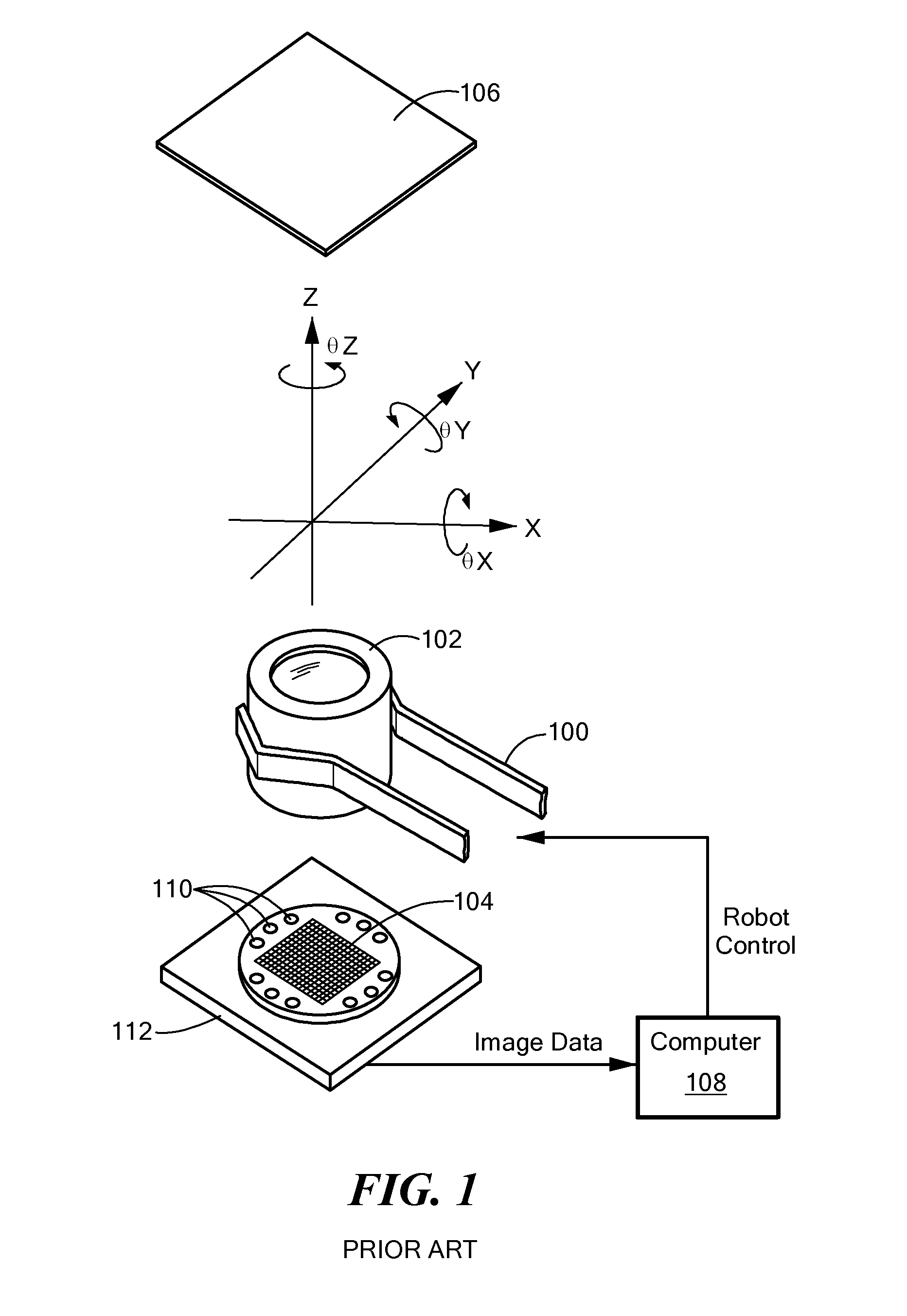
- A computer-implemented method using continuous motion sweeps and temporal interpolation to actively align optical elements by scanning along trajectories, acquiring alignment data, and estimating the desired alignment position based on collected data, allowing for precise positioning and orientation adjustments.
Active Alignment Using Continuous Motion Sweeps and Temporal Interpolation
PatentActiveUS20130274923A1
Innovation
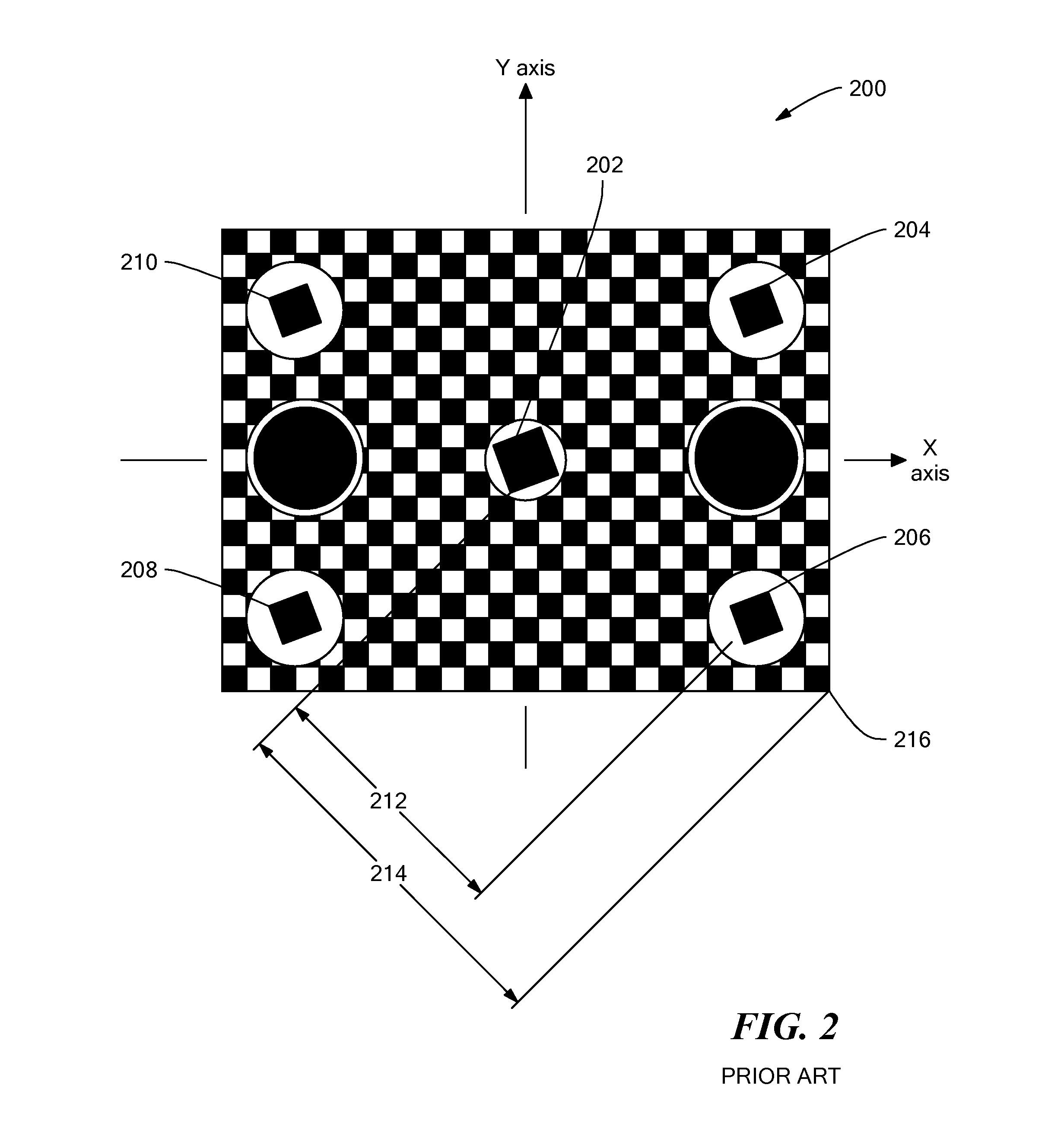
- A computer-implemented method involving continuous motion sweeps of optical elements to collect and analyze alignment data, using a robot to estimate and adjust the position of optical elements based on optical signals and image data from a digital image sensor, allowing for precise alignment across multiple degrees of freedom.

Manufacturing Standards for Active Alignment Equipment
The manufacturing standards for active alignment equipment represent a critical framework that ensures consistent performance, reliability, and interoperability across digital platform applications. These standards encompass mechanical precision requirements, optical component specifications, and environmental operating conditions that directly impact alignment accuracy and system longevity.
Mechanical precision standards define tolerances for positioning systems, typically requiring sub-micron accuracy for high-precision applications. Key specifications include linear positioning accuracy within ±0.1 micrometers, angular positioning precision of ±0.01 degrees, and repeatability metrics that ensure consistent performance across multiple alignment cycles. Vibration isolation requirements mandate that equipment operates effectively in environments with ambient vibrations up to specified frequency ranges, typically below 10 Hz for critical applications.
Optical component standards establish requirements for laser sources, photodetectors, and beam steering elements used in active alignment systems. Laser stability specifications demand wavelength accuracy within ±0.1 nanometers and power stability better than ±1% over operational temperature ranges. Photodetector standards specify minimum sensitivity levels, response times under 1 millisecond, and dynamic range capabilities exceeding 60 dB to accommodate varying signal strengths during alignment processes.
Environmental and operational standards define temperature stability requirements, typically ±0.1°C for precision applications, humidity control within 45-55% relative humidity, and cleanroom classifications ranging from ISO Class 6 to Class 8 depending on component sensitivity. These standards also specify electromagnetic interference limits and grounding requirements to prevent signal degradation during alignment operations.
Quality assurance protocols mandate regular calibration procedures, traceability requirements for measurement systems, and documentation standards for process validation. Equipment certification processes require compliance with international standards such as ISO 9001 for quality management and specific industry standards like IEC 61010 for safety requirements in measurement and control equipment used in active alignment applications.
Mechanical precision standards define tolerances for positioning systems, typically requiring sub-micron accuracy for high-precision applications. Key specifications include linear positioning accuracy within ±0.1 micrometers, angular positioning precision of ±0.01 degrees, and repeatability metrics that ensure consistent performance across multiple alignment cycles. Vibration isolation requirements mandate that equipment operates effectively in environments with ambient vibrations up to specified frequency ranges, typically below 10 Hz for critical applications.
Optical component standards establish requirements for laser sources, photodetectors, and beam steering elements used in active alignment systems. Laser stability specifications demand wavelength accuracy within ±0.1 nanometers and power stability better than ±1% over operational temperature ranges. Photodetector standards specify minimum sensitivity levels, response times under 1 millisecond, and dynamic range capabilities exceeding 60 dB to accommodate varying signal strengths during alignment processes.
Environmental and operational standards define temperature stability requirements, typically ±0.1°C for precision applications, humidity control within 45-55% relative humidity, and cleanroom classifications ranging from ISO Class 6 to Class 8 depending on component sensitivity. These standards also specify electromagnetic interference limits and grounding requirements to prevent signal degradation during alignment operations.
Quality assurance protocols mandate regular calibration procedures, traceability requirements for measurement systems, and documentation standards for process validation. Equipment certification processes require compliance with international standards such as ISO 9001 for quality management and specific industry standards like IEC 61010 for safety requirements in measurement and control equipment used in active alignment applications.
Cost-Benefit Analysis of Active Alignment Implementation
The implementation of active alignment systems in digital platforms requires substantial upfront investment, with initial costs ranging from $500,000 to $2.5 million for enterprise-level deployments. These costs encompass specialized hardware components including high-precision sensors, actuators, and control systems, alongside software development for real-time processing algorithms. Personnel training and system integration typically account for 25-30% of total implementation expenses.
Hardware infrastructure represents the largest cost component, particularly for precision-critical applications requiring sub-micron accuracy. Advanced piezoelectric actuators and laser interferometry systems command premium pricing, while environmental control systems add additional overhead. Software licensing for specialized control algorithms and machine learning frameworks contributes approximately 15-20% of initial investment.
Operational benefits manifest through significant improvements in manufacturing yield and product quality consistency. Organizations typically observe 15-25% reduction in defect rates within the first year of implementation. Enhanced precision capabilities enable access to higher-value market segments, with premium pricing opportunities offsetting initial investment costs. Reduced material waste and rework expenses contribute to operational savings of 8-12% annually.
Long-term financial returns demonstrate compelling value propositions across multiple industries. Semiconductor manufacturing facilities report return on investment periods of 18-24 months, driven by improved yield rates and reduced scrap costs. Precision machining operations achieve payback periods of 2-3 years through enhanced product quality and reduced inspection requirements.
Maintenance costs remain relatively modest, typically representing 5-8% of initial investment annually. Predictive maintenance capabilities inherent in active alignment systems reduce unexpected downtime and extend equipment lifespan. Energy efficiency improvements through optimized positioning algorithms contribute additional operational savings.
Risk mitigation benefits provide substantial but difficult-to-quantify value. Reduced product recalls, enhanced customer satisfaction, and improved regulatory compliance create significant long-term value. Market competitiveness advantages through superior product quality enable sustained premium positioning and market share growth.
The total cost of ownership analysis reveals favorable economics for most precision-dependent applications, with net present value calculations showing positive returns within 3-5 years for typical implementations.
Hardware infrastructure represents the largest cost component, particularly for precision-critical applications requiring sub-micron accuracy. Advanced piezoelectric actuators and laser interferometry systems command premium pricing, while environmental control systems add additional overhead. Software licensing for specialized control algorithms and machine learning frameworks contributes approximately 15-20% of initial investment.
Operational benefits manifest through significant improvements in manufacturing yield and product quality consistency. Organizations typically observe 15-25% reduction in defect rates within the first year of implementation. Enhanced precision capabilities enable access to higher-value market segments, with premium pricing opportunities offsetting initial investment costs. Reduced material waste and rework expenses contribute to operational savings of 8-12% annually.
Long-term financial returns demonstrate compelling value propositions across multiple industries. Semiconductor manufacturing facilities report return on investment periods of 18-24 months, driven by improved yield rates and reduced scrap costs. Precision machining operations achieve payback periods of 2-3 years through enhanced product quality and reduced inspection requirements.
Maintenance costs remain relatively modest, typically representing 5-8% of initial investment annually. Predictive maintenance capabilities inherent in active alignment systems reduce unexpected downtime and extend equipment lifespan. Energy efficiency improvements through optimized positioning algorithms contribute additional operational savings.
Risk mitigation benefits provide substantial but difficult-to-quantify value. Reduced product recalls, enhanced customer satisfaction, and improved regulatory compliance create significant long-term value. Market competitiveness advantages through superior product quality enable sustained premium positioning and market share growth.
The total cost of ownership analysis reveals favorable economics for most precision-dependent applications, with net present value calculations showing positive returns within 3-5 years for typical implementations.
Unlock deeper insights with Patsnap Eureka Quick Research — get a full tech report to explore trends and direct your research. Try now!
Generate Your Research Report Instantly with AI Agent
Supercharge your innovation with Patsnap Eureka AI Agent Platform!