

Adaptive Network Control for Smart Cities: Efficiency Gains
MAR 18, 20269 MIN READ
Generate Your Research Report Instantly with AI Agent
PatSnap Eureka helps you evaluate technical feasibility & market potential.
Smart City Network Control Background and Objectives
Smart cities represent a paradigm shift in urban development, leveraging interconnected digital technologies to optimize municipal services, infrastructure management, and citizen experiences. The evolution from traditional urban planning to intelligent city ecosystems has been driven by rapid urbanization, with over 68% of the global population expected to reside in cities by 2050. This demographic transformation necessitates sophisticated network control systems capable of managing complex interdependencies across transportation, energy, water, waste management, and communication infrastructures.
The historical development of smart city initiatives began in the early 2000s with isolated sensor deployments and basic automation systems. Initial implementations focused primarily on individual subsystems such as traffic light optimization or energy meter monitoring. However, these fragmented approaches revealed significant limitations in achieving city-wide efficiency improvements, as they failed to capitalize on cross-domain synergies and holistic optimization opportunities.
Contemporary smart city networks have evolved toward integrated platforms that enable real-time data exchange and coordinated decision-making across multiple urban systems. The emergence of Internet of Things technologies, edge computing capabilities, and advanced analytics has created unprecedented opportunities for adaptive network control mechanisms that can dynamically respond to changing urban conditions and citizen demands.
Current technological trends indicate a clear trajectory toward autonomous urban management systems that can predict, prevent, and resolve operational challenges before they impact citizens. Machine learning algorithms, artificial intelligence frameworks, and distributed computing architectures are converging to enable predictive maintenance, demand forecasting, and resource optimization at unprecedented scales and accuracy levels.
The primary objective of adaptive network control in smart cities centers on achieving measurable efficiency gains across multiple performance dimensions. These include reducing energy consumption by 20-30% through intelligent grid management, decreasing traffic congestion by 15-25% via dynamic routing optimization, and improving emergency response times by 40-50% through coordinated communication networks. Additionally, adaptive systems aim to enhance resource utilization efficiency, minimize operational costs, and improve overall quality of life metrics for urban residents.
Strategic goals encompass developing resilient infrastructure networks capable of self-healing and autonomous adaptation to disruptions, whether caused by natural disasters, cyber threats, or unexpected demand fluctuations. The ultimate vision involves creating truly intelligent urban ecosystems that continuously learn from operational data, citizen feedback, and environmental conditions to optimize performance and sustainability outcomes.
The historical development of smart city initiatives began in the early 2000s with isolated sensor deployments and basic automation systems. Initial implementations focused primarily on individual subsystems such as traffic light optimization or energy meter monitoring. However, these fragmented approaches revealed significant limitations in achieving city-wide efficiency improvements, as they failed to capitalize on cross-domain synergies and holistic optimization opportunities.
Contemporary smart city networks have evolved toward integrated platforms that enable real-time data exchange and coordinated decision-making across multiple urban systems. The emergence of Internet of Things technologies, edge computing capabilities, and advanced analytics has created unprecedented opportunities for adaptive network control mechanisms that can dynamically respond to changing urban conditions and citizen demands.
Current technological trends indicate a clear trajectory toward autonomous urban management systems that can predict, prevent, and resolve operational challenges before they impact citizens. Machine learning algorithms, artificial intelligence frameworks, and distributed computing architectures are converging to enable predictive maintenance, demand forecasting, and resource optimization at unprecedented scales and accuracy levels.
The primary objective of adaptive network control in smart cities centers on achieving measurable efficiency gains across multiple performance dimensions. These include reducing energy consumption by 20-30% through intelligent grid management, decreasing traffic congestion by 15-25% via dynamic routing optimization, and improving emergency response times by 40-50% through coordinated communication networks. Additionally, adaptive systems aim to enhance resource utilization efficiency, minimize operational costs, and improve overall quality of life metrics for urban residents.
Strategic goals encompass developing resilient infrastructure networks capable of self-healing and autonomous adaptation to disruptions, whether caused by natural disasters, cyber threats, or unexpected demand fluctuations. The ultimate vision involves creating truly intelligent urban ecosystems that continuously learn from operational data, citizen feedback, and environmental conditions to optimize performance and sustainability outcomes.
Market Demand for Adaptive Urban Network Solutions
The global urbanization trend has created unprecedented demand for intelligent network management solutions in metropolitan areas. Cities worldwide are experiencing exponential growth in connected devices, autonomous vehicles, IoT sensors, and digital infrastructure, creating complex network ecosystems that require sophisticated adaptive control mechanisms. Traditional static network management approaches are proving inadequate for handling the dynamic nature of modern urban environments.
Municipal governments and urban planners are increasingly recognizing the critical role of adaptive network control systems in achieving sustainability goals and operational efficiency. The demand is particularly pronounced in megacities across Asia-Pacific, North America, and Europe, where population density and technological adoption rates are highest. These regions are driving significant investment in smart city initiatives that prioritize network optimization and resource allocation.
The transportation sector represents one of the largest market segments for adaptive network solutions. Traffic management systems, connected vehicle networks, and multimodal transportation platforms require real-time network adaptation to optimize flow patterns and reduce congestion. Emergency response systems also demonstrate strong demand for adaptive capabilities, as they need to dynamically prioritize network resources during critical situations.
Energy grid management constitutes another major demand driver, with utilities seeking adaptive network control to balance renewable energy integration, peak load management, and distributed generation systems. The increasing deployment of electric vehicle charging infrastructure and smart building systems further amplifies the need for intelligent network coordination across urban energy networks.
Public safety and security applications are generating substantial market demand for adaptive network solutions. Law enforcement agencies, surveillance systems, and emergency services require networks that can automatically adjust bandwidth allocation, routing priorities, and communication protocols based on real-time threat assessments and operational requirements.
The economic value proposition of adaptive network control is becoming increasingly clear to city administrators. Efficiency gains translate directly into reduced operational costs, improved service delivery, and enhanced citizen satisfaction. This economic imperative is driving procurement decisions and budget allocations toward adaptive network technologies across multiple urban sectors.
Private sector demand is equally robust, with telecommunications providers, technology integrators, and infrastructure operators seeking adaptive solutions to optimize their urban network investments. The convergence of 5G deployment, edge computing, and IoT expansion is creating new market opportunities for adaptive network control platforms that can manage heterogeneous network environments effectively.
Municipal governments and urban planners are increasingly recognizing the critical role of adaptive network control systems in achieving sustainability goals and operational efficiency. The demand is particularly pronounced in megacities across Asia-Pacific, North America, and Europe, where population density and technological adoption rates are highest. These regions are driving significant investment in smart city initiatives that prioritize network optimization and resource allocation.
The transportation sector represents one of the largest market segments for adaptive network solutions. Traffic management systems, connected vehicle networks, and multimodal transportation platforms require real-time network adaptation to optimize flow patterns and reduce congestion. Emergency response systems also demonstrate strong demand for adaptive capabilities, as they need to dynamically prioritize network resources during critical situations.
Energy grid management constitutes another major demand driver, with utilities seeking adaptive network control to balance renewable energy integration, peak load management, and distributed generation systems. The increasing deployment of electric vehicle charging infrastructure and smart building systems further amplifies the need for intelligent network coordination across urban energy networks.
Public safety and security applications are generating substantial market demand for adaptive network solutions. Law enforcement agencies, surveillance systems, and emergency services require networks that can automatically adjust bandwidth allocation, routing priorities, and communication protocols based on real-time threat assessments and operational requirements.
The economic value proposition of adaptive network control is becoming increasingly clear to city administrators. Efficiency gains translate directly into reduced operational costs, improved service delivery, and enhanced citizen satisfaction. This economic imperative is driving procurement decisions and budget allocations toward adaptive network technologies across multiple urban sectors.
Private sector demand is equally robust, with telecommunications providers, technology integrators, and infrastructure operators seeking adaptive solutions to optimize their urban network investments. The convergence of 5G deployment, edge computing, and IoT expansion is creating new market opportunities for adaptive network control platforms that can manage heterogeneous network environments effectively.
Current State and Challenges of Smart City Networks
Smart city networks currently operate through a complex ecosystem of interconnected infrastructure systems, including transportation networks, energy grids, water management systems, telecommunications networks, and public safety systems. These networks rely heavily on traditional centralized control architectures that were designed for static operational parameters rather than dynamic urban environments. Most existing implementations utilize legacy SCADA systems and basic IoT sensor networks that provide limited real-time adaptability and cross-system integration capabilities.
The technological foundation of current smart city networks predominantly consists of siloed vertical solutions that lack comprehensive horizontal integration. Traffic management systems operate independently from energy distribution networks, while water management systems function separately from waste management infrastructure. This fragmented approach results in suboptimal resource allocation and missed opportunities for system-wide efficiency improvements. Current network control mechanisms typically rely on predetermined algorithms and manual interventions rather than adaptive machine learning approaches.
Contemporary smart city implementations face significant scalability challenges as urban populations continue to grow exponentially. Existing network infrastructures struggle to accommodate increasing data volumes, device connectivity demands, and real-time processing requirements. The current state reveals substantial gaps in interoperability standards, with different vendors and systems utilizing incompatible communication protocols and data formats. This technological fragmentation creates barriers to implementing unified adaptive control strategies across multiple urban systems.
Major technical constraints include insufficient bandwidth capacity for real-time data transmission, limited edge computing capabilities for distributed processing, and inadequate cybersecurity frameworks for protecting interconnected systems. Current networks often experience latency issues that prevent effective real-time decision-making, particularly in critical applications such as emergency response coordination and traffic flow optimization. The existing infrastructure also lacks robust fault tolerance mechanisms, making systems vulnerable to cascading failures across interconnected networks.
Data management represents another critical challenge, with current systems generating massive volumes of heterogeneous data that existing analytics platforms cannot effectively process or utilize for adaptive control purposes. Most smart city networks currently operate with reactive rather than predictive control mechanisms, limiting their ability to anticipate and prevent system inefficiencies before they occur. The absence of standardized APIs and data exchange protocols further complicates efforts to implement comprehensive adaptive network control solutions.
Geographic distribution of smart city network technologies reveals significant disparities, with advanced implementations concentrated primarily in developed urban centers while emerging markets struggle with basic connectivity infrastructure. This technological divide creates challenges for developing universal adaptive control solutions that can function effectively across diverse technological maturity levels and resource constraints.
The technological foundation of current smart city networks predominantly consists of siloed vertical solutions that lack comprehensive horizontal integration. Traffic management systems operate independently from energy distribution networks, while water management systems function separately from waste management infrastructure. This fragmented approach results in suboptimal resource allocation and missed opportunities for system-wide efficiency improvements. Current network control mechanisms typically rely on predetermined algorithms and manual interventions rather than adaptive machine learning approaches.
Contemporary smart city implementations face significant scalability challenges as urban populations continue to grow exponentially. Existing network infrastructures struggle to accommodate increasing data volumes, device connectivity demands, and real-time processing requirements. The current state reveals substantial gaps in interoperability standards, with different vendors and systems utilizing incompatible communication protocols and data formats. This technological fragmentation creates barriers to implementing unified adaptive control strategies across multiple urban systems.
Major technical constraints include insufficient bandwidth capacity for real-time data transmission, limited edge computing capabilities for distributed processing, and inadequate cybersecurity frameworks for protecting interconnected systems. Current networks often experience latency issues that prevent effective real-time decision-making, particularly in critical applications such as emergency response coordination and traffic flow optimization. The existing infrastructure also lacks robust fault tolerance mechanisms, making systems vulnerable to cascading failures across interconnected networks.
Data management represents another critical challenge, with current systems generating massive volumes of heterogeneous data that existing analytics platforms cannot effectively process or utilize for adaptive control purposes. Most smart city networks currently operate with reactive rather than predictive control mechanisms, limiting their ability to anticipate and prevent system inefficiencies before they occur. The absence of standardized APIs and data exchange protocols further complicates efforts to implement comprehensive adaptive network control solutions.
Geographic distribution of smart city network technologies reveals significant disparities, with advanced implementations concentrated primarily in developed urban centers while emerging markets struggle with basic connectivity infrastructure. This technological divide creates challenges for developing universal adaptive control solutions that can function effectively across diverse technological maturity levels and resource constraints.
Existing Adaptive Network Control Solutions
01 Dynamic bandwidth allocation and traffic management
Adaptive network control systems can dynamically allocate bandwidth and manage traffic flows based on real-time network conditions. These systems monitor network congestion, packet loss, and latency to automatically adjust resource allocation. By implementing intelligent traffic shaping and prioritization mechanisms, networks can optimize throughput and reduce bottlenecks. Advanced algorithms analyze traffic patterns and predict future demands to proactively adjust network parameters, ensuring efficient utilization of available resources.- Dynamic bandwidth allocation and traffic management: Adaptive network control systems can dynamically allocate bandwidth and manage traffic flows based on real-time network conditions. These systems monitor network congestion, packet loss, and latency to automatically adjust resource allocation. By implementing intelligent traffic shaping and prioritization mechanisms, networks can optimize throughput and reduce bottlenecks. Advanced algorithms analyze traffic patterns and predict future demands to proactively adjust network parameters, ensuring efficient utilization of available resources.
- Quality of Service (QoS) optimization through adaptive control: Network efficiency can be enhanced through adaptive QoS mechanisms that continuously monitor and adjust service levels. These systems employ feedback loops to measure performance metrics such as jitter, delay, and packet delivery rates. Based on these measurements, the control system can dynamically modify routing paths, adjust transmission rates, and reallocate network resources. This approach ensures that critical applications receive priority treatment while maintaining overall network stability and performance.
- Machine learning-based network optimization: Advanced adaptive network control leverages machine learning algorithms to predict and respond to network conditions. These systems analyze historical data and current network states to identify patterns and anomalies. By training models on network behavior, the system can anticipate congestion events and automatically implement preventive measures. The learning algorithms continuously improve their predictions and control strategies based on observed outcomes, leading to increasingly efficient network operations over time.
- Distributed control architecture for network efficiency: Implementing distributed control mechanisms across network nodes enhances overall system efficiency and resilience. This architecture allows individual network elements to make localized decisions while coordinating with neighboring nodes. The distributed approach reduces latency in control responses and eliminates single points of failure. Each node maintains awareness of local conditions and can autonomously adjust parameters while contributing to global network optimization objectives.
- Adaptive routing protocols and path optimization: Network control efficiency is improved through adaptive routing protocols that dynamically select optimal paths based on current network conditions. These protocols continuously evaluate multiple routing metrics including hop count, bandwidth availability, and link reliability. The system can rapidly switch between alternative paths when degradation is detected, maintaining service continuity. Advanced implementations incorporate predictive analytics to anticipate path failures and preemptively establish backup routes, minimizing disruption and maximizing network utilization.
02 Quality of Service (QoS) optimization through adaptive control
Network efficiency can be enhanced through adaptive QoS mechanisms that continuously monitor and adjust service parameters. These systems employ feedback loops to measure performance metrics such as jitter, delay, and packet delivery rates. Based on these measurements, the control system automatically modifies routing policies, buffer sizes, and transmission schedules. Machine learning algorithms can be integrated to learn from historical data and optimize QoS policies for different application types and user requirements.Expand Specific Solutions03 Adaptive routing protocols and path selection
Efficient network control can be achieved through adaptive routing mechanisms that select optimal paths based on current network state. These protocols continuously evaluate multiple routing metrics including hop count, link quality, and congestion levels. The system dynamically switches between routing paths to avoid failed links or congested nodes. Distributed algorithms enable nodes to make autonomous routing decisions while maintaining global network efficiency through coordination protocols.Expand Specific Solutions04 Power-aware adaptive network management
Network control efficiency can be improved by implementing power-aware adaptive mechanisms that balance performance with energy consumption. These systems monitor power usage across network devices and adjust operational parameters to minimize energy waste. Techniques include dynamic voltage scaling, selective component shutdown during low-traffic periods, and load balancing to distribute processing across energy-efficient nodes. The adaptive control system considers both performance requirements and power constraints to achieve optimal energy efficiency.Expand Specific Solutions05 Self-learning and cognitive network control
Advanced adaptive network systems incorporate self-learning capabilities to improve control efficiency over time. These cognitive systems use artificial intelligence and machine learning techniques to analyze network behavior patterns and automatically optimize control policies. The system builds predictive models of network performance under various conditions and uses these models to make proactive control decisions. Reinforcement learning algorithms enable the network to adapt to changing environments and user behaviors without manual intervention.Expand Specific Solutions
Key Players in Smart City and Network Control Industry
The adaptive network control technology for smart cities represents a rapidly evolving sector in the early-to-mature development stage, driven by increasing urbanization and IoT deployment demands. The market demonstrates substantial growth potential, estimated in billions globally, as cities seek efficiency optimization through intelligent infrastructure management. Technology maturity varies significantly across market players, with telecommunications giants like Huawei Technologies, Ericsson, and Deutsche Telekom leading in network infrastructure solutions, while semiconductor leaders Intel and Qualcomm provide foundational processing capabilities. Traditional utilities such as State Grid Corporation and Électricité de France are integrating smart grid technologies, supported by automation specialists like Siemens. The competitive landscape shows convergence between telecommunications, computing, and energy sectors, with companies like Cisco Technology and Microsoft Technology Licensing contributing networking and cloud solutions, indicating a maturing ecosystem where established players leverage existing infrastructure expertise to capture emerging smart city opportunities.
Huawei Technologies Co., Ltd.
Technical Solution: Huawei has developed a comprehensive smart city network control platform that integrates AI-driven traffic optimization, IoT sensor networks, and 5G connectivity. Their solution employs machine learning algorithms to dynamically adjust network resources based on real-time city data, achieving up to 30% improvement in network efficiency. The platform features adaptive bandwidth allocation, predictive maintenance capabilities, and seamless integration with existing urban infrastructure. Their CloudCampus solution provides centralized network management for smart city applications, enabling automatic policy enforcement and quality of service optimization across diverse urban services including transportation, utilities, and public safety systems.
Strengths: Comprehensive end-to-end solution with strong 5G integration and proven deployment experience. Weaknesses: Limited market access in some regions due to geopolitical concerns, potentially higher implementation costs.
Telefonaktiebolaget LM Ericsson
Technical Solution: Ericsson's Connected Urban Transport solution leverages advanced network slicing and edge computing to create adaptive control systems for smart cities. Their platform utilizes real-time analytics and AI to optimize traffic flow, reduce congestion by up to 20%, and improve emergency response times. The solution integrates with existing cellular infrastructure to provide low-latency communication between city systems, vehicles, and IoT devices. Ericsson's network orchestration technology enables dynamic resource allocation based on city-wide demand patterns, supporting applications from intelligent transportation systems to smart grid management with guaranteed service level agreements.
Strengths: Strong telecommunications expertise with proven network slicing capabilities and global deployment experience. Weaknesses: Higher dependency on existing telecom infrastructure, potentially complex integration with non-telecom city systems.
Core Innovations in Smart City Network Optimization
Traffic-adaptive network control systems and methods
PatentActiveUS10491501B2
Innovation
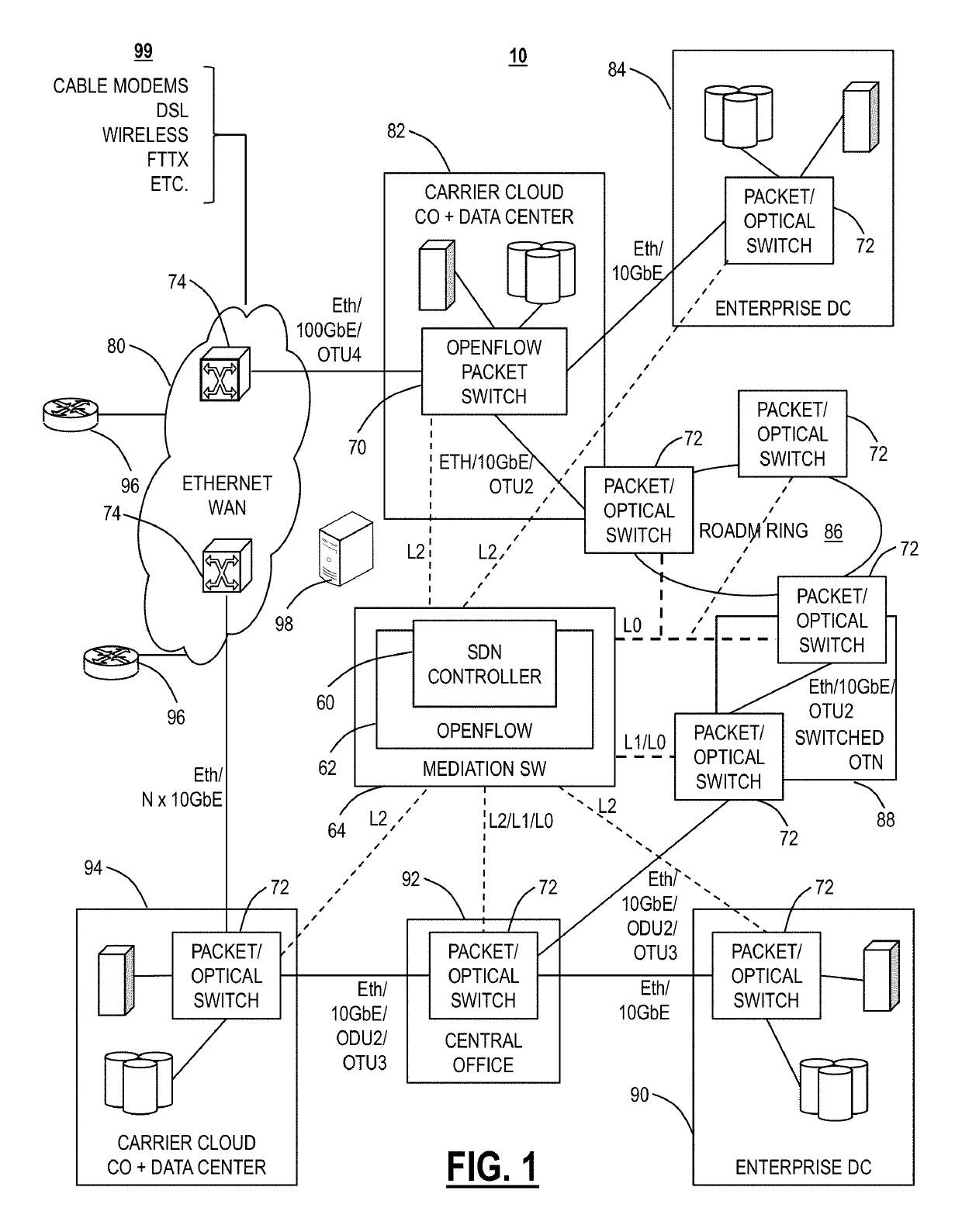
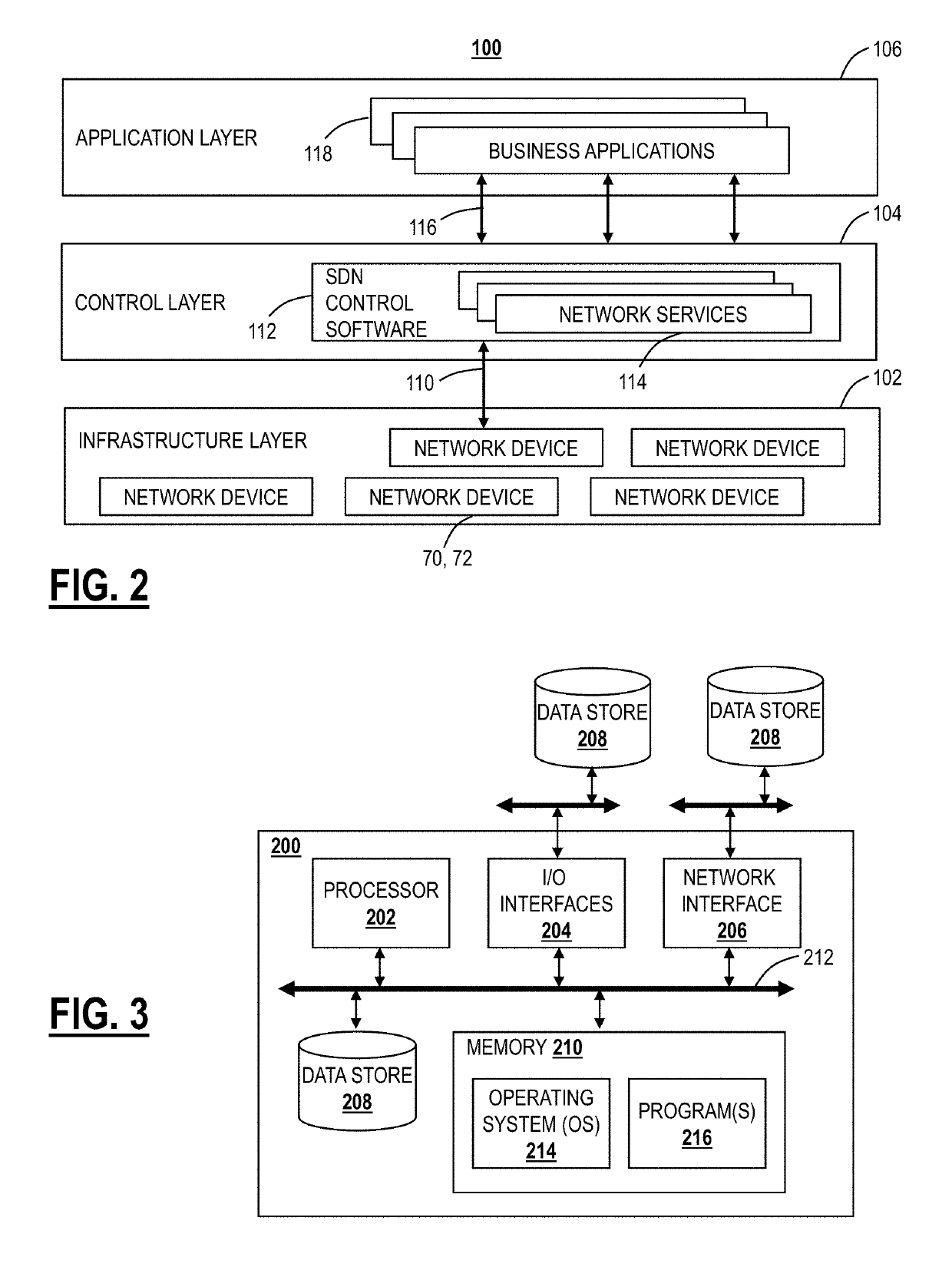
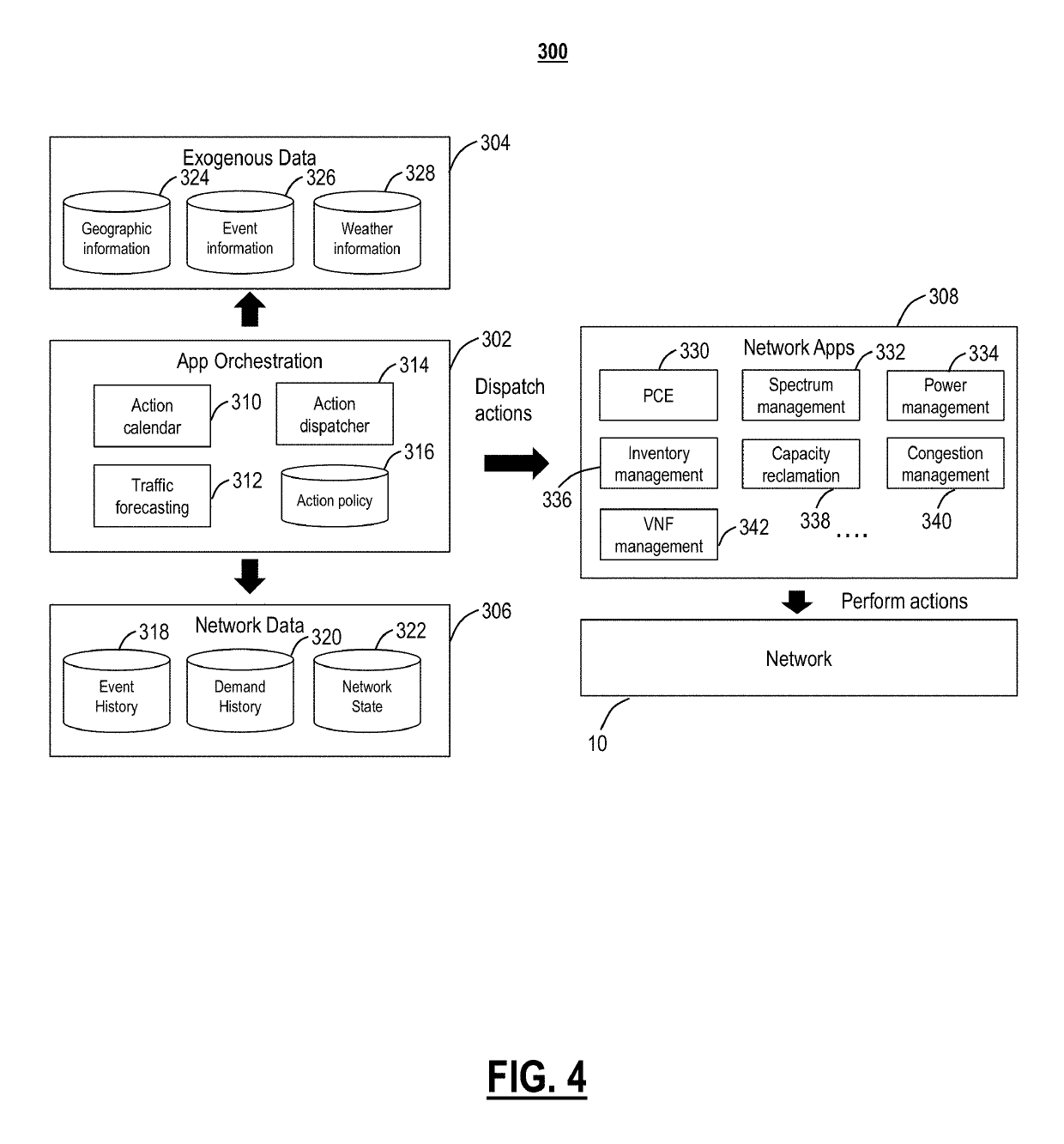
- A traffic-adaptive network control method that monitors network data, generates forecasts based on observed and external events, and orchestrates actions such as capacity recovery, reallocation, and addition using network applications to optimize resource utilization and minimize costs.

Deep reinforcement learning for adaptive network slicing in 5G for intelligent vehicular systems and smart cities
PatentActiveUS12137030B2
Innovation
- A network slicing model using a cluster of fog nodes coordinated with an edge controller, employing an infinite-horizon Markov decision process and deep reinforcement learning (DRL) to dynamically allocate resources, determining whether to serve service requests at the edge or refer them to the cloud, thereby optimizing resource utilization and meeting diverse latency requirements.


Policy Framework for Smart City Infrastructure
The establishment of a comprehensive policy framework for smart city infrastructure represents a critical foundation for implementing adaptive network control systems that can deliver substantial efficiency gains. This framework must address the complex interplay between technological innovation, regulatory compliance, and public service delivery while ensuring sustainable urban development.
Regulatory standards form the cornerstone of smart city infrastructure policy, requiring the development of interoperability protocols that enable seamless communication between diverse network components. These standards must encompass data exchange formats, security protocols, and performance metrics that facilitate adaptive control mechanisms across transportation, energy, water, and telecommunications networks. The framework should establish mandatory compliance requirements for infrastructure providers while maintaining flexibility for technological evolution.
Data governance policies constitute another essential pillar, addressing privacy protection, data ownership rights, and cross-system information sharing protocols. The framework must define clear guidelines for data collection, storage, and utilization by adaptive network control systems, ensuring citizen privacy while enabling the data-driven optimization that smart cities require. This includes establishing protocols for anonymization, consent management, and data retention periods.
Investment and funding mechanisms require structured policy approaches that encourage private sector participation while maintaining public oversight of critical infrastructure. The framework should outline public-private partnership models, risk-sharing arrangements, and performance-based contracting structures that incentivize efficiency improvements through adaptive network technologies. This includes establishing clear return-on-investment metrics and cost-benefit evaluation methodologies.
Cybersecurity and resilience policies must address the increased vulnerability that interconnected adaptive systems introduce, establishing mandatory security standards, incident response protocols, and system redundancy requirements. The framework should mandate regular security audits, vulnerability assessments, and disaster recovery planning for all smart city infrastructure components.
Finally, the policy framework must incorporate adaptive governance mechanisms that allow for continuous policy evolution as technologies advance and urban needs change, ensuring long-term sustainability and effectiveness of smart city infrastructure investments.
Regulatory standards form the cornerstone of smart city infrastructure policy, requiring the development of interoperability protocols that enable seamless communication between diverse network components. These standards must encompass data exchange formats, security protocols, and performance metrics that facilitate adaptive control mechanisms across transportation, energy, water, and telecommunications networks. The framework should establish mandatory compliance requirements for infrastructure providers while maintaining flexibility for technological evolution.
Data governance policies constitute another essential pillar, addressing privacy protection, data ownership rights, and cross-system information sharing protocols. The framework must define clear guidelines for data collection, storage, and utilization by adaptive network control systems, ensuring citizen privacy while enabling the data-driven optimization that smart cities require. This includes establishing protocols for anonymization, consent management, and data retention periods.
Investment and funding mechanisms require structured policy approaches that encourage private sector participation while maintaining public oversight of critical infrastructure. The framework should outline public-private partnership models, risk-sharing arrangements, and performance-based contracting structures that incentivize efficiency improvements through adaptive network technologies. This includes establishing clear return-on-investment metrics and cost-benefit evaluation methodologies.
Cybersecurity and resilience policies must address the increased vulnerability that interconnected adaptive systems introduce, establishing mandatory security standards, incident response protocols, and system redundancy requirements. The framework should mandate regular security audits, vulnerability assessments, and disaster recovery planning for all smart city infrastructure components.
Finally, the policy framework must incorporate adaptive governance mechanisms that allow for continuous policy evolution as technologies advance and urban needs change, ensuring long-term sustainability and effectiveness of smart city infrastructure investments.
Sustainability Impact of Adaptive Network Systems
Adaptive network control systems in smart cities represent a paradigm shift toward environmentally sustainable urban infrastructure management. These systems fundamentally reduce energy consumption through intelligent resource allocation, dynamic load balancing, and predictive optimization algorithms. By continuously monitoring and adjusting network parameters in real-time, adaptive systems minimize unnecessary energy expenditure across transportation networks, utility grids, and communication infrastructures, resulting in measurable reductions in carbon footprint and operational emissions.
The environmental benefits extend beyond direct energy savings to encompass broader ecological impacts. Adaptive traffic management systems significantly reduce vehicle idle times and optimize routing patterns, leading to decreased fuel consumption and lower greenhouse gas emissions. Smart grid implementations enable better integration of renewable energy sources, facilitating the transition from fossil fuel dependency to sustainable energy alternatives. These systems also support distributed energy generation and storage, creating more resilient and environmentally friendly urban energy ecosystems.
Resource optimization represents another critical sustainability dimension of adaptive network systems. Through predictive analytics and machine learning algorithms, these systems minimize waste generation by optimizing material flows, reducing redundant operations, and extending infrastructure lifespan through preventive maintenance protocols. Water management networks benefit from adaptive control through leak detection, pressure optimization, and demand forecasting, substantially reducing water waste and improving conservation efforts.
The circular economy principles are inherently embedded within adaptive network architectures. These systems promote resource reuse and recycling through intelligent waste management networks that optimize collection routes, sort materials more effectively, and identify opportunities for material recovery. Smart building networks integrate with urban systems to create closed-loop resource cycles, where waste heat from one system becomes input energy for another.
Long-term sustainability impacts include enhanced urban resilience and reduced environmental degradation. Adaptive systems contribute to climate change mitigation by enabling more efficient urban operations while simultaneously supporting adaptation strategies through improved disaster response capabilities and infrastructure flexibility. The cumulative effect of these systems creates measurable progress toward sustainable development goals and carbon neutrality targets.
The environmental benefits extend beyond direct energy savings to encompass broader ecological impacts. Adaptive traffic management systems significantly reduce vehicle idle times and optimize routing patterns, leading to decreased fuel consumption and lower greenhouse gas emissions. Smart grid implementations enable better integration of renewable energy sources, facilitating the transition from fossil fuel dependency to sustainable energy alternatives. These systems also support distributed energy generation and storage, creating more resilient and environmentally friendly urban energy ecosystems.
Resource optimization represents another critical sustainability dimension of adaptive network systems. Through predictive analytics and machine learning algorithms, these systems minimize waste generation by optimizing material flows, reducing redundant operations, and extending infrastructure lifespan through preventive maintenance protocols. Water management networks benefit from adaptive control through leak detection, pressure optimization, and demand forecasting, substantially reducing water waste and improving conservation efforts.
The circular economy principles are inherently embedded within adaptive network architectures. These systems promote resource reuse and recycling through intelligent waste management networks that optimize collection routes, sort materials more effectively, and identify opportunities for material recovery. Smart building networks integrate with urban systems to create closed-loop resource cycles, where waste heat from one system becomes input energy for another.
Long-term sustainability impacts include enhanced urban resilience and reduced environmental degradation. Adaptive systems contribute to climate change mitigation by enabling more efficient urban operations while simultaneously supporting adaptation strategies through improved disaster response capabilities and infrastructure flexibility. The cumulative effect of these systems creates measurable progress toward sustainable development goals and carbon neutrality targets.
Unlock deeper insights with PatSnap Eureka Quick Research — get a full tech report to explore trends and direct your research. Try now!
Generate Your Research Report Instantly with AI Agent
Supercharge your innovation with PatSnap Eureka AI Agent Platform!