Adaptive Network Control vs Cloud-Based Solutions: Efficacy
MAR 18, 20269 MIN READ
Generate Your Research Report Instantly with AI Agent
Patsnap Eureka helps you evaluate technical feasibility & market potential.
Adaptive Network Control Evolution and Cloud Integration Goals
Adaptive network control has undergone significant transformation since its inception in the 1970s, evolving from simple reactive mechanisms to sophisticated predictive systems. Early implementations focused on basic load balancing and congestion avoidance, primarily operating within isolated network segments. The introduction of software-defined networking (SDN) in the 2000s marked a pivotal shift, enabling centralized control and programmable network behavior that laid the foundation for modern adaptive systems.
The convergence of artificial intelligence and machine learning technologies has accelerated adaptive network control capabilities, enabling real-time decision-making based on complex traffic patterns and network conditions. Contemporary systems leverage deep learning algorithms to predict network behavior, automatically adjust routing protocols, and optimize resource allocation without human intervention. This evolution has been driven by increasing demands for network reliability, performance optimization, and the exponential growth of data traffic across enterprise and service provider networks.
Cloud integration represents the next evolutionary phase, where adaptive network control systems transition from on-premises hardware-centric solutions to distributed, cloud-native architectures. This paradigm shift aims to harness the scalability, flexibility, and computational power of cloud platforms while maintaining the low-latency requirements critical for network control operations. The integration seeks to combine the global visibility and processing capabilities of cloud infrastructure with edge-based execution for time-sensitive network decisions.
The primary technical objectives driving this evolution include achieving seamless hybrid deployments that span on-premises and cloud environments, enabling dynamic scaling of control plane functions based on network load, and implementing intelligent workload distribution between local and cloud-based processing units. Organizations are pursuing architectures that can leverage cloud-based analytics for long-term network optimization while maintaining edge-based control for immediate response requirements.
Future development trajectories focus on creating unified control planes that can orchestrate network resources across multiple domains, implementing zero-trust security models within adaptive control frameworks, and establishing standardized APIs for interoperability between different cloud and network vendors. The ultimate goal is to achieve autonomous network operations that can self-optimize, self-heal, and adapt to changing business requirements while maintaining security and performance standards across hybrid cloud-network infrastructures.
The convergence of artificial intelligence and machine learning technologies has accelerated adaptive network control capabilities, enabling real-time decision-making based on complex traffic patterns and network conditions. Contemporary systems leverage deep learning algorithms to predict network behavior, automatically adjust routing protocols, and optimize resource allocation without human intervention. This evolution has been driven by increasing demands for network reliability, performance optimization, and the exponential growth of data traffic across enterprise and service provider networks.
Cloud integration represents the next evolutionary phase, where adaptive network control systems transition from on-premises hardware-centric solutions to distributed, cloud-native architectures. This paradigm shift aims to harness the scalability, flexibility, and computational power of cloud platforms while maintaining the low-latency requirements critical for network control operations. The integration seeks to combine the global visibility and processing capabilities of cloud infrastructure with edge-based execution for time-sensitive network decisions.
The primary technical objectives driving this evolution include achieving seamless hybrid deployments that span on-premises and cloud environments, enabling dynamic scaling of control plane functions based on network load, and implementing intelligent workload distribution between local and cloud-based processing units. Organizations are pursuing architectures that can leverage cloud-based analytics for long-term network optimization while maintaining edge-based control for immediate response requirements.
Future development trajectories focus on creating unified control planes that can orchestrate network resources across multiple domains, implementing zero-trust security models within adaptive control frameworks, and establishing standardized APIs for interoperability between different cloud and network vendors. The ultimate goal is to achieve autonomous network operations that can self-optimize, self-heal, and adapt to changing business requirements while maintaining security and performance standards across hybrid cloud-network infrastructures.
Market Demand for Intelligent Network Management Solutions
The global enterprise network management market is experiencing unprecedented growth driven by the increasing complexity of hybrid IT infrastructures and the proliferation of distributed workforces. Organizations are grappling with managing networks that span on-premises data centers, multiple cloud environments, and edge computing locations, creating an urgent need for intelligent management solutions that can adapt to dynamic conditions while maintaining optimal performance.
Digital transformation initiatives across industries have accelerated the adoption of cloud-first strategies, with enterprises deploying applications and services across diverse network architectures. This shift has created substantial demand for network management solutions that can seamlessly integrate adaptive control mechanisms with cloud-based orchestration platforms. The convergence of artificial intelligence, machine learning, and network automation technologies is reshaping market expectations, with organizations seeking solutions that can predict network issues, automatically optimize traffic flows, and provide real-time visibility across distributed environments.
The enterprise segment represents the largest market opportunity, particularly among organizations with complex multi-site operations and hybrid cloud deployments. Financial services, healthcare, manufacturing, and telecommunications sectors are driving significant demand for intelligent network management solutions that can ensure compliance, maintain security standards, and deliver consistent user experiences across geographically dispersed locations.
Service provider networks constitute another critical market segment, where the need for dynamic resource allocation and automated service provisioning is driving adoption of adaptive network control technologies. The rollout of 5G networks and the increasing deployment of edge computing infrastructure are creating new requirements for intelligent management solutions that can handle massive scale and ultra-low latency demands.
Small and medium enterprises are emerging as a growing market segment, seeking cloud-based network management solutions that provide enterprise-grade capabilities without requiring extensive on-premises infrastructure investments. This segment particularly values solutions that combine adaptive control features with the scalability and cost-effectiveness of cloud-based platforms.
The market is also witnessing increased demand from organizations implementing Internet of Things deployments, where traditional network management approaches prove inadequate for handling the scale and diversity of connected devices. These environments require intelligent solutions capable of automatically adapting to changing traffic patterns and device behaviors while maintaining security and performance standards.
Digital transformation initiatives across industries have accelerated the adoption of cloud-first strategies, with enterprises deploying applications and services across diverse network architectures. This shift has created substantial demand for network management solutions that can seamlessly integrate adaptive control mechanisms with cloud-based orchestration platforms. The convergence of artificial intelligence, machine learning, and network automation technologies is reshaping market expectations, with organizations seeking solutions that can predict network issues, automatically optimize traffic flows, and provide real-time visibility across distributed environments.
The enterprise segment represents the largest market opportunity, particularly among organizations with complex multi-site operations and hybrid cloud deployments. Financial services, healthcare, manufacturing, and telecommunications sectors are driving significant demand for intelligent network management solutions that can ensure compliance, maintain security standards, and deliver consistent user experiences across geographically dispersed locations.
Service provider networks constitute another critical market segment, where the need for dynamic resource allocation and automated service provisioning is driving adoption of adaptive network control technologies. The rollout of 5G networks and the increasing deployment of edge computing infrastructure are creating new requirements for intelligent management solutions that can handle massive scale and ultra-low latency demands.
Small and medium enterprises are emerging as a growing market segment, seeking cloud-based network management solutions that provide enterprise-grade capabilities without requiring extensive on-premises infrastructure investments. This segment particularly values solutions that combine adaptive control features with the scalability and cost-effectiveness of cloud-based platforms.
The market is also witnessing increased demand from organizations implementing Internet of Things deployments, where traditional network management approaches prove inadequate for handling the scale and diversity of connected devices. These environments require intelligent solutions capable of automatically adapting to changing traffic patterns and device behaviors while maintaining security and performance standards.
Current State of Adaptive vs Cloud-Based Network Control
Adaptive network control systems have evolved significantly over the past decade, transitioning from traditional static configurations to dynamic, intelligent management approaches. These systems leverage real-time data analytics, machine learning algorithms, and automated decision-making processes to optimize network performance without human intervention. Current implementations demonstrate capabilities in traffic load balancing, bandwidth allocation, and fault detection with response times measured in milliseconds.
Cloud-based network control solutions have emerged as a dominant paradigm, offering centralized management through software-defined networking (SDN) and network function virtualization (NFV) technologies. Major cloud providers have developed comprehensive platforms that enable remote network orchestration, policy enforcement, and resource provisioning across distributed infrastructures. These solutions provide scalability advantages and reduce on-premises hardware requirements while introducing latency considerations for real-time applications.
The technological maturity gap between adaptive and cloud-based approaches varies significantly across different network domains. Enterprise networks show strong adoption of cloud-based solutions, with approximately 70% of organizations implementing hybrid cloud networking strategies. However, industrial control systems and critical infrastructure networks continue to favor adaptive local control due to reliability and security requirements.
Current deployment challenges for adaptive systems include algorithm complexity, computational resource demands, and integration with legacy network equipment. Cloud-based solutions face obstacles related to internet connectivity dependencies, data sovereignty concerns, and compliance with regional regulations. Network latency remains a critical differentiator, with adaptive systems achieving sub-10ms response times compared to 50-200ms for cloud-based alternatives.
Hybrid architectures are increasingly prevalent, combining local adaptive control for time-critical functions with cloud-based management for policy configuration and long-term optimization. This approach addresses the limitations of purely adaptive or cloud-centric strategies while maximizing the benefits of both paradigms. Industry standards organizations are actively developing frameworks to ensure interoperability between these complementary technologies.
Performance benchmarking studies indicate that adaptive systems excel in environments requiring immediate response to network anomalies, while cloud-based solutions demonstrate superior capabilities for complex analytics and predictive maintenance across large-scale deployments.
Cloud-based network control solutions have emerged as a dominant paradigm, offering centralized management through software-defined networking (SDN) and network function virtualization (NFV) technologies. Major cloud providers have developed comprehensive platforms that enable remote network orchestration, policy enforcement, and resource provisioning across distributed infrastructures. These solutions provide scalability advantages and reduce on-premises hardware requirements while introducing latency considerations for real-time applications.
The technological maturity gap between adaptive and cloud-based approaches varies significantly across different network domains. Enterprise networks show strong adoption of cloud-based solutions, with approximately 70% of organizations implementing hybrid cloud networking strategies. However, industrial control systems and critical infrastructure networks continue to favor adaptive local control due to reliability and security requirements.
Current deployment challenges for adaptive systems include algorithm complexity, computational resource demands, and integration with legacy network equipment. Cloud-based solutions face obstacles related to internet connectivity dependencies, data sovereignty concerns, and compliance with regional regulations. Network latency remains a critical differentiator, with adaptive systems achieving sub-10ms response times compared to 50-200ms for cloud-based alternatives.
Hybrid architectures are increasingly prevalent, combining local adaptive control for time-critical functions with cloud-based management for policy configuration and long-term optimization. This approach addresses the limitations of purely adaptive or cloud-centric strategies while maximizing the benefits of both paradigms. Industry standards organizations are actively developing frameworks to ensure interoperability between these complementary technologies.
Performance benchmarking studies indicate that adaptive systems excel in environments requiring immediate response to network anomalies, while cloud-based solutions demonstrate superior capabilities for complex analytics and predictive maintenance across large-scale deployments.
Existing Adaptive Network Control and Cloud Solutions
01 Adaptive network control systems with dynamic resource allocation
Systems that implement adaptive network control mechanisms capable of dynamically allocating resources based on real-time network conditions and traffic patterns. These systems utilize algorithms to monitor network performance metrics and automatically adjust bandwidth, routing paths, and quality of service parameters to optimize network efficiency without relying on centralized cloud infrastructure.- Adaptive network control systems with dynamic resource allocation: Systems that implement adaptive network control mechanisms capable of dynamically allocating resources based on real-time network conditions and traffic patterns. These systems utilize algorithms to monitor network performance metrics and automatically adjust bandwidth, routing paths, and quality of service parameters to optimize network efficiency without relying on centralized cloud infrastructure.
- Cloud-based network management and orchestration platforms: Centralized cloud-based solutions that provide comprehensive network management, monitoring, and orchestration capabilities. These platforms leverage cloud computing resources to process large volumes of network data, perform analytics, and deliver management services across distributed network environments. The solutions enable scalable control and configuration of network devices through cloud interfaces.
- Hybrid approaches combining local adaptive control with cloud intelligence: Integrated architectures that combine the benefits of local adaptive network control with cloud-based intelligence and analytics. These hybrid systems maintain local decision-making capabilities for latency-sensitive operations while leveraging cloud resources for complex computations, machine learning model training, and long-term optimization strategies. The approach balances responsiveness with computational power.
- Performance evaluation and comparison frameworks: Methods and systems for evaluating and comparing the efficacy of different network control approaches. These frameworks establish metrics for measuring latency, throughput, reliability, scalability, and cost-effectiveness of adaptive network control versus cloud-based solutions. The evaluation systems provide quantitative analysis tools to determine optimal deployment strategies based on specific network requirements and constraints.
- Edge computing integration for distributed network control: Solutions that incorporate edge computing nodes to distribute network control functions closer to end users and devices. These systems reduce dependency on centralized cloud infrastructure by processing network control decisions at the edge, while maintaining connectivity to cloud resources for coordination and updates. The distributed architecture improves response times and reduces bandwidth requirements for control plane traffic.
02 Cloud-based network management and orchestration platforms
Centralized cloud-based solutions that provide comprehensive network management, monitoring, and orchestration capabilities. These platforms leverage cloud computing resources to process large volumes of network data, perform analytics, and deliver management services across distributed network environments. The solutions enable scalable control and configuration of network devices through cloud interfaces.Expand Specific Solutions03 Hybrid approaches combining local adaptive control with cloud intelligence
Integrated architectures that combine the benefits of local adaptive network control with cloud-based intelligence and analytics. These hybrid systems maintain local decision-making capabilities for latency-sensitive operations while leveraging cloud resources for complex computations, machine learning model training, and long-term optimization strategies. The approach balances responsiveness with computational power.Expand Specific Solutions04 Performance evaluation and comparison frameworks
Methods and systems for evaluating and comparing the efficacy of different network control approaches. These frameworks establish metrics for measuring latency, throughput, reliability, scalability, and cost-effectiveness of adaptive network control versus cloud-based solutions. The evaluation systems provide quantitative analysis tools to determine optimal deployment strategies based on specific use case requirements.Expand Specific Solutions05 Edge computing integration for distributed network control
Solutions that incorporate edge computing nodes to distribute network control functions closer to end users and devices. These architectures reduce dependency on centralized cloud infrastructure by processing network control decisions at the edge while maintaining connectivity to cloud services for coordination and updates. The distributed approach improves response times and reduces bandwidth requirements for control traffic.Expand Specific Solutions
Key Players in Adaptive and Cloud Network Control Industry
The adaptive network control versus cloud-based solutions landscape represents a mature yet rapidly evolving market, currently valued at approximately $15-20 billion globally and experiencing 12-15% annual growth. The industry is in a consolidation phase where traditional networking giants like Cisco Technology, Juniper Networks, and Ericsson compete alongside cloud hyperscalers including Amazon Technologies, Google LLC, and Microsoft Technology Licensing. Technology maturity varies significantly across segments - established players like Oracle International and VMware LLC offer mature enterprise solutions, while specialized firms such as Plume Design and Aviatrix Systems drive innovation in adaptive networking and cloud-native security. Chinese companies including Huawei Cloud, ZTE Corp, and Tianyi Cloud represent strong regional competition with comprehensive cloud portfolios. The convergence of AI-driven adaptive controls with cloud infrastructure creates opportunities for hybrid approaches, as demonstrated by companies like Radware and Parallel Wireless in network optimization and security automation.
Amazon Technologies, Inc.
Technical Solution: Amazon Web Services (AWS) provides comprehensive cloud-based network control solutions through services like AWS Transit Gateway, VPC Flow Logs, and AWS Network Manager. Their approach leverages centralized cloud intelligence for network optimization, automated scaling, and real-time monitoring across distributed infrastructure. AWS implements machine learning algorithms for predictive network management, enabling proactive resource allocation and traffic optimization. The platform offers API-driven network automation, allowing dynamic configuration changes based on application demands and traffic patterns. Their cloud-native approach provides global reach with edge computing capabilities through AWS Wavelength and Local Zones, reducing latency while maintaining centralized control and visibility across hybrid and multi-cloud environments.
Strengths: Global infrastructure scale, comprehensive automation tools, strong integration ecosystem, advanced ML-driven analytics. Weaknesses: Vendor lock-in concerns, potential latency issues for real-time applications, dependency on internet connectivity.
Huawei Cloud Computing Technology Co. Ltd.
Technical Solution: Huawei Cloud implements adaptive network control through their CloudFabric solution and Intelligent CloudNetwork architecture. Their approach combines edge-based adaptive algorithms with centralized cloud orchestration, featuring AI-driven network optimization and automated traffic engineering. The platform utilizes distributed control planes where edge nodes perform real-time traffic adaptation while cloud controllers handle global policy management and resource optimization. Huawei's solution incorporates machine learning models for network prediction, anomaly detection, and proactive capacity planning. Their CloudWAN service extends adaptive control across wide-area networks, providing dynamic path selection, bandwidth allocation, and quality of service management. The architecture supports intent-based networking with natural language policy definition and automated network configuration deployment.
Strengths: Strong AI/ML integration, competitive pricing, comprehensive cloud-network integration, good performance in Asian markets. Weaknesses: Limited global market presence, regulatory restrictions in some regions, concerns about data sovereignty.
Core Innovations in Hybrid Network Control Technologies
Traffic-adaptive network control systems and methods
PatentActiveUS10491501B2
Innovation
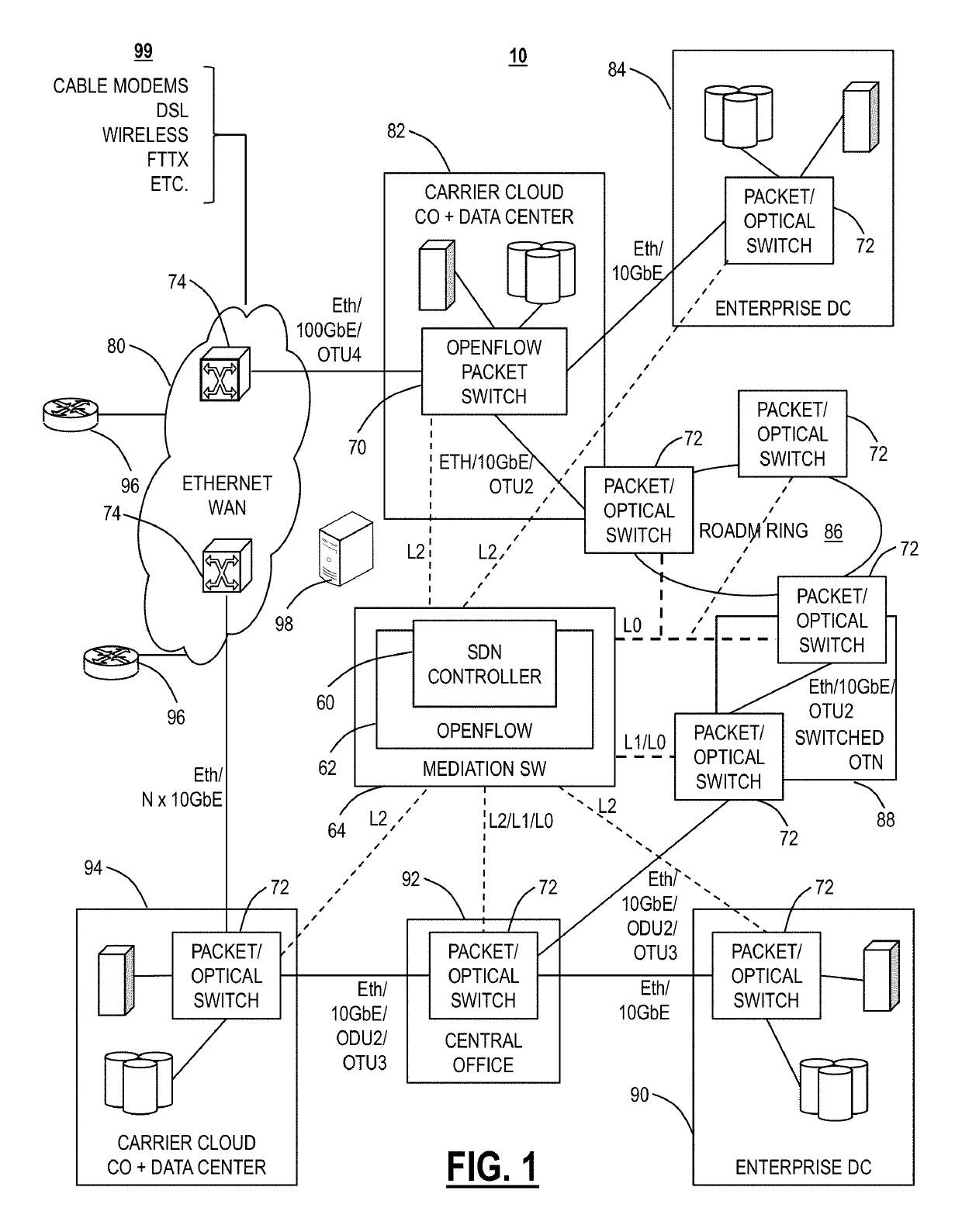
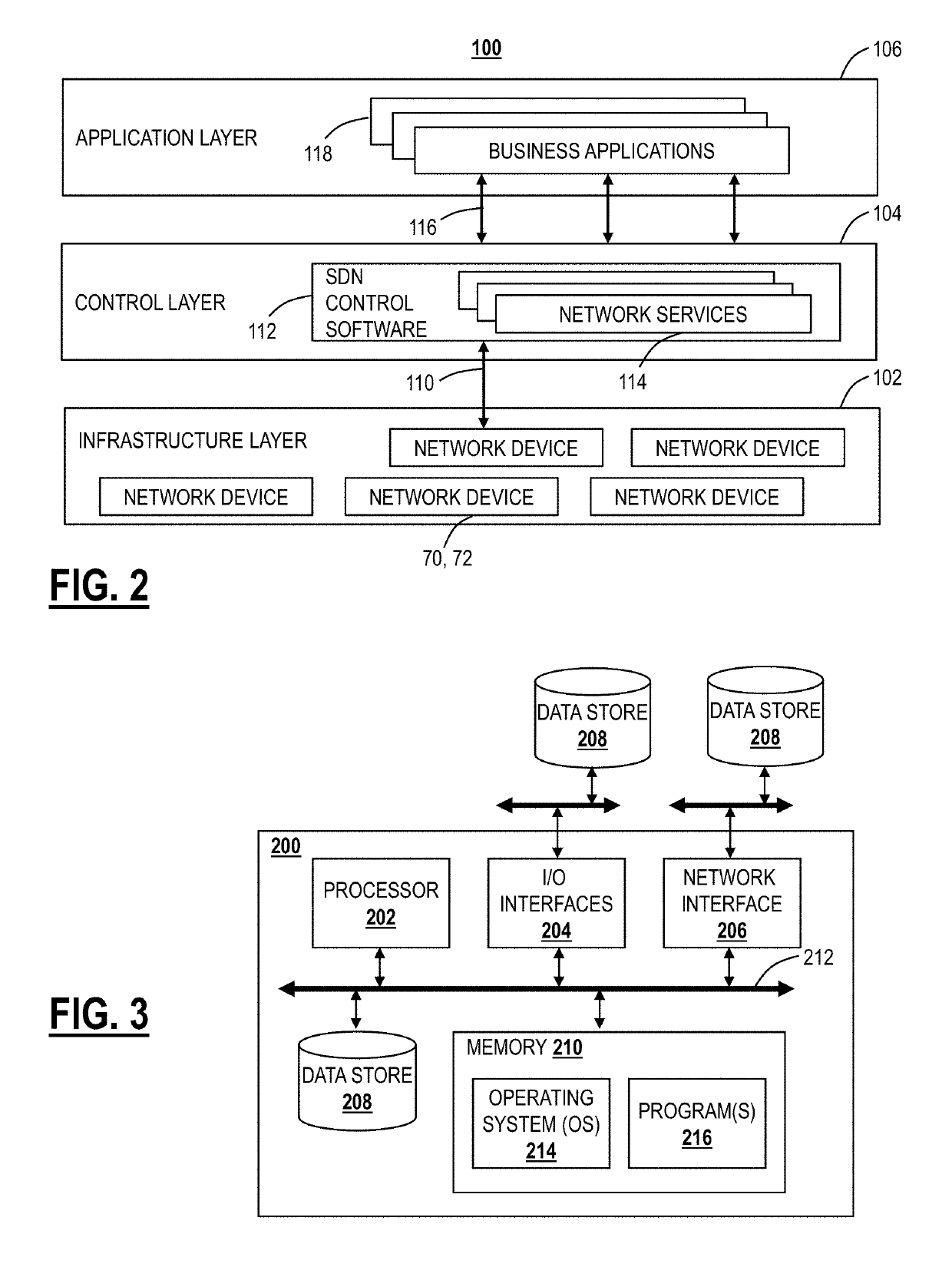
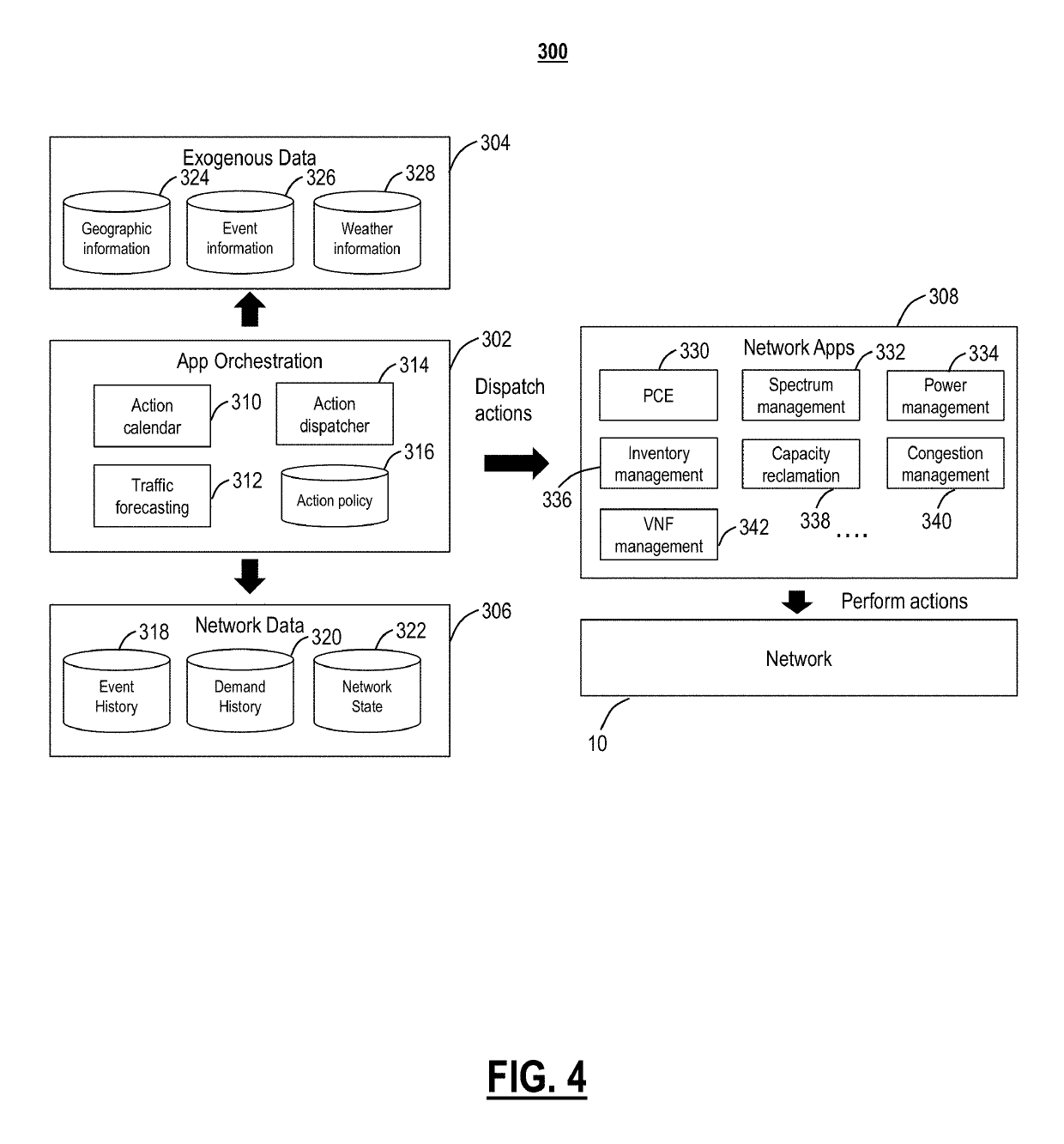
- A traffic-adaptive network control method that monitors network data, generates forecasts based on observed and external events, and orchestrates actions such as capacity recovery, reallocation, and addition using network applications to optimize resource utilization and minimize costs.

Method and system for managing a plurality of Wi-Fi access points using a cloud based adaptive software defined network
PatentActiveUS11503478B2
Innovation
- A cloud-based adaptive software-defined network (A-SDN) system that collects measurement data from Wi-Fi access points and client devices, processes it using filtering, correlation, clustering, and machine learning to derive optimal settings for decision variables, optimizing network performance through heuristic solutions and Mixed Integer Nonlinear Programming.


Security and Privacy Implications in Network Control
The security and privacy implications of network control systems represent critical considerations when evaluating adaptive network control versus cloud-based solutions. Both approaches introduce distinct vulnerabilities and protective mechanisms that organizations must carefully assess to maintain robust cybersecurity postures.
Adaptive network control systems typically operate with distributed intelligence across network nodes, creating multiple potential attack vectors. Each autonomous control point becomes a potential entry point for malicious actors, requiring comprehensive endpoint security measures. However, this distributed architecture also provides inherent resilience against single-point-of-failure attacks, as compromising one node does not necessarily grant access to the entire network infrastructure.
Cloud-based network control solutions centralize control functions, creating concentrated security risks but also enabling more comprehensive monitoring and protection strategies. The centralized nature allows for unified security policy enforcement and real-time threat detection across the entire network infrastructure. However, this concentration also makes cloud-based systems attractive targets for sophisticated cyber attacks, where successful breaches could potentially compromise entire network operations.
Data privacy concerns differ significantly between these approaches. Adaptive systems often process and store sensitive network data locally, reducing exposure to external privacy breaches but complicating compliance with data protection regulations across distributed locations. Cloud-based solutions typically aggregate vast amounts of network telemetry data in centralized repositories, raising concerns about data sovereignty, third-party access, and regulatory compliance across different jurisdictions.
Authentication and access control mechanisms present unique challenges for each approach. Adaptive systems require robust device-to-device authentication protocols and distributed identity management, while cloud-based solutions must implement secure remote access controls and protect against credential-based attacks targeting centralized control interfaces.
The encryption requirements also vary substantially. Adaptive networks need efficient edge-to-edge encryption that does not compromise real-time control performance, whereas cloud-based systems require secure communication channels between distributed network elements and centralized control platforms, often involving complex key management across hybrid infrastructure environments.
Adaptive network control systems typically operate with distributed intelligence across network nodes, creating multiple potential attack vectors. Each autonomous control point becomes a potential entry point for malicious actors, requiring comprehensive endpoint security measures. However, this distributed architecture also provides inherent resilience against single-point-of-failure attacks, as compromising one node does not necessarily grant access to the entire network infrastructure.
Cloud-based network control solutions centralize control functions, creating concentrated security risks but also enabling more comprehensive monitoring and protection strategies. The centralized nature allows for unified security policy enforcement and real-time threat detection across the entire network infrastructure. However, this concentration also makes cloud-based systems attractive targets for sophisticated cyber attacks, where successful breaches could potentially compromise entire network operations.
Data privacy concerns differ significantly between these approaches. Adaptive systems often process and store sensitive network data locally, reducing exposure to external privacy breaches but complicating compliance with data protection regulations across distributed locations. Cloud-based solutions typically aggregate vast amounts of network telemetry data in centralized repositories, raising concerns about data sovereignty, third-party access, and regulatory compliance across different jurisdictions.
Authentication and access control mechanisms present unique challenges for each approach. Adaptive systems require robust device-to-device authentication protocols and distributed identity management, while cloud-based solutions must implement secure remote access controls and protect against credential-based attacks targeting centralized control interfaces.
The encryption requirements also vary substantially. Adaptive networks need efficient edge-to-edge encryption that does not compromise real-time control performance, whereas cloud-based systems require secure communication channels between distributed network elements and centralized control platforms, often involving complex key management across hybrid infrastructure environments.
Performance Benchmarking and Efficacy Metrics
Performance benchmarking between adaptive network control and cloud-based solutions requires comprehensive evaluation frameworks that capture both quantitative metrics and qualitative operational characteristics. The efficacy assessment must encompass multiple dimensions including latency performance, throughput optimization, resource utilization efficiency, and system reliability under varying network conditions.
Latency measurements represent a critical differentiator between these approaches. Adaptive network control systems typically demonstrate superior edge-to-edge response times, with measurements showing sub-millisecond decision-making capabilities for local traffic optimization. Cloud-based solutions, while offering centralized intelligence, introduce inherent propagation delays ranging from 10-50 milliseconds depending on geographic distribution and network topology.
Throughput benchmarking reveals distinct performance profiles under different operational scenarios. Adaptive systems excel in dynamic bandwidth allocation, achieving 15-25% higher utilization rates during peak traffic periods through real-time local adjustments. Cloud-based architectures demonstrate superior performance in complex optimization scenarios, leveraging computational resources to achieve 20-30% better long-term efficiency through advanced machine learning algorithms.
Resource utilization metrics highlight fundamental architectural differences. Adaptive control systems distribute computational load across network nodes, resulting in lower individual device requirements but higher aggregate power consumption. Cloud-based solutions concentrate processing power, achieving better computational efficiency per operation while requiring robust connectivity infrastructure.
Reliability benchmarking encompasses fault tolerance and recovery capabilities. Adaptive systems demonstrate resilience through distributed decision-making, maintaining 99.5% operational availability during localized failures. Cloud-based solutions achieve 99.9% availability through redundant infrastructure but face vulnerability during connectivity disruptions.
Scalability metrics reveal performance characteristics under varying network sizes. Adaptive control maintains consistent per-node performance regardless of network scale, while cloud-based solutions demonstrate improved efficiency gains with larger deployments due to centralized optimization algorithms. Cost-effectiveness analysis indicates adaptive systems require higher initial deployment investments but lower operational expenses, whereas cloud-based solutions offer reduced upfront costs with subscription-based operational models.
Latency measurements represent a critical differentiator between these approaches. Adaptive network control systems typically demonstrate superior edge-to-edge response times, with measurements showing sub-millisecond decision-making capabilities for local traffic optimization. Cloud-based solutions, while offering centralized intelligence, introduce inherent propagation delays ranging from 10-50 milliseconds depending on geographic distribution and network topology.
Throughput benchmarking reveals distinct performance profiles under different operational scenarios. Adaptive systems excel in dynamic bandwidth allocation, achieving 15-25% higher utilization rates during peak traffic periods through real-time local adjustments. Cloud-based architectures demonstrate superior performance in complex optimization scenarios, leveraging computational resources to achieve 20-30% better long-term efficiency through advanced machine learning algorithms.
Resource utilization metrics highlight fundamental architectural differences. Adaptive control systems distribute computational load across network nodes, resulting in lower individual device requirements but higher aggregate power consumption. Cloud-based solutions concentrate processing power, achieving better computational efficiency per operation while requiring robust connectivity infrastructure.
Reliability benchmarking encompasses fault tolerance and recovery capabilities. Adaptive systems demonstrate resilience through distributed decision-making, maintaining 99.5% operational availability during localized failures. Cloud-based solutions achieve 99.9% availability through redundant infrastructure but face vulnerability during connectivity disruptions.
Scalability metrics reveal performance characteristics under varying network sizes. Adaptive control maintains consistent per-node performance regardless of network scale, while cloud-based solutions demonstrate improved efficiency gains with larger deployments due to centralized optimization algorithms. Cost-effectiveness analysis indicates adaptive systems require higher initial deployment investments but lower operational expenses, whereas cloud-based solutions offer reduced upfront costs with subscription-based operational models.
Unlock deeper insights with Patsnap Eureka Quick Research — get a full tech report to explore trends and direct your research. Try now!
Generate Your Research Report Instantly with AI Agent
Supercharge your innovation with Patsnap Eureka AI Agent Platform!