Adaptive Network Control vs Traditional Models: Scalability Insights
MAR 18, 20269 MIN READ
Generate Your Research Report Instantly with AI Agent
PatSnap Eureka helps you evaluate technical feasibility & market potential.
Adaptive Network Control Evolution and Objectives
Adaptive network control has emerged from decades of evolution in network management paradigms, fundamentally transforming how modern communication systems handle dynamic traffic patterns and resource allocation. The journey began with static routing protocols in the 1970s, where network paths were predetermined and rarely adjusted. This approach proved inadequate as networks grew in complexity and scale, leading to the development of dynamic routing algorithms in the 1980s that could respond to basic network state changes.
The advent of software-defined networking (SDN) in the early 2000s marked a pivotal shift toward centralized control architectures, enabling more sophisticated network management strategies. This evolution laid the groundwork for adaptive control mechanisms that could leverage real-time network intelligence and machine learning algorithms to optimize performance continuously.
Contemporary adaptive network control systems represent a paradigm shift from reactive to proactive network management. Unlike traditional models that respond to network events after they occur, adaptive systems anticipate network conditions and preemptively adjust configurations to maintain optimal performance. This evolution has been driven by the exponential growth in network traffic, the proliferation of IoT devices, and the increasing demand for low-latency applications.
The primary objective of adaptive network control is to achieve autonomous network optimization that scales efficiently with network size and complexity. Traditional control models typically exhibit linear or polynomial scaling characteristics, where management overhead increases proportionally with network elements. In contrast, adaptive systems aim to achieve logarithmic scaling through intelligent automation and distributed decision-making processes.
Key technical objectives include dynamic resource allocation based on real-time demand patterns, predictive congestion management using historical and current traffic analytics, and self-healing capabilities that automatically reroute traffic around failed components. These systems also target energy efficiency optimization, reducing operational costs while maintaining service quality standards.
The scalability imperative has driven the development of hierarchical control architectures that can manage networks spanning multiple geographic regions and administrative domains. Modern adaptive systems incorporate edge computing principles, distributing control intelligence closer to end users to reduce latency and improve responsiveness. This distributed approach enables networks to scale horizontally while maintaining centralized policy enforcement and global optimization objectives.
Machine learning integration represents another critical objective, enabling networks to learn from historical patterns and adapt to emerging traffic behaviors without human intervention. This capability is essential for managing the complexity of modern heterogeneous networks that support diverse application requirements and service level agreements.
The advent of software-defined networking (SDN) in the early 2000s marked a pivotal shift toward centralized control architectures, enabling more sophisticated network management strategies. This evolution laid the groundwork for adaptive control mechanisms that could leverage real-time network intelligence and machine learning algorithms to optimize performance continuously.
Contemporary adaptive network control systems represent a paradigm shift from reactive to proactive network management. Unlike traditional models that respond to network events after they occur, adaptive systems anticipate network conditions and preemptively adjust configurations to maintain optimal performance. This evolution has been driven by the exponential growth in network traffic, the proliferation of IoT devices, and the increasing demand for low-latency applications.
The primary objective of adaptive network control is to achieve autonomous network optimization that scales efficiently with network size and complexity. Traditional control models typically exhibit linear or polynomial scaling characteristics, where management overhead increases proportionally with network elements. In contrast, adaptive systems aim to achieve logarithmic scaling through intelligent automation and distributed decision-making processes.
Key technical objectives include dynamic resource allocation based on real-time demand patterns, predictive congestion management using historical and current traffic analytics, and self-healing capabilities that automatically reroute traffic around failed components. These systems also target energy efficiency optimization, reducing operational costs while maintaining service quality standards.
The scalability imperative has driven the development of hierarchical control architectures that can manage networks spanning multiple geographic regions and administrative domains. Modern adaptive systems incorporate edge computing principles, distributing control intelligence closer to end users to reduce latency and improve responsiveness. This distributed approach enables networks to scale horizontally while maintaining centralized policy enforcement and global optimization objectives.
Machine learning integration represents another critical objective, enabling networks to learn from historical patterns and adapt to emerging traffic behaviors without human intervention. This capability is essential for managing the complexity of modern heterogeneous networks that support diverse application requirements and service level agreements.
Market Demand for Scalable Network Solutions
The global network infrastructure market is experiencing unprecedented growth driven by digital transformation initiatives across industries. Organizations are increasingly demanding network solutions that can dynamically scale to accommodate fluctuating workloads, support emerging technologies like IoT and edge computing, and maintain performance under varying traffic conditions. This demand surge stems from the fundamental shift toward cloud-native architectures, distributed computing models, and real-time data processing requirements.
Enterprise networks face mounting pressure to support hybrid work environments, where traffic patterns are unpredictable and resource demands can spike dramatically. Traditional static network configurations struggle to meet these evolving requirements, creating a substantial market opportunity for adaptive network control solutions. The proliferation of connected devices and the exponential growth in data volumes have made scalability a critical differentiator rather than a luxury feature.
Cloud service providers represent a significant market segment driving demand for scalable network solutions. These organizations require network architectures that can automatically adjust to customer demands, optimize resource allocation, and maintain service level agreements across diverse geographical regions. The competitive landscape in cloud services has intensified the focus on network efficiency and responsiveness as key value propositions.
Telecommunications operators are actively seeking network control technologies that can handle the complexity of 5G deployments, network function virtualization, and software-defined networking implementations. The transition from hardware-centric to software-defined network architectures has created new scalability challenges that traditional models cannot adequately address. This technological evolution has opened substantial market opportunities for innovative network control approaches.
Financial services, healthcare, and manufacturing sectors are driving demand for network solutions that can scale securely while maintaining compliance requirements. These industries require network architectures that can adapt to regulatory changes, support mission-critical applications, and provide consistent performance across distributed operations. The increasing emphasis on data sovereignty and edge processing has further amplified the need for scalable network control mechanisms.
The market demand is particularly strong for solutions that can demonstrate measurable improvements in network utilization efficiency, reduced operational complexity, and enhanced fault tolerance compared to traditional approaches.
Enterprise networks face mounting pressure to support hybrid work environments, where traffic patterns are unpredictable and resource demands can spike dramatically. Traditional static network configurations struggle to meet these evolving requirements, creating a substantial market opportunity for adaptive network control solutions. The proliferation of connected devices and the exponential growth in data volumes have made scalability a critical differentiator rather than a luxury feature.
Cloud service providers represent a significant market segment driving demand for scalable network solutions. These organizations require network architectures that can automatically adjust to customer demands, optimize resource allocation, and maintain service level agreements across diverse geographical regions. The competitive landscape in cloud services has intensified the focus on network efficiency and responsiveness as key value propositions.
Telecommunications operators are actively seeking network control technologies that can handle the complexity of 5G deployments, network function virtualization, and software-defined networking implementations. The transition from hardware-centric to software-defined network architectures has created new scalability challenges that traditional models cannot adequately address. This technological evolution has opened substantial market opportunities for innovative network control approaches.
Financial services, healthcare, and manufacturing sectors are driving demand for network solutions that can scale securely while maintaining compliance requirements. These industries require network architectures that can adapt to regulatory changes, support mission-critical applications, and provide consistent performance across distributed operations. The increasing emphasis on data sovereignty and edge processing has further amplified the need for scalable network control mechanisms.
The market demand is particularly strong for solutions that can demonstrate measurable improvements in network utilization efficiency, reduced operational complexity, and enhanced fault tolerance compared to traditional approaches.
Current Limitations of Traditional Network Models
Traditional network models face significant scalability constraints that fundamentally limit their effectiveness in modern distributed environments. These models typically rely on centralized control architectures where a single controller or a small cluster of controllers manages the entire network infrastructure. As network size increases exponentially, the computational overhead and decision-making latency grow proportionally, creating bottlenecks that severely impact performance.
The static configuration approach inherent in traditional models presents another critical limitation. Network parameters are typically pre-configured based on anticipated traffic patterns and remain largely unchanged during operation. This rigidity prevents networks from adapting to dynamic workload variations, seasonal traffic fluctuations, or unexpected demand spikes that are commonplace in contemporary digital ecosystems.
Resource allocation inefficiencies plague traditional models when dealing with large-scale deployments. The lack of real-time visibility into network conditions across distributed nodes leads to suboptimal bandwidth distribution and routing decisions. Traditional models often over-provision resources to handle peak loads, resulting in significant waste during normal operations and increased operational costs.
Protocol overhead becomes increasingly problematic as network scale expands. Traditional routing protocols like OSPF and BGP generate substantial control traffic for topology discovery and maintenance. In large networks, this overhead can consume significant bandwidth and processing resources, reducing the capacity available for actual data transmission and degrading overall network efficiency.
The inability to handle heterogeneous network environments represents another fundamental constraint. Traditional models struggle to accommodate diverse device types, varying performance capabilities, and different network technologies within a unified framework. This limitation becomes particularly acute in modern networks that integrate cloud services, edge computing nodes, and IoT devices with vastly different operational characteristics.
Fault tolerance and recovery mechanisms in traditional models are often inadequate for large-scale operations. The centralized nature of control makes these systems vulnerable to single points of failure, while recovery procedures typically involve manual intervention or pre-configured backup systems that may not address complex failure scenarios effectively.
The static configuration approach inherent in traditional models presents another critical limitation. Network parameters are typically pre-configured based on anticipated traffic patterns and remain largely unchanged during operation. This rigidity prevents networks from adapting to dynamic workload variations, seasonal traffic fluctuations, or unexpected demand spikes that are commonplace in contemporary digital ecosystems.
Resource allocation inefficiencies plague traditional models when dealing with large-scale deployments. The lack of real-time visibility into network conditions across distributed nodes leads to suboptimal bandwidth distribution and routing decisions. Traditional models often over-provision resources to handle peak loads, resulting in significant waste during normal operations and increased operational costs.
Protocol overhead becomes increasingly problematic as network scale expands. Traditional routing protocols like OSPF and BGP generate substantial control traffic for topology discovery and maintenance. In large networks, this overhead can consume significant bandwidth and processing resources, reducing the capacity available for actual data transmission and degrading overall network efficiency.
The inability to handle heterogeneous network environments represents another fundamental constraint. Traditional models struggle to accommodate diverse device types, varying performance capabilities, and different network technologies within a unified framework. This limitation becomes particularly acute in modern networks that integrate cloud services, edge computing nodes, and IoT devices with vastly different operational characteristics.
Fault tolerance and recovery mechanisms in traditional models are often inadequate for large-scale operations. The centralized nature of control makes these systems vulnerable to single points of failure, while recovery procedures typically involve manual intervention or pre-configured backup systems that may not address complex failure scenarios effectively.
Existing Adaptive vs Traditional Control Approaches
01 Hierarchical network architecture for scalable control
Implementing hierarchical network architectures enables scalable adaptive control by organizing network elements into multiple layers or tiers. This approach distributes control functions across different levels, reducing centralized processing bottlenecks and improving overall system scalability. The hierarchical structure allows for localized decision-making while maintaining global coordination, making it suitable for large-scale network deployments.- Hierarchical network architecture for scalable control: Implementing hierarchical network structures with multiple control layers enables better scalability in adaptive networks. This approach divides the network into manageable domains or zones, each with local controllers that communicate with higher-level controllers. The hierarchical design reduces control overhead, improves response times, and allows the network to scale efficiently as new nodes or domains are added. This architecture supports distributed decision-making while maintaining centralized oversight for critical network functions.
- Dynamic resource allocation and load balancing mechanisms: Adaptive networks employ dynamic resource allocation algorithms that automatically adjust bandwidth, processing power, and network resources based on real-time demand. Load balancing techniques distribute traffic and computational tasks across multiple network elements to prevent bottlenecks and ensure optimal performance. These mechanisms monitor network conditions continuously and make intelligent decisions to redistribute resources, enabling the network to handle varying loads and scale seamlessly as traffic patterns change.
- Software-defined networking for flexible control plane scalability: Software-defined networking approaches separate the control plane from the data plane, allowing centralized programmable control over network behavior. This separation enables rapid adaptation to changing network conditions and simplifies the deployment of new services and protocols. The programmable nature of the control plane allows for efficient scaling by enabling controllers to manage large numbers of network devices through standardized interfaces. This architecture supports network virtualization and allows multiple virtual networks to operate on shared physical infrastructure.
- Distributed control protocols with consensus mechanisms: Distributed control protocols enable network nodes to make coordinated decisions without relying on a single central authority. These protocols use consensus algorithms to ensure consistency across the network while allowing local autonomy. By distributing control intelligence across multiple nodes, the network can scale more effectively and maintain operation even when individual nodes fail. This approach reduces single points of failure and enables the network to adapt to topology changes dynamically.
- Machine learning-based adaptive control optimization: Machine learning algorithms analyze network traffic patterns, performance metrics, and historical data to predict future network behavior and optimize control decisions. These intelligent systems can automatically adjust network parameters, routing policies, and resource allocation strategies to maintain optimal performance as the network scales. The learning-based approach enables the network to adapt to new conditions without manual intervention and improves scalability by identifying and addressing performance issues proactively.
02 Dynamic resource allocation and load balancing mechanisms
Adaptive network control scalability can be achieved through dynamic resource allocation algorithms that automatically adjust network resources based on current demand and traffic patterns. Load balancing mechanisms distribute network traffic and processing tasks across multiple nodes or controllers, preventing overload on individual components and ensuring consistent performance as the network scales. These mechanisms continuously monitor network conditions and adapt resource distribution in real-time.Expand Specific Solutions03 Distributed control plane architecture
Distributed control plane architectures enhance scalability by eliminating single points of failure and distributing control intelligence across multiple controllers or nodes. This approach allows parallel processing of control decisions and reduces latency in large-scale networks. The distributed architecture supports horizontal scaling, where additional control nodes can be added as network size increases, maintaining performance and reliability.Expand Specific Solutions04 Software-defined networking with modular control functions
Software-defined networking approaches with modular control functions provide scalability through programmable network management and flexible control logic deployment. Modular design allows specific control functions to be instantiated, scaled, or modified independently based on network requirements. This architecture supports rapid adaptation to changing network conditions and enables efficient scaling of control capabilities without redesigning the entire system.Expand Specific Solutions05 Machine learning-based adaptive control optimization
Machine learning algorithms enable intelligent adaptive control that scales efficiently by learning network patterns and predicting optimal control strategies. These systems can automatically adjust control parameters based on historical data and real-time observations, reducing manual configuration overhead in large networks. The learning-based approach improves scalability by enabling autonomous optimization and adaptation as network complexity increases.Expand Specific Solutions
Leading Players in Adaptive Network Technologies
The adaptive network control technology landscape is experiencing rapid evolution as the industry transitions from traditional static models to dynamic, AI-driven solutions. The market demonstrates significant growth potential, driven by increasing demands for network scalability and real-time optimization. Technology maturity varies considerably across players, with established telecommunications giants like Ericsson, Huawei, and NTT leading in infrastructure deployment, while companies like Cisco and Samsung Electronics advance software-defined networking capabilities. Research institutions including Carnegie Mellon University and Zhejiang University contribute foundational algorithmic innovations, particularly in machine learning applications. Specialized firms like AISing and Talari Networks focus on edge-based adaptive solutions, while traditional players such as Siemens and Nokia integrate adaptive controls into broader industrial and telecommunications portfolios. The competitive landscape reflects a convergence of telecommunications, semiconductor, and AI technologies, with scalability emerging as the primary differentiator between adaptive and conventional approaches.
Telefonaktiebolaget LM Ericsson
Technical Solution: Ericsson's Network Intelligence platform combines machine learning with 5G network slicing for adaptive network control in telecommunications infrastructure. Their AI-powered Radio Access Network (RAN) optimization automatically adjusts antenna parameters, power levels, and handover thresholds based on real-time traffic analysis. The system implements reinforcement learning algorithms for dynamic spectrum allocation and interference mitigation. Ericsson's Cloud RAN solution enables centralized processing with adaptive resource allocation across multiple cell sites. The platform incorporates predictive maintenance capabilities and can automatically scale network capacity based on demand forecasting. Their network orchestration solution supports service function chaining with microsecond-level service provisioning.
Strengths: Deep expertise in telecommunications with strong 5G technology leadership and global carrier relationships. Weaknesses: Limited presence in enterprise networking markets and high infrastructure investment requirements.
Huawei Technologies Co., Ltd.
Technical Solution: Huawei's CloudCampus solution implements adaptive network control through AI-powered network intelligence engine called CampusInsight. The system utilizes deep learning algorithms to analyze network behavior patterns and automatically optimize network performance. Their Intent-Driven Network (IDN) architecture enables policy-based automation with natural language processing for network configuration. The solution incorporates predictive analytics for proactive fault detection and self-healing capabilities. Huawei's CloudFabric data center networking solution provides adaptive load balancing and traffic engineering with microsecond-level latency optimization. The platform supports multi-tenant environments and can scale to support over 100,000 virtual machines in a single data center deployment.
Strengths: Advanced AI capabilities and competitive pricing with strong presence in Asia-Pacific markets. Weaknesses: Limited market access in certain regions due to geopolitical restrictions and regulatory concerns.
Core Scalability Innovations in Network Control
Traffic-adaptive network control systems and methods
PatentActiveUS10491501B2
Innovation
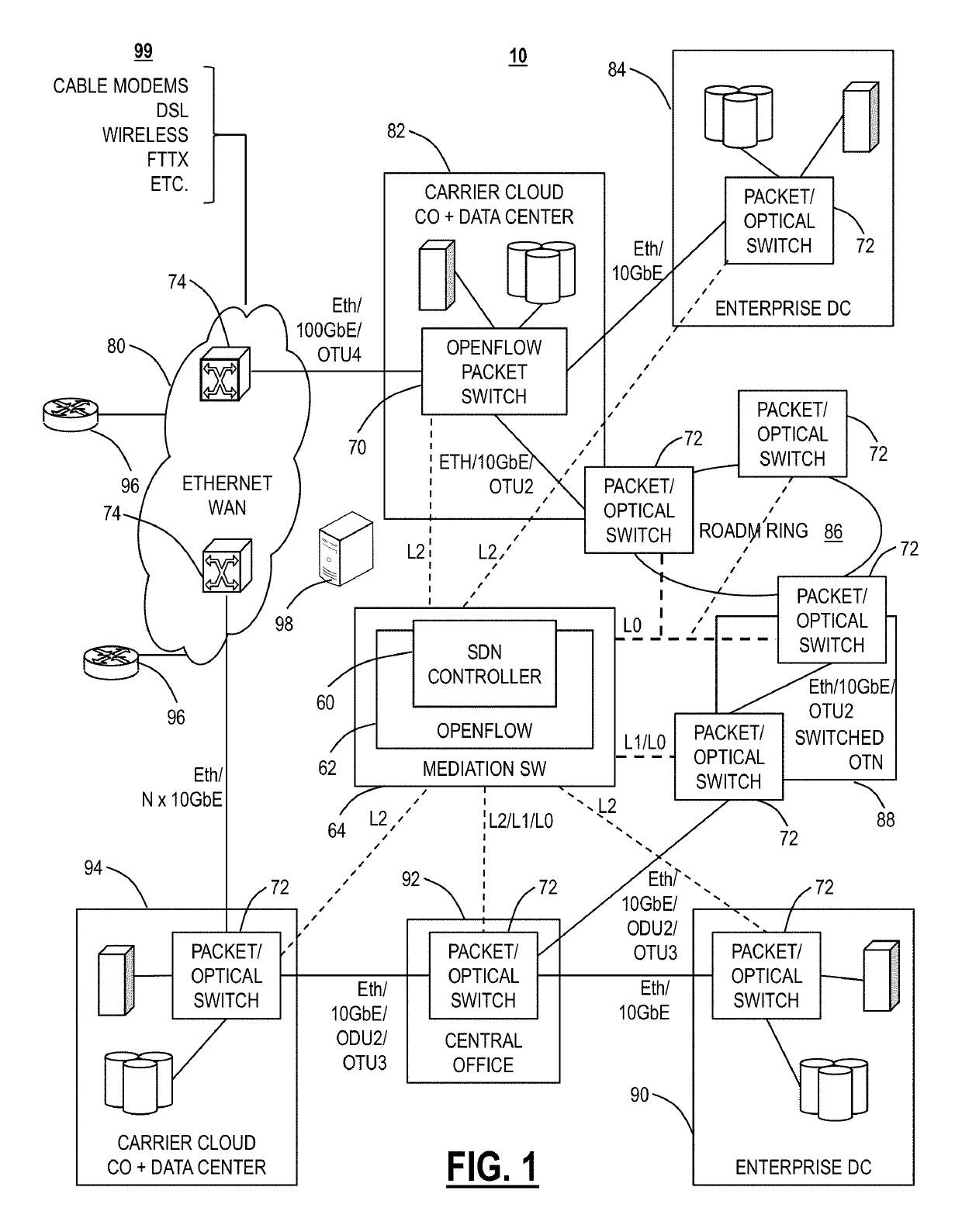
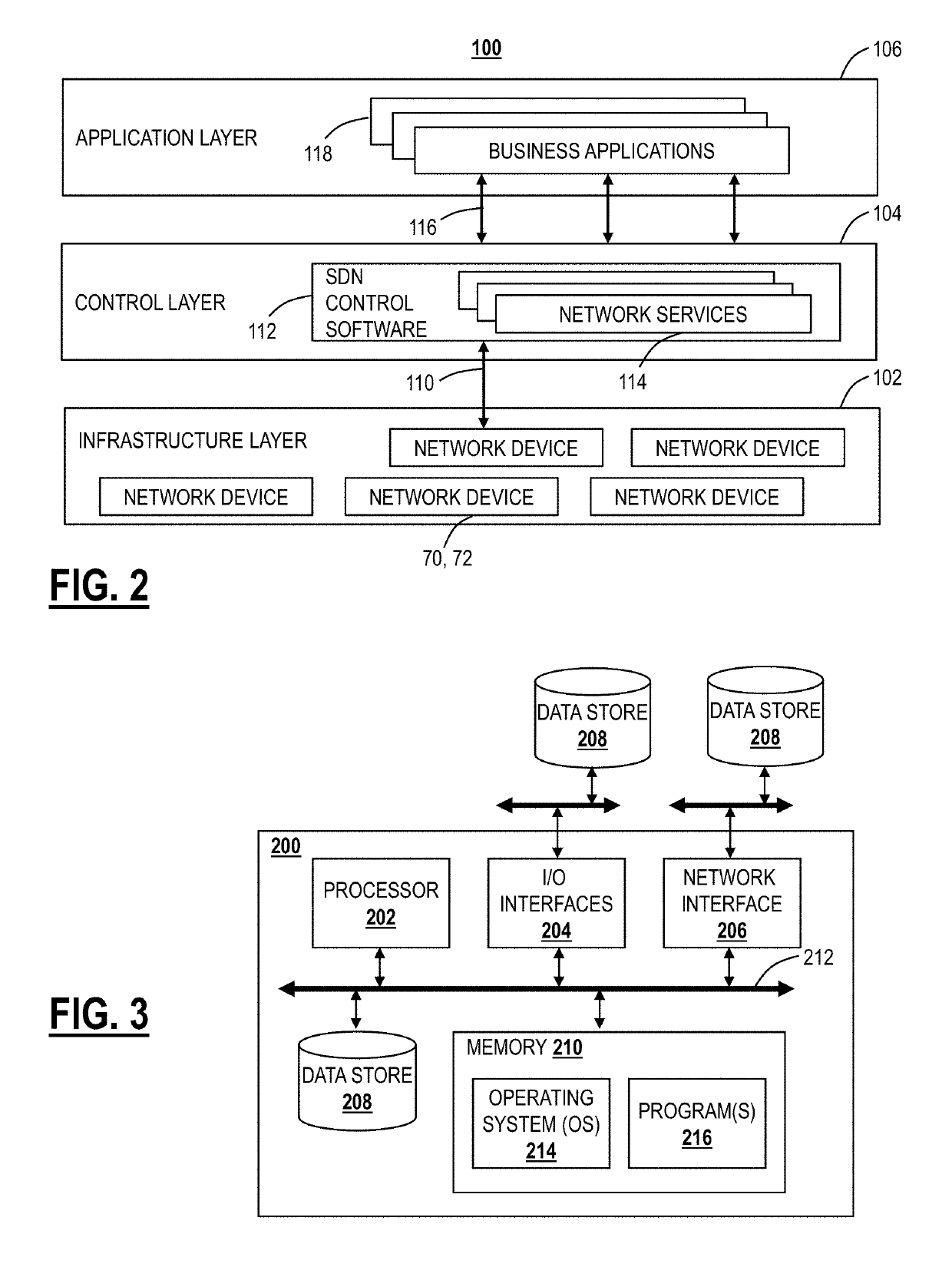
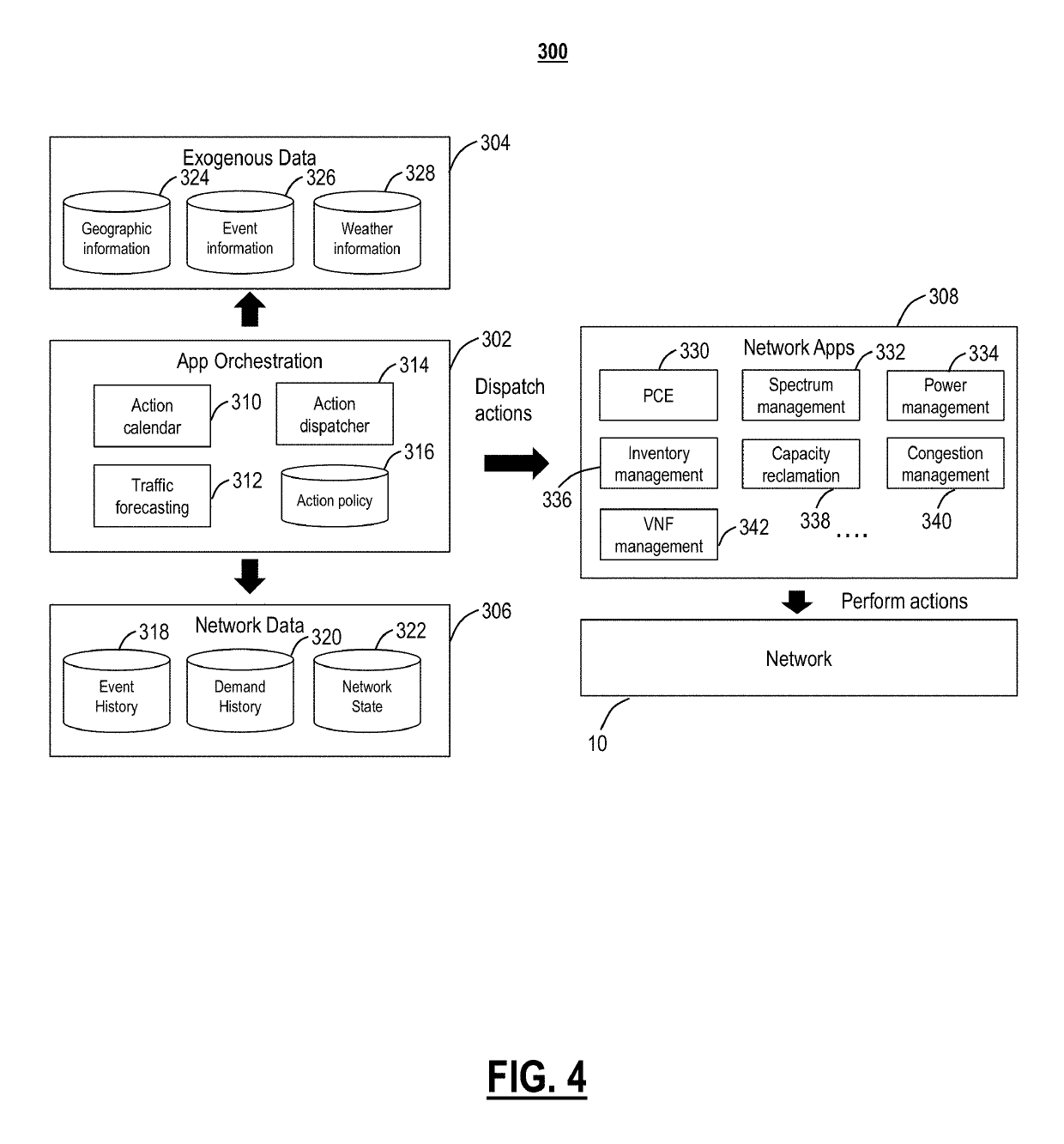
- A traffic-adaptive network control method that monitors network data, generates forecasts based on observed and external events, and orchestrates actions such as capacity recovery, reallocation, and addition using network applications to optimize resource utilization and minimize costs.

Stabilized adaptive neural network based control system
PatentInactiveUS5493631A
Innovation
- A neural network controller with a built-in baseline fixed controller and smart limiter for output constraint, allowing real-time adaptivity while ensuring stability by limiting control signals within predetermined gain and phase margins, leveraging the complexity of neural networks for pattern matching and feature extraction.


Network Infrastructure Standards and Compliance
Network infrastructure standards and compliance frameworks play a pivotal role in determining the feasibility and implementation pathways for both adaptive network control systems and traditional networking models. The regulatory landscape encompasses multiple layers of requirements, from international telecommunications standards to industry-specific compliance mandates that directly influence scalability considerations.
The International Telecommunication Union (ITU) and Institute of Electrical and Electronics Engineers (IEEE) have established foundational standards that govern network architecture design principles. IEEE 802 series standards, particularly 802.1Q for VLAN tagging and 802.1X for network access control, create baseline requirements that both adaptive and traditional systems must accommodate. These standards inherently favor certain architectural approaches, with traditional models often enjoying legacy compliance advantages due to their established implementation patterns.
Software-Defined Networking (SDN) and Network Function Virtualization (NFV) standards, primarily driven by the Open Networking Foundation and European Telecommunications Standards Institute, have introduced new compliance frameworks specifically designed to support adaptive network control mechanisms. The OpenFlow protocol specification and ETSI NFV architectural framework provide standardized interfaces that enable dynamic network reconfiguration while maintaining regulatory compliance.
Regional compliance requirements significantly impact scalability strategies. The European Union's General Data Protection Regulation (GDPR) and Network and Information Systems Directive impose strict data handling and security requirements that affect network control system design. Similarly, the Federal Information Processing Standards (FIPS) in the United States mandate specific cryptographic implementations that can constrain adaptive control algorithms' operational flexibility.
Industry-specific standards present additional complexity layers. Financial services networks must comply with Payment Card Industry Data Security Standard (PCI DSS) requirements, while healthcare networks face Health Insurance Portability and Accountability Act (HIPAA) constraints. These sector-specific mandates often require deterministic network behaviors that traditional models can more readily guarantee compared to adaptive systems' dynamic nature.
Emerging standards for network automation and artificial intelligence integration, including the Telecommunications Management Network (TMN) framework and Intent-Based Networking specifications, are creating new compliance pathways that favor adaptive control systems. These evolving standards recognize the necessity of intelligent network management while establishing guardrails for automated decision-making processes.
The compliance verification and audit processes represent critical scalability bottlenecks. Traditional network models benefit from well-established testing methodologies and certification procedures, while adaptive systems often require novel validation approaches that regulatory bodies are still developing. This regulatory maturity gap creates implementation risks that organizations must carefully evaluate when selecting network control paradigms for large-scale deployments.
The International Telecommunication Union (ITU) and Institute of Electrical and Electronics Engineers (IEEE) have established foundational standards that govern network architecture design principles. IEEE 802 series standards, particularly 802.1Q for VLAN tagging and 802.1X for network access control, create baseline requirements that both adaptive and traditional systems must accommodate. These standards inherently favor certain architectural approaches, with traditional models often enjoying legacy compliance advantages due to their established implementation patterns.
Software-Defined Networking (SDN) and Network Function Virtualization (NFV) standards, primarily driven by the Open Networking Foundation and European Telecommunications Standards Institute, have introduced new compliance frameworks specifically designed to support adaptive network control mechanisms. The OpenFlow protocol specification and ETSI NFV architectural framework provide standardized interfaces that enable dynamic network reconfiguration while maintaining regulatory compliance.
Regional compliance requirements significantly impact scalability strategies. The European Union's General Data Protection Regulation (GDPR) and Network and Information Systems Directive impose strict data handling and security requirements that affect network control system design. Similarly, the Federal Information Processing Standards (FIPS) in the United States mandate specific cryptographic implementations that can constrain adaptive control algorithms' operational flexibility.
Industry-specific standards present additional complexity layers. Financial services networks must comply with Payment Card Industry Data Security Standard (PCI DSS) requirements, while healthcare networks face Health Insurance Portability and Accountability Act (HIPAA) constraints. These sector-specific mandates often require deterministic network behaviors that traditional models can more readily guarantee compared to adaptive systems' dynamic nature.
Emerging standards for network automation and artificial intelligence integration, including the Telecommunications Management Network (TMN) framework and Intent-Based Networking specifications, are creating new compliance pathways that favor adaptive control systems. These evolving standards recognize the necessity of intelligent network management while establishing guardrails for automated decision-making processes.
The compliance verification and audit processes represent critical scalability bottlenecks. Traditional network models benefit from well-established testing methodologies and certification procedures, while adaptive systems often require novel validation approaches that regulatory bodies are still developing. This regulatory maturity gap creates implementation risks that organizations must carefully evaluate when selecting network control paradigms for large-scale deployments.
Performance Benchmarking and Evaluation Metrics
Performance benchmarking of adaptive network control systems requires comprehensive evaluation frameworks that capture both quantitative metrics and qualitative assessments. The fundamental challenge lies in establishing standardized measurement protocols that can effectively compare adaptive algorithms against traditional static models across diverse network environments and operational conditions.
Throughput and latency measurements form the cornerstone of performance evaluation, with adaptive systems typically demonstrating superior performance under dynamic load conditions. Benchmarking protocols must account for temporal variations, measuring not only peak performance but also consistency over extended operational periods. Traditional models often exhibit predictable but limited performance ceilings, while adaptive systems show variable performance patterns that require statistical analysis across multiple operational scenarios.
Scalability metrics encompass both horizontal and vertical scaling capabilities, measuring how systems respond to increasing network size, user density, and traffic complexity. Adaptive control mechanisms typically excel in environments with fluctuating demands, demonstrating improved resource utilization efficiency compared to static allocation models. However, the computational overhead of adaptive algorithms must be factored into scalability assessments, as decision-making processes can introduce processing delays that impact overall system performance.
Resource utilization efficiency serves as a critical differentiator between adaptive and traditional approaches. Evaluation frameworks must measure CPU usage, memory consumption, and network bandwidth utilization under varying load conditions. Adaptive systems often demonstrate superior resource optimization through dynamic allocation strategies, but this advantage may diminish under stable, predictable network conditions where traditional models can achieve optimal static configurations.
Convergence time and stability metrics are particularly relevant for adaptive systems, measuring how quickly algorithms reach optimal configurations and maintain stable performance. Traditional models typically offer immediate stability but lack responsiveness to changing conditions. Benchmarking must evaluate the trade-offs between adaptation speed and system stability, considering scenarios where rapid environmental changes challenge adaptive algorithms' ability to maintain consistent performance levels.
Error rates and fault tolerance capabilities require specialized evaluation methodologies that simulate various failure scenarios and network disruptions. Adaptive systems generally demonstrate superior recovery capabilities through self-healing mechanisms and dynamic rerouting strategies. However, the complexity of adaptive algorithms can introduce new failure modes that traditional systems avoid through their simpler, more predictable operational patterns.
Throughput and latency measurements form the cornerstone of performance evaluation, with adaptive systems typically demonstrating superior performance under dynamic load conditions. Benchmarking protocols must account for temporal variations, measuring not only peak performance but also consistency over extended operational periods. Traditional models often exhibit predictable but limited performance ceilings, while adaptive systems show variable performance patterns that require statistical analysis across multiple operational scenarios.
Scalability metrics encompass both horizontal and vertical scaling capabilities, measuring how systems respond to increasing network size, user density, and traffic complexity. Adaptive control mechanisms typically excel in environments with fluctuating demands, demonstrating improved resource utilization efficiency compared to static allocation models. However, the computational overhead of adaptive algorithms must be factored into scalability assessments, as decision-making processes can introduce processing delays that impact overall system performance.
Resource utilization efficiency serves as a critical differentiator between adaptive and traditional approaches. Evaluation frameworks must measure CPU usage, memory consumption, and network bandwidth utilization under varying load conditions. Adaptive systems often demonstrate superior resource optimization through dynamic allocation strategies, but this advantage may diminish under stable, predictable network conditions where traditional models can achieve optimal static configurations.
Convergence time and stability metrics are particularly relevant for adaptive systems, measuring how quickly algorithms reach optimal configurations and maintain stable performance. Traditional models typically offer immediate stability but lack responsiveness to changing conditions. Benchmarking must evaluate the trade-offs between adaptation speed and system stability, considering scenarios where rapid environmental changes challenge adaptive algorithms' ability to maintain consistent performance levels.
Error rates and fault tolerance capabilities require specialized evaluation methodologies that simulate various failure scenarios and network disruptions. Adaptive systems generally demonstrate superior recovery capabilities through self-healing mechanisms and dynamic rerouting strategies. However, the complexity of adaptive algorithms can introduce new failure modes that traditional systems avoid through their simpler, more predictable operational patterns.
Unlock deeper insights with PatSnap Eureka Quick Research — get a full tech report to explore trends and direct your research. Try now!
Generate Your Research Report Instantly with AI Agent
Supercharge your innovation with PatSnap Eureka AI Agent Platform!