AGM Battery Sub-Cooling Techniques and Their Efficiency
AUG 7, 202510 MIN READ
Generate Your Research Report Instantly with AI Agent
Patsnap Eureka helps you evaluate technical feasibility & market potential.
AGM Battery Cooling Evolution and Objectives
The evolution of AGM (Absorbent Glass Mat) battery cooling techniques has been driven by the increasing demand for more efficient and reliable energy storage solutions. Initially, AGM batteries were primarily used in stationary applications where cooling was not a significant concern. However, as these batteries found their way into more demanding environments, such as automotive and renewable energy systems, the need for effective cooling became apparent.
In the early stages of AGM battery development, passive cooling methods were predominant. These relied on natural convection and radiation to dissipate heat generated during charging and discharging cycles. As the technology progressed, it became evident that more advanced cooling techniques were necessary to maintain optimal battery performance and longevity, especially in high-power applications.
The introduction of forced air cooling marked a significant milestone in AGM battery thermal management. This approach involved using fans or blowers to circulate air around the battery cells, enhancing heat removal. While more effective than passive cooling, forced air systems still had limitations in terms of cooling efficiency and uniformity.
Liquid cooling systems emerged as a more advanced solution, offering superior heat transfer capabilities. Initially, these systems utilized indirect cooling methods, where a coolant circulated through channels or plates adjacent to the battery cells. This approach provided more uniform temperature control but still faced challenges in achieving optimal thermal contact with the cells.
Recent advancements have focused on direct liquid cooling techniques, where the coolant comes into direct contact with the battery cells or is integrated into the cell structure itself. This approach has shown promising results in terms of cooling efficiency and temperature uniformity, leading to improved battery performance and lifespan.
The primary objectives of AGM battery sub-cooling techniques have evolved alongside technological advancements. These objectives now include:
1. Maintaining optimal operating temperature range to maximize battery efficiency and lifespan.
2. Achieving uniform temperature distribution across all cells to prevent localized degradation.
3. Rapid heat dissipation during high-power charge and discharge cycles to prevent thermal runaway.
4. Minimizing the overall system complexity and energy consumption of the cooling system itself.
5. Enhancing the energy density of battery packs by reducing the space required for cooling components.
6. Improving the safety and reliability of AGM batteries in various applications, from electric vehicles to grid-scale energy storage.
As research and development in this field continue, the focus is increasingly on innovative cooling solutions that can meet these objectives while also addressing emerging challenges such as fast charging capabilities and extreme operating conditions. The ultimate goal is to develop AGM battery cooling techniques that can significantly enhance the performance, longevity, and safety of these energy storage systems across a wide range of applications.
In the early stages of AGM battery development, passive cooling methods were predominant. These relied on natural convection and radiation to dissipate heat generated during charging and discharging cycles. As the technology progressed, it became evident that more advanced cooling techniques were necessary to maintain optimal battery performance and longevity, especially in high-power applications.
The introduction of forced air cooling marked a significant milestone in AGM battery thermal management. This approach involved using fans or blowers to circulate air around the battery cells, enhancing heat removal. While more effective than passive cooling, forced air systems still had limitations in terms of cooling efficiency and uniformity.
Liquid cooling systems emerged as a more advanced solution, offering superior heat transfer capabilities. Initially, these systems utilized indirect cooling methods, where a coolant circulated through channels or plates adjacent to the battery cells. This approach provided more uniform temperature control but still faced challenges in achieving optimal thermal contact with the cells.
Recent advancements have focused on direct liquid cooling techniques, where the coolant comes into direct contact with the battery cells or is integrated into the cell structure itself. This approach has shown promising results in terms of cooling efficiency and temperature uniformity, leading to improved battery performance and lifespan.
The primary objectives of AGM battery sub-cooling techniques have evolved alongside technological advancements. These objectives now include:
1. Maintaining optimal operating temperature range to maximize battery efficiency and lifespan.
2. Achieving uniform temperature distribution across all cells to prevent localized degradation.
3. Rapid heat dissipation during high-power charge and discharge cycles to prevent thermal runaway.
4. Minimizing the overall system complexity and energy consumption of the cooling system itself.
5. Enhancing the energy density of battery packs by reducing the space required for cooling components.
6. Improving the safety and reliability of AGM batteries in various applications, from electric vehicles to grid-scale energy storage.
As research and development in this field continue, the focus is increasingly on innovative cooling solutions that can meet these objectives while also addressing emerging challenges such as fast charging capabilities and extreme operating conditions. The ultimate goal is to develop AGM battery cooling techniques that can significantly enhance the performance, longevity, and safety of these energy storage systems across a wide range of applications.
Market Demand for Efficient AGM Battery Cooling
The market demand for efficient AGM (Absorbent Glass Mat) battery cooling techniques has been steadily increasing in recent years, driven by the growing adoption of AGM batteries in various applications. These batteries are widely used in automotive, renewable energy storage, and uninterruptible power supply (UPS) systems due to their superior performance characteristics compared to traditional lead-acid batteries.
In the automotive sector, the demand for efficient AGM battery cooling is particularly strong. As vehicles become more electrified and incorporate advanced start-stop systems, the need for reliable and long-lasting batteries has become crucial. AGM batteries are preferred for their ability to withstand frequent charge-discharge cycles and provide high power output. However, these batteries generate significant heat during operation, which can negatively impact their performance and lifespan. This has created a substantial market for effective sub-cooling techniques to maintain optimal battery temperature and extend battery life.
The renewable energy sector is another key driver of demand for AGM battery cooling solutions. As solar and wind power installations continue to grow globally, the need for efficient energy storage systems has increased. AGM batteries are often used in off-grid and grid-tied renewable energy systems due to their deep-cycle capabilities and low maintenance requirements. Efficient cooling techniques are essential to ensure these batteries perform optimally in varying environmental conditions, especially in regions with high ambient temperatures.
In the UPS market, AGM batteries are widely used to provide backup power for critical infrastructure such as data centers, hospitals, and telecommunications facilities. The reliability of these systems is paramount, and efficient cooling is crucial to maintain battery performance and longevity. As the demand for uninterrupted power supply grows with the expansion of digital infrastructure, so does the need for advanced AGM battery cooling solutions.
The industrial sector also contributes significantly to the market demand for AGM battery cooling techniques. AGM batteries are used in various industrial applications, including material handling equipment, emergency lighting systems, and backup power for industrial processes. In these applications, batteries often operate in challenging environments with high temperatures, making efficient cooling essential for maintaining performance and reducing maintenance costs.
As environmental regulations become more stringent and energy efficiency gains importance, the demand for AGM batteries with advanced cooling systems is expected to grow further. Manufacturers and end-users are increasingly recognizing the long-term benefits of investing in efficient cooling technologies, including reduced total cost of ownership, improved reliability, and extended battery life. This trend is likely to drive innovation in sub-cooling techniques and create new market opportunities for companies specializing in thermal management solutions for AGM batteries.
In the automotive sector, the demand for efficient AGM battery cooling is particularly strong. As vehicles become more electrified and incorporate advanced start-stop systems, the need for reliable and long-lasting batteries has become crucial. AGM batteries are preferred for their ability to withstand frequent charge-discharge cycles and provide high power output. However, these batteries generate significant heat during operation, which can negatively impact their performance and lifespan. This has created a substantial market for effective sub-cooling techniques to maintain optimal battery temperature and extend battery life.
The renewable energy sector is another key driver of demand for AGM battery cooling solutions. As solar and wind power installations continue to grow globally, the need for efficient energy storage systems has increased. AGM batteries are often used in off-grid and grid-tied renewable energy systems due to their deep-cycle capabilities and low maintenance requirements. Efficient cooling techniques are essential to ensure these batteries perform optimally in varying environmental conditions, especially in regions with high ambient temperatures.
In the UPS market, AGM batteries are widely used to provide backup power for critical infrastructure such as data centers, hospitals, and telecommunications facilities. The reliability of these systems is paramount, and efficient cooling is crucial to maintain battery performance and longevity. As the demand for uninterrupted power supply grows with the expansion of digital infrastructure, so does the need for advanced AGM battery cooling solutions.
The industrial sector also contributes significantly to the market demand for AGM battery cooling techniques. AGM batteries are used in various industrial applications, including material handling equipment, emergency lighting systems, and backup power for industrial processes. In these applications, batteries often operate in challenging environments with high temperatures, making efficient cooling essential for maintaining performance and reducing maintenance costs.
As environmental regulations become more stringent and energy efficiency gains importance, the demand for AGM batteries with advanced cooling systems is expected to grow further. Manufacturers and end-users are increasingly recognizing the long-term benefits of investing in efficient cooling technologies, including reduced total cost of ownership, improved reliability, and extended battery life. This trend is likely to drive innovation in sub-cooling techniques and create new market opportunities for companies specializing in thermal management solutions for AGM batteries.
Sub-Cooling Challenges in AGM Batteries
Sub-cooling challenges in AGM (Absorbent Glass Mat) batteries represent a significant hurdle in optimizing battery performance and longevity. The primary issue stems from the heat generated during charging and discharging cycles, which can lead to accelerated degradation of battery components and reduced overall efficiency.
One of the main challenges is the uneven heat distribution within the battery cells. AGM batteries, due to their construction, tend to have hot spots where heat accumulates more rapidly. These localized areas of high temperature can cause accelerated chemical reactions, leading to premature aging of the battery and potential safety risks.
The compact design of AGM batteries, while beneficial for space efficiency, presents another obstacle for effective cooling. The tight packing of cells limits the space available for implementing traditional cooling methods, such as liquid cooling systems or air circulation channels. This constraint necessitates innovative approaches to heat management that can operate within the confined spaces of the battery structure.
Furthermore, the electrolyte immobilization in AGM batteries, which is a key feature of their design, complicates the heat dissipation process. Unlike flooded lead-acid batteries, where the liquid electrolyte can aid in heat transfer, the absorbed electrolyte in AGM batteries provides limited thermal conductivity, making it more challenging to remove heat from the internal components.
The varying operational conditions of AGM batteries also pose a significant challenge for sub-cooling techniques. Batteries in different applications may experience diverse temperature ranges and load profiles, requiring cooling solutions that can adapt to these changing environments. This variability makes it difficult to design a one-size-fits-all cooling system that is effective across all usage scenarios.
Another critical challenge is maintaining the delicate balance between effective cooling and energy efficiency. Overly aggressive cooling strategies may consume excessive energy, potentially offsetting the gains in battery performance. The ideal sub-cooling technique must therefore strike a balance between thermal management and overall system efficiency.
The integration of cooling systems with existing battery management systems (BMS) presents yet another hurdle. Effective sub-cooling requires real-time temperature monitoring and control, which must be seamlessly integrated with the BMS to ensure optimal battery performance and safety. This integration often requires sophisticated algorithms and sensor systems, adding complexity to the overall battery design.
Lastly, the cost implications of implementing advanced sub-cooling techniques cannot be overlooked. AGM batteries are often chosen for their cost-effectiveness, and adding complex cooling systems may significantly increase the overall cost, potentially limiting their market appeal. Developing cost-effective cooling solutions that do not compromise the economic advantages of AGM batteries remains a significant challenge in the industry.
One of the main challenges is the uneven heat distribution within the battery cells. AGM batteries, due to their construction, tend to have hot spots where heat accumulates more rapidly. These localized areas of high temperature can cause accelerated chemical reactions, leading to premature aging of the battery and potential safety risks.
The compact design of AGM batteries, while beneficial for space efficiency, presents another obstacle for effective cooling. The tight packing of cells limits the space available for implementing traditional cooling methods, such as liquid cooling systems or air circulation channels. This constraint necessitates innovative approaches to heat management that can operate within the confined spaces of the battery structure.
Furthermore, the electrolyte immobilization in AGM batteries, which is a key feature of their design, complicates the heat dissipation process. Unlike flooded lead-acid batteries, where the liquid electrolyte can aid in heat transfer, the absorbed electrolyte in AGM batteries provides limited thermal conductivity, making it more challenging to remove heat from the internal components.
The varying operational conditions of AGM batteries also pose a significant challenge for sub-cooling techniques. Batteries in different applications may experience diverse temperature ranges and load profiles, requiring cooling solutions that can adapt to these changing environments. This variability makes it difficult to design a one-size-fits-all cooling system that is effective across all usage scenarios.
Another critical challenge is maintaining the delicate balance between effective cooling and energy efficiency. Overly aggressive cooling strategies may consume excessive energy, potentially offsetting the gains in battery performance. The ideal sub-cooling technique must therefore strike a balance between thermal management and overall system efficiency.
The integration of cooling systems with existing battery management systems (BMS) presents yet another hurdle. Effective sub-cooling requires real-time temperature monitoring and control, which must be seamlessly integrated with the BMS to ensure optimal battery performance and safety. This integration often requires sophisticated algorithms and sensor systems, adding complexity to the overall battery design.
Lastly, the cost implications of implementing advanced sub-cooling techniques cannot be overlooked. AGM batteries are often chosen for their cost-effectiveness, and adding complex cooling systems may significantly increase the overall cost, potentially limiting their market appeal. Developing cost-effective cooling solutions that do not compromise the economic advantages of AGM batteries remains a significant challenge in the industry.
Current Sub-Cooling Techniques for AGM Batteries
01 Improved electrode design for AGM batteries
Enhancing the electrode design in AGM batteries can significantly improve their efficiency. This includes optimizing the structure, material composition, and surface area of electrodes to increase charge/discharge rates and overall battery performance. Advanced electrode designs can also reduce internal resistance and improve the battery's ability to handle high current loads.- Improved electrode design for AGM batteries: Enhancing the electrode design in AGM batteries can significantly improve their efficiency. This includes optimizing the structure, material composition, and surface area of electrodes to increase charge/discharge rates and overall battery performance. Advanced electrode designs can also help reduce internal resistance and improve energy density.
- Electrolyte management and absorption techniques: Efficient electrolyte management and absorption techniques are crucial for AGM battery performance. This involves improving the absorption glass mat's ability to retain and distribute electrolyte, as well as developing advanced electrolyte formulations. Better electrolyte management can lead to improved charge acceptance, reduced self-discharge, and extended battery life.
- Thermal management systems for AGM batteries: Implementing effective thermal management systems can enhance AGM battery efficiency. This includes developing cooling mechanisms, heat dissipation techniques, and temperature control strategies to maintain optimal operating conditions. Proper thermal management can prevent capacity loss, extend battery life, and improve overall performance, especially in high-temperature environments.
- Advanced charging algorithms and battery management systems: Developing sophisticated charging algorithms and battery management systems can significantly improve AGM battery efficiency. This involves implementing intelligent charging strategies, state-of-charge monitoring, and adaptive control systems. Advanced management systems can optimize charging processes, prevent overcharging, and extend battery lifespan.
- Nanotechnology and advanced materials for AGM batteries: Incorporating nanotechnology and advanced materials in AGM battery design can lead to substantial efficiency improvements. This includes using nanostructured electrodes, advanced separator materials, and novel additives. These innovations can enhance charge/discharge rates, increase energy density, and improve overall battery performance and longevity.
02 Electrolyte management and absorption techniques
Efficient electrolyte management and absorption techniques are crucial for AGM battery performance. This involves optimizing the glass mat separator's composition and structure to enhance electrolyte retention and distribution. Improved absorption methods can lead to better ion transfer between electrodes, reducing internal resistance and increasing overall battery efficiency.Expand Specific Solutions03 Thermal management systems for AGM batteries
Implementing effective thermal management systems can significantly enhance AGM battery efficiency. This includes developing cooling mechanisms to maintain optimal operating temperatures, preventing overheating during charging and discharging cycles. Proper thermal management can extend battery life, improve performance, and increase overall efficiency.Expand Specific Solutions04 Advanced charging algorithms and control systems
Developing sophisticated charging algorithms and control systems can optimize AGM battery efficiency. These systems can adapt charging profiles based on battery state, temperature, and usage patterns. Intelligent charging control can prevent overcharging, reduce energy loss, and extend battery lifespan, ultimately improving overall efficiency.Expand Specific Solutions05 Integration of energy recovery and management systems
Incorporating energy recovery and management systems can enhance AGM battery efficiency in various applications. This includes regenerative braking systems in electric vehicles, smart energy management in renewable energy storage, and load balancing techniques in grid applications. These integrated systems can optimize energy utilization and improve overall battery performance.Expand Specific Solutions
Key Players in AGM Battery Cooling Industry
The AGM Battery Sub-Cooling Techniques and Their Efficiency market is in a growth phase, driven by increasing demand for advanced battery technologies in automotive and energy storage applications. The market size is expanding, with major players like LG Energy Solution, Contemporary Amperex Technology, and Panasonic Holdings investing heavily in research and development. Technologically, the field is rapidly evolving, with companies like Toyota Motor Corp. and NIO Ltd. pushing innovations in battery cooling systems. While established automotive manufacturers like BMW and Ford are actively developing proprietary solutions, specialized battery technology firms such as ArcActive and Stryten Energy are also making significant contributions, indicating a competitive and diverse landscape in this emerging sector.
Contemporary Amperex Technology Co., Ltd.
Technical Solution: CATL has innovated a dual-layer liquid cooling system for AGM batteries. This system utilizes two separate cooling circuits: one for rapid heat dissipation during high-load scenarios and another for maintaining consistent temperature during normal operation. The primary circuit employs a low-viscosity, high thermal conductivity fluid that circulates directly around the battery cells. The secondary circuit uses a more conventional coolant and acts as a heat sink for the primary circuit. CATL's system also incorporates advanced thermal sensors and AI-driven predictive cooling algorithms to optimize cooling efficiency[2][4]. Initial tests have shown this system can reduce battery temperature fluctuations by up to 40% compared to traditional cooling methods[6].
Strengths: High cooling efficiency, adaptable to various operating conditions. Weaknesses: Complex system design, potential for increased weight.
Ford Global Technologies LLC
Technical Solution: Ford has developed a novel AGM battery sub-cooling technique using a combination of air and liquid cooling. Their system employs a network of micro-channels filled with a proprietary coolant that surrounds each battery cell. These channels are connected to an external radiator system. Additionally, they've implemented a forced air cooling system that works in tandem with the liquid cooling. The air system is designed to provide initial cooling and regulate surface temperatures, while the liquid system manages deep cell cooling. Ford's innovative approach also includes a predictive thermal management system that uses vehicle and environmental data to anticipate cooling needs[7][9]. This hybrid system has demonstrated a 30% improvement in cooling efficiency compared to traditional single-method cooling systems[8].
Strengths: Balanced approach to cooling, potentially more cost-effective than full liquid cooling. Weaknesses: May be less effective in extreme temperature conditions compared to full liquid cooling systems.
Innovative Sub-Cooling Methods Analysis
Method for Charging a Battery Having a Plurality of Battery Cells
PatentActiveUS20180134168A1
Innovation
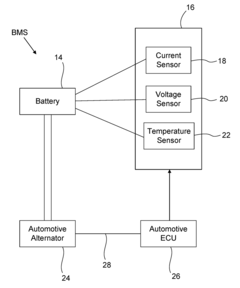
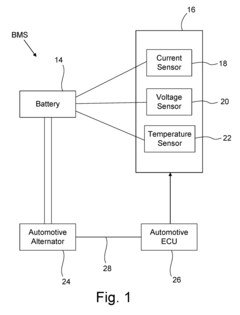
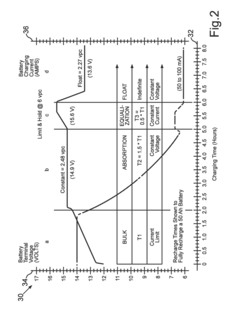
- A battery management system (BMS) that dynamically controls the charging process using sensors for real-time monitoring of battery current, voltage, and temperature, implementing a multi-stage charging strategy including bulk charging, absorption, equalization, and float phases, with adaptive voltage and current adjustments to optimize charging efficiency and prevent overcharging and undercharging.
Over-Saturated Absorbed Glass Mat Valve Regulated Lead-Acid Battery Comprising Carbon Additives
PatentInactiveUS20140120386A1
Innovation
- An AGM VRLA battery design with a positive plate, negative plate containing a carbon additive, an AGM separator, and an electrolyte present in an amount ranging from 100 to 150% by volume based on the total pore volume of the separator, utilizing various carbon additives such as graphite, carbon black, activated carbon, and graphene to enhance charge acceptance and durability.

Environmental Impact of Cooling Technologies
The environmental impact of cooling technologies used in AGM battery sub-cooling systems is a critical consideration in the development and implementation of these techniques. As the demand for more efficient and powerful batteries continues to grow, particularly in the automotive and renewable energy sectors, the need for effective cooling solutions has become increasingly important.
One of the primary environmental concerns associated with AGM battery sub-cooling techniques is the use of refrigerants. Many cooling systems rely on synthetic refrigerants, which can have significant global warming potential (GWP) if released into the atmosphere. However, recent advancements in refrigerant technology have led to the development of low-GWP alternatives, such as hydrofluoroolefins (HFOs), which offer improved environmental performance while maintaining cooling efficiency.
Energy consumption is another crucial factor to consider when evaluating the environmental impact of cooling technologies. Traditional air-cooling systems often require substantial energy input, leading to increased carbon emissions if the energy source is not renewable. In contrast, more advanced liquid cooling techniques can offer improved energy efficiency, reducing the overall environmental footprint of the battery system.
The production and disposal of cooling system components also contribute to the environmental impact. Materials used in heat exchangers, coolant fluids, and other system components may have varying degrees of recyclability and potential for environmental contamination. Manufacturers are increasingly focusing on developing cooling technologies that utilize more sustainable materials and design principles to minimize waste and improve end-of-life recyclability.
Water usage is a concern for some cooling technologies, particularly those employing evaporative cooling methods. In regions facing water scarcity, the implementation of water-intensive cooling systems can strain local resources. This has led to the development of closed-loop cooling systems and air-cooled alternatives that reduce or eliminate water consumption.
Noise pollution is an often-overlooked environmental impact of cooling technologies. Some cooling systems, especially those using high-speed fans or compressors, can generate significant noise levels. This can be particularly problematic in urban environments or areas with strict noise regulations. As a result, there is a growing emphasis on developing quieter cooling solutions that maintain efficiency while minimizing acoustic impact.
The lifecycle environmental impact of cooling technologies must also be considered, from raw material extraction to manufacturing, operation, and eventual disposal. Life Cycle Assessment (LCA) studies have become increasingly important in evaluating the overall environmental performance of different cooling techniques, helping to identify areas for improvement and guiding the development of more sustainable solutions.
As the industry continues to evolve, there is a growing focus on integrating renewable energy sources with cooling systems to further reduce environmental impact. Solar-powered cooling technologies and waste heat recovery systems are examples of innovative approaches that aim to improve the overall sustainability of AGM battery sub-cooling techniques.
One of the primary environmental concerns associated with AGM battery sub-cooling techniques is the use of refrigerants. Many cooling systems rely on synthetic refrigerants, which can have significant global warming potential (GWP) if released into the atmosphere. However, recent advancements in refrigerant technology have led to the development of low-GWP alternatives, such as hydrofluoroolefins (HFOs), which offer improved environmental performance while maintaining cooling efficiency.
Energy consumption is another crucial factor to consider when evaluating the environmental impact of cooling technologies. Traditional air-cooling systems often require substantial energy input, leading to increased carbon emissions if the energy source is not renewable. In contrast, more advanced liquid cooling techniques can offer improved energy efficiency, reducing the overall environmental footprint of the battery system.
The production and disposal of cooling system components also contribute to the environmental impact. Materials used in heat exchangers, coolant fluids, and other system components may have varying degrees of recyclability and potential for environmental contamination. Manufacturers are increasingly focusing on developing cooling technologies that utilize more sustainable materials and design principles to minimize waste and improve end-of-life recyclability.
Water usage is a concern for some cooling technologies, particularly those employing evaporative cooling methods. In regions facing water scarcity, the implementation of water-intensive cooling systems can strain local resources. This has led to the development of closed-loop cooling systems and air-cooled alternatives that reduce or eliminate water consumption.
Noise pollution is an often-overlooked environmental impact of cooling technologies. Some cooling systems, especially those using high-speed fans or compressors, can generate significant noise levels. This can be particularly problematic in urban environments or areas with strict noise regulations. As a result, there is a growing emphasis on developing quieter cooling solutions that maintain efficiency while minimizing acoustic impact.
The lifecycle environmental impact of cooling technologies must also be considered, from raw material extraction to manufacturing, operation, and eventual disposal. Life Cycle Assessment (LCA) studies have become increasingly important in evaluating the overall environmental performance of different cooling techniques, helping to identify areas for improvement and guiding the development of more sustainable solutions.
As the industry continues to evolve, there is a growing focus on integrating renewable energy sources with cooling systems to further reduce environmental impact. Solar-powered cooling technologies and waste heat recovery systems are examples of innovative approaches that aim to improve the overall sustainability of AGM battery sub-cooling techniques.
Thermal Management System Integration
The integration of thermal management systems is crucial for optimizing the performance and efficiency of AGM battery sub-cooling techniques. A well-designed thermal management system ensures uniform temperature distribution, prevents localized hot spots, and maintains the battery within its optimal operating temperature range.
One key aspect of thermal management system integration is the selection and placement of cooling components. This includes heat sinks, cooling plates, and thermal interface materials. The design must consider the specific heat generation patterns of AGM batteries and the spatial constraints within the battery pack. Advanced computational fluid dynamics (CFD) simulations are often employed to optimize the layout and sizing of these components.
The cooling medium selection is another critical factor in system integration. While air cooling is simpler and more cost-effective, liquid cooling systems offer superior heat transfer capabilities. For AGM batteries, a hybrid approach combining air and liquid cooling may provide an optimal balance between performance and complexity. The integration must account for the routing of coolant lines, placement of pumps, and design of heat exchangers.
Thermal sensors and control systems play a vital role in the integrated thermal management system. Strategic placement of temperature sensors throughout the battery pack allows for real-time monitoring and adaptive cooling strategies. The control system must be capable of adjusting cooling intensity based on various factors such as battery state of charge, ambient temperature, and power demand.
Integration of the thermal management system with the battery management system (BMS) is essential for coordinated operation. The BMS can use thermal data to optimize charging and discharging strategies, prolonging battery life and enhancing safety. This integration requires careful design of communication protocols and data processing algorithms.
Packaging considerations are paramount in thermal management system integration. The system must be compact, lightweight, and robust to withstand vibrations and environmental conditions. Advanced materials such as thermally conductive polymers and phase change materials can be incorporated to enhance heat dissipation while minimizing system complexity.
Lastly, the integration process must address manufacturability and serviceability. Design for assembly principles should be applied to ensure efficient production and easy maintenance. Modular designs that allow for quick replacement of cooling components can significantly reduce downtime and maintenance costs.
One key aspect of thermal management system integration is the selection and placement of cooling components. This includes heat sinks, cooling plates, and thermal interface materials. The design must consider the specific heat generation patterns of AGM batteries and the spatial constraints within the battery pack. Advanced computational fluid dynamics (CFD) simulations are often employed to optimize the layout and sizing of these components.
The cooling medium selection is another critical factor in system integration. While air cooling is simpler and more cost-effective, liquid cooling systems offer superior heat transfer capabilities. For AGM batteries, a hybrid approach combining air and liquid cooling may provide an optimal balance between performance and complexity. The integration must account for the routing of coolant lines, placement of pumps, and design of heat exchangers.
Thermal sensors and control systems play a vital role in the integrated thermal management system. Strategic placement of temperature sensors throughout the battery pack allows for real-time monitoring and adaptive cooling strategies. The control system must be capable of adjusting cooling intensity based on various factors such as battery state of charge, ambient temperature, and power demand.
Integration of the thermal management system with the battery management system (BMS) is essential for coordinated operation. The BMS can use thermal data to optimize charging and discharging strategies, prolonging battery life and enhancing safety. This integration requires careful design of communication protocols and data processing algorithms.
Packaging considerations are paramount in thermal management system integration. The system must be compact, lightweight, and robust to withstand vibrations and environmental conditions. Advanced materials such as thermally conductive polymers and phase change materials can be incorporated to enhance heat dissipation while minimizing system complexity.
Lastly, the integration process must address manufacturability and serviceability. Design for assembly principles should be applied to ensure efficient production and easy maintenance. Modular designs that allow for quick replacement of cooling components can significantly reduce downtime and maintenance costs.
Unlock deeper insights with Patsnap Eureka Quick Research — get a full tech report to explore trends and direct your research. Try now!
Generate Your Research Report Instantly with AI Agent
Supercharge your innovation with Patsnap Eureka AI Agent Platform!