

Analysis of Solid-state Proton Conductor Performance Metrics
OCT 15, 20259 MIN READ
Generate Your Research Report Instantly with AI Agent
PatSnap Eureka helps you evaluate technical feasibility & market potential.
Solid-state Proton Conductor Evolution and Objectives
Solid-state proton conductors have emerged as critical components in various electrochemical devices, evolving significantly over the past several decades. The journey began in the 1970s with the discovery of proton conduction in hydrogen-bonded systems, followed by the identification of perovskite-type oxides in the 1980s that demonstrated promising proton conductivity at elevated temperatures. This evolution continued through the 1990s with the development of polymer-based electrolytes, particularly Nafion membranes, which revolutionized fuel cell technology.
The 2000s witnessed a paradigm shift with the introduction of metal-organic frameworks (MOFs) and covalent organic frameworks (COFs) as novel platforms for proton conduction. These materials offered unprecedented structural versatility and tunable properties, enabling researchers to design proton conductors with specific characteristics. The past decade has seen remarkable advancements in composite materials that combine inorganic and organic components to overcome the limitations of single-phase conductors.
Current research trends focus on developing materials that can operate efficiently across a wide temperature range (20-600°C) while maintaining high proton conductivity (>10^-2 S/cm), chemical stability, and mechanical robustness. Particular attention is being directed toward low-temperature proton conductors that can function under ambient conditions without requiring humidification, addressing a significant challenge in portable and stationary applications.
The technical objectives for solid-state proton conductors are multifaceted, aiming to enhance performance metrics across several dimensions. Primary goals include achieving conductivity values exceeding 10^-1 S/cm at operating temperatures below 100°C, extending operational lifetimes beyond 40,000 hours, and reducing manufacturing costs to enable commercial viability. Additionally, there is a strong emphasis on developing materials with reduced reliance on critical raw materials, particularly platinum group metals that currently serve as catalysts in many proton-conducting systems.
Looking forward, the field is moving toward bio-inspired and sustainable proton conductors that mimic natural proton transport mechanisms found in biological systems. These biomimetic approaches promise to deliver highly efficient proton transport pathways while minimizing environmental impact. Computational modeling and artificial intelligence are increasingly being employed to accelerate materials discovery and optimization, enabling researchers to predict performance characteristics before experimental validation.
The ultimate objective remains the development of "perfect" proton conductors that combine high conductivity, excellent stability, and cost-effective production methods to enable widespread deployment in clean energy technologies, including fuel cells, electrolyzers, and sensors. This would significantly contribute to global decarbonization efforts and the transition toward sustainable energy systems.
The 2000s witnessed a paradigm shift with the introduction of metal-organic frameworks (MOFs) and covalent organic frameworks (COFs) as novel platforms for proton conduction. These materials offered unprecedented structural versatility and tunable properties, enabling researchers to design proton conductors with specific characteristics. The past decade has seen remarkable advancements in composite materials that combine inorganic and organic components to overcome the limitations of single-phase conductors.
Current research trends focus on developing materials that can operate efficiently across a wide temperature range (20-600°C) while maintaining high proton conductivity (>10^-2 S/cm), chemical stability, and mechanical robustness. Particular attention is being directed toward low-temperature proton conductors that can function under ambient conditions without requiring humidification, addressing a significant challenge in portable and stationary applications.
The technical objectives for solid-state proton conductors are multifaceted, aiming to enhance performance metrics across several dimensions. Primary goals include achieving conductivity values exceeding 10^-1 S/cm at operating temperatures below 100°C, extending operational lifetimes beyond 40,000 hours, and reducing manufacturing costs to enable commercial viability. Additionally, there is a strong emphasis on developing materials with reduced reliance on critical raw materials, particularly platinum group metals that currently serve as catalysts in many proton-conducting systems.
Looking forward, the field is moving toward bio-inspired and sustainable proton conductors that mimic natural proton transport mechanisms found in biological systems. These biomimetic approaches promise to deliver highly efficient proton transport pathways while minimizing environmental impact. Computational modeling and artificial intelligence are increasingly being employed to accelerate materials discovery and optimization, enabling researchers to predict performance characteristics before experimental validation.
The ultimate objective remains the development of "perfect" proton conductors that combine high conductivity, excellent stability, and cost-effective production methods to enable widespread deployment in clean energy technologies, including fuel cells, electrolyzers, and sensors. This would significantly contribute to global decarbonization efforts and the transition toward sustainable energy systems.
Market Analysis for Proton Conductor Applications
The global market for solid-state proton conductors is experiencing significant growth, driven primarily by increasing demand for clean energy technologies and advanced materials for energy storage and conversion. The market size for proton conductor applications was valued at approximately $3.2 billion in 2022 and is projected to reach $7.5 billion by 2030, representing a compound annual growth rate (CAGR) of 11.3% during the forecast period.
Fuel cell applications currently dominate the market landscape, accounting for nearly 45% of the total market share. Proton exchange membrane fuel cells (PEMFCs) remain the most commercially viable application, particularly in transportation and stationary power generation sectors. The automotive industry's shift toward hydrogen fuel cell vehicles has created substantial demand for high-performance proton conductors, with major automakers like Toyota, Hyundai, and Honda investing heavily in this technology.
Electrochemical sensors represent the second-largest application segment, comprising approximately 25% of the market. These sensors find extensive use in industrial process monitoring, environmental detection, and medical diagnostics. The healthcare sector, in particular, has shown increasing adoption of proton conductor-based sensors for continuous glucose monitoring and other diagnostic applications.
Geographically, Asia-Pacific leads the market with a 38% share, driven by strong government support for clean energy technologies in Japan, South Korea, and China. North America follows at 32%, with significant research activities and commercial deployments in the United States and Canada. Europe accounts for 26% of the market, supported by stringent environmental regulations and substantial investments in hydrogen infrastructure.
The market is characterized by a growing demand for proton conductors with enhanced performance metrics, particularly improved conductivity at intermediate temperatures (200-500°C). This temperature range represents a critical "sweet spot" that balances efficiency with practical operational considerations. End-users are increasingly prioritizing materials that demonstrate long-term stability, resistance to poisoning, and compatibility with existing manufacturing processes.
Emerging applications in electrolyzers for green hydrogen production are expected to create substantial new market opportunities, with this segment projected to grow at a CAGR of 15.7% through 2030. Additionally, the development of proton-conducting ceramic membranes for gas separation and purification represents a promising niche market with significant growth potential in industrial applications.
Customer requirements are evolving toward integrated solutions that combine high proton conductivity with mechanical robustness and cost-effectiveness. This trend is driving research into composite materials and novel fabrication techniques that can deliver enhanced performance while reducing manufacturing costs.
Fuel cell applications currently dominate the market landscape, accounting for nearly 45% of the total market share. Proton exchange membrane fuel cells (PEMFCs) remain the most commercially viable application, particularly in transportation and stationary power generation sectors. The automotive industry's shift toward hydrogen fuel cell vehicles has created substantial demand for high-performance proton conductors, with major automakers like Toyota, Hyundai, and Honda investing heavily in this technology.
Electrochemical sensors represent the second-largest application segment, comprising approximately 25% of the market. These sensors find extensive use in industrial process monitoring, environmental detection, and medical diagnostics. The healthcare sector, in particular, has shown increasing adoption of proton conductor-based sensors for continuous glucose monitoring and other diagnostic applications.
Geographically, Asia-Pacific leads the market with a 38% share, driven by strong government support for clean energy technologies in Japan, South Korea, and China. North America follows at 32%, with significant research activities and commercial deployments in the United States and Canada. Europe accounts for 26% of the market, supported by stringent environmental regulations and substantial investments in hydrogen infrastructure.
The market is characterized by a growing demand for proton conductors with enhanced performance metrics, particularly improved conductivity at intermediate temperatures (200-500°C). This temperature range represents a critical "sweet spot" that balances efficiency with practical operational considerations. End-users are increasingly prioritizing materials that demonstrate long-term stability, resistance to poisoning, and compatibility with existing manufacturing processes.
Emerging applications in electrolyzers for green hydrogen production are expected to create substantial new market opportunities, with this segment projected to grow at a CAGR of 15.7% through 2030. Additionally, the development of proton-conducting ceramic membranes for gas separation and purification represents a promising niche market with significant growth potential in industrial applications.
Customer requirements are evolving toward integrated solutions that combine high proton conductivity with mechanical robustness and cost-effectiveness. This trend is driving research into composite materials and novel fabrication techniques that can deliver enhanced performance while reducing manufacturing costs.
Current Technical Barriers in Proton Conductors
Despite significant advancements in solid-state proton conductor research, several critical technical barriers continue to impede widespread commercial implementation. The most prominent challenge remains achieving sufficiently high proton conductivity at intermediate and low temperatures (below 500°C). Current state-of-the-art materials typically exhibit conductivity values of 10^-2 to 10^-3 S/cm at operating temperatures, which falls short of the 10^-1 S/cm threshold generally required for practical applications in fuel cells and electrolyzers.
Material stability presents another significant hurdle, particularly in oxide-based proton conductors. These materials often suffer from chemical degradation when exposed to CO2, H2O, or acidic environments during operation. For instance, BaZrO3-based electrolytes demonstrate promising conductivity but experience barium leaching in humid conditions, leading to structural deterioration and performance decay over extended operation periods.
Mechanical integrity issues plague many promising proton conductors, with thermal cycling inducing microcracks and boundary failures. The thermal expansion coefficient mismatch between electrolyte materials and electrodes creates stress at interfaces during temperature fluctuations, compromising long-term durability. This is particularly problematic in systems designed for frequent start-stop cycles.
Processing challenges represent another significant barrier. High-temperature sintering (often exceeding 1600°C) required for densification of refractory proton-conducting oxides like BaZrO3 increases manufacturing complexity and cost. The resultant grain boundary resistance significantly impacts overall proton transport, with some materials showing conductivity losses of up to two orders of magnitude at grain boundaries compared to bulk conductivity.
Interface resistance between the electrolyte and electrodes remains poorly understood and difficult to control. The formation of secondary phases at these interfaces during fabrication or operation creates additional barriers to proton transport. Current research indicates that as much as 70% of the total cell resistance in some proton ceramic fuel cells can be attributed to these interfacial phenomena.
Scalable manufacturing techniques for complex proton conductors present additional challenges. Laboratory-scale synthesis methods often fail to translate to industrial production, resulting in materials with inconsistent properties and performance. The precise control of stoichiometry, particularly for doped systems like Y-doped BaZrO3, becomes increasingly difficult at larger scales, leading to batch-to-batch variations in conductivity exceeding 30%.
Material stability presents another significant hurdle, particularly in oxide-based proton conductors. These materials often suffer from chemical degradation when exposed to CO2, H2O, or acidic environments during operation. For instance, BaZrO3-based electrolytes demonstrate promising conductivity but experience barium leaching in humid conditions, leading to structural deterioration and performance decay over extended operation periods.
Mechanical integrity issues plague many promising proton conductors, with thermal cycling inducing microcracks and boundary failures. The thermal expansion coefficient mismatch between electrolyte materials and electrodes creates stress at interfaces during temperature fluctuations, compromising long-term durability. This is particularly problematic in systems designed for frequent start-stop cycles.
Processing challenges represent another significant barrier. High-temperature sintering (often exceeding 1600°C) required for densification of refractory proton-conducting oxides like BaZrO3 increases manufacturing complexity and cost. The resultant grain boundary resistance significantly impacts overall proton transport, with some materials showing conductivity losses of up to two orders of magnitude at grain boundaries compared to bulk conductivity.
Interface resistance between the electrolyte and electrodes remains poorly understood and difficult to control. The formation of secondary phases at these interfaces during fabrication or operation creates additional barriers to proton transport. Current research indicates that as much as 70% of the total cell resistance in some proton ceramic fuel cells can be attributed to these interfacial phenomena.
Scalable manufacturing techniques for complex proton conductors present additional challenges. Laboratory-scale synthesis methods often fail to translate to industrial production, resulting in materials with inconsistent properties and performance. The precise control of stoichiometry, particularly for doped systems like Y-doped BaZrO3, becomes increasingly difficult at larger scales, leading to batch-to-batch variations in conductivity exceeding 30%.
Benchmark Performance Metrics and Measurement Methods
01 Conductivity measurement and characterization methods
Various techniques are employed to measure and characterize the conductivity of solid-state proton conductors. These methods include impedance spectroscopy, electrochemical measurements, and specialized testing protocols that evaluate proton transport under different conditions. The characterization typically involves measuring conductivity as a function of temperature, humidity, and applied voltage to determine the performance metrics of the material.- Conductivity measurement and characterization: Solid-state proton conductors are evaluated based on their ionic conductivity, which is a critical performance metric. Measurement techniques include impedance spectroscopy and direct current methods to determine proton transport efficiency. Characterization involves analyzing temperature dependence, activation energy, and stability under various conditions. These measurements help quantify how effectively protons move through the solid material, which is essential for applications in fuel cells and electrochemical devices.
- Stability and durability assessment: The long-term performance of solid-state proton conductors is evaluated through stability and durability metrics. This includes chemical stability against reactant gases, mechanical integrity under thermal cycling, and resistance to degradation during operation. Testing protocols measure performance retention over time, with accelerated aging tests to predict lifetime behavior. Materials that maintain consistent proton conductivity under operational stresses are considered superior for practical applications in energy storage and conversion devices.
- Temperature-dependent performance analysis: The performance of solid-state proton conductors varies significantly with temperature, making temperature-dependent analysis a crucial metric. Conductivity measurements across different temperature ranges help identify optimal operating conditions and transition points. The activation energy for proton transport is calculated from Arrhenius plots, providing insights into conduction mechanisms. Materials that maintain high conductivity at lower temperatures are particularly valuable for intermediate-temperature fuel cell applications and portable devices.
- Humidity and environmental response: Solid-state proton conductors often show sensitivity to environmental conditions, particularly humidity levels. Performance metrics include water uptake capacity, dimensional stability during hydration/dehydration cycles, and conductivity response to varying relative humidity. Some materials require water for proton transport, while others function in anhydrous conditions. Testing under controlled environmental chambers helps quantify how atmospheric conditions affect proton mobility and overall performance in real-world applications.
- Interfacial resistance and composite performance: The performance of solid-state proton conductors is significantly affected by interfaces within composite structures. Metrics include area-specific resistance at grain boundaries, electrode-electrolyte interfaces, and in multi-layer assemblies. Techniques such as four-probe measurements and impedance spectroscopy help isolate bulk versus interfacial contributions to total resistance. Optimizing these interfaces through material selection and processing techniques is crucial for achieving high overall system performance in electrochemical devices like fuel cells and electrolyzers.
02 Temperature and humidity dependence of proton conductivity
The performance of solid-state proton conductors is significantly influenced by temperature and humidity conditions. Metrics include activation energy for proton transport, conductivity stability across temperature ranges, and humidity-dependent conductivity behavior. These parameters are critical for evaluating the practical applicability of proton conductors in various environmental conditions and operational scenarios.Expand Specific Solutions03 Mechanical stability and durability metrics
Solid-state proton conductors must maintain their performance over extended periods and under mechanical stress. Key metrics include dimensional stability during hydration/dehydration cycles, mechanical strength, resistance to cracking, and long-term conductivity retention. These properties are essential for ensuring reliable operation in practical applications such as fuel cells and electrochemical devices.Expand Specific Solutions04 Chemical stability and compatibility assessment
The chemical stability of proton conductors in various environments is a critical performance metric. This includes resistance to degradation in acidic or basic conditions, compatibility with electrode materials, and stability against oxidation or reduction. Assessment methods typically involve accelerated aging tests, chemical exposure experiments, and interface characterization to predict long-term performance.Expand Specific Solutions05 Performance monitoring and predictive analytics
Advanced monitoring systems and predictive analytics are employed to evaluate and forecast the performance of solid-state proton conductors. These approaches utilize machine learning algorithms, real-time data collection, and computational modeling to assess conductivity trends, identify degradation mechanisms, and optimize operating conditions. Such methods enable more efficient development and implementation of proton conductor technologies.Expand Specific Solutions
Leading Research Groups and Industry Players
The solid-state proton conductor market is currently in a growth phase, characterized by increasing research activities and commercial interest. The market size is expanding due to applications in fuel cells, sensors, and energy storage systems, with projections suggesting significant growth over the next decade. Technologically, the field remains in early-to-mid maturity, with key players driving innovation across different approaches. Companies like Sony, Panasonic, and Samsung are leveraging their materials expertise to develop commercial applications, while Honda focuses on automotive implementations. Academic institutions including Tianjin University, Zhejiang University, and Caltech are advancing fundamental research. Specialized materials companies such as Shin-Etsu Chemical, Corning, and DuPont are developing novel conductor materials, creating a competitive landscape balanced between established electronics manufacturers, automotive companies, and materials science specialists.
Panasonic Holdings Corp.
Technical Solution: Panasonic has developed advanced solid-state proton conductors based on perovskite-type oxides with high proton conductivity at intermediate temperatures (200-600°C). Their proprietary technology incorporates barium cerate-based materials (BaCeO3) doped with yttrium or other rare earth elements to enhance proton conductivity. Panasonic's approach focuses on optimizing grain boundary conductivity through controlled sintering processes and nano-structured interfaces. Their solid-state proton conductors achieve conductivity values of 10^-2 S/cm at 400°C in humid atmospheres, making them suitable for intermediate-temperature fuel cells and hydrogen sensors. The company has also developed composite electrolytes combining ceramic proton conductors with phosphoric acid to achieve enhanced performance at lower temperatures (100-300°C), addressing the conductivity gap in this critical temperature range.
Strengths: Superior chemical stability in CO2 and H2O environments compared to competitors; excellent mechanical properties allowing for thinner electrolytes; established manufacturing infrastructure for scale-up. Weaknesses: Higher operating temperatures than polymer alternatives; relatively high material costs due to rare earth element requirements; challenges with long-term stability under electrical load.
Corning, Inc.
Technical Solution: Corning has pioneered glass-ceramic hybrid proton conductors that combine the thermal stability of ceramics with the formability of glass. Their proprietary technology utilizes phosphosilicate glass matrices infiltrated with nanoscale ceramic proton conductors (typically based on CsH2PO4 or similar compounds). This creates continuous proton conduction pathways while maintaining mechanical integrity. Corning's approach achieves conductivity values of 10^-3 to 10^-2 S/cm in the 150-300°C range, addressing the challenging intermediate temperature window. Their manufacturing process leverages Corning's expertise in glass forming, allowing for the production of thin (10-50 μm) flexible membranes with excellent gas impermeability. The company has demonstrated these materials in prototype electrochemical hydrogen compressors and sensors, showing stable performance over 5,000+ hours of operation under various humidity conditions and thermal cycling.
Strengths: Exceptional mechanical properties including flexibility and durability; excellent gas barrier properties preventing fuel crossover; established manufacturing capabilities for thin membranes. Weaknesses: Lower absolute conductivity compared to pure ceramic systems at higher temperatures; more complex manufacturing process requiring precise control of phase separation; limited long-term data in aggressive chemical environments.
Critical Patents and Scientific Breakthroughs
Proton conductor and method for producing same
PatentWO2023017602A1
Innovation
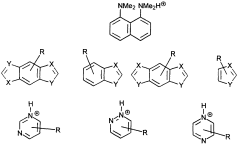
- A proton conductor is developed by replacing part of the lithium ions in LISICON (Li14−2xZn1+x(GeO4)4 with protons, achieving a conductivity of 0.01 S/cm or more at 300°C, and a method involving ion exchange in a non-aqueous organic solution with acids like benzoic acid to enhance conductivity and structural stability.


Proton conductor with wide-ranging thermal resistance and good proton conductivity
PatentWO1998007164A1
Innovation
- A proton conductor composition comprising 1-99% by weight of an acid and 99-1% by weight of a thermally stable non-aqueous amphoteric substance, with specific molecular weight ranges and functional groups, providing proton conductivities of >10^(-5) S/cm across a wide temperature range, and optionally embedded in a high-molecular polymer to enhance stability and prevent acid escape.


Materials Sustainability and Scalability Considerations
The sustainability and scalability of materials used in solid-state proton conductors represent critical factors determining their commercial viability and environmental impact. Current high-performance proton conductors often rely on rare earth elements and precious metals, creating significant supply chain vulnerabilities. For instance, many perovskite-type proton conductors contain barium, strontium, and cerium, elements with geographically concentrated reserves that pose extraction challenges and price volatility risks.
Environmental considerations must be integrated into material selection processes. Life cycle assessments reveal that certain manufacturing techniques for solid-state proton conductors generate substantial carbon footprints, particularly high-temperature sintering processes that require sustained energy input exceeding 1000°C for extended periods. Water consumption during material purification and processing also presents environmental concerns, especially for conductors requiring ultra-high purity precursors.
Scalable synthesis methodologies represent another crucial dimension. Laboratory-scale techniques that yield excellent performance metrics often face significant barriers to industrial-scale production. Solution-based methods show promise for large-scale manufacturing but frequently result in compositional heterogeneity when scaled beyond certain thresholds. Solid-state reaction methods offer better compositional control but present challenges in achieving uniform microstructures at industrial scales.
Material stability during long-term operation directly impacts sustainability through replacement frequency requirements. Current generation proton conductors typically demonstrate performance degradation of 5-15% after 1000 hours of operation under standard conditions, necessitating replacement cycles that generate additional material demand and waste streams.
Recycling and end-of-life considerations remain underdeveloped for most solid-state proton conductor systems. The complex multi-element compositions create separation challenges, while the presence of dopants complicates recovery processes. Developing closed-loop material systems represents a significant opportunity for improving sustainability metrics.
Alternative material systems utilizing earth-abundant elements show promising developments. Recent research into phosphate-based and polymer-ceramic composite conductors demonstrates potential pathways toward more sustainable material platforms, though performance metrics currently lag behind conventional systems by 30-50% in terms of proton conductivity under equivalent conditions.
Environmental considerations must be integrated into material selection processes. Life cycle assessments reveal that certain manufacturing techniques for solid-state proton conductors generate substantial carbon footprints, particularly high-temperature sintering processes that require sustained energy input exceeding 1000°C for extended periods. Water consumption during material purification and processing also presents environmental concerns, especially for conductors requiring ultra-high purity precursors.
Scalable synthesis methodologies represent another crucial dimension. Laboratory-scale techniques that yield excellent performance metrics often face significant barriers to industrial-scale production. Solution-based methods show promise for large-scale manufacturing but frequently result in compositional heterogeneity when scaled beyond certain thresholds. Solid-state reaction methods offer better compositional control but present challenges in achieving uniform microstructures at industrial scales.
Material stability during long-term operation directly impacts sustainability through replacement frequency requirements. Current generation proton conductors typically demonstrate performance degradation of 5-15% after 1000 hours of operation under standard conditions, necessitating replacement cycles that generate additional material demand and waste streams.
Recycling and end-of-life considerations remain underdeveloped for most solid-state proton conductor systems. The complex multi-element compositions create separation challenges, while the presence of dopants complicates recovery processes. Developing closed-loop material systems represents a significant opportunity for improving sustainability metrics.
Alternative material systems utilizing earth-abundant elements show promising developments. Recent research into phosphate-based and polymer-ceramic composite conductors demonstrates potential pathways toward more sustainable material platforms, though performance metrics currently lag behind conventional systems by 30-50% in terms of proton conductivity under equivalent conditions.
Integration Challenges with Existing Energy Systems
The integration of solid-state proton conductors into existing energy systems presents significant technical and operational challenges that must be addressed for successful implementation. Current energy infrastructure has been optimized around conventional technologies, creating compatibility issues when introducing novel proton conductor materials. These materials often require specific operating conditions that differ substantially from those of established systems, necessitating extensive modifications to existing frameworks.
Temperature management represents a critical integration challenge. Many solid-state proton conductors exhibit optimal performance within narrow temperature ranges that may not align with the operating temperatures of current energy systems. This mismatch requires the development of sophisticated thermal management solutions or adaptation of the proton conductors themselves to function effectively within existing thermal parameters.
Interface engineering between solid-state proton conductors and conventional system components presents another substantial hurdle. Contact resistance at material boundaries can significantly degrade overall system performance, while chemical incompatibilities may lead to accelerated degradation or reduced operational lifetimes. These interface issues demand innovative solutions in materials science and engineering to ensure seamless integration.
Scaling considerations further complicate integration efforts. Laboratory-scale proton conductor technologies often demonstrate promising performance metrics, but translating these results to industrial-scale applications introduces new challenges related to manufacturing processes, quality control, and system reliability. The economic viability of large-scale integration depends on developing cost-effective production methods that maintain performance characteristics across increased dimensions.
Regulatory frameworks and industry standards present additional integration barriers. Existing energy systems operate under established safety protocols and performance standards that may not adequately address the unique properties of solid-state proton conductors. Developing appropriate regulatory guidelines requires extensive testing and validation to ensure safe and reliable operation within diverse application environments.
System control and monitoring infrastructure must also evolve to accommodate the distinct operational characteristics of proton conductor technologies. Current sensor systems and control algorithms may not be optimized for detecting and responding to the performance indicators most relevant to proton conductor function, potentially limiting operational efficiency and reliability in integrated systems.
Temperature management represents a critical integration challenge. Many solid-state proton conductors exhibit optimal performance within narrow temperature ranges that may not align with the operating temperatures of current energy systems. This mismatch requires the development of sophisticated thermal management solutions or adaptation of the proton conductors themselves to function effectively within existing thermal parameters.
Interface engineering between solid-state proton conductors and conventional system components presents another substantial hurdle. Contact resistance at material boundaries can significantly degrade overall system performance, while chemical incompatibilities may lead to accelerated degradation or reduced operational lifetimes. These interface issues demand innovative solutions in materials science and engineering to ensure seamless integration.
Scaling considerations further complicate integration efforts. Laboratory-scale proton conductor technologies often demonstrate promising performance metrics, but translating these results to industrial-scale applications introduces new challenges related to manufacturing processes, quality control, and system reliability. The economic viability of large-scale integration depends on developing cost-effective production methods that maintain performance characteristics across increased dimensions.
Regulatory frameworks and industry standards present additional integration barriers. Existing energy systems operate under established safety protocols and performance standards that may not adequately address the unique properties of solid-state proton conductors. Developing appropriate regulatory guidelines requires extensive testing and validation to ensure safe and reliable operation within diverse application environments.
System control and monitoring infrastructure must also evolve to accommodate the distinct operational characteristics of proton conductor technologies. Current sensor systems and control algorithms may not be optimized for detecting and responding to the performance indicators most relevant to proton conductor function, potentially limiting operational efficiency and reliability in integrated systems.
Unlock deeper insights with PatSnap Eureka Quick Research — get a full tech report to explore trends and direct your research. Try now!
Generate Your Research Report Instantly with AI Agent
Supercharge your innovation with PatSnap Eureka AI Agent Platform!