

Regulations and Standards for Solid-state Proton Conductors
OCT 15, 20259 MIN READ
Generate Your Research Report Instantly with AI Agent
PatSnap Eureka helps you evaluate technical feasibility & market potential.
Solid-state Proton Conductors Background and Objectives
Solid-state proton conductors represent a critical technology in the evolving landscape of energy storage and conversion systems. These materials facilitate the transport of protons (H+) through solid matrices without requiring liquid media, offering significant advantages over traditional liquid-based systems. The development of solid-state proton conductors dates back to the 1970s, with pioneering work on ceramic oxides and polymer membranes. However, the field has experienced accelerated growth in the past two decades due to increasing demands for clean energy technologies and more efficient electrochemical devices.
The evolution of solid-state proton conductors has followed several distinct technological waves. Initially, research focused on oxide-based ceramics such as doped zirconia and ceria. This was followed by the development of polymer-based conductors like Nafion, which dominated fuel cell applications. The current technological frontier involves composite materials, perovskite-type oxides, and metal-organic frameworks (MOFs) that aim to combine high conductivity with enhanced mechanical and thermal stability.
The primary objective in this field is to develop proton-conducting materials that achieve conductivity values exceeding 10^-2 S/cm at intermediate temperatures (80-300°C) while maintaining long-term stability under operating conditions. Additional goals include reducing manufacturing costs, enhancing compatibility with existing energy systems, and minimizing environmental impact throughout the material lifecycle.
Regulatory frameworks and standardization efforts for solid-state proton conductors remain fragmented globally, creating challenges for technology commercialization and market adoption. Current standards primarily address safety aspects, performance metrics, and testing protocols, but lack comprehensive coverage of emerging materials and applications. This technological gap necessitates the development of unified international standards to facilitate innovation and market growth.
The intersection of solid-state proton conductors with adjacent technologies, particularly solid-state batteries, hydrogen production systems, and sensors, presents opportunities for cross-disciplinary innovation. Understanding the regulatory landscape across these domains is essential for strategic technology development and commercialization pathways.
As climate change concerns drive stricter emissions regulations worldwide, solid-state proton conductors are positioned to play a pivotal role in the transition to hydrogen-based energy systems and electrification of industrial processes. The technology's trajectory is increasingly influenced by policy frameworks supporting decarbonization, creating both opportunities and challenges for standardization efforts in this rapidly evolving field.
The evolution of solid-state proton conductors has followed several distinct technological waves. Initially, research focused on oxide-based ceramics such as doped zirconia and ceria. This was followed by the development of polymer-based conductors like Nafion, which dominated fuel cell applications. The current technological frontier involves composite materials, perovskite-type oxides, and metal-organic frameworks (MOFs) that aim to combine high conductivity with enhanced mechanical and thermal stability.
The primary objective in this field is to develop proton-conducting materials that achieve conductivity values exceeding 10^-2 S/cm at intermediate temperatures (80-300°C) while maintaining long-term stability under operating conditions. Additional goals include reducing manufacturing costs, enhancing compatibility with existing energy systems, and minimizing environmental impact throughout the material lifecycle.
Regulatory frameworks and standardization efforts for solid-state proton conductors remain fragmented globally, creating challenges for technology commercialization and market adoption. Current standards primarily address safety aspects, performance metrics, and testing protocols, but lack comprehensive coverage of emerging materials and applications. This technological gap necessitates the development of unified international standards to facilitate innovation and market growth.
The intersection of solid-state proton conductors with adjacent technologies, particularly solid-state batteries, hydrogen production systems, and sensors, presents opportunities for cross-disciplinary innovation. Understanding the regulatory landscape across these domains is essential for strategic technology development and commercialization pathways.
As climate change concerns drive stricter emissions regulations worldwide, solid-state proton conductors are positioned to play a pivotal role in the transition to hydrogen-based energy systems and electrification of industrial processes. The technology's trajectory is increasingly influenced by policy frameworks supporting decarbonization, creating both opportunities and challenges for standardization efforts in this rapidly evolving field.
Market Applications and Demand Analysis
The solid-state proton conductor market is experiencing significant growth driven by increasing demand for clean energy technologies and sustainable power solutions. The global market for these materials is projected to reach $2.5 billion by 2028, with a compound annual growth rate of approximately 9.7% from 2023 to 2028. This growth trajectory is primarily fueled by applications in fuel cells, hydrogen production, and energy storage systems.
Fuel cell technology represents the largest application segment, accounting for over 40% of the current market share. Solid oxide fuel cells (SOFCs) and proton exchange membrane fuel cells (PEMFCs) are witnessing substantial commercial adoption in stationary power generation, transportation, and portable electronics. The automotive sector in particular has shown increasing interest, with major manufacturers investing heavily in hydrogen fuel cell vehicles that rely on advanced proton conductors.
Hydrogen production and electrolysis systems constitute another rapidly expanding application area. The global push for green hydrogen as a clean energy carrier has accelerated demand for efficient electrolyzers utilizing solid-state proton conductors. This segment is expected to grow at the fastest rate among all applications, with projected annual growth exceeding 12% through 2028.
Energy storage applications are emerging as a promising frontier for solid-state proton conductors. These materials offer advantages in grid-scale storage systems and are being explored for integration with renewable energy sources to address intermittency challenges. The energy storage segment currently represents about 15% of the market but is expected to expand significantly as technology matures.
Geographically, Asia-Pacific dominates the market with approximately 45% share, led by Japan, South Korea, and China's aggressive investments in hydrogen economy initiatives. North America and Europe follow closely, with substantial research funding and commercial deployment programs focused on clean energy transitions.
Industry analysis reveals growing demand from both established energy companies diversifying their portfolios and technology startups focusing on innovative applications. End-user industries including power generation, transportation, and industrial processes are increasingly adopting proton conductor technologies to meet decarbonization targets and regulatory requirements.
The market is also witnessing a shift toward higher-performance materials that can operate at intermediate temperatures (200-500°C), which offer improved efficiency and durability while reducing system complexity and cost. This trend is expected to further expand application possibilities and market penetration across various sectors in the coming years.
Fuel cell technology represents the largest application segment, accounting for over 40% of the current market share. Solid oxide fuel cells (SOFCs) and proton exchange membrane fuel cells (PEMFCs) are witnessing substantial commercial adoption in stationary power generation, transportation, and portable electronics. The automotive sector in particular has shown increasing interest, with major manufacturers investing heavily in hydrogen fuel cell vehicles that rely on advanced proton conductors.
Hydrogen production and electrolysis systems constitute another rapidly expanding application area. The global push for green hydrogen as a clean energy carrier has accelerated demand for efficient electrolyzers utilizing solid-state proton conductors. This segment is expected to grow at the fastest rate among all applications, with projected annual growth exceeding 12% through 2028.
Energy storage applications are emerging as a promising frontier for solid-state proton conductors. These materials offer advantages in grid-scale storage systems and are being explored for integration with renewable energy sources to address intermittency challenges. The energy storage segment currently represents about 15% of the market but is expected to expand significantly as technology matures.
Geographically, Asia-Pacific dominates the market with approximately 45% share, led by Japan, South Korea, and China's aggressive investments in hydrogen economy initiatives. North America and Europe follow closely, with substantial research funding and commercial deployment programs focused on clean energy transitions.
Industry analysis reveals growing demand from both established energy companies diversifying their portfolios and technology startups focusing on innovative applications. End-user industries including power generation, transportation, and industrial processes are increasingly adopting proton conductor technologies to meet decarbonization targets and regulatory requirements.
The market is also witnessing a shift toward higher-performance materials that can operate at intermediate temperatures (200-500°C), which offer improved efficiency and durability while reducing system complexity and cost. This trend is expected to further expand application possibilities and market penetration across various sectors in the coming years.
Global Regulatory Landscape and Technical Challenges
The global regulatory landscape for solid-state proton conductors remains fragmented, with significant variations across regions. In the United States, the Department of Energy (DOE) has established guidelines for hydrogen-based technologies, including proton conductors, focusing primarily on safety standards and performance metrics. The European Union, through its Horizon Europe framework, has implemented more comprehensive regulations that address both safety and environmental impacts of these materials, particularly emphasizing sustainability in manufacturing processes.
Japan and South Korea have developed specialized regulatory frameworks specifically targeting solid-state ionic conductors, with Japan's METI (Ministry of Economy, Trade and Industry) providing detailed technical specifications for proton-conducting materials used in energy applications. China has recently accelerated its regulatory development, introducing the "Hydrogen Energy Industry Development Plan (2021-2035)" which includes specific provisions for solid-state proton conductors in fuel cell applications.
A significant technical challenge in the regulatory landscape is the lack of standardized testing protocols for evaluating proton conductivity across different material systems. Current methods vary widely between laboratories, making cross-comparison of research results difficult and hindering regulatory consistency. The International Electrotechnical Commission (IEC) has initiated efforts to address this through its Technical Committee 105, but comprehensive standards remain under development.
Material stability certification presents another major regulatory hurdle. Solid-state proton conductors often operate in harsh chemical environments and at elevated temperatures, yet standardized accelerated aging tests that accurately predict long-term stability are largely absent from current regulatory frameworks. This gap creates uncertainty for manufacturers and delays commercialization pathways.
Safety regulations present particular complexity due to the hydrogen involvement in many proton conductor applications. While hydrogen safety codes exist (such as ISO/TC 197), their application to solid-state systems with integrated proton conductors remains inconsistently interpreted across jurisdictions. The National Fire Protection Association (NFPA) in the US has begun addressing these gaps through its NFPA 2 Hydrogen Technologies Code, but international harmonization lags.
Environmental regulations affecting the production and disposal of solid-state proton conductors vary dramatically by region. The EU's REACH regulations impose strict documentation requirements for chemical components, while similar comprehensive frameworks are less developed in other markets. This regulatory divergence creates compliance challenges for global supply chains and technology transfer.
Japan and South Korea have developed specialized regulatory frameworks specifically targeting solid-state ionic conductors, with Japan's METI (Ministry of Economy, Trade and Industry) providing detailed technical specifications for proton-conducting materials used in energy applications. China has recently accelerated its regulatory development, introducing the "Hydrogen Energy Industry Development Plan (2021-2035)" which includes specific provisions for solid-state proton conductors in fuel cell applications.
A significant technical challenge in the regulatory landscape is the lack of standardized testing protocols for evaluating proton conductivity across different material systems. Current methods vary widely between laboratories, making cross-comparison of research results difficult and hindering regulatory consistency. The International Electrotechnical Commission (IEC) has initiated efforts to address this through its Technical Committee 105, but comprehensive standards remain under development.
Material stability certification presents another major regulatory hurdle. Solid-state proton conductors often operate in harsh chemical environments and at elevated temperatures, yet standardized accelerated aging tests that accurately predict long-term stability are largely absent from current regulatory frameworks. This gap creates uncertainty for manufacturers and delays commercialization pathways.
Safety regulations present particular complexity due to the hydrogen involvement in many proton conductor applications. While hydrogen safety codes exist (such as ISO/TC 197), their application to solid-state systems with integrated proton conductors remains inconsistently interpreted across jurisdictions. The National Fire Protection Association (NFPA) in the US has begun addressing these gaps through its NFPA 2 Hydrogen Technologies Code, but international harmonization lags.
Environmental regulations affecting the production and disposal of solid-state proton conductors vary dramatically by region. The EU's REACH regulations impose strict documentation requirements for chemical components, while similar comprehensive frameworks are less developed in other markets. This regulatory divergence creates compliance challenges for global supply chains and technology transfer.
Current Standardization Frameworks and Compliance Methods
01 Polymer-based solid-state proton conductors
Polymer-based materials serve as effective solid-state proton conductors for various electrochemical applications. These include modified polymers with functional groups that facilitate proton transport, polymer electrolyte membranes with enhanced conductivity, and composite polymer systems. The incorporation of specific functional groups and structural modifications improves proton conductivity while maintaining mechanical stability. These materials are particularly valuable for fuel cells and other energy conversion devices operating at various temperature ranges.- Polymer-based solid-state proton conductors: Polymer-based materials serve as effective solid-state proton conductors for various electrochemical applications. These polymers, often functionalized with acidic groups like sulfonic acid, facilitate proton transport through their molecular structure. The incorporation of hydrophilic domains within the polymer matrix enhances proton conductivity by creating efficient proton transport pathways. These materials offer advantages such as flexibility, processability, and tunable properties, making them suitable for fuel cells and other electrochemical devices requiring solid-state proton conduction.
- Ceramic and inorganic oxide proton conductors: Ceramic and inorganic oxide materials function as high-temperature solid-state proton conductors with excellent thermal stability. These materials, including perovskites, tungstates, and phosphates, exhibit proton conduction through oxygen vacancies and hydroxyl groups in their crystal structure. Their ability to maintain conductivity at elevated temperatures makes them particularly valuable for applications requiring operation above 100°C. The proton transport mechanism typically involves proton hopping between oxygen sites within the crystal lattice, with conductivity often enhanced by appropriate doping strategies.
- Composite and hybrid proton conducting materials: Composite and hybrid materials combine organic and inorganic components to create solid-state proton conductors with enhanced properties. These materials typically incorporate inorganic fillers (such as metal oxides or nanoparticles) within polymer matrices to improve mechanical strength, thermal stability, and conductivity. The interface between components often creates additional proton conduction pathways. By leveraging the advantages of both constituent materials, these composites achieve higher performance than either component alone, making them promising for intermediate-temperature fuel cells and electrochemical devices.
- Metal-organic frameworks as proton conductors: Metal-organic frameworks (MOFs) represent an emerging class of solid-state proton conductors with highly ordered porous structures. Their crystalline frameworks, composed of metal nodes connected by organic linkers, create channels that facilitate proton transport. The proton conductivity in MOFs can be enhanced by incorporating acidic functional groups, coordinated water molecules, or guest molecules within the pores. Their highly tunable nature allows for precise engineering of pore size, functionality, and hydrophilicity to optimize proton conduction properties for applications in sensors, membranes, and energy storage devices.
- Novel fabrication methods for solid-state proton conductors: Advanced fabrication techniques are being developed to enhance the performance of solid-state proton conductors. These methods include sol-gel processing, electrospinning, layer-by-layer assembly, and various nanofabrication approaches that enable precise control over material structure at the nanoscale. By manipulating processing parameters, researchers can optimize proton conduction pathways, reduce interfacial resistance, and improve mechanical properties. These fabrication innovations are critical for developing thin-film electrolytes, composite membranes, and structured electrodes that advance the performance of fuel cells, electrolyzers, and other electrochemical devices.
02 Inorganic solid-state proton conductors
Inorganic materials form an important class of solid-state proton conductors, including metal oxides, phosphates, and ceramic materials. These conductors typically offer high thermal stability and can operate at elevated temperatures. Various synthesis methods and doping strategies are employed to enhance proton conductivity in these materials. Inorganic proton conductors find applications in high-temperature fuel cells, sensors, and electrochemical devices where stability under harsh conditions is required.Expand Specific Solutions03 Composite and hybrid proton conductors
Composite and hybrid materials combine organic and inorganic components to achieve enhanced proton conductivity. These materials leverage the benefits of both constituent phases - typically the mechanical stability of inorganic materials with the flexibility and processability of organic materials. The interface between components often creates additional proton conduction pathways. Various fabrication techniques are used to optimize the morphology and distribution of components for maximum conductivity while maintaining structural integrity.Expand Specific Solutions04 Metal-organic frameworks for proton conduction
Metal-organic frameworks (MOFs) represent an emerging class of solid-state proton conductors with highly ordered porous structures. Their tunable pore size, high surface area, and modifiable functional groups make them excellent candidates for proton transport. Proton conduction in MOFs occurs through coordinated water molecules, acidic functional groups, or guest molecules within the pores. Various strategies to enhance proton conductivity include functionalization of organic linkers and incorporation of proton-carrying species within the framework.Expand Specific Solutions05 Novel materials and fabrication techniques for solid-state proton conductors
Recent advances in materials science have led to the development of novel solid-state proton conductors with unprecedented performance. These include two-dimensional materials, nanostructured conductors, and materials with engineered defects for enhanced proton transport. Advanced fabrication techniques such as 3D printing, layer-by-layer assembly, and controlled crystallization enable precise control over material structure and properties. These innovations address challenges related to conductivity, stability, and manufacturability of solid-state proton conductors for next-generation electrochemical devices.Expand Specific Solutions
Leading Organizations and Research Institutions
The solid-state proton conductor market is currently in an early growth phase, characterized by increasing research activities and emerging commercial applications. The global market size is estimated to be relatively modest but growing rapidly, driven by applications in fuel cells, sensors, and energy storage systems. Technologically, the field is still evolving, with varying degrees of maturity across different material systems. Leading academic institutions like MIT, Cornell University, and California Institute of Technology are advancing fundamental research, while companies such as Sony Group, Honda Motor, and JSR Corp are developing practical applications. Japanese corporations including Sumitomo Electric and Tokyo Electron demonstrate particular strength in commercialization efforts, while pharmaceutical companies like Teva and CureVac are exploring biomedical applications. The regulatory landscape remains under development, with standards still emerging for performance, safety, and environmental impact.
Massachusetts Institute of Technology
Technical Solution: MIT has developed groundbreaking research on solid-state proton conductors focusing on fundamental understanding of proton transport mechanisms at the atomic scale. Their approach combines advanced computational modeling with experimental validation to design novel materials with unprecedented proton conductivity. MIT researchers have pioneered characterization techniques that have become de facto standards in the scientific community for evaluating proton conductor performance, including specialized impedance spectroscopy protocols and in-situ neutron diffraction methods. Their work has established benchmark performance metrics that are increasingly referenced in regulatory frameworks and standards development. MIT has also developed standardized protocols for evaluating the environmental impact and lifecycle assessment of proton conductor materials, contributing to sustainable development goals in emerging hydrogen technologies. Their collaborative approach with industry partners has accelerated the translation of laboratory standards to industrial implementation.
Strengths: Cutting-edge fundamental research capabilities; influential position in scientific community allows their methodologies to become widely adopted standards. Weaknesses: Academic focus may sometimes prioritize novel scientific approaches over practical implementation considerations required for industrial standards.
Sumitomo Electric Industries Ltd.
Technical Solution: Sumitomo Electric has developed advanced solid-state proton conductors based on ceramic-polymer composite materials. Their technology focuses on creating high-performance proton exchange membranes with enhanced conductivity at intermediate temperatures (80-200°C). The company has established proprietary manufacturing processes for thin-film proton conductors with controlled microstructure and interface engineering to optimize proton transport pathways. Sumitomo's approach includes doping strategies with rare earth elements to stabilize the crystal structure and improve proton conductivity under various operating conditions. They have also developed standardized testing protocols for evaluating proton conductivity, mechanical stability, and chemical durability that align with international standards such as IEC 62282 for fuel cell technologies.
Strengths: Superior manufacturing capabilities for large-scale production with consistent quality; established relationships with regulatory bodies for standards development. Weaknesses: Their technology may be limited to specific temperature ranges, potentially restricting applications in extreme environments.
Key Patents and Scientific Breakthroughs
Proton conductor with wide-ranging thermal resistance and good proton conductivity
PatentWO1998007164A1
Innovation
- A proton conductor composition comprising 1-99% by weight of an acid and 99-1% by weight of a thermally stable non-aqueous amphoteric substance, with specific molecular weight ranges and functional groups, providing proton conductivities of >10^(-5) S/cm across a wide temperature range, and optionally embedded in a high-molecular polymer to enhance stability and prevent acid escape.


Proton conducting material, and electrode and fuel cell using same
PatentWO2006098318A1
Innovation
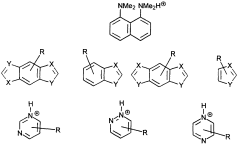
- A proton conductor with a porous structure containing heterocyclic organic compounds, where the crystallite size of the organic compound is controlled to be within 0.5 nm to 50 nm, ensuring optimal crystal state and proton conductivity through the use of acidic or basic functional groups immobilized on the porous structure's surface.


Safety and Performance Testing Protocols
Safety and performance testing protocols for solid-state proton conductors require comprehensive evaluation frameworks to ensure reliability and functionality in various applications. Current protocols focus on three primary areas: electrochemical performance, mechanical integrity, and safety characteristics under operational conditions.
Electrochemical testing protocols typically include conductivity measurements across varying temperatures (20-200°C) and humidity levels (0-100% RH), utilizing impedance spectroscopy to determine proton transport efficiency. Standardized methods such as ASTM F3219 and IEC 62282-8-201 provide guidelines for evaluating proton conductivity stability during thermal cycling and long-term operation. These protocols require samples to maintain at least 80% of initial conductivity after 1000 hours of operation to meet commercial viability standards.
Mechanical testing frameworks assess the structural integrity of solid-state proton conductors under operational stresses. Protocols include flexural strength measurements (ASTM D790), thermal expansion coefficient determination (ASTM E228), and interfacial adhesion tests between electrolyte and electrode materials. Recent standards have incorporated accelerated stress testing, subjecting materials to rapid temperature fluctuations (±50°C/min) to simulate extreme operational conditions.
Safety testing protocols have evolved significantly following incidents in early prototype systems. Current standards mandate evaluation of material stability under various failure scenarios, including short-circuit conditions, overheating events (up to 200°C above operational temperature), and exposure to contaminants. Hydrogen generation/leakage tests are particularly critical, with maximum allowable hydrogen concentration set at 4% (lower flammability limit) in enclosed spaces.
Environmental compatibility testing has become increasingly important, with protocols evaluating material degradation under exposure to common environmental contaminants including CO2, SO2, and NOx. The ISO 14687 standard provides guidelines for assessing long-term environmental stability, requiring materials to maintain performance after exposure to 10 ppm of contaminants for 500 hours.
Harmonization efforts between international standards organizations have resulted in the development of unified testing protocols, though regional variations persist. The International Electrotechnical Commission (IEC) has established Technical Committee 105 specifically focused on standardizing test methods for proton-conducting solid electrolytes, with particular emphasis on safety certification requirements for commercial applications in transportation and stationary power systems.
Electrochemical testing protocols typically include conductivity measurements across varying temperatures (20-200°C) and humidity levels (0-100% RH), utilizing impedance spectroscopy to determine proton transport efficiency. Standardized methods such as ASTM F3219 and IEC 62282-8-201 provide guidelines for evaluating proton conductivity stability during thermal cycling and long-term operation. These protocols require samples to maintain at least 80% of initial conductivity after 1000 hours of operation to meet commercial viability standards.
Mechanical testing frameworks assess the structural integrity of solid-state proton conductors under operational stresses. Protocols include flexural strength measurements (ASTM D790), thermal expansion coefficient determination (ASTM E228), and interfacial adhesion tests between electrolyte and electrode materials. Recent standards have incorporated accelerated stress testing, subjecting materials to rapid temperature fluctuations (±50°C/min) to simulate extreme operational conditions.
Safety testing protocols have evolved significantly following incidents in early prototype systems. Current standards mandate evaluation of material stability under various failure scenarios, including short-circuit conditions, overheating events (up to 200°C above operational temperature), and exposure to contaminants. Hydrogen generation/leakage tests are particularly critical, with maximum allowable hydrogen concentration set at 4% (lower flammability limit) in enclosed spaces.
Environmental compatibility testing has become increasingly important, with protocols evaluating material degradation under exposure to common environmental contaminants including CO2, SO2, and NOx. The ISO 14687 standard provides guidelines for assessing long-term environmental stability, requiring materials to maintain performance after exposure to 10 ppm of contaminants for 500 hours.
Harmonization efforts between international standards organizations have resulted in the development of unified testing protocols, though regional variations persist. The International Electrotechnical Commission (IEC) has established Technical Committee 105 specifically focused on standardizing test methods for proton-conducting solid electrolytes, with particular emphasis on safety certification requirements for commercial applications in transportation and stationary power systems.
Environmental Impact and Sustainability Considerations
The environmental impact of solid-state proton conductors represents a critical consideration in their development and implementation. These materials offer significant sustainability advantages over traditional liquid electrolytes, primarily due to their enhanced safety profile and reduced environmental hazards. The absence of volatile or flammable components substantially decreases the risk of leakage and environmental contamination, addressing a major ecological concern associated with conventional systems.
Manufacturing processes for solid-state proton conductors currently present mixed environmental implications. While some production methods utilize energy-intensive high-temperature sintering processes that generate considerable carbon emissions, alternative low-temperature synthesis routes are emerging. These newer approaches significantly reduce energy consumption and associated greenhouse gas emissions, aligning with global carbon reduction targets.
Raw material sourcing for solid-state proton conductors raises important sustainability questions. Many advanced proton conductors incorporate rare earth elements or other critical materials with limited global reserves. This dependency creates potential supply chain vulnerabilities and environmental justice concerns related to mining practices. The industry is increasingly exploring alternative compositions using more abundant elements and developing recycling protocols to mitigate these issues.
Life cycle assessment (LCA) studies indicate that solid-state proton conductors generally demonstrate favorable environmental profiles compared to conventional alternatives when evaluated across their entire lifespan. Their extended operational durability reduces replacement frequency, thereby decreasing cumulative resource consumption and waste generation. Additionally, their enhanced efficiency in energy conversion applications contributes to overall system-level environmental benefits.
End-of-life management strategies for solid-state proton conductors are still evolving. Current recycling technologies face challenges in efficiently separating and recovering valuable components from these complex materials. Research initiatives are focusing on designing proton conductors with recyclability as a core consideration, implementing principles of circular economy from the earliest development stages.
Regulatory frameworks governing the environmental aspects of solid-state proton conductors vary significantly across regions. The European Union has taken a leading position through its REACH regulations and Waste Electrical and Electronic Equipment (WEEE) directive, which increasingly address these emerging materials. Meanwhile, the United States Environmental Protection Agency is developing specific guidelines for next-generation energy materials, though comprehensive standards specifically addressing solid-state proton conductors remain under development in most jurisdictions.
Manufacturing processes for solid-state proton conductors currently present mixed environmental implications. While some production methods utilize energy-intensive high-temperature sintering processes that generate considerable carbon emissions, alternative low-temperature synthesis routes are emerging. These newer approaches significantly reduce energy consumption and associated greenhouse gas emissions, aligning with global carbon reduction targets.
Raw material sourcing for solid-state proton conductors raises important sustainability questions. Many advanced proton conductors incorporate rare earth elements or other critical materials with limited global reserves. This dependency creates potential supply chain vulnerabilities and environmental justice concerns related to mining practices. The industry is increasingly exploring alternative compositions using more abundant elements and developing recycling protocols to mitigate these issues.
Life cycle assessment (LCA) studies indicate that solid-state proton conductors generally demonstrate favorable environmental profiles compared to conventional alternatives when evaluated across their entire lifespan. Their extended operational durability reduces replacement frequency, thereby decreasing cumulative resource consumption and waste generation. Additionally, their enhanced efficiency in energy conversion applications contributes to overall system-level environmental benefits.
End-of-life management strategies for solid-state proton conductors are still evolving. Current recycling technologies face challenges in efficiently separating and recovering valuable components from these complex materials. Research initiatives are focusing on designing proton conductors with recyclability as a core consideration, implementing principles of circular economy from the earliest development stages.
Regulatory frameworks governing the environmental aspects of solid-state proton conductors vary significantly across regions. The European Union has taken a leading position through its REACH regulations and Waste Electrical and Electronic Equipment (WEEE) directive, which increasingly address these emerging materials. Meanwhile, the United States Environmental Protection Agency is developing specific guidelines for next-generation energy materials, though comprehensive standards specifically addressing solid-state proton conductors remain under development in most jurisdictions.
Unlock deeper insights with PatSnap Eureka Quick Research — get a full tech report to explore trends and direct your research. Try now!
Generate Your Research Report Instantly with AI Agent
Supercharge your innovation with PatSnap Eureka AI Agent Platform!