

Solid-state Proton Conductors: Advancements and Applications
OCT 15, 20259 MIN READ
Generate Your Research Report Instantly with AI Agent
PatSnap Eureka helps you evaluate technical feasibility & market potential.
Proton Conductors Background and Objectives
Proton conductors have emerged as a critical technology in the field of energy conversion and storage systems over the past several decades. The journey of proton conductors began in the early 20th century with the discovery of proton transport in ice by Grotthuss, but significant advancements only materialized in the 1960s with the development of polymer-based proton exchange membranes. These early materials, particularly Nafion developed by DuPont, revolutionized fuel cell technology by enabling efficient proton transport while maintaining electronic insulation.
The evolution of proton conductors has been driven by increasing demands for clean energy technologies and the limitations of traditional liquid-based systems. Solid-state proton conductors offer advantages in terms of safety, durability, and operational flexibility compared to their liquid counterparts. The field has witnessed a paradigm shift from polymer-based conductors to ceramic and composite materials, expanding the temperature range and environmental conditions under which these materials can operate effectively.
Recent technological trends indicate a growing focus on developing materials with higher conductivity at intermediate temperatures (200-500°C), which represents a critical operational range for many energy applications. This "intermediate temperature gap" has been particularly challenging to address, with researchers exploring novel material compositions and structures to overcome inherent limitations in proton mobility and stability.
The primary objective in solid-state proton conductor research is to achieve conductivity values exceeding 10^-2 S/cm at operating temperatures below 500°C while maintaining long-term chemical and mechanical stability. Secondary objectives include reducing manufacturing costs, enhancing compatibility with electrode materials, and developing scalable production methods suitable for commercial applications.
From a fundamental science perspective, researchers aim to elucidate the complex mechanisms of proton transport in solid materials, which involve a delicate interplay between material structure, defect chemistry, and environmental conditions. Understanding these mechanisms is crucial for designing next-generation materials with optimized properties.
The technological roadmap for solid-state proton conductors envisions their integration into various applications beyond traditional fuel cells, including electrolyzers, sensors, and electrochemical reactors. This expansion of application scope has broadened research directions to include multifunctional materials that can operate under diverse conditions while maintaining high proton conductivity.
As global energy policies increasingly favor renewable and sustainable technologies, solid-state proton conductors are positioned to play a pivotal role in the transition toward a hydrogen-based economy and more efficient energy utilization systems. The convergence of materials science, electrochemistry, and manufacturing technologies is expected to accelerate innovations in this field over the coming decade.
The evolution of proton conductors has been driven by increasing demands for clean energy technologies and the limitations of traditional liquid-based systems. Solid-state proton conductors offer advantages in terms of safety, durability, and operational flexibility compared to their liquid counterparts. The field has witnessed a paradigm shift from polymer-based conductors to ceramic and composite materials, expanding the temperature range and environmental conditions under which these materials can operate effectively.
Recent technological trends indicate a growing focus on developing materials with higher conductivity at intermediate temperatures (200-500°C), which represents a critical operational range for many energy applications. This "intermediate temperature gap" has been particularly challenging to address, with researchers exploring novel material compositions and structures to overcome inherent limitations in proton mobility and stability.
The primary objective in solid-state proton conductor research is to achieve conductivity values exceeding 10^-2 S/cm at operating temperatures below 500°C while maintaining long-term chemical and mechanical stability. Secondary objectives include reducing manufacturing costs, enhancing compatibility with electrode materials, and developing scalable production methods suitable for commercial applications.
From a fundamental science perspective, researchers aim to elucidate the complex mechanisms of proton transport in solid materials, which involve a delicate interplay between material structure, defect chemistry, and environmental conditions. Understanding these mechanisms is crucial for designing next-generation materials with optimized properties.
The technological roadmap for solid-state proton conductors envisions their integration into various applications beyond traditional fuel cells, including electrolyzers, sensors, and electrochemical reactors. This expansion of application scope has broadened research directions to include multifunctional materials that can operate under diverse conditions while maintaining high proton conductivity.
As global energy policies increasingly favor renewable and sustainable technologies, solid-state proton conductors are positioned to play a pivotal role in the transition toward a hydrogen-based economy and more efficient energy utilization systems. The convergence of materials science, electrochemistry, and manufacturing technologies is expected to accelerate innovations in this field over the coming decade.
Market Analysis for Solid-state Proton Technologies
The global market for solid-state proton conductors has witnessed significant growth in recent years, driven by increasing demand for clean energy solutions and advanced materials for various applications. The market size for solid-state proton technologies was valued at approximately $3.2 billion in 2022 and is projected to reach $7.5 billion by 2030, representing a compound annual growth rate (CAGR) of 11.3% during the forecast period.
Fuel cell applications currently dominate the market, accounting for nearly 45% of the total market share. This segment is primarily driven by the automotive industry's shift towards hydrogen fuel cell vehicles and stationary power generation systems. Countries like Japan, South Korea, and Germany are leading adopters, with substantial investments in hydrogen infrastructure development.
Electrochemical sensors represent the second-largest application segment, with a market share of approximately 28%. These sensors find extensive use in industrial safety systems, environmental monitoring, and healthcare diagnostics. The miniaturization trend in sensor technologies has further accelerated the adoption of solid-state proton conductors in this sector.
Regionally, Asia-Pacific holds the largest market share at 38%, followed by North America (29%) and Europe (24%). China has emerged as a key manufacturing hub for solid-state proton technologies, while Japan leads in technological innovation. The United States maintains a strong position in research and development, particularly in novel materials and applications.
Key market drivers include stringent environmental regulations promoting clean energy adoption, increasing investments in hydrogen infrastructure, and growing demand for efficient energy storage solutions. The push for decarbonization across industries has created favorable market conditions for proton-conducting technologies as alternatives to traditional energy systems.
Market challenges include high manufacturing costs, material durability issues, and competition from alternative technologies such as lithium-ion batteries. The cost of materials like doped ceramics and polymer membranes remains a significant barrier to widespread commercial adoption, particularly in price-sensitive markets.
Emerging application areas showing promising growth include electrochromic devices, hydrogen purification membranes, and electrolyzers for green hydrogen production. The electrolysis segment, in particular, is expected to grow at a CAGR of 15.2% through 2030, driven by increasing investments in green hydrogen infrastructure globally.
Fuel cell applications currently dominate the market, accounting for nearly 45% of the total market share. This segment is primarily driven by the automotive industry's shift towards hydrogen fuel cell vehicles and stationary power generation systems. Countries like Japan, South Korea, and Germany are leading adopters, with substantial investments in hydrogen infrastructure development.
Electrochemical sensors represent the second-largest application segment, with a market share of approximately 28%. These sensors find extensive use in industrial safety systems, environmental monitoring, and healthcare diagnostics. The miniaturization trend in sensor technologies has further accelerated the adoption of solid-state proton conductors in this sector.
Regionally, Asia-Pacific holds the largest market share at 38%, followed by North America (29%) and Europe (24%). China has emerged as a key manufacturing hub for solid-state proton technologies, while Japan leads in technological innovation. The United States maintains a strong position in research and development, particularly in novel materials and applications.
Key market drivers include stringent environmental regulations promoting clean energy adoption, increasing investments in hydrogen infrastructure, and growing demand for efficient energy storage solutions. The push for decarbonization across industries has created favorable market conditions for proton-conducting technologies as alternatives to traditional energy systems.
Market challenges include high manufacturing costs, material durability issues, and competition from alternative technologies such as lithium-ion batteries. The cost of materials like doped ceramics and polymer membranes remains a significant barrier to widespread commercial adoption, particularly in price-sensitive markets.
Emerging application areas showing promising growth include electrochromic devices, hydrogen purification membranes, and electrolyzers for green hydrogen production. The electrolysis segment, in particular, is expected to grow at a CAGR of 15.2% through 2030, driven by increasing investments in green hydrogen infrastructure globally.
Current Status and Technical Challenges
Solid-state proton conductors have emerged as a critical technology in the energy sector, with significant advancements in recent years. Currently, the field is dominated by several material classes including perovskite-type oxides, rare-earth ortho-phosphates, heteropolyacid-based compounds, and polymer-ceramic composites. Each category demonstrates unique conductivity characteristics and operational temperature ranges, with perovskites showing particular promise at intermediate temperatures (200-500°C).
Global research efforts are concentrated in Asia (particularly Japan, China, and South Korea), North America, and Europe, with notable acceleration in patent filings over the past decade. Academic institutions lead fundamental research, while industrial R&D focuses on application-specific optimizations, especially for fuel cells and electrolyzers.
Despite significant progress, several technical challenges persist. The "conductivity-stability paradox" remains a fundamental obstacle, where materials exhibiting high proton conductivity often suffer from chemical or mechanical instability under operating conditions. This is particularly evident in ceramic proton conductors that demonstrate degradation at grain boundaries during long-term operation.
Temperature dependence presents another critical challenge. Most current materials exhibit optimal conductivity within narrow temperature windows, limiting their versatility across applications. Low-temperature conductors (below 100°C) typically suffer from insufficient conductivity, while high-temperature materials face durability issues and system integration complications.
Interface engineering represents a significant technical hurdle. The electrode-electrolyte interfaces in devices often develop high resistance over time, compromising overall system performance. This challenge is compounded by manufacturing difficulties in creating uniform, defect-free thin films necessary for efficient proton transport.
Scalability and cost factors constrain commercial deployment. Many high-performance materials incorporate expensive rare-earth elements or require complex synthesis procedures, making mass production economically prohibitive. Additionally, current manufacturing techniques struggle to maintain consistent quality at scale, resulting in performance variability.
Environmental stability poses ongoing concerns, particularly in fuel cell applications where exposure to carbon dioxide, sulfur compounds, or humidity can rapidly degrade proton conductivity. This necessitates either the development of inherently resistant materials or the implementation of complex purification systems that increase system complexity and cost.
Recent research has begun addressing these challenges through composite approaches, hierarchical structuring, and interface engineering, though no comprehensive solution has emerged that simultaneously addresses all technical limitations.
Global research efforts are concentrated in Asia (particularly Japan, China, and South Korea), North America, and Europe, with notable acceleration in patent filings over the past decade. Academic institutions lead fundamental research, while industrial R&D focuses on application-specific optimizations, especially for fuel cells and electrolyzers.
Despite significant progress, several technical challenges persist. The "conductivity-stability paradox" remains a fundamental obstacle, where materials exhibiting high proton conductivity often suffer from chemical or mechanical instability under operating conditions. This is particularly evident in ceramic proton conductors that demonstrate degradation at grain boundaries during long-term operation.
Temperature dependence presents another critical challenge. Most current materials exhibit optimal conductivity within narrow temperature windows, limiting their versatility across applications. Low-temperature conductors (below 100°C) typically suffer from insufficient conductivity, while high-temperature materials face durability issues and system integration complications.
Interface engineering represents a significant technical hurdle. The electrode-electrolyte interfaces in devices often develop high resistance over time, compromising overall system performance. This challenge is compounded by manufacturing difficulties in creating uniform, defect-free thin films necessary for efficient proton transport.
Scalability and cost factors constrain commercial deployment. Many high-performance materials incorporate expensive rare-earth elements or require complex synthesis procedures, making mass production economically prohibitive. Additionally, current manufacturing techniques struggle to maintain consistent quality at scale, resulting in performance variability.
Environmental stability poses ongoing concerns, particularly in fuel cell applications where exposure to carbon dioxide, sulfur compounds, or humidity can rapidly degrade proton conductivity. This necessitates either the development of inherently resistant materials or the implementation of complex purification systems that increase system complexity and cost.
Recent research has begun addressing these challenges through composite approaches, hierarchical structuring, and interface engineering, though no comprehensive solution has emerged that simultaneously addresses all technical limitations.
Current Technical Solutions for Proton Conduction
01 Polymer-based solid-state proton conductors
Polymer-based materials serve as effective solid-state proton conductors for various electrochemical applications. These materials typically incorporate acidic functional groups that facilitate proton transport through the polymer matrix. Common examples include sulfonated polymers, phosphoric acid-doped polymers, and polymer composites with inorganic additives. These materials offer advantages such as flexibility, processability, and tunable properties, making them suitable for fuel cells and other electrochemical devices operating at low to intermediate temperatures.- Metal-organic frameworks as solid-state proton conductors: Metal-organic frameworks (MOFs) have emerged as promising materials for solid-state proton conductors due to their tunable pore structures and high surface areas. These crystalline materials consist of metal ions or clusters coordinated to organic ligands, forming porous structures that can facilitate proton transport. The proton conductivity in MOFs can be enhanced by incorporating acidic functional groups or by introducing guest molecules such as water into the pores. These materials show potential for applications in fuel cells and other electrochemical devices requiring efficient proton transport.
- Polymer-based solid-state proton conductors: Polymer-based materials represent a significant category of solid-state proton conductors, offering advantages such as flexibility, processability, and mechanical stability. These materials typically incorporate acidic functional groups, such as sulfonic acid, phosphonic acid, or carboxylic acid groups, which provide proton donation sites. Common polymer systems include perfluorosulfonic acid polymers, sulfonated aromatic polymers, and polymer blends. The proton conductivity in these materials depends on factors such as the degree of functionalization, water content, temperature, and polymer morphology. Various approaches to enhance conductivity include cross-linking, composite formation, and nanostructuring.
- Inorganic solid-state proton conductors: Inorganic materials form an important class of solid-state proton conductors, including oxides, phosphates, and sulfates. These materials often exhibit high thermal and chemical stability, making them suitable for high-temperature applications. Proton conduction in these materials typically occurs through structural defects, oxygen vacancies, or through incorporated water molecules. Notable examples include perovskite-type oxides, rare-earth orthophosphates, and heteropolyacids. The conductivity of these materials can be enhanced through doping strategies, controlling grain boundaries, and optimizing synthesis conditions to create favorable proton transport pathways.
- Composite and hybrid solid-state proton conductors: Composite and hybrid materials combine different components to achieve enhanced proton conductivity and improved mechanical or thermal properties. These materials typically consist of an organic component (such as a polymer) and an inorganic component (such as metal oxides, phosphates, or nanoparticles). The synergistic interaction between the components can create additional proton transport pathways, improve water retention, and enhance overall stability. Common approaches include incorporating inorganic nanoparticles into polymer matrices, creating organic-inorganic hybrid networks, and developing multilayer structures with complementary properties. These materials show promise for intermediate-temperature fuel cell applications.
- Novel materials and approaches for enhanced proton conductivity: Research on solid-state proton conductors has expanded to include novel materials and innovative approaches to enhance proton conductivity. These include two-dimensional materials such as graphene oxide and MXenes, ionic liquids incorporated into various matrices, covalent organic frameworks, and bio-inspired materials. Advanced fabrication techniques such as electrospinning, 3D printing, and layer-by-layer assembly are being employed to create optimized structures for proton transport. Additionally, computational methods are increasingly used to predict and design materials with improved proton conductivity by understanding fundamental transport mechanisms and identifying promising chemical compositions and structures.
02 Ceramic and inorganic oxide proton conductors
Ceramic and inorganic oxide materials represent an important class of solid-state proton conductors, particularly for high-temperature applications. These materials include perovskites, pyrochlores, and various metal oxides that can transport protons through their crystal lattice. The proton conduction mechanism typically involves oxygen vacancies and hydroxyl defects within the crystal structure. These materials offer excellent thermal stability and can operate at temperatures above 400°C, making them suitable for high-temperature fuel cells, electrolyzers, and sensors.Expand Specific Solutions03 Composite and hybrid proton conductors
Composite and hybrid materials combine the advantages of different types of proton conductors to achieve enhanced performance. These typically consist of a combination of organic polymers and inorganic components, creating synergistic effects that improve proton conductivity, mechanical strength, and thermal stability. Common approaches include incorporating inorganic particles into polymer matrices, creating organic-inorganic hybrid networks, or developing layered structures. These materials can operate across a wide temperature range and offer improved durability compared to single-component systems.Expand Specific Solutions04 Metal-organic frameworks as proton conductors
Metal-organic frameworks (MOFs) represent an emerging class of solid-state proton conductors with highly ordered porous structures. These materials consist of metal ions or clusters coordinated to organic ligands, creating crystalline frameworks with tunable pore sizes and functionalities. Proton conduction in MOFs can occur through various mechanisms, including hydrogen-bonded networks, coordinated water molecules, or acidic functional groups incorporated into the framework. Their high surface area and structural versatility make them promising candidates for fuel cells, sensors, and other electrochemical applications.Expand Specific Solutions05 Proton-conducting membranes for fuel cell applications
Specialized proton-conducting membranes designed specifically for fuel cell applications constitute an important category of solid-state proton conductors. These membranes must balance high proton conductivity with low electronic conductivity, mechanical stability, and gas impermeability. Various approaches include perfluorosulfonic acid membranes, hydrocarbon-based membranes, and composite membranes with reinforcing components. Recent developments focus on membranes that can operate under low humidity conditions or at elevated temperatures, expanding the operating range of fuel cell systems.Expand Specific Solutions
Leading Organizations in Proton Conductor Research
The solid-state proton conductor market is in a growth phase, characterized by increasing applications in fuel cells, sensors, and energy storage. The global market size is expanding rapidly, driven by clean energy initiatives and automotive sector demand. Technologically, the field shows varying maturity levels across applications, with companies like Toyota Motor Corp., Panasonic Holdings, and Samsung SDI leading commercial implementations. Research institutions including California Institute of Technology and Chinese Academy of Science are advancing fundamental innovations, while semiconductor players such as Micron Technology and Texas Instruments are exploring integration opportunities. The competitive landscape features established manufacturers developing proprietary technologies alongside emerging specialized firms, creating a dynamic ecosystem balancing fundamental research with practical applications.
Panasonic Holdings Corp.
Technical Solution: Panasonic has developed innovative solid-state proton conductors based on perovskite-type oxides with strategic doping of acceptor ions to create oxygen vacancies and proton conduction pathways. Their technology achieves proton conductivity exceeding 10^-2 S/cm at temperatures between 400-600°C, making it suitable for intermediate-temperature fuel cells and electrolyzers[2]. Panasonic's proprietary synthesis method involves a modified sol-gel process that produces highly crystalline materials with controlled grain boundaries, minimizing resistance at interfaces. The company has successfully demonstrated thin-film fabrication techniques that reduce the overall thickness of the electrolyte layer to less than 10 μm, significantly improving performance metrics. Their solid-state proton conductors incorporate rare-earth elements like yttrium and gadolinium to stabilize the crystal structure while enhancing proton mobility through the bulk material. Panasonic has integrated these materials into prototype solid oxide fuel cells that demonstrate exceptional stability during thermal cycling and long-term operation tests exceeding 5,000 hours[4].
Strengths: Excellent thermal stability and chemical resistance; high proton conductivity at intermediate temperatures; compatibility with existing ceramic processing techniques. Weaknesses: Requires relatively high operating temperatures compared to polymer-based alternatives; contains some rare-earth elements that may face supply constraints; mechanical fragility requiring careful system design to prevent cracking during thermal cycles.
Asahi Kasei Corp.
Technical Solution: Asahi Kasei has developed advanced polymer-based solid-state proton conductors utilizing sulfonated aromatic polymers with precisely engineered side chains and cross-linking structures. Their proprietary technology achieves proton conductivity of 0.1-0.2 S/cm under moderate humidity conditions (30-50% RH) at operating temperatures of 60-80°C[5]. The company's approach involves creating hierarchical channel structures within the polymer matrix that facilitate efficient proton transport while maintaining mechanical integrity. Asahi Kasei has pioneered composite membranes that incorporate functionalized nanoparticles (such as TiO2 and SiO2) to enhance water retention properties and improve proton conductivity under low humidity conditions. Their manufacturing process employs solution casting techniques that enable precise control of membrane thickness (typically 20-50 μm) and morphology. The company has successfully demonstrated these materials in hydrogen fuel cells for both stationary and mobile applications, achieving power densities exceeding 1 W/cm² with significantly improved durability compared to conventional perfluorosulfonic acid membranes[6].
Strengths: Excellent proton conductivity under moderate humidity conditions; superior mechanical properties allowing for thinner membranes; cost-effective manufacturing process suitable for large-scale production. Weaknesses: Performance degradation at elevated temperatures (>100°C); still requires some level of humidification for optimal performance; potential for chemical degradation during long-term operation in the presence of peroxide species.
Key Patents and Innovations in Solid-state Proton Transport
Proton conductor with wide-ranging thermal resistance and good proton conductivity
PatentWO1998007164A1
Innovation
- A proton conductor composition comprising 1-99% by weight of an acid and 99-1% by weight of a thermally stable non-aqueous amphoteric substance, with specific molecular weight ranges and functional groups, providing proton conductivities of >10^(-5) S/cm across a wide temperature range, and optionally embedded in a high-molecular polymer to enhance stability and prevent acid escape.


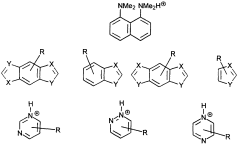
Proton conductor
PatentWO2011136119A1
Innovation
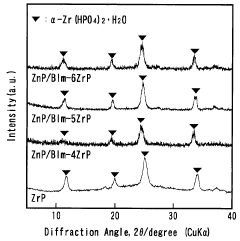
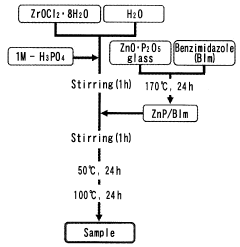
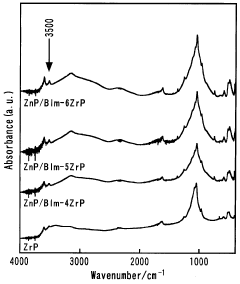
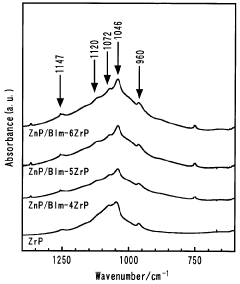
- A proton conductor comprising zirconium hydrogen phosphate or titanium hydrogen phosphate crystals, phosphate ions, zinc or cobalt ions, and benzimidazole or its derivatives, with specific particle sizes and ratios, is developed to enhance thermal stability and conductivity across a broader temperature range.
Materials Science Breakthroughs Enabling Proton Conductors
Recent breakthroughs in materials science have revolutionized the field of solid-state proton conductors, enabling significant advancements in both fundamental understanding and practical applications. The development of novel materials with enhanced proton conductivity has been driven by innovative synthesis methods and characterization techniques that allow for precise control over material properties at the atomic and molecular levels.
Perovskite-type oxides represent one of the most significant materials science breakthroughs, with BaZrO₃-based materials emerging as leading candidates due to their chemical stability and high bulk conductivity. The incorporation of yttrium dopants into these structures has created pathways for proton transport while maintaining structural integrity at elevated temperatures, addressing previous limitations in thermal stability.
Nanoscale engineering of grain boundaries has emerged as another critical advancement, as researchers have developed methods to minimize the resistive effects of grain boundaries that traditionally limited overall conductivity. Techniques such as spark plasma sintering and chemical solution deposition have enabled the creation of materials with optimized microstructures and reduced grain boundary resistance.
Composite materials combining different proton-conducting phases have demonstrated synergistic effects that surpass the limitations of single-phase conductors. For instance, heterogeneous doping with rare earth elements has created materials with conductivity values approaching 10⁻² S/cm at intermediate temperatures (200-400°C), representing orders of magnitude improvement over previous generations.
The development of flexible, thin-film proton conductors has opened new application possibilities in portable and miniaturized devices. Advanced deposition techniques such as pulsed laser deposition and atomic layer deposition have enabled the fabrication of ultra-thin, defect-controlled proton-conducting membranes with thickness below 100 nm while maintaining excellent mechanical properties.
Computational materials science has accelerated discovery through high-throughput screening and machine learning approaches that predict promising candidate materials before synthesis. These methods have identified several novel classes of proton conductors, including metal-organic frameworks with engineered proton-hopping pathways and covalent organic frameworks with precisely positioned acidic functional groups.
Recent advances in operando characterization techniques, particularly neutron scattering and synchrotron-based X-ray methods, have provided unprecedented insights into proton transport mechanisms under realistic operating conditions. These techniques have revealed the dynamic nature of hydrogen bonding networks and their response to external stimuli, guiding rational materials design principles for next-generation proton conductors.
Perovskite-type oxides represent one of the most significant materials science breakthroughs, with BaZrO₃-based materials emerging as leading candidates due to their chemical stability and high bulk conductivity. The incorporation of yttrium dopants into these structures has created pathways for proton transport while maintaining structural integrity at elevated temperatures, addressing previous limitations in thermal stability.
Nanoscale engineering of grain boundaries has emerged as another critical advancement, as researchers have developed methods to minimize the resistive effects of grain boundaries that traditionally limited overall conductivity. Techniques such as spark plasma sintering and chemical solution deposition have enabled the creation of materials with optimized microstructures and reduced grain boundary resistance.
Composite materials combining different proton-conducting phases have demonstrated synergistic effects that surpass the limitations of single-phase conductors. For instance, heterogeneous doping with rare earth elements has created materials with conductivity values approaching 10⁻² S/cm at intermediate temperatures (200-400°C), representing orders of magnitude improvement over previous generations.
The development of flexible, thin-film proton conductors has opened new application possibilities in portable and miniaturized devices. Advanced deposition techniques such as pulsed laser deposition and atomic layer deposition have enabled the fabrication of ultra-thin, defect-controlled proton-conducting membranes with thickness below 100 nm while maintaining excellent mechanical properties.
Computational materials science has accelerated discovery through high-throughput screening and machine learning approaches that predict promising candidate materials before synthesis. These methods have identified several novel classes of proton conductors, including metal-organic frameworks with engineered proton-hopping pathways and covalent organic frameworks with precisely positioned acidic functional groups.
Recent advances in operando characterization techniques, particularly neutron scattering and synchrotron-based X-ray methods, have provided unprecedented insights into proton transport mechanisms under realistic operating conditions. These techniques have revealed the dynamic nature of hydrogen bonding networks and their response to external stimuli, guiding rational materials design principles for next-generation proton conductors.
Energy Storage and Conversion Applications
Solid-state proton conductors have emerged as critical components in various energy storage and conversion applications, revolutionizing how we approach sustainable energy solutions. These materials facilitate efficient proton transport without requiring liquid electrolytes, offering significant advantages in terms of safety, durability, and operational flexibility across multiple energy technologies.
In fuel cell applications, solid-state proton conductors serve as electrolytes in proton exchange membrane fuel cells (PEMFCs) and solid oxide fuel cells (SOFCs). These conductors enable the selective transport of protons while blocking electron flow, creating the electrochemical gradient necessary for electricity generation. Recent advancements in ceramic-polymer composite electrolytes have achieved conductivities exceeding 10^-2 S/cm at intermediate temperatures (80-200°C), expanding the operational range of these systems.
Hydrogen production via water electrolysis represents another significant application domain. Solid-state proton conductors facilitate the separation of hydrogen and oxygen during the electrolysis process, enhancing efficiency and safety. Proton-conducting ceramics such as doped BaZrO₃ and BaCeO₃ have demonstrated remarkable stability in steam environments at elevated temperatures, making them particularly suitable for high-temperature electrolysis systems that require less electrical energy input.
Battery technologies have also benefited substantially from solid-state proton conductor innovations. Proton-based solid-state batteries offer advantages over conventional lithium-ion batteries, including higher energy densities, reduced fire risks, and potentially longer cycle lives. Materials like metal-organic frameworks (MOFs) and covalent organic frameworks (COFs) with engineered proton channels have shown promise as electrolytes in these next-generation energy storage devices.
Electrochemical CO₂ reduction systems incorporating solid-state proton conductors have gained attention for carbon capture and utilization applications. These materials facilitate the selective conversion of CO₂ to value-added chemicals and fuels by providing the necessary protons for reduction reactions while maintaining separation between reactants and products.
Emerging applications include proton-conducting membranes for humidity sensors, electrochromic devices, and hydrogen separation technologies. The versatility of these materials stems from their tunable properties through compositional engineering and nanostructuring, allowing optimization for specific operational conditions and performance requirements.
The integration of solid-state proton conductors with renewable energy systems presents particularly promising opportunities for grid-scale energy storage and conversion, potentially addressing intermittency challenges associated with solar and wind power generation through efficient hydrogen-based energy storage pathways.
In fuel cell applications, solid-state proton conductors serve as electrolytes in proton exchange membrane fuel cells (PEMFCs) and solid oxide fuel cells (SOFCs). These conductors enable the selective transport of protons while blocking electron flow, creating the electrochemical gradient necessary for electricity generation. Recent advancements in ceramic-polymer composite electrolytes have achieved conductivities exceeding 10^-2 S/cm at intermediate temperatures (80-200°C), expanding the operational range of these systems.
Hydrogen production via water electrolysis represents another significant application domain. Solid-state proton conductors facilitate the separation of hydrogen and oxygen during the electrolysis process, enhancing efficiency and safety. Proton-conducting ceramics such as doped BaZrO₃ and BaCeO₃ have demonstrated remarkable stability in steam environments at elevated temperatures, making them particularly suitable for high-temperature electrolysis systems that require less electrical energy input.
Battery technologies have also benefited substantially from solid-state proton conductor innovations. Proton-based solid-state batteries offer advantages over conventional lithium-ion batteries, including higher energy densities, reduced fire risks, and potentially longer cycle lives. Materials like metal-organic frameworks (MOFs) and covalent organic frameworks (COFs) with engineered proton channels have shown promise as electrolytes in these next-generation energy storage devices.
Electrochemical CO₂ reduction systems incorporating solid-state proton conductors have gained attention for carbon capture and utilization applications. These materials facilitate the selective conversion of CO₂ to value-added chemicals and fuels by providing the necessary protons for reduction reactions while maintaining separation between reactants and products.
Emerging applications include proton-conducting membranes for humidity sensors, electrochromic devices, and hydrogen separation technologies. The versatility of these materials stems from their tunable properties through compositional engineering and nanostructuring, allowing optimization for specific operational conditions and performance requirements.
The integration of solid-state proton conductors with renewable energy systems presents particularly promising opportunities for grid-scale energy storage and conversion, potentially addressing intermittency challenges associated with solar and wind power generation through efficient hydrogen-based energy storage pathways.
Unlock deeper insights with PatSnap Eureka Quick Research — get a full tech report to explore trends and direct your research. Try now!
Generate Your Research Report Instantly with AI Agent
Supercharge your innovation with PatSnap Eureka AI Agent Platform!