
Applying Machine Learning in Voltage Source Inverter Control
MAR 10, 20269 MIN READ
Generate Your Research Report Instantly with AI Agent
Patsnap Eureka helps you evaluate technical feasibility & market potential.
ML-Enhanced VSI Control Background and Objectives
Voltage Source Inverters have emerged as fundamental components in modern power electronics systems, serving critical roles in renewable energy integration, electric vehicle powertrains, and industrial motor drives. The evolution of VSI technology has progressed from basic switching control methods to sophisticated modulation techniques, yet traditional control approaches face increasing challenges in meeting the demanding requirements of contemporary applications.
The historical development of VSI control began with simple six-step commutation methods in the 1970s, advancing through pulse-width modulation techniques in the 1980s and 1990s. Space vector modulation and advanced carrier-based PWM strategies emerged in the early 2000s, providing improved harmonic performance and efficiency. However, these conventional approaches rely heavily on linear control theory and predetermined mathematical models, limiting their adaptability to varying operating conditions and system uncertainties.
Current VSI control systems encounter significant limitations when dealing with parameter variations, load disturbances, and grid integration challenges. Traditional PI controllers, while widely adopted, struggle with nonlinear system dynamics and require extensive tuning for optimal performance across different operating points. The increasing penetration of renewable energy sources and the growing complexity of power grid interactions demand more intelligent and adaptive control solutions.
Machine learning presents unprecedented opportunities to revolutionize VSI control by introducing adaptive, self-learning capabilities that can optimize performance in real-time. The convergence of advanced computational power, sophisticated algorithms, and extensive data availability has created favorable conditions for implementing ML-based control strategies in power electronics applications.
The primary objective of integrating machine learning into VSI control is to develop intelligent systems capable of autonomous optimization, predictive maintenance, and enhanced grid stability. These systems aim to achieve superior harmonic mitigation, improved efficiency across varying load conditions, and robust performance under grid disturbances. Additionally, ML-enhanced VSI control seeks to enable predictive fault detection, reducing maintenance costs and improving system reliability.
The technical goals encompass developing neural network-based controllers that can learn optimal switching patterns, implementing reinforcement learning algorithms for real-time parameter adaptation, and creating predictive models for proactive grid support functions. These objectives align with the broader industry trend toward smart grid technologies and autonomous power systems, positioning ML-enhanced VSI control as a critical enabler for future energy infrastructure.
The historical development of VSI control began with simple six-step commutation methods in the 1970s, advancing through pulse-width modulation techniques in the 1980s and 1990s. Space vector modulation and advanced carrier-based PWM strategies emerged in the early 2000s, providing improved harmonic performance and efficiency. However, these conventional approaches rely heavily on linear control theory and predetermined mathematical models, limiting their adaptability to varying operating conditions and system uncertainties.
Current VSI control systems encounter significant limitations when dealing with parameter variations, load disturbances, and grid integration challenges. Traditional PI controllers, while widely adopted, struggle with nonlinear system dynamics and require extensive tuning for optimal performance across different operating points. The increasing penetration of renewable energy sources and the growing complexity of power grid interactions demand more intelligent and adaptive control solutions.
Machine learning presents unprecedented opportunities to revolutionize VSI control by introducing adaptive, self-learning capabilities that can optimize performance in real-time. The convergence of advanced computational power, sophisticated algorithms, and extensive data availability has created favorable conditions for implementing ML-based control strategies in power electronics applications.
The primary objective of integrating machine learning into VSI control is to develop intelligent systems capable of autonomous optimization, predictive maintenance, and enhanced grid stability. These systems aim to achieve superior harmonic mitigation, improved efficiency across varying load conditions, and robust performance under grid disturbances. Additionally, ML-enhanced VSI control seeks to enable predictive fault detection, reducing maintenance costs and improving system reliability.
The technical goals encompass developing neural network-based controllers that can learn optimal switching patterns, implementing reinforcement learning algorithms for real-time parameter adaptation, and creating predictive models for proactive grid support functions. These objectives align with the broader industry trend toward smart grid technologies and autonomous power systems, positioning ML-enhanced VSI control as a critical enabler for future energy infrastructure.
Market Demand for Intelligent Power Electronics
The global power electronics market is experiencing unprecedented growth driven by the accelerating transition toward renewable energy systems, electric vehicles, and smart grid infrastructure. Traditional voltage source inverter control methods, while functional, are increasingly inadequate for meeting the sophisticated demands of modern power conversion applications that require enhanced efficiency, reliability, and adaptive performance under varying operational conditions.
The renewable energy sector represents one of the most significant demand drivers for intelligent power electronics solutions. Solar photovoltaic installations and wind energy systems require advanced inverter control capabilities to optimize power extraction, manage grid integration challenges, and ensure stable operation under fluctuating environmental conditions. Machine learning-enhanced inverter control systems can dynamically adjust operational parameters to maximize energy harvest while maintaining grid stability requirements.
Electric vehicle adoption is creating substantial market pressure for more sophisticated power electronics solutions. EV charging infrastructure demands intelligent inverter systems capable of bidirectional power flow management, load balancing, and grid support functions. The automotive industry's push toward higher efficiency powertrains and faster charging capabilities necessitates advanced control algorithms that can adapt to varying battery conditions and charging profiles in real-time.
Industrial automation and manufacturing sectors are increasingly demanding power electronics systems with predictive maintenance capabilities and self-optimizing performance characteristics. Machine learning integration enables inverter systems to anticipate component degradation, optimize switching patterns for extended equipment lifespan, and automatically adjust control parameters to maintain peak efficiency across diverse operating conditions.
The emergence of microgrids and distributed energy resources is driving demand for intelligent power electronics that can operate autonomously while coordinating with broader grid systems. These applications require sophisticated control algorithms capable of islanding detection, seamless grid reconnection, and dynamic load sharing among multiple distributed generation sources.
Data center and telecommunications infrastructure markets are seeking power electronics solutions with enhanced reliability and efficiency metrics. Machine learning-enabled inverter control can optimize power conversion efficiency based on real-time load patterns, reduce cooling requirements, and provide predictive failure analysis to minimize downtime risks in mission-critical applications.
The renewable energy sector represents one of the most significant demand drivers for intelligent power electronics solutions. Solar photovoltaic installations and wind energy systems require advanced inverter control capabilities to optimize power extraction, manage grid integration challenges, and ensure stable operation under fluctuating environmental conditions. Machine learning-enhanced inverter control systems can dynamically adjust operational parameters to maximize energy harvest while maintaining grid stability requirements.
Electric vehicle adoption is creating substantial market pressure for more sophisticated power electronics solutions. EV charging infrastructure demands intelligent inverter systems capable of bidirectional power flow management, load balancing, and grid support functions. The automotive industry's push toward higher efficiency powertrains and faster charging capabilities necessitates advanced control algorithms that can adapt to varying battery conditions and charging profiles in real-time.
Industrial automation and manufacturing sectors are increasingly demanding power electronics systems with predictive maintenance capabilities and self-optimizing performance characteristics. Machine learning integration enables inverter systems to anticipate component degradation, optimize switching patterns for extended equipment lifespan, and automatically adjust control parameters to maintain peak efficiency across diverse operating conditions.
The emergence of microgrids and distributed energy resources is driving demand for intelligent power electronics that can operate autonomously while coordinating with broader grid systems. These applications require sophisticated control algorithms capable of islanding detection, seamless grid reconnection, and dynamic load sharing among multiple distributed generation sources.
Data center and telecommunications infrastructure markets are seeking power electronics solutions with enhanced reliability and efficiency metrics. Machine learning-enabled inverter control can optimize power conversion efficiency based on real-time load patterns, reduce cooling requirements, and provide predictive failure analysis to minimize downtime risks in mission-critical applications.
Current VSI Control Challenges and ML Opportunities
Voltage Source Inverters face significant control challenges in modern power electronics applications, particularly as system complexity and performance requirements continue to escalate. Traditional control methods, while proven effective in many scenarios, encounter limitations when dealing with nonlinear dynamics, parameter variations, and disturbances that characterize real-world operating conditions.
Conventional PI and PID controllers struggle with the inherent nonlinearities present in VSI systems, especially during transient conditions and load variations. These linear controllers are typically designed around specific operating points, leading to suboptimal performance when system conditions deviate from nominal parameters. The challenge becomes more pronounced in grid-connected applications where voltage fluctuations, frequency variations, and harmonic distortions create complex control scenarios.
Parameter uncertainty represents another critical challenge in VSI control systems. Circuit parameters such as inductance, capacitance, and resistance values can drift due to temperature variations, aging effects, and manufacturing tolerances. Traditional control approaches often lack the adaptability to compensate for these parameter changes automatically, resulting in degraded performance over time.
The increasing demand for higher power quality and faster dynamic response further exposes the limitations of conventional control strategies. Modern applications require precise voltage regulation, minimal total harmonic distortion, and rapid response to load changes, pushing traditional controllers beyond their optimal operating ranges.
Machine learning presents unprecedented opportunities to address these fundamental challenges through its inherent ability to learn complex nonlinear relationships and adapt to changing system conditions. ML algorithms can potentially capture the intricate dynamics of VSI systems that are difficult to model using conventional mathematical approaches.
Adaptive control represents a primary opportunity where ML algorithms can continuously learn and adjust control parameters based on real-time system behavior. Neural networks and reinforcement learning algorithms show particular promise in developing controllers that can automatically tune themselves to maintain optimal performance across varying operating conditions.
Predictive control capabilities enabled by ML offer another significant opportunity. By learning from historical data patterns, ML algorithms can anticipate system behavior and proactively adjust control actions, potentially achieving superior transient response and disturbance rejection compared to reactive control methods.
The ability of ML to handle high-dimensional data makes it particularly suitable for multi-objective optimization in VSI control, simultaneously addressing efficiency, power quality, and dynamic performance requirements that traditional methods often treat as competing objectives.
Conventional PI and PID controllers struggle with the inherent nonlinearities present in VSI systems, especially during transient conditions and load variations. These linear controllers are typically designed around specific operating points, leading to suboptimal performance when system conditions deviate from nominal parameters. The challenge becomes more pronounced in grid-connected applications where voltage fluctuations, frequency variations, and harmonic distortions create complex control scenarios.
Parameter uncertainty represents another critical challenge in VSI control systems. Circuit parameters such as inductance, capacitance, and resistance values can drift due to temperature variations, aging effects, and manufacturing tolerances. Traditional control approaches often lack the adaptability to compensate for these parameter changes automatically, resulting in degraded performance over time.
The increasing demand for higher power quality and faster dynamic response further exposes the limitations of conventional control strategies. Modern applications require precise voltage regulation, minimal total harmonic distortion, and rapid response to load changes, pushing traditional controllers beyond their optimal operating ranges.
Machine learning presents unprecedented opportunities to address these fundamental challenges through its inherent ability to learn complex nonlinear relationships and adapt to changing system conditions. ML algorithms can potentially capture the intricate dynamics of VSI systems that are difficult to model using conventional mathematical approaches.
Adaptive control represents a primary opportunity where ML algorithms can continuously learn and adjust control parameters based on real-time system behavior. Neural networks and reinforcement learning algorithms show particular promise in developing controllers that can automatically tune themselves to maintain optimal performance across varying operating conditions.
Predictive control capabilities enabled by ML offer another significant opportunity. By learning from historical data patterns, ML algorithms can anticipate system behavior and proactively adjust control actions, potentially achieving superior transient response and disturbance rejection compared to reactive control methods.
The ability of ML to handle high-dimensional data makes it particularly suitable for multi-objective optimization in VSI control, simultaneously addressing efficiency, power quality, and dynamic performance requirements that traditional methods often treat as competing objectives.
Existing ML Solutions for VSI Control Systems
01 Multi-level voltage source inverter topologies
Advanced inverter configurations utilize multi-level topologies to generate output voltages with reduced harmonic distortion and improved power quality. These topologies employ multiple switching devices arranged in cascaded or modular structures to synthesize stepped voltage waveforms that approximate sinusoidal outputs. The multi-level approach enables higher voltage operation, reduced switching losses, and better electromagnetic compatibility compared to conventional two-level inverters.- Multi-level voltage source inverter topologies: Advanced inverter configurations utilize multi-level topologies to generate output voltages with reduced harmonic distortion and improved power quality. These topologies employ multiple switching devices arranged in cascaded or modular structures to synthesize stepped voltage waveforms that approximate sinusoidal outputs. The multi-level approach enables higher voltage operation, reduced electromagnetic interference, and improved efficiency compared to conventional two-level inverters.
- Pulse width modulation control strategies: Control methods for voltage source inverters employ sophisticated pulse width modulation techniques to regulate output voltage and frequency. These strategies involve generating switching signals with variable duty cycles to control the power flow and maintain desired output characteristics. Advanced modulation schemes can minimize switching losses, reduce total harmonic distortion, and improve dynamic response under varying load conditions.
- DC-link capacitor and voltage stabilization: Voltage source inverters incorporate DC-link capacitors and associated circuitry to maintain stable DC bus voltage and provide energy storage. These components filter ripple currents, support transient power demands, and ensure consistent inverter operation. Proper sizing and configuration of the DC-link stage is critical for achieving reliable performance, minimizing voltage fluctuations, and protecting switching devices from overvoltage conditions.
- Switching device protection and fault management: Protection mechanisms are integrated into voltage source inverters to safeguard switching devices against overcurrent, overvoltage, and thermal stress conditions. These systems monitor operating parameters and implement fault detection algorithms to identify abnormal conditions. Upon detecting faults, protective circuits can trigger shutdown sequences, activate snubber circuits, or engage bypass mechanisms to prevent component damage and ensure safe operation.
- Grid-connected inverter synchronization and power quality: Grid-tied voltage source inverters employ synchronization techniques to match phase, frequency, and voltage with utility power systems. These inverters incorporate phase-locked loops and control algorithms to ensure seamless connection and power transfer. Advanced implementations include reactive power compensation, harmonic filtering, and anti-islanding protection to maintain power quality standards and comply with grid interconnection requirements.
02 Pulse width modulation control strategies
Control methods for voltage source inverters employ various pulse width modulation techniques to regulate output voltage and frequency. These strategies involve switching semiconductor devices at high frequencies according to specific patterns to control the average voltage delivered to the load. Advanced modulation schemes optimize switching sequences to minimize harmonics, reduce switching losses, and improve dynamic response. The control algorithms may incorporate feedback mechanisms and adaptive techniques to maintain stable operation under varying load conditions.Expand Specific Solutions03 DC-link capacitor and voltage stabilization
Voltage source inverters incorporate energy storage elements on the DC side to maintain stable DC bus voltage and provide instantaneous power buffering. The capacitor bank design considers voltage ripple requirements, energy storage capacity, and transient response characteristics. Voltage stabilization circuits may include active or passive components to regulate the DC link voltage against input variations and load transients, ensuring consistent inverter performance and protecting semiconductor switches from overvoltage conditions.Expand Specific Solutions04 Semiconductor switching devices and gate drive circuits
The power conversion stage utilizes semiconductor switches such as IGBTs, MOSFETs, or other power transistors configured in bridge arrangements. Gate drive circuits provide the necessary voltage and current levels to control the switching devices with precise timing and adequate isolation from the control circuitry. Protection features include short-circuit detection, overcurrent limiting, and thermal monitoring to ensure safe operation. The selection and configuration of switching devices directly impacts the inverter's power rating, efficiency, and switching frequency capabilities.Expand Specific Solutions05 Grid-connected inverter synchronization and power quality
Inverter systems designed for grid connection incorporate synchronization mechanisms to match the phase, frequency, and voltage of the utility network. These systems implement phase-locked loops or similar techniques to track grid parameters and ensure seamless power transfer. Power quality features include harmonic filtering, reactive power control, and compliance with grid codes and standards. Advanced implementations may provide ancillary services such as voltage support, frequency regulation, and fault ride-through capabilities to enhance grid stability.Expand Specific Solutions
Key Players in ML-Based Power Conversion Industry
The application of machine learning in voltage source inverter control represents a rapidly evolving technological landscape characterized by significant industry momentum and diverse market participation. The field is currently in a growth phase, with substantial market potential driven by increasing demand for efficient power conversion systems across automotive, industrial automation, and renewable energy sectors. Technology maturity varies considerably among key players, with established industrial giants like ABB Ltd., YASKAWA Electric Corp., and FANUC Corp. leading in traditional control systems, while automotive manufacturers including Mercedes-Benz Group AG, GM Global Technology Operations LLC, and DENSO Corp. are advancing ML-integrated inverter solutions for electric vehicles. Research institutions such as North Carolina State University and Beihang University are contributing foundational algorithms, while companies like Mitsubishi Electric Research Laboratories are bridging academic research with practical implementations, creating a competitive ecosystem spanning from emerging startups to multinational corporations.
GM Global Technology Operations LLC
Technical Solution: General Motors has developed machine learning-based voltage source inverter control specifically for electric vehicle applications. Their approach utilizes convolutional neural networks to optimize inverter switching patterns for maximum efficiency and minimal electromagnetic interference. The system incorporates real-time learning algorithms that adapt to driving patterns and battery conditions, achieving up to 15% improvement in overall powertrain efficiency. Their ML models process sensor data from temperature, current, and voltage measurements to predict optimal control strategies. The technology includes predictive maintenance capabilities that can forecast inverter component wear and schedule maintenance proactively.
Strengths: Extensive experience in automotive power electronics with focus on efficiency optimization. Weaknesses: Technology primarily optimized for automotive applications with limited applicability to stationary power systems.
DENSO Corp.
Technical Solution: DENSO has implemented machine learning algorithms in voltage source inverter control for hybrid and electric vehicle applications. Their technology employs fuzzy logic combined with neural networks to achieve optimal torque control and energy efficiency. The system uses reinforcement learning to adapt control strategies based on real-time vehicle operating conditions, resulting in improved fuel economy and reduced emissions. Their ML-based approach includes predictive algorithms for thermal management and fault diagnosis, enabling proactive system protection. The technology incorporates sensor fusion techniques that combine multiple data sources for enhanced control accuracy and reliability in automotive environments.
Strengths: Strong automotive industry expertise with focus on reliability and cost-effectiveness. Weaknesses: Limited application scope beyond automotive sector and conservative approach to advanced ML techniques.
Core ML Algorithms for Advanced VSI Control
Motor control device in which current regeneration is adjusted, control unit for an inverter, machine learning device and method thereof
PatentInactiveDE102016008984A1
Innovation
- A machine learning device is employed to learn and adjust power supply regeneration output and stop voltages based on observed status variables, using reinforcement learning to optimize these operations and minimize heat generation and overvoltage risks.


Control of a voltage source converter using synchronous machine emulation
PatentInactiveUS20110153113A1
Innovation
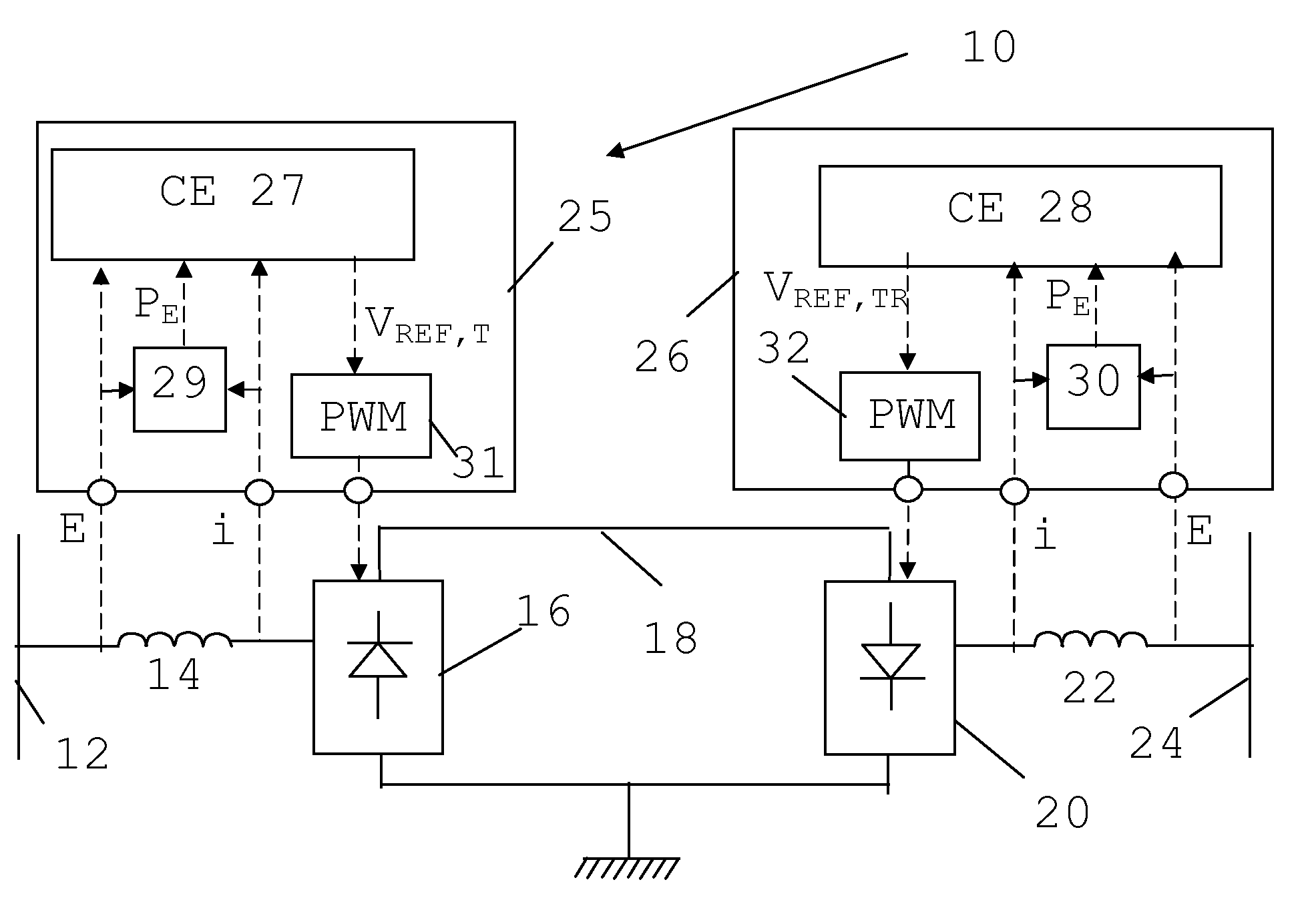
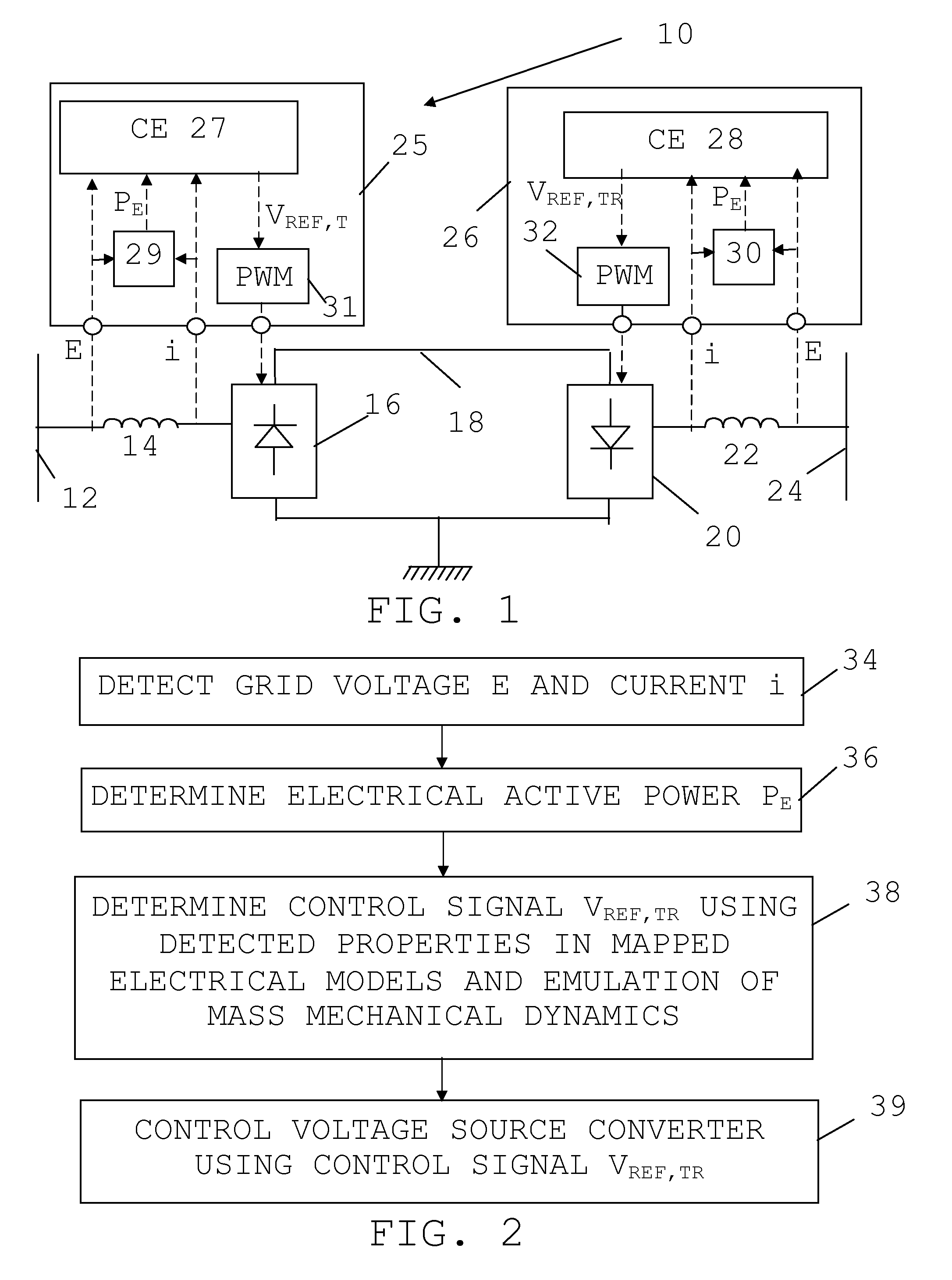
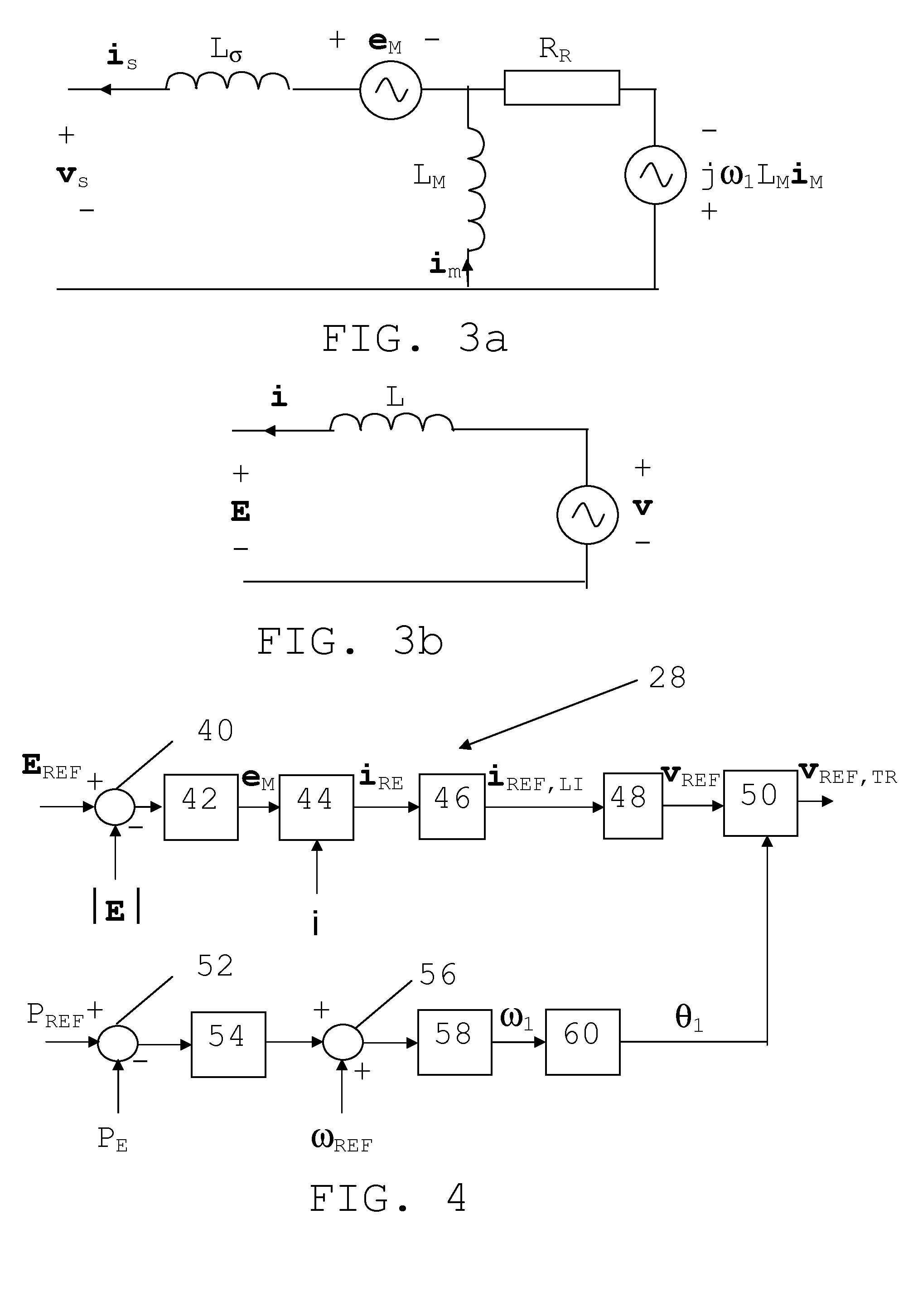
- The method involves emulating the electrical dynamics of a non-salient synchronous machine to control voltage source converters, using a mapping of an electrical model to generate control signals based on detected grid properties, enabling the converters to contribute to grid voltage and frequency control.

Grid Code Compliance for ML-Enhanced Inverters
Grid code compliance represents a critical regulatory framework that ML-enhanced voltage source inverters must satisfy to ensure safe and reliable grid integration. These codes establish mandatory technical requirements covering voltage and frequency regulation, power quality standards, fault ride-through capabilities, and reactive power support. Traditional inverter control systems rely on predetermined parameters and fixed control algorithms to meet these specifications, while ML-enhanced systems introduce adaptive learning mechanisms that must demonstrate consistent compliance across varying operational conditions.
The integration of machine learning algorithms in inverter control systems creates unique compliance challenges that extend beyond conventional regulatory frameworks. ML models introduce inherent variability in control responses due to their adaptive nature, requiring new verification methodologies to ensure grid code adherence. Key compliance areas include maintaining voltage stability within specified tolerances, providing adequate frequency response during grid disturbances, and delivering prescribed reactive power support during both normal and abnormal operating conditions.
Regulatory bodies worldwide are developing updated grid codes specifically addressing intelligent inverter technologies. The IEEE 1547 standard and IEC 61727 provide foundational requirements for distributed energy resource interconnection, while emerging standards like IEEE 2030.5 address communication protocols for smart inverter functions. These evolving regulations increasingly recognize the potential benefits of adaptive control systems while establishing rigorous testing protocols to validate ML algorithm performance under diverse grid scenarios.
Certification processes for ML-enhanced inverters require comprehensive validation of algorithm behavior across extensive operational parameter ranges. Testing protocols must demonstrate that machine learning models maintain grid code compliance during training phases, operational adaptation periods, and long-term deployment scenarios. This includes verifying consistent performance during grid fault conditions, load variations, and environmental changes that may influence ML model decision-making processes.
The dynamic nature of ML algorithms necessitates continuous monitoring and validation frameworks to ensure ongoing grid code compliance throughout the inverter's operational lifetime. Advanced testing methodologies incorporating Monte Carlo simulations, hardware-in-the-loop validation, and real-time performance monitoring are becoming essential tools for demonstrating regulatory compliance and maintaining grid stability in increasingly complex power system environments.
The integration of machine learning algorithms in inverter control systems creates unique compliance challenges that extend beyond conventional regulatory frameworks. ML models introduce inherent variability in control responses due to their adaptive nature, requiring new verification methodologies to ensure grid code adherence. Key compliance areas include maintaining voltage stability within specified tolerances, providing adequate frequency response during grid disturbances, and delivering prescribed reactive power support during both normal and abnormal operating conditions.
Regulatory bodies worldwide are developing updated grid codes specifically addressing intelligent inverter technologies. The IEEE 1547 standard and IEC 61727 provide foundational requirements for distributed energy resource interconnection, while emerging standards like IEEE 2030.5 address communication protocols for smart inverter functions. These evolving regulations increasingly recognize the potential benefits of adaptive control systems while establishing rigorous testing protocols to validate ML algorithm performance under diverse grid scenarios.
Certification processes for ML-enhanced inverters require comprehensive validation of algorithm behavior across extensive operational parameter ranges. Testing protocols must demonstrate that machine learning models maintain grid code compliance during training phases, operational adaptation periods, and long-term deployment scenarios. This includes verifying consistent performance during grid fault conditions, load variations, and environmental changes that may influence ML model decision-making processes.
The dynamic nature of ML algorithms necessitates continuous monitoring and validation frameworks to ensure ongoing grid code compliance throughout the inverter's operational lifetime. Advanced testing methodologies incorporating Monte Carlo simulations, hardware-in-the-loop validation, and real-time performance monitoring are becoming essential tools for demonstrating regulatory compliance and maintaining grid stability in increasingly complex power system environments.
Real-Time Implementation Challenges for ML VSI Control
The implementation of machine learning algorithms in voltage source inverter control systems faces significant real-time computational constraints that fundamentally challenge traditional control paradigms. Modern VSI applications demand control loop execution frequencies ranging from 10 kHz to 100 kHz, creating stringent timing requirements where computational delays exceeding 10-50 microseconds can severely compromise system stability and performance. These temporal constraints become particularly acute when deploying complex ML models such as deep neural networks or ensemble methods that require substantial computational resources.
Hardware platform selection represents a critical bottleneck in ML-based VSI control implementation. Traditional digital signal processors, while optimized for control applications, often lack the parallel processing capabilities necessary for efficient neural network inference. Graphics processing units offer superior parallel computation but introduce latency issues due to data transfer overhead between CPU and GPU memory spaces. Field-programmable gate arrays emerge as promising solutions, enabling custom hardware acceleration for specific ML algorithms, yet require significant development effort and expertise in hardware description languages.
Memory bandwidth and storage limitations pose additional implementation challenges, particularly for embedded control systems with constrained resources. Large neural network models may exceed available memory capacity, necessitating model compression techniques such as quantization, pruning, or knowledge distillation. These optimization methods, while reducing computational requirements, can potentially degrade control performance and require careful validation to ensure system stability margins are maintained.
Real-time determinism presents another fundamental challenge, as many ML frameworks are designed for batch processing rather than real-time applications. The non-deterministic nature of certain ML algorithms, combined with operating system scheduling uncertainties, can introduce jitter in control loop timing. This variability conflicts with the deterministic behavior required for stable VSI operation, particularly in grid-connected applications where synchronization accuracy is paramount.
Integration with existing control infrastructure requires careful consideration of communication protocols and data flow architectures. Legacy VSI control systems typically employ established fieldbus protocols and real-time operating systems that may not seamlessly accommodate ML processing pipelines. The challenge extends to maintaining backward compatibility while introducing ML capabilities, often requiring hybrid architectures that combine conventional control methods with ML-enhanced functions.
Hardware platform selection represents a critical bottleneck in ML-based VSI control implementation. Traditional digital signal processors, while optimized for control applications, often lack the parallel processing capabilities necessary for efficient neural network inference. Graphics processing units offer superior parallel computation but introduce latency issues due to data transfer overhead between CPU and GPU memory spaces. Field-programmable gate arrays emerge as promising solutions, enabling custom hardware acceleration for specific ML algorithms, yet require significant development effort and expertise in hardware description languages.
Memory bandwidth and storage limitations pose additional implementation challenges, particularly for embedded control systems with constrained resources. Large neural network models may exceed available memory capacity, necessitating model compression techniques such as quantization, pruning, or knowledge distillation. These optimization methods, while reducing computational requirements, can potentially degrade control performance and require careful validation to ensure system stability margins are maintained.
Real-time determinism presents another fundamental challenge, as many ML frameworks are designed for batch processing rather than real-time applications. The non-deterministic nature of certain ML algorithms, combined with operating system scheduling uncertainties, can introduce jitter in control loop timing. This variability conflicts with the deterministic behavior required for stable VSI operation, particularly in grid-connected applications where synchronization accuracy is paramount.
Integration with existing control infrastructure requires careful consideration of communication protocols and data flow architectures. Legacy VSI control systems typically employ established fieldbus protocols and real-time operating systems that may not seamlessly accommodate ML processing pipelines. The challenge extends to maintaining backward compatibility while introducing ML capabilities, often requiring hybrid architectures that combine conventional control methods with ML-enhanced functions.
Unlock deeper insights with Patsnap Eureka Quick Research — get a full tech report to explore trends and direct your research. Try now!
Generate Your Research Report Instantly with AI Agent
Supercharge your innovation with Patsnap Eureka AI Agent Platform!