
Optimize Time Response for Voltage Source Inverter Control
MAR 10, 20269 MIN READ
Generate Your Research Report Instantly with AI Agent
Patsnap Eureka helps you evaluate technical feasibility & market potential.
VSI Control Time Response Background and Objectives
Voltage Source Inverters have emerged as fundamental components in modern power electronics systems, serving as critical interfaces between DC power sources and AC loads or grids. The evolution of VSI technology has been driven by the increasing demand for efficient power conversion in renewable energy systems, electric vehicles, uninterruptible power supplies, and motor drives. As these applications become more sophisticated and performance-critical, the temporal characteristics of VSI control systems have gained paramount importance.
The historical development of VSI control has progressed from basic open-loop switching strategies to advanced closed-loop control methodologies incorporating sophisticated feedback mechanisms. Early implementations relied on simple pulse-width modulation techniques with limited dynamic response capabilities. However, the integration of digital signal processors and advanced control algorithms has enabled the implementation of high-performance control strategies that can achieve rapid response times and enhanced system stability.
Contemporary power systems face unprecedented challenges in terms of dynamic performance requirements. Grid-connected inverters must respond rapidly to voltage fluctuations, frequency variations, and load transients to maintain power quality and system stability. Similarly, motor drive applications demand fast torque response and precise speed control, necessitating VSI control systems with minimal delay and optimal transient behavior. The proliferation of distributed energy resources and microgrids has further intensified the need for inverters capable of seamless transitions between grid-connected and islanded operation modes.
The primary objective of optimizing VSI control time response centers on minimizing the delay between reference command changes and actual output response while maintaining system stability and robustness. This encompasses reducing computational delays in digital control implementations, optimizing control algorithm structures, and enhancing the bandwidth of feedback control loops. Additionally, the objective extends to achieving consistent performance across varying operating conditions, including different load types, power levels, and environmental factors.
Advanced control objectives also include the implementation of predictive control strategies that can anticipate system disturbances and preemptively adjust control actions. This proactive approach aims to further reduce effective response times by eliminating reactive delays inherent in traditional feedback-only control systems. The integration of machine learning algorithms and adaptive control techniques represents an emerging frontier in achieving autonomous optimization of VSI response characteristics based on real-time system identification and performance monitoring.
The historical development of VSI control has progressed from basic open-loop switching strategies to advanced closed-loop control methodologies incorporating sophisticated feedback mechanisms. Early implementations relied on simple pulse-width modulation techniques with limited dynamic response capabilities. However, the integration of digital signal processors and advanced control algorithms has enabled the implementation of high-performance control strategies that can achieve rapid response times and enhanced system stability.
Contemporary power systems face unprecedented challenges in terms of dynamic performance requirements. Grid-connected inverters must respond rapidly to voltage fluctuations, frequency variations, and load transients to maintain power quality and system stability. Similarly, motor drive applications demand fast torque response and precise speed control, necessitating VSI control systems with minimal delay and optimal transient behavior. The proliferation of distributed energy resources and microgrids has further intensified the need for inverters capable of seamless transitions between grid-connected and islanded operation modes.
The primary objective of optimizing VSI control time response centers on minimizing the delay between reference command changes and actual output response while maintaining system stability and robustness. This encompasses reducing computational delays in digital control implementations, optimizing control algorithm structures, and enhancing the bandwidth of feedback control loops. Additionally, the objective extends to achieving consistent performance across varying operating conditions, including different load types, power levels, and environmental factors.
Advanced control objectives also include the implementation of predictive control strategies that can anticipate system disturbances and preemptively adjust control actions. This proactive approach aims to further reduce effective response times by eliminating reactive delays inherent in traditional feedback-only control systems. The integration of machine learning algorithms and adaptive control techniques represents an emerging frontier in achieving autonomous optimization of VSI response characteristics based on real-time system identification and performance monitoring.
Market Demand for Fast VSI Control Systems
The global power electronics market is experiencing unprecedented growth driven by the accelerating transition toward renewable energy systems, electric vehicles, and smart grid infrastructure. Voltage source inverters serve as critical components in these applications, where millisecond-level response times can determine system stability and performance. The demand for enhanced VSI control systems stems from increasingly stringent grid codes and performance requirements across multiple sectors.
Industrial automation represents a significant demand driver, where manufacturing processes require precise motor control with minimal settling times. Modern production lines cannot tolerate voltage fluctuations or delayed responses that could disrupt sensitive equipment or compromise product quality. The semiconductor industry, in particular, demands ultra-stable power supplies where even microsecond delays in voltage regulation can result in substantial financial losses.
The renewable energy sector presents substantial market opportunities for fast VSI control systems. Solar and wind installations require rapid grid synchronization capabilities to maintain power quality during variable generation conditions. Grid-tied inverters must respond instantaneously to frequency variations and voltage sags to prevent disconnection events that could destabilize local power networks.
Electric vehicle charging infrastructure creates additional market pressure for optimized VSI response times. Fast-charging stations require precise voltage and current control to maximize charging efficiency while protecting battery systems. The growing deployment of vehicle-to-grid technologies further amplifies the need for bidirectional inverters with enhanced dynamic response characteristics.
Data centers and telecommunications facilities represent high-value market segments where power quality directly impacts operational reliability. These facilities require uninterruptible power systems with VSI controllers capable of seamless transitions between grid and backup power sources. Any delay in voltage regulation during switching events can cause costly equipment failures or data loss.
The microgrid market segment demonstrates particularly strong demand for advanced VSI control systems. Distributed energy resources require sophisticated inverter coordination to maintain islanded operation stability. Multiple inverters must respond collectively within tight timeframes to prevent voltage and frequency excursions that could damage connected loads.
Emerging applications in aerospace and defense sectors are driving requirements for even faster VSI response times. Aircraft electrical systems and military power supplies demand robust performance under extreme operating conditions where conventional control methods may prove inadequate.
Industrial automation represents a significant demand driver, where manufacturing processes require precise motor control with minimal settling times. Modern production lines cannot tolerate voltage fluctuations or delayed responses that could disrupt sensitive equipment or compromise product quality. The semiconductor industry, in particular, demands ultra-stable power supplies where even microsecond delays in voltage regulation can result in substantial financial losses.
The renewable energy sector presents substantial market opportunities for fast VSI control systems. Solar and wind installations require rapid grid synchronization capabilities to maintain power quality during variable generation conditions. Grid-tied inverters must respond instantaneously to frequency variations and voltage sags to prevent disconnection events that could destabilize local power networks.
Electric vehicle charging infrastructure creates additional market pressure for optimized VSI response times. Fast-charging stations require precise voltage and current control to maximize charging efficiency while protecting battery systems. The growing deployment of vehicle-to-grid technologies further amplifies the need for bidirectional inverters with enhanced dynamic response characteristics.
Data centers and telecommunications facilities represent high-value market segments where power quality directly impacts operational reliability. These facilities require uninterruptible power systems with VSI controllers capable of seamless transitions between grid and backup power sources. Any delay in voltage regulation during switching events can cause costly equipment failures or data loss.
The microgrid market segment demonstrates particularly strong demand for advanced VSI control systems. Distributed energy resources require sophisticated inverter coordination to maintain islanded operation stability. Multiple inverters must respond collectively within tight timeframes to prevent voltage and frequency excursions that could damage connected loads.
Emerging applications in aerospace and defense sectors are driving requirements for even faster VSI response times. Aircraft electrical systems and military power supplies demand robust performance under extreme operating conditions where conventional control methods may prove inadequate.
Current VSI Control Limitations and Response Challenges
Voltage Source Inverter control systems face significant temporal limitations that constrain their performance in dynamic applications. Traditional control architectures exhibit inherent delays ranging from 50 to 200 microseconds, primarily attributed to computational processing, analog-to-digital conversion, and pulse width modulation generation cycles. These delays become particularly problematic in high-frequency switching applications where rapid load changes demand instantaneous response.
The fundamental challenge stems from the discrete nature of digital control systems, which introduce sampling delays and computational latencies. Current control loops operating at typical switching frequencies of 10-20 kHz create bottlenecks when attempting to achieve sub-millisecond response times. The cascaded control structure, commonly employed in VSI systems, compounds these delays as outer voltage loops and inner current loops each contribute additional phase lag.
Modern VSI applications in electric vehicle powertrains and renewable energy systems demand response times below 10 microseconds to maintain stability during transient conditions. However, conventional control methods struggle to achieve such performance due to sensor bandwidth limitations and processing constraints. Current sensors typically exhibit bandwidth limitations of 100-500 kHz, while voltage sensors often operate at even lower frequencies, creating measurement bottlenecks.
Digital signal processor limitations further exacerbate response challenges. Standard DSP architectures require multiple clock cycles for complex mathematical operations such as Park transformations and PI controller calculations. Memory access delays and interrupt handling overhead add additional latency to the control loop execution time.
Grid-tied VSI systems face particular challenges when responding to voltage sags, frequency variations, and harmonic disturbances. The requirement for grid code compliance necessitates rapid fault detection and response capabilities, often within 2-3 line cycles. Current control architectures frequently fail to meet these stringent requirements, leading to system disconnections and reduced power quality.
Temperature variations and component aging introduce additional response degradation over operational lifetime. Power semiconductor switching characteristics drift with temperature, requiring adaptive control strategies that current systems inadequately address. These factors collectively create a complex optimization challenge requiring innovative approaches to achieve desired temporal performance in VSI control systems.
The fundamental challenge stems from the discrete nature of digital control systems, which introduce sampling delays and computational latencies. Current control loops operating at typical switching frequencies of 10-20 kHz create bottlenecks when attempting to achieve sub-millisecond response times. The cascaded control structure, commonly employed in VSI systems, compounds these delays as outer voltage loops and inner current loops each contribute additional phase lag.
Modern VSI applications in electric vehicle powertrains and renewable energy systems demand response times below 10 microseconds to maintain stability during transient conditions. However, conventional control methods struggle to achieve such performance due to sensor bandwidth limitations and processing constraints. Current sensors typically exhibit bandwidth limitations of 100-500 kHz, while voltage sensors often operate at even lower frequencies, creating measurement bottlenecks.
Digital signal processor limitations further exacerbate response challenges. Standard DSP architectures require multiple clock cycles for complex mathematical operations such as Park transformations and PI controller calculations. Memory access delays and interrupt handling overhead add additional latency to the control loop execution time.
Grid-tied VSI systems face particular challenges when responding to voltage sags, frequency variations, and harmonic disturbances. The requirement for grid code compliance necessitates rapid fault detection and response capabilities, often within 2-3 line cycles. Current control architectures frequently fail to meet these stringent requirements, leading to system disconnections and reduced power quality.
Temperature variations and component aging introduce additional response degradation over operational lifetime. Power semiconductor switching characteristics drift with temperature, requiring adaptive control strategies that current systems inadequately address. These factors collectively create a complex optimization challenge requiring innovative approaches to achieve desired temporal performance in VSI control systems.
Existing VSI Control Optimization Solutions
01 Control methods for improving inverter transient response
Various control strategies can be implemented to enhance the transient response of voltage source inverters. These methods include advanced feedback control algorithms, predictive control techniques, and adaptive control schemes that adjust system parameters in real-time. By optimizing the control loop design and implementing fast-acting control mechanisms, the inverter can respond more quickly to load changes and disturbances, reducing settling time and overshoot during transient conditions.- Control methods for improving inverter transient response: Various control strategies can be implemented to enhance the transient response of voltage source inverters. These methods include advanced feedback control algorithms, predictive control techniques, and adaptive control schemes that adjust system parameters in real-time. By optimizing the control loop design and implementing fast-acting control mechanisms, the inverter can respond more quickly to load changes and disturbances, reducing settling time and overshoot during transient conditions.
- PWM switching strategies for enhanced dynamic performance: Pulse width modulation techniques play a crucial role in determining the time response characteristics of voltage source inverters. Advanced PWM strategies, including space vector modulation and optimized switching patterns, can significantly improve the dynamic response by reducing switching delays and minimizing dead-time effects. These techniques enable faster voltage regulation and better tracking of reference signals during transient operations.
- Output filter design for transient response optimization: The design of output filters significantly impacts the time response of voltage source inverters. Proper selection of filter components, including inductors and capacitors, can minimize response delays while maintaining adequate harmonic filtering. Filter topologies and damping methods can be optimized to achieve faster settling times and reduced oscillations during load transients without compromising output quality.
- Dead-time compensation techniques: Dead-time inserted between switching transitions to prevent shoot-through can adversely affect inverter time response. Compensation methods can be employed to minimize the impact of dead-time on dynamic performance. These techniques include predictive compensation algorithms, adaptive dead-time adjustment, and voltage error correction schemes that improve the accuracy and speed of the inverter output during transient conditions.
- Current limiting and protection during transient events: Fast and reliable current limiting mechanisms are essential for protecting voltage source inverters during transient events while maintaining acceptable time response. Protection schemes can include instantaneous overcurrent detection, predictive current limiting, and soft-limiting techniques that prevent excessive currents without causing significant delays in normal operation. These methods ensure both fast response and safe operation under various transient conditions.
02 PWM switching strategies for enhanced dynamic performance
Pulse width modulation techniques play a crucial role in determining the time response characteristics of voltage source inverters. Advanced PWM strategies, including space vector modulation and optimized switching patterns, can minimize response delays and improve the overall dynamic behavior. These techniques help reduce harmonic distortion while maintaining fast response times, enabling the inverter to track reference signals more accurately during transient operations.Expand Specific Solutions03 Dead-time compensation and switching loss reduction
Dead-time effects in inverter switching can significantly impact the time response and introduce delays in the output voltage. Compensation techniques and circuit designs that minimize dead-time effects help improve the inverter's ability to respond quickly to command signals. Methods include adaptive dead-time adjustment, zero-voltage switching techniques, and optimized gate drive circuits that reduce switching losses while maintaining fast transition times.Expand Specific Solutions04 Output filter design for transient response optimization
The design of output filters in voltage source inverters directly affects the system's time response characteristics. Proper selection of filter components, including inductors and capacitors, can balance between harmonic filtering and dynamic response speed. Advanced filter topologies and damping techniques help achieve fast settling times while maintaining output voltage quality, enabling the inverter to respond rapidly to load variations without excessive oscillations.Expand Specific Solutions05 Current limiting and protection during transient conditions
Protection mechanisms and current limiting strategies are essential for maintaining safe operation during fast transient events. These systems must respond quickly to overcurrent conditions while allowing normal dynamic operation. Techniques include fast-acting current sensors, predictive current limiting algorithms, and intelligent protection schemes that distinguish between normal transients and fault conditions, ensuring both rapid response and system reliability.Expand Specific Solutions
Key Players in Power Electronics and VSI Industry
The voltage source inverter control optimization market represents a mature yet rapidly evolving sector within power electronics, driven by increasing demand for energy efficiency and renewable energy integration. The industry has reached technological maturity with established players like ABB Ltd., Mitsubishi Electric Corp., and YASKAWA Electric Corp. leading traditional industrial applications, while companies such as Texas Instruments and STMicroelectronics advance semiconductor solutions. Market growth is substantial, fueled by electric vehicle adoption (evidenced by GM Global Technology Operations and LG Electronics' involvement) and smart grid development (State Grid Corp. of China participation). Technology maturity varies across segments - basic inverter control is well-established, but advanced optimization techniques incorporating AI and real-time response enhancement remain emerging. The competitive landscape spans from industrial automation giants to specialized semiconductor manufacturers, indicating a diverse ecosystem addressing different optimization aspects from hardware-level improvements to system-wide control strategies.
Mitsubishi Electric Corp.
Technical Solution: Mitsubishi Electric develops sophisticated inverter control systems utilizing their proprietary SSCNET III communication protocol for ultra-fast response applications. Their FREQROL series incorporates advanced vector control algorithms with response times reaching 0.1 milliseconds for current loop control. The company implements real-time flux estimation techniques and optimized PWM strategies that reduce computational overhead while maintaining precise control accuracy. Mitsubishi's solutions feature integrated safety functions and fault detection mechanisms that ensure reliable operation without compromising response speed, making them suitable for high-precision industrial automation applications.
Strengths: Excellent integration with factory automation systems, robust safety features, proven reliability in harsh industrial environments. Weaknesses: Limited compatibility with non-Mitsubishi systems, higher maintenance complexity.
STMicroelectronics Srl
Technical Solution: STMicroelectronics provides integrated motor control solutions featuring their STM32 microcontroller family with dedicated motor control peripherals. Their solutions incorporate field-oriented control (FOC) algorithms optimized for real-time execution, achieving current loop response times under 10 microseconds. The company's STSPIN series combines power management and control functions in single-chip solutions, reducing system complexity and improving response characteristics. STMicroelectronics implements advanced PWM generation techniques with complementary outputs and programmable dead-time insertion, enabling precise control of voltage source inverters while minimizing electromagnetic interference and switching losses.
Strengths: Cost-effective integrated solutions, extensive software libraries and development tools, strong automotive qualification standards. Weaknesses: Limited high-power applications support, requires additional external components for complete systems.
Core Innovations in Fast VSI Control Methods
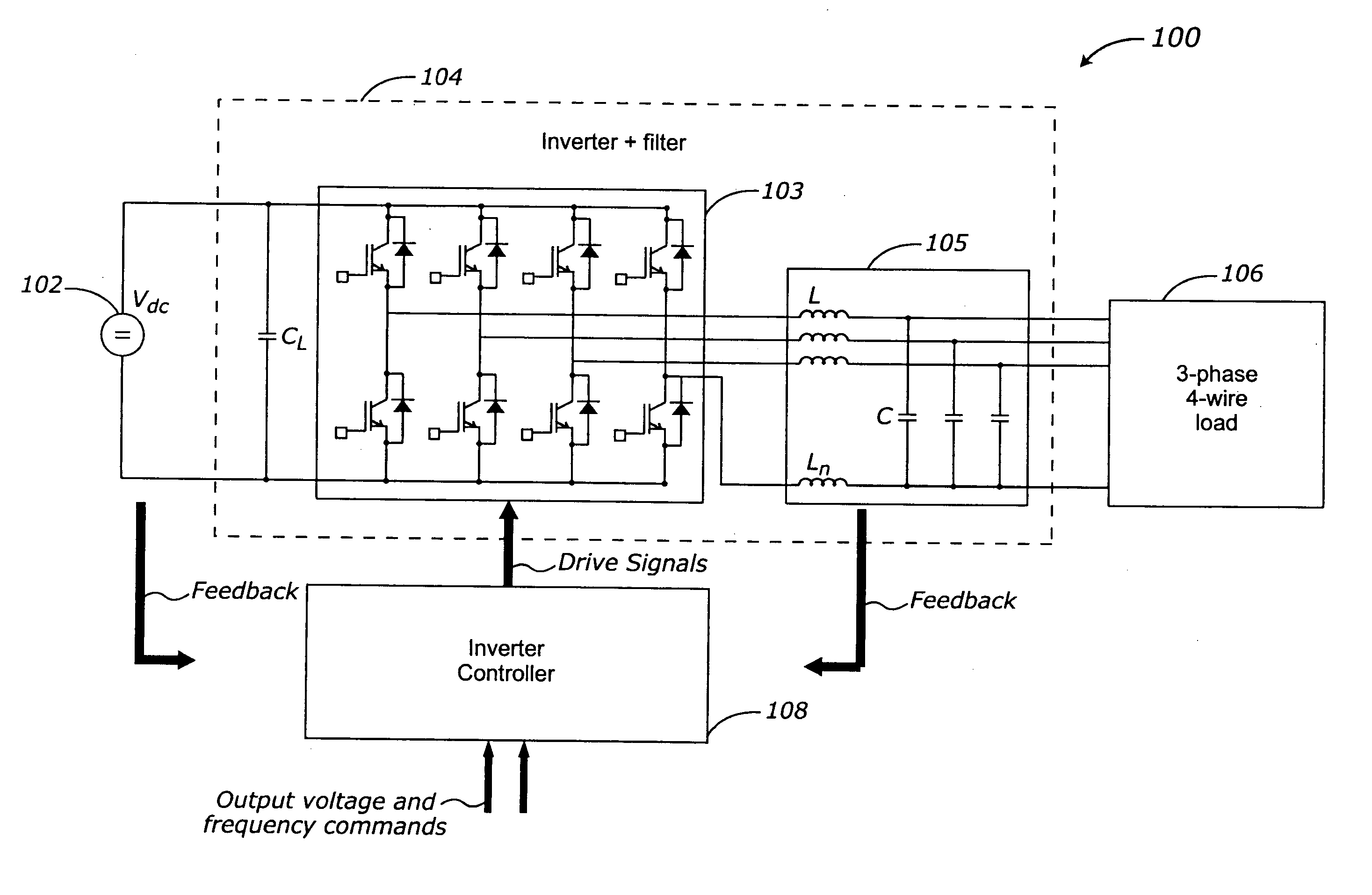
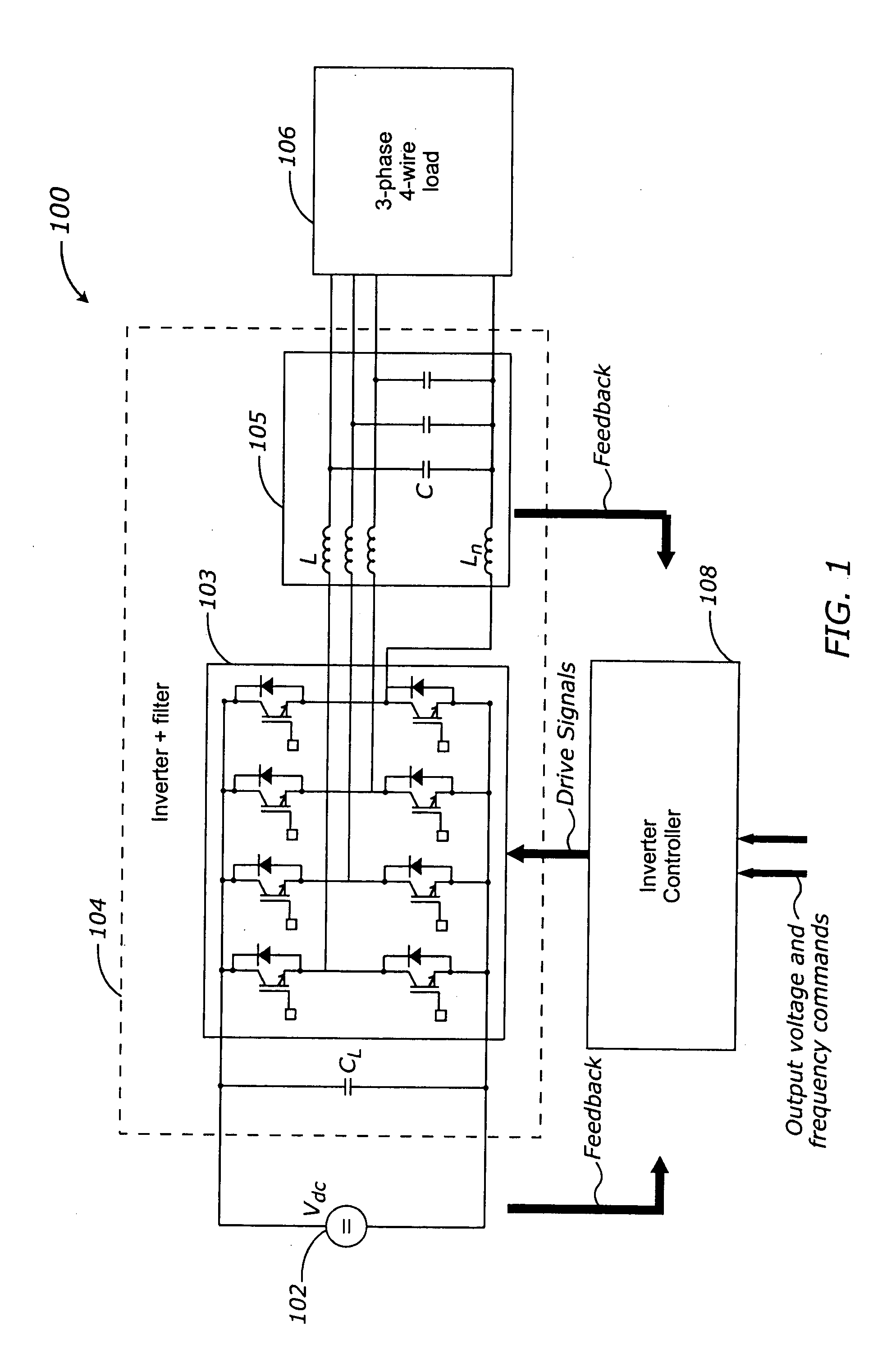
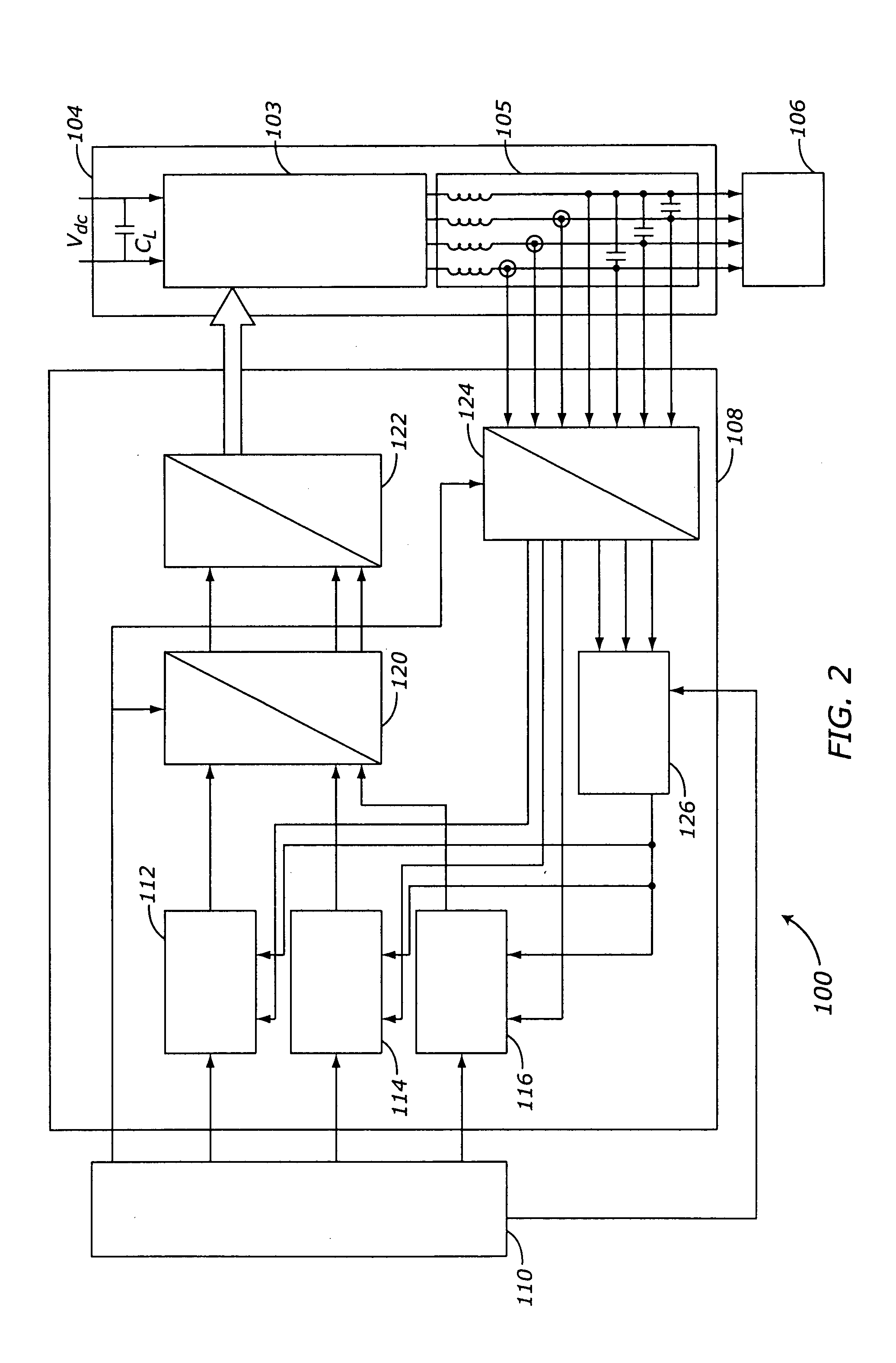
Method and apparatus for controlling a stand-alone 4-leg voltage source inverter
PatentInactiveUS20050063205A1
Innovation
- A multi-phase inverter control method and device that converts AC output to a DC domain for feedback, processes difference voltage signals to create regulating signals, limits them with current factors, and converts back to AC to produce control inputs for compensating fundamental and imbalance characteristics, utilizing a simplified architecture with high voltage loop bandwidth and reduced software modules.

Voltage control method, inverter, and voltage control apparatus
PatentActiveUS11848623B2
Innovation
- A voltage control method where the voltage loop and double current loops run in parallel, with the current loop dynamically limiting the amplitude of the voltage loop, allowing separate design of loop parameters and improving response speed and stability.


Grid Code Requirements for VSI Performance
Grid codes worldwide have established stringent performance requirements for voltage source inverters to ensure reliable and stable power system operation. These regulatory frameworks define specific time response criteria that directly impact VSI control system design and implementation strategies.
The IEEE 1547 standard mandates that grid-connected inverters must respond to voltage disturbances within 160 milliseconds for abnormal conditions and maintain continuous operation during normal voltage variations. European grid codes, particularly the German VDE-AR-N 4105, require even faster response times of 100 milliseconds for voltage regulation support and reactive power compensation. These requirements establish the fundamental performance benchmarks that VSI control systems must achieve.
Frequency response requirements present additional temporal constraints for VSI performance. The NERC PRC-024 standard specifies that inverters must remain connected during frequency excursions and provide appropriate response within 500 milliseconds of frequency deviation detection. Australian grid code AEMO requires primary frequency response activation within 6 seconds, while secondary response must be fully deployed within 60 seconds.
Power quality standards impose specific harmonic distortion limits that directly influence VSI switching frequency and control loop design. IEC 61000-3-12 establishes total harmonic distortion thresholds below 5% for voltage and 8% for current, requiring control systems to maintain these limits under dynamic operating conditions. These constraints necessitate high-bandwidth current control loops typically operating above 10 kHz.
Fault ride-through capabilities represent critical grid code requirements affecting VSI time response optimization. Low voltage ride-through standards require inverters to maintain connection during voltage sags as low as 15% of nominal voltage for durations up to 625 milliseconds. High voltage ride-through requirements mandate continued operation at 110% nominal voltage for extended periods, demanding rapid control system adaptation.
Grid support functions increasingly require coordinated VSI response for system stability. Voltage support requirements mandate reactive power injection within 40 milliseconds of voltage deviation detection, while frequency support functions require active power modulation response times below 200 milliseconds. These grid code specifications establish the performance envelope within which VSI control optimization must operate.
The IEEE 1547 standard mandates that grid-connected inverters must respond to voltage disturbances within 160 milliseconds for abnormal conditions and maintain continuous operation during normal voltage variations. European grid codes, particularly the German VDE-AR-N 4105, require even faster response times of 100 milliseconds for voltage regulation support and reactive power compensation. These requirements establish the fundamental performance benchmarks that VSI control systems must achieve.
Frequency response requirements present additional temporal constraints for VSI performance. The NERC PRC-024 standard specifies that inverters must remain connected during frequency excursions and provide appropriate response within 500 milliseconds of frequency deviation detection. Australian grid code AEMO requires primary frequency response activation within 6 seconds, while secondary response must be fully deployed within 60 seconds.
Power quality standards impose specific harmonic distortion limits that directly influence VSI switching frequency and control loop design. IEC 61000-3-12 establishes total harmonic distortion thresholds below 5% for voltage and 8% for current, requiring control systems to maintain these limits under dynamic operating conditions. These constraints necessitate high-bandwidth current control loops typically operating above 10 kHz.
Fault ride-through capabilities represent critical grid code requirements affecting VSI time response optimization. Low voltage ride-through standards require inverters to maintain connection during voltage sags as low as 15% of nominal voltage for durations up to 625 milliseconds. High voltage ride-through requirements mandate continued operation at 110% nominal voltage for extended periods, demanding rapid control system adaptation.
Grid support functions increasingly require coordinated VSI response for system stability. Voltage support requirements mandate reactive power injection within 40 milliseconds of voltage deviation detection, while frequency support functions require active power modulation response times below 200 milliseconds. These grid code specifications establish the performance envelope within which VSI control optimization must operate.
Safety Standards for High-Speed VSI Control
Safety standards for high-speed voltage source inverter control systems have become increasingly critical as switching frequencies continue to rise and response times decrease to microsecond levels. The rapid advancement in semiconductor technology, particularly wide bandgap devices like silicon carbide and gallium nitride, has enabled VSI systems to operate at unprecedented speeds, creating new safety challenges that traditional standards struggle to address.
Current international safety frameworks, including IEC 61800-5-1 and IEEE 519, provide foundational guidelines for power electronic systems but lack specific provisions for ultra-fast VSI control scenarios. These standards primarily focus on steady-state operations and conventional switching frequencies, leaving gaps in addressing transient behaviors and fault detection mechanisms required for high-speed applications. The emergence of real-time control systems operating below 10 microseconds necessitates updated safety protocols that can accommodate rapid decision-making processes.
Functional safety requirements under IEC 61508 and its derivative standards demand systematic approaches to hazard analysis and risk assessment for high-speed VSI systems. Safety Integrity Level classifications become particularly challenging when control loops operate at frequencies exceeding 100 kHz, as traditional diagnostic coverage methods may not provide adequate fault detection within required timeframes. The probability of dangerous failures must be carefully evaluated considering the reduced time available for safety system responses.
Protection system design standards emphasize the implementation of hardware-based safety mechanisms that can respond faster than software-based solutions. Current best practices recommend redundant sensing systems, independent safety processors, and fail-safe circuit topologies that maintain system integrity even during high-frequency switching operations. These protection schemes must comply with electromagnetic compatibility requirements while ensuring reliable operation under extreme dynamic conditions.
Emerging safety standards specifically targeting high-speed power electronics are under development by various international bodies. These proposed frameworks address unique challenges such as parasitic oscillations, switching noise immunity, and thermal management under rapid cycling conditions. The standards also incorporate requirements for advanced diagnostic algorithms capable of detecting incipient failures within microsecond timeframes, ensuring system safety without compromising performance optimization objectives.
Current international safety frameworks, including IEC 61800-5-1 and IEEE 519, provide foundational guidelines for power electronic systems but lack specific provisions for ultra-fast VSI control scenarios. These standards primarily focus on steady-state operations and conventional switching frequencies, leaving gaps in addressing transient behaviors and fault detection mechanisms required for high-speed applications. The emergence of real-time control systems operating below 10 microseconds necessitates updated safety protocols that can accommodate rapid decision-making processes.
Functional safety requirements under IEC 61508 and its derivative standards demand systematic approaches to hazard analysis and risk assessment for high-speed VSI systems. Safety Integrity Level classifications become particularly challenging when control loops operate at frequencies exceeding 100 kHz, as traditional diagnostic coverage methods may not provide adequate fault detection within required timeframes. The probability of dangerous failures must be carefully evaluated considering the reduced time available for safety system responses.
Protection system design standards emphasize the implementation of hardware-based safety mechanisms that can respond faster than software-based solutions. Current best practices recommend redundant sensing systems, independent safety processors, and fail-safe circuit topologies that maintain system integrity even during high-frequency switching operations. These protection schemes must comply with electromagnetic compatibility requirements while ensuring reliable operation under extreme dynamic conditions.
Emerging safety standards specifically targeting high-speed power electronics are under development by various international bodies. These proposed frameworks address unique challenges such as parasitic oscillations, switching noise immunity, and thermal management under rapid cycling conditions. The standards also incorporate requirements for advanced diagnostic algorithms capable of detecting incipient failures within microsecond timeframes, ensuring system safety without compromising performance optimization objectives.
Unlock deeper insights with Patsnap Eureka Quick Research — get a full tech report to explore trends and direct your research. Try now!
Generate Your Research Report Instantly with AI Agent
Supercharge your innovation with Patsnap Eureka AI Agent Platform!