Voltage Source Inverter in Quantum Computing Applications
MAR 10, 20269 MIN READ
Generate Your Research Report Instantly with AI Agent
PatSnap Eureka helps you evaluate technical feasibility & market potential.
Quantum VSI Background and Technical Objectives
Quantum computing represents a paradigm shift in computational technology, leveraging quantum mechanical phenomena such as superposition and entanglement to process information in fundamentally new ways. Unlike classical computers that use binary bits, quantum computers employ quantum bits (qubits) that can exist in multiple states simultaneously, potentially offering exponential computational advantages for specific problem classes including cryptography, optimization, and molecular simulation.
The evolution of quantum computing has progressed through distinct phases, beginning with theoretical foundations laid by Richard Feynman and David Deutsch in the 1980s, advancing through proof-of-concept demonstrations in the 1990s and 2000s, and culminating in the current era of Noisy Intermediate-Scale Quantum (NISQ) devices. Major milestones include IBM's first quantum computer demonstrations, Google's quantum supremacy claim in 2019, and the recent emergence of fault-tolerant quantum computing prototypes.
Contemporary quantum systems face critical infrastructure challenges, particularly in power management and control electronics. Traditional power conversion systems designed for classical computing environments often introduce electromagnetic interference, thermal fluctuations, and voltage instabilities that can severely compromise qubit coherence and quantum gate fidelity. The extreme sensitivity of quantum states to environmental perturbations necessitates unprecedented precision in power delivery systems.
Voltage Source Inverters have emerged as a promising solution to address these power management challenges in quantum computing applications. VSIs offer superior control over voltage waveforms, reduced harmonic distortion, and enhanced electromagnetic compatibility compared to conventional power supplies. Their ability to provide clean, stable power with minimal noise characteristics makes them particularly suitable for the stringent requirements of quantum hardware operation.
The primary technical objectives for implementing VSIs in quantum computing environments encompass several critical areas. First, achieving ultra-low noise power conversion to minimize decoherence effects on quantum states. Second, developing precise voltage regulation capabilities to maintain stable operating conditions for quantum control electronics and cryogenic systems. Third, ensuring electromagnetic compatibility to prevent interference with sensitive quantum measurements and control signals.
Additional objectives include optimizing power efficiency to reduce heat generation in cryogenic environments, implementing fast transient response capabilities for dynamic quantum operations, and developing modular architectures that can scale with evolving quantum system requirements. These technical goals collectively aim to establish VSI technology as a foundational component enabling the next generation of practical quantum computing systems.
The evolution of quantum computing has progressed through distinct phases, beginning with theoretical foundations laid by Richard Feynman and David Deutsch in the 1980s, advancing through proof-of-concept demonstrations in the 1990s and 2000s, and culminating in the current era of Noisy Intermediate-Scale Quantum (NISQ) devices. Major milestones include IBM's first quantum computer demonstrations, Google's quantum supremacy claim in 2019, and the recent emergence of fault-tolerant quantum computing prototypes.
Contemporary quantum systems face critical infrastructure challenges, particularly in power management and control electronics. Traditional power conversion systems designed for classical computing environments often introduce electromagnetic interference, thermal fluctuations, and voltage instabilities that can severely compromise qubit coherence and quantum gate fidelity. The extreme sensitivity of quantum states to environmental perturbations necessitates unprecedented precision in power delivery systems.
Voltage Source Inverters have emerged as a promising solution to address these power management challenges in quantum computing applications. VSIs offer superior control over voltage waveforms, reduced harmonic distortion, and enhanced electromagnetic compatibility compared to conventional power supplies. Their ability to provide clean, stable power with minimal noise characteristics makes them particularly suitable for the stringent requirements of quantum hardware operation.
The primary technical objectives for implementing VSIs in quantum computing environments encompass several critical areas. First, achieving ultra-low noise power conversion to minimize decoherence effects on quantum states. Second, developing precise voltage regulation capabilities to maintain stable operating conditions for quantum control electronics and cryogenic systems. Third, ensuring electromagnetic compatibility to prevent interference with sensitive quantum measurements and control signals.
Additional objectives include optimizing power efficiency to reduce heat generation in cryogenic environments, implementing fast transient response capabilities for dynamic quantum operations, and developing modular architectures that can scale with evolving quantum system requirements. These technical goals collectively aim to establish VSI technology as a foundational component enabling the next generation of practical quantum computing systems.
Market Demand for Quantum Computing Power Solutions
The quantum computing industry is experiencing unprecedented growth driven by increasing demand for computational power that exceeds the capabilities of classical systems. Organizations across multiple sectors are recognizing quantum computing's potential to solve complex optimization problems, accelerate drug discovery, enhance cryptographic security, and advance artificial intelligence applications. This surge in interest has created substantial market demand for reliable, high-performance power solutions specifically designed for quantum computing infrastructure.
Enterprise adoption of quantum computing systems requires sophisticated power management solutions that can deliver precise voltage control and minimal electromagnetic interference. Traditional power supply systems often fall short of meeting the stringent requirements for quantum processors, which operate at extremely low temperatures and demand exceptional stability. The need for specialized voltage source inverters has become critical as quantum computers transition from research laboratories to commercial deployments.
Financial institutions are driving significant demand for quantum computing power solutions to enhance risk modeling, portfolio optimization, and fraud detection capabilities. Similarly, pharmaceutical companies are investing heavily in quantum systems for molecular simulation and drug development processes. These applications require continuous operation with power systems that maintain quantum coherence and minimize decoherence effects caused by electrical noise.
The telecommunications sector represents another major demand driver, particularly for quantum key distribution networks and quantum-enhanced communication systems. These applications necessitate power solutions that can support distributed quantum computing architectures while maintaining synchronization across multiple quantum nodes. The growing emphasis on quantum-safe cryptography is further accelerating adoption timelines.
Government and defense organizations worldwide are establishing quantum computing initiatives that require robust power infrastructure capable of supporting classified operations. These deployments often demand redundant power systems with enhanced security features and compliance with strict regulatory standards.
Cloud service providers are beginning to offer quantum computing as a service, creating demand for scalable power solutions that can support multi-tenant quantum systems. This emerging market segment requires power management systems capable of dynamic resource allocation and real-time performance monitoring across diverse quantum workloads.
Enterprise adoption of quantum computing systems requires sophisticated power management solutions that can deliver precise voltage control and minimal electromagnetic interference. Traditional power supply systems often fall short of meeting the stringent requirements for quantum processors, which operate at extremely low temperatures and demand exceptional stability. The need for specialized voltage source inverters has become critical as quantum computers transition from research laboratories to commercial deployments.
Financial institutions are driving significant demand for quantum computing power solutions to enhance risk modeling, portfolio optimization, and fraud detection capabilities. Similarly, pharmaceutical companies are investing heavily in quantum systems for molecular simulation and drug development processes. These applications require continuous operation with power systems that maintain quantum coherence and minimize decoherence effects caused by electrical noise.
The telecommunications sector represents another major demand driver, particularly for quantum key distribution networks and quantum-enhanced communication systems. These applications necessitate power solutions that can support distributed quantum computing architectures while maintaining synchronization across multiple quantum nodes. The growing emphasis on quantum-safe cryptography is further accelerating adoption timelines.
Government and defense organizations worldwide are establishing quantum computing initiatives that require robust power infrastructure capable of supporting classified operations. These deployments often demand redundant power systems with enhanced security features and compliance with strict regulatory standards.
Cloud service providers are beginning to offer quantum computing as a service, creating demand for scalable power solutions that can support multi-tenant quantum systems. This emerging market segment requires power management systems capable of dynamic resource allocation and real-time performance monitoring across diverse quantum workloads.
Current VSI Challenges in Quantum Computing Systems
Voltage Source Inverters face unprecedented challenges when deployed in quantum computing environments, primarily due to the extreme operational requirements and environmental constraints inherent to quantum systems. The most critical challenge stems from the need to maintain quantum coherence, which demands exceptionally low electromagnetic interference levels. Traditional VSI switching operations generate high-frequency noise and harmonics that can disrupt delicate quantum states, leading to decoherence and computational errors.
Temperature stability presents another significant obstacle for VSI implementation in quantum systems. Quantum computers typically operate at cryogenic temperatures, often below 20 millikelvin, while VSI components generate substantial heat during operation. This thermal mismatch creates complex cooling requirements and necessitates sophisticated thermal management solutions that can isolate heat-generating power electronics from quantum processing units.
Power quality requirements in quantum computing applications far exceed conventional standards. Quantum systems demand ultra-stable DC power supplies with voltage ripple levels below 0.01%, requiring VSI designs with advanced filtering and control mechanisms. The switching frequency selection becomes critical, as it must avoid interference with quantum gate operation frequencies while maintaining acceptable power conversion efficiency.
Electromagnetic compatibility represents a fundamental design constraint for quantum-oriented VSIs. The magnetic fields generated by VSI inductors and transformers can interfere with quantum bit manipulation, requiring careful component placement, advanced shielding techniques, and potentially novel magnetic-field-free power conversion topologies. Additionally, the physical proximity limitations in quantum systems restrict VSI placement options, complicating thermal and electromagnetic management.
Control system complexity increases dramatically when VSIs must synchronize with quantum computing operations. The timing precision required for quantum gate sequences demands VSI control systems capable of microsecond-level response times while maintaining power quality standards. Furthermore, the integration of VSI monitoring and control with quantum system orchestration software presents significant software-hardware interface challenges.
Reliability and fault tolerance requirements in quantum computing environments exceed typical industrial standards, as any power system failure can result in loss of quantum computational progress and expensive system restart procedures. This necessitates redundant VSI architectures and advanced fault detection mechanisms specifically designed for quantum computing operational patterns.
Temperature stability presents another significant obstacle for VSI implementation in quantum systems. Quantum computers typically operate at cryogenic temperatures, often below 20 millikelvin, while VSI components generate substantial heat during operation. This thermal mismatch creates complex cooling requirements and necessitates sophisticated thermal management solutions that can isolate heat-generating power electronics from quantum processing units.
Power quality requirements in quantum computing applications far exceed conventional standards. Quantum systems demand ultra-stable DC power supplies with voltage ripple levels below 0.01%, requiring VSI designs with advanced filtering and control mechanisms. The switching frequency selection becomes critical, as it must avoid interference with quantum gate operation frequencies while maintaining acceptable power conversion efficiency.
Electromagnetic compatibility represents a fundamental design constraint for quantum-oriented VSIs. The magnetic fields generated by VSI inductors and transformers can interfere with quantum bit manipulation, requiring careful component placement, advanced shielding techniques, and potentially novel magnetic-field-free power conversion topologies. Additionally, the physical proximity limitations in quantum systems restrict VSI placement options, complicating thermal and electromagnetic management.
Control system complexity increases dramatically when VSIs must synchronize with quantum computing operations. The timing precision required for quantum gate sequences demands VSI control systems capable of microsecond-level response times while maintaining power quality standards. Furthermore, the integration of VSI monitoring and control with quantum system orchestration software presents significant software-hardware interface challenges.
Reliability and fault tolerance requirements in quantum computing environments exceed typical industrial standards, as any power system failure can result in loss of quantum computational progress and expensive system restart procedures. This necessitates redundant VSI architectures and advanced fault detection mechanisms specifically designed for quantum computing operational patterns.
Existing VSI Solutions for Quantum Computing
01 Multi-level voltage source inverter topologies
Advanced inverter designs utilize multi-level configurations to generate output voltages with reduced harmonic distortion and improved power quality. These topologies employ multiple switching devices arranged in cascaded or modular structures to synthesize stepped voltage waveforms that approximate sinusoidal outputs. The multi-level approach enables higher voltage operation, reduced electromagnetic interference, and improved efficiency compared to conventional two-level inverters.- Multi-level voltage source inverter topologies: Advanced inverter configurations utilize multi-level voltage conversion techniques to improve output waveform quality and reduce harmonic distortion. These topologies employ multiple voltage levels through cascaded or modular structures, enabling better power quality and efficiency in power conversion applications. The multi-level approach allows for reduced voltage stress on switching devices and improved electromagnetic compatibility.
- PWM control and modulation strategies for voltage source inverters: Pulse width modulation techniques are employed to control the switching patterns of inverter power devices, enabling precise voltage and frequency regulation. Various modulation strategies including space vector modulation and sinusoidal PWM are implemented to optimize inverter performance, minimize switching losses, and achieve desired output characteristics. These control methods are essential for maintaining stable operation across different load conditions.
- DC-link capacitor and voltage stabilization circuits: Voltage source inverters incorporate DC-link capacitor banks and stabilization circuits to maintain constant DC bus voltage and provide energy storage during transient conditions. These components help filter voltage ripples, support dynamic load changes, and ensure stable inverter operation. Advanced designs include active voltage balancing and capacitor voltage monitoring systems to enhance reliability and performance.
- Grid-connected inverter synchronization and power quality control: Grid-tied voltage source inverters require sophisticated synchronization mechanisms to match grid voltage and frequency while maintaining power quality standards. These systems implement phase-locked loops, anti-islanding protection, and reactive power control to ensure safe and efficient grid integration. Advanced control algorithms enable compliance with grid codes and support grid stability through voltage and frequency regulation capabilities.
- Thermal management and protection circuits for inverter power devices: Effective thermal management systems are critical for voltage source inverters to ensure reliable operation of power semiconductor devices. Protection circuits include over-current detection, over-voltage protection, and thermal monitoring to prevent device failure. Advanced cooling solutions and fault detection mechanisms enhance inverter longevity and operational safety under various operating conditions.
02 Pulse width modulation control techniques
Sophisticated control strategies are employed to regulate the switching patterns of power semiconductor devices in voltage source inverters. These techniques involve varying the duty cycle and timing of gate signals to control output voltage magnitude and frequency. Advanced modulation schemes enable precise control of harmonic content, minimize switching losses, and optimize inverter performance across different operating conditions. The control methods can be implemented using digital signal processors or microcontrollers for real-time operation.Expand Specific Solutions03 DC-link capacitor and voltage stabilization
Energy storage elements on the direct current side of the inverter maintain stable voltage levels and provide instantaneous power during switching transitions. Proper sizing and configuration of these storage components is critical for minimizing voltage ripple, handling load transients, and ensuring reliable operation. Design considerations include capacitance value selection, voltage rating, equivalent series resistance, and thermal management to achieve optimal performance and longevity.Expand Specific Solutions04 Grid-connected inverter synchronization and power quality
Specialized control systems enable voltage source inverters to interface with utility grids while maintaining synchronization and meeting power quality standards. These systems implement phase-locked loops, frequency tracking algorithms, and harmonic filtering to ensure the inverter output matches grid parameters. Additional features include anti-islanding protection, reactive power control, and compliance with grid codes for safe and efficient operation in distributed generation applications.Expand Specific Solutions05 Thermal management and protection circuits
Comprehensive protection mechanisms safeguard voltage source inverters from overcurrent, overvoltage, and thermal stress conditions. Heat dissipation strategies incorporate heatsinks, cooling fans, and thermal interface materials to maintain semiconductor junction temperatures within safe limits. Protection circuits monitor operating parameters and implement fault detection algorithms to trigger shutdown sequences or protective actions when abnormal conditions are detected, ensuring system reliability and preventing component damage.Expand Specific Solutions
Key Players in Quantum Power Management Industry
The voltage source inverter technology in quantum computing applications represents an emerging niche within the broader power electronics sector, currently in early development stages with limited market penetration. The market remains nascent due to quantum computing's experimental nature, though it shows significant growth potential as quantum systems advance toward commercial viability. Technology maturity varies considerably among key players, with established power electronics giants like ABB Ltd., Mitsubishi Electric Corp., and YASKAWA Electric Corp. leveraging decades of inverter expertise to adapt solutions for quantum applications. Meanwhile, specialized firms such as Exro Technologies focus on innovative power control architectures, and research institutions including Nanjing University of Aeronautics & Astronautics and Indian Institutes of Technology drive fundamental technological breakthroughs. The competitive landscape features traditional industrial automation leaders competing alongside emerging quantum-focused companies, creating a dynamic environment where conventional power electronics expertise intersects with cutting-edge quantum technologies.
YASKAWA Electric Corp.
Technical Solution: YASKAWA has developed specialized voltage source inverters for quantum computing applications, building on their extensive experience in precision motor drives and industrial automation. Their quantum VSI technology features ultra-precise current control with resolution better than 0.01% and response times under 10 microseconds. The company's inverters incorporate advanced digital signal processing and real-time feedback control systems specifically designed to minimize disturbances in quantum computing environments. These VSI systems utilize proprietary switching algorithms and custom-designed inductors to achieve exceptional linearity and low electromagnetic emissions. The technology includes integrated diagnostic capabilities and predictive maintenance features to ensure continuous operation in critical quantum computing applications.
Strengths: Excellent precision control technology, proven reliability in industrial applications, strong customer support. Weaknesses: Limited quantum market presence, higher initial investment costs.
ABB Ltd.
Technical Solution: ABB has developed advanced voltage source inverter (VSI) technology specifically adapted for quantum computing applications, focusing on ultra-low noise power conversion systems. Their VSI solutions incorporate sophisticated filtering mechanisms and precision control algorithms to minimize electromagnetic interference that could disrupt quantum coherence. The company's quantum-grade VSI systems feature multi-level topologies with advanced modulation techniques, achieving power conversion efficiency exceeding 98% while maintaining harmonic distortion below 0.1%. These inverters utilize specialized semiconductor devices and custom magnetic components designed to operate in the stringent environmental conditions required by quantum computers, including cryogenic temperatures and ultra-high vacuum environments.
Strengths: Extensive experience in power electronics, proven track record in precision applications, strong R&D capabilities. Weaknesses: High cost of specialized components, complex manufacturing processes.
Core VSI Innovations for Quantum System Integration
Control method for peak power delivery with limited DC-bus voltage
PatentInactiveUS7102321B2
Innovation
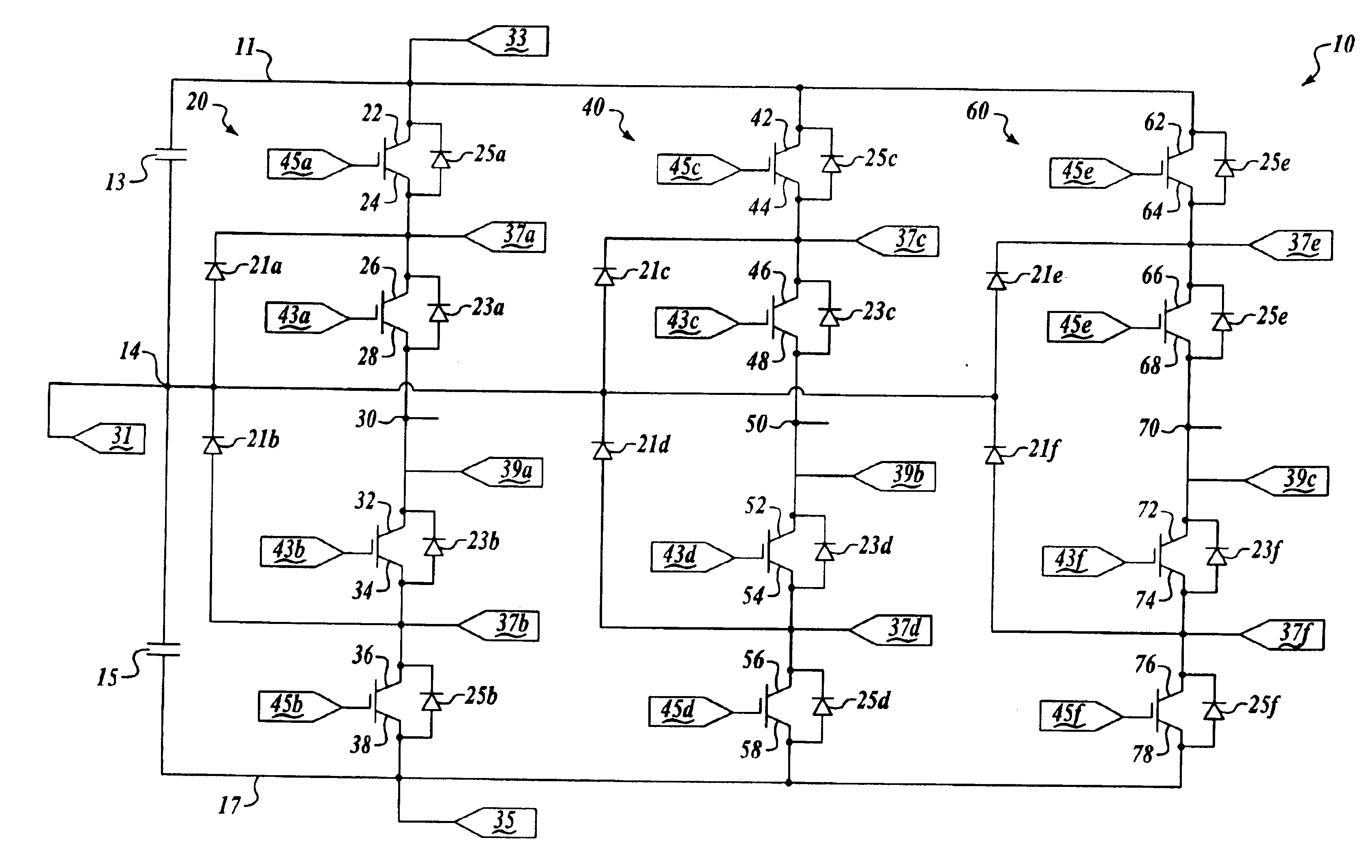
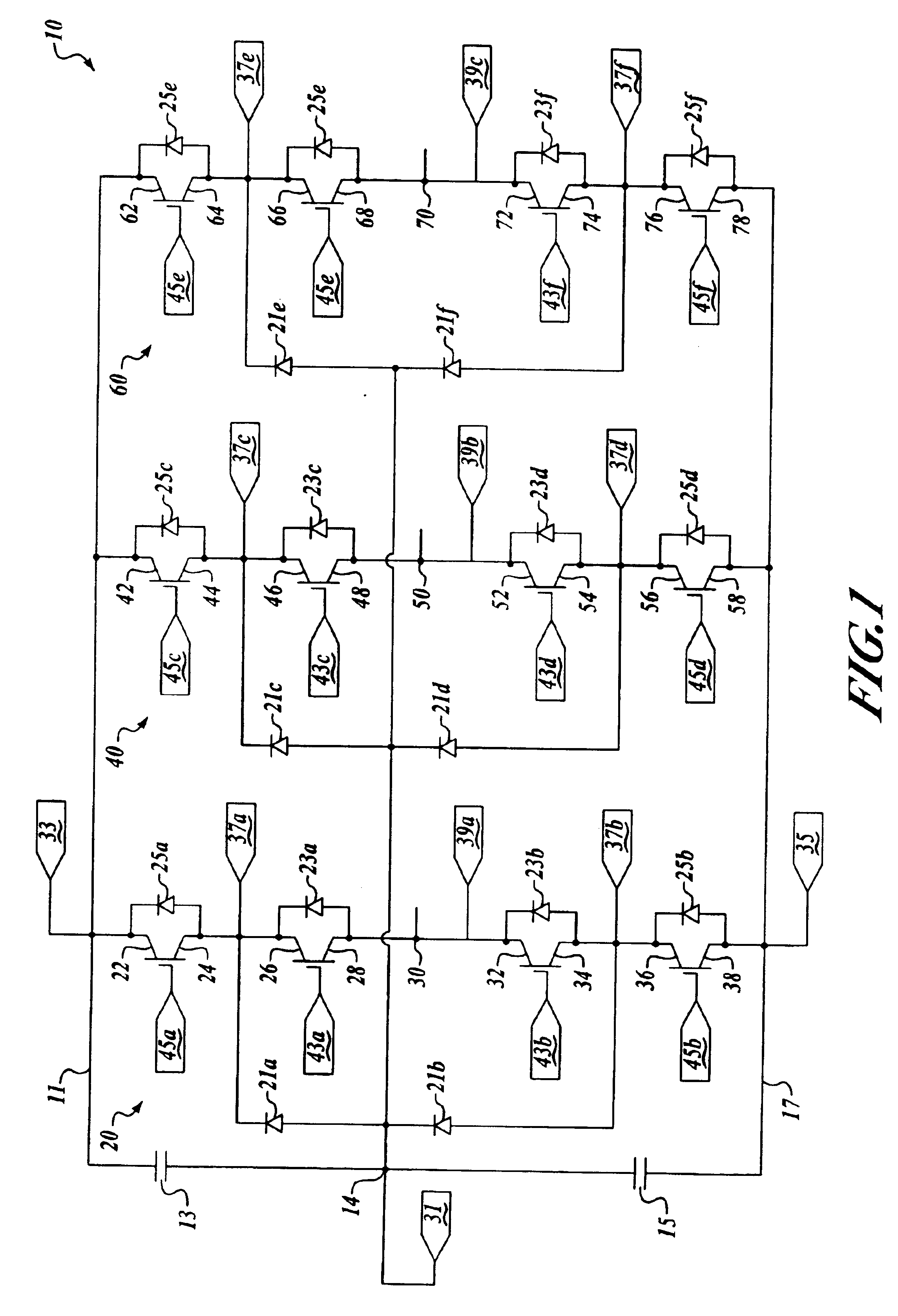
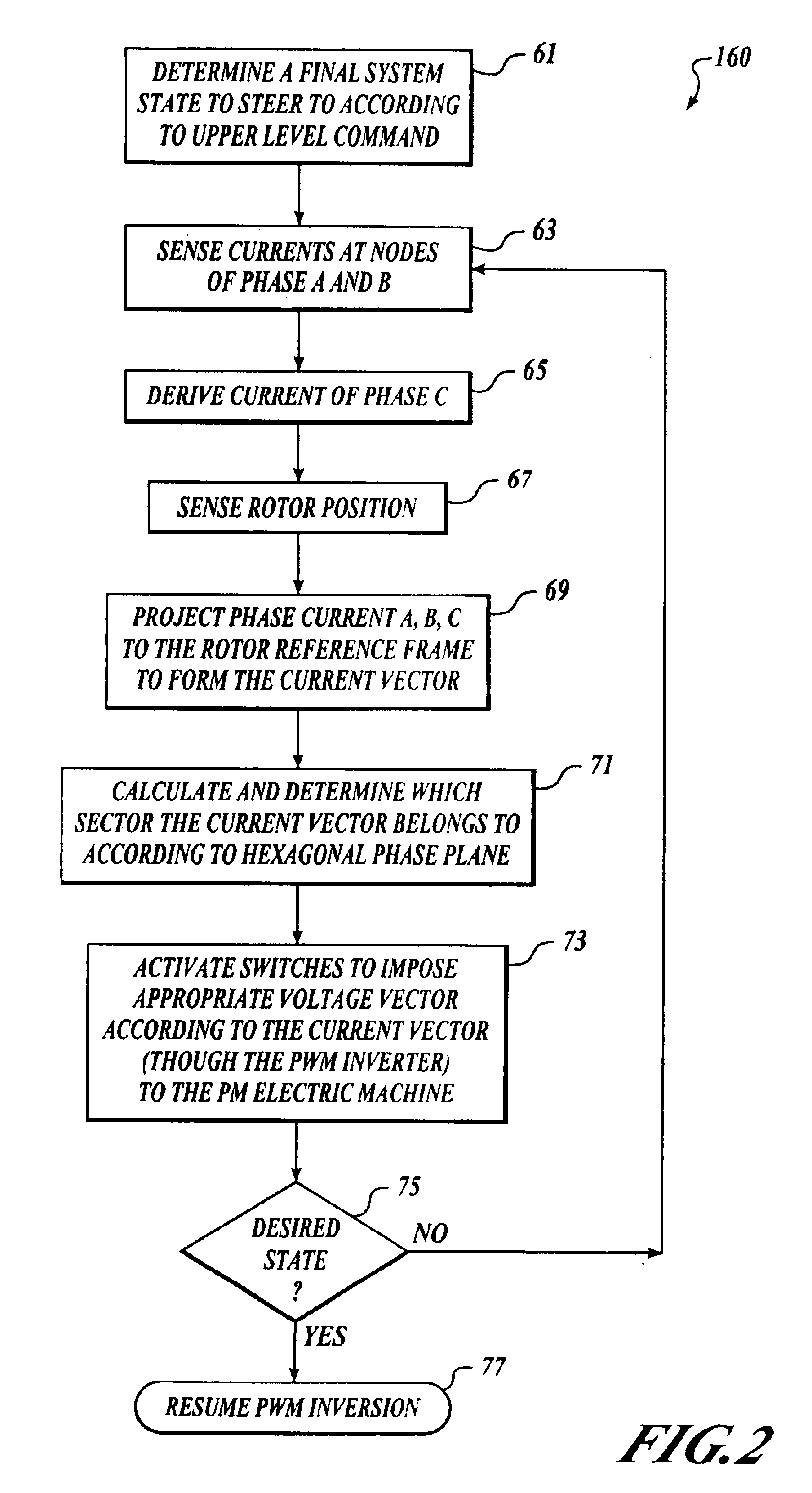
- A method for driving a neutral point-clamped multi-level voltage source inverter that senses rotor position and current, using a look-up table to activate switches and apply time-optimal control theory for efficient energy extraction and minimizing switching losses, allowing operation beyond the hexagon boundary without significant harmonic distortion.

System and method for voltage calibration
PatentActiveUS20230261602A1
Innovation
- A method and system for self-calibrating voltage source inverters that induce a DC current to determine load voltage, account for semiconductor voltage drops and deadtime effects, and adjust the switching modulation scheme to achieve accurate ideal switching-averaged voltage without the need for sensors.


Quantum Computing Infrastructure Standards
The integration of voltage source inverters in quantum computing systems necessitates adherence to rigorous infrastructure standards that ensure operational reliability, electromagnetic compatibility, and system interoperability. Current quantum computing infrastructure standards are primarily governed by emerging frameworks from organizations such as IEEE, IEC, and specialized quantum technology consortiums, which are rapidly evolving to address the unique requirements of quantum systems.
Power quality standards represent a critical foundation for VSI implementation in quantum environments. The IEEE 519 standard for harmonic control and IEEE 1547 for distributed energy resources provide baseline requirements that must be adapted for quantum applications. These standards mandate total harmonic distortion levels below 5% and voltage regulation within ±2% of nominal values, which are essential for maintaining quantum state coherence and minimizing decoherence effects.
Electromagnetic interference and compatibility standards, particularly IEC 61000 series, establish crucial guidelines for VSI design in quantum computing facilities. The extremely sensitive nature of quantum processors requires enhanced EMI shielding and filtering capabilities beyond conventional power electronics applications. Conducted and radiated emission limits must be significantly more stringent, often requiring custom specifications that exceed commercial standards by 20-40 dB.
Safety and isolation standards, including IEC 61010 for electrical safety and UL 991 for environmental safety, provide frameworks for protecting both quantum hardware and personnel. These standards mandate multiple levels of electrical isolation, fail-safe mechanisms, and environmental monitoring systems that are particularly relevant given the cryogenic operating conditions typical in quantum computing systems.
Emerging quantum-specific infrastructure standards are being developed through collaborative efforts between quantum computing companies, national laboratories, and standards organizations. These include specifications for power system architectures, grounding schemes, and thermal management integration that directly impact VSI design requirements and performance criteria in quantum computing applications.
Power quality standards represent a critical foundation for VSI implementation in quantum environments. The IEEE 519 standard for harmonic control and IEEE 1547 for distributed energy resources provide baseline requirements that must be adapted for quantum applications. These standards mandate total harmonic distortion levels below 5% and voltage regulation within ±2% of nominal values, which are essential for maintaining quantum state coherence and minimizing decoherence effects.
Electromagnetic interference and compatibility standards, particularly IEC 61000 series, establish crucial guidelines for VSI design in quantum computing facilities. The extremely sensitive nature of quantum processors requires enhanced EMI shielding and filtering capabilities beyond conventional power electronics applications. Conducted and radiated emission limits must be significantly more stringent, often requiring custom specifications that exceed commercial standards by 20-40 dB.
Safety and isolation standards, including IEC 61010 for electrical safety and UL 991 for environmental safety, provide frameworks for protecting both quantum hardware and personnel. These standards mandate multiple levels of electrical isolation, fail-safe mechanisms, and environmental monitoring systems that are particularly relevant given the cryogenic operating conditions typical in quantum computing systems.
Emerging quantum-specific infrastructure standards are being developed through collaborative efforts between quantum computing companies, national laboratories, and standards organizations. These include specifications for power system architectures, grounding schemes, and thermal management integration that directly impact VSI design requirements and performance criteria in quantum computing applications.
Cryogenic VSI Design Considerations
Cryogenic environments present unique challenges for voltage source inverter design in quantum computing applications, where operational temperatures typically range from 4K to 300mK. At these extreme temperatures, conventional semiconductor materials exhibit drastically altered electrical properties, requiring fundamental reconsideration of device selection and circuit topology. Silicon-based MOSFETs experience reduced carrier mobility and increased threshold voltages, while their parasitic capacitances decrease significantly, affecting switching characteristics and timing precision.
Thermal management becomes critically important as even minimal heat dissipation can disrupt quantum coherence. VSI designs must incorporate ultra-low power consumption strategies, often necessitating the use of superconducting materials for interconnects and specialized cryogenic-compatible semiconductors. Gallium arsenide and indium gallium arsenide devices demonstrate superior performance at cryogenic temperatures compared to silicon counterparts, maintaining better switching speeds and lower on-resistance characteristics.
Component packaging and interconnection methods require specialized approaches to withstand thermal cycling between room temperature and cryogenic conditions. Traditional solder joints may become brittle, necessitating alternative bonding techniques such as wire bonding with gold or aluminum wires. Printed circuit board materials must exhibit minimal thermal expansion coefficients to prevent mechanical stress-induced failures.
Gate drive circuits face particular challenges in cryogenic environments, as conventional gate drivers may fail to provide adequate switching speeds or voltage levels. Custom-designed gate drive circuits utilizing cryogenic-compatible operational amplifiers and voltage references become essential. Additionally, the reduced thermal noise at cryogenic temperatures can improve signal-to-noise ratios, but also makes the system more susceptible to electromagnetic interference from switching operations.
Magnetic components such as inductors and transformers require careful material selection, as ferrite cores may lose their magnetic properties at extremely low temperatures. Air-core inductors or specialized cryogenic-compatible magnetic materials become necessary alternatives, though they typically result in larger component sizes and reduced inductance values.
Thermal management becomes critically important as even minimal heat dissipation can disrupt quantum coherence. VSI designs must incorporate ultra-low power consumption strategies, often necessitating the use of superconducting materials for interconnects and specialized cryogenic-compatible semiconductors. Gallium arsenide and indium gallium arsenide devices demonstrate superior performance at cryogenic temperatures compared to silicon counterparts, maintaining better switching speeds and lower on-resistance characteristics.
Component packaging and interconnection methods require specialized approaches to withstand thermal cycling between room temperature and cryogenic conditions. Traditional solder joints may become brittle, necessitating alternative bonding techniques such as wire bonding with gold or aluminum wires. Printed circuit board materials must exhibit minimal thermal expansion coefficients to prevent mechanical stress-induced failures.
Gate drive circuits face particular challenges in cryogenic environments, as conventional gate drivers may fail to provide adequate switching speeds or voltage levels. Custom-designed gate drive circuits utilizing cryogenic-compatible operational amplifiers and voltage references become essential. Additionally, the reduced thermal noise at cryogenic temperatures can improve signal-to-noise ratios, but also makes the system more susceptible to electromagnetic interference from switching operations.
Magnetic components such as inductors and transformers require careful material selection, as ferrite cores may lose their magnetic properties at extremely low temperatures. Air-core inductors or specialized cryogenic-compatible magnetic materials become necessary alternatives, though they typically result in larger component sizes and reduced inductance values.
Unlock deeper insights with PatSnap Eureka Quick Research — get a full tech report to explore trends and direct your research. Try now!
Generate Your Research Report Instantly with AI Agent
Supercharge your innovation with PatSnap Eureka AI Agent Platform!