Voltage Source Inverter vs. Discrete Inverter: Modularity
MAR 10, 20269 MIN READ
Generate Your Research Report Instantly with AI Agent
PatSnap Eureka helps you evaluate technical feasibility & market potential.
VSI vs Discrete Inverter Modularity Background and Objectives
The power electronics industry has witnessed significant evolution in inverter technologies over the past decades, with two distinct architectural approaches emerging as dominant solutions: integrated Voltage Source Inverters (VSI) and discrete inverter systems. This technological divergence has fundamentally shaped how power conversion systems are designed, manufactured, and deployed across various applications ranging from renewable energy systems to electric vehicle powertrains.
Voltage Source Inverters represent a consolidated approach where power switching devices, control circuits, and auxiliary components are integrated into unified modules or packages. This integration philosophy emphasizes compactness, standardization, and simplified system-level design. Conversely, discrete inverter architectures maintain separation between individual components, allowing for customized configurations and specialized optimization of each functional block.
The concept of modularity has become increasingly critical as power electronics systems face mounting demands for scalability, maintainability, and cost-effectiveness. Traditional monolithic designs struggle to address diverse application requirements while maintaining economic viability across different power ratings and performance specifications. The industry's shift toward modular architectures reflects broader trends in electronics manufacturing, where flexibility and rapid time-to-market have become competitive imperatives.
Current market dynamics reveal growing complexity in power conversion requirements, driven by renewable energy integration, electric mobility adoption, and industrial automation advancement. These applications demand inverter solutions that can adapt to varying power levels, environmental conditions, and performance criteria while maintaining reliability and cost competitiveness.
The primary objective of this technical investigation centers on evaluating the modularity characteristics of VSI versus discrete inverter approaches. This analysis aims to establish comprehensive understanding of how each architectural philosophy addresses scalability challenges, manufacturing efficiency, and system-level integration requirements. The research seeks to identify optimal application domains for each approach while examining the trade-offs between integration benefits and design flexibility.
Furthermore, this study endeavors to project future development trajectories for both technologies, considering emerging requirements in power density, thermal management, and digital integration. The investigation will provide strategic insights for technology selection decisions and identify potential innovation opportunities that could reshape the competitive landscape in power electronics modularity.
Voltage Source Inverters represent a consolidated approach where power switching devices, control circuits, and auxiliary components are integrated into unified modules or packages. This integration philosophy emphasizes compactness, standardization, and simplified system-level design. Conversely, discrete inverter architectures maintain separation between individual components, allowing for customized configurations and specialized optimization of each functional block.
The concept of modularity has become increasingly critical as power electronics systems face mounting demands for scalability, maintainability, and cost-effectiveness. Traditional monolithic designs struggle to address diverse application requirements while maintaining economic viability across different power ratings and performance specifications. The industry's shift toward modular architectures reflects broader trends in electronics manufacturing, where flexibility and rapid time-to-market have become competitive imperatives.
Current market dynamics reveal growing complexity in power conversion requirements, driven by renewable energy integration, electric mobility adoption, and industrial automation advancement. These applications demand inverter solutions that can adapt to varying power levels, environmental conditions, and performance criteria while maintaining reliability and cost competitiveness.
The primary objective of this technical investigation centers on evaluating the modularity characteristics of VSI versus discrete inverter approaches. This analysis aims to establish comprehensive understanding of how each architectural philosophy addresses scalability challenges, manufacturing efficiency, and system-level integration requirements. The research seeks to identify optimal application domains for each approach while examining the trade-offs between integration benefits and design flexibility.
Furthermore, this study endeavors to project future development trajectories for both technologies, considering emerging requirements in power density, thermal management, and digital integration. The investigation will provide strategic insights for technology selection decisions and identify potential innovation opportunities that could reshape the competitive landscape in power electronics modularity.
Market Demand Analysis for Modular Inverter Solutions
The global power electronics market is experiencing unprecedented growth driven by the accelerating adoption of renewable energy systems, electric vehicles, and industrial automation. Modular inverter solutions have emerged as a critical technology segment within this landscape, addressing the increasing demand for flexible, scalable, and maintainable power conversion systems across multiple industries.
Renewable energy installations represent the largest market driver for modular inverter technologies. Solar photovoltaic systems increasingly favor modular architectures that enable independent maximum power point tracking, enhanced system reliability through redundancy, and simplified maintenance procedures. Wind energy applications similarly benefit from modular designs that allow for partial system operation during component failures and facilitate remote monitoring capabilities.
The electric vehicle charging infrastructure market presents substantial opportunities for modular inverter solutions. Fast-charging stations require high-power conversion systems that can adapt to varying grid conditions and charging protocols. Modular designs enable charging station operators to scale power capacity incrementally based on demand patterns while maintaining operational flexibility across different vehicle types and charging standards.
Industrial applications demonstrate strong preference for modular inverter architectures in motor drive systems, uninterruptible power supplies, and grid-tie applications. Manufacturing facilities value the ability to maintain production continuity through hot-swappable modules and the flexibility to adjust power ratings without complete system replacement. Data centers particularly benefit from modular designs that support phased capacity expansion and provide redundancy for critical loads.
Grid modernization initiatives worldwide are creating demand for modular inverter solutions in energy storage systems and grid-stabilization applications. Utility-scale battery storage installations require inverter systems capable of providing multiple grid services simultaneously, including frequency regulation, voltage support, and peak shaving. Modular architectures enable these systems to optimize performance across diverse operating modes while maintaining high availability.
Market adoption patterns indicate strong preference for solutions that combine voltage source inverter efficiency with discrete inverter modularity. End users increasingly prioritize total cost of ownership over initial capital expenditure, driving demand for systems that offer reduced maintenance costs, extended operational lifespans, and upgrade flexibility. This trend particularly influences procurement decisions in commercial and utility-scale applications where system availability directly impacts revenue generation.
Renewable energy installations represent the largest market driver for modular inverter technologies. Solar photovoltaic systems increasingly favor modular architectures that enable independent maximum power point tracking, enhanced system reliability through redundancy, and simplified maintenance procedures. Wind energy applications similarly benefit from modular designs that allow for partial system operation during component failures and facilitate remote monitoring capabilities.
The electric vehicle charging infrastructure market presents substantial opportunities for modular inverter solutions. Fast-charging stations require high-power conversion systems that can adapt to varying grid conditions and charging protocols. Modular designs enable charging station operators to scale power capacity incrementally based on demand patterns while maintaining operational flexibility across different vehicle types and charging standards.
Industrial applications demonstrate strong preference for modular inverter architectures in motor drive systems, uninterruptible power supplies, and grid-tie applications. Manufacturing facilities value the ability to maintain production continuity through hot-swappable modules and the flexibility to adjust power ratings without complete system replacement. Data centers particularly benefit from modular designs that support phased capacity expansion and provide redundancy for critical loads.
Grid modernization initiatives worldwide are creating demand for modular inverter solutions in energy storage systems and grid-stabilization applications. Utility-scale battery storage installations require inverter systems capable of providing multiple grid services simultaneously, including frequency regulation, voltage support, and peak shaving. Modular architectures enable these systems to optimize performance across diverse operating modes while maintaining high availability.
Market adoption patterns indicate strong preference for solutions that combine voltage source inverter efficiency with discrete inverter modularity. End users increasingly prioritize total cost of ownership over initial capital expenditure, driving demand for systems that offer reduced maintenance costs, extended operational lifespans, and upgrade flexibility. This trend particularly influences procurement decisions in commercial and utility-scale applications where system availability directly impacts revenue generation.
Current Status and Challenges in Inverter Modularity
The current landscape of inverter modularity presents a complex dichotomy between voltage source inverters (VSI) and discrete inverter architectures, each offering distinct advantages and facing unique implementation challenges. Traditional centralized VSI systems have dominated the market due to their cost-effectiveness and simplified control schemes, yet they inherently limit scalability and flexibility in distributed energy applications.
Modern discrete inverter topologies have emerged as a response to increasing demands for system expandability and fault tolerance. These architectures enable independent operation of multiple smaller inverter units, allowing for incremental capacity additions and improved system reliability through redundancy. However, the transition from centralized to modular approaches introduces significant technical complexities in synchronization, power sharing, and overall system coordination.
One of the primary challenges facing modular inverter implementation is the coordination of multiple power conversion units operating in parallel. Each discrete module must maintain precise voltage and frequency synchronization while ensuring balanced power distribution across the entire system. This requirement necessitates sophisticated communication protocols and advanced control algorithms that can manage inter-module interactions effectively.
Thermal management represents another critical challenge in modular inverter designs. While distributed architectures can potentially improve heat dissipation through spatial separation, they also introduce complications in maintaining uniform operating temperatures across multiple units. Variations in thermal conditions between modules can lead to uneven aging, performance degradation, and potential system instabilities.
The economic viability of modular approaches remains a significant concern for widespread adoption. Although discrete inverters offer superior flexibility and maintainability, they typically require higher initial capital investment due to increased component count and more complex control systems. The cost-benefit analysis becomes particularly challenging when considering the trade-offs between modularity advantages and economic efficiency.
Control complexity escalates significantly in modular systems, where each inverter unit requires individual monitoring and coordination with the broader system. The implementation of distributed control strategies demands robust communication infrastructure and fault-tolerant algorithms capable of maintaining system stability even during partial module failures or communication disruptions.
Standardization efforts across the industry face obstacles in establishing universal protocols for modular inverter integration. The lack of comprehensive standards for inter-module communication, power sharing algorithms, and safety protocols creates barriers to interoperability between different manufacturers' systems, limiting the potential for truly modular and scalable inverter solutions.
Modern discrete inverter topologies have emerged as a response to increasing demands for system expandability and fault tolerance. These architectures enable independent operation of multiple smaller inverter units, allowing for incremental capacity additions and improved system reliability through redundancy. However, the transition from centralized to modular approaches introduces significant technical complexities in synchronization, power sharing, and overall system coordination.
One of the primary challenges facing modular inverter implementation is the coordination of multiple power conversion units operating in parallel. Each discrete module must maintain precise voltage and frequency synchronization while ensuring balanced power distribution across the entire system. This requirement necessitates sophisticated communication protocols and advanced control algorithms that can manage inter-module interactions effectively.
Thermal management represents another critical challenge in modular inverter designs. While distributed architectures can potentially improve heat dissipation through spatial separation, they also introduce complications in maintaining uniform operating temperatures across multiple units. Variations in thermal conditions between modules can lead to uneven aging, performance degradation, and potential system instabilities.
The economic viability of modular approaches remains a significant concern for widespread adoption. Although discrete inverters offer superior flexibility and maintainability, they typically require higher initial capital investment due to increased component count and more complex control systems. The cost-benefit analysis becomes particularly challenging when considering the trade-offs between modularity advantages and economic efficiency.
Control complexity escalates significantly in modular systems, where each inverter unit requires individual monitoring and coordination with the broader system. The implementation of distributed control strategies demands robust communication infrastructure and fault-tolerant algorithms capable of maintaining system stability even during partial module failures or communication disruptions.
Standardization efforts across the industry face obstacles in establishing universal protocols for modular inverter integration. The lack of comprehensive standards for inter-module communication, power sharing algorithms, and safety protocols creates barriers to interoperability between different manufacturers' systems, limiting the potential for truly modular and scalable inverter solutions.
Current Modular Inverter Design Solutions
01 Modular multilevel converter topology for voltage source inverters
Modular multilevel converter architectures enable scalable voltage source inverter designs by stacking multiple converter modules in series or parallel configurations. This approach allows for higher voltage and power ratings while maintaining modularity and redundancy. The modular structure facilitates easier maintenance, replacement of individual modules, and flexible system expansion. Each module operates independently with its own control system, contributing to improved reliability and fault tolerance in the overall inverter system.- Modular multilevel converter topology for voltage source inverters: Modular multilevel converter architectures enable scalable voltage source inverter designs by stacking multiple converter modules in series or parallel configurations. This approach allows for higher voltage and power ratings while maintaining modularity and redundancy. The modular structure facilitates easier maintenance, replacement of individual modules, and flexible system expansion. Each module operates independently with its own control system, contributing to improved reliability and fault tolerance in the overall inverter system.
- Discrete semiconductor switching devices in modular inverter design: The use of discrete power semiconductor devices such as IGBTs, MOSFETs, and thyristors in modular inverter configurations provides flexibility in power handling and switching characteristics. Discrete components allow for customized selection based on voltage and current requirements of each module. This approach enables optimization of switching losses, thermal management, and overall efficiency. The discrete device arrangement supports independent control of switching elements and facilitates parallel or series connection of multiple inverter modules for scalability.
- Control strategies for modular voltage source inverter systems: Advanced control methodologies are employed to coordinate multiple inverter modules operating in a modular system. These strategies include distributed control architectures, synchronized switching patterns, and voltage balancing algorithms across modules. The control systems ensure proper load sharing, harmonic reduction, and stable operation under varying load conditions. Implementation of digital signal processors and microcontrollers enables real-time monitoring and adjustment of individual module parameters to maintain system performance and reliability.
- Power distribution and interconnection in discrete modular inverters: Modular inverter systems require sophisticated power distribution networks and interconnection schemes to link discrete modules effectively. These architectures include bus bar configurations, isolated DC links, and transformer coupling methods that enable power flow between modules. The interconnection design addresses issues of voltage matching, current sharing, and electromagnetic compatibility. Proper isolation and protection mechanisms are integrated to prevent fault propagation between modules and ensure safe operation during module failure or maintenance.
- Thermal management and packaging of modular inverter units: Effective thermal management solutions are critical for modular inverter designs to handle heat dissipation from discrete power components. Packaging approaches include heat sink integration, forced air or liquid cooling systems, and thermal interface materials optimized for each module. The modular packaging design facilitates independent thermal zones, allowing for localized cooling and temperature monitoring. Compact module designs with standardized mechanical interfaces enable efficient space utilization and simplified installation in various applications while maintaining adequate thermal performance.
02 Discrete semiconductor switching devices in modular inverter design
The use of discrete power semiconductor devices such as IGBTs, MOSFETs, and thyristors in modular inverter configurations provides flexibility in power handling and switching characteristics. Discrete components allow for customized selection based on voltage and current requirements of each module. This approach enables optimization of switching losses, thermal management, and overall efficiency. The discrete device arrangement facilitates independent control of switching elements and supports various modulation strategies for improved power quality.Expand Specific Solutions03 Parallel and series connection of inverter modules
Connecting multiple inverter modules in parallel or series configurations enables scalable power systems with enhanced capacity and voltage levels. Parallel connection increases current handling capability while maintaining voltage levels, whereas series connection achieves higher output voltages. This modular interconnection strategy provides redundancy and allows for N+1 configurations to improve system reliability. Control algorithms coordinate the operation of multiple modules to ensure proper load sharing, synchronized switching, and balanced power distribution among modules.Expand Specific Solutions04 Control and synchronization methods for modular inverter systems
Advanced control strategies enable proper coordination and synchronization of multiple discrete inverter modules operating together. These methods include master-slave control architectures, distributed control systems, and communication protocols between modules. Synchronization techniques ensure phase alignment, voltage matching, and current sharing among parallel-connected modules. The control systems monitor individual module performance, implement fault detection, and enable seamless transition during module failures or maintenance operations.Expand Specific Solutions05 Fault tolerance and redundancy in discrete modular inverter architectures
Modular inverter designs incorporate fault tolerance mechanisms that allow continued operation even when individual modules fail. Redundant module configurations enable the system to bypass or isolate faulty units while maintaining power delivery to the load. Hot-swappable module designs facilitate maintenance without system shutdown. Diagnostic systems continuously monitor module health, detect anomalies, and trigger protective actions. This architecture significantly improves overall system availability and reduces downtime in critical applications.Expand Specific Solutions
Major Players in VSI and Discrete Inverter Markets
The voltage source inverter versus discrete inverter modularity landscape represents a mature technology sector within the broader power electronics industry, currently valued at approximately $40 billion globally and experiencing steady 6-8% annual growth driven by renewable energy adoption and electric vehicle proliferation. The competitive environment demonstrates high technical maturity, with established players like Infineon Technologies AG, Mitsubishi Electric Corp., and SMA Solar Technology AG leading integrated voltage source inverter solutions, while companies such as Microchip Technology Inc. and Samsung Electronics Co. Ltd. dominate discrete component markets. Chinese manufacturers including Sungrow Power Supply Co. Ltd. and Delta Electronics Inc. are rapidly advancing modular architectures, intensifying competition. Academic institutions like Zhejiang University and IIT Kharagpur contribute significant research innovations. The industry shows clear segmentation between automotive applications (GM Global Technology Operations LLC, YASKAWA Electric Corp.) and grid infrastructure (State Grid Corp. of China), with modularity becoming increasingly critical for scalability and maintenance efficiency across all sectors.
SMA Solar Technology AG
Technical Solution: SMA Solar implements modular voltage source inverter designs specifically optimized for solar applications, featuring stackable power modules that can be combined to achieve desired power ratings. Their modular approach separates DC input processing, MPPT tracking, and AC output conversion into distinct modules that communicate through standardized protocols. Each module operates independently with its own control system, enabling continued operation even if individual modules fail. The company's modular architecture supports easy field serviceability, where technicians can replace individual modules without shutting down the entire system. Their design philosophy emphasizes standardized mechanical mounting systems and electrical connections, allowing for flexible installation configurations and future expansion. The modular approach also enables optimized performance under partial shading conditions, as each module can operate at its optimal point independently.
Strengths: Specialized solar optimization, excellent field serviceability, proven track record in renewable energy. Weaknesses: Limited applicability outside solar applications, dependency on weather conditions for optimal performance.
Infineon Technologies AG
Technical Solution: Infineon develops modular voltage source inverter solutions featuring integrated power modules that combine multiple discrete components into single packages. Their approach emphasizes scalability through standardized building blocks that can be configured for different power ratings and applications. The company's IGBT modules and silicon carbide solutions enable flexible system architectures where individual modules can be easily replaced or upgraded without affecting the entire system. Their modular design philosophy allows for parallel connection of multiple inverter units to achieve higher power outputs while maintaining individual control and monitoring capabilities. This modularity extends to their gate driver circuits and protection systems, creating a comprehensive ecosystem of interchangeable components that reduce development time and improve system reliability through redundancy.
Strengths: High integration density, proven reliability in automotive and industrial applications, comprehensive product ecosystem. Weaknesses: Higher initial cost compared to discrete solutions, potential vendor lock-in for proprietary interfaces.
Core Technologies in VSI vs Discrete Modularity
Power converter
PatentInactiveUS20050275386A1
Innovation
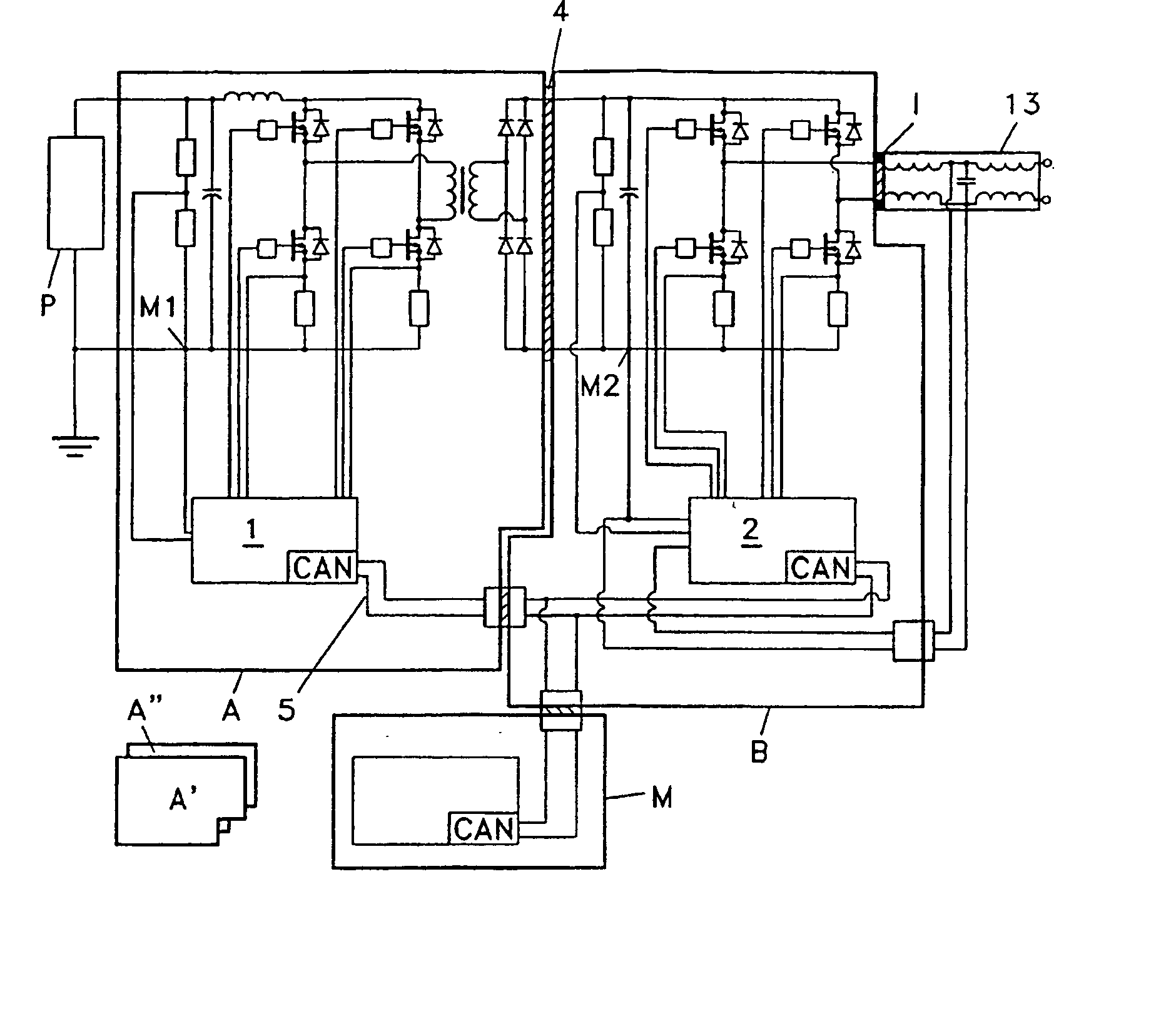
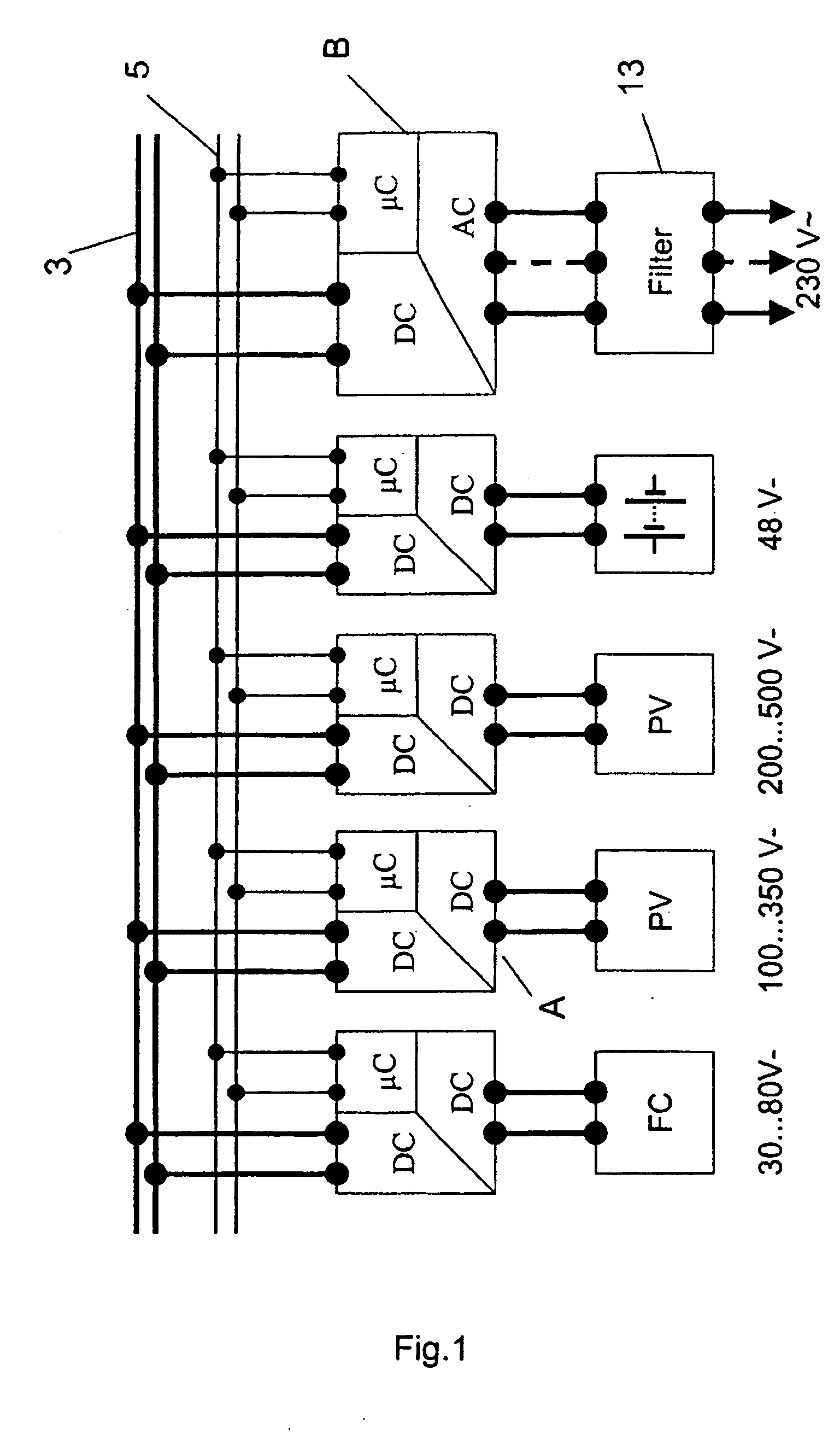
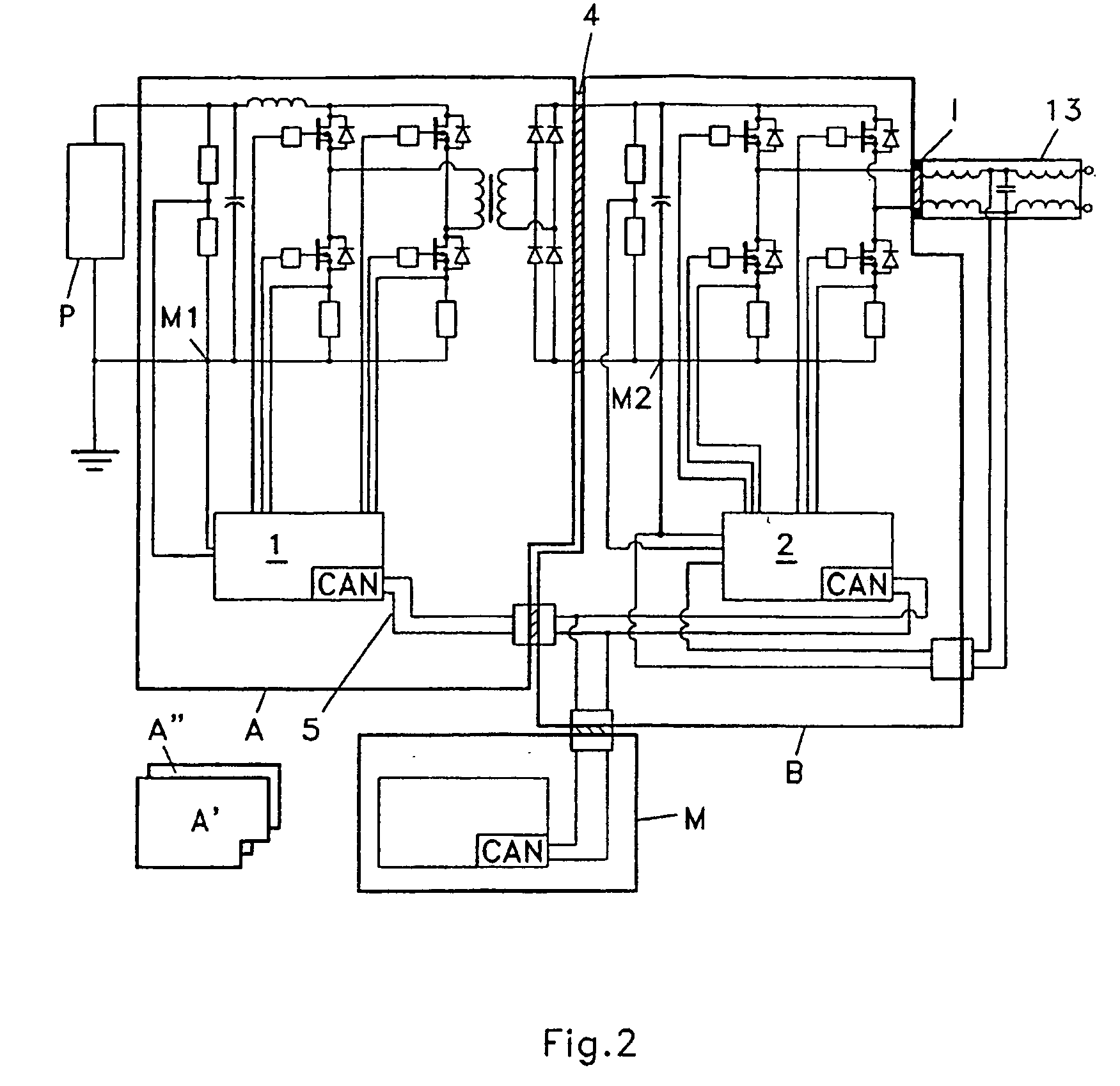
- A modular power converter system with distributed intelligence, where each module has its own controller and communicates via a bus, allowing independent control and coordination, enabling flexible use of different green power sources and improved electrical efficiency by suppressing ripple effects and optimizing power management.

Active rectifier with current source inverter and voltage source inverter power systems for induction heating and melting applications
PatentPendingUS20240172335A1
Innovation
- A power conversion system utilizing an active rectifier with IGBT transistors, a DC link circuit, and an inverter with sinusoidal pulse width modulation (SPWM) control to maintain a constant rectifier phase angle, reducing switching losses and harmonic distortion, and eliminating the need for starting circuits by using transistors that can be switched continuously.


Grid Code Compliance for Modular Inverter Systems
Grid code compliance represents a critical consideration for modular inverter systems, particularly when comparing voltage source inverters (VSI) and discrete inverter architectures. The modular approach introduces unique challenges in meeting stringent grid interconnection requirements while maintaining system flexibility and scalability.
Modular inverter systems must demonstrate coordinated compliance across multiple inverter units operating in parallel or distributed configurations. Unlike centralized systems, modular architectures require sophisticated control mechanisms to ensure that individual modules collectively meet grid code specifications for voltage regulation, frequency response, and power quality parameters. This coordination becomes increasingly complex as the number of modules scales up.
Voltage source inverters in modular configurations typically employ centralized or hierarchical control strategies to maintain grid code compliance. The master-slave control architecture enables synchronized operation where a primary controller manages grid interface requirements while individual VSI modules respond to coordinated commands. This approach facilitates compliance with reactive power injection requirements, voltage ride-through capabilities, and frequency support functions mandated by grid codes.
Discrete inverter systems present alternative compliance pathways through distributed intelligence and autonomous operation capabilities. Each discrete unit can independently assess grid conditions and respond according to programmed grid code requirements. However, this autonomy must be balanced with system-level coordination to prevent conflicting responses that could compromise overall grid stability.
Communication infrastructure plays a pivotal role in ensuring grid code compliance for modular systems. Real-time data exchange between modules enables coordinated responses to grid disturbances, synchronized fault ride-through operations, and collective participation in grid support services. The communication latency and reliability directly impact the system's ability to meet fast-response grid code requirements.
Certification and testing procedures for modular inverter systems require comprehensive validation of both individual module performance and system-level behavior. Grid codes increasingly recognize the need for specific testing protocols that address modular system characteristics, including partial system operation scenarios and module failure conditions while maintaining compliance standards.
Modular inverter systems must demonstrate coordinated compliance across multiple inverter units operating in parallel or distributed configurations. Unlike centralized systems, modular architectures require sophisticated control mechanisms to ensure that individual modules collectively meet grid code specifications for voltage regulation, frequency response, and power quality parameters. This coordination becomes increasingly complex as the number of modules scales up.
Voltage source inverters in modular configurations typically employ centralized or hierarchical control strategies to maintain grid code compliance. The master-slave control architecture enables synchronized operation where a primary controller manages grid interface requirements while individual VSI modules respond to coordinated commands. This approach facilitates compliance with reactive power injection requirements, voltage ride-through capabilities, and frequency support functions mandated by grid codes.
Discrete inverter systems present alternative compliance pathways through distributed intelligence and autonomous operation capabilities. Each discrete unit can independently assess grid conditions and respond according to programmed grid code requirements. However, this autonomy must be balanced with system-level coordination to prevent conflicting responses that could compromise overall grid stability.
Communication infrastructure plays a pivotal role in ensuring grid code compliance for modular systems. Real-time data exchange between modules enables coordinated responses to grid disturbances, synchronized fault ride-through operations, and collective participation in grid support services. The communication latency and reliability directly impact the system's ability to meet fast-response grid code requirements.
Certification and testing procedures for modular inverter systems require comprehensive validation of both individual module performance and system-level behavior. Grid codes increasingly recognize the need for specific testing protocols that address modular system characteristics, including partial system operation scenarios and module failure conditions while maintaining compliance standards.
Standardization Impact on Inverter Modularity
Standardization plays a pivotal role in shaping inverter modularity by establishing common interfaces, protocols, and design frameworks that enable interoperability across different manufacturers and system configurations. The development of industry standards such as IEC 61850 for power system communication and IEEE 1547 for distributed energy resources has created a foundation for modular inverter architectures that can seamlessly integrate into diverse grid environments.
The impact of standardization on voltage source inverters versus discrete inverters manifests differently due to their inherent architectural distinctions. Voltage source inverters benefit significantly from standardized DC bus voltage levels, control protocols, and grid interface requirements, which facilitate the development of plug-and-play modules that can be easily scaled or replaced. These standards enable manufacturers to create interchangeable power modules, control units, and protection systems that maintain compatibility across different product lines and vendors.
Discrete inverter systems face unique standardization challenges related to component-level compatibility and system integration protocols. The modular nature of discrete systems requires standardized mechanical interfaces, thermal management specifications, and electrical connection protocols to ensure reliable operation when components from different suppliers are combined. Standards like UL 1741 and IEC 62109 provide safety and performance benchmarks that discrete inverter modules must meet to achieve market acceptance.
Communication standardization has emerged as a critical enabler for advanced modular inverter systems. Protocols such as Modbus, CAN bus, and Ethernet-based communications allow individual inverter modules to coordinate their operation, share status information, and respond to grid conditions collectively. This standardized communication framework enables sophisticated control strategies that optimize system performance while maintaining individual module autonomy.
The economic implications of standardization on inverter modularity are substantial, as common standards reduce development costs, accelerate time-to-market, and create economies of scale in manufacturing. Standardized interfaces allow system integrators to mix and match components from different suppliers, fostering competition and innovation while reducing overall system costs. However, the standardization process can also limit design flexibility and potentially slow the adoption of breakthrough technologies that deviate from established norms.
The impact of standardization on voltage source inverters versus discrete inverters manifests differently due to their inherent architectural distinctions. Voltage source inverters benefit significantly from standardized DC bus voltage levels, control protocols, and grid interface requirements, which facilitate the development of plug-and-play modules that can be easily scaled or replaced. These standards enable manufacturers to create interchangeable power modules, control units, and protection systems that maintain compatibility across different product lines and vendors.
Discrete inverter systems face unique standardization challenges related to component-level compatibility and system integration protocols. The modular nature of discrete systems requires standardized mechanical interfaces, thermal management specifications, and electrical connection protocols to ensure reliable operation when components from different suppliers are combined. Standards like UL 1741 and IEC 62109 provide safety and performance benchmarks that discrete inverter modules must meet to achieve market acceptance.
Communication standardization has emerged as a critical enabler for advanced modular inverter systems. Protocols such as Modbus, CAN bus, and Ethernet-based communications allow individual inverter modules to coordinate their operation, share status information, and respond to grid conditions collectively. This standardized communication framework enables sophisticated control strategies that optimize system performance while maintaining individual module autonomy.
The economic implications of standardization on inverter modularity are substantial, as common standards reduce development costs, accelerate time-to-market, and create economies of scale in manufacturing. Standardized interfaces allow system integrators to mix and match components from different suppliers, fostering competition and innovation while reducing overall system costs. However, the standardization process can also limit design flexibility and potentially slow the adoption of breakthrough technologies that deviate from established norms.
Unlock deeper insights with PatSnap Eureka Quick Research — get a full tech report to explore trends and direct your research. Try now!
Generate Your Research Report Instantly with AI Agent
Supercharge your innovation with PatSnap Eureka AI Agent Platform!