Voltage Source Inverter vs. Pulse Inverter: Application Versatility
MAR 10, 20269 MIN READ
Generate Your Research Report Instantly with AI Agent
PatSnap Eureka helps you evaluate technical feasibility & market potential.
VSI vs Pulse Inverter Tech Background and Goals
Power electronics has undergone remarkable transformation since the early 20th century, with inverter technology emerging as a cornerstone of modern electrical systems. The evolution from mechanical rotary converters to sophisticated semiconductor-based solutions has fundamentally reshaped how electrical energy is converted and controlled across diverse applications.
Voltage Source Inverters represent the mainstream approach in contemporary power conversion systems, utilizing controlled switching of semiconductor devices to generate AC waveforms from DC sources. This technology has matured through decades of development, incorporating advanced control algorithms and high-performance switching devices such as IGBTs and MOSFETs. VSI systems have become the de facto standard for applications ranging from motor drives to renewable energy integration.
Pulse inverters, while sharing fundamental conversion principles with VSIs, employ distinct switching strategies and control methodologies that differentiate their operational characteristics. These systems typically focus on specific pulse generation patterns and timing control mechanisms, offering unique advantages in particular application domains where precise pulse control and timing accuracy are paramount.
The technological landscape has been shaped by increasing demands for energy efficiency, power density, and application-specific performance optimization. Modern industrial requirements span from high-precision motor control in manufacturing to grid-tied renewable energy systems, each presenting unique challenges in terms of harmonic content, switching frequency, and dynamic response characteristics.
Current development trajectories emphasize enhanced controllability, reduced electromagnetic interference, and improved power quality metrics. The integration of digital signal processors and advanced control algorithms has enabled sophisticated modulation techniques, real-time adaptive control, and enhanced fault detection capabilities across both inverter architectures.
The primary objective of comparing VSI and pulse inverter technologies centers on evaluating their respective application versatility and identifying optimal deployment scenarios. This analysis aims to establish clear performance boundaries, cost-effectiveness considerations, and technical trade-offs that influence technology selection decisions. Understanding these distinctions enables informed engineering choices that align inverter characteristics with specific application requirements, ultimately optimizing system performance and operational efficiency across diverse industrial and commercial contexts.
Voltage Source Inverters represent the mainstream approach in contemporary power conversion systems, utilizing controlled switching of semiconductor devices to generate AC waveforms from DC sources. This technology has matured through decades of development, incorporating advanced control algorithms and high-performance switching devices such as IGBTs and MOSFETs. VSI systems have become the de facto standard for applications ranging from motor drives to renewable energy integration.
Pulse inverters, while sharing fundamental conversion principles with VSIs, employ distinct switching strategies and control methodologies that differentiate their operational characteristics. These systems typically focus on specific pulse generation patterns and timing control mechanisms, offering unique advantages in particular application domains where precise pulse control and timing accuracy are paramount.
The technological landscape has been shaped by increasing demands for energy efficiency, power density, and application-specific performance optimization. Modern industrial requirements span from high-precision motor control in manufacturing to grid-tied renewable energy systems, each presenting unique challenges in terms of harmonic content, switching frequency, and dynamic response characteristics.
Current development trajectories emphasize enhanced controllability, reduced electromagnetic interference, and improved power quality metrics. The integration of digital signal processors and advanced control algorithms has enabled sophisticated modulation techniques, real-time adaptive control, and enhanced fault detection capabilities across both inverter architectures.
The primary objective of comparing VSI and pulse inverter technologies centers on evaluating their respective application versatility and identifying optimal deployment scenarios. This analysis aims to establish clear performance boundaries, cost-effectiveness considerations, and technical trade-offs that influence technology selection decisions. Understanding these distinctions enables informed engineering choices that align inverter characteristics with specific application requirements, ultimately optimizing system performance and operational efficiency across diverse industrial and commercial contexts.
Market Demand Analysis for Inverter Applications
The global inverter market demonstrates robust growth driven by accelerating renewable energy adoption, electric vehicle proliferation, and industrial automation expansion. Solar photovoltaic installations represent the largest demand segment, where voltage source inverters dominate due to their superior grid synchronization capabilities and power quality management. The residential solar market particularly favors string inverters and microinverters, both utilizing voltage source inverter technology for reliable DC-to-AC conversion with minimal harmonic distortion.
Industrial applications showcase distinct preferences between inverter technologies based on specific operational requirements. Manufacturing facilities with variable frequency drives predominantly employ voltage source inverters for motor control applications, benefiting from their smooth output waveforms and precise speed regulation. Conversely, pulse inverters find specialized applications in welding equipment, electroplating processes, and high-frequency heating systems where controlled pulse characteristics are essential for process optimization.
The uninterruptible power supply market reveals segmented demand patterns influenced by load sensitivity and cost considerations. Critical infrastructure facilities including data centers and hospitals prioritize voltage source inverters for their clean sinusoidal output and seamless grid integration capabilities. However, pulse inverters capture market share in cost-sensitive applications where basic backup power functionality suffices without stringent power quality requirements.
Electric vehicle charging infrastructure development creates substantial demand for both inverter types across different charging scenarios. Fast charging stations predominantly utilize voltage source inverters for their bidirectional power flow capabilities and grid stability support. Meanwhile, specialized applications such as wireless charging systems increasingly adopt pulse inverter technologies for their high-frequency operation characteristics and electromagnetic field control precision.
Emerging market segments including energy storage systems and microgrid applications demonstrate growing demand for advanced inverter functionalities. Grid-forming capabilities, reactive power support, and islanding detection features drive preference toward sophisticated voltage source inverter solutions. Regional market dynamics show developed economies emphasizing power quality and grid compliance, while developing markets balance functionality requirements against cost constraints, creating diverse demand patterns across different inverter technologies and performance specifications.
Industrial applications showcase distinct preferences between inverter technologies based on specific operational requirements. Manufacturing facilities with variable frequency drives predominantly employ voltage source inverters for motor control applications, benefiting from their smooth output waveforms and precise speed regulation. Conversely, pulse inverters find specialized applications in welding equipment, electroplating processes, and high-frequency heating systems where controlled pulse characteristics are essential for process optimization.
The uninterruptible power supply market reveals segmented demand patterns influenced by load sensitivity and cost considerations. Critical infrastructure facilities including data centers and hospitals prioritize voltage source inverters for their clean sinusoidal output and seamless grid integration capabilities. However, pulse inverters capture market share in cost-sensitive applications where basic backup power functionality suffices without stringent power quality requirements.
Electric vehicle charging infrastructure development creates substantial demand for both inverter types across different charging scenarios. Fast charging stations predominantly utilize voltage source inverters for their bidirectional power flow capabilities and grid stability support. Meanwhile, specialized applications such as wireless charging systems increasingly adopt pulse inverter technologies for their high-frequency operation characteristics and electromagnetic field control precision.
Emerging market segments including energy storage systems and microgrid applications demonstrate growing demand for advanced inverter functionalities. Grid-forming capabilities, reactive power support, and islanding detection features drive preference toward sophisticated voltage source inverter solutions. Regional market dynamics show developed economies emphasizing power quality and grid compliance, while developing markets balance functionality requirements against cost constraints, creating diverse demand patterns across different inverter technologies and performance specifications.
Current State and Challenges of Inverter Technologies
The inverter technology landscape is currently dominated by two primary architectures: Voltage Source Inverters (VSI) and Pulse Inverters, each representing distinct approaches to power conversion with varying degrees of market penetration and technological maturity. VSI technology has achieved widespread commercial adoption across multiple sectors, particularly in renewable energy systems, motor drives, and grid-tied applications, benefiting from decades of refinement and standardization efforts.
Voltage Source Inverters maintain a constant DC voltage input and utilize sophisticated pulse-width modulation (PWM) techniques to generate AC output waveforms. This technology has reached considerable maturity in terms of control algorithms, semiconductor device integration, and system reliability. Current VSI implementations demonstrate high efficiency rates exceeding 95% in many applications, with established manufacturing processes enabling cost-effective mass production.
Pulse Inverters, conversely, operate on fundamentally different principles, generating discrete voltage pulses to approximate sinusoidal output waveforms. While less prevalent in mainstream applications, pulse inverter technology has found specialized niches in high-frequency applications, certain industrial processes, and emerging power electronics research domains. The technology exhibits unique characteristics in terms of electromagnetic interference patterns and dynamic response capabilities.
Contemporary challenges facing both inverter technologies center on several critical areas. Harmonic distortion remains a persistent concern, particularly in grid-connected applications where power quality standards impose stringent requirements. VSI systems struggle with inherent switching losses and electromagnetic interference generation, while pulse inverters face challenges in achieving smooth output waveforms without extensive filtering requirements.
Thermal management represents another significant challenge across both technologies. High-power applications demand sophisticated cooling solutions and thermal design considerations that directly impact system reliability and operational lifespan. Semiconductor device limitations continue to constrain switching frequencies and power handling capabilities, affecting overall system performance and efficiency optimization.
Grid integration challenges have become increasingly prominent as renewable energy penetration grows. Both VSI and pulse inverter technologies must address grid stability requirements, fault ride-through capabilities, and dynamic grid support functions. Regulatory compliance across different geographical markets adds complexity to technology development and deployment strategies.
The geographical distribution of inverter technology development shows concentrated activity in established industrial regions, with significant research and manufacturing capabilities in Europe, North America, and Asia-Pacific regions. However, emerging markets are increasingly demanding localized solutions and technology transfer arrangements, creating new challenges for global technology deployment and standardization efforts.
Voltage Source Inverters maintain a constant DC voltage input and utilize sophisticated pulse-width modulation (PWM) techniques to generate AC output waveforms. This technology has reached considerable maturity in terms of control algorithms, semiconductor device integration, and system reliability. Current VSI implementations demonstrate high efficiency rates exceeding 95% in many applications, with established manufacturing processes enabling cost-effective mass production.
Pulse Inverters, conversely, operate on fundamentally different principles, generating discrete voltage pulses to approximate sinusoidal output waveforms. While less prevalent in mainstream applications, pulse inverter technology has found specialized niches in high-frequency applications, certain industrial processes, and emerging power electronics research domains. The technology exhibits unique characteristics in terms of electromagnetic interference patterns and dynamic response capabilities.
Contemporary challenges facing both inverter technologies center on several critical areas. Harmonic distortion remains a persistent concern, particularly in grid-connected applications where power quality standards impose stringent requirements. VSI systems struggle with inherent switching losses and electromagnetic interference generation, while pulse inverters face challenges in achieving smooth output waveforms without extensive filtering requirements.
Thermal management represents another significant challenge across both technologies. High-power applications demand sophisticated cooling solutions and thermal design considerations that directly impact system reliability and operational lifespan. Semiconductor device limitations continue to constrain switching frequencies and power handling capabilities, affecting overall system performance and efficiency optimization.
Grid integration challenges have become increasingly prominent as renewable energy penetration grows. Both VSI and pulse inverter technologies must address grid stability requirements, fault ride-through capabilities, and dynamic grid support functions. Regulatory compliance across different geographical markets adds complexity to technology development and deployment strategies.
The geographical distribution of inverter technology development shows concentrated activity in established industrial regions, with significant research and manufacturing capabilities in Europe, North America, and Asia-Pacific regions. However, emerging markets are increasingly demanding localized solutions and technology transfer arrangements, creating new challenges for global technology deployment and standardization efforts.
Current VSI and Pulse Inverter Solutions
01 Multi-level voltage source inverter topologies
Advanced inverter designs utilize multi-level voltage source configurations to improve power quality and reduce harmonic distortion. These topologies enable better voltage regulation and enhanced efficiency across various load conditions. The multi-level approach allows for smoother output waveforms and reduced electromagnetic interference, making them suitable for industrial and renewable energy applications.- Multi-level voltage source inverter topologies: Advanced inverter designs utilize multi-level voltage source configurations to improve power quality and reduce harmonic distortion. These topologies enable better voltage regulation and enhanced efficiency across various load conditions. The multi-level approach allows for smoother output waveforms and reduced electromagnetic interference, making them suitable for diverse industrial and commercial applications.
- Pulse width modulation control strategies: Sophisticated pulse width modulation techniques are employed to control inverter switching patterns and optimize power conversion efficiency. These control strategies enable precise regulation of output voltage and frequency while minimizing switching losses. The implementation of advanced modulation schemes enhances the versatility of inverters in handling different load types and operating conditions.
- Hybrid inverter configurations for renewable energy integration: Inverter systems designed with hybrid architectures facilitate seamless integration of renewable energy sources with conventional power grids. These configurations combine voltage source and current source characteristics to accommodate variable input conditions from solar, wind, and other renewable sources. The versatile design enables bidirectional power flow and grid stabilization capabilities.
- High-frequency switching inverter designs: Inverter architectures incorporating high-frequency switching technologies achieve compact form factors and improved dynamic response. These designs utilize advanced semiconductor devices to enable rapid switching transitions and reduced component sizes. The high-frequency operation expands application versatility across telecommunications, medical equipment, and precision industrial processes.
- Adaptive inverter control for variable load applications: Intelligent control systems enable inverters to automatically adjust their operating parameters based on load characteristics and environmental conditions. These adaptive mechanisms optimize efficiency and performance across a wide range of applications from motor drives to uninterruptible power supplies. The versatility is enhanced through real-time monitoring and dynamic parameter adjustment capabilities.
02 Pulse width modulation control strategies
Sophisticated pulse width modulation techniques are employed to control inverter switching patterns and optimize power conversion efficiency. These control strategies enable precise regulation of output voltage and frequency while minimizing switching losses. Advanced modulation schemes provide flexibility in adapting to different load requirements and operating conditions, enhancing overall system performance.Expand Specific Solutions03 High-frequency switching applications
Inverter designs incorporating high-frequency switching capabilities enable compact system designs and improved dynamic response. These configurations are particularly effective in applications requiring rapid load changes and precise power control. The high-frequency operation reduces the size of passive components and enhances power density, making them ideal for space-constrained installations.Expand Specific Solutions04 Grid-connected inverter systems
Specialized inverter configurations designed for grid integration provide bidirectional power flow capabilities and synchronization with utility networks. These systems incorporate advanced control algorithms for power factor correction and voltage support. The designs ensure compliance with grid codes and enable seamless integration of distributed energy resources while maintaining system stability.Expand Specific Solutions05 Fault tolerance and protection mechanisms
Robust inverter architectures incorporate redundancy and protection features to ensure continuous operation under fault conditions. These designs include overcurrent protection, thermal management, and fault detection circuits that enhance system reliability. The protection mechanisms enable safe operation across a wide range of operating conditions and prevent damage to power electronics components.Expand Specific Solutions
Major Players in Power Electronics Industry
The voltage source inverter versus pulse inverter application versatility landscape represents a mature technology sector within the broader power electronics industry, currently valued at approximately $15-20 billion globally. The market is experiencing steady growth driven by electrification trends across automotive, aerospace, and industrial automation sectors. Technology maturity varies significantly among key players, with established leaders like Siemens AG, ABB Ltd., and Hitachi Energy Ltd. demonstrating advanced VSI capabilities for grid-tied applications, while automotive giants including General Motors LLC, AUDI AG, and Robert Bosch GmbH focus on pulse inverter optimization for electric vehicle powertrains. Semiconductor specialists such as Samsung Electronics and Renesas Electronics provide critical component innovations, while emerging players like Dana TM4 and research institutions including Fraunhofer-Gesellschaft drive next-generation hybrid inverter architectures, indicating a competitive landscape transitioning toward application-specific optimization rather than fundamental technological breakthroughs.
Hitachi Energy Ltd.
Technical Solution: Hitachi Energy specializes in high-voltage direct current (HVDC) voltage source converters for grid applications, featuring modular multilevel converter (MMC) technology that enables scalable power transmission solutions. Their VSI systems incorporate advanced fault ride-through capabilities and grid stabilization functions. The company also develops pulse inverters for railway traction systems, utilizing optimized switching patterns to reduce torque ripple and improve energy efficiency while maintaining robust performance under varying load conditions and environmental factors.
Strengths: Expertise in high-power applications and proven reliability in critical infrastructure projects. Weaknesses: Limited presence in low-power consumer applications and longer development cycles for custom solutions.
Siemens AG
Technical Solution: Siemens implements voltage source inverters in their SINAMICS drive systems, utilizing advanced vector control algorithms and regenerative braking capabilities for industrial motor applications. Their VSI technology features integrated safety functions and predictive maintenance capabilities through digitalization. For pulse inverter applications, Siemens develops specialized solutions for medical equipment and industrial heating systems, employing high-frequency switching techniques and adaptive control strategies to optimize energy delivery and minimize system losses while ensuring reliable operation across diverse operating conditions.
Strengths: Strong integration with automation systems and excellent digital connectivity features for Industry 4.0 applications. Weaknesses: Limited flexibility in customization and higher initial investment costs for small-scale implementations.
Core Tech Analysis of VSI vs Pulse Inverters
Control method for peak power delivery with limited DC-bus voltage
PatentInactiveUS7102321B2
Innovation
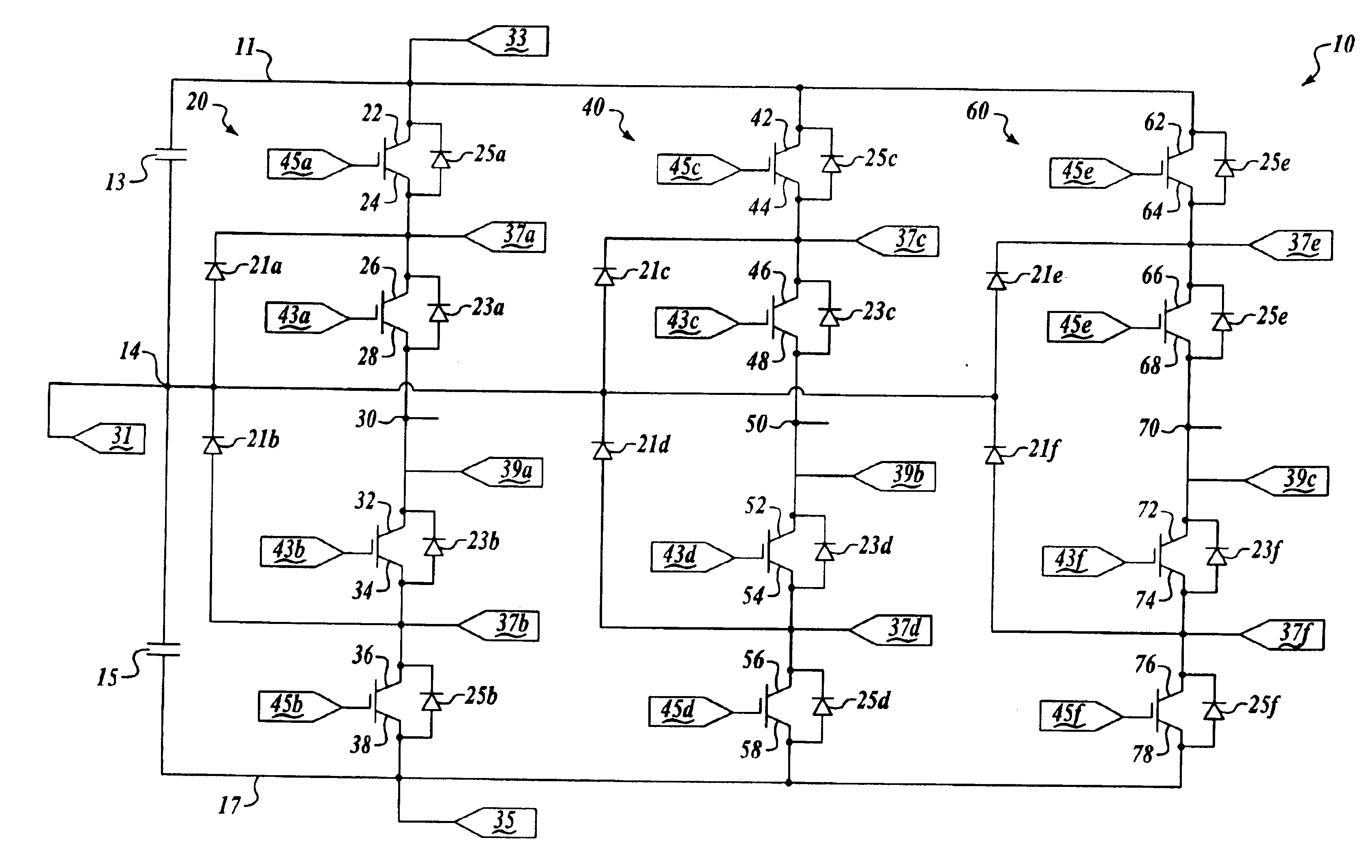
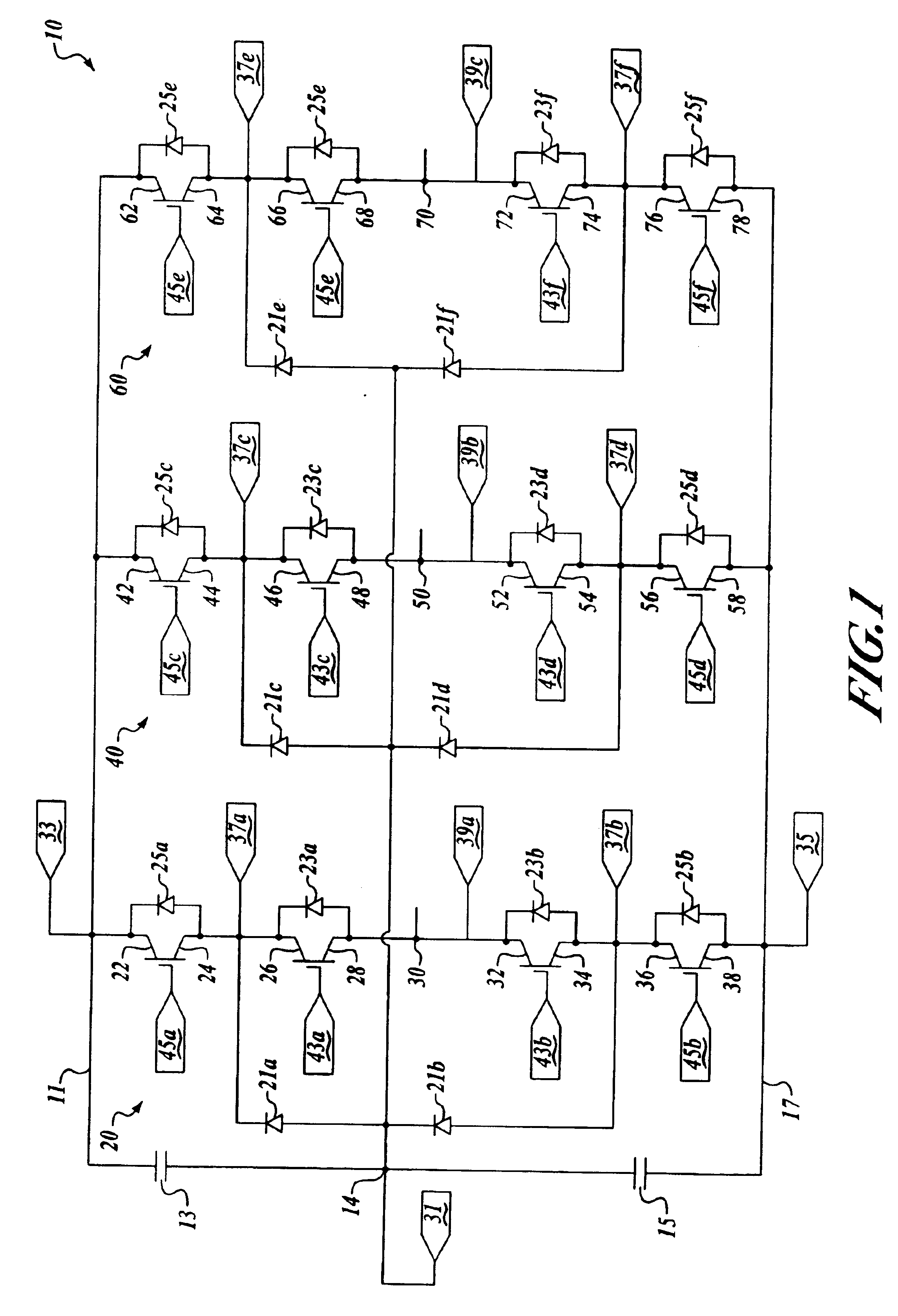
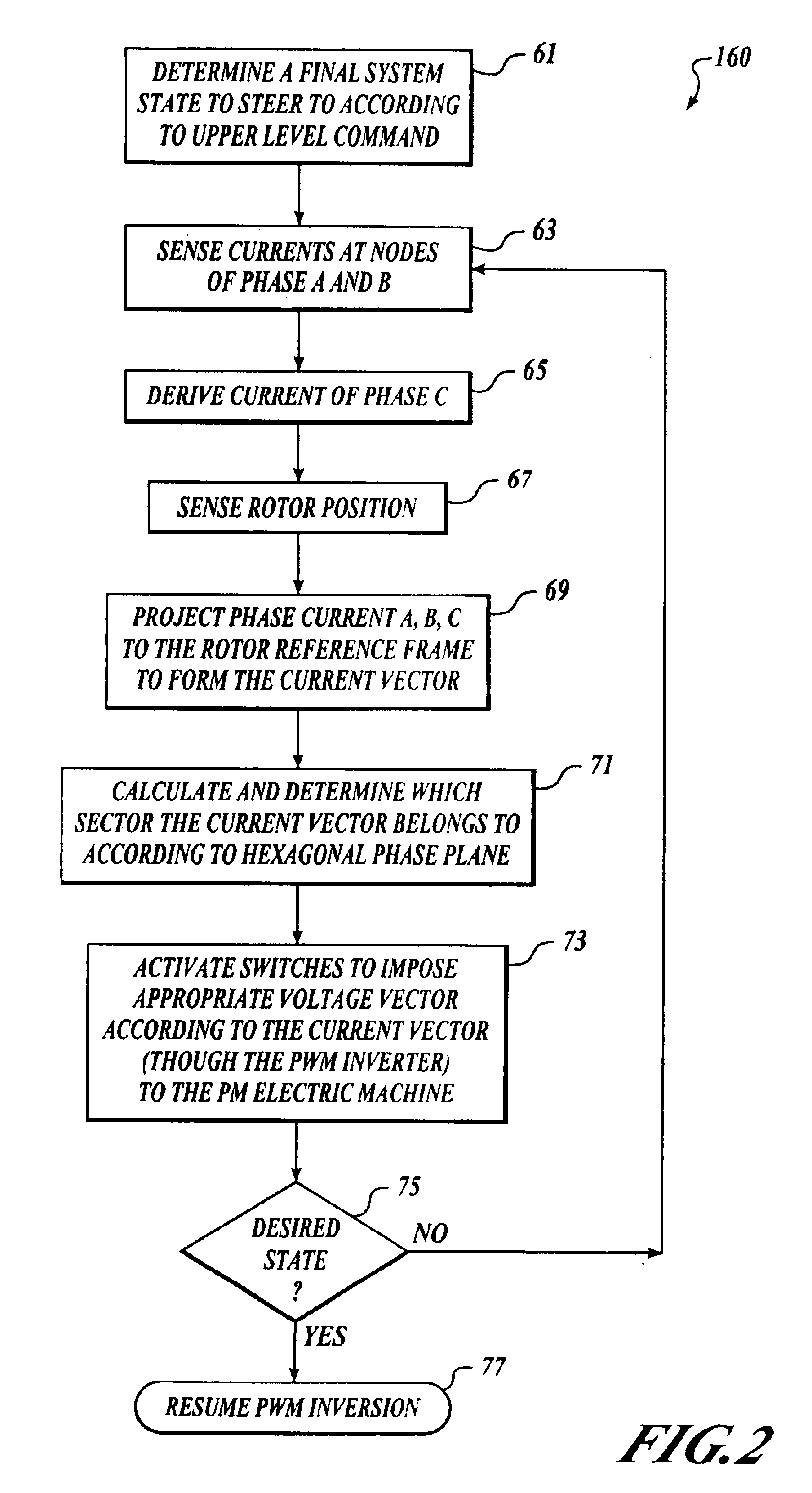
- A method for driving a neutral point-clamped multi-level voltage source inverter that senses rotor position and current, using a look-up table to activate switches and apply time-optimal control theory for efficient energy extraction and minimizing switching losses, allowing operation beyond the hexagon boundary without significant harmonic distortion.

Voltage Source Converter Generating a Pulse Train Using Two Voltage Levels
PatentActiveUS20210328523A1
Innovation
- A voltage source converter with a control unit that manages a group of cells to commutate current between two voltage levels by obtaining current values and handling a selected cell for insertion or bypassing when the current reaches zero, thereby reducing resonance.


Grid Integration Standards and Regulations
Grid integration of voltage source inverters (VSI) and pulse inverters requires adherence to comprehensive regulatory frameworks that govern power quality, safety, and operational reliability. The IEEE 1547 standard series establishes fundamental requirements for distributed energy resource interconnection, defining voltage and frequency operating ranges, power quality parameters, and anti-islanding protection mechanisms. These standards apply universally to both inverter types but impose different compliance challenges based on their distinct operational characteristics.
Voltage source inverters typically demonstrate superior compliance with harmonic distortion limits specified in IEEE 519 due to their continuous sinusoidal output generation capabilities. The standard mandates total harmonic distortion levels below 5% for voltage and current waveforms, which VSI systems can achieve through advanced pulse width modulation techniques and sophisticated filtering systems. Additionally, VSI configurations more readily satisfy IEC 61727 requirements for photovoltaic system grid interface characteristics, particularly regarding power factor control and reactive power compensation capabilities.
Pulse inverters face more stringent regulatory scrutiny regarding electromagnetic compatibility standards outlined in IEC 61000 series. Their switching-based operation generates higher frequency harmonics that require extensive filtering to meet conducted and radiated emission limits. However, pulse inverters often excel in meeting dynamic response requirements specified in grid codes such as NERC PRC-024, particularly for fault ride-through capabilities and frequency regulation services.
Regional grid codes impose additional layer of complexity, with European EN 50438 standards emphasizing different aspects compared to North American regulations. European standards place greater emphasis on voltage support capabilities and grid stabilization functions, areas where VSI systems demonstrate inherent advantages through their voltage control characteristics. Conversely, certain applications favor pulse inverters' rapid switching capabilities for meeting fast frequency response requirements mandated by transmission system operators.
Certification processes through organizations like UL, CSA, and TÜV require extensive testing protocols that vary significantly between inverter technologies. VSI systems typically undergo streamlined certification due to their predictable output characteristics, while pulse inverters require additional testing for electromagnetic interference and power quality compliance, potentially extending development timelines and increasing regulatory compliance costs.
Voltage source inverters typically demonstrate superior compliance with harmonic distortion limits specified in IEEE 519 due to their continuous sinusoidal output generation capabilities. The standard mandates total harmonic distortion levels below 5% for voltage and current waveforms, which VSI systems can achieve through advanced pulse width modulation techniques and sophisticated filtering systems. Additionally, VSI configurations more readily satisfy IEC 61727 requirements for photovoltaic system grid interface characteristics, particularly regarding power factor control and reactive power compensation capabilities.
Pulse inverters face more stringent regulatory scrutiny regarding electromagnetic compatibility standards outlined in IEC 61000 series. Their switching-based operation generates higher frequency harmonics that require extensive filtering to meet conducted and radiated emission limits. However, pulse inverters often excel in meeting dynamic response requirements specified in grid codes such as NERC PRC-024, particularly for fault ride-through capabilities and frequency regulation services.
Regional grid codes impose additional layer of complexity, with European EN 50438 standards emphasizing different aspects compared to North American regulations. European standards place greater emphasis on voltage support capabilities and grid stabilization functions, areas where VSI systems demonstrate inherent advantages through their voltage control characteristics. Conversely, certain applications favor pulse inverters' rapid switching capabilities for meeting fast frequency response requirements mandated by transmission system operators.
Certification processes through organizations like UL, CSA, and TÜV require extensive testing protocols that vary significantly between inverter technologies. VSI systems typically undergo streamlined certification due to their predictable output characteristics, while pulse inverters require additional testing for electromagnetic interference and power quality compliance, potentially extending development timelines and increasing regulatory compliance costs.
Energy Efficiency and Environmental Impact
Energy efficiency represents a critical differentiator between voltage source inverters and pulse inverters, with significant implications for environmental sustainability. Voltage source inverters typically achieve efficiency ratings between 92-98%, primarily due to their sophisticated control algorithms and advanced semiconductor technologies. The continuous modulation techniques employed in VSIs, such as pulse width modulation, enable precise control over output waveforms while minimizing switching losses.
Pulse inverters, characterized by their simpler switching mechanisms, generally exhibit lower efficiency rates ranging from 85-95%. The discrete switching nature of pulse inverters results in higher harmonic content and increased power losses during switching transitions. However, recent advancements in wide bandgap semiconductors have begun to narrow this efficiency gap, particularly in high-frequency applications.
The environmental impact assessment reveals substantial differences between these technologies. VSIs contribute to reduced carbon footprint through superior energy conversion efficiency, translating to lower electricity consumption and decreased greenhouse gas emissions. A typical 100kW VSI system can save approximately 3-8% more energy annually compared to equivalent pulse inverter systems, resulting in reduced CO2 emissions of 2-5 tons per year depending on the regional electricity grid composition.
Thermal management requirements also differ significantly between the two technologies. VSIs generate less waste heat due to higher efficiency, reducing cooling system demands and associated energy consumption. This characteristic extends equipment lifespan and decreases maintenance requirements, further enhancing environmental benefits through reduced material consumption and waste generation.
The manufacturing environmental footprint varies considerably, with VSIs requiring more sophisticated control circuits and sensors, increasing material complexity. However, the operational environmental benefits typically offset manufacturing impacts within 2-3 years of deployment. Pulse inverters, while simpler to manufacture, may require more frequent replacement due to higher thermal stress and component degradation.
Grid integration aspects reveal that VSIs provide superior power quality with lower total harmonic distortion, reducing stress on electrical infrastructure and improving overall system efficiency. This enhanced grid compatibility supports renewable energy integration objectives and contributes to more sustainable power distribution networks.
Pulse inverters, characterized by their simpler switching mechanisms, generally exhibit lower efficiency rates ranging from 85-95%. The discrete switching nature of pulse inverters results in higher harmonic content and increased power losses during switching transitions. However, recent advancements in wide bandgap semiconductors have begun to narrow this efficiency gap, particularly in high-frequency applications.
The environmental impact assessment reveals substantial differences between these technologies. VSIs contribute to reduced carbon footprint through superior energy conversion efficiency, translating to lower electricity consumption and decreased greenhouse gas emissions. A typical 100kW VSI system can save approximately 3-8% more energy annually compared to equivalent pulse inverter systems, resulting in reduced CO2 emissions of 2-5 tons per year depending on the regional electricity grid composition.
Thermal management requirements also differ significantly between the two technologies. VSIs generate less waste heat due to higher efficiency, reducing cooling system demands and associated energy consumption. This characteristic extends equipment lifespan and decreases maintenance requirements, further enhancing environmental benefits through reduced material consumption and waste generation.
The manufacturing environmental footprint varies considerably, with VSIs requiring more sophisticated control circuits and sensors, increasing material complexity. However, the operational environmental benefits typically offset manufacturing impacts within 2-3 years of deployment. Pulse inverters, while simpler to manufacture, may require more frequent replacement due to higher thermal stress and component degradation.
Grid integration aspects reveal that VSIs provide superior power quality with lower total harmonic distortion, reducing stress on electrical infrastructure and improving overall system efficiency. This enhanced grid compatibility supports renewable energy integration objectives and contributes to more sustainable power distribution networks.
Unlock deeper insights with PatSnap Eureka Quick Research — get a full tech report to explore trends and direct your research. Try now!
Generate Your Research Report Instantly with AI Agent
Supercharge your innovation with PatSnap Eureka AI Agent Platform!