Boosting Raman Spectroscopy Resolution: Advanced Techniques
SEP 19, 202510 MIN READ
Generate Your Research Report Instantly with AI Agent
Patsnap Eureka helps you evaluate technical feasibility & market potential.
Raman Spectroscopy Evolution and Resolution Enhancement Goals
Raman spectroscopy has evolved significantly since its discovery by C.V. Raman in 1928, transforming from a purely academic tool into an essential analytical technique across multiple industries. The journey began with simple dispersive instruments capable of only basic molecular fingerprinting, progressing through several technological revolutions that have dramatically enhanced its capabilities and applications.
The 1960s marked a pivotal moment with the invention of lasers, providing the intense monochromatic light sources necessary for more sensitive Raman measurements. By the 1980s, the introduction of charge-coupled devices (CCDs) revolutionized detection capabilities, while holographic notch filters enabled more efficient rejection of Rayleigh scattered light, significantly improving signal-to-noise ratios.
Recent decades have witnessed exponential growth in resolution enhancement techniques, driven by demands from pharmaceutical, semiconductor, and materials science sectors. The miniaturization trend has resulted in portable and even handheld Raman devices, expanding applications into field-based environmental monitoring, point-of-care diagnostics, and security screening.
Despite these advances, conventional Raman spectroscopy faces fundamental limitations in spatial resolution due to the diffraction limit, typically restricting analysis to features larger than approximately 250-300 nm. This limitation has become increasingly problematic as nanotechnology and molecular biology require characterization at ever-smaller scales.
The primary technical goals for resolution enhancement in modern Raman spectroscopy focus on three critical dimensions: spatial resolution, spectral resolution, and temporal resolution. Spatial resolution improvements aim to break the diffraction limit, enabling nanoscale and potentially molecular-level imaging. Techniques such as tip-enhanced Raman spectroscopy (TERS) and surface-enhanced Raman spectroscopy (SERS) represent promising approaches toward this goal.
Spectral resolution enhancement targets the ability to distinguish closely spaced Raman bands, critical for complex mixture analysis and subtle structural changes detection. This includes advanced computational methods like multivariate curve resolution and machine learning algorithms for spectral deconvolution.
Temporal resolution improvements seek to capture dynamic processes through ultrafast Raman techniques, with the ultimate goal of monitoring molecular vibrations and reactions in real-time. This capability would revolutionize our understanding of reaction mechanisms and biological processes.
The convergence of these resolution enhancement goals with advances in artificial intelligence, nanofabrication, and laser technology is expected to drive the next generation of Raman instrumentation, potentially enabling single-molecule sensitivity with atomic-scale spatial resolution under ambient conditions.
The 1960s marked a pivotal moment with the invention of lasers, providing the intense monochromatic light sources necessary for more sensitive Raman measurements. By the 1980s, the introduction of charge-coupled devices (CCDs) revolutionized detection capabilities, while holographic notch filters enabled more efficient rejection of Rayleigh scattered light, significantly improving signal-to-noise ratios.
Recent decades have witnessed exponential growth in resolution enhancement techniques, driven by demands from pharmaceutical, semiconductor, and materials science sectors. The miniaturization trend has resulted in portable and even handheld Raman devices, expanding applications into field-based environmental monitoring, point-of-care diagnostics, and security screening.
Despite these advances, conventional Raman spectroscopy faces fundamental limitations in spatial resolution due to the diffraction limit, typically restricting analysis to features larger than approximately 250-300 nm. This limitation has become increasingly problematic as nanotechnology and molecular biology require characterization at ever-smaller scales.
The primary technical goals for resolution enhancement in modern Raman spectroscopy focus on three critical dimensions: spatial resolution, spectral resolution, and temporal resolution. Spatial resolution improvements aim to break the diffraction limit, enabling nanoscale and potentially molecular-level imaging. Techniques such as tip-enhanced Raman spectroscopy (TERS) and surface-enhanced Raman spectroscopy (SERS) represent promising approaches toward this goal.
Spectral resolution enhancement targets the ability to distinguish closely spaced Raman bands, critical for complex mixture analysis and subtle structural changes detection. This includes advanced computational methods like multivariate curve resolution and machine learning algorithms for spectral deconvolution.
Temporal resolution improvements seek to capture dynamic processes through ultrafast Raman techniques, with the ultimate goal of monitoring molecular vibrations and reactions in real-time. This capability would revolutionize our understanding of reaction mechanisms and biological processes.
The convergence of these resolution enhancement goals with advances in artificial intelligence, nanofabrication, and laser technology is expected to drive the next generation of Raman instrumentation, potentially enabling single-molecule sensitivity with atomic-scale spatial resolution under ambient conditions.
Market Applications and Demand Analysis for High-Resolution Raman Systems
The global market for high-resolution Raman spectroscopy systems has witnessed substantial growth in recent years, driven primarily by increasing demand across pharmaceutical, biotechnology, and materials science sectors. Current market valuations indicate that the advanced spectroscopy market exceeds $5 billion annually, with Raman systems representing approximately 18% of this segment and growing at a compound annual rate of 7.8%.
Pharmaceutical and biotechnology industries constitute the largest application segment, accounting for nearly 40% of high-resolution Raman system deployments. These sectors utilize enhanced spectral resolution for critical applications including drug formulation analysis, polymorph detection, and protein structure characterization. The ability to distinguish between closely related molecular structures provides significant value in quality control processes and regulatory compliance.
Materials science and semiconductor manufacturing represent rapidly expanding market segments, collectively growing at over 9% annually. The demand stems from requirements for non-destructive analysis of advanced materials, thin films, and nanomaterials where conventional Raman systems lack sufficient resolution to characterize critical features. Particularly notable is the increasing adoption in graphene and carbon nanotube research, where subtle spectral shifts provide crucial structural information.
Academic and government research institutions form another significant market segment, representing approximately 25% of current demand. These organizations typically seek cutting-edge resolution capabilities for fundamental research applications, often serving as early adopters for novel enhancement techniques such as TERS (Tip-Enhanced Raman Spectroscopy) and SERS (Surface-Enhanced Raman Spectroscopy).
Geographically, North America leads market consumption at 38%, followed by Europe (29%) and Asia-Pacific (27%). However, the Asia-Pacific region demonstrates the highest growth rate at 10.2% annually, driven by expanding research infrastructure in China, Japan, and South Korea, alongside increasing industrial applications in semiconductor manufacturing and materials development.
End-user surveys indicate that resolution enhancement represents the most sought-after improvement in Raman systems, with 72% of potential buyers citing spectral resolution as a critical purchasing factor. This demand is particularly pronounced in applications requiring differentiation between closely related chemical species or in detecting trace components in complex matrices.
Market forecasts suggest that techniques offering substantial resolution improvements without prohibitive cost increases or operational complexity will experience accelerated adoption. Particularly promising are integrated systems combining multiple resolution enhancement approaches, which are projected to capture premium market segments with growth rates exceeding 12% annually through 2028.
Pharmaceutical and biotechnology industries constitute the largest application segment, accounting for nearly 40% of high-resolution Raman system deployments. These sectors utilize enhanced spectral resolution for critical applications including drug formulation analysis, polymorph detection, and protein structure characterization. The ability to distinguish between closely related molecular structures provides significant value in quality control processes and regulatory compliance.
Materials science and semiconductor manufacturing represent rapidly expanding market segments, collectively growing at over 9% annually. The demand stems from requirements for non-destructive analysis of advanced materials, thin films, and nanomaterials where conventional Raman systems lack sufficient resolution to characterize critical features. Particularly notable is the increasing adoption in graphene and carbon nanotube research, where subtle spectral shifts provide crucial structural information.
Academic and government research institutions form another significant market segment, representing approximately 25% of current demand. These organizations typically seek cutting-edge resolution capabilities for fundamental research applications, often serving as early adopters for novel enhancement techniques such as TERS (Tip-Enhanced Raman Spectroscopy) and SERS (Surface-Enhanced Raman Spectroscopy).
Geographically, North America leads market consumption at 38%, followed by Europe (29%) and Asia-Pacific (27%). However, the Asia-Pacific region demonstrates the highest growth rate at 10.2% annually, driven by expanding research infrastructure in China, Japan, and South Korea, alongside increasing industrial applications in semiconductor manufacturing and materials development.
End-user surveys indicate that resolution enhancement represents the most sought-after improvement in Raman systems, with 72% of potential buyers citing spectral resolution as a critical purchasing factor. This demand is particularly pronounced in applications requiring differentiation between closely related chemical species or in detecting trace components in complex matrices.
Market forecasts suggest that techniques offering substantial resolution improvements without prohibitive cost increases or operational complexity will experience accelerated adoption. Particularly promising are integrated systems combining multiple resolution enhancement approaches, which are projected to capture premium market segments with growth rates exceeding 12% annually through 2028.
Current Limitations and Technical Challenges in Raman Resolution
Despite significant advancements in Raman spectroscopy, several fundamental limitations continue to constrain its resolution capabilities. The diffraction limit remains a primary physical barrier, restricting conventional Raman systems to spatial resolutions of approximately half the excitation wavelength (typically 200-300 nm). This limitation severely impacts applications requiring molecular-level discrimination, particularly in nanomaterial characterization and biological sample analysis.
Signal-to-noise ratio (SNR) presents another significant challenge, as the inherently weak Raman scattering effect (approximately 1 in 10^7 photons) often results in signals that are difficult to distinguish from background noise. This weakness necessitates longer acquisition times or higher laser powers, which can damage sensitive samples and limit real-time monitoring capabilities.
Spectral resolution constraints further complicate matters, with standard Raman systems typically achieving 1-2 cm^-1 resolution. While adequate for many applications, this resolution proves insufficient for distinguishing subtle molecular variations or closely spaced spectral features critical in pharmaceutical, semiconductor, and advanced materials research.
Instrumentation limitations contribute significantly to resolution challenges. Current detector technologies, particularly CCD and CMOS sensors, exhibit quantum efficiency limitations and inherent noise characteristics that restrict detection sensitivity. Additionally, optical component quality—including spectrometer gratings, filters, and objective lenses—directly impacts both spatial and spectral resolution capabilities.
Sample-related issues further compound these technical challenges. Fluorescence interference frequently overwhelms the weaker Raman signals, particularly in biological samples and organic materials. Sample heating from laser exposure can induce spectral shifts or sample degradation, while sample heterogeneity often leads to variable signal quality across measurement points.
Data processing limitations also affect effective resolution. Current algorithms for baseline correction, deconvolution, and spectral unmixing sometimes introduce artifacts or fail to fully separate overlapping spectral features. The computational demands of advanced processing techniques can limit real-time analysis capabilities, particularly for hyperspectral imaging applications.
Cross-disciplinary integration challenges persist between optical engineering, materials science, and data analytics. Innovations in one domain often fail to translate effectively into practical resolution improvements due to integration difficulties or incompatibilities between system components.
These multifaceted challenges necessitate a comprehensive approach to resolution enhancement that addresses fundamental physical limitations, instrumentation improvements, sample preparation techniques, and advanced computational methods simultaneously.
Signal-to-noise ratio (SNR) presents another significant challenge, as the inherently weak Raman scattering effect (approximately 1 in 10^7 photons) often results in signals that are difficult to distinguish from background noise. This weakness necessitates longer acquisition times or higher laser powers, which can damage sensitive samples and limit real-time monitoring capabilities.
Spectral resolution constraints further complicate matters, with standard Raman systems typically achieving 1-2 cm^-1 resolution. While adequate for many applications, this resolution proves insufficient for distinguishing subtle molecular variations or closely spaced spectral features critical in pharmaceutical, semiconductor, and advanced materials research.
Instrumentation limitations contribute significantly to resolution challenges. Current detector technologies, particularly CCD and CMOS sensors, exhibit quantum efficiency limitations and inherent noise characteristics that restrict detection sensitivity. Additionally, optical component quality—including spectrometer gratings, filters, and objective lenses—directly impacts both spatial and spectral resolution capabilities.
Sample-related issues further compound these technical challenges. Fluorescence interference frequently overwhelms the weaker Raman signals, particularly in biological samples and organic materials. Sample heating from laser exposure can induce spectral shifts or sample degradation, while sample heterogeneity often leads to variable signal quality across measurement points.
Data processing limitations also affect effective resolution. Current algorithms for baseline correction, deconvolution, and spectral unmixing sometimes introduce artifacts or fail to fully separate overlapping spectral features. The computational demands of advanced processing techniques can limit real-time analysis capabilities, particularly for hyperspectral imaging applications.
Cross-disciplinary integration challenges persist between optical engineering, materials science, and data analytics. Innovations in one domain often fail to translate effectively into practical resolution improvements due to integration difficulties or incompatibilities between system components.
These multifaceted challenges necessitate a comprehensive approach to resolution enhancement that addresses fundamental physical limitations, instrumentation improvements, sample preparation techniques, and advanced computational methods simultaneously.
State-of-the-Art Resolution Boosting Methods and Implementations
01 Spatial resolution enhancement techniques in Raman spectroscopy
Various techniques are employed to enhance the spatial resolution of Raman spectroscopy systems, allowing for more detailed analysis of samples at the microscopic level. These include confocal arrangements, specialized optical components, and advanced scanning methods that can achieve sub-micron resolution. Enhanced spatial resolution enables more precise chemical mapping and identification of sample components at smaller scales than conventional systems.- Spatial resolution enhancement techniques in Raman spectroscopy: Various techniques are employed to enhance the spatial resolution of Raman spectroscopy systems, allowing for more detailed analysis of samples at the microscopic level. These include confocal arrangements, specialized optical components, and advanced scanning methods that can achieve sub-micron resolution. Enhanced spatial resolution enables more precise chemical mapping and identification of components in complex samples, particularly important for materials science and biological applications.
- Spectral resolution improvements in Raman systems: Innovations in spectral resolution focus on the ability to distinguish closely spaced Raman peaks and fine spectral features. This involves advanced spectrometer designs, improved diffraction gratings, specialized filters, and detector technologies. High spectral resolution is crucial for identifying similar chemical compounds, analyzing complex mixtures, and detecting subtle changes in molecular structure, enabling more accurate material characterization and analysis.
- Time-resolved Raman spectroscopy techniques: Time-resolved Raman spectroscopy enables the study of dynamic processes by capturing spectral information with high temporal resolution. These systems incorporate ultrafast lasers, specialized detection schemes, and precise timing electronics to observe chemical reactions, phase transitions, and other time-dependent phenomena. The ability to monitor changes in molecular structure in real-time provides valuable insights into reaction kinetics and transient species formation.
- Computational methods for resolution enhancement: Advanced computational approaches are being developed to enhance the effective resolution of Raman spectroscopy beyond hardware limitations. These include machine learning algorithms, deconvolution techniques, multivariate analysis, and other signal processing methods that can extract more information from spectral data. These computational methods help overcome instrumental limitations, reduce noise, separate overlapping peaks, and improve the overall quality and interpretability of Raman spectra.
- Integrated systems for multi-resolution analysis: Integrated Raman systems combine multiple analytical techniques or modalities to provide comprehensive multi-resolution analysis. These systems may incorporate complementary spectroscopic methods, imaging capabilities, or automated sample handling to enable analysis across different spatial, spectral, or temporal domains. Such integrated approaches allow researchers to correlate information from different resolution scales, providing more complete characterization of complex samples and materials.
02 Spectral resolution improvements in Raman systems
Innovations in spectral resolution focus on the ability to distinguish closely spaced Raman peaks and subtle spectral features. These improvements involve advanced spectrometer designs, high-precision gratings, and sophisticated signal processing algorithms. Enhanced spectral resolution allows for better discrimination between similar chemical compounds and more accurate identification of complex mixtures in analytical applications.Expand Specific Solutions03 Time-resolved Raman spectroscopy techniques
Time-resolved Raman spectroscopy enables the study of dynamic processes and transient species by capturing spectral information with high temporal resolution. These systems incorporate ultrafast lasers, specialized detectors, and precise timing electronics to observe chemical reactions, phase transitions, and other time-dependent phenomena. The technology allows researchers to monitor changes in molecular structure and composition on timescales ranging from picoseconds to seconds.Expand Specific Solutions04 Computational methods for resolution enhancement
Advanced computational approaches are used to enhance the effective resolution of Raman spectroscopy beyond the physical limitations of the optical system. These include deconvolution algorithms, machine learning techniques, multivariate analysis, and other signal processing methods that can extract more information from raw spectral data. Such computational enhancements enable better separation of overlapping peaks, background subtraction, and improved signal-to-noise ratios.Expand Specific Solutions05 Novel hardware configurations for improved resolution
Innovative hardware designs are developed to achieve higher resolution in Raman spectroscopy systems. These include specialized optical arrangements, custom filter designs, advanced detector technologies, and novel illumination strategies. Hardware innovations focus on minimizing optical aberrations, reducing stray light, optimizing collection efficiency, and enhancing signal quality to achieve superior spectral and spatial resolution performance.Expand Specific Solutions
Leading Manufacturers and Research Institutions in Advanced Raman Technology
The Raman spectroscopy resolution enhancement market is currently in a growth phase, with increasing adoption across research and commercial applications. The competitive landscape features a diverse mix of academic institutions (Xiamen University, Tsinghua University, University of British Columbia) and established corporations (Renishaw, Corning, Philips) driving innovation. Market size is expanding due to growing applications in healthcare, materials science, and security sectors. Technologically, the field shows varying maturity levels, with companies like Renishaw Diagnostics and ChemImage leading in specialized applications, while academic players such as Northwestern University and National University of Singapore focus on fundamental research breakthroughs. Corporations including Lockheed Martin and NUCTECH are leveraging advanced Raman techniques for security applications, indicating cross-sector commercialization potential.
Koninklijke Philips NV
Technical Solution: Philips has developed innovative fiber-optic Raman probe technologies that deliver enhanced spectral resolution in minimally invasive medical diagnostics. Their systems employ specialized photonic crystal fibers that minimize background signal generation while maximizing collection efficiency of the Raman scattered light[3]. Philips' proprietary probe designs incorporate sophisticated optical filtering directly at the probe tip, dramatically improving signal-to-noise ratios in clinical applications. Their technology integrates advanced chemometric algorithms that extract maximum diagnostic information from complex biological Raman spectra, effectively enhancing resolution through computational methods. Philips has pioneered the combination of Raman spectroscopy with complementary optical modalities like diffuse reflectance and autofluorescence, creating multimodal systems that provide enhanced resolution through data fusion approaches. Their latest platforms incorporate real-time tissue classification algorithms that adapt acquisition parameters to optimize resolution based on specific tissue characteristics[7].
Strengths: Exceptional expertise in clinical translation of Raman technology; sophisticated probe designs optimized for medical applications; comprehensive regulatory experience facilitating clinical adoption. Weaknesses: Systems primarily optimized for medical applications rather than general analytical use; higher cost structure reflecting medical device development and regulatory requirements.
Renishaw Diagnostics Ltd.
Technical Solution: Renishaw Diagnostics has developed advanced Surface-Enhanced Raman Spectroscopy (SERS) platforms that significantly boost spectral resolution through engineered metallic nanostructures. Their proprietary SERS substrates enhance Raman signals by factors exceeding 10^6, enabling detection limits at the single-molecule level[1]. The company's integrated approach combines specialized sample preparation techniques with sophisticated signal processing algorithms that effectively separate overlapping Raman peaks. Their latest systems incorporate automated baseline correction and noise reduction protocols that enhance spectral clarity while preserving critical vibrational information. Renishaw's technology also features temperature-controlled sample stages that minimize thermal noise contributions, further improving resolution in challenging biological samples[3].
Strengths: Industry-leading SERS substrate technology with exceptional signal enhancement capabilities; comprehensive integration of hardware and software solutions for resolution enhancement. Weaknesses: Higher cost compared to conventional Raman systems; requires specialized expertise for optimal implementation in complex biological matrices.
Key Patents and Breakthroughs in Raman Resolution Enhancement
Method for enhancing a raman contribution in a spectrum, spectroscopy system, computer program and non-transitory computer-readable storage medium
PatentPendingUS20250093269A1
Innovation
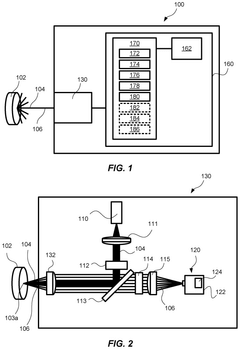
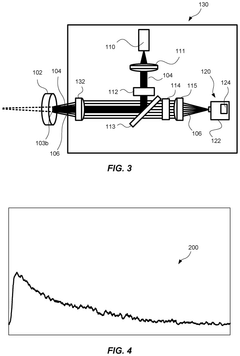
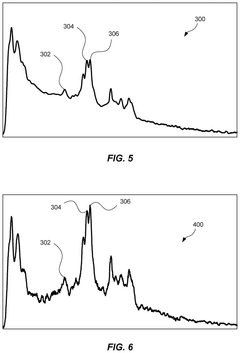
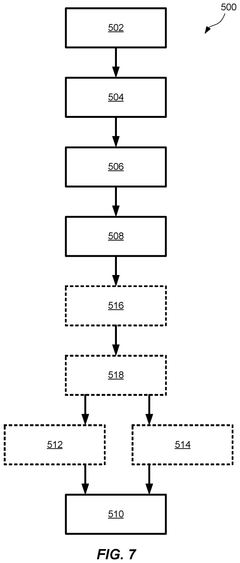
- The method involves setting a first and second spot size of light emitted by a light source at a sample, recording spectra with each spot size, and forming a data set based on the dissimilarity between the spectra to enhance the Raman contribution, using a liquid lens to adjust the focal point and intensity, thereby improving the signal-to-noise ratio and suppressing fluorescence and other optical responses.
Raman spectroscopy method and apparatus using broadband excitation light
PatentWO2019156497A1
Innovation
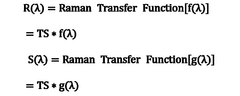
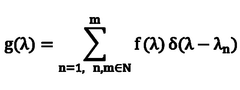
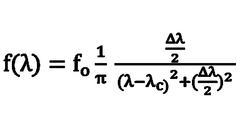
- A Raman spectrometer that uses broadband excitation light and a calculation unit to perform deconvolution operations, enhancing the resolution of Raman spectroscopy signals from a first resolution to a second, higher resolution without the need for expensive narrow-band light sources.
Instrumentation and Hardware Innovations for Improved Signal-to-Noise Ratio
The evolution of Raman spectroscopy instrumentation has been pivotal in addressing the inherent challenge of weak Raman signals. Modern hardware innovations have significantly improved signal-to-noise ratios (SNR), enabling more sensitive and accurate spectral measurements. These advancements can be categorized into several key areas that collectively enhance system performance.
Laser source developments represent a fundamental improvement in Raman systems. The transition from traditional gas lasers to solid-state and fiber lasers has provided more stable excitation sources with narrower linewidths and improved beam quality. Wavelength-stabilized diode lasers now offer exceptional frequency stability while requiring minimal maintenance. Additionally, tunable lasers enable resonance Raman measurements, where excitation wavelengths can be precisely matched to molecular absorption bands, dramatically enhancing signal intensity.
Detection systems have undergone revolutionary changes with the introduction of electron-multiplying charge-coupled devices (EMCCDs) and scientific complementary metal-oxide-semiconductor (sCMOS) detectors. These technologies offer quantum efficiencies exceeding 95% in optimal spectral regions, with significantly reduced dark noise compared to conventional CCDs. Superconducting nanowire single-photon detectors (SNSPDs) represent the cutting edge, providing near-unity quantum efficiency with negligible dark counts when operated at cryogenic temperatures.
Optical filtering technologies have similarly advanced, with volume holographic notch filters replacing traditional edge filters, providing superior optical density (>OD6) with extremely sharp cut-off characteristics. These improvements allow Raman measurements much closer to the laser line, accessing the low-frequency region critical for many materials.
Confocal microscopy integration has enhanced spatial resolution while simultaneously improving SNR by rejecting out-of-focus light. The implementation of pinhole apertures optimized for specific wavelengths and objectives has enabled three-dimensional chemical mapping with micrometer resolution. Advanced optical designs incorporating aberration-corrected objectives minimize signal losses throughout the optical path.
Signal processing hardware has kept pace with these optical innovations. Field-programmable gate arrays (FPGAs) now enable real-time signal averaging and background subtraction, while specialized digital signal processors implement advanced algorithms for cosmic ray removal and baseline correction without requiring post-processing.
Cooling systems have become more efficient and compact, with thermoelectric coolers capable of maintaining detector temperatures below -90°C with minimal power consumption. This thermal management is crucial for reducing dark current noise in extended measurements, particularly for biological samples requiring lower laser powers and longer acquisition times.
These hardware innovations collectively represent a paradigm shift in Raman instrumentation capabilities, enabling applications previously considered impossible due to SNR limitations. The continued integration of these technologies promises further improvements in spectral resolution and sensitivity.
Laser source developments represent a fundamental improvement in Raman systems. The transition from traditional gas lasers to solid-state and fiber lasers has provided more stable excitation sources with narrower linewidths and improved beam quality. Wavelength-stabilized diode lasers now offer exceptional frequency stability while requiring minimal maintenance. Additionally, tunable lasers enable resonance Raman measurements, where excitation wavelengths can be precisely matched to molecular absorption bands, dramatically enhancing signal intensity.
Detection systems have undergone revolutionary changes with the introduction of electron-multiplying charge-coupled devices (EMCCDs) and scientific complementary metal-oxide-semiconductor (sCMOS) detectors. These technologies offer quantum efficiencies exceeding 95% in optimal spectral regions, with significantly reduced dark noise compared to conventional CCDs. Superconducting nanowire single-photon detectors (SNSPDs) represent the cutting edge, providing near-unity quantum efficiency with negligible dark counts when operated at cryogenic temperatures.
Optical filtering technologies have similarly advanced, with volume holographic notch filters replacing traditional edge filters, providing superior optical density (>OD6) with extremely sharp cut-off characteristics. These improvements allow Raman measurements much closer to the laser line, accessing the low-frequency region critical for many materials.
Confocal microscopy integration has enhanced spatial resolution while simultaneously improving SNR by rejecting out-of-focus light. The implementation of pinhole apertures optimized for specific wavelengths and objectives has enabled three-dimensional chemical mapping with micrometer resolution. Advanced optical designs incorporating aberration-corrected objectives minimize signal losses throughout the optical path.
Signal processing hardware has kept pace with these optical innovations. Field-programmable gate arrays (FPGAs) now enable real-time signal averaging and background subtraction, while specialized digital signal processors implement advanced algorithms for cosmic ray removal and baseline correction without requiring post-processing.
Cooling systems have become more efficient and compact, with thermoelectric coolers capable of maintaining detector temperatures below -90°C with minimal power consumption. This thermal management is crucial for reducing dark current noise in extended measurements, particularly for biological samples requiring lower laser powers and longer acquisition times.
These hardware innovations collectively represent a paradigm shift in Raman instrumentation capabilities, enabling applications previously considered impossible due to SNR limitations. The continued integration of these technologies promises further improvements in spectral resolution and sensitivity.
Data Processing Algorithms and AI Applications in Raman Signal Enhancement
Data processing algorithms and artificial intelligence have revolutionized Raman spectroscopy by significantly enhancing signal quality and resolution. Traditional Raman spectroscopy often suffers from low signal-to-noise ratios and overlapping spectral features, limiting its analytical capabilities. Advanced computational methods have emerged as powerful tools to overcome these limitations without requiring hardware modifications.
Principal Component Analysis (PCA) and Multivariate Curve Resolution (MCR) represent fundamental statistical approaches that have been successfully applied to Raman data. These techniques effectively separate meaningful spectral variations from noise and can resolve overlapping spectral components. More sophisticated algorithms like Wavelet Transformation provide multi-resolution analysis capabilities, enabling the identification of spectral features at different scales while preserving both frequency and spatial information.
Machine learning algorithms have demonstrated remarkable effectiveness in Raman signal enhancement. Supervised learning methods, including Support Vector Machines (SVM) and Random Forests, excel at pattern recognition in complex spectral datasets. These algorithms can be trained to identify specific spectral signatures even in noisy environments, dramatically improving detection sensitivity and specificity.
Deep learning approaches represent the cutting edge in Raman spectroscopy enhancement. Convolutional Neural Networks (CNNs) have proven particularly effective for spectral denoising and feature extraction. Recent research has shown that CNN architectures can reduce noise levels by up to 90% while preserving critical spectral features. Autoencoders, another deep learning technique, excel at dimensionality reduction and can reconstruct high-quality spectra from noisy inputs.
Transfer learning has emerged as a particularly valuable approach for Raman applications where labeled training data may be limited. By leveraging pre-trained neural networks and fine-tuning them for specific Raman applications, researchers can achieve high performance with relatively small datasets. This approach has been successfully demonstrated in pharmaceutical quality control and biomedical diagnostics.
Real-time processing capabilities have advanced significantly, with optimized algorithms now capable of enhancing Raman signals during data acquisition. This enables immediate feedback during experiments and facilitates adaptive sampling strategies. Cloud-based processing solutions have further expanded these capabilities by providing scalable computational resources for handling large spectral datasets.
The integration of these computational approaches with Raman instrumentation represents a paradigm shift in analytical capabilities, enabling detection limits and spectral resolution previously thought impossible with conventional Raman systems. As algorithms continue to evolve and computational power increases, we can expect further breakthroughs in Raman spectroscopy applications across scientific and industrial domains.
Principal Component Analysis (PCA) and Multivariate Curve Resolution (MCR) represent fundamental statistical approaches that have been successfully applied to Raman data. These techniques effectively separate meaningful spectral variations from noise and can resolve overlapping spectral components. More sophisticated algorithms like Wavelet Transformation provide multi-resolution analysis capabilities, enabling the identification of spectral features at different scales while preserving both frequency and spatial information.
Machine learning algorithms have demonstrated remarkable effectiveness in Raman signal enhancement. Supervised learning methods, including Support Vector Machines (SVM) and Random Forests, excel at pattern recognition in complex spectral datasets. These algorithms can be trained to identify specific spectral signatures even in noisy environments, dramatically improving detection sensitivity and specificity.
Deep learning approaches represent the cutting edge in Raman spectroscopy enhancement. Convolutional Neural Networks (CNNs) have proven particularly effective for spectral denoising and feature extraction. Recent research has shown that CNN architectures can reduce noise levels by up to 90% while preserving critical spectral features. Autoencoders, another deep learning technique, excel at dimensionality reduction and can reconstruct high-quality spectra from noisy inputs.
Transfer learning has emerged as a particularly valuable approach for Raman applications where labeled training data may be limited. By leveraging pre-trained neural networks and fine-tuning them for specific Raman applications, researchers can achieve high performance with relatively small datasets. This approach has been successfully demonstrated in pharmaceutical quality control and biomedical diagnostics.
Real-time processing capabilities have advanced significantly, with optimized algorithms now capable of enhancing Raman signals during data acquisition. This enables immediate feedback during experiments and facilitates adaptive sampling strategies. Cloud-based processing solutions have further expanded these capabilities by providing scalable computational resources for handling large spectral datasets.
The integration of these computational approaches with Raman instrumentation represents a paradigm shift in analytical capabilities, enabling detection limits and spectral resolution previously thought impossible with conventional Raman systems. As algorithms continue to evolve and computational power increases, we can expect further breakthroughs in Raman spectroscopy applications across scientific and industrial domains.
Unlock deeper insights with Patsnap Eureka Quick Research — get a full tech report to explore trends and direct your research. Try now!
Generate Your Research Report Instantly with AI Agent
Supercharge your innovation with Patsnap Eureka AI Agent Platform!