

Comparing Brain Computer Interface Designs for Paralysis Rehabilitation
JUN 23, 20269 MIN READ
Generate Your Research Report Instantly with AI Agent
Patsnap Eureka helps you evaluate technical feasibility & market potential.
BCI Technology Background and Paralysis Rehabilitation Goals
Brain-Computer Interface technology represents a revolutionary paradigm in neurotechnology that establishes direct communication pathways between the brain and external devices. The fundamental principle involves capturing neural signals, typically through electroencephalography (EEG), electrocorticography (ECoG), or intracortical microelectrode arrays, and translating these signals into actionable commands for assistive devices. This technology has evolved from early experimental concepts in the 1970s to sophisticated systems capable of real-time neural signal processing and device control.
The historical development of BCI technology began with foundational research on neural signal acquisition and processing. Early pioneers demonstrated that motor cortex signals could be decoded to predict intended movements, even in the absence of actual motor output. Subsequent decades witnessed significant advances in signal processing algorithms, machine learning techniques, and hardware miniaturization, enabling more robust and practical BCI implementations.
Contemporary BCI systems encompass various approaches, including non-invasive surface-based recording methods and invasive intracortical interfaces. Non-invasive systems offer safer implementation but with limited signal resolution, while invasive approaches provide higher fidelity neural recordings at the cost of surgical intervention. Hybrid approaches combining multiple signal acquisition modalities have emerged to optimize the balance between performance and safety considerations.
The primary rehabilitation goals for paralysis patients center on restoring functional independence and improving quality of life through technological augmentation. Motor function restoration represents the most immediate objective, enabling patients to control prosthetic limbs, computer cursors, or environmental control systems through direct neural commands. Communication restoration constitutes another critical goal, particularly for patients with severe motor impairments affecting speech capabilities.
Neuroplasticity enhancement through BCI-mediated training protocols has emerged as a significant therapeutic objective. These systems can facilitate motor learning and neural reorganization by providing real-time feedback on neural activity patterns, potentially promoting recovery of residual motor function. Additionally, BCI technology aims to address psychological and social rehabilitation aspects by restoring patient autonomy and enabling more natural interaction with their environment.
Long-term rehabilitation goals include the development of fully implantable, wireless BCI systems that can operate continuously without external hardware constraints. These advanced systems would integrate seamlessly with the patient's daily activities, providing transparent assistance for motor control, communication, and environmental interaction while minimizing the technological burden on users and caregivers.
Market Demand for BCI-Based Paralysis Rehabilitation Solutions
The global paralysis rehabilitation market represents a substantial and growing segment within the broader healthcare technology landscape. Spinal cord injuries affect hundreds of thousands of individuals worldwide annually, with stroke-related paralysis impacting millions more. Traditional rehabilitation approaches often reach therapeutic plateaus, creating significant unmet medical needs that BCI technologies are uniquely positioned to address.
Current rehabilitation expenditures for paralysis patients encompass extensive physical therapy, occupational therapy, and assistive device costs that can extend over decades. Healthcare systems increasingly recognize the economic burden of long-term care for paralyzed patients, driving interest in innovative solutions that can accelerate recovery or restore functional independence. BCI-based rehabilitation systems offer the potential to reduce these long-term costs through more effective neural plasticity stimulation and motor function restoration.
The aging global population amplifies market demand, as stroke incidence correlates strongly with age demographics. Developed nations face particularly acute challenges as their populations age, creating sustained pressure for advanced rehabilitation technologies. Healthcare providers seek solutions that can deliver measurable outcomes while managing resource constraints and patient throughput demands.
Insurance coverage patterns significantly influence market accessibility for BCI rehabilitation solutions. Progressive healthcare systems have begun establishing reimbursement frameworks for innovative neurorehabilitation technologies, though coverage remains inconsistent across regions. Private healthcare markets demonstrate greater willingness to adopt premium rehabilitation technologies, particularly in markets with high healthcare spending per capita.
Patient advocacy groups and rehabilitation centers increasingly demand evidence-based technologies that demonstrate superior outcomes compared to conventional therapies. The market shows particular receptivity to BCI systems that can provide objective progress measurements and personalized therapy protocols. Healthcare providers value solutions that integrate seamlessly with existing rehabilitation workflows while offering clear differentiation from traditional approaches.
Regulatory pathways for medical device approval create both opportunities and barriers for market entry. Established regulatory frameworks provide clear development targets, though lengthy approval processes can delay market access. The medical device market demonstrates preference for solutions with robust clinical validation and established safety profiles.
Geographic market variations reflect differences in healthcare infrastructure, regulatory environments, and economic development levels. Advanced healthcare markets show readiness for sophisticated BCI rehabilitation systems, while emerging markets may prioritize cost-effective solutions with simplified implementation requirements.
Current BCI Development Status and Technical Challenges
Brain-computer interface technology for paralysis rehabilitation has reached a critical juncture where multiple technical approaches demonstrate varying degrees of maturity and clinical viability. Current BCI systems primarily utilize three main signal acquisition methods: invasive microelectrode arrays, semi-invasive electrocorticography (ECoG), and non-invasive electroencephalography (EEG). Each approach presents distinct advantages and limitations that significantly impact their practical deployment in rehabilitation settings.
Invasive BCI systems, exemplified by Utah arrays and flexible microelectrode grids, offer superior signal quality with high spatial and temporal resolution. These systems can decode complex motor intentions with remarkable precision, enabling sophisticated control of robotic prosthetics and computer interfaces. However, invasive approaches face substantial challenges including surgical risks, long-term biocompatibility issues, and signal degradation over time due to scar tissue formation and electrode corrosion.
Non-invasive EEG-based systems represent the most widely adopted approach due to their safety profile and ease of implementation. Modern EEG systems can effectively decode motor imagery signals and sensorimotor rhythms for basic control applications. Nevertheless, these systems suffer from limited bandwidth, susceptibility to artifacts, and relatively low information transfer rates, typically ranging from 10-25 bits per minute for practical applications.
Semi-invasive ECoG technology emerges as a promising middle ground, offering better signal quality than EEG while avoiding the tissue damage associated with penetrating electrodes. Recent developments in flexible electrode arrays and wireless transmission systems have enhanced ECoG's clinical appeal, though surgical placement requirements remain a significant barrier.
Signal processing and machine learning algorithms constitute another critical challenge area. Current systems rely heavily on supervised learning approaches that require extensive calibration periods and struggle with signal non-stationarity. Adaptive algorithms and transfer learning methods show promise for reducing training requirements, but robust real-time performance across diverse user populations remains elusive.
Integration challenges persist across hardware miniaturization, power consumption, and wireless data transmission. Existing systems often require bulky external processing units and frequent recalibration, limiting their practical utility for daily rehabilitation activities. Additionally, standardization of evaluation metrics and regulatory pathways continues to impede systematic comparison of different BCI approaches and their clinical translation.
Existing BCI Design Solutions for Motor Recovery
01 Signal acquisition and processing systems
Brain computer interface systems utilize advanced signal acquisition methods to capture neural signals from the brain. These systems employ sophisticated processing algorithms to filter, amplify, and interpret the electrical activity generated by neurons. The processed signals are then converted into digital formats that can be used to control external devices or applications.- Signal acquisition and processing systems: Brain computer interface systems utilize advanced signal acquisition methods to capture neural signals from the brain. These systems employ sophisticated processing algorithms to filter, amplify, and interpret the electrical activity generated by neurons. The processed signals are then converted into digital formats that can be used to control external devices or applications.
- Neural signal decoding and classification algorithms: Advanced machine learning and artificial intelligence algorithms are implemented to decode and classify neural signals captured from brain activity. These algorithms can identify specific patterns in brainwaves and translate them into meaningful commands or intentions. The classification systems enable real-time interpretation of user thoughts and mental states for various applications.
- Hardware interfaces and electrode systems: Specialized hardware components including electrodes, amplifiers, and interface circuits are designed to establish reliable connections between the brain and computer systems. These components ensure stable signal transmission while maintaining biocompatibility and user safety. The hardware systems are optimized for long-term use and minimal invasiveness.
- Control applications and user interaction methods: Brain computer interfaces enable direct control of various devices and applications through mental commands. These systems can be used for controlling prosthetic devices, computer cursors, communication aids, and other assistive technologies. The interaction methods are designed to provide intuitive and efficient control mechanisms for users with different abilities and needs.
- Wireless communication and data transmission: Modern brain computer interface systems incorporate wireless communication technologies to enable untethered operation and improved user mobility. These systems utilize various wireless protocols and data transmission methods to maintain reliable communication between neural sensors and processing units. The wireless capabilities enhance user comfort and expand the range of possible applications.
02 Neural signal decoding and classification algorithms
Advanced machine learning and artificial intelligence algorithms are implemented to decode and classify neural signals captured from brain activity. These algorithms can identify specific patterns in brainwaves and translate them into meaningful commands or intentions. The classification systems enable real-time interpretation of user thoughts and mental states for various applications.Expand Specific Solutions03 Hardware interfaces and electrode systems
Specialized hardware components including electrodes, amplifiers, and interface circuits are designed to establish reliable connections between the brain and computer systems. These components ensure stable signal transmission while maintaining biocompatibility and user safety. The hardware systems are optimized for long-term use and minimal invasiveness.Expand Specific Solutions04 Control and feedback mechanisms
Brain computer interfaces incorporate sophisticated control systems that enable users to operate external devices through mental commands. These systems provide real-time feedback to users, allowing them to adjust their mental states for improved control accuracy. The feedback mechanisms help users learn to optimize their brain signal patterns for better interface performance.Expand Specific Solutions05 Applications and therapeutic implementations
Brain computer interface technology is applied in various therapeutic and assistive contexts, including rehabilitation, prosthetic control, and neurological disorder treatment. These implementations focus on restoring lost functions or enhancing human capabilities through direct brain-computer communication. The systems are designed to adapt to individual user needs and medical conditions.Expand Specific Solutions
Major BCI Companies and Research Institutions Analysis
The brain-computer interface (BCI) field for paralysis rehabilitation is experiencing rapid growth, transitioning from early research to clinical applications. The market demonstrates significant expansion potential, driven by increasing paralysis cases and technological advances. Technology maturity varies considerably across the competitive landscape. Leading academic institutions like Brown University, University of Washington, and Caltech have established foundational research platforms, while Chinese universities including Tianjin University, Zhejiang University, and Fudan University are advancing regional innovation. Commercial players such as Precision Neuroscience Corp., Neurolutions Inc., and SmartStent Pty Ltd. are developing market-ready solutions with varying invasiveness levels. Research organizations like Battelle Memorial Institute and A*STAR provide crucial technological bridges between academia and industry, indicating a maturing ecosystem with diverse technological approaches ranging from minimally invasive to fully implantable systems.
Neurolutions, Inc.
Technical Solution: Neurolutions has developed the IpsiHand system, an FDA-breakthrough designated brain-computer interface for stroke and spinal cord injury rehabilitation. The system uses non-invasive EEG electrodes to capture motor intention signals from the unaffected brain hemisphere and translates them into functional electrical stimulation of paralyzed muscles. Their approach combines real-time neural signal processing with targeted muscle stimulation to promote neuroplasticity and motor recovery. The system enables patients to perform hand and arm movements by thinking about the intended motion, facilitating both immediate functional assistance and long-term rehabilitation through repetitive neural-muscular training sessions.
Strengths: Non-invasive EEG approach eliminates surgical risks. FDA breakthrough designation validates clinical efficacy. Promotes natural neuroplasticity recovery. Weaknesses: EEG signals have lower spatial resolution and signal-to-noise ratio compared to invasive methods. Limited to surface brain activity detection.
Battelle Memorial Institute
Technical Solution: Battelle has developed the NeuroLife system, a revolutionary brain-computer interface that bypasses spinal cord injuries by directly connecting the brain to muscles. The system uses a microelectrode array implanted in the motor cortex to record neural signals associated with intended movements. Advanced machine learning algorithms decode these signals in real-time and convert them into electrical stimulation patterns delivered through a flexible electrode sleeve placed around the forearm. This approach has enabled paralyzed patients to regain voluntary hand and finger movements. The system continuously learns and adapts to improve signal decoding accuracy and movement precision over time through neural plasticity mechanisms.
Strengths: Direct brain-to-muscle bypass enables natural movement restoration. Adaptive machine learning improves performance over time. Proven clinical success in restoring hand function. Weaknesses: Requires invasive brain surgery for electrode implantation. Complex system setup and calibration requirements.
Core BCI Patents and Breakthrough Technologies
Control system and method for upper limb rehabilitation training robot based on brain-computer interface
PatentActiveCN108304068A
Innovation
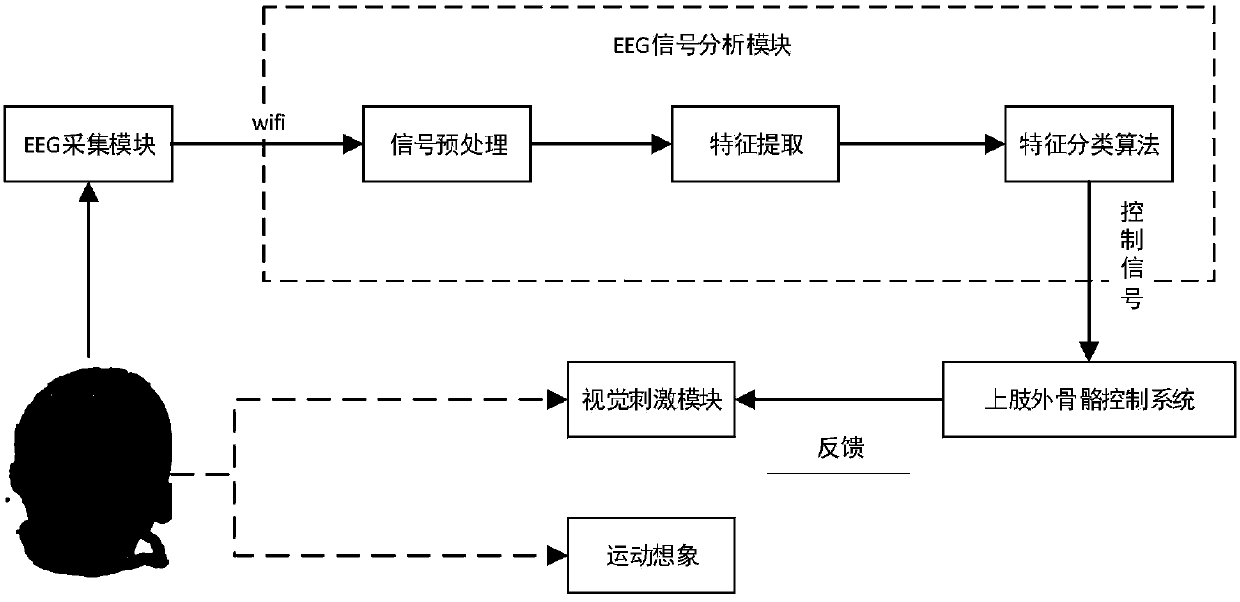
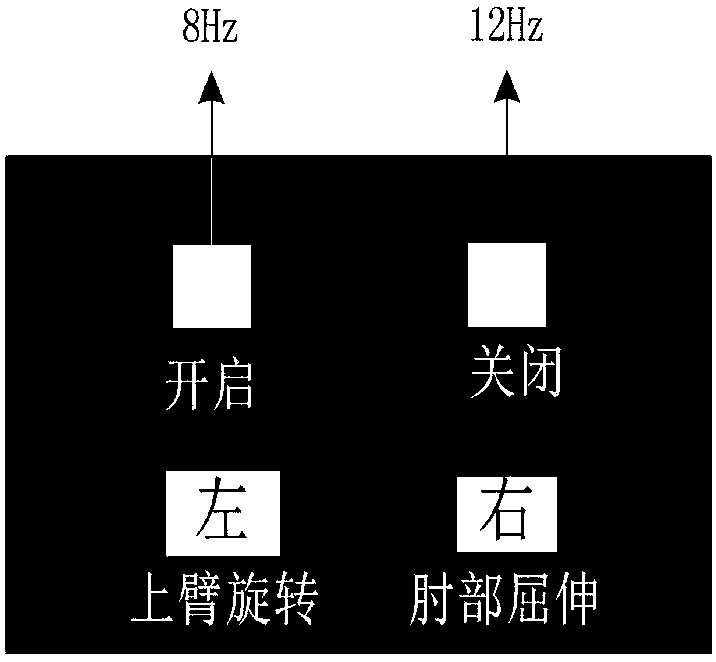
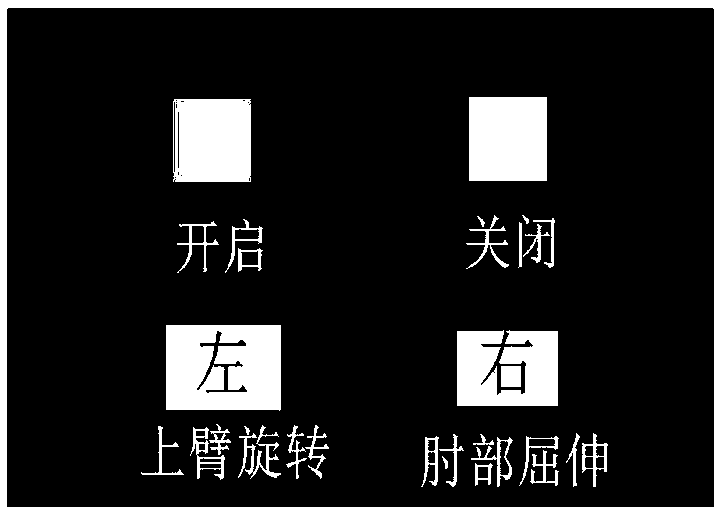
- Using a system based on EEG signal collection and analysis, combined with steady-state visual evoked potentials and motor imagination signals, through the visual stimulation module and upper limb exoskeleton control system, the start, stop and action control of the upper limb exoskeleton are realized, using Matlab's Psychtoolbox toolbox and support vector machines for signal analysis and classification.

Paralytic patient auxiliary nervous pathway restoring system
PatentInactiveCN1977997A
Innovation
- Using brain-computer interface (BCI) technology, through the collection and processing of EEG signals, functional electrical stimulation signals are generated to drive multi-lead stimulation electrodes to reconstruct the patient's subjective movement awareness information, achieve autonomous control of lower limb movements, and form a complete central- Peripheral motor nervous system.


Medical Device Regulations for BCI Systems
Brain-computer interface systems designed for paralysis rehabilitation face a complex regulatory landscape that varies significantly across global markets. The regulatory framework primarily centers around medical device classifications, with most BCI systems falling under Class II or Class III categories depending on their invasiveness and risk profile. Non-invasive EEG-based systems typically receive Class II designation, while implantable electrode arrays and penetrating microelectrode systems are classified as Class III devices requiring more stringent approval processes.
The FDA's regulatory pathway for BCI systems involves multiple stages, beginning with pre-submission meetings to establish appropriate testing protocols and clinical trial designs. Invasive BCI devices must demonstrate biocompatibility through ISO 10993 standards, addressing cytotoxicity, sensitization, and chronic tissue response. The agency requires comprehensive risk analysis following ISO 14971 guidelines, with particular attention to infection risks, device migration, and long-term neural tissue damage.
European regulatory oversight under the Medical Device Regulation (MDR) emphasizes clinical evidence requirements and post-market surveillance obligations. The CE marking process demands conformity assessment by notified bodies for higher-risk BCI systems. Unique identifier requirements and device registration in EUDAMED database add administrative complexity for manufacturers seeking European market access.
Clinical trial regulations present significant challenges for BCI rehabilitation systems. The vulnerable patient population requires enhanced informed consent procedures and additional safety monitoring protocols. Regulatory agencies mandate adaptive trial designs that can accommodate the learning curve associated with BCI training while maintaining statistical validity for efficacy endpoints.
Quality management system requirements under ISO 13485 specifically impact BCI development processes. Software validation following IEC 62304 standards becomes critical given the sophisticated signal processing and machine learning algorithms integral to modern BCI systems. Cybersecurity considerations under FDA guidance and EU MDR requirements address data protection and device security vulnerabilities.
International harmonization efforts through the Global Harmonization Task Force provide some regulatory alignment, yet significant regional differences persist. Japan's PMDA follows similar risk-based classifications but emphasizes different clinical endpoints. Emerging markets are developing BCI-specific regulatory frameworks, creating opportunities and challenges for global market expansion.
Post-market surveillance obligations require continuous monitoring of device performance and adverse events. The unique nature of BCI systems necessitates specialized reporting mechanisms for neural interface complications and algorithm performance degradation over time.
Clinical Trial Requirements for BCI Rehabilitation Devices
The regulatory landscape for BCI rehabilitation devices presents a complex framework that varies significantly across different jurisdictions. In the United States, the FDA classifies these devices under Class II or Class III medical devices, requiring extensive premarket approval processes. The European Union follows the Medical Device Regulation (MDR) framework, while other regions maintain their own specific requirements. Understanding these regulatory pathways is crucial for successful device commercialization.
Clinical trial design for BCI rehabilitation devices must address unique challenges inherent to neural interface technologies. Phase I trials typically focus on safety assessment, requiring careful monitoring of surgical implantation procedures, biocompatibility of neural electrodes, and potential adverse neurological effects. Patient selection criteria must be stringent, often limiting enrollment to individuals with complete spinal cord injuries or specific stroke-related paralysis patterns.
Efficacy endpoints present particular complexity in BCI rehabilitation trials. Primary endpoints often include functional improvement measures such as the Action Research Arm Test (ARAT) or Fugl-Meyer Assessment scores. Secondary endpoints may encompass quality of life metrics, device reliability parameters, and neural signal stability over extended periods. The challenge lies in establishing clinically meaningful improvement thresholds that demonstrate genuine therapeutic benefit.
Patient safety considerations extend beyond traditional medical device concerns. Long-term biocompatibility of implanted components requires extended monitoring periods, often spanning several years. Infection risk management protocols must be rigorously implemented, particularly for percutaneous connector systems. Additionally, the psychological impact of device failure or suboptimal performance necessitates comprehensive patient support frameworks.
Regulatory agencies increasingly emphasize real-world evidence collection and post-market surveillance for BCI devices. This includes mandatory adverse event reporting systems, device performance tracking, and long-term patient outcome monitoring. The evolving nature of BCI technology also requires adaptive trial designs that can accommodate software updates and algorithm improvements during the clinical evaluation process.
Data integrity and cybersecurity represent emerging regulatory focus areas, given the sensitive nature of neural data and potential device connectivity features. Clinical trials must demonstrate robust data protection measures and establish clear protocols for handling neural signal information throughout the study duration.
Unlock deeper insights with Patsnap Eureka Quick Research — get a full tech report to explore trends and direct your research. Try now!
Generate Your Research Report Instantly with AI Agent
Supercharge your innovation with Patsnap Eureka AI Agent Platform!