

Optimizing Algorithms in BCIs to Minimize Power Consumption
JUN 23, 20269 MIN READ
Generate Your Research Report Instantly with AI Agent
Patsnap Eureka helps you evaluate technical feasibility & market potential.
BCI Power Optimization Background and Objectives
Brain-Computer Interfaces have emerged as transformative technologies that establish direct communication pathways between the human brain and external devices. Since the first successful demonstrations in the 1970s, BCIs have evolved from laboratory curiosities to practical systems with applications spanning medical rehabilitation, assistive technologies, and human augmentation. The fundamental principle involves capturing neural signals, processing them through sophisticated algorithms, and translating these signals into actionable commands for external devices.
The evolution of BCI technology has been marked by significant milestones in signal acquisition, processing methodologies, and real-world applications. Early systems relied on invasive electrodes and bulky processing equipment, limiting their practical deployment. However, advances in microelectronics, machine learning, and signal processing have enabled the development of more compact and efficient BCI systems. Modern BCIs can operate using non-invasive methods such as electroencephalography (EEG) while maintaining reasonable performance levels.
Power consumption has emerged as a critical bottleneck in BCI development, particularly for portable and implantable systems. Traditional BCI algorithms often require intensive computational resources, leading to high energy demands that compromise battery life and system portability. This challenge becomes especially pronounced in implantable BCIs, where power efficiency directly impacts device longevity and patient safety. The need for continuous operation over extended periods further amplifies these power-related constraints.
The primary objective of optimizing algorithms in BCIs for power minimization is to develop computational approaches that maintain or improve decoding accuracy while significantly reducing energy consumption. This involves creating algorithms that can efficiently process neural signals with minimal computational overhead, implementing adaptive processing techniques that scale with signal complexity, and developing hardware-aware algorithms that leverage specific processor architectures for optimal energy efficiency.
Contemporary research focuses on achieving real-time performance with power budgets suitable for battery-operated and implantable devices. The target specifications typically aim for power consumption in the milliwatt range for implantable systems and extended battery life for portable devices. These objectives must be balanced against maintaining high classification accuracy, low latency, and robust performance across diverse users and operating conditions.
The strategic importance of power optimization extends beyond technical performance to encompass user acceptance, clinical viability, and commercial feasibility. Successful power optimization enables the development of truly portable BCI systems that can integrate seamlessly into users' daily lives, supporting applications ranging from assistive communication devices to advanced prosthetic control systems.
Market Demand for Low-Power BCI Systems
The global brain-computer interface market is experiencing unprecedented growth driven by increasing demand for energy-efficient neural interface solutions. Healthcare applications represent the largest segment, where patients with neurological conditions require long-term implantable devices that must operate continuously without frequent battery replacements or external power interventions. The aging population worldwide has intensified the need for assistive technologies that can restore communication and motor functions while maintaining minimal power footprints.
Medical device manufacturers are prioritizing low-power BCI systems to address critical clinical requirements. Implantable neural prosthetics for paralyzed patients demand operational lifespans measured in years rather than hours, making power optimization a fundamental design constraint rather than a performance enhancement. The market has responded with increasing investment in algorithm development that can maintain signal processing accuracy while dramatically reducing computational overhead.
Consumer electronics applications are driving another significant demand vector for power-efficient BCI technologies. Gaming companies and virtual reality developers seek neural interfaces that can operate on battery-powered devices without compromising user experience through frequent charging cycles. The emergence of augmented reality applications has created additional market pressure for lightweight, long-lasting neural interface solutions that can integrate seamlessly with portable computing platforms.
Industrial and military applications present unique market opportunities where power consumption directly impacts mission-critical operations. Remote monitoring systems and battlefield applications require BCI devices that can function reliably in environments where power sources are limited or unavailable for extended periods. These sectors are willing to invest substantially in advanced algorithmic solutions that can extend operational duration while maintaining robust signal interpretation capabilities.
The telecommunications industry has identified low-power BCI systems as enablers for next-generation human-computer interaction paradigms. As edge computing and Internet of Things applications proliferate, the demand for neural interfaces that can operate within strict power budgets while providing real-time responsiveness continues to expand across multiple market verticals.
Current Power Challenges in BCI Algorithm Implementation
Brain-Computer Interface systems face significant power consumption challenges that directly impact their practical deployment and user acceptance. The computational demands of real-time signal processing, combined with the need for continuous operation, create substantial energy requirements that strain battery life and limit device portability. Current BCI algorithms must process high-frequency neural signals, often sampled at rates exceeding 1000 Hz across multiple channels, resulting in intensive computational workloads that consume considerable power.
Signal acquisition and preprocessing stages represent major power bottlenecks in BCI implementations. Analog-to-digital converters operating at high sampling rates consume substantial energy, while amplification circuits required for weak neural signals add additional power overhead. Digital filtering operations, essential for noise reduction and artifact removal, require continuous mathematical computations that drain battery resources rapidly. These preprocessing steps alone can account for 30-40% of total system power consumption in portable BCI devices.
Feature extraction algorithms pose another significant power challenge, particularly when implementing complex mathematical operations such as Fast Fourier Transforms, wavelet decompositions, or Common Spatial Pattern filtering. These computationally intensive processes must operate in real-time while maintaining accuracy, creating a direct trade-off between algorithm sophistication and power efficiency. Machine learning classifiers, including Support Vector Machines and neural networks, further compound power consumption through matrix operations and iterative calculations required for pattern recognition.
Wireless data transmission represents an often-overlooked power drain in modern BCI systems. Continuous streaming of high-bandwidth neural data to external processing units or cloud services can consume more power than the signal processing algorithms themselves. The power requirements scale exponentially with transmission range and data rates, making wireless BCIs particularly vulnerable to rapid battery depletion.
Hardware-software optimization mismatches exacerbate power consumption issues in current BCI implementations. Many algorithms designed for desktop computing environments are directly ported to embedded systems without considering power constraints. This approach results in inefficient memory usage, excessive computational overhead, and suboptimal processor utilization that significantly increases energy consumption beyond theoretical minimums.
Thermal management challenges further complicate power optimization efforts in BCI systems. High power consumption generates heat that can affect both user comfort and system reliability, particularly in implantable devices where heat dissipation is severely limited. This thermal constraint forces additional power budget allocation for cooling mechanisms or requires algorithm throttling that compromises performance to maintain safe operating temperatures.
Existing Power Optimization Solutions for BCI Algorithms
01 Low-power signal processing algorithms for BCI systems
Development of energy-efficient signal processing techniques specifically designed for brain-computer interface applications. These algorithms focus on reducing computational complexity while maintaining signal quality and accuracy. The approaches include optimized filtering methods, reduced sampling rates, and simplified feature extraction techniques that minimize power consumption in portable and implantable BCI devices.- Low-power signal processing algorithms for BCI systems: Development of energy-efficient signal processing techniques specifically designed for brain-computer interface applications. These algorithms focus on reducing computational complexity while maintaining signal quality and accuracy. The approaches include optimized filtering methods, reduced sampling rates, and simplified feature extraction techniques that minimize power consumption in portable BCI devices.
- Hardware optimization for power-efficient BCI processing: Implementation of specialized hardware architectures and circuit designs that reduce power consumption in BCI systems. This includes the use of low-power processors, optimized memory management, and custom integrated circuits designed specifically for neural signal processing applications. The focus is on balancing processing capability with energy efficiency.
- Adaptive power management in BCI devices: Dynamic power management strategies that adjust system performance based on real-time requirements and battery status. These methods include sleep mode implementations, selective channel activation, and adaptive sampling rates that respond to signal quality and user activity levels. The goal is to extend battery life while maintaining system responsiveness.
- Machine learning algorithms with reduced computational overhead: Development of lightweight machine learning and classification algorithms specifically optimized for low-power BCI applications. These approaches include simplified neural networks, efficient feature selection methods, and compressed model architectures that maintain classification accuracy while significantly reducing computational requirements and power consumption.
- Wireless communication optimization for BCI systems: Energy-efficient wireless transmission protocols and data compression techniques designed for BCI applications. These solutions focus on minimizing transmission power while ensuring reliable data transfer between BCI sensors and processing units. Methods include optimized data packet structures, adaptive transmission rates, and intelligent scheduling algorithms.
02 Hardware optimization for BCI power management
Specialized hardware architectures and circuit designs that minimize power consumption in brain-computer interface systems. This includes the development of low-power amplifiers, efficient analog-to-digital converters, and power management units specifically tailored for neural signal acquisition and processing. The focus is on reducing overall system power while maintaining signal integrity and processing capabilities.Expand Specific Solutions03 Adaptive power control mechanisms
Dynamic power management strategies that adjust system performance based on real-time requirements and battery status. These mechanisms include intelligent duty cycling, adaptive sampling rates, and selective channel activation to optimize power usage. The systems can automatically scale processing power and communication frequency based on application demands and available energy resources.Expand Specific Solutions04 Wireless communication power optimization
Energy-efficient wireless transmission protocols and methods specifically designed for brain-computer interface applications. These solutions focus on minimizing power consumption during data transmission while ensuring reliable communication between implanted devices and external systems. Techniques include optimized modulation schemes, reduced transmission power, and intelligent communication scheduling.Expand Specific Solutions05 Machine learning algorithms for power-efficient BCI
Implementation of lightweight machine learning and artificial intelligence algorithms that reduce computational overhead in brain-computer interface systems. These approaches include simplified neural networks, efficient classification algorithms, and optimized training methods that maintain accuracy while significantly reducing power requirements for real-time neural signal processing and pattern recognition.Expand Specific Solutions
Key Players in BCI and Low-Power Computing Industry
The BCI power optimization field represents an emerging technology sector in its early development stage, characterized by significant growth potential as the global BCI market is projected to reach billions in the coming decade. The competitive landscape features a diverse ecosystem spanning semiconductor giants, specialized AI companies, and research institutions. Technology maturity varies considerably across players - established semiconductor leaders like Intel Corp., Qualcomm, Samsung Electronics, and AMD bring decades of low-power chip design expertise, while specialized companies like Groq focus on AI-specific power-efficient processing architectures. Traditional tech companies including IBM and Fujitsu contribute enterprise-grade optimization solutions, supported by academic institutions such as Columbia University, Northwestern University, and various Chinese universities driving fundamental research. The fragmented nature of current solutions indicates the technology is still in nascent stages, with no dominant standard emerging yet, creating opportunities for breakthrough innovations in algorithm-hardware co-optimization approaches.
Intel Corp.
Technical Solution: Intel develops neuromorphic computing solutions through their Loihi chip architecture, which mimics brain-like processing for BCI applications. Their approach focuses on spiking neural networks that consume significantly less power compared to traditional digital processors. The Loihi chip operates on event-driven computation, processing information only when spikes occur, reducing idle power consumption by up to 1000x compared to conventional processors. Intel's BCI optimization algorithms incorporate dynamic voltage and frequency scaling (DVFS) techniques, adaptive sampling rates based on signal quality, and hardware-software co-design methodologies. Their power management framework includes intelligent sleep modes, selective channel activation, and real-time power budgeting algorithms that can extend battery life in portable BCI devices from hours to days.
Strengths: Industry-leading neuromorphic architecture with proven power efficiency gains, extensive R&D resources, strong ecosystem partnerships. Weaknesses: High development costs, complex integration requirements, limited availability of specialized development tools for BCI applications.
International Business Machines Corp.
Technical Solution: IBM's approach to BCI power optimization centers around their TrueNorth neuromorphic processor and advanced AI algorithms designed for edge computing scenarios. Their solution implements event-driven processing architectures that consume power only during neural spike events, achieving sub-milliwatt operation for continuous BCI monitoring. IBM's algorithms incorporate machine learning-based signal compression techniques that reduce data processing requirements by 80-90% while maintaining signal fidelity. Their power optimization framework includes adaptive filtering algorithms that dynamically adjust computational complexity based on signal-to-noise ratios, intelligent electrode selection mechanisms that activate only necessary channels, and predictive analytics that anticipate user intentions to pre-emptively adjust power states. The system utilizes IBM's expertise in cognitive computing to implement self-learning power management policies that continuously optimize energy consumption patterns based on individual user behavior and application requirements.
Strengths: Advanced AI and machine learning capabilities, strong research foundation in neuromorphic computing, enterprise-grade reliability and security features. Weaknesses: Higher complexity in implementation, limited consumer market presence, potentially higher costs for small-scale deployments.
Core Innovations in Energy-Efficient BCI Processing
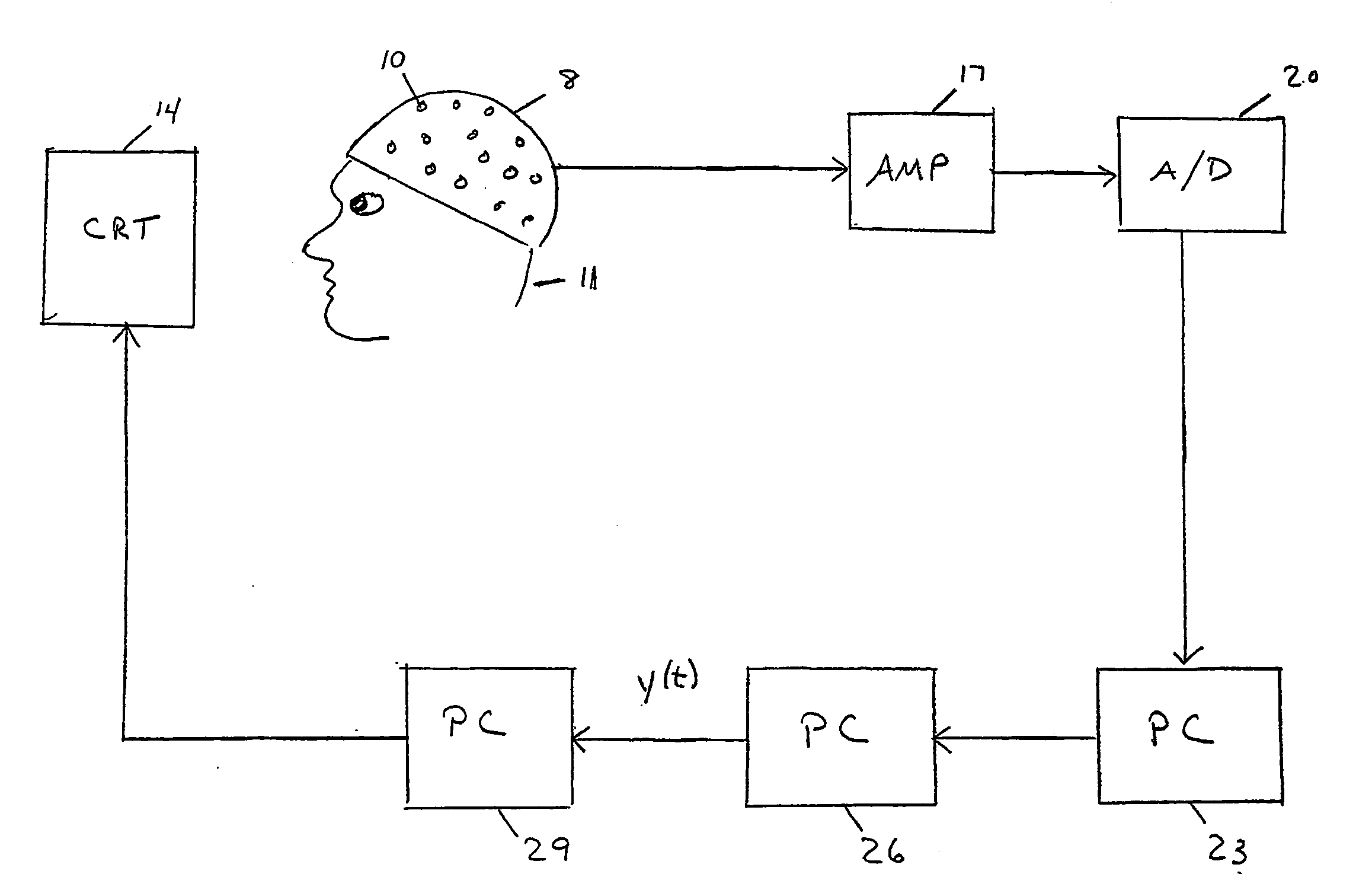
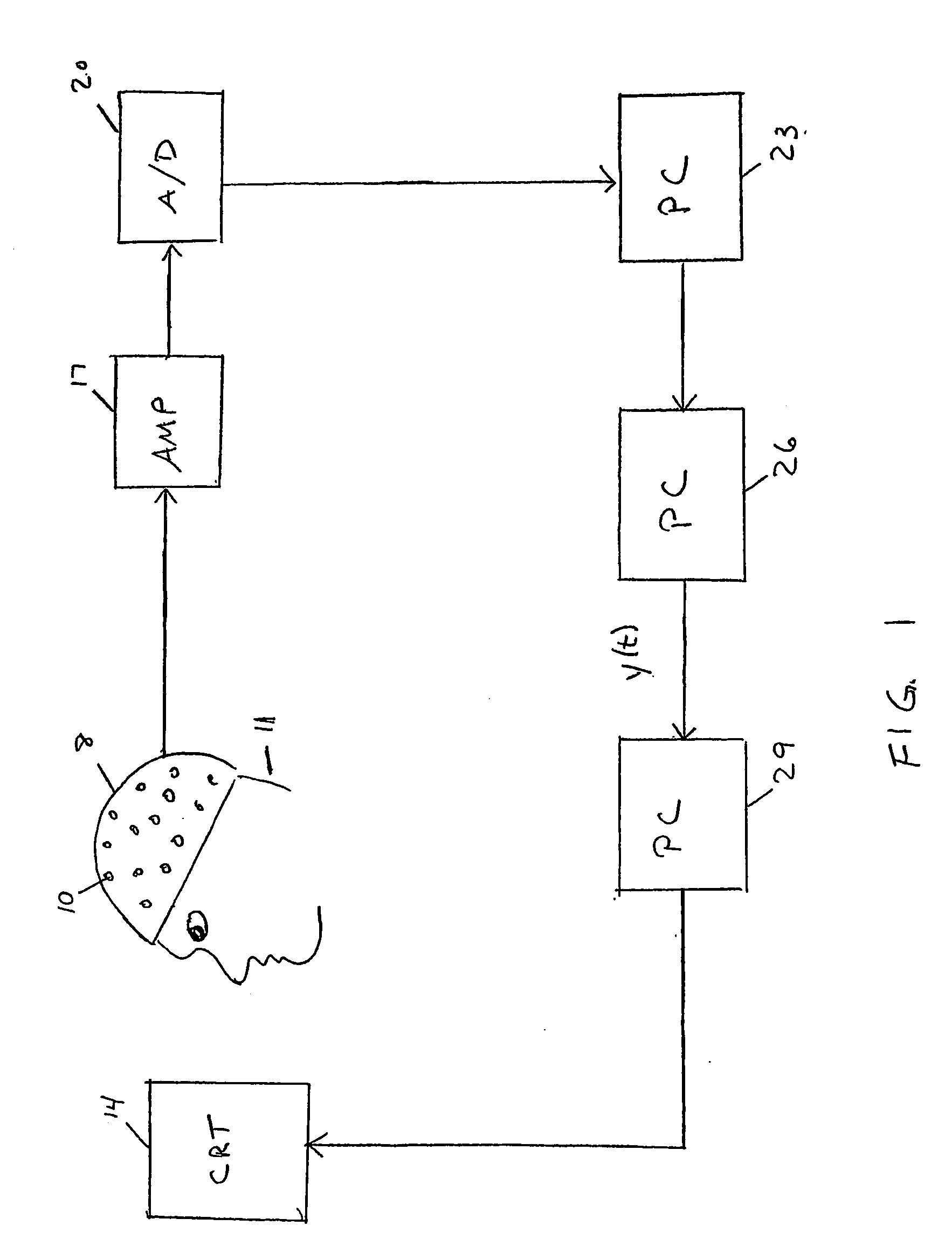
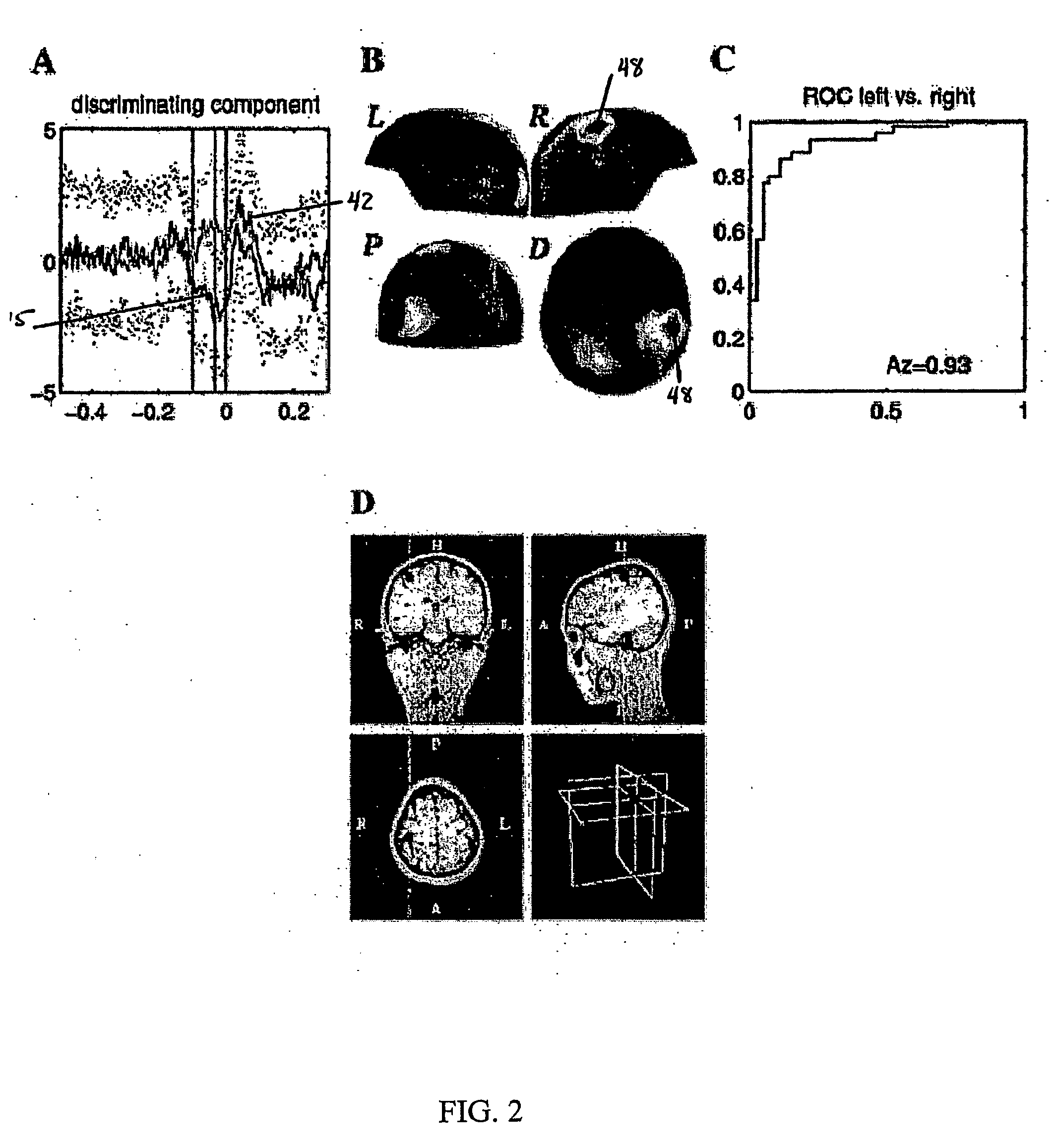
Single trial detection in encephalography
PatentActiveUS20090326404A1
Innovation
- The system employs conventional linear discrimination to compute optimal spatial integration of brain activity sensors, exploiting timing information within a short time window relative to external events, allowing for single-trial discrimination and comparison to functional neuroanatomy for validation.

Systems and methods for high-bandwidth minimally invasive brain-computer interfaces
PatentPendingCA3224620A1
Innovation
- The development of minimally invasive systems and methods for deploying high-spatial-resolution electrode arrays through the subdural space, ventricles, or blood vessels, using a comprehensive interventional electrophysiology suite that includes imaging and electrophysiologic guidance modules, processors, and data telemetry, allowing for precise recording and stimulation of brain areas like the temporal lobe and visual cortex.
Safety Standards for Implantable BCI Devices
The development of safety standards for implantable BCI devices represents a critical intersection between power optimization algorithms and patient safety requirements. As BCIs become increasingly sophisticated in their power management capabilities, regulatory frameworks must evolve to address the unique challenges posed by ultra-low power consumption systems while maintaining stringent safety protocols.
Current safety standards for implantable BCIs primarily focus on biocompatibility, electromagnetic compatibility, and thermal management. The ISO 14708 series, originally developed for cardiac pacemakers, serves as a foundational framework but requires significant adaptation for neural interfaces. The FDA's guidance documents for implantable devices provide additional regulatory pathways, though specific provisions for power-optimized BCI algorithms remain limited. European CE marking requirements under the Medical Device Regulation further complicate the landscape, particularly regarding software validation for adaptive power management systems.
Power optimization algorithms introduce novel safety considerations that traditional implantable device standards inadequately address. Dynamic voltage scaling and adaptive sampling rates can potentially affect signal integrity and therapeutic efficacy. Sleep mode transitions, while essential for power conservation, must be carefully regulated to prevent critical data loss or delayed emergency responses. The temporal aspects of power management create new failure modes that require comprehensive risk assessment methodologies.
Emerging safety protocols specifically target algorithm-driven power management systems. These include mandatory fail-safe mechanisms that ensure device functionality during power optimization failures, standardized testing procedures for battery depletion scenarios, and requirements for real-time power consumption monitoring. Validation protocols now incorporate extended operational testing under various power states to ensure consistent performance across the device's operational envelope.
International harmonization efforts are underway to establish unified safety standards for next-generation BCIs. The International Electrotechnical Commission is developing IEC 80601-2-X standards specifically addressing neural stimulation devices with advanced power management capabilities. These standards emphasize the need for transparent algorithm behavior, predictable power consumption patterns, and robust safety margins during optimization processes.
Future safety standard development must balance innovation enablement with patient protection, ensuring that power optimization advances do not compromise the fundamental safety principles governing implantable medical devices.
Real-Time Processing Requirements for BCI Applications
Real-time processing in Brain-Computer Interface applications demands stringent temporal constraints that directly impact power optimization strategies. BCI systems must process neural signals within milliseconds to maintain user experience and system responsiveness, creating a fundamental tension between computational speed and energy efficiency. The temporal requirements vary significantly across different BCI modalities, with motor imagery systems typically requiring response times under 300 milliseconds, while P300-based systems can tolerate slightly higher latencies up to 500 milliseconds.
The computational pipeline in real-time BCI processing involves multiple stages including signal acquisition, preprocessing, feature extraction, classification, and command generation. Each stage contributes to overall latency and power consumption, necessitating careful optimization of algorithmic complexity. Signal preprocessing operations such as filtering and artifact removal must be implemented using computationally efficient algorithms that minimize floating-point operations and memory access patterns.
Feature extraction algorithms face particular challenges in real-time scenarios, as traditional methods like Common Spatial Patterns or spectral analysis can be computationally intensive. The selection of appropriate time windows and frequency bands becomes critical for balancing classification accuracy with processing speed. Shorter analysis windows reduce latency but may compromise signal quality, while longer windows improve accuracy at the cost of increased delay and computational burden.
Classification algorithms must be optimized for both speed and power efficiency in real-time applications. Linear classifiers such as Linear Discriminant Analysis offer computational advantages over complex machine learning models, requiring fewer operations per classification cycle. However, the trade-off between model complexity and classification performance must be carefully evaluated based on specific application requirements.
Hardware acceleration techniques become essential for meeting real-time constraints while minimizing power consumption. Digital signal processors and specialized neuromorphic chips can provide significant efficiency gains compared to general-purpose processors. The implementation of parallel processing architectures allows for concurrent execution of different pipeline stages, reducing overall latency while potentially optimizing power distribution across processing units.
Adaptive processing strategies can dynamically adjust computational complexity based on signal quality and user state. During periods of low neural activity or high signal-to-noise ratios, algorithms can reduce sampling rates or simplify processing operations to conserve power while maintaining adequate performance levels.
Unlock deeper insights with Patsnap Eureka Quick Research — get a full tech report to explore trends and direct your research. Try now!
Generate Your Research Report Instantly with AI Agent
Supercharge your innovation with Patsnap Eureka AI Agent Platform!