

How to Link Brain Computer Interfaces to Swarm Robotics Platforms
JUN 23, 20269 MIN READ
Generate Your Research Report Instantly with AI Agent
Patsnap Eureka helps you evaluate technical feasibility & market potential.
BCI-Swarm Robotics Integration Background and Objectives
The convergence of Brain-Computer Interfaces (BCI) and swarm robotics represents a paradigm shift in human-machine interaction, emerging from decades of parallel development in neurotechnology and distributed autonomous systems. BCI technology, which originated in the 1970s with early experiments in neural signal detection, has evolved from simple single-electrode recordings to sophisticated multi-channel systems capable of decoding complex motor intentions and cognitive states. Simultaneously, swarm robotics has progressed from theoretical concepts inspired by biological collective behaviors to practical implementations in industrial automation, search and rescue operations, and environmental monitoring.
The integration of these two domains addresses fundamental limitations in current robotic control paradigms. Traditional human-robot interfaces rely on conventional input methods such as joysticks, keyboards, or voice commands, which create bottlenecks in information transfer and limit the intuitive control of multiple robotic agents. The human brain's natural ability to process complex spatial relationships and coordinate multiple tasks simultaneously makes it an ideal control interface for managing swarm behaviors.
Current technological trajectories indicate a growing convergence toward more sophisticated neural decoding algorithms, improved signal processing techniques, and enhanced wireless communication protocols. The development of non-invasive BCI systems with higher spatial and temporal resolution has made real-time control of multiple robotic agents increasingly feasible. Machine learning advances, particularly in deep neural networks and reinforcement learning, have enabled more robust interpretation of neural signals and translation into coordinated swarm commands.
The primary objective of BCI-swarm robotics integration is to establish seamless, intuitive control mechanisms that leverage human cognitive capabilities while maintaining the scalability and robustness inherent in swarm systems. This integration aims to create hybrid intelligence systems where human strategic thinking and pattern recognition complement the distributed processing power and parallel execution capabilities of robotic swarms.
Key technical objectives include developing real-time neural signal processing algorithms capable of extracting high-level intentions from brain activity, establishing reliable communication protocols between BCI systems and swarm networks, and implementing adaptive control architectures that can translate human cognitive commands into coordinated multi-agent behaviors. The ultimate goal is to achieve natural, thought-based control of robotic swarms that can adapt to dynamic environments while maintaining system stability and predictable performance characteristics.
The integration of these two domains addresses fundamental limitations in current robotic control paradigms. Traditional human-robot interfaces rely on conventional input methods such as joysticks, keyboards, or voice commands, which create bottlenecks in information transfer and limit the intuitive control of multiple robotic agents. The human brain's natural ability to process complex spatial relationships and coordinate multiple tasks simultaneously makes it an ideal control interface for managing swarm behaviors.
Current technological trajectories indicate a growing convergence toward more sophisticated neural decoding algorithms, improved signal processing techniques, and enhanced wireless communication protocols. The development of non-invasive BCI systems with higher spatial and temporal resolution has made real-time control of multiple robotic agents increasingly feasible. Machine learning advances, particularly in deep neural networks and reinforcement learning, have enabled more robust interpretation of neural signals and translation into coordinated swarm commands.
The primary objective of BCI-swarm robotics integration is to establish seamless, intuitive control mechanisms that leverage human cognitive capabilities while maintaining the scalability and robustness inherent in swarm systems. This integration aims to create hybrid intelligence systems where human strategic thinking and pattern recognition complement the distributed processing power and parallel execution capabilities of robotic swarms.
Key technical objectives include developing real-time neural signal processing algorithms capable of extracting high-level intentions from brain activity, establishing reliable communication protocols between BCI systems and swarm networks, and implementing adaptive control architectures that can translate human cognitive commands into coordinated multi-agent behaviors. The ultimate goal is to achieve natural, thought-based control of robotic swarms that can adapt to dynamic environments while maintaining system stability and predictable performance characteristics.
Market Demand for BCI-Controlled Swarm Systems
The convergence of brain-computer interfaces and swarm robotics represents an emerging market with significant growth potential across multiple sectors. Healthcare applications demonstrate the strongest immediate demand, particularly in rehabilitation medicine where BCI-controlled robotic swarms could revolutionize physical therapy and assistive care. Medical facilities increasingly seek innovative solutions for patients with mobility impairments, creating substantial market opportunities for systems that enable direct neural control of multiple robotic assistants.
Military and defense sectors exhibit growing interest in BCI-controlled swarm systems for tactical operations and reconnaissance missions. Defense contractors are actively exploring technologies that allow operators to command multiple unmanned vehicles simultaneously through neural interfaces, reducing cognitive load and improving mission effectiveness. The ability to control drone swarms through thought alone presents strategic advantages in complex operational environments.
Industrial automation markets show increasing receptivity to BCI-swarm integration, particularly in manufacturing and logistics. Companies operating large-scale robotic systems recognize the potential for neural interfaces to streamline multi-robot coordination tasks. Warehouse operations, assembly lines, and quality control processes could benefit significantly from operators managing robotic swarms through direct brain control, potentially reducing training time and operational complexity.
Research institutions and academic organizations constitute another key market segment, driving demand for experimental platforms that combine BCI technology with swarm robotics. Universities and research centers require sophisticated systems for advancing neurotechnology research and exploring human-robot interaction paradigms. This academic market provides essential validation and development support for commercial applications.
The entertainment and gaming industries present emerging opportunities for consumer-oriented BCI-swarm applications. Interactive experiences that allow users to control multiple virtual or physical robots through neural signals could create new market categories in immersive entertainment and educational gaming platforms.
Market adoption faces challenges including regulatory approval processes, particularly in medical applications, and the need for standardized safety protocols. Cost considerations remain significant, as current BCI technology requires substantial investment. However, decreasing hardware costs and improving neural signal processing capabilities are gradually expanding market accessibility across different sectors.
Military and defense sectors exhibit growing interest in BCI-controlled swarm systems for tactical operations and reconnaissance missions. Defense contractors are actively exploring technologies that allow operators to command multiple unmanned vehicles simultaneously through neural interfaces, reducing cognitive load and improving mission effectiveness. The ability to control drone swarms through thought alone presents strategic advantages in complex operational environments.
Industrial automation markets show increasing receptivity to BCI-swarm integration, particularly in manufacturing and logistics. Companies operating large-scale robotic systems recognize the potential for neural interfaces to streamline multi-robot coordination tasks. Warehouse operations, assembly lines, and quality control processes could benefit significantly from operators managing robotic swarms through direct brain control, potentially reducing training time and operational complexity.
Research institutions and academic organizations constitute another key market segment, driving demand for experimental platforms that combine BCI technology with swarm robotics. Universities and research centers require sophisticated systems for advancing neurotechnology research and exploring human-robot interaction paradigms. This academic market provides essential validation and development support for commercial applications.
The entertainment and gaming industries present emerging opportunities for consumer-oriented BCI-swarm applications. Interactive experiences that allow users to control multiple virtual or physical robots through neural signals could create new market categories in immersive entertainment and educational gaming platforms.
Market adoption faces challenges including regulatory approval processes, particularly in medical applications, and the need for standardized safety protocols. Cost considerations remain significant, as current BCI technology requires substantial investment. However, decreasing hardware costs and improving neural signal processing capabilities are gradually expanding market accessibility across different sectors.
Current BCI-Robotics Interface Challenges and Limitations
The integration of brain-computer interfaces with swarm robotics platforms faces significant technical barriers that currently limit practical implementation. Signal acquisition and processing represent the most fundamental challenge, as current BCI systems struggle with low signal-to-noise ratios and inconsistent neural signal quality. The invasive nature of high-fidelity BCIs creates safety concerns, while non-invasive alternatives like EEG suffer from poor spatial resolution and susceptibility to artifacts from muscle movements and environmental interference.
Real-time processing constraints pose another critical limitation. Swarm robotics requires millisecond-level response times for effective coordination, yet current BCI systems typically operate with latencies ranging from 100-500 milliseconds. This delay becomes exponentially problematic when controlling multiple robotic units simultaneously, as the cognitive load on users increases dramatically with swarm size. The human brain's limited bandwidth for conscious control creates an inherent bottleneck when attempting to manage complex multi-agent behaviors.
Communication architecture presents substantial technical hurdles in establishing reliable data pathways between neural interfaces and distributed robotic networks. Current wireless communication protocols struggle with the dual requirements of ultra-low latency and high reliability necessary for swarm coordination. The challenge intensifies when considering the need for bidirectional communication, where sensory feedback from multiple robots must be processed and integrated without overwhelming the user's cognitive capacity.
Calibration and adaptation difficulties significantly impact system usability and performance consistency. Individual neural patterns vary substantially between users and even within the same user across different sessions. Current machine learning algorithms require extensive training periods and frequent recalibration, making the systems impractical for dynamic operational environments. The lack of standardized protocols for BCI-swarm integration further complicates development efforts across different research groups and commercial entities.
Safety and reliability concerns remain paramount, particularly regarding fail-safe mechanisms when neural control systems malfunction. The absence of robust error detection and recovery protocols could lead to catastrophic swarm behavior. Additionally, the cognitive fatigue experienced by users during extended BCI operation raises questions about sustained operational capability and the potential for dangerous performance degradation during critical missions.
Real-time processing constraints pose another critical limitation. Swarm robotics requires millisecond-level response times for effective coordination, yet current BCI systems typically operate with latencies ranging from 100-500 milliseconds. This delay becomes exponentially problematic when controlling multiple robotic units simultaneously, as the cognitive load on users increases dramatically with swarm size. The human brain's limited bandwidth for conscious control creates an inherent bottleneck when attempting to manage complex multi-agent behaviors.
Communication architecture presents substantial technical hurdles in establishing reliable data pathways between neural interfaces and distributed robotic networks. Current wireless communication protocols struggle with the dual requirements of ultra-low latency and high reliability necessary for swarm coordination. The challenge intensifies when considering the need for bidirectional communication, where sensory feedback from multiple robots must be processed and integrated without overwhelming the user's cognitive capacity.
Calibration and adaptation difficulties significantly impact system usability and performance consistency. Individual neural patterns vary substantially between users and even within the same user across different sessions. Current machine learning algorithms require extensive training periods and frequent recalibration, making the systems impractical for dynamic operational environments. The lack of standardized protocols for BCI-swarm integration further complicates development efforts across different research groups and commercial entities.
Safety and reliability concerns remain paramount, particularly regarding fail-safe mechanisms when neural control systems malfunction. The absence of robust error detection and recovery protocols could lead to catastrophic swarm behavior. Additionally, the cognitive fatigue experienced by users during extended BCI operation raises questions about sustained operational capability and the potential for dangerous performance degradation during critical missions.
Existing BCI-Swarm Integration Solutions
01 Neural signal acquisition and processing systems
Brain computer interfaces utilize advanced signal acquisition systems to capture and process neural signals from the brain. These systems employ sophisticated algorithms and hardware components to filter, amplify, and digitize brain signals for further analysis. The processing involves noise reduction, feature extraction, and signal conditioning to ensure accurate interpretation of neural activity patterns.- Neural signal acquisition and processing systems: Brain computer interfaces utilize advanced signal acquisition systems to capture and process neural signals from the brain. These systems employ sophisticated algorithms and hardware to filter, amplify, and digitize brain signals for further processing. The technology focuses on extracting meaningful information from complex neural patterns and converting them into usable digital signals that can be interpreted by computer systems.
- Machine learning algorithms for brain signal interpretation: Advanced machine learning and artificial intelligence algorithms are employed to decode and interpret brain signals in real-time. These systems use pattern recognition, deep learning networks, and adaptive algorithms to translate neural activity into meaningful commands or responses. The technology enables the system to learn from user patterns and improve accuracy over time through continuous training and adaptation.
- Electrode and sensor technologies for neural monitoring: Specialized electrode arrays and sensor technologies are designed to establish reliable connections with neural tissue for monitoring brain activity. These components include both invasive and non-invasive sensing methods that can detect various types of neural signals with high precision and minimal interference. The technology focuses on biocompatible materials and optimal positioning for long-term stability and signal quality.
- Real-time control and feedback systems: Brain computer interfaces incorporate real-time control mechanisms that enable immediate response to neural commands and provide feedback to users. These systems process brain signals with minimal latency to control external devices, prosthetics, or computer applications. The technology includes closed-loop feedback mechanisms that allow users to receive sensory or visual confirmation of their intended actions.
- Wireless communication and data transmission protocols: Modern brain computer interfaces employ wireless communication technologies to transmit neural data and control signals without physical connections. These systems utilize various wireless protocols and data compression techniques to ensure reliable, secure, and efficient transmission of brain signals to external processing units or controlled devices. The technology addresses power management, signal integrity, and data security in wireless neural communication.
02 Machine learning algorithms for brain signal interpretation
Advanced machine learning and artificial intelligence algorithms are implemented to decode and interpret complex brain signals. These algorithms can learn patterns from neural data, classify different types of brain activity, and translate mental intentions into actionable commands. The systems continuously adapt and improve their accuracy through training on large datasets of neural patterns.Expand Specific Solutions03 Electrode design and neural interface hardware
Specialized electrode arrays and neural interface hardware are designed to establish reliable connections with brain tissue. These components focus on biocompatibility, signal quality, and long-term stability. The hardware includes various types of electrodes, amplifiers, and wireless transmission systems that can be implanted or used externally to monitor brain activity.Expand Specific Solutions04 Real-time control and feedback systems
Brain computer interfaces incorporate real-time processing capabilities that enable immediate translation of neural signals into control commands for external devices. These systems provide instantaneous feedback to users and can control prosthetic limbs, computer cursors, or other assistive technologies. The feedback mechanisms help users learn to modulate their brain signals more effectively.Expand Specific Solutions05 Wireless communication and data transmission
Modern brain computer interfaces employ wireless communication technologies to transmit neural data without the need for physical connections. These systems include wireless power transfer, data telemetry, and remote monitoring capabilities. The wireless approach reduces infection risks and improves user mobility while maintaining high-quality signal transmission and system reliability.Expand Specific Solutions
Key Players in BCI and Swarm Robotics Industries
The brain-computer interface (BCI) to swarm robotics integration field represents an emerging technological convergence in its nascent development stage. The market remains relatively small but shows significant growth potential as applications span from medical rehabilitation to autonomous systems coordination. Technology maturity varies considerably across the competitive landscape. Leading Chinese universities including Beijing Institute of Technology, Zhejiang University, and Institute of Automation Chinese Academy of Sciences drive fundamental research, while specialized companies like Shenzhen Ruihan Medical Technology and Zhejiang Zheda Xitou Brain Computer Intelligent Technology focus on medical BCI applications. Established technology giants IBM and Intel provide foundational computing infrastructure, though direct BCI-swarm integration solutions remain largely experimental. The field currently lacks dominant commercial players, indicating early-stage market development with substantial opportunities for breakthrough innovations.
International Business Machines Corp.
Technical Solution: IBM has developed advanced neural interface technologies that enable direct brain-to-computer communication through their neuromorphic computing platforms. Their approach utilizes TrueNorth chip architecture to process neural signals in real-time, allowing for seamless integration with robotic swarm systems. The technology employs machine learning algorithms to decode motor cortex signals and translate them into coordinated swarm commands. IBM's solution features low-latency signal processing capabilities, enabling users to control multiple robotic units simultaneously through thought patterns. Their platform supports distributed computing across swarm networks, allowing individual robots to process neural commands locally while maintaining collective behavior coordination.
Strengths: Robust enterprise-grade infrastructure, advanced AI processing capabilities, scalable cloud integration. Weaknesses: High implementation costs, complex system requirements, limited real-time responsiveness in large swarms.
Institute of Automation Chinese Academy of Sciences
Technical Solution: The Institute has developed comprehensive brain-computer interface frameworks specifically designed for swarm robotics applications, focusing on multi-channel neural signal acquisition and processing. Their technology employs advanced signal processing algorithms including independent component analysis and common spatial patterns to extract meaningful control signals from noisy neural data. The system features real-time neural decoding capabilities that can translate various brain states into coordinated swarm behaviors, supporting both discrete commands and continuous control modes. Their approach integrates cognitive load assessment to prevent user fatigue during extended swarm control sessions. The platform includes sophisticated feedback mechanisms that provide users with visual and haptic information about swarm status, creating closed-loop control systems that enhance overall performance and user experience.
Strengths: Comprehensive research capabilities, strong government support, extensive neural signal processing expertise. Weaknesses: Limited international market access, slower technology transfer processes, restricted commercial applications.
Core Patents in Neural Control of Multi-Robot Systems
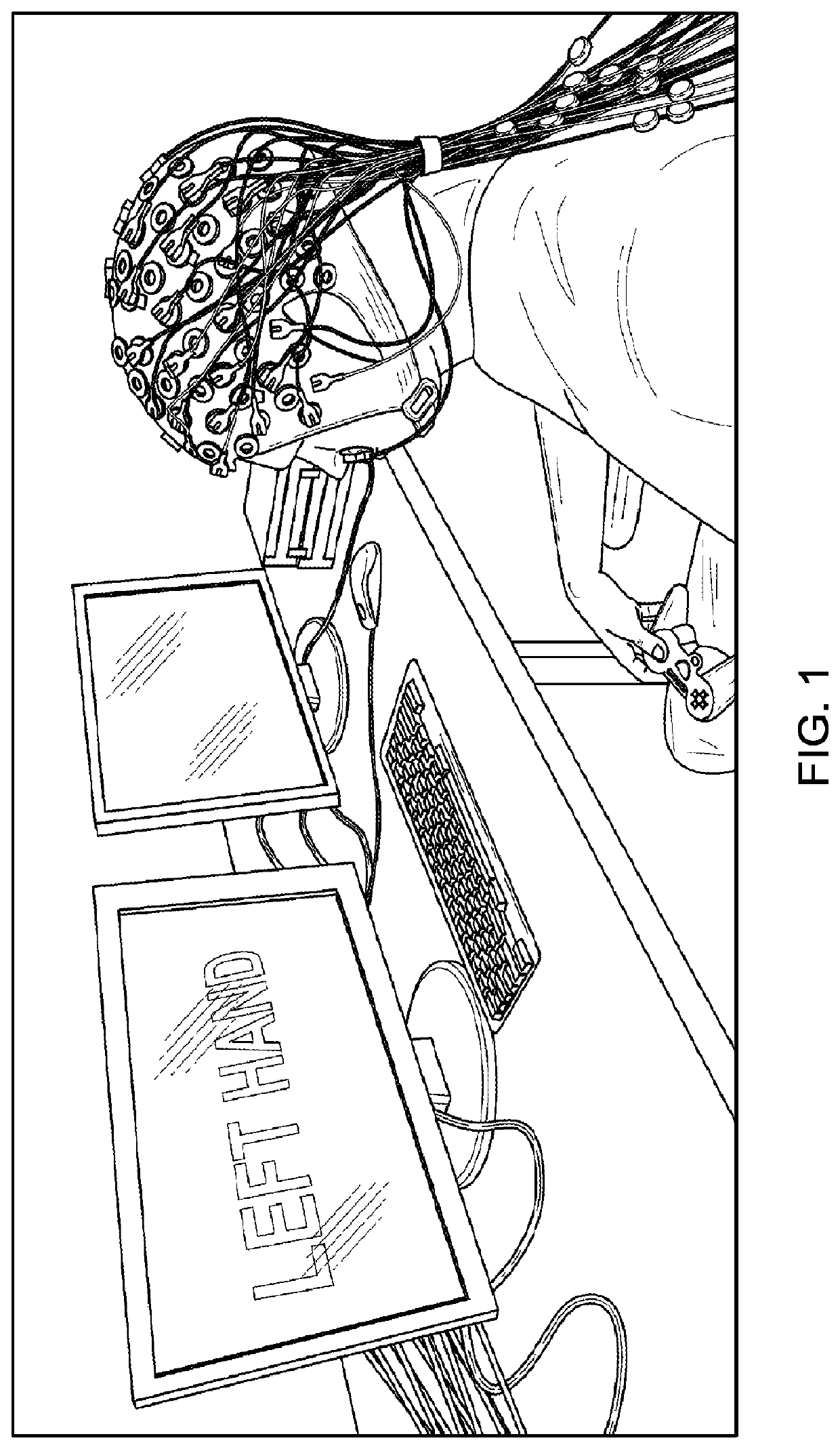
Systems and methods for a hybrid brain interface for robotic swarms using EEG signals and an input device
PatentActiveUS20200057498A1
Innovation
- A hybrid BCI system that combines EEG signals with joystick input, utilizing ERD/ERS phenomena and integrating Principal Component Analysis (PCA) with Hidden Markov Models (HMMs, to enhance control capabilities and reduce training requirements, allowing for more dexterous control of robotic systems, including swarms of quadrotors.


Brain-computer interface system and method for air-ground cooperative multi-unmanned system
PatentActiveCN119620858A
Innovation
- A brain-computer interface system for air-ground collaborative multi-unmanned systems was designed. Through augmented reality technology and SSVEP brain-computer interface, the reliability analysis of brain electrodecoding results is used using Softmax functions, and the robot performance is optimized and corrected with auxiliary controllers.


Ethical Framework for Neural-Controlled Autonomous Systems
The integration of brain-computer interfaces with swarm robotics platforms necessitates a comprehensive ethical framework that addresses the unique challenges posed by neural-controlled autonomous systems. This framework must establish fundamental principles governing the responsible development and deployment of technologies that directly interface human cognition with distributed robotic networks.
Privacy and neural data protection constitute the cornerstone of ethical considerations in neural-controlled swarm systems. The framework must define strict protocols for collecting, processing, and storing neural signals, ensuring that brain data remains secure and cannot be exploited for unauthorized purposes. Encryption standards, data anonymization techniques, and user consent mechanisms must be rigorously implemented to protect the intimate nature of neural information.
Autonomy and human agency represent critical ethical dimensions requiring careful balance between human control and system automation. The framework should establish clear boundaries regarding decision-making authority, ensuring that humans retain meaningful control over swarm operations while preventing over-reliance on automated systems. This includes defining scenarios where human intervention is mandatory and establishing fail-safe mechanisms for emergency situations.
Accountability and responsibility allocation present complex challenges when neural inputs control autonomous swarm behaviors. The ethical framework must clearly delineate responsibility chains, addressing questions of liability when swarm actions result in unintended consequences. This includes establishing protocols for determining whether responsibility lies with the human operator, system designers, or autonomous algorithms.
Safety and risk mitigation protocols must address both individual and collective risks associated with neural-controlled swarm operations. The framework should mandate comprehensive risk assessment procedures, establish safety thresholds for neural signal interpretation, and define protocols for handling system malfunctions or neural signal anomalies that could compromise swarm behavior.
Transparency and explainability requirements ensure that neural-controlled swarm systems operate with sufficient clarity for ethical oversight. The framework must mandate that decision-making processes remain interpretable, allowing for post-hoc analysis of actions and enabling meaningful human oversight of system operations.
Human enhancement and cognitive equity considerations address potential disparities in neural-control capabilities and access to enhancement technologies. The framework should establish guidelines preventing discrimination based on neural interface proficiency and ensuring equitable access to neural-controlled swarm technologies across diverse populations.
Privacy and neural data protection constitute the cornerstone of ethical considerations in neural-controlled swarm systems. The framework must define strict protocols for collecting, processing, and storing neural signals, ensuring that brain data remains secure and cannot be exploited for unauthorized purposes. Encryption standards, data anonymization techniques, and user consent mechanisms must be rigorously implemented to protect the intimate nature of neural information.
Autonomy and human agency represent critical ethical dimensions requiring careful balance between human control and system automation. The framework should establish clear boundaries regarding decision-making authority, ensuring that humans retain meaningful control over swarm operations while preventing over-reliance on automated systems. This includes defining scenarios where human intervention is mandatory and establishing fail-safe mechanisms for emergency situations.
Accountability and responsibility allocation present complex challenges when neural inputs control autonomous swarm behaviors. The ethical framework must clearly delineate responsibility chains, addressing questions of liability when swarm actions result in unintended consequences. This includes establishing protocols for determining whether responsibility lies with the human operator, system designers, or autonomous algorithms.
Safety and risk mitigation protocols must address both individual and collective risks associated with neural-controlled swarm operations. The framework should mandate comprehensive risk assessment procedures, establish safety thresholds for neural signal interpretation, and define protocols for handling system malfunctions or neural signal anomalies that could compromise swarm behavior.
Transparency and explainability requirements ensure that neural-controlled swarm systems operate with sufficient clarity for ethical oversight. The framework must mandate that decision-making processes remain interpretable, allowing for post-hoc analysis of actions and enabling meaningful human oversight of system operations.
Human enhancement and cognitive equity considerations address potential disparities in neural-control capabilities and access to enhancement technologies. The framework should establish guidelines preventing discrimination based on neural interface proficiency and ensuring equitable access to neural-controlled swarm technologies across diverse populations.
Safety Standards for BCI-Enabled Robotic Swarms
The integration of brain-computer interfaces with swarm robotics platforms introduces unprecedented safety challenges that require comprehensive standardization frameworks. Current safety protocols for individual robotic systems prove inadequate when addressing the complexities of neural-controlled multi-agent systems operating in dynamic environments.
Existing safety standards primarily focus on ISO 10218 for industrial robots and ISO 13482 for personal care robots, but these frameworks lack provisions for neural interface integration and swarm coordination protocols. The absence of specific guidelines for BCI-enabled robotic swarms creates significant regulatory gaps that must be addressed through dedicated safety standards development.
Critical safety parameters for BCI-swarm systems include neural signal integrity thresholds, command validation protocols, and fail-safe mechanisms for neural disconnection scenarios. These systems require real-time monitoring of both individual robot safety states and collective swarm behavior patterns to prevent cascading failures that could result from compromised neural commands or communication breakdowns.
Emergency response protocols must encompass multiple failure modes, including partial neural signal loss, individual robot malfunction within the swarm, and complete BCI system failure. Safety standards should mandate redundant control pathways, allowing for seamless transition between neural control and autonomous operation modes when safety thresholds are exceeded.
Human operator protection represents another crucial aspect, requiring standards for neural interface biocompatibility, signal processing latency limits, and cognitive load management. Safety protocols must establish maximum operational duration guidelines and mandatory rest periods to prevent neural fatigue that could compromise decision-making capabilities.
Environmental safety considerations include collision avoidance algorithms specifically designed for swarm operations, dynamic obstacle detection systems, and coordinated emergency shutdown procedures. These standards must address both indoor and outdoor operational environments, accounting for varying complexity levels and potential human interaction scenarios.
Certification processes for BCI-enabled robotic swarms should incorporate multi-level testing protocols, including individual component validation, integrated system verification, and real-world scenario simulation. Regular safety audits and performance monitoring systems must be mandated to ensure continued compliance with established safety parameters throughout the system's operational lifecycle.
Existing safety standards primarily focus on ISO 10218 for industrial robots and ISO 13482 for personal care robots, but these frameworks lack provisions for neural interface integration and swarm coordination protocols. The absence of specific guidelines for BCI-enabled robotic swarms creates significant regulatory gaps that must be addressed through dedicated safety standards development.
Critical safety parameters for BCI-swarm systems include neural signal integrity thresholds, command validation protocols, and fail-safe mechanisms for neural disconnection scenarios. These systems require real-time monitoring of both individual robot safety states and collective swarm behavior patterns to prevent cascading failures that could result from compromised neural commands or communication breakdowns.
Emergency response protocols must encompass multiple failure modes, including partial neural signal loss, individual robot malfunction within the swarm, and complete BCI system failure. Safety standards should mandate redundant control pathways, allowing for seamless transition between neural control and autonomous operation modes when safety thresholds are exceeded.
Human operator protection represents another crucial aspect, requiring standards for neural interface biocompatibility, signal processing latency limits, and cognitive load management. Safety protocols must establish maximum operational duration guidelines and mandatory rest periods to prevent neural fatigue that could compromise decision-making capabilities.
Environmental safety considerations include collision avoidance algorithms specifically designed for swarm operations, dynamic obstacle detection systems, and coordinated emergency shutdown procedures. These standards must address both indoor and outdoor operational environments, accounting for varying complexity levels and potential human interaction scenarios.
Certification processes for BCI-enabled robotic swarms should incorporate multi-level testing protocols, including individual component validation, integrated system verification, and real-world scenario simulation. Regular safety audits and performance monitoring systems must be mandated to ensure continued compliance with established safety parameters throughout the system's operational lifecycle.
Unlock deeper insights with Patsnap Eureka Quick Research — get a full tech report to explore trends and direct your research. Try now!
Generate Your Research Report Instantly with AI Agent
Supercharge your innovation with Patsnap Eureka AI Agent Platform!