

How to Adapt BCIs for High-Vibration Operating Environments
JUN 23, 20269 MIN READ
Generate Your Research Report Instantly with AI Agent
Patsnap Eureka helps you evaluate technical feasibility & market potential.
BCI Vibration Adaptation Background and Objectives
Brain-Computer Interfaces (BCIs) have emerged as transformative technologies enabling direct communication between the human brain and external devices through the acquisition and interpretation of neural signals. Since the first experimental demonstrations in the 1970s, BCIs have evolved from laboratory curiosities to practical applications in medical rehabilitation, assistive technologies, and human-machine interaction systems. The technology has progressed through several generations, from invasive electrode arrays to non-invasive EEG-based systems, each offering different trade-offs between signal quality and user safety.
The integration of BCIs into high-vibration operating environments represents a critical frontier for expanding their practical applications. Traditional BCI systems were primarily designed for controlled laboratory or clinical settings where environmental disturbances are minimal. However, emerging applications in aerospace, automotive, industrial automation, and military operations demand robust performance under challenging conditions characterized by mechanical vibrations, electromagnetic interference, and dynamic operational parameters.
High-vibration environments pose fundamental challenges to BCI functionality across multiple dimensions. Mechanical vibrations can introduce significant artifacts into neural signal acquisition, particularly affecting the stability of electrode-tissue interfaces and the integrity of recorded bioelectrical signals. These disturbances can manifest as motion artifacts, baseline drift, and frequency-domain interference that overlap with the spectral characteristics of neural signals of interest.
The primary objective of adapting BCIs for high-vibration environments is to maintain reliable neural signal acquisition and processing performance while preserving the natural user experience and system responsiveness. This requires developing comprehensive solutions that address hardware stability, signal processing robustness, and adaptive algorithms capable of distinguishing between genuine neural activity and vibration-induced artifacts.
Key technical objectives include achieving signal-to-noise ratios comparable to laboratory conditions, maintaining classification accuracy above 85% for intended neural commands, and ensuring system latency remains below 300 milliseconds despite additional processing overhead for vibration compensation. Additionally, the adapted systems must demonstrate long-term stability and user safety across the expected range of operational vibration frequencies and amplitudes.
The successful development of vibration-resistant BCIs will unlock new application domains including pilot assistance systems in aircraft, operator interfaces for heavy machinery, and hands-free control systems for emergency responders operating in challenging environments.
Market Demand for Vibration-Resistant BCI Systems
The market demand for vibration-resistant Brain-Computer Interface systems is experiencing significant growth across multiple industrial sectors where traditional BCI technologies face operational limitations. Industries operating in high-vibration environments, including aerospace, defense, heavy machinery, transportation, and offshore energy, represent substantial market opportunities for ruggedized BCI solutions.
Aerospace applications constitute a primary demand driver, where pilots and crew members require hands-free control systems in aircraft experiencing constant engine vibrations, turbulence, and G-force variations. Military and defense sectors show increasing interest in vibration-resistant BCIs for armored vehicles, naval vessels, and field operations where soldiers need reliable neural interfaces despite harsh environmental conditions. The growing adoption of autonomous systems in these sectors further amplifies the need for robust human-machine interfaces.
Industrial manufacturing presents another significant market segment, particularly in heavy machinery operations, mining equipment, and construction vehicles where operators work in continuously vibrating environments. The push toward Industry 4.0 and smart manufacturing creates demand for advanced human-machine interfaces that can function reliably despite mechanical vibrations from production equipment.
Transportation sectors, including commercial trucking, railway systems, and maritime operations, represent emerging markets for vibration-resistant BCIs. As autonomous and semi-autonomous vehicles become more prevalent, the need for reliable backup control systems and enhanced human-vehicle interaction in vibrating environments increases substantially.
The medical device market also shows growing interest, particularly for assistive technologies used by patients in mobile environments or during transportation. Rehabilitation robotics and prosthetic control systems require BCI solutions that maintain functionality despite movement-induced vibrations.
Market growth is driven by increasing recognition of BCI technology's potential combined with the limitations of current systems in real-world applications. The convergence of advancing neural signal processing capabilities, improved sensor technologies, and growing demand for hands-free control systems creates a compelling market opportunity for vibration-resistant BCI solutions across diverse industrial applications.
Current BCI Limitations in High-Vibration Environments
Brain-Computer Interfaces face significant operational constraints when deployed in high-vibration environments, primarily due to their reliance on precise signal acquisition and processing mechanisms. Traditional EEG-based BCIs demonstrate particular vulnerability to mechanical disturbances, as vibrations introduce substantial motion artifacts that contaminate neural signal recordings. These artifacts often exceed the amplitude of actual brain signals by several orders of magnitude, making reliable signal extraction extremely challenging.
Current signal processing algorithms employed in commercial BCI systems are predominantly designed for controlled laboratory or clinical settings with minimal environmental interference. The standard filtering techniques, including bandpass filters and common average referencing, prove inadequate when confronted with broadband vibration-induced noise. Adaptive filtering methods, while showing promise in stationary noise conditions, struggle with the dynamic and unpredictable nature of vibration patterns encountered in industrial or mobile applications.
Hardware limitations present another critical bottleneck in high-vibration environments. Conventional wet electrodes, which rely on conductive gel for signal acquisition, suffer from impedance fluctuations and connection instability under mechanical stress. The electrode-skin interface becomes compromised as vibrations cause micro-movements, leading to signal degradation and increased noise levels. Additionally, the physical mounting systems for BCI headsets lack the mechanical robustness required for sustained operation in vibrating platforms.
Processing latency emerges as a compounding factor when implementing vibration compensation techniques. Real-time BCI applications demand response times typically under 300 milliseconds, yet current motion artifact removal algorithms introduce significant computational overhead. This creates a fundamental trade-off between signal quality improvement and system responsiveness, particularly problematic for time-critical applications such as assistive robotics or emergency response systems.
Power consumption constraints become amplified in high-vibration scenarios due to the increased computational demands of advanced signal processing. Mobile BCI platforms operating in vehicles, aircraft, or industrial machinery face limited battery capacity while requiring more intensive processing to maintain signal integrity. Current low-power BCI architectures cannot adequately support the computational requirements for effective vibration artifact mitigation.
The lack of standardized testing protocols for high-vibration BCI performance represents a significant gap in current technology assessment. Existing evaluation frameworks focus primarily on stationary conditions, providing insufficient guidance for system optimization in dynamic environments. This limitation hinders the development of robust solutions and creates uncertainty regarding performance expectations in real-world deployment scenarios.
Existing Vibration Compensation Solutions for BCIs
01 Signal processing and feature extraction methods for BCIs
Brain-computer interfaces require sophisticated signal processing techniques to extract meaningful features from neural signals. These methods involve filtering, amplification, and digital signal processing algorithms to identify patterns in brainwave activity that can be translated into control commands. Advanced feature extraction techniques help improve the accuracy and reliability of BCI systems by isolating relevant neural signatures while reducing noise and artifacts.- Signal processing and feature extraction methods for BCIs: Brain-computer interfaces require sophisticated signal processing techniques to extract meaningful features from neural signals. These methods involve filtering, amplification, and digital signal processing algorithms to identify patterns in brainwave activity that can be translated into control commands. Advanced feature extraction techniques help improve the accuracy and reliability of BCI systems by isolating relevant neural signatures while reducing noise and artifacts.
- Adaptive learning algorithms for BCI calibration: Adaptive algorithms enable BCI systems to learn and adjust to individual users' neural patterns over time. These machine learning approaches continuously update system parameters based on user feedback and performance metrics, allowing for personalized calibration that improves with use. The adaptation process helps accommodate natural variations in brain signals and enhances the overall user experience by reducing training time and increasing control accuracy.
- Real-time feedback and control mechanisms: Real-time processing capabilities are essential for effective BCI operation, providing immediate feedback to users about their neural control attempts. These systems implement closed-loop control mechanisms that process brain signals with minimal latency and provide visual, auditory, or tactile feedback to help users modulate their brain activity. The feedback systems enable users to learn how to generate consistent and reliable control signals for various applications.
- Multi-modal sensor integration and electrode optimization: Modern BCI systems integrate multiple types of sensors and optimized electrode configurations to capture comprehensive neural information. These approaches combine different recording modalities and employ advanced electrode designs that improve signal quality while maintaining user comfort. The integration of various sensor types allows for more robust signal acquisition and better adaptation to different users and applications.
- User interface adaptation and personalization: BCI systems incorporate adaptive user interfaces that customize the interaction experience based on individual user capabilities and preferences. These interfaces dynamically adjust control parameters, sensitivity settings, and display elements to optimize performance for each user. The personalization features account for differences in neural signal strength, cognitive abilities, and specific application requirements to maximize usability and effectiveness.
02 Adaptive learning algorithms for BCI calibration
Adaptive algorithms enable BCI systems to learn and adjust to individual users' neural patterns over time. These machine learning approaches continuously update system parameters based on user feedback and performance metrics, allowing for personalized calibration that improves with use. The adaptation process helps accommodate natural variations in brain signals and enhances the overall user experience by reducing training time and increasing control accuracy.Expand Specific Solutions03 Real-time feedback and control mechanisms
Real-time processing capabilities are essential for effective BCI adaptation, enabling immediate response to neural input and providing users with instantaneous feedback. These systems incorporate closed-loop control mechanisms that monitor user intent and system performance continuously, making rapid adjustments to maintain optimal operation. The feedback systems help users learn to modulate their brain signals more effectively while the BCI simultaneously adapts to their neural patterns.Expand Specific Solutions04 Multi-modal sensor integration and electrode optimization
Advanced BCI systems integrate multiple types of sensors and optimize electrode configurations to capture comprehensive neural information. This approach combines different signal acquisition methods and electrode arrangements to maximize signal quality and coverage of relevant brain regions. The integration of various sensing modalities provides redundancy and improves the robustness of the BCI system while electrode optimization ensures optimal signal-to-noise ratios.Expand Specific Solutions05 User interface adaptation and personalization frameworks
BCI systems incorporate adaptive user interfaces that customize the interaction experience based on individual user capabilities and preferences. These frameworks adjust interface parameters, control sensitivity, and interaction modes to match each user's specific neural characteristics and skill level. The personalization process involves continuous monitoring of user performance and automatic adjustment of system parameters to optimize usability and reduce cognitive load.Expand Specific Solutions
Key Players in Industrial BCI and Vibration Control
The brain-computer interface (BCI) adaptation for high-vibration environments represents an emerging technological frontier currently in early development stages. The market remains nascent with limited commercial deployment, primarily driven by research institutions and specialized companies. Leading academic players including Tianjin University, Xi'an Jiaotong University, Zhejiang University, and California Institute of Technology are advancing fundamental research in robust neural signal processing and noise mitigation algorithms. Technology maturity varies significantly across stakeholders, with Precision Neuroscience Corp. developing minimally invasive interfaces, while established corporations like Samsung Electronics, Huawei Technologies, and IBM contribute complementary technologies in signal processing and hardware resilience. The competitive landscape shows strong collaboration between universities and industry partners, with companies like Koninklijke Philips and SmartStent focusing on medical applications, indicating the technology's potential for specialized industrial and healthcare markets despite current technical challenges.
Koninklijke Philips NV
Technical Solution: Philips has developed robust medical monitoring systems that incorporate vibration-resistant sensor technologies and advanced signal processing capabilities. Their HealthSuite platform includes motion artifact reduction algorithms originally designed for patient monitoring in ambulatory settings. The company's expertise in medical device engineering has led to the development of secure electrode-tissue interfaces and noise-resistant amplification systems that can maintain signal quality in challenging environments. Their solutions integrate machine learning algorithms for real-time signal classification and artifact removal.
Strengths: Extensive medical device experience, proven noise reduction technologies, regulatory compliance expertise. Weaknesses: Not specialized in neural interfaces, may lack deep BCI-specific knowledge compared to dedicated neurotechnology companies.
Precision Neuroscience Corp.
Technical Solution: Precision Neuroscience has developed ultra-thin, flexible electrode arrays that can conform to brain surface topology, reducing mechanical stress from vibrations. Their Layer 7 Cortical Interface utilizes biocompatible materials with enhanced flexibility to maintain signal integrity during movement. The system incorporates advanced signal processing algorithms that can differentiate between neural signals and motion artifacts in real-time. Their approach includes adaptive filtering techniques specifically designed to handle high-frequency vibrations while preserving critical neural information for BCI applications.
Strengths: Specialized BCI focus with flexible electrode design, advanced artifact rejection algorithms. Weaknesses: Limited to surface-level recordings, relatively new technology with limited long-term validation data.
Core Innovations in Anti-Vibration BCI Design
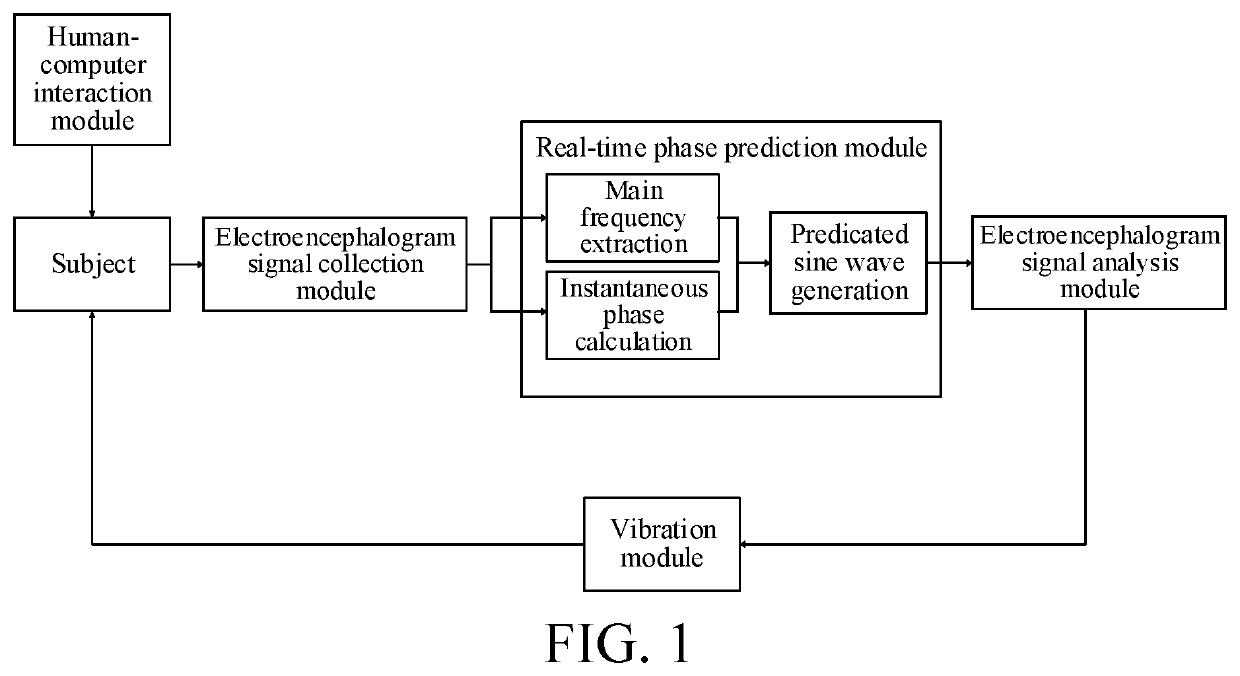
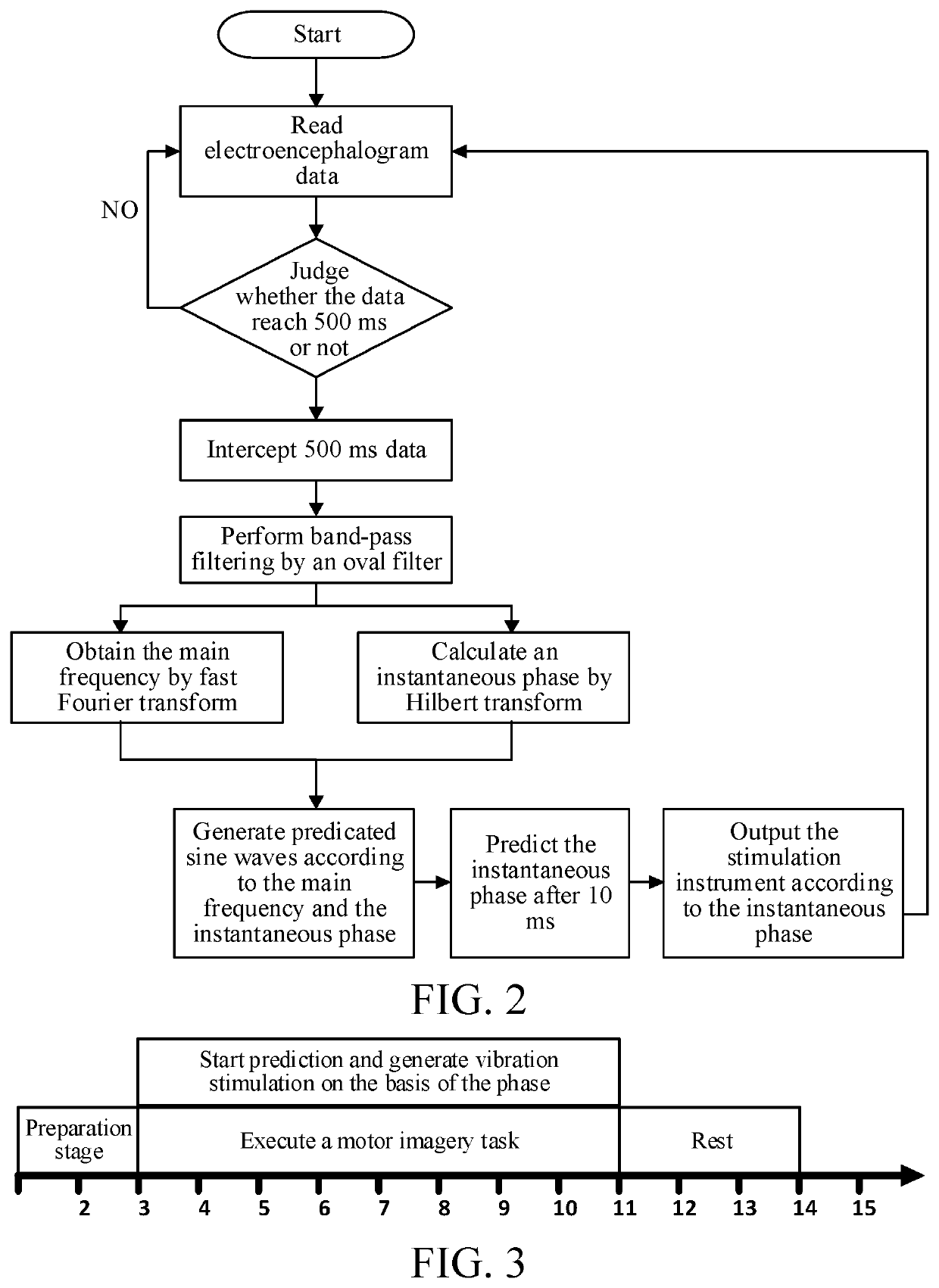
Brain-computer interface method and system based on real-time closed loop vibration stimulation enhancement
PatentActiveUS20200401226A1
Innovation
- A brain-computer interface method and system using real-time closed loop vibration stimulation enhancement, which involves displaying a motor imagery task, collecting EEG signals, performing band-pass filtering, calculating time-frequency characteristics, extracting the main frequency and instantaneous phase, and using this information to control a vibration motor for sensory stimulation, thereby improving signal quality and decoding rates.
High resolution brain-electronics interface
PatentInactiveUS20190366073A1
Innovation
- A high-resolution brain-electronic interface is developed by forming a semiconductor circuit on a silicon substrate, thinning it using a tensile stress layer, and transferring it to a biocompatible silk film, allowing for dense placement of components less than 10 micrometers apart to achieve precise neuronal detection and stimulation.


Safety Standards for Industrial BCI Applications
The deployment of Brain-Computer Interfaces in industrial environments necessitates comprehensive safety standards that address the unique challenges posed by high-vibration operating conditions. Current safety frameworks for BCI applications primarily focus on medical and consumer contexts, leaving significant gaps in industrial safety protocols where mechanical vibrations, electromagnetic interference, and harsh environmental conditions create unprecedented risks.
Existing safety standards such as IEC 62304 for medical device software and ISO 14971 for medical device risk management provide foundational frameworks but require substantial adaptation for industrial BCI applications. The integration of vibration-resistant design principles from aerospace and automotive industries becomes essential, particularly incorporating standards like MIL-STD-810 for environmental engineering considerations and ISO 16750 for road vehicle environmental conditions.
Critical safety parameters for industrial BCI systems include signal integrity thresholds under vibrational stress, fail-safe mechanisms for communication disruption, and user protection protocols during system malfunctions. The standards must define acceptable signal-to-noise ratios when subjected to frequencies ranging from 10Hz to 2000Hz, typical in industrial machinery operations. Additionally, latency requirements become more stringent, with maximum allowable delays of 50-100 milliseconds to prevent dangerous operational decisions.
Electromagnetic compatibility standards such as IEC 61000 series must be enhanced to address BCI-specific vulnerabilities, including neural signal corruption and unintended device activation. The standards should mandate shielding effectiveness requirements exceeding 60dB across frequency ranges from 150kHz to 1GHz, ensuring reliable operation in electrically noisy industrial environments.
Human factors engineering standards require redefinition to account for cognitive load variations under physical stress conditions. The standards must establish protocols for user training, competency assessment, and periodic recertification specific to high-vibration environments. This includes defining maximum operational duration limits, mandatory rest periods, and physiological monitoring requirements to prevent operator fatigue-induced safety incidents.
Certification processes must incorporate accelerated aging tests simulating years of vibrational exposure, thermal cycling between -40°C to +85°C, and humidity resistance testing. The standards should mandate redundant safety systems, including backup communication channels and emergency override mechanisms that function independently of the primary BCI system.
Signal Quality Assessment in Harsh Operating Conditions
Signal quality assessment in harsh operating conditions represents a critical challenge for brain-computer interface systems deployed in high-vibration environments. Traditional signal quality metrics, primarily developed for controlled laboratory settings, often fail to accurately characterize neural signal integrity when subjected to mechanical disturbances, electromagnetic interference, and environmental stressors commonly encountered in industrial, military, or mobile applications.
The fundamental approach to signal quality assessment in these environments requires multi-dimensional evaluation frameworks that extend beyond conventional signal-to-noise ratio measurements. Real-time assessment algorithms must incorporate vibration-specific artifacts identification, distinguishing between genuine neural activity and motion-induced interference patterns. Advanced spectral analysis techniques, including adaptive filtering and wavelet decomposition, enable separation of physiological signals from mechanical noise signatures across different frequency domains.
Electrode impedance monitoring becomes particularly crucial in high-vibration scenarios, as mechanical stress can cause intermittent contact disruptions and impedance fluctuations that directly impact signal fidelity. Dynamic impedance tracking systems must operate continuously, providing immediate feedback on electrode performance degradation and enabling predictive maintenance protocols before complete signal loss occurs.
Machine learning-based quality assessment frameworks have emerged as promising solutions for harsh environment applications. These systems learn to recognize vibration-induced artifacts through pattern recognition algorithms trained on datasets containing both clean and contaminated neural signals. Supervised learning models can classify signal segments in real-time, automatically flagging periods of compromised data quality and triggering adaptive signal processing responses.
Temporal consistency analysis provides another essential dimension for quality assessment, examining signal stability across extended operational periods. High-vibration environments often introduce non-stationary noise characteristics that evolve with changing operational conditions, requiring adaptive assessment criteria that adjust quality thresholds based on environmental context and historical performance baselines.
The integration of auxiliary sensor data, including accelerometers and gyroscopes, enhances signal quality assessment accuracy by providing contextual information about mechanical disturbances. Correlation analysis between auxiliary sensor readings and neural signal degradation patterns enables more sophisticated quality metrics that account for specific vibration characteristics and their impact on different electrode locations and signal acquisition channels.
Unlock deeper insights with Patsnap Eureka Quick Research — get a full tech report to explore trends and direct your research. Try now!
Generate Your Research Report Instantly with AI Agent
Supercharge your innovation with Patsnap Eureka AI Agent Platform!