

Comparing Signal Decoding Accuracy in Open Loop vs Closed Loop BCIs
JUN 23, 20269 MIN READ
Generate Your Research Report Instantly with AI Agent
Patsnap Eureka helps you evaluate technical feasibility & market potential.
BCI Signal Decoding Background and Research Objectives
Brain-Computer Interfaces represent a revolutionary paradigm in neurotechnology, enabling direct communication pathways between the brain and external devices. The fundamental principle underlying BCI systems involves the acquisition, processing, and interpretation of neural signals to translate user intentions into actionable commands for assistive technologies, prosthetic devices, or computer applications.
The evolution of BCI technology has progressed through distinct phases, beginning with invasive electrode-based systems in the 1970s and advancing to sophisticated non-invasive approaches utilizing electroencephalography, functional magnetic resonance imaging, and near-infrared spectroscopy. This technological progression has been driven by the urgent need to restore communication and motor functions for individuals with severe neurological conditions, including spinal cord injuries, amyotrophic lateral sclerosis, and stroke-related paralysis.
Signal decoding accuracy represents the cornerstone of effective BCI performance, directly determining the reliability and usability of these systems in real-world applications. The accuracy of neural signal interpretation fundamentally impacts user experience, safety, and the practical viability of BCI-assisted tasks. Current decoding methodologies encompass machine learning algorithms, pattern recognition techniques, and adaptive signal processing approaches that continuously evolve to enhance interpretation precision.
The distinction between open-loop and closed-loop BCI architectures has emerged as a critical research frontier with profound implications for decoding performance. Open-loop systems operate without real-time feedback mechanisms, relying solely on pre-trained algorithms to interpret neural signals based on historical data patterns. These systems typically demonstrate consistent baseline performance but lack adaptability to dynamic neural signal variations or user learning processes.
Closed-loop BCI systems incorporate real-time feedback mechanisms that enable continuous adaptation and learning between the user and the decoding algorithm. This bidirectional communication allows for dynamic recalibration of decoding parameters based on ongoing performance metrics and user neural plasticity changes. The feedback loop potentially enhances long-term accuracy through co-adaptive learning processes where both the user and the system optimize their respective contributions to successful signal interpretation.
The primary research objective focuses on establishing comprehensive performance benchmarks comparing signal decoding accuracy between these two architectural approaches. This investigation aims to quantify the relative advantages and limitations of each system type across various neural signal modalities, user populations, and application scenarios. Understanding these performance differentials will inform future BCI design decisions and guide the development of next-generation neurotechnology solutions that maximize user benefit and system reliability.
Market Demand for High-Accuracy BCI Systems
The global brain-computer interface market is experiencing unprecedented growth driven by increasing demand for high-accuracy signal decoding systems. Healthcare institutions, research facilities, and technology companies are actively seeking BCI solutions that can reliably translate neural signals into actionable commands with minimal error rates. This demand stems from the critical nature of applications where decoding accuracy directly impacts patient safety and treatment efficacy.
Medical rehabilitation centers represent the largest market segment demanding high-accuracy BCI systems. Stroke recovery programs, spinal cord injury rehabilitation, and neurodegenerative disease management require precise neural signal interpretation to enable effective motor function restoration. The comparison between open-loop and closed-loop BCI architectures has become a focal point for healthcare providers evaluating system procurement decisions, as accuracy improvements translate directly to better patient outcomes.
The assistive technology market demonstrates strong appetite for BCI systems with superior decoding performance. Individuals with severe motor disabilities require communication and control interfaces that minimize false positives and maximize command recognition rates. Market research indicates that end users prioritize accuracy over speed, with many willing to accept longer processing times in exchange for more reliable signal interpretation.
Research institutions and academic medical centers constitute another significant demand driver. These organizations require high-fidelity BCI systems for clinical trials and experimental protocols where data integrity is paramount. The ability to compare and validate different decoding approaches, particularly open-loop versus closed-loop methodologies, has become essential for advancing the field and securing research funding.
Emerging applications in cognitive enhancement and human-computer interaction are creating new market segments with stringent accuracy requirements. Gaming companies, virtual reality developers, and productivity software manufacturers are exploring BCI integration, but adoption hinges on achieving consistent and precise neural signal decoding across diverse user populations.
The military and defense sector represents a specialized but high-value market segment seeking BCI systems with exceptional accuracy for pilot training, equipment control, and situational awareness applications. These use cases demand robust performance under challenging conditions, making signal decoding reliability a critical procurement criterion.
Market dynamics indicate that organizations are increasingly willing to invest in premium BCI solutions that demonstrate measurable accuracy improvements. The cost-benefit analysis for high-accuracy systems becomes favorable when considering reduced training time, improved user satisfaction, and enhanced safety profiles across various application domains.
Current BCI Decoding Challenges and Technical Barriers
Brain-computer interface systems face fundamental challenges in signal decoding that significantly impact their practical implementation and clinical viability. The primary technical barrier stems from the inherent variability and complexity of neural signals, which exhibit substantial inter-subject and intra-subject variations. Neural signal patterns can drift over time due to electrode impedance changes, tissue responses, and neuroplasticity, creating instability in decoding performance that affects both open-loop and closed-loop systems.
Signal-to-noise ratio represents another critical challenge, particularly in non-invasive BCI systems where recorded signals are contaminated by artifacts from muscle activity, eye movements, and environmental interference. Invasive systems, while offering better signal quality, face issues with electrode degradation and scar tissue formation that progressively reduce signal fidelity over extended periods.
The curse of dimensionality poses significant computational challenges in BCI decoding algorithms. Neural signals generate high-dimensional feature spaces that require sophisticated machine learning approaches to extract meaningful patterns. Current algorithms struggle with real-time processing requirements while maintaining accuracy, especially when dealing with the limited training data typically available in clinical settings.
Adaptation mechanisms present another major technical hurdle. Open-loop systems cannot adjust to changing neural patterns, leading to performance degradation over time. Closed-loop systems, while theoretically capable of adaptation, face the challenge of distinguishing between intended neural changes and system drift, potentially leading to unstable feedback loops that compromise decoding accuracy.
Cross-session variability remains a persistent challenge across both system types. Neural signal characteristics can change between recording sessions due to electrode repositioning, user fatigue, attention levels, and learning effects. This variability necessitates frequent recalibration procedures that interrupt system usability and limit practical deployment.
The temporal dynamics of neural signals create additional complexity in decoding algorithms. Neural patterns exhibit multi-scale temporal dependencies that current decoding methods inadequately capture. The trade-off between temporal resolution and decoding stability continues to challenge researchers in optimizing system performance for different applications and user requirements.
Existing Signal Decoding Solutions Comparison
01 Machine learning algorithms for signal classification
Advanced machine learning techniques including deep learning neural networks, support vector machines, and ensemble methods are employed to improve the classification accuracy of brain signals. These algorithms can learn complex patterns in neural data and adapt to individual user characteristics, significantly enhancing the decoding performance of brain-computer interface systems.- Machine learning algorithms for signal classification: Advanced machine learning techniques including deep neural networks, support vector machines, and ensemble methods are employed to improve the classification accuracy of brain signals. These algorithms can learn complex patterns in neural data and adapt to individual user characteristics, significantly enhancing the decoding performance of brain-computer interface systems.
- Signal preprocessing and feature extraction methods: Sophisticated preprocessing techniques such as spatial filtering, temporal filtering, and artifact removal are applied to enhance signal quality before decoding. Feature extraction methods including common spatial patterns, wavelet transforms, and spectral analysis help identify the most relevant characteristics of brain signals for accurate classification.
- Multi-modal signal integration approaches: Integration of multiple types of brain signals such as electroencephalography, electrocorticography, and functional near-infrared spectroscopy provides complementary information that improves overall decoding accuracy. Fusion algorithms combine data from different modalities to create more robust and reliable brain-computer interface systems.
- Adaptive calibration and personalization techniques: Adaptive algorithms continuously adjust decoding parameters based on changes in brain signal patterns over time and across different users. Personalization methods customize the system to individual neural characteristics, accounting for variations in brain anatomy and signal properties to maintain high decoding accuracy across extended use periods.
- Real-time processing and optimization strategies: Real-time signal processing architectures and computational optimization techniques enable fast and accurate decoding of brain signals with minimal latency. These approaches include parallel processing, hardware acceleration, and efficient algorithm implementations that maintain high accuracy while meeting strict timing requirements for practical applications.
02 Signal preprocessing and feature extraction methods
Various preprocessing techniques such as filtering, artifact removal, and feature extraction methods are utilized to enhance signal quality before decoding. These methods include spatial filtering, temporal filtering, and frequency domain analysis to extract relevant neural features while reducing noise and interference that could affect decoding accuracy.Expand Specific Solutions03 Multi-modal signal integration approaches
Integration of multiple types of neural signals and sensors to improve overall decoding accuracy. This approach combines different modalities of brain activity measurements to create a more comprehensive understanding of user intentions, leading to more robust and accurate signal interpretation.Expand Specific Solutions04 Adaptive calibration and personalization systems
Development of adaptive systems that continuously calibrate and personalize the decoding algorithms based on individual user patterns and changing neural characteristics over time. These systems automatically adjust parameters and thresholds to maintain optimal decoding performance for each specific user.Expand Specific Solutions05 Real-time processing and optimization techniques
Implementation of real-time signal processing methods and computational optimization techniques to achieve high-speed, accurate decoding with minimal latency. These approaches focus on efficient algorithms and hardware implementations that can process neural signals in real-time while maintaining high accuracy standards.Expand Specific Solutions
Major BCI Companies and Research Institutions Analysis
The Brain-Computer Interface (BCI) field comparing signal decoding accuracy between open loop and closed loop systems represents an emerging technology sector in its early-to-mid development stage with significant growth potential. The market encompasses diverse players from semiconductor giants like Intel, Qualcomm, and Texas Instruments providing core processing capabilities, to consumer electronics leaders such as Apple, LG Electronics, and Samsung Electro-Mechanics exploring neural interface applications. Technology maturity varies considerably across the ecosystem, with established companies like Huawei, Philips, and Fujitsu leveraging existing signal processing expertise, while research institutions including Tsinghua University, Zhejiang University, and Washington University drive fundamental algorithmic advances. The competitive landscape shows convergence between traditional semiconductor manufacturers, healthcare technology providers, and academic research centers, indicating the interdisciplinary nature of BCI development and the technology's transition from laboratory research toward commercial viability.
Intel Corp.
Technical Solution: Intel has developed comprehensive BCI signal processing solutions focusing on real-time neural signal decoding with their neuromorphic computing platforms. Their approach utilizes advanced machine learning algorithms optimized for both open-loop and closed-loop BCI systems, leveraging their Loihi neuromorphic chips for low-latency signal processing. The company's BCI framework incorporates adaptive filtering techniques and real-time feedback mechanisms that significantly improve decoding accuracy in closed-loop configurations compared to traditional open-loop systems. Their hardware-software co-design approach enables efficient processing of high-dimensional neural data while maintaining power efficiency for portable BCI applications.
Strengths: Advanced neuromorphic hardware provides ultra-low latency processing and power efficiency. Weaknesses: Limited clinical validation data and high development costs for specialized applications.
Koninklijke Philips NV
Technical Solution: Philips has developed medical-grade BCI systems with emphasis on signal decoding accuracy for healthcare applications. Their technology focuses on comparing open-loop versus closed-loop BCI performance through advanced signal processing algorithms and real-time adaptive control systems. The company's BCI platform integrates sophisticated noise reduction techniques, multi-channel signal acquisition, and machine learning-based decoding algorithms that demonstrate superior performance in closed-loop configurations. Their clinical research shows that closed-loop BCIs achieve significantly higher decoding accuracy due to real-time adaptation and feedback correction mechanisms, particularly in motor imagery and cognitive control applications.
Strengths: Strong clinical validation and medical device expertise with regulatory compliance. Weaknesses: Higher system complexity and cost compared to research-grade solutions.
Core Patents in BCI Signal Processing and Decoding
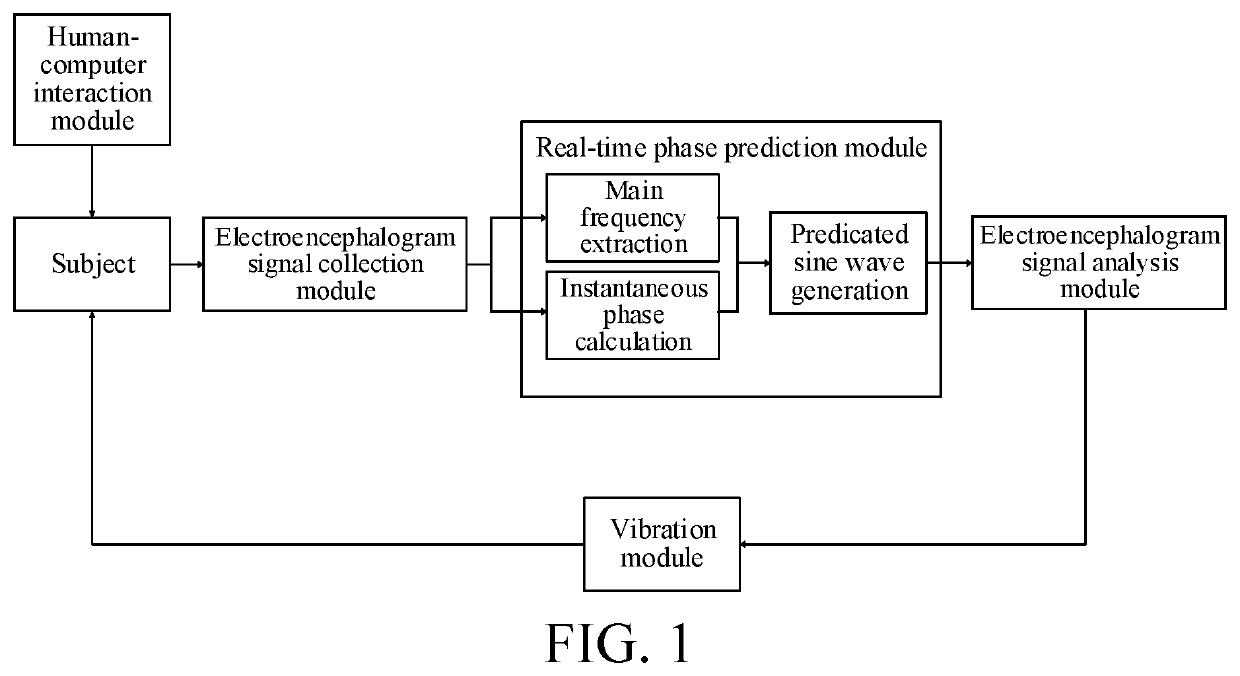
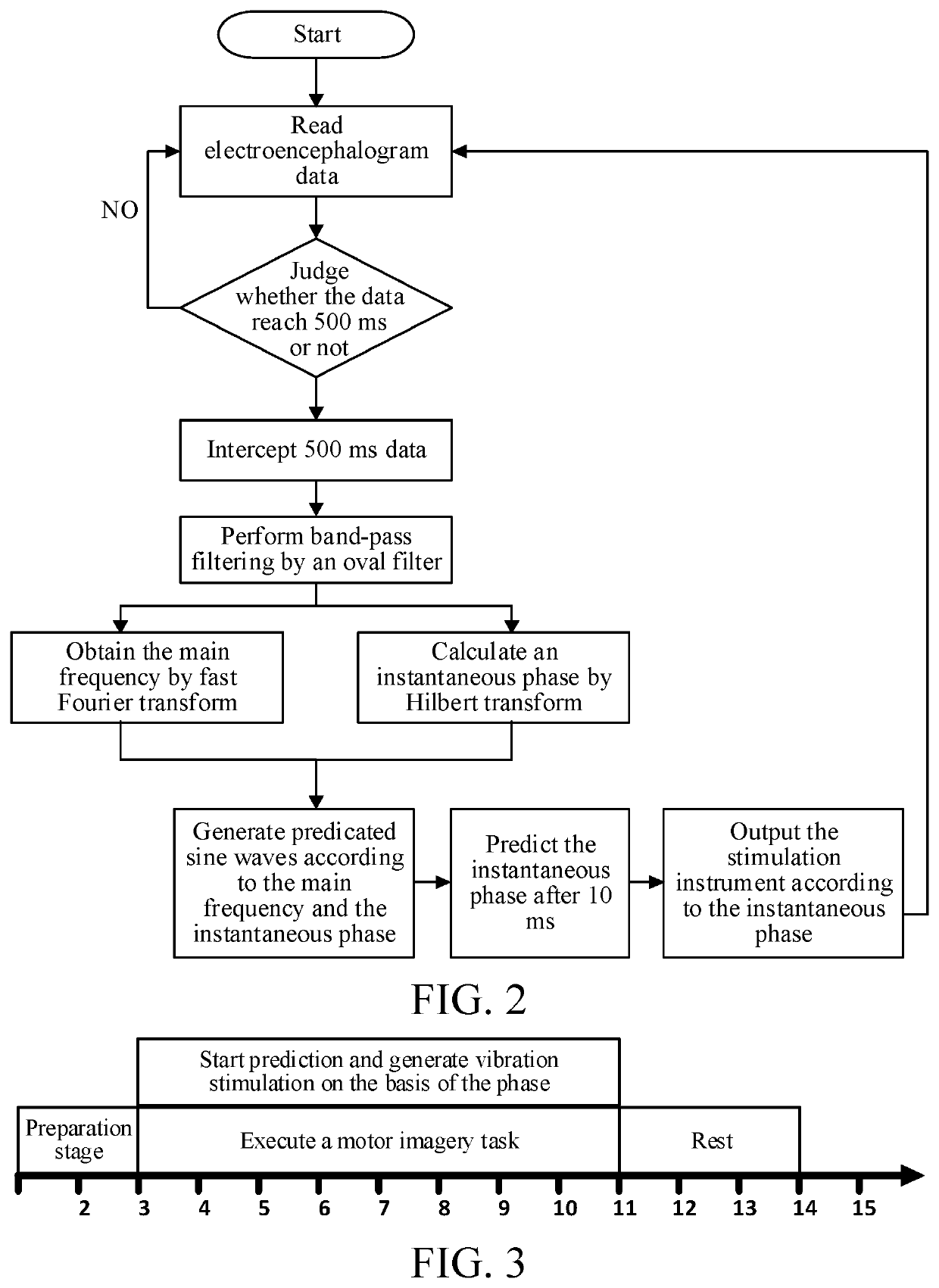
Brain-computer interface method and system based on real-time closed loop vibration stimulation enhancement
PatentActiveUS20200401226A1
Innovation
- A brain-computer interface method and system using real-time closed loop vibration stimulation enhancement, which involves displaying a motor imagery task, collecting EEG signals, performing band-pass filtering, calculating time-frequency characteristics, extracting the main frequency and instantaneous phase, and using this information to control a vibration motor for sensory stimulation, thereby improving signal quality and decoding rates.
Closed loop brain machine interface
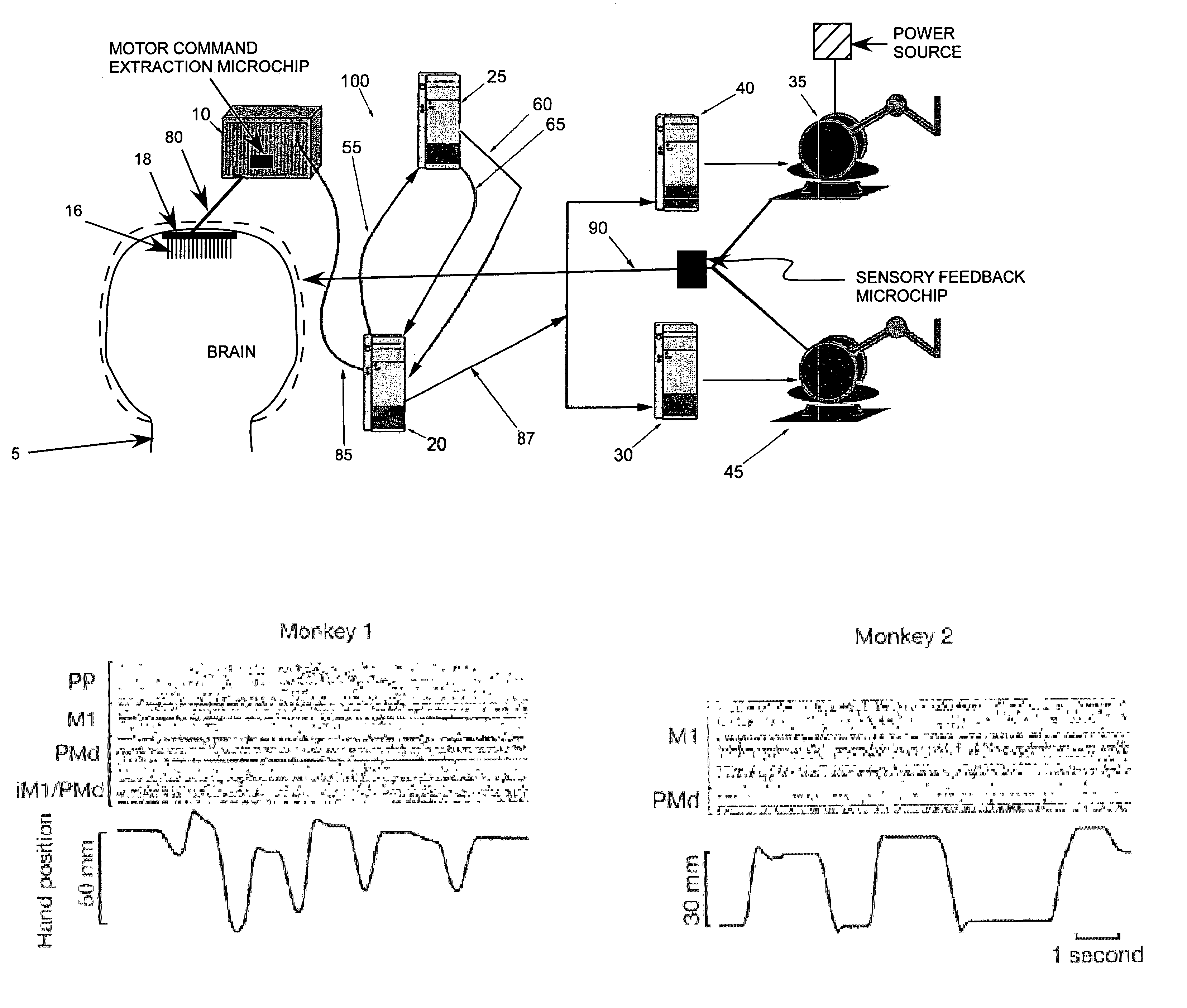
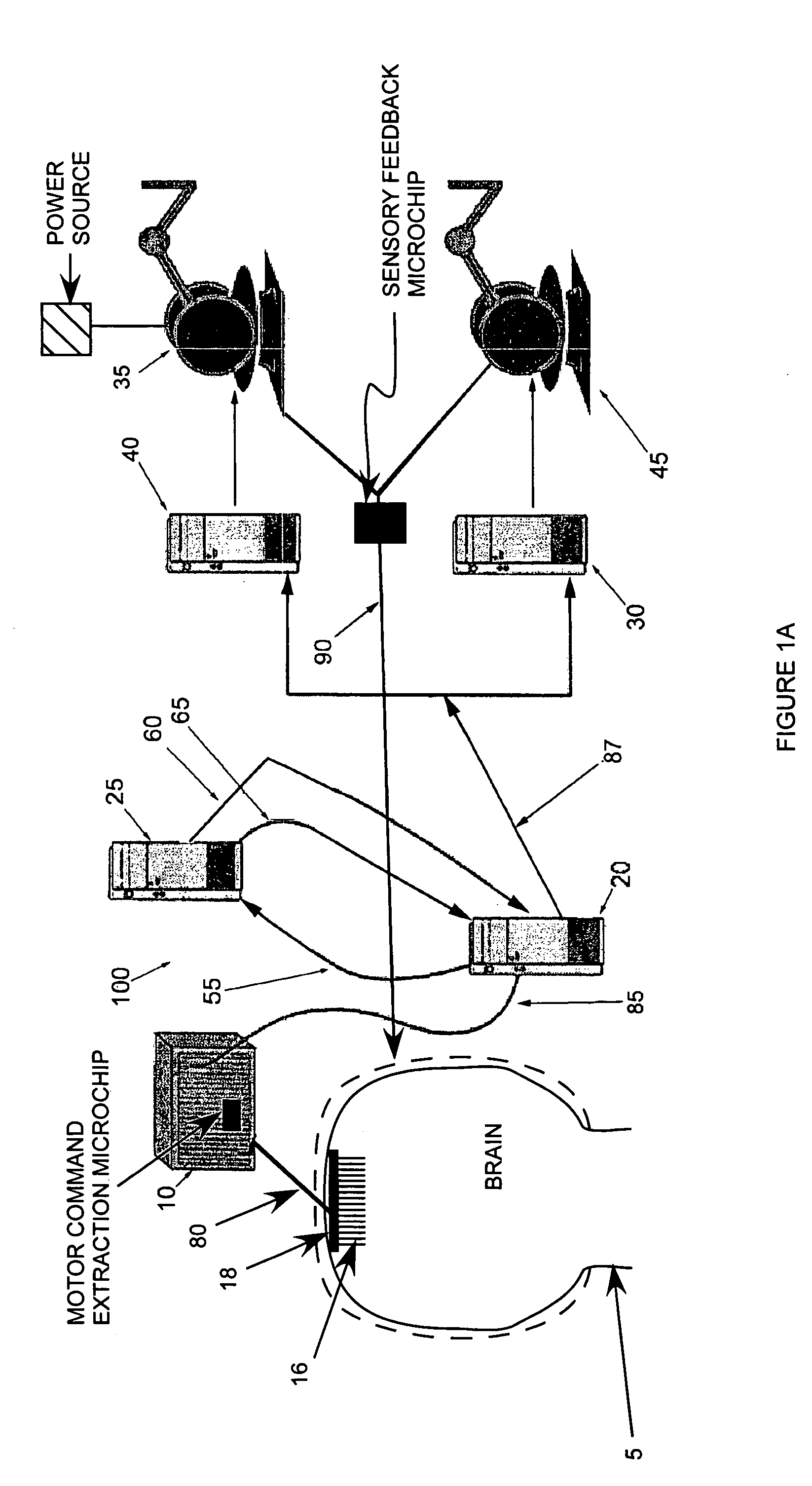
PatentInactiveUS7209788B2
Innovation
- A closed-loop brain-machine interface system using chronically implanted microwire electrodes and neurochips to acquire and process brain-derived signals, extract motor commands, and provide sensory feedback, enabling real-time control of actuators and restoring voluntary motor control and sensory perception.

FDA Regulatory Framework for BCI Medical Devices
The FDA regulatory framework for Brain-Computer Interface (BCI) medical devices presents a complex landscape that significantly impacts the development and deployment of both open-loop and closed-loop systems. The regulatory classification depends heavily on the intended use, risk profile, and the degree of invasiveness of the BCI technology.
For open-loop BCIs, which primarily focus on signal acquisition and interpretation without direct therapeutic intervention, the regulatory pathway typically involves Class II medical device classification under the FDA's 510(k) premarket notification process. These systems often fall under existing predicate devices for neurological monitoring equipment, making the approval process relatively straightforward when signal decoding accuracy meets established performance benchmarks.
Closed-loop BCIs face more stringent regulatory requirements due to their therapeutic nature and real-time intervention capabilities. These systems typically require Class III designation, necessitating Premarket Approval (PMA) with comprehensive clinical trials demonstrating both safety and efficacy. The FDA evaluates closed-loop systems under stricter criteria, including cybersecurity protocols, fail-safe mechanisms, and long-term biocompatibility studies.
Signal decoding accuracy plays a crucial role in regulatory submissions for both system types. The FDA requires detailed validation studies demonstrating consistent performance across diverse patient populations, with particular emphasis on false positive and false negative rates. For closed-loop systems, accuracy thresholds are more stringent due to potential adverse consequences of misinterpreted neural signals.
Recent FDA guidance documents emphasize the importance of adaptive algorithms and machine learning validation in BCI systems. Regulatory submissions must include comprehensive documentation of algorithm training datasets, cross-validation methodologies, and performance degradation analysis over extended operational periods. The agency particularly scrutinizes how signal decoding accuracy is maintained across different patient conditions and environmental factors.
The regulatory framework also addresses data integrity and traceability requirements, mandating robust quality management systems that ensure consistent signal processing performance throughout the device lifecycle.
Ethical Issues in Neural Interface Technology Development
The development of brain-computer interfaces (BCIs) for signal decoding applications raises significant ethical considerations that must be carefully addressed throughout the research and implementation process. These ethical challenges become particularly complex when comparing open-loop and closed-loop systems, as each approach presents distinct moral implications for users and society.
Privacy and data security represent fundamental ethical concerns in neural interface technology. BCIs inherently access and process highly sensitive neural data that could potentially reveal intimate thoughts, intentions, and cognitive states. The continuous monitoring required for accurate signal decoding creates unprecedented privacy vulnerabilities, particularly in closed-loop systems where real-time neural feedback occurs. Establishing robust data protection protocols and ensuring user consent for neural data collection becomes paramount.
Informed consent presents unique challenges in BCI development, especially given the complexity of neural signal processing technologies. Users must comprehensively understand the risks, benefits, and long-term implications of neural interface implantation or usage. The technical sophistication of signal decoding algorithms makes it difficult for non-experts to fully grasp the extent of neural information being accessed and processed.
Safety considerations extend beyond immediate physical risks to encompass long-term neurological and psychological effects. The accuracy differences between open-loop and closed-loop systems may influence user dependency and cognitive adaptation patterns. Ensuring rigorous safety testing and establishing clear risk-benefit assessments becomes essential before clinical deployment.
Equity and accessibility issues arise when considering who will benefit from advanced BCI technologies. High development costs and technical complexity may create disparities in access to these potentially life-changing technologies. Addressing fair distribution and preventing the emergence of neural enhancement inequalities requires proactive policy development.
The potential for neural enhancement beyond therapeutic applications raises questions about human augmentation ethics. As signal decoding accuracy improves, the boundary between medical treatment and cognitive enhancement becomes increasingly blurred, necessitating careful consideration of societal implications and regulatory frameworks.
Autonomy and agency concerns emerge when neural interfaces influence decision-making processes. Closed-loop systems that provide real-time feedback may alter natural cognitive processes, raising questions about authentic choice and mental autonomy. Preserving user agency while maximizing therapeutic benefits requires delicate ethical balancing.
Unlock deeper insights with Patsnap Eureka Quick Research — get a full tech report to explore trends and direct your research. Try now!
Generate Your Research Report Instantly with AI Agent
Supercharge your innovation with Patsnap Eureka AI Agent Platform!