Comparing Cooling Rates: Liquid Nitrogen vs Coolants
OCT 7, 202510 MIN READ
Generate Your Research Report Instantly with AI Agent
PatSnap Eureka helps you evaluate technical feasibility & market potential.
Cryogenic Cooling Background and Objectives
Cryogenic cooling represents a critical technology domain with applications spanning from medical sciences to advanced manufacturing and quantum computing. The evolution of cooling technologies has progressed significantly since the liquefaction of gases in the 19th century, with liquid nitrogen emerging as a revolutionary cryogenic fluid due to its relative abundance and cost-effectiveness compared to other cryogens.
The fundamental principle behind cryogenic cooling involves the rapid extraction of thermal energy from a system, bringing it to extremely low temperatures. Liquid nitrogen, with its boiling point at -196°C (77K), offers significant advantages in achieving rapid cooling rates compared to conventional coolants that typically operate above -50°C. This temperature differential creates the foundation for our comparative analysis.
Current technological trends in cryogenic cooling are moving toward more efficient heat transfer mechanisms, reduced energy consumption, and enhanced control over cooling rates. The precision of cooling rate control has become increasingly important across industries, particularly in biological sample preservation, metallurgical processes, and semiconductor manufacturing, where thermal shock can compromise material integrity.
The objectives of this technical research are multifaceted. First, we aim to quantitatively compare the cooling rates achievable with liquid nitrogen versus conventional coolants across various application scenarios. Second, we seek to identify the thermodynamic limitations and practical constraints that influence these cooling rates in real-world applications. Third, we intend to explore the relationship between cooling rate and material properties to optimize cooling protocols for specific applications.
Understanding the heat transfer mechanisms during rapid cooling is essential for this analysis. While liquid nitrogen primarily relies on film boiling followed by nucleate boiling phases during the cooling process, conventional coolants typically operate through conductive and convective heat transfer. These fundamental differences in heat transfer mechanisms directly impact the achievable cooling rates and temperature uniformity within the cooled material.
The technological evolution in this field is increasingly focused on hybrid cooling systems that leverage the advantages of both cryogenic and conventional cooling approaches. These systems aim to optimize cooling efficiency while minimizing the operational challenges associated with cryogenic fluids, such as safety concerns and specialized handling requirements.
As industries continue to demand more precise thermal management solutions, the comparative analysis of liquid nitrogen versus conventional coolants becomes increasingly relevant for developing next-generation cooling technologies that balance performance, efficiency, and practical implementation considerations.
The fundamental principle behind cryogenic cooling involves the rapid extraction of thermal energy from a system, bringing it to extremely low temperatures. Liquid nitrogen, with its boiling point at -196°C (77K), offers significant advantages in achieving rapid cooling rates compared to conventional coolants that typically operate above -50°C. This temperature differential creates the foundation for our comparative analysis.
Current technological trends in cryogenic cooling are moving toward more efficient heat transfer mechanisms, reduced energy consumption, and enhanced control over cooling rates. The precision of cooling rate control has become increasingly important across industries, particularly in biological sample preservation, metallurgical processes, and semiconductor manufacturing, where thermal shock can compromise material integrity.
The objectives of this technical research are multifaceted. First, we aim to quantitatively compare the cooling rates achievable with liquid nitrogen versus conventional coolants across various application scenarios. Second, we seek to identify the thermodynamic limitations and practical constraints that influence these cooling rates in real-world applications. Third, we intend to explore the relationship between cooling rate and material properties to optimize cooling protocols for specific applications.
Understanding the heat transfer mechanisms during rapid cooling is essential for this analysis. While liquid nitrogen primarily relies on film boiling followed by nucleate boiling phases during the cooling process, conventional coolants typically operate through conductive and convective heat transfer. These fundamental differences in heat transfer mechanisms directly impact the achievable cooling rates and temperature uniformity within the cooled material.
The technological evolution in this field is increasingly focused on hybrid cooling systems that leverage the advantages of both cryogenic and conventional cooling approaches. These systems aim to optimize cooling efficiency while minimizing the operational challenges associated with cryogenic fluids, such as safety concerns and specialized handling requirements.
As industries continue to demand more precise thermal management solutions, the comparative analysis of liquid nitrogen versus conventional coolants becomes increasingly relevant for developing next-generation cooling technologies that balance performance, efficiency, and practical implementation considerations.
Market Applications and Demand Analysis
The rapid cooling market has witnessed significant growth in recent years, driven by increasing applications across various industries. The global industrial cooling systems market was valued at $16.5 billion in 2021 and is projected to reach $27.3 billion by 2030, growing at a CAGR of 5.8%. Within this broader market, specialized cooling technologies like liquid nitrogen and advanced coolants represent critical segments with distinct demand patterns.
Healthcare and biomedical sectors constitute the largest market for liquid nitrogen cooling systems, particularly in cryopreservation of biological samples, vaccines, and reproductive materials. The COVID-19 pandemic substantially increased demand for ultra-low temperature storage solutions, with mRNA vaccine storage requirements creating unprecedented market expansion. Liquid nitrogen's ability to maintain temperatures below -196°C makes it irreplaceable in these applications.
The food industry represents another significant market, with flash freezing applications driving demand for both liquid nitrogen and specialized coolants. The frozen food market exceeded $250 billion globally in 2022, with manufacturers increasingly adopting rapid cooling technologies to preserve nutritional value and extend shelf life. Liquid nitrogen's superior cooling rate provides competitive advantages in premium food processing operations.
Industrial manufacturing applications show growing demand for both cooling technologies, with electronics manufacturing particularly dependent on precise thermal management. The semiconductor industry's cooling requirements have become more stringent with each generation of smaller, more powerful chips. Here, specialized coolants often compete directly with liquid nitrogen systems, with selection depending on specific temperature requirements and operational constraints.
Research institutions and laboratories represent a stable market segment with consistent demand for both technologies. The global laboratory equipment market, valued at approximately $30 billion, includes significant expenditure on cooling systems, with liquid nitrogen systems preferred for applications requiring extremely low temperatures.
Emerging applications in quantum computing, superconductivity research, and advanced materials processing are creating new market opportunities. These specialized fields typically require the extreme cooling capabilities of liquid nitrogen rather than conventional coolants.
Cost considerations significantly influence market dynamics, with liquid nitrogen systems generally requiring higher initial investment but potentially offering operational advantages in specific applications. The total cost of ownership analysis increasingly favors energy-efficient cooling solutions, creating market pressure for innovation in both technologies.
Regional market analysis reveals stronger growth in Asia-Pacific regions, particularly China and India, where expanding healthcare infrastructure and industrial manufacturing are driving demand for advanced cooling technologies. North America and Europe maintain stable markets with replacement and upgrade cycles providing consistent demand.
Healthcare and biomedical sectors constitute the largest market for liquid nitrogen cooling systems, particularly in cryopreservation of biological samples, vaccines, and reproductive materials. The COVID-19 pandemic substantially increased demand for ultra-low temperature storage solutions, with mRNA vaccine storage requirements creating unprecedented market expansion. Liquid nitrogen's ability to maintain temperatures below -196°C makes it irreplaceable in these applications.
The food industry represents another significant market, with flash freezing applications driving demand for both liquid nitrogen and specialized coolants. The frozen food market exceeded $250 billion globally in 2022, with manufacturers increasingly adopting rapid cooling technologies to preserve nutritional value and extend shelf life. Liquid nitrogen's superior cooling rate provides competitive advantages in premium food processing operations.
Industrial manufacturing applications show growing demand for both cooling technologies, with electronics manufacturing particularly dependent on precise thermal management. The semiconductor industry's cooling requirements have become more stringent with each generation of smaller, more powerful chips. Here, specialized coolants often compete directly with liquid nitrogen systems, with selection depending on specific temperature requirements and operational constraints.
Research institutions and laboratories represent a stable market segment with consistent demand for both technologies. The global laboratory equipment market, valued at approximately $30 billion, includes significant expenditure on cooling systems, with liquid nitrogen systems preferred for applications requiring extremely low temperatures.
Emerging applications in quantum computing, superconductivity research, and advanced materials processing are creating new market opportunities. These specialized fields typically require the extreme cooling capabilities of liquid nitrogen rather than conventional coolants.
Cost considerations significantly influence market dynamics, with liquid nitrogen systems generally requiring higher initial investment but potentially offering operational advantages in specific applications. The total cost of ownership analysis increasingly favors energy-efficient cooling solutions, creating market pressure for innovation in both technologies.
Regional market analysis reveals stronger growth in Asia-Pacific regions, particularly China and India, where expanding healthcare infrastructure and industrial manufacturing are driving demand for advanced cooling technologies. North America and Europe maintain stable markets with replacement and upgrade cycles providing consistent demand.
Current Cooling Technologies and Challenges
The cooling technology landscape has evolved significantly over the past decades, with various solutions emerging to address thermal management challenges across industries. Currently, conventional cooling technologies include air cooling, liquid cooling systems, phase change materials, thermoelectric cooling, and cryogenic cooling methods. Each approach offers distinct advantages and limitations depending on the application requirements.
Air cooling remains the most widely implemented method due to its simplicity and cost-effectiveness, utilizing natural or forced convection to dissipate heat. However, its cooling capacity is inherently limited by ambient conditions and becomes increasingly inefficient for high-heat-flux applications.
Liquid cooling systems have gained prominence in high-performance computing, industrial processes, and electric vehicle thermal management. These systems typically employ water, glycol solutions, or specialized coolants circulating through heat exchangers. While offering superior heat transfer coefficients compared to air cooling, traditional coolants face limitations in extreme cooling scenarios where rapid temperature reduction is critical.
Cryogenic cooling, particularly using liquid nitrogen (LN2), represents the frontier of ultra-low temperature applications. With a boiling point of -196°C, liquid nitrogen provides exceptional cooling capacity through its phase change from liquid to gas. This property enables cooling rates significantly faster than conventional coolants, making it invaluable for specialized applications in medical tissue preservation, superconductivity research, and advanced materials processing.
The primary technical challenges in comparing liquid nitrogen with conventional coolants center around several factors. First, the extreme temperature differentials created by liquid nitrogen introduce material stress concerns, potentially causing thermal shock and structural integrity issues in cooled components. Second, precise temperature control remains difficult with cryogenic systems due to the rapid phase change dynamics.
Safety considerations present another significant challenge, as liquid nitrogen handling requires specialized equipment and protocols to prevent cold burns, asphyxiation risks, and pressure buildup hazards. Additionally, the energy efficiency of cryogenic cooling systems is often compromised by the substantial energy requirements for nitrogen liquefaction and the inevitable losses during storage and transfer.
Infrastructure compatibility represents a persistent obstacle, as most existing cooling systems are not designed to accommodate the extreme temperatures and specialized requirements of cryogenic coolants. This necessitates significant modifications or entirely new system architectures when transitioning to liquid nitrogen cooling solutions.
The economic viability of liquid nitrogen versus conventional coolants varies dramatically by application scale, cooling requirements, and geographical location. While offering superior cooling rates, the total cost of ownership for liquid nitrogen systems typically exceeds that of conventional cooling technologies when considering production, storage, and handling expenses.
Air cooling remains the most widely implemented method due to its simplicity and cost-effectiveness, utilizing natural or forced convection to dissipate heat. However, its cooling capacity is inherently limited by ambient conditions and becomes increasingly inefficient for high-heat-flux applications.
Liquid cooling systems have gained prominence in high-performance computing, industrial processes, and electric vehicle thermal management. These systems typically employ water, glycol solutions, or specialized coolants circulating through heat exchangers. While offering superior heat transfer coefficients compared to air cooling, traditional coolants face limitations in extreme cooling scenarios where rapid temperature reduction is critical.
Cryogenic cooling, particularly using liquid nitrogen (LN2), represents the frontier of ultra-low temperature applications. With a boiling point of -196°C, liquid nitrogen provides exceptional cooling capacity through its phase change from liquid to gas. This property enables cooling rates significantly faster than conventional coolants, making it invaluable for specialized applications in medical tissue preservation, superconductivity research, and advanced materials processing.
The primary technical challenges in comparing liquid nitrogen with conventional coolants center around several factors. First, the extreme temperature differentials created by liquid nitrogen introduce material stress concerns, potentially causing thermal shock and structural integrity issues in cooled components. Second, precise temperature control remains difficult with cryogenic systems due to the rapid phase change dynamics.
Safety considerations present another significant challenge, as liquid nitrogen handling requires specialized equipment and protocols to prevent cold burns, asphyxiation risks, and pressure buildup hazards. Additionally, the energy efficiency of cryogenic cooling systems is often compromised by the substantial energy requirements for nitrogen liquefaction and the inevitable losses during storage and transfer.
Infrastructure compatibility represents a persistent obstacle, as most existing cooling systems are not designed to accommodate the extreme temperatures and specialized requirements of cryogenic coolants. This necessitates significant modifications or entirely new system architectures when transitioning to liquid nitrogen cooling solutions.
The economic viability of liquid nitrogen versus conventional coolants varies dramatically by application scale, cooling requirements, and geographical location. While offering superior cooling rates, the total cost of ownership for liquid nitrogen systems typically exceeds that of conventional cooling technologies when considering production, storage, and handling expenses.
Comparative Analysis of Cooling Solutions
01 Liquid nitrogen cooling systems
Liquid nitrogen is used as a cryogenic coolant in various cooling systems due to its extremely low temperature. These systems typically involve the controlled release of liquid nitrogen to rapidly cool components or materials. The cooling rate can be precisely controlled by adjusting the flow rate and exposure time. Liquid nitrogen cooling systems are particularly useful in applications requiring rapid cooling to very low temperatures, such as in scientific research, medical applications, and certain industrial processes.- Liquid nitrogen cooling systems: Liquid nitrogen is used as a cryogenic coolant in various cooling systems due to its extremely low temperature. These systems typically involve the controlled release of liquid nitrogen to rapidly cool components or materials. The cooling rate can be precisely controlled by adjusting the flow rate and exposure time. Liquid nitrogen cooling systems are particularly useful in applications requiring rapid cooling to very low temperatures, such as in scientific research, medical applications, and certain industrial processes.
- Heat exchange efficiency in cooling systems: The efficiency of heat exchange in cooling systems significantly impacts cooling rates. Advanced heat exchanger designs incorporate features such as increased surface area, optimized flow patterns, and enhanced thermal conductivity materials to improve heat transfer. These systems may utilize various configurations including plate, shell-and-tube, or microchannel heat exchangers. Improving heat exchange efficiency allows for faster cooling rates while potentially reducing the amount of coolant required, leading to more economical and environmentally friendly cooling solutions.
- Electronic component cooling technologies: Specialized cooling systems for electronic components employ various coolants and techniques to manage heat dissipation and control cooling rates. These systems may include direct liquid cooling, immersion cooling, or two-phase cooling methods. The cooling rate is critical for preventing thermal damage while maintaining optimal operating temperatures. Advanced electronic cooling systems often incorporate temperature sensors and feedback control mechanisms to dynamically adjust cooling rates based on thermal load, ensuring efficient operation and extended component lifespan.
- Flow rate control mechanisms for coolants: Control mechanisms for regulating coolant flow rates are essential components in advanced cooling systems. These mechanisms may include variable speed pumps, proportional valves, flow restrictors, and electronic control systems. By precisely controlling the flow rate of coolants, these systems can achieve optimal cooling rates for specific applications. The ability to dynamically adjust cooling rates allows for energy efficiency, temperature stability, and adaptation to varying thermal loads, which is particularly important in industrial processes and high-performance computing applications.
- Thermal management systems with multiple cooling stages: Multi-stage cooling systems utilize a combination of different coolants and cooling methods to achieve precise temperature control and optimal cooling rates. These systems may incorporate pre-cooling stages, intermediate cooling stages, and final cooling stages, each with specific coolants and operating parameters. By strategically implementing multiple cooling stages, these systems can achieve more efficient and controlled cooling rates than single-stage systems. This approach is particularly valuable in applications requiring precise temperature trajectories or extremely rapid cooling followed by temperature stabilization.
02 Coolant flow rate control mechanisms
Various mechanisms are employed to control the flow rate of coolants in cooling systems, which directly affects the cooling rate. These mechanisms include pumps, valves, sensors, and electronic control systems that can adjust the coolant flow based on temperature feedback. By precisely controlling the coolant flow rate, these systems can achieve optimal cooling efficiency and maintain desired temperature levels. Advanced control algorithms may be implemented to dynamically adjust cooling rates based on changing thermal loads.Expand Specific Solutions03 Heat exchanger designs for enhanced cooling rates
Specialized heat exchanger designs can significantly improve cooling rates in various systems. These designs focus on maximizing the surface area for heat transfer, optimizing coolant flow patterns, and reducing thermal resistance. Features such as microchannels, fins, and turbulence-inducing structures enhance the heat transfer coefficient between the coolant and the heated surface. Advanced materials with high thermal conductivity are also employed to improve heat dissipation efficiency and achieve faster cooling rates.Expand Specific Solutions04 Electronic component cooling solutions
Cooling systems specifically designed for electronic components employ various techniques to achieve optimal cooling rates. These include direct liquid cooling, immersion cooling, and two-phase cooling systems. The cooling rate is critical for maintaining electronic component performance and preventing thermal damage. Advanced thermal management solutions incorporate multiple cooling technologies, such as liquid coolants combined with heat pipes or vapor chambers, to efficiently dissipate heat from high-power electronic components.Expand Specific Solutions05 Cooling rate measurement and monitoring systems
Systems for accurately measuring and monitoring cooling rates are essential for optimizing cooling processes. These systems typically include temperature sensors, flow meters, and data acquisition equipment that provide real-time information about the cooling performance. Advanced monitoring systems may incorporate predictive algorithms to anticipate cooling needs and adjust parameters accordingly. By continuously monitoring cooling rates, these systems enable precise control of thermal processes and help identify potential issues before they affect system performance.Expand Specific Solutions
Leading Companies in Cryogenic and Coolant Industries
The cooling technology landscape comparing liquid nitrogen and coolants is currently in a growth phase, with an estimated market size exceeding $5 billion annually. Liquid nitrogen cooling technology has reached commercial maturity, with companies like Air Liquide, Messer Group, and Praxair Technology leading innovation in cryogenic applications. Traditional coolant technologies remain dominant in mainstream applications, with Mayekawa MFG and NITROcrete developing specialized solutions for industrial cooling. The competitive landscape is evolving as companies like BASF and Sinopec invest in advanced cooling technologies for specialized applications. The market shows increasing segmentation between high-performance cryogenic solutions and more conventional cooling systems, with cross-industry applications driving innovation in energy efficiency and sustainability.
Air Liquide SA
Technical Solution: Air Liquide has developed advanced cryogenic cooling systems that leverage liquid nitrogen's exceptional cooling properties. Their technology utilizes liquid nitrogen at -196°C to achieve rapid cooling rates of up to 200°C/minute in specialized applications. The company's patented controlled-release systems allow precise temperature management through regulated nitrogen vapor distribution. For industrial processes requiring extreme cooling, Air Liquide has engineered specialized heat exchangers that maximize thermal transfer efficiency while minimizing nitrogen consumption. Their systems incorporate sophisticated monitoring technology that continuously adjusts nitrogen flow based on real-time temperature feedback, ensuring optimal cooling performance while reducing operational costs. Air Liquide's solutions are particularly notable for their ability to maintain uniform cooling across large or irregularly shaped objects through strategic nitrogen delivery points[1][3].
Strengths: Superior cooling speed compared to conventional coolants; precise temperature control; environmentally friendly with no harmful residues; applicable across multiple industries. Weaknesses: Higher initial infrastructure costs; requires specialized handling equipment and safety protocols; limited by nitrogen availability in some regions.
NITROcrete LLC
Technical Solution: NITROcrete has pioneered a specialized concrete cooling technology using liquid nitrogen that achieves cooling rates 4-5 times faster than traditional methods. Their patented delivery system injects liquid nitrogen directly into concrete mixtures during the batching process, enabling temperature reductions of up to 30°F in seconds. This rapid cooling capability allows precise temperature control within ±2°F of target specifications. The company's technology features automated dosing systems that calculate required nitrogen quantities based on concrete volume, ambient conditions, and target temperatures. NITROcrete's solution eliminates the need for ice plants and chilled water systems traditionally used in concrete cooling. Their mobile delivery units can be deployed at various project sites, providing cooling capacities of up to 150 cubic yards per hour. The system's efficiency derives from liquid nitrogen's phase change properties, absorbing approximately 200 BTUs per pound during vaporization[2][4].
Strengths: Dramatically faster cooling rates than conventional methods; precise temperature control; eliminates water consumption associated with traditional cooling; mobile deployment capability. Weaknesses: Requires specialized equipment and trained operators; higher operational costs in regions with limited nitrogen supply; potential safety concerns with handling cryogenic materials.
Technical Deep Dive: Heat Transfer Mechanisms
Liquid nitrogen-based cooling system
PatentWO2019147563A1
Innovation
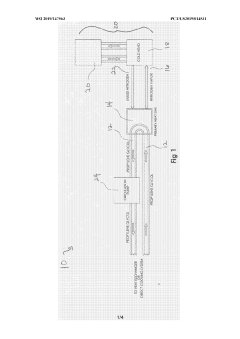
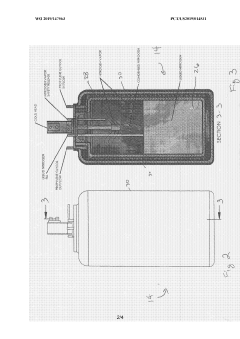
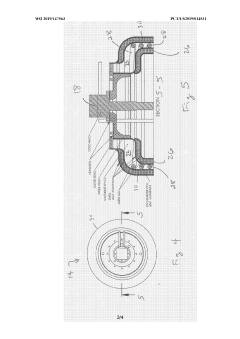
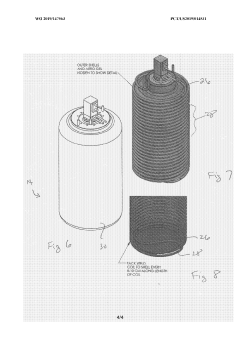
- A liquid nitrogen-based cooling system featuring a heat sink with a first vessel containing liquid nitrogen and a series of coils in heat-exchanging contact, where heat is absorbed by a heat-absorbing medium and transferred to liquid nitrogen, vaporized, and then condensed back using a helium-based cryo-refrigeration system, with a partial vacuum and insulating materials to minimize ambient heat transfer.
Cooling system using positive displacement cryogenic liquid pump
PatentActiveUS20100154439A1
Innovation
- A thermal analysis cooling system using a positive displacement pump submerged in the cryogenic liquid to provide a continuous flow of liquid nitrogen to a heat exchanger without pressurization, allowing for continuous cooling by vaporization and returning vapor and excess liquid to the dewar for reuse.


Safety and Handling Protocols
The handling of liquid nitrogen requires stringent safety protocols due to its extremely low temperature (-196°C), which can cause severe cryogenic burns and tissue damage upon contact. Personnel working with liquid nitrogen must wear appropriate personal protective equipment (PPE), including cryogenic gloves, face shields, and closed-toe shoes. Laboratory coats or aprons should be worn to protect the body from splashes. Training programs for all personnel are essential before allowing access to liquid nitrogen systems.
Storage considerations for liquid nitrogen include using only specialized Dewar flasks or cryogenic containers designed to handle extreme cold temperatures. These containers must be properly vented to prevent pressure buildup as the liquid nitrogen evaporates. Storage areas require adequate ventilation to prevent oxygen displacement, as nitrogen gas can create an asphyxiation hazard in confined spaces. Oxygen level monitors should be installed in areas where liquid nitrogen is stored or frequently used.
Conventional coolants, while less hazardous than liquid nitrogen, still present significant safety concerns. Glycol-based coolants may be toxic if ingested and require proper handling procedures. Mineral oil coolants present fire hazards if they reach their flash points. Personnel should wear chemical-resistant gloves and eye protection when handling these substances. Unlike liquid nitrogen, many conventional coolants do not present asphyxiation risks but may release harmful vapors requiring adequate ventilation.
Emergency response protocols differ significantly between liquid nitrogen and conventional coolants. For liquid nitrogen incidents, the immediate focus is on treating cryogenic burns by gently warming affected areas and seeking medical attention. Rooms must be evacuated immediately in case of large spills due to asphyxiation risk. For conventional coolant spills, appropriate absorbent materials should be used for containment, with specific neutralization procedures depending on the chemical composition.
Transportation regulations for liquid nitrogen are particularly stringent, requiring DOT-approved containers and proper labeling as a cryogenic liquid. Vehicles transporting liquid nitrogen must be well-ventilated. Conventional coolants typically have less restrictive transportation requirements but still need proper containment and labeling according to their hazard classification.
Risk assessment frameworks should be implemented for both cooling methods, with liquid nitrogen requiring more comprehensive protocols due to its extreme temperature and asphyxiation hazards. Regular safety audits, equipment inspections, and emergency drills should be conducted, with special attention to oxygen monitoring systems when liquid nitrogen is used. Documentation of all safety procedures, training records, and incident reports must be maintained for regulatory compliance and continuous improvement of safety protocols.
Storage considerations for liquid nitrogen include using only specialized Dewar flasks or cryogenic containers designed to handle extreme cold temperatures. These containers must be properly vented to prevent pressure buildup as the liquid nitrogen evaporates. Storage areas require adequate ventilation to prevent oxygen displacement, as nitrogen gas can create an asphyxiation hazard in confined spaces. Oxygen level monitors should be installed in areas where liquid nitrogen is stored or frequently used.
Conventional coolants, while less hazardous than liquid nitrogen, still present significant safety concerns. Glycol-based coolants may be toxic if ingested and require proper handling procedures. Mineral oil coolants present fire hazards if they reach their flash points. Personnel should wear chemical-resistant gloves and eye protection when handling these substances. Unlike liquid nitrogen, many conventional coolants do not present asphyxiation risks but may release harmful vapors requiring adequate ventilation.
Emergency response protocols differ significantly between liquid nitrogen and conventional coolants. For liquid nitrogen incidents, the immediate focus is on treating cryogenic burns by gently warming affected areas and seeking medical attention. Rooms must be evacuated immediately in case of large spills due to asphyxiation risk. For conventional coolant spills, appropriate absorbent materials should be used for containment, with specific neutralization procedures depending on the chemical composition.
Transportation regulations for liquid nitrogen are particularly stringent, requiring DOT-approved containers and proper labeling as a cryogenic liquid. Vehicles transporting liquid nitrogen must be well-ventilated. Conventional coolants typically have less restrictive transportation requirements but still need proper containment and labeling according to their hazard classification.
Risk assessment frameworks should be implemented for both cooling methods, with liquid nitrogen requiring more comprehensive protocols due to its extreme temperature and asphyxiation hazards. Regular safety audits, equipment inspections, and emergency drills should be conducted, with special attention to oxygen monitoring systems when liquid nitrogen is used. Documentation of all safety procedures, training records, and incident reports must be maintained for regulatory compliance and continuous improvement of safety protocols.
Environmental Impact and Sustainability Considerations
The environmental impact of cooling technologies represents a critical consideration in the selection between liquid nitrogen and conventional coolants. Liquid nitrogen, while highly effective for rapid cooling, presents significant sustainability challenges. Its production requires substantial energy input through air liquefaction processes, contributing to considerable carbon emissions when derived from non-renewable energy sources. The energy intensity of liquid nitrogen production can range from 0.4 to 0.8 kWh per kilogram, translating to substantial carbon footprints in large-scale applications.
Traditional coolants, particularly those containing hydrofluorocarbons (HFCs) and hydrochlorofluorocarbons (HCFCs), pose serious environmental concerns despite their lower production energy requirements. These compounds exhibit global warming potentials hundreds to thousands of times greater than CO2, with atmospheric lifetimes extending to decades. While newer hydrofluoroolefin (HFO) coolants demonstrate reduced environmental impact, they still present concerns regarding decomposition products and manufacturing emissions.
The operational phase presents another dimension of environmental comparison. Liquid nitrogen systems typically operate as open-loop configurations, releasing nitrogen gas to the atmosphere after use. While nitrogen constitutes 78% of atmospheric air and is inert, the energy embedded in its liquefaction is effectively wasted in single-use applications. Conversely, conventional cooling systems operate in closed loops but face risks of refrigerant leakage throughout their operational lifetime, with average annual leakage rates of 10-15% in some industrial applications.
End-of-life considerations further differentiate these cooling approaches. Liquid nitrogen leaves minimal waste beyond the containers used for storage and transport, which are typically reusable. Traditional coolant systems require specialized recovery and disposal procedures to prevent atmospheric release, with recovery rates often falling below regulatory targets despite stringent regulations.
Recent sustainability innovations are reshaping this comparison. Renewable energy integration in liquid nitrogen production can significantly reduce its carbon footprint, while advances in capture and reuse systems are improving the lifecycle efficiency of nitrogen-based cooling. Simultaneously, the cooling industry is developing bio-based coolants and enhancing containment technologies for conventional systems to minimize leakage rates.
Regulatory frameworks increasingly influence technology selection, with global phasedowns of high-GWP refrigerants under the Kigali Amendment to the Montreal Protocol accelerating the transition toward more environmentally responsible cooling solutions. These evolving regulations may ultimately favor liquid nitrogen systems in specific applications where their technical advantages outweigh their energy-intensive production requirements.
Traditional coolants, particularly those containing hydrofluorocarbons (HFCs) and hydrochlorofluorocarbons (HCFCs), pose serious environmental concerns despite their lower production energy requirements. These compounds exhibit global warming potentials hundreds to thousands of times greater than CO2, with atmospheric lifetimes extending to decades. While newer hydrofluoroolefin (HFO) coolants demonstrate reduced environmental impact, they still present concerns regarding decomposition products and manufacturing emissions.
The operational phase presents another dimension of environmental comparison. Liquid nitrogen systems typically operate as open-loop configurations, releasing nitrogen gas to the atmosphere after use. While nitrogen constitutes 78% of atmospheric air and is inert, the energy embedded in its liquefaction is effectively wasted in single-use applications. Conversely, conventional cooling systems operate in closed loops but face risks of refrigerant leakage throughout their operational lifetime, with average annual leakage rates of 10-15% in some industrial applications.
End-of-life considerations further differentiate these cooling approaches. Liquid nitrogen leaves minimal waste beyond the containers used for storage and transport, which are typically reusable. Traditional coolant systems require specialized recovery and disposal procedures to prevent atmospheric release, with recovery rates often falling below regulatory targets despite stringent regulations.
Recent sustainability innovations are reshaping this comparison. Renewable energy integration in liquid nitrogen production can significantly reduce its carbon footprint, while advances in capture and reuse systems are improving the lifecycle efficiency of nitrogen-based cooling. Simultaneously, the cooling industry is developing bio-based coolants and enhancing containment technologies for conventional systems to minimize leakage rates.
Regulatory frameworks increasingly influence technology selection, with global phasedowns of high-GWP refrigerants under the Kigali Amendment to the Montreal Protocol accelerating the transition toward more environmentally responsible cooling solutions. These evolving regulations may ultimately favor liquid nitrogen systems in specific applications where their technical advantages outweigh their energy-intensive production requirements.
Unlock deeper insights with PatSnap Eureka Quick Research — get a full tech report to explore trends and direct your research. Try now!
Generate Your Research Report Instantly with AI Agent
Supercharge your innovation with PatSnap Eureka AI Agent Platform!