

Comparing Plasma Treatment Effectiveness: Air vs Nitrogen
APR 14, 20269 MIN READ
Generate Your Research Report Instantly with AI Agent
PatSnap Eureka helps you evaluate technical feasibility & market potential.
Plasma Treatment Background and Technical Objectives
Plasma treatment has emerged as a revolutionary surface modification technology that utilizes ionized gases to alter material properties at the molecular level. This non-thermal plasma process involves the generation of reactive species, ions, and electrons through electrical discharge in gaseous environments, enabling precise control over surface characteristics without affecting bulk material properties. The technology has gained significant traction across multiple industries due to its ability to enhance adhesion, wettability, biocompatibility, and sterilization capabilities while maintaining environmental sustainability.
The historical development of plasma treatment technology traces back to the early 20th century when scientists first observed electrical discharges in low-pressure gases. However, practical applications emerged in the 1960s with the semiconductor industry's need for precise surface cleaning and etching processes. The technology evolved rapidly through the 1980s and 1990s, expanding from vacuum-based systems to atmospheric pressure plasma treatments, making it more accessible for industrial applications.
Contemporary plasma treatment systems operate under two primary atmospheric conditions: air plasma and nitrogen plasma environments. Air plasma treatment utilizes ambient atmospheric composition, primarily nitrogen and oxygen, creating a complex mixture of reactive species including hydroxyl radicals, atomic oxygen, and nitrogen oxides. This approach offers cost-effectiveness and simplicity in implementation, making it attractive for large-scale industrial applications requiring surface activation and cleaning.
Nitrogen plasma treatment, conversely, employs pure or high-concentration nitrogen atmospheres, generating predominantly nitrogen-based reactive species and minimizing oxidative reactions. This controlled environment enables more predictable surface modifications and reduces unwanted chemical byproducts, particularly beneficial for applications requiring precise surface chemistry control or when treating oxidation-sensitive materials.
The fundamental technical objectives driving current plasma treatment research focus on optimizing treatment effectiveness while minimizing process complexity and operational costs. Key performance metrics include surface energy enhancement, contamination removal efficiency, treatment uniformity, and long-term stability of modified surfaces. Additionally, environmental considerations and energy efficiency have become increasingly important factors in technology development.
The comparative analysis between air and nitrogen plasma treatments represents a critical research frontier, as each approach offers distinct advantages depending on specific application requirements. Understanding the mechanistic differences, treatment outcomes, and cost-benefit ratios between these two approaches is essential for advancing plasma treatment technology and expanding its industrial adoption across diverse sectors including automotive, medical devices, packaging, and electronics manufacturing.
The historical development of plasma treatment technology traces back to the early 20th century when scientists first observed electrical discharges in low-pressure gases. However, practical applications emerged in the 1960s with the semiconductor industry's need for precise surface cleaning and etching processes. The technology evolved rapidly through the 1980s and 1990s, expanding from vacuum-based systems to atmospheric pressure plasma treatments, making it more accessible for industrial applications.
Contemporary plasma treatment systems operate under two primary atmospheric conditions: air plasma and nitrogen plasma environments. Air plasma treatment utilizes ambient atmospheric composition, primarily nitrogen and oxygen, creating a complex mixture of reactive species including hydroxyl radicals, atomic oxygen, and nitrogen oxides. This approach offers cost-effectiveness and simplicity in implementation, making it attractive for large-scale industrial applications requiring surface activation and cleaning.
Nitrogen plasma treatment, conversely, employs pure or high-concentration nitrogen atmospheres, generating predominantly nitrogen-based reactive species and minimizing oxidative reactions. This controlled environment enables more predictable surface modifications and reduces unwanted chemical byproducts, particularly beneficial for applications requiring precise surface chemistry control or when treating oxidation-sensitive materials.
The fundamental technical objectives driving current plasma treatment research focus on optimizing treatment effectiveness while minimizing process complexity and operational costs. Key performance metrics include surface energy enhancement, contamination removal efficiency, treatment uniformity, and long-term stability of modified surfaces. Additionally, environmental considerations and energy efficiency have become increasingly important factors in technology development.
The comparative analysis between air and nitrogen plasma treatments represents a critical research frontier, as each approach offers distinct advantages depending on specific application requirements. Understanding the mechanistic differences, treatment outcomes, and cost-benefit ratios between these two approaches is essential for advancing plasma treatment technology and expanding its industrial adoption across diverse sectors including automotive, medical devices, packaging, and electronics manufacturing.
Market Demand for Air vs Nitrogen Plasma Applications
The global plasma treatment market demonstrates distinct demand patterns for air and nitrogen-based applications across multiple industrial sectors. Air plasma systems dominate cost-sensitive applications where atmospheric pressure operation and simplified equipment design are prioritized. These systems find extensive adoption in surface cleaning, adhesion promotion for automotive components, and textile treatment processes where moderate treatment intensity suffices.
Nitrogen plasma applications command premium market segments requiring precise control and contamination-free environments. The semiconductor industry represents the largest demand driver for nitrogen plasma systems, utilizing these technologies for wafer cleaning, etching processes, and thin film deposition. Medical device manufacturing constitutes another significant market segment, where nitrogen plasma enables sterilization and surface modification of implants and surgical instruments without introducing oxygen-related contamination.
The packaging industry exhibits dual demand patterns depending on application requirements. Food packaging applications increasingly favor nitrogen plasma for barrier coating treatments, as the inert atmosphere prevents oxidation during processing. Conversely, general packaging applications often utilize air plasma systems for surface activation before printing or lamination processes, where cost efficiency outweighs the need for inert conditions.
Emerging market segments show growing preference for nitrogen plasma solutions in advanced manufacturing applications. The aerospace industry demands nitrogen plasma for composite material surface preparation and coating adhesion enhancement, where material integrity cannot be compromised by atmospheric contaminants. Similarly, the renewable energy sector, particularly solar panel manufacturing, increasingly adopts nitrogen plasma for precise surface texturing and cleaning processes.
Regional demand variations reflect industrial development patterns and technological sophistication levels. Asian markets, led by semiconductor and electronics manufacturing hubs, demonstrate strong nitrogen plasma demand growth. European markets show balanced adoption across both air and nitrogen systems, driven by diverse industrial applications and stringent quality requirements. North American markets exhibit increasing nitrogen plasma adoption in medical and aerospace applications, while maintaining substantial air plasma usage in automotive and general manufacturing sectors.
Market growth drivers include expanding applications in emerging technologies such as flexible electronics, where nitrogen plasma enables precise surface modification without thermal damage. The increasing emphasis on environmentally friendly processing methods also favors both air and nitrogen plasma systems as alternatives to wet chemical treatments, though nitrogen systems often provide superior process control and repeatability for critical applications.
Nitrogen plasma applications command premium market segments requiring precise control and contamination-free environments. The semiconductor industry represents the largest demand driver for nitrogen plasma systems, utilizing these technologies for wafer cleaning, etching processes, and thin film deposition. Medical device manufacturing constitutes another significant market segment, where nitrogen plasma enables sterilization and surface modification of implants and surgical instruments without introducing oxygen-related contamination.
The packaging industry exhibits dual demand patterns depending on application requirements. Food packaging applications increasingly favor nitrogen plasma for barrier coating treatments, as the inert atmosphere prevents oxidation during processing. Conversely, general packaging applications often utilize air plasma systems for surface activation before printing or lamination processes, where cost efficiency outweighs the need for inert conditions.
Emerging market segments show growing preference for nitrogen plasma solutions in advanced manufacturing applications. The aerospace industry demands nitrogen plasma for composite material surface preparation and coating adhesion enhancement, where material integrity cannot be compromised by atmospheric contaminants. Similarly, the renewable energy sector, particularly solar panel manufacturing, increasingly adopts nitrogen plasma for precise surface texturing and cleaning processes.
Regional demand variations reflect industrial development patterns and technological sophistication levels. Asian markets, led by semiconductor and electronics manufacturing hubs, demonstrate strong nitrogen plasma demand growth. European markets show balanced adoption across both air and nitrogen systems, driven by diverse industrial applications and stringent quality requirements. North American markets exhibit increasing nitrogen plasma adoption in medical and aerospace applications, while maintaining substantial air plasma usage in automotive and general manufacturing sectors.
Market growth drivers include expanding applications in emerging technologies such as flexible electronics, where nitrogen plasma enables precise surface modification without thermal damage. The increasing emphasis on environmentally friendly processing methods also favors both air and nitrogen plasma systems as alternatives to wet chemical treatments, though nitrogen systems often provide superior process control and repeatability for critical applications.
Current Status of Plasma Treatment Technologies
Plasma treatment technologies have evolved significantly over the past two decades, establishing themselves as critical tools across multiple industrial sectors. The technology fundamentally relies on generating ionized gas states through electrical discharge, creating reactive species that can modify surface properties, sterilize materials, or facilitate chemical processes. Current implementations span from low-pressure glow discharge systems to atmospheric pressure plasma jets, each offering distinct advantages for specific applications.
The choice between air and nitrogen as plasma-forming gases represents a fundamental decision point in contemporary plasma treatment systems. Air plasma systems dominate in cost-sensitive applications due to their operational simplicity and elimination of gas supply infrastructure. These systems generate diverse reactive oxygen and nitrogen species, including ozone, nitric oxide, and hydroxyl radicals, making them particularly effective for surface cleaning and sterilization processes.
Nitrogen plasma systems, conversely, have gained prominence in precision applications requiring controlled chemical environments. Pure nitrogen plasma generates primarily nitrogen-based reactive species while minimizing oxidative damage, making it ideal for treating sensitive materials or achieving specific surface modifications. The controlled atmosphere prevents unwanted chemical reactions that might occur with ambient air's variable composition.
Industrial adoption patterns reveal distinct preferences based on application requirements. Semiconductor manufacturing predominantly employs nitrogen plasma for its precision and contamination control capabilities. Medical device sterilization increasingly utilizes air plasma systems due to their broad-spectrum antimicrobial effectiveness and regulatory acceptance. Textile and polymer industries show mixed adoption, with selection criteria heavily influenced by material compatibility and desired surface modifications.
Recent technological advances have focused on hybrid systems that can switch between air and nitrogen operation modes, providing operational flexibility while maintaining treatment effectiveness. Atmospheric pressure plasma systems have particularly benefited from this approach, enabling real-time gas composition optimization based on substrate requirements.
Current limitations include energy efficiency disparities between air and nitrogen systems, with nitrogen requiring additional infrastructure investments for gas supply and handling. Treatment uniformity across large surface areas remains challenging for both approaches, though recent developments in plasma source arrays show promising improvements in coverage consistency.
The choice between air and nitrogen as plasma-forming gases represents a fundamental decision point in contemporary plasma treatment systems. Air plasma systems dominate in cost-sensitive applications due to their operational simplicity and elimination of gas supply infrastructure. These systems generate diverse reactive oxygen and nitrogen species, including ozone, nitric oxide, and hydroxyl radicals, making them particularly effective for surface cleaning and sterilization processes.
Nitrogen plasma systems, conversely, have gained prominence in precision applications requiring controlled chemical environments. Pure nitrogen plasma generates primarily nitrogen-based reactive species while minimizing oxidative damage, making it ideal for treating sensitive materials or achieving specific surface modifications. The controlled atmosphere prevents unwanted chemical reactions that might occur with ambient air's variable composition.
Industrial adoption patterns reveal distinct preferences based on application requirements. Semiconductor manufacturing predominantly employs nitrogen plasma for its precision and contamination control capabilities. Medical device sterilization increasingly utilizes air plasma systems due to their broad-spectrum antimicrobial effectiveness and regulatory acceptance. Textile and polymer industries show mixed adoption, with selection criteria heavily influenced by material compatibility and desired surface modifications.
Recent technological advances have focused on hybrid systems that can switch between air and nitrogen operation modes, providing operational flexibility while maintaining treatment effectiveness. Atmospheric pressure plasma systems have particularly benefited from this approach, enabling real-time gas composition optimization based on substrate requirements.
Current limitations include energy efficiency disparities between air and nitrogen systems, with nitrogen requiring additional infrastructure investments for gas supply and handling. Treatment uniformity across large surface areas remains challenging for both approaches, though recent developments in plasma source arrays show promising improvements in coverage consistency.
Existing Air and Nitrogen Plasma Solutions
01 Plasma treatment parameters optimization for enhanced effectiveness
The effectiveness of plasma treatment can be significantly improved by optimizing various treatment parameters such as power density, treatment duration, gas composition, and electrode configuration. Proper control of these parameters ensures uniform treatment coverage and maximizes therapeutic outcomes. Advanced monitoring systems can be integrated to maintain optimal plasma characteristics throughout the treatment process, leading to more consistent and predictable results.- Plasma treatment parameters optimization for enhanced effectiveness: The effectiveness of plasma treatment can be significantly improved by optimizing various treatment parameters such as power density, treatment duration, gas composition, and frequency. Controlling these parameters allows for precise modulation of plasma characteristics to achieve desired treatment outcomes. The optimization process involves adjusting voltage levels, pulse duration, and electrode configurations to maximize therapeutic effects while minimizing adverse effects. Systematic parameter control enables reproducible and predictable treatment results across different applications.
- Monitoring and feedback systems for plasma treatment efficacy: Real-time monitoring systems and feedback mechanisms are employed to assess and enhance plasma treatment effectiveness. These systems utilize various sensors and diagnostic tools to measure treatment parameters and biological responses during the procedure. Advanced monitoring techniques enable dynamic adjustment of treatment protocols based on observed responses, ensuring optimal therapeutic outcomes. The integration of imaging technologies and biomarker detection allows for immediate evaluation of treatment progress and effectiveness.
- Combination of plasma treatment with adjuvant therapies: The effectiveness of plasma treatment can be enhanced through combination with complementary therapeutic approaches. Synergistic effects are achieved by integrating plasma treatment with pharmaceutical agents, biological compounds, or other physical treatment modalities. This multimodal approach leverages the unique properties of plasma to enhance the delivery and efficacy of adjuvant therapies. The combined treatment strategies demonstrate improved outcomes compared to single-modality approaches in various applications.
- Tissue-specific plasma treatment protocols: Customized plasma treatment protocols tailored to specific tissue types and conditions improve treatment effectiveness. Different tissues respond variably to plasma exposure, necessitating the development of tissue-specific parameters and delivery methods. Specialized applicators and treatment regimens are designed to accommodate the unique characteristics of target tissues, including their composition, thickness, and sensitivity. This targeted approach ensures maximum therapeutic benefit while preserving surrounding healthy tissue.
- Post-treatment assessment and outcome measurement: Comprehensive evaluation methods are utilized to quantify plasma treatment effectiveness through various assessment techniques. Standardized protocols for measuring treatment outcomes include histological analysis, functional testing, and long-term follow-up monitoring. Objective metrics and scoring systems enable comparison of treatment efficacy across different conditions and patient populations. Advanced analytical methods provide detailed characterization of biological responses and therapeutic effects following plasma treatment.
02 Cold atmospheric plasma for medical applications
Cold atmospheric plasma technology operates at near-room temperature, making it suitable for direct application on biological tissues without causing thermal damage. This approach has demonstrated effectiveness in various medical treatments including wound healing, sterilization, and tissue regeneration. The non-thermal nature of the plasma allows for safe interaction with sensitive biological materials while maintaining therapeutic efficacy through reactive species generation.Expand Specific Solutions03 Plasma-based surface modification and activation
Plasma treatment can effectively modify surface properties of materials to enhance their functionality and performance. The treatment alters surface chemistry, increases wettability, and improves adhesion characteristics without affecting bulk material properties. This technology is particularly valuable for preparing surfaces for subsequent coating, bonding, or biological integration processes, with applications ranging from medical devices to industrial materials.Expand Specific Solutions04 Combination of plasma treatment with therapeutic agents
The effectiveness of plasma treatment can be enhanced by combining it with pharmaceutical compounds, biological agents, or other therapeutic modalities. This synergistic approach allows for improved penetration of active substances, enhanced cellular uptake, and amplified therapeutic effects. The plasma treatment can modify tissue permeability and create favorable conditions for drug delivery while simultaneously providing its own therapeutic benefits.Expand Specific Solutions05 Real-time monitoring and feedback control systems
Advanced monitoring systems enable real-time assessment of plasma treatment effectiveness through measurement of key indicators such as reactive species concentration, temperature distribution, and tissue response. Feedback control mechanisms automatically adjust treatment parameters to maintain optimal conditions and ensure consistent therapeutic outcomes. These systems incorporate sensors, imaging technologies, and computational algorithms to provide precise control over the treatment process and improve overall effectiveness.Expand Specific Solutions
Major Players in Plasma Equipment Industry
The plasma treatment technology sector is experiencing significant growth driven by expanding applications across semiconductor manufacturing, surface modification, and materials processing industries. The market demonstrates strong maturity with established players like Tokyo Electron Ltd., Lam Research Corp., and Taiwan Semiconductor Manufacturing Co., Ltd. leading semiconductor equipment development, while Air Liquide SA dominates gas supply infrastructure. Technology maturity varies across applications, with semiconductor plasma processing being highly advanced through companies like Hitachi Ltd. and Semiconductor Manufacturing International Corp., whereas emerging applications in medical devices through US Patent Innovations LLC and materials science via Tokuyama Corp. represent developing segments. The competitive landscape shows consolidation around specialized expertise, with Japanese companies particularly strong in equipment manufacturing and materials innovation, indicating a mature but rapidly evolving technological ecosystem.
Tokyo Electron Ltd.
Technical Solution: Tokyo Electron has developed advanced plasma treatment systems that utilize both air and nitrogen atmospheres for semiconductor manufacturing processes. Their plasma systems feature precise gas flow control and monitoring capabilities, allowing for real-time comparison of treatment effectiveness between different gas environments. The company's technology incorporates multi-frequency plasma generation with optimized power delivery systems that can switch between air and nitrogen plasma modes. Their equipment includes sophisticated endpoint detection systems that measure surface modification effectiveness, enabling quantitative comparison of treatment results. The plasma chambers are designed with uniform gas distribution to ensure consistent treatment across substrate surfaces, with specialized sensors monitoring plasma density and ion energy distribution in both air and nitrogen environments.
Strengths: Industry-leading semiconductor equipment expertise, precise process control systems, established market presence. Weaknesses: High equipment costs, complex system requirements, primarily focused on semiconductor applications rather than broader plasma treatment markets.
Air Liquide SA
Technical Solution: Air Liquide provides comprehensive gas solutions for plasma treatment applications, offering high-purity nitrogen and specialized gas mixtures for comparative plasma studies. Their technology includes gas purification systems that deliver ultra-high purity nitrogen with oxygen levels below 1 ppm, enabling precise control over plasma chemistry. The company has developed gas delivery systems with real-time monitoring and control capabilities that allow researchers to switch between air and nitrogen atmospheres while maintaining consistent flow rates and pressure conditions. Their plasma gas solutions include specialized nitrogen blends and atmospheric air processing systems designed to optimize plasma generation efficiency. Air Liquide's expertise extends to plasma chemistry consulting, helping customers understand the fundamental differences between air and nitrogen plasma treatments for various applications including surface activation, cleaning, and material modification.
Strengths: Global gas supply network, high-purity gas production capabilities, extensive plasma application knowledge. Weaknesses: Limited plasma equipment manufacturing, dependency on third-party plasma generation systems, higher operational costs for specialty gas mixtures.
Core Technologies in Plasma Gas Selection
Method for surface treating substrate and plasma treatment apparatus
PatentInactiveUS20090133714A1
Innovation
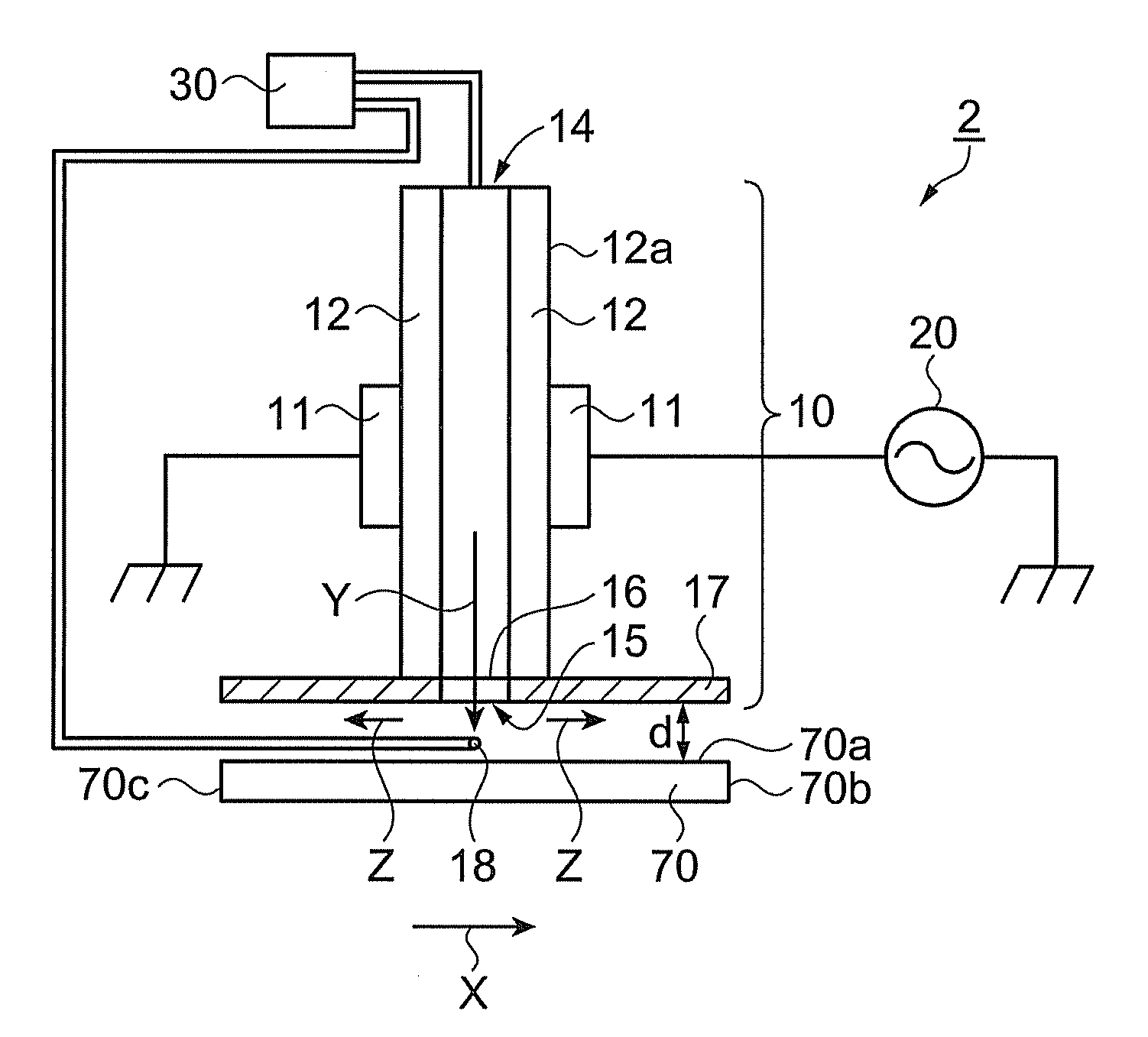
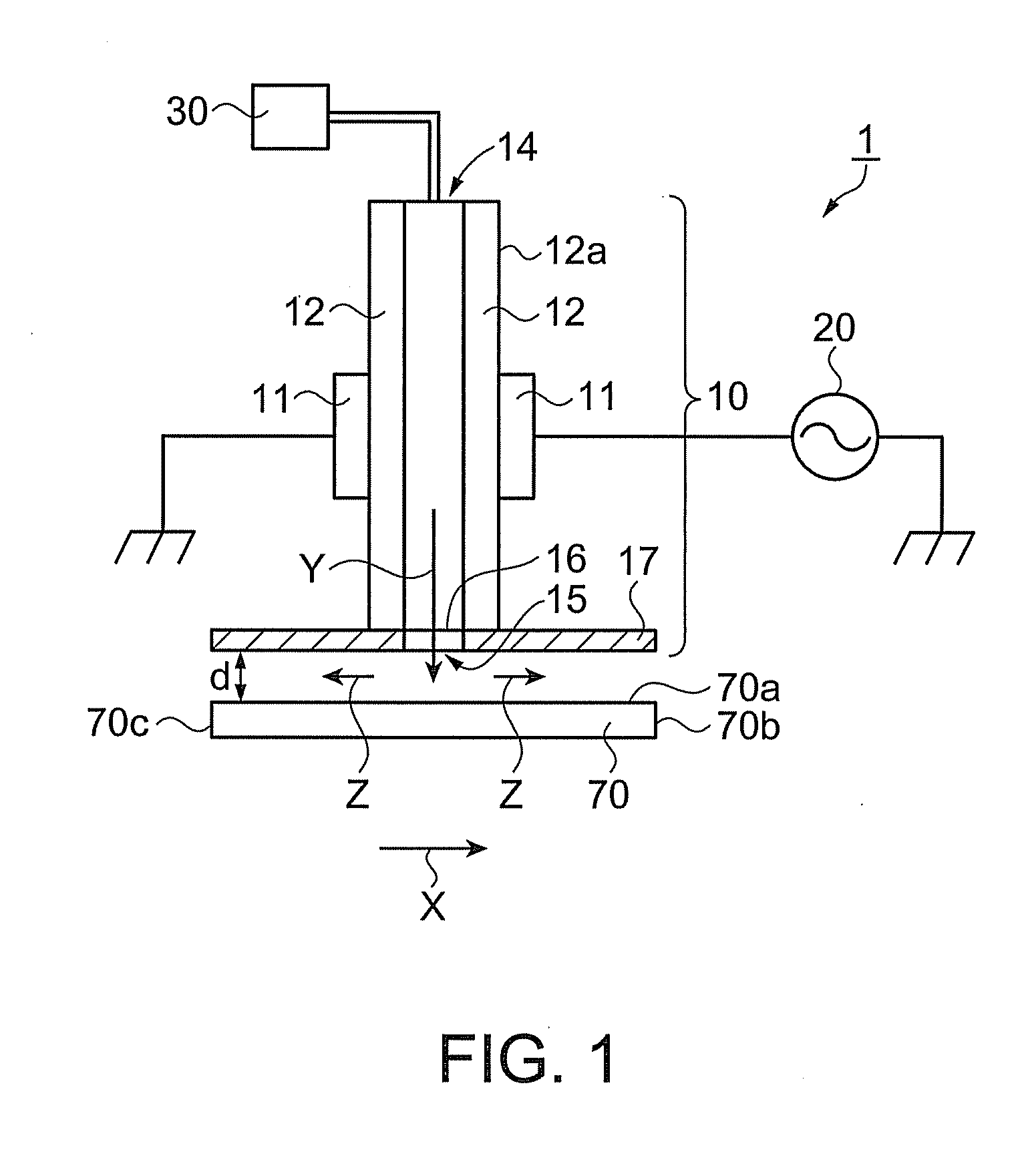
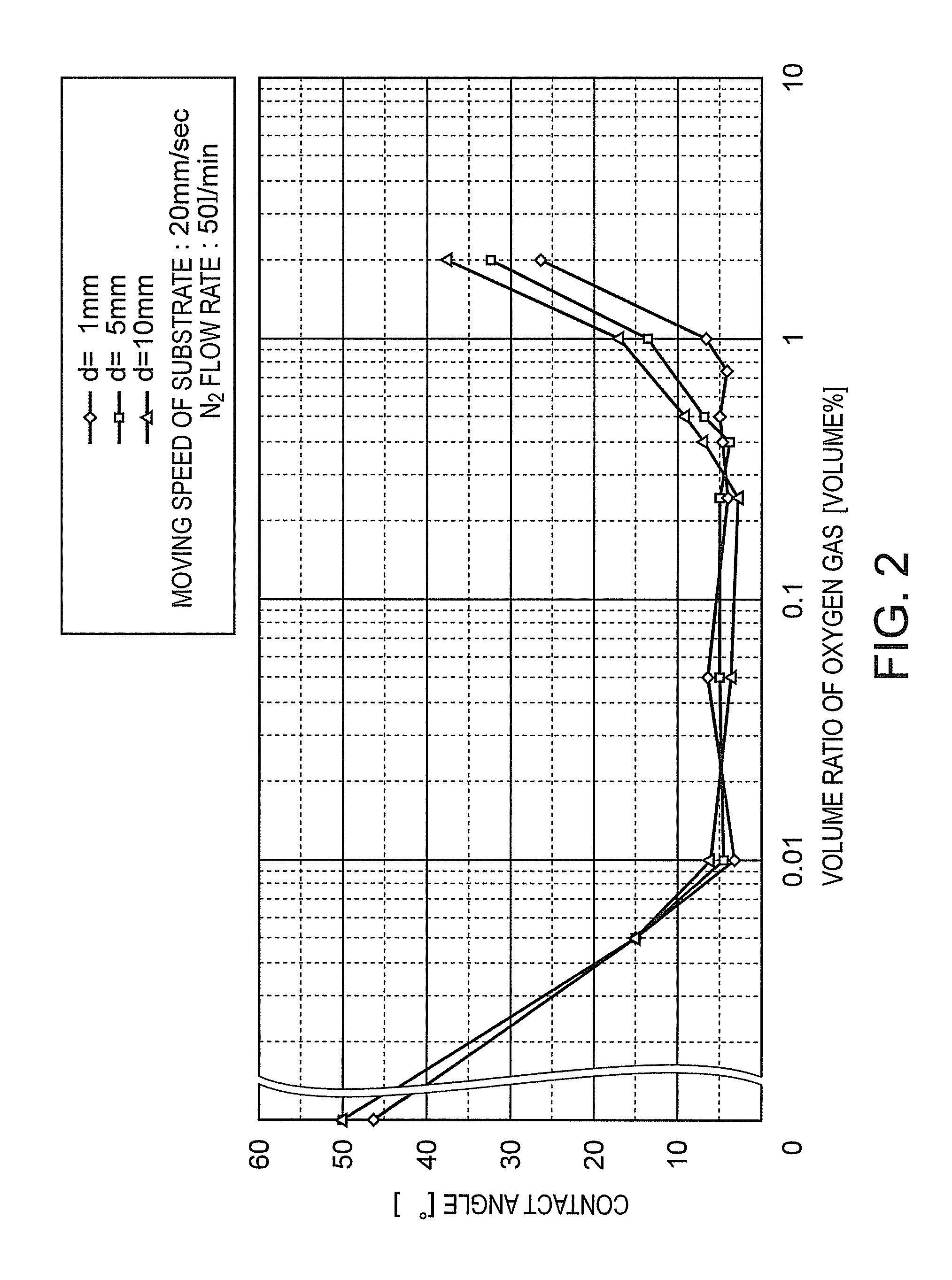
- A method using a plasma treatment with a volume ratio of oxygen gas to nitrogen gas that is lower than in air, allowing nitrogen radicals to collide and generate fresh oxygen radicals, maintaining their presence and efficiently oxidizing organic substances on the substrate surface, while also adjusting the distance between the plasma gun and substrate to optimize gas ratios.

Droplet Discharge Device, and Method for Forming Pattern, and Method for Manufacturing Display Device
PatentInactiveUS20080280033A1
Innovation
- The use of a droplet discharge method to form conductive and insulating layers with desired patterns, employing a shape means to deform and control droplets for precise pattern formation, and incorporating base pretreatment with high melting point metals or organic materials to enhance adhesion and reliability.


Environmental Impact of Plasma Gas Selection
The environmental implications of plasma gas selection between air and nitrogen present significant considerations for sustainable industrial implementation. Air plasma systems demonstrate inherently lower environmental impact due to the elimination of gas supply infrastructure and transportation requirements. This approach reduces the carbon footprint associated with gas production, purification, and delivery logistics, making it particularly attractive for facilities prioritizing environmental sustainability.
Nitrogen plasma systems, while requiring dedicated gas supply chains, offer controlled atmospheric conditions that can minimize unwanted chemical byproducts. The environmental trade-off involves higher energy consumption for nitrogen production and purification against potentially cleaner reaction pathways. Industrial nitrogen production through air separation units consumes substantial electrical energy, contributing to indirect greenhouse gas emissions depending on the local energy grid composition.
Waste stream characteristics differ significantly between the two approaches. Air plasma treatments may generate nitrogen oxides and ozone as byproducts, requiring appropriate ventilation and potential scrubbing systems to meet environmental regulations. These reactive species can contribute to local air quality concerns if not properly managed. Conversely, nitrogen plasma systems typically produce fewer oxidative byproducts but may require specialized waste gas treatment depending on the substrate materials being processed.
Life cycle assessment considerations favor air plasma systems for applications where treatment quality requirements can be met without compromising performance. The elimination of gas storage, handling, and disposal requirements reduces overall environmental complexity. However, nitrogen plasma systems may demonstrate superior environmental performance in applications requiring precise atmospheric control, where air plasma might necessitate longer treatment times or higher energy consumption to achieve equivalent results.
Regulatory compliance aspects increasingly influence gas selection decisions as environmental standards become more stringent. Air plasma systems generally align better with circular economy principles and resource efficiency mandates, while nitrogen systems may face additional scrutiny regarding gas sourcing and waste management protocols in environmentally sensitive applications.
Nitrogen plasma systems, while requiring dedicated gas supply chains, offer controlled atmospheric conditions that can minimize unwanted chemical byproducts. The environmental trade-off involves higher energy consumption for nitrogen production and purification against potentially cleaner reaction pathways. Industrial nitrogen production through air separation units consumes substantial electrical energy, contributing to indirect greenhouse gas emissions depending on the local energy grid composition.
Waste stream characteristics differ significantly between the two approaches. Air plasma treatments may generate nitrogen oxides and ozone as byproducts, requiring appropriate ventilation and potential scrubbing systems to meet environmental regulations. These reactive species can contribute to local air quality concerns if not properly managed. Conversely, nitrogen plasma systems typically produce fewer oxidative byproducts but may require specialized waste gas treatment depending on the substrate materials being processed.
Life cycle assessment considerations favor air plasma systems for applications where treatment quality requirements can be met without compromising performance. The elimination of gas storage, handling, and disposal requirements reduces overall environmental complexity. However, nitrogen plasma systems may demonstrate superior environmental performance in applications requiring precise atmospheric control, where air plasma might necessitate longer treatment times or higher energy consumption to achieve equivalent results.
Regulatory compliance aspects increasingly influence gas selection decisions as environmental standards become more stringent. Air plasma systems generally align better with circular economy principles and resource efficiency mandates, while nitrogen systems may face additional scrutiny regarding gas sourcing and waste management protocols in environmentally sensitive applications.
Safety Standards for Industrial Plasma Systems
Industrial plasma systems operating with air or nitrogen atmospheres require comprehensive safety frameworks to protect personnel, equipment, and facilities. The fundamental safety considerations differ significantly between these two operational modes due to their distinct chemical and physical properties during plasma generation.
Air plasma systems present unique safety challenges primarily related to ozone generation and nitrogen oxide formation. When air is subjected to plasma treatment, the high-energy environment creates reactive oxygen species and ozone concentrations that can exceed occupational exposure limits. Safety standards mandate continuous atmospheric monitoring with ozone detection systems capable of triggering automatic ventilation responses when concentrations approach 0.1 ppm threshold levels. Additionally, nitrogen oxides produced during air plasma operations require specialized exhaust treatment systems to prevent environmental release and worker exposure.
Nitrogen plasma systems, while eliminating ozone concerns, introduce different safety requirements centered on asphyxiation risks and pressure management. The displacement of oxygen in enclosed treatment areas necessitates oxygen monitoring systems with audible alarms set at 19.5% oxygen concentration levels. Emergency protocols must include rapid area evacuation procedures and emergency air supply systems for personnel working in nitrogen-enriched environments.
Electrical safety standards remain consistent across both plasma types, requiring high-voltage isolation systems, emergency shutdown mechanisms, and personnel protection equipment rated for electrical hazards exceeding 1000 volts. Grounding systems must comply with IEEE standards for high-frequency electrical equipment, with impedance measurements verified quarterly.
Fire suppression systems require different approaches for each plasma type. Air plasma facilities typically employ water-based suppression due to reduced fire risk from oxygen depletion, while nitrogen plasma systems necessitate inert gas suppression to prevent oxygen introduction that could create explosive atmospheres when combined with organic vapors from treated materials.
Personal protective equipment specifications vary between operational modes, with air plasma requiring enhanced respiratory protection against oxidative compounds, while nitrogen plasma operations emphasize oxygen supply systems and atmospheric monitoring devices for individual workers.
Air plasma systems present unique safety challenges primarily related to ozone generation and nitrogen oxide formation. When air is subjected to plasma treatment, the high-energy environment creates reactive oxygen species and ozone concentrations that can exceed occupational exposure limits. Safety standards mandate continuous atmospheric monitoring with ozone detection systems capable of triggering automatic ventilation responses when concentrations approach 0.1 ppm threshold levels. Additionally, nitrogen oxides produced during air plasma operations require specialized exhaust treatment systems to prevent environmental release and worker exposure.
Nitrogen plasma systems, while eliminating ozone concerns, introduce different safety requirements centered on asphyxiation risks and pressure management. The displacement of oxygen in enclosed treatment areas necessitates oxygen monitoring systems with audible alarms set at 19.5% oxygen concentration levels. Emergency protocols must include rapid area evacuation procedures and emergency air supply systems for personnel working in nitrogen-enriched environments.
Electrical safety standards remain consistent across both plasma types, requiring high-voltage isolation systems, emergency shutdown mechanisms, and personnel protection equipment rated for electrical hazards exceeding 1000 volts. Grounding systems must comply with IEEE standards for high-frequency electrical equipment, with impedance measurements verified quarterly.
Fire suppression systems require different approaches for each plasma type. Air plasma facilities typically employ water-based suppression due to reduced fire risk from oxygen depletion, while nitrogen plasma systems necessitate inert gas suppression to prevent oxygen introduction that could create explosive atmospheres when combined with organic vapors from treated materials.
Personal protective equipment specifications vary between operational modes, with air plasma requiring enhanced respiratory protection against oxidative compounds, while nitrogen plasma operations emphasize oxygen supply systems and atmospheric monitoring devices for individual workers.
Unlock deeper insights with PatSnap Eureka Quick Research — get a full tech report to explore trends and direct your research. Try now!
Generate Your Research Report Instantly with AI Agent
Supercharge your innovation with PatSnap Eureka AI Agent Platform!