

Creating Value in HEV Industries through Innovative Practices
AUG 14, 20258 MIN READ
Generate Your Research Report Instantly with AI Agent
Patsnap Eureka helps you evaluate technical feasibility & market potential.
HEV Industry Evolution and Objectives
The evolution of the Hybrid Electric Vehicle (HEV) industry has been marked by significant technological advancements and shifting market dynamics. From its inception in the late 20th century, HEV technology has progressed rapidly, driven by the dual objectives of reducing environmental impact and improving fuel efficiency. The industry's growth has been propelled by increasing environmental consciousness, stringent emissions regulations, and the rising cost of fossil fuels.
In the early stages, HEV development focused primarily on improving battery technology and integrating electric motors with conventional internal combustion engines. As the technology matured, the industry witnessed a shift towards more sophisticated power management systems and lightweight materials to enhance overall vehicle performance. This evolution has been characterized by continuous innovation in areas such as regenerative braking, power split devices, and advanced control algorithms.
The objectives of the HEV industry have expanded beyond mere fuel efficiency. Today, the sector aims to create value through innovative practices that address a broader range of consumer and societal needs. These include enhancing driving experience, improving safety features, and integrating smart connectivity solutions. The industry is also focusing on reducing production costs to make HEVs more accessible to a wider consumer base.
A key objective for the HEV industry is to achieve technological parity with conventional vehicles in terms of performance, range, and convenience. This involves overcoming challenges such as battery life, charging infrastructure, and consumer perception. Simultaneously, the industry is striving to differentiate HEVs through unique features that leverage their electric powertrains, such as vehicle-to-grid capabilities and advanced driver assistance systems.
Looking ahead, the HEV industry is setting ambitious goals for sustainability and circular economy practices. This includes developing more environmentally friendly battery technologies, improving the recyclability of vehicle components, and reducing the carbon footprint of the manufacturing process. The industry is also exploring innovative business models, such as battery leasing and mobility-as-a-service, to create additional value streams and address evolving consumer preferences.
As the automotive landscape continues to evolve, the HEV industry is positioning itself at the intersection of traditional automotive engineering and cutting-edge technology. The sector's objectives now encompass not only technological advancement but also the creation of a sustainable ecosystem that supports the transition to cleaner transportation. This holistic approach aims to generate value across the entire vehicle lifecycle, from design and production to use and end-of-life management.
In the early stages, HEV development focused primarily on improving battery technology and integrating electric motors with conventional internal combustion engines. As the technology matured, the industry witnessed a shift towards more sophisticated power management systems and lightweight materials to enhance overall vehicle performance. This evolution has been characterized by continuous innovation in areas such as regenerative braking, power split devices, and advanced control algorithms.
The objectives of the HEV industry have expanded beyond mere fuel efficiency. Today, the sector aims to create value through innovative practices that address a broader range of consumer and societal needs. These include enhancing driving experience, improving safety features, and integrating smart connectivity solutions. The industry is also focusing on reducing production costs to make HEVs more accessible to a wider consumer base.
A key objective for the HEV industry is to achieve technological parity with conventional vehicles in terms of performance, range, and convenience. This involves overcoming challenges such as battery life, charging infrastructure, and consumer perception. Simultaneously, the industry is striving to differentiate HEVs through unique features that leverage their electric powertrains, such as vehicle-to-grid capabilities and advanced driver assistance systems.
Looking ahead, the HEV industry is setting ambitious goals for sustainability and circular economy practices. This includes developing more environmentally friendly battery technologies, improving the recyclability of vehicle components, and reducing the carbon footprint of the manufacturing process. The industry is also exploring innovative business models, such as battery leasing and mobility-as-a-service, to create additional value streams and address evolving consumer preferences.
As the automotive landscape continues to evolve, the HEV industry is positioning itself at the intersection of traditional automotive engineering and cutting-edge technology. The sector's objectives now encompass not only technological advancement but also the creation of a sustainable ecosystem that supports the transition to cleaner transportation. This holistic approach aims to generate value across the entire vehicle lifecycle, from design and production to use and end-of-life management.
Market Demand Analysis for HEV Technologies
The market demand for Hybrid Electric Vehicle (HEV) technologies has been experiencing significant growth in recent years, driven by increasing environmental concerns, stricter emissions regulations, and rising fuel costs. This surge in demand is evident across various segments of the automotive industry, from passenger cars to commercial vehicles.
Consumer preferences have shifted towards more fuel-efficient and environmentally friendly transportation options, with HEVs offering a compelling compromise between traditional internal combustion engines and fully electric vehicles. This shift is particularly pronounced in urban areas where air quality concerns are more acute, and in regions with supportive government policies and incentives for low-emission vehicles.
The global HEV market has been expanding at a robust pace, with major automotive markets such as China, Europe, and North America leading the charge. In these regions, consumer awareness of environmental issues and the total cost of ownership benefits associated with HEVs have been key drivers of adoption.
Fleet operators, including taxi services, delivery companies, and ride-sharing platforms, have also shown increased interest in HEV technologies. The potential for reduced fuel costs and lower maintenance requirements make HEVs an attractive option for businesses looking to optimize their operational expenses while meeting sustainability goals.
The demand for HEV technologies extends beyond the vehicles themselves to encompass a wide range of components and systems. This includes advanced battery technologies, electric motors, power electronics, and energy management systems. As a result, the HEV supply chain has become a significant market in its own right, attracting investment and innovation from both established automotive suppliers and new entrants.
Market analysts project continued growth in the HEV sector, with expectations of increased market penetration across different vehicle classes. The light-duty vehicle segment currently dominates the HEV market, but there is growing interest in applying hybrid technologies to medium and heavy-duty vehicles, opening up new opportunities for innovation and market expansion.
However, the HEV market is not without challenges. The higher upfront costs of hybrid vehicles compared to conventional models remain a barrier to adoption for some consumers. Additionally, the rapid advancement of fully electric vehicle technologies poses a potential threat to long-term HEV demand, as some consumers may opt to leapfrog hybrid technology in favor of all-electric solutions.
Despite these challenges, the overall market outlook for HEV technologies remains positive. The industry's ability to continuously improve fuel efficiency, reduce emissions, and enhance performance through innovative practices will be crucial in sustaining and expanding market demand. As automotive manufacturers and suppliers continue to invest in research and development, the HEV market is expected to evolve, offering increasingly sophisticated and cost-effective solutions to meet the growing demand for cleaner, more efficient transportation options.
Consumer preferences have shifted towards more fuel-efficient and environmentally friendly transportation options, with HEVs offering a compelling compromise between traditional internal combustion engines and fully electric vehicles. This shift is particularly pronounced in urban areas where air quality concerns are more acute, and in regions with supportive government policies and incentives for low-emission vehicles.
The global HEV market has been expanding at a robust pace, with major automotive markets such as China, Europe, and North America leading the charge. In these regions, consumer awareness of environmental issues and the total cost of ownership benefits associated with HEVs have been key drivers of adoption.
Fleet operators, including taxi services, delivery companies, and ride-sharing platforms, have also shown increased interest in HEV technologies. The potential for reduced fuel costs and lower maintenance requirements make HEVs an attractive option for businesses looking to optimize their operational expenses while meeting sustainability goals.
The demand for HEV technologies extends beyond the vehicles themselves to encompass a wide range of components and systems. This includes advanced battery technologies, electric motors, power electronics, and energy management systems. As a result, the HEV supply chain has become a significant market in its own right, attracting investment and innovation from both established automotive suppliers and new entrants.
Market analysts project continued growth in the HEV sector, with expectations of increased market penetration across different vehicle classes. The light-duty vehicle segment currently dominates the HEV market, but there is growing interest in applying hybrid technologies to medium and heavy-duty vehicles, opening up new opportunities for innovation and market expansion.
However, the HEV market is not without challenges. The higher upfront costs of hybrid vehicles compared to conventional models remain a barrier to adoption for some consumers. Additionally, the rapid advancement of fully electric vehicle technologies poses a potential threat to long-term HEV demand, as some consumers may opt to leapfrog hybrid technology in favor of all-electric solutions.
Despite these challenges, the overall market outlook for HEV technologies remains positive. The industry's ability to continuously improve fuel efficiency, reduce emissions, and enhance performance through innovative practices will be crucial in sustaining and expanding market demand. As automotive manufacturers and suppliers continue to invest in research and development, the HEV market is expected to evolve, offering increasingly sophisticated and cost-effective solutions to meet the growing demand for cleaner, more efficient transportation options.
Current HEV Tech Challenges
The Hybrid Electric Vehicle (HEV) industry faces several significant challenges as it strives to create value through innovative practices. One of the primary hurdles is the ongoing need for improved battery technology. Current lithium-ion batteries, while advanced, still struggle with issues of energy density, charging speed, and longevity. This limitation directly impacts the range and performance of HEVs, potentially hindering wider adoption.
Another critical challenge lies in the integration of complex powertrain systems. HEVs require seamless coordination between electric motors and internal combustion engines, necessitating sophisticated control systems. Optimizing this integration for maximum efficiency and performance remains a significant technical hurdle, particularly as manufacturers seek to reduce costs and improve reliability.
The development of lightweight materials presents another obstacle. As HEVs incorporate heavy battery packs, reducing overall vehicle weight becomes crucial for enhancing energy efficiency and range. However, finding cost-effective, durable, and easily manufacturable lightweight materials that meet safety standards is an ongoing challenge for the industry.
Thermal management is a further area of concern. HEV batteries and power electronics generate significant heat during operation, which can affect performance and longevity. Developing efficient cooling systems that don't compromise vehicle design or add excessive weight is a complex engineering challenge that manufacturers continue to grapple with.
Infrastructure limitations also pose a significant hurdle. While HEVs don't rely solely on electric charging, the availability of charging stations remains a concern for consumers, particularly for plug-in hybrid models. This infrastructure gap can impact consumer confidence and slow adoption rates in certain regions.
Lastly, the industry faces challenges in standardization. With various manufacturers developing proprietary technologies, there's a lack of universal standards for components, charging systems, and software interfaces. This fragmentation can lead to increased costs, compatibility issues, and slower industry-wide innovation.
Addressing these technical challenges is crucial for the HEV industry to continue creating value and driving innovation. Overcoming these hurdles will not only improve vehicle performance and consumer acceptance but also contribute to the broader goals of reducing carbon emissions and promoting sustainable transportation solutions.
Another critical challenge lies in the integration of complex powertrain systems. HEVs require seamless coordination between electric motors and internal combustion engines, necessitating sophisticated control systems. Optimizing this integration for maximum efficiency and performance remains a significant technical hurdle, particularly as manufacturers seek to reduce costs and improve reliability.
The development of lightweight materials presents another obstacle. As HEVs incorporate heavy battery packs, reducing overall vehicle weight becomes crucial for enhancing energy efficiency and range. However, finding cost-effective, durable, and easily manufacturable lightweight materials that meet safety standards is an ongoing challenge for the industry.
Thermal management is a further area of concern. HEV batteries and power electronics generate significant heat during operation, which can affect performance and longevity. Developing efficient cooling systems that don't compromise vehicle design or add excessive weight is a complex engineering challenge that manufacturers continue to grapple with.
Infrastructure limitations also pose a significant hurdle. While HEVs don't rely solely on electric charging, the availability of charging stations remains a concern for consumers, particularly for plug-in hybrid models. This infrastructure gap can impact consumer confidence and slow adoption rates in certain regions.
Lastly, the industry faces challenges in standardization. With various manufacturers developing proprietary technologies, there's a lack of universal standards for components, charging systems, and software interfaces. This fragmentation can lead to increased costs, compatibility issues, and slower industry-wide innovation.
Addressing these technical challenges is crucial for the HEV industry to continue creating value and driving innovation. Overcoming these hurdles will not only improve vehicle performance and consumer acceptance but also contribute to the broader goals of reducing carbon emissions and promoting sustainable transportation solutions.
Innovative HEV Solutions
01 HEV light protection in cosmetics
High Energy Visible (HEV) light protection is becoming increasingly important in the cosmetics industry. Formulations are being developed to protect skin from the potential harmful effects of blue light emitted by electronic devices and sunlight. These products often incorporate specific ingredients that can absorb or reflect HEV light, providing a new dimension to skin protection beyond traditional UV filters.- HEV light protection in cosmetics: High-energy visible (HEV) light protection is becoming increasingly important in the cosmetics industry. Formulations incorporating ingredients that can block or mitigate the effects of HEV light are being developed to protect skin from potential damage caused by prolonged exposure to digital screens and other sources of blue light.
- HEV-related automotive technologies: The automotive industry is exploring HEV-related technologies for various applications, including lighting systems, displays, and sensors. These innovations aim to improve vehicle safety, enhance driver experience, and optimize energy efficiency in hybrid and electric vehicles.
- HEV in biotechnology and medical applications: High-energy visible light is being utilized in biotechnology and medical fields for various applications, including diagnostics, imaging, and therapeutic treatments. Research is ongoing to develop new techniques and devices that harness HEV light for improved healthcare outcomes.
- HEV-related data processing and analysis: The development of advanced data processing and analysis techniques is crucial for handling the large volumes of data generated in HEV-related industries. These methods are being applied to optimize performance, enhance decision-making processes, and improve overall efficiency in various sectors utilizing HEV technologies.
- HEV in agriculture and plant science: High-energy visible light is being explored for its potential applications in agriculture and plant science. Research is focused on understanding the effects of HEV light on plant growth, development, and productivity, with the aim of developing innovative cultivation techniques and improving crop yields.
02 HEV-related biotechnology applications
The biotechnology sector is exploring HEV-related applications, particularly in areas such as gene expression and protein production. Research is focused on understanding how HEV light affects cellular processes and developing methods to utilize or mitigate these effects in various biological systems. This could lead to advancements in fields like agriculture, medicine, and environmental science.Expand Specific Solutions03 HEV technology in automotive industry
The automotive industry is incorporating HEV technology in vehicle design and manufacturing. This includes the development of hybrid electric vehicles, which combine conventional internal combustion engines with electric propulsion systems. The focus is on improving fuel efficiency, reducing emissions, and enhancing overall vehicle performance through the integration of HEV systems.Expand Specific Solutions04 HEV in display and lighting technology
HEV technology is being applied in the development of advanced display and lighting systems. This includes the creation of more energy-efficient and visually appealing screens for electronic devices, as well as innovative lighting solutions for various applications. The focus is on improving color reproduction, reducing eye strain, and optimizing energy consumption in these systems.Expand Specific Solutions05 HEV in data processing and analysis
The information technology sector is leveraging HEV concepts in data processing and analysis. This involves developing algorithms and systems that can efficiently handle high-energy data streams, potentially leading to advancements in areas such as big data analytics, machine learning, and artificial intelligence. The goal is to improve data processing speed and accuracy while managing energy consumption.Expand Specific Solutions
Core HEV Patents and Innovations
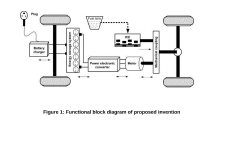
Hybrid electric vehicle with electric motor providing strategic power assist to load balance internal combustion engine
PatentPendingIN202441000035A
Innovation
- A Hybrid Electric Vehicle (HEV) system with an electric motor providing strategic power assist to the internal combustion engine, optimizing power distribution and energy management through advanced control algorithms.
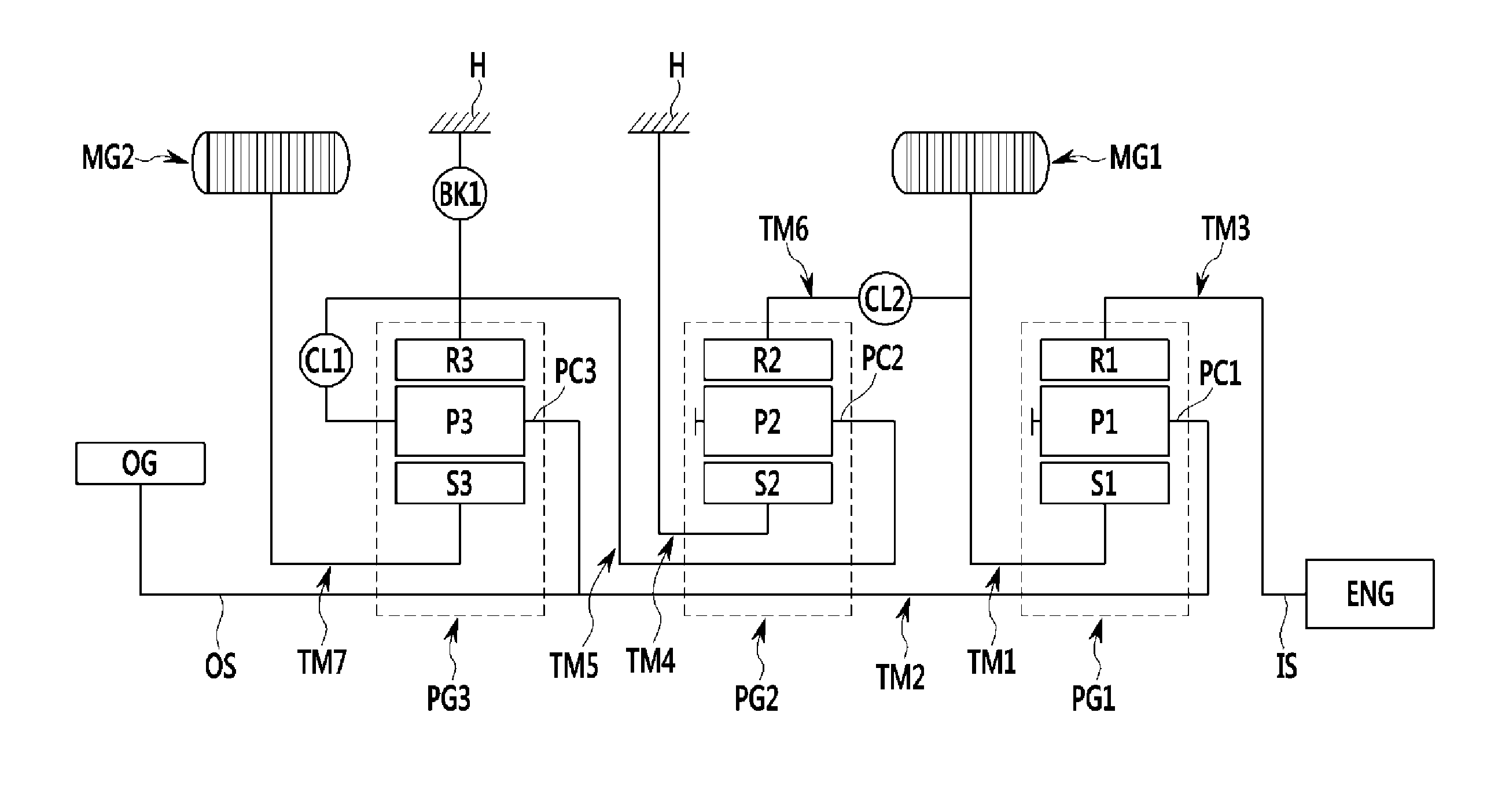
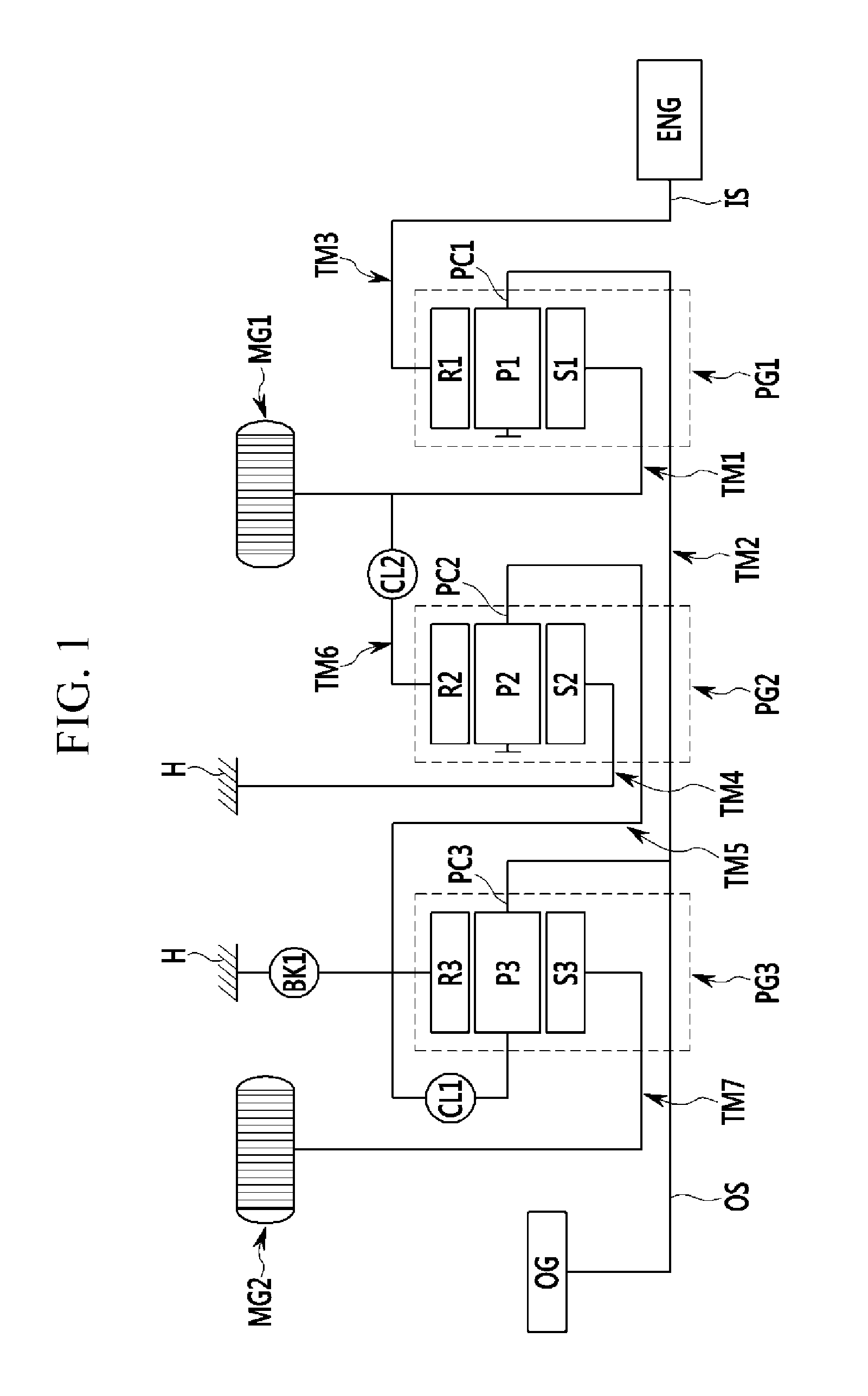
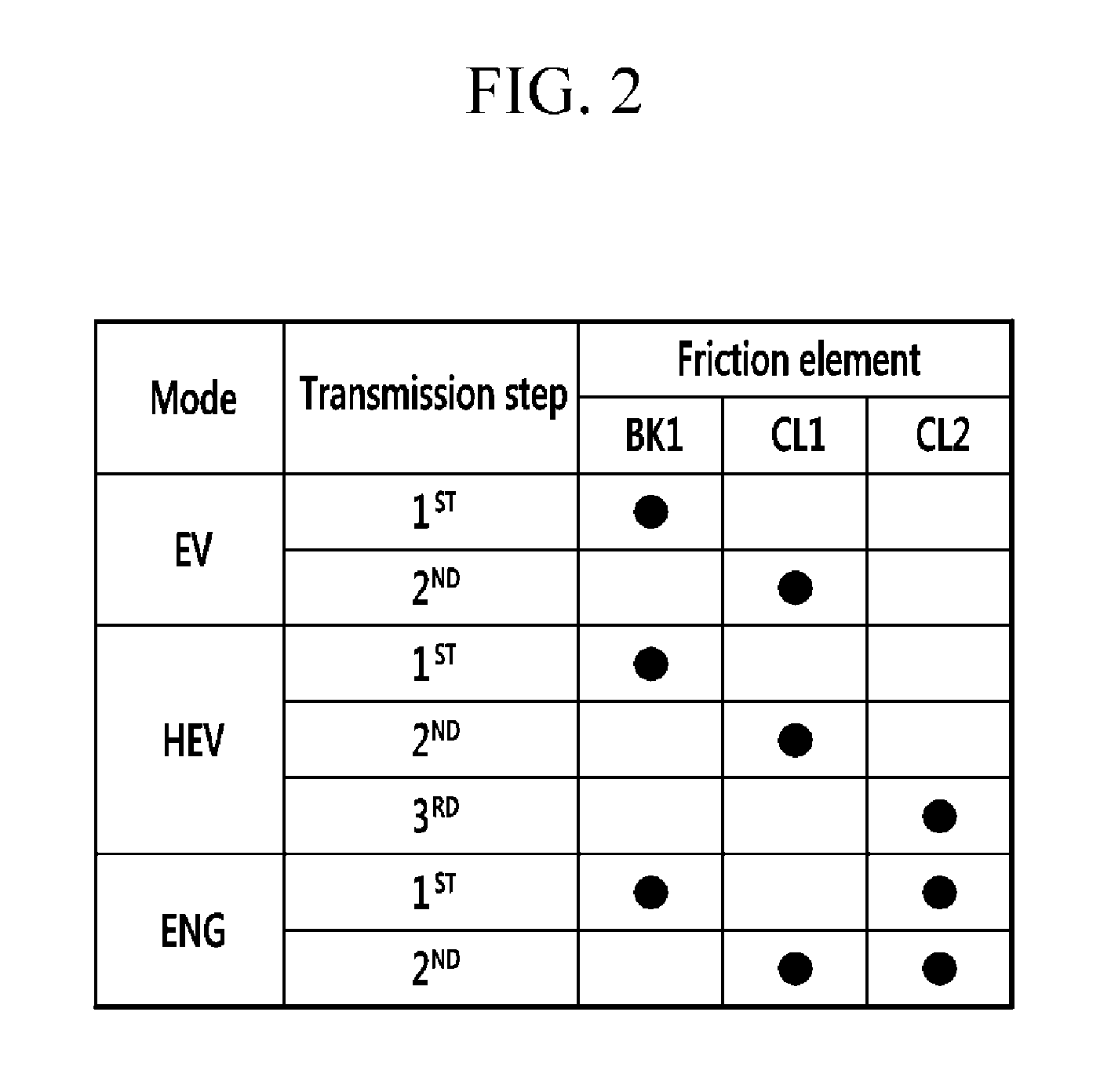
Power transmission system of hybrid electric vehicle
PatentActiveUS20160047444A1
Innovation
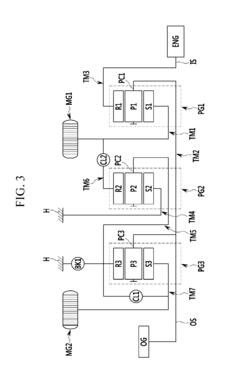
- A power transmission system incorporating three planetary gear sets and two motors/generators, along with friction elements and clutches, is designed to suppress ENG mode conversion, maximize engine power use in HEV modes, and minimize RPM changes during mode transitions, allowing for high-torque transmission and reduced electric load, enabling efficient high-speed driving without motor/generator electric loads.
HEV Environmental Impact
The environmental impact of Hybrid Electric Vehicles (HEVs) is a crucial aspect to consider when evaluating their overall value proposition. HEVs have gained significant attention due to their potential to reduce greenhouse gas emissions and improve fuel efficiency compared to conventional internal combustion engine vehicles.
One of the primary environmental benefits of HEVs is their reduced carbon footprint. By combining an electric motor with a gasoline engine, HEVs can significantly decrease fuel consumption and, consequently, lower CO2 emissions. Studies have shown that HEVs can reduce greenhouse gas emissions by 25-35% compared to their conventional counterparts, depending on the specific model and driving conditions.
HEVs also contribute to improved air quality in urban areas. The electric motor allows for zero-emission operation during low-speed city driving, reducing the release of harmful pollutants such as nitrogen oxides and particulate matter. This is particularly beneficial in densely populated areas where air pollution is a major concern.
However, the environmental impact of HEVs extends beyond their operational phase. The production of HEV batteries involves energy-intensive processes and the extraction of rare earth elements, which can have negative environmental consequences. The mining and processing of these materials can lead to habitat destruction, water pollution, and increased carbon emissions.
End-of-life considerations for HEVs also present environmental challenges. The disposal and recycling of batteries require specialized processes to prevent the release of toxic materials into the environment. While progress has been made in battery recycling technologies, further advancements are needed to minimize the environmental impact of battery disposal.
It is important to note that the overall environmental impact of HEVs can vary depending on factors such as the source of electricity used for charging, driving patterns, and local climate conditions. In regions where electricity is primarily generated from renewable sources, the environmental benefits of HEVs are more pronounced.
To maximize the environmental benefits of HEVs, ongoing research and development efforts are focused on improving battery technology, enhancing energy efficiency, and developing more sustainable manufacturing processes. Additionally, the integration of HEVs with smart grid systems and renewable energy sources holds promise for further reducing their environmental footprint.
As the HEV industry continues to evolve, it is crucial to consider the entire lifecycle of these vehicles when assessing their environmental impact. This holistic approach will help guide future innovations and ensure that HEVs contribute positively to global sustainability efforts.
One of the primary environmental benefits of HEVs is their reduced carbon footprint. By combining an electric motor with a gasoline engine, HEVs can significantly decrease fuel consumption and, consequently, lower CO2 emissions. Studies have shown that HEVs can reduce greenhouse gas emissions by 25-35% compared to their conventional counterparts, depending on the specific model and driving conditions.
HEVs also contribute to improved air quality in urban areas. The electric motor allows for zero-emission operation during low-speed city driving, reducing the release of harmful pollutants such as nitrogen oxides and particulate matter. This is particularly beneficial in densely populated areas where air pollution is a major concern.
However, the environmental impact of HEVs extends beyond their operational phase. The production of HEV batteries involves energy-intensive processes and the extraction of rare earth elements, which can have negative environmental consequences. The mining and processing of these materials can lead to habitat destruction, water pollution, and increased carbon emissions.
End-of-life considerations for HEVs also present environmental challenges. The disposal and recycling of batteries require specialized processes to prevent the release of toxic materials into the environment. While progress has been made in battery recycling technologies, further advancements are needed to minimize the environmental impact of battery disposal.
It is important to note that the overall environmental impact of HEVs can vary depending on factors such as the source of electricity used for charging, driving patterns, and local climate conditions. In regions where electricity is primarily generated from renewable sources, the environmental benefits of HEVs are more pronounced.
To maximize the environmental benefits of HEVs, ongoing research and development efforts are focused on improving battery technology, enhancing energy efficiency, and developing more sustainable manufacturing processes. Additionally, the integration of HEVs with smart grid systems and renewable energy sources holds promise for further reducing their environmental footprint.
As the HEV industry continues to evolve, it is crucial to consider the entire lifecycle of these vehicles when assessing their environmental impact. This holistic approach will help guide future innovations and ensure that HEVs contribute positively to global sustainability efforts.
HEV Policy and Regulations
The regulatory landscape for Hybrid Electric Vehicles (HEVs) plays a crucial role in shaping the industry's growth and innovation. Governments worldwide have implemented various policies and regulations to promote the adoption of HEVs and reduce greenhouse gas emissions from the transportation sector.
In many countries, fuel economy standards have been a primary driver for HEV development. These standards set targets for average fleet fuel efficiency, encouraging automakers to invest in hybrid technologies. For instance, the Corporate Average Fuel Economy (CAFE) standards in the United States have been instrumental in pushing manufacturers to improve fuel efficiency across their vehicle lineups.
Tax incentives and subsidies have also been widely used to stimulate HEV sales. These financial incentives can take the form of tax credits, rebates, or reduced registration fees for HEV purchases. Such policies have been particularly effective in countries like Japan and Norway, where HEV adoption rates are among the highest globally.
Emissions regulations have become increasingly stringent, further driving the shift towards HEVs. The European Union's CO2 emissions targets for new vehicles have led to a significant increase in HEV offerings from European automakers. Similarly, China's New Energy Vehicle (NEV) mandate has spurred rapid growth in the HEV market within the country.
Many cities and urban areas have implemented low-emission zones or congestion charging schemes that favor HEVs. These policies provide additional incentives for consumers to choose hybrid vehicles, particularly in densely populated areas where air quality is a major concern.
Research and development support is another critical aspect of HEV policy. Governments often provide funding or tax breaks for companies investing in hybrid technology research, helping to accelerate innovation in the field. This support has led to advancements in battery technology, power electronics, and electric motor design.
Infrastructure development policies are also essential for the HEV ecosystem. While HEVs do not rely solely on electric charging, the availability of charging stations can still influence consumer adoption, particularly for plug-in hybrid models. Governments have implemented various initiatives to expand charging networks and standardize charging protocols.
As the HEV market matures, some countries are beginning to phase out incentives for conventional hybrids in favor of fully electric vehicles. This shift in policy focus presents both challenges and opportunities for the HEV industry, driving further innovation in plug-in hybrid technologies and extended-range electric vehicles.
In many countries, fuel economy standards have been a primary driver for HEV development. These standards set targets for average fleet fuel efficiency, encouraging automakers to invest in hybrid technologies. For instance, the Corporate Average Fuel Economy (CAFE) standards in the United States have been instrumental in pushing manufacturers to improve fuel efficiency across their vehicle lineups.
Tax incentives and subsidies have also been widely used to stimulate HEV sales. These financial incentives can take the form of tax credits, rebates, or reduced registration fees for HEV purchases. Such policies have been particularly effective in countries like Japan and Norway, where HEV adoption rates are among the highest globally.
Emissions regulations have become increasingly stringent, further driving the shift towards HEVs. The European Union's CO2 emissions targets for new vehicles have led to a significant increase in HEV offerings from European automakers. Similarly, China's New Energy Vehicle (NEV) mandate has spurred rapid growth in the HEV market within the country.
Many cities and urban areas have implemented low-emission zones or congestion charging schemes that favor HEVs. These policies provide additional incentives for consumers to choose hybrid vehicles, particularly in densely populated areas where air quality is a major concern.
Research and development support is another critical aspect of HEV policy. Governments often provide funding or tax breaks for companies investing in hybrid technology research, helping to accelerate innovation in the field. This support has led to advancements in battery technology, power electronics, and electric motor design.
Infrastructure development policies are also essential for the HEV ecosystem. While HEVs do not rely solely on electric charging, the availability of charging stations can still influence consumer adoption, particularly for plug-in hybrid models. Governments have implemented various initiatives to expand charging networks and standardize charging protocols.
As the HEV market matures, some countries are beginning to phase out incentives for conventional hybrids in favor of fully electric vehicles. This shift in policy focus presents both challenges and opportunities for the HEV industry, driving further innovation in plug-in hybrid technologies and extended-range electric vehicles.
Unlock deeper insights with Patsnap Eureka Quick Research — get a full tech report to explore trends and direct your research. Try now!
Generate Your Research Report Instantly with AI Agent
Supercharge your innovation with Patsnap Eureka AI Agent Platform!