Design Quantum Tunneling Integrations for Noise Suppression
SEP 4, 202510 MIN READ
Generate Your Research Report Instantly with AI Agent
PatSnap Eureka helps you evaluate technical feasibility & market potential.
Quantum Tunneling Noise Suppression Background and Objectives
Quantum tunneling, a fundamental quantum mechanical phenomenon, has evolved from a theoretical curiosity to a practical tool in modern electronics and signal processing. This phenomenon, where particles penetrate energy barriers that would be insurmountable according to classical physics, was first described in the early 20th century through the work of Friedrich Hund, followed by significant contributions from George Gamow in nuclear physics applications. Over the decades, our understanding of quantum tunneling has deepened substantially, revealing its potential for addressing one of the most persistent challenges in electronic systems: noise suppression.
The evolution of quantum tunneling applications has accelerated dramatically in recent years, driven by advancements in nanofabrication techniques and quantum materials science. Initially limited to theoretical models and basic semiconductor devices, quantum tunneling is now being explored for sophisticated noise cancellation mechanisms that operate at the quantum level, potentially offering unprecedented signal clarity in sensitive electronic systems.
Our technical objective is to develop integrated quantum tunneling solutions that can effectively suppress noise across multiple frequency domains while maintaining signal integrity. Specifically, we aim to harness the unique properties of quantum tunneling to create filtering mechanisms that can distinguish between signal and noise at the quantum level, rather than through conventional electronic filtering which often compromises signal quality.
The current trajectory of quantum tunneling technology suggests several promising avenues for noise suppression. These include tunnel junction arrays that can be precisely tuned to filter specific noise frequencies, quantum well structures that can trap and neutralize noise-generating electrons, and tunneling-based amplification systems that can boost signals without introducing additional noise - a significant improvement over traditional amplifiers.
Recent breakthroughs in materials science, particularly in two-dimensional quantum materials like graphene and transition metal dichalcogenides, have created new possibilities for quantum tunneling applications. These materials exhibit exceptional tunneling characteristics that can be manipulated with unprecedented precision, potentially enabling noise suppression systems that adapt dynamically to changing noise environments.
The ultimate goal of this technical exploration is to establish a framework for quantum tunneling noise suppression that can be practically implemented in next-generation electronic systems, from quantum computers and ultra-sensitive sensors to advanced communication systems operating in noisy environments. This requires not only theoretical advances but also practical engineering solutions that can bridge the gap between quantum phenomena and real-world applications.
By systematically investigating quantum tunneling mechanisms for noise suppression, we expect to develop novel approaches that fundamentally change how electronic systems handle signal-to-noise challenges, potentially enabling performance levels that are unattainable with conventional technologies.
The evolution of quantum tunneling applications has accelerated dramatically in recent years, driven by advancements in nanofabrication techniques and quantum materials science. Initially limited to theoretical models and basic semiconductor devices, quantum tunneling is now being explored for sophisticated noise cancellation mechanisms that operate at the quantum level, potentially offering unprecedented signal clarity in sensitive electronic systems.
Our technical objective is to develop integrated quantum tunneling solutions that can effectively suppress noise across multiple frequency domains while maintaining signal integrity. Specifically, we aim to harness the unique properties of quantum tunneling to create filtering mechanisms that can distinguish between signal and noise at the quantum level, rather than through conventional electronic filtering which often compromises signal quality.
The current trajectory of quantum tunneling technology suggests several promising avenues for noise suppression. These include tunnel junction arrays that can be precisely tuned to filter specific noise frequencies, quantum well structures that can trap and neutralize noise-generating electrons, and tunneling-based amplification systems that can boost signals without introducing additional noise - a significant improvement over traditional amplifiers.
Recent breakthroughs in materials science, particularly in two-dimensional quantum materials like graphene and transition metal dichalcogenides, have created new possibilities for quantum tunneling applications. These materials exhibit exceptional tunneling characteristics that can be manipulated with unprecedented precision, potentially enabling noise suppression systems that adapt dynamically to changing noise environments.
The ultimate goal of this technical exploration is to establish a framework for quantum tunneling noise suppression that can be practically implemented in next-generation electronic systems, from quantum computers and ultra-sensitive sensors to advanced communication systems operating in noisy environments. This requires not only theoretical advances but also practical engineering solutions that can bridge the gap between quantum phenomena and real-world applications.
By systematically investigating quantum tunneling mechanisms for noise suppression, we expect to develop novel approaches that fundamentally change how electronic systems handle signal-to-noise challenges, potentially enabling performance levels that are unattainable with conventional technologies.
Market Applications and Demand Analysis
The quantum tunneling noise suppression technology market is experiencing significant growth driven by the increasing demand for high-precision electronic devices and quantum computing applications. As electronic components continue to miniaturize, quantum noise effects become more pronounced, creating substantial challenges for device performance and reliability. This has created a pressing market need for effective noise suppression solutions that can operate at the quantum level.
The telecommunications sector represents one of the largest potential markets for quantum tunneling noise suppression technology. With the global rollout of 5G networks and development of 6G technologies, signal integrity and noise reduction have become critical factors in achieving the promised data rates and reliability. Quantum tunneling-based solutions offer superior performance compared to traditional noise filtering methods, particularly in high-frequency applications where conventional approaches reach their physical limitations.
Healthcare and medical diagnostics constitute another rapidly expanding application area. Advanced medical imaging systems, such as high-resolution MRI and quantum sensors for biological systems, require unprecedented levels of signal clarity. Quantum tunneling noise suppression can significantly enhance the sensitivity of these devices, enabling earlier disease detection and more accurate diagnostics through improved signal-to-noise ratios.
The aerospace and defense industries have demonstrated substantial interest in this technology for radar systems, secure communications, and sensitive detection equipment. These applications operate in environments with significant electromagnetic interference, making quantum tunneling noise suppression particularly valuable for maintaining operational integrity and data security.
Consumer electronics manufacturers are increasingly exploring quantum tunneling solutions to address noise issues in next-generation devices. As smartphones, wearables, and IoT devices incorporate more sensors and operate at higher frequencies, quantum noise effects become more problematic. Market research indicates that manufacturers are willing to invest in premium noise suppression solutions that can extend battery life and improve device performance.
The automotive sector, particularly with the rise of autonomous vehicles, represents an emerging market opportunity. These vehicles rely on numerous sensors and communication systems that must function reliably in noisy electromagnetic environments. Quantum tunneling noise suppression technology can enhance the performance of radar systems, lidar, and vehicle-to-everything (V2X) communication platforms critical for autonomous operation.
Scientific research instrumentation forms a specialized but high-value market segment. Quantum physics laboratories, materials science facilities, and other research institutions require extremely sensitive measurement equipment where quantum tunneling noise suppression can provide significant advantages over conventional technologies.
The telecommunications sector represents one of the largest potential markets for quantum tunneling noise suppression technology. With the global rollout of 5G networks and development of 6G technologies, signal integrity and noise reduction have become critical factors in achieving the promised data rates and reliability. Quantum tunneling-based solutions offer superior performance compared to traditional noise filtering methods, particularly in high-frequency applications where conventional approaches reach their physical limitations.
Healthcare and medical diagnostics constitute another rapidly expanding application area. Advanced medical imaging systems, such as high-resolution MRI and quantum sensors for biological systems, require unprecedented levels of signal clarity. Quantum tunneling noise suppression can significantly enhance the sensitivity of these devices, enabling earlier disease detection and more accurate diagnostics through improved signal-to-noise ratios.
The aerospace and defense industries have demonstrated substantial interest in this technology for radar systems, secure communications, and sensitive detection equipment. These applications operate in environments with significant electromagnetic interference, making quantum tunneling noise suppression particularly valuable for maintaining operational integrity and data security.
Consumer electronics manufacturers are increasingly exploring quantum tunneling solutions to address noise issues in next-generation devices. As smartphones, wearables, and IoT devices incorporate more sensors and operate at higher frequencies, quantum noise effects become more problematic. Market research indicates that manufacturers are willing to invest in premium noise suppression solutions that can extend battery life and improve device performance.
The automotive sector, particularly with the rise of autonomous vehicles, represents an emerging market opportunity. These vehicles rely on numerous sensors and communication systems that must function reliably in noisy electromagnetic environments. Quantum tunneling noise suppression technology can enhance the performance of radar systems, lidar, and vehicle-to-everything (V2X) communication platforms critical for autonomous operation.
Scientific research instrumentation forms a specialized but high-value market segment. Quantum physics laboratories, materials science facilities, and other research institutions require extremely sensitive measurement equipment where quantum tunneling noise suppression can provide significant advantages over conventional technologies.
Current Quantum Tunneling Integration Challenges
The integration of quantum tunneling mechanisms for noise suppression faces several significant technical challenges that impede widespread implementation. Current quantum tunneling devices exhibit inconsistent performance across varying temperature ranges, with efficiency dropping dramatically outside narrow operational parameters. This thermal sensitivity creates substantial barriers for real-world applications, particularly in environments where temperature control is limited or impractical.
Signal integrity represents another major hurdle, as quantum tunneling components often introduce their own noise artifacts during operation. The paradoxical situation where noise suppression systems generate secondary noise patterns requires complex compensation algorithms that increase computational overhead and power requirements. These artifacts become particularly problematic in high-precision measurement systems where even minimal signal distortion can compromise results.
Scalability remains a persistent challenge, with current integration techniques struggling to maintain quantum coherence when scaled beyond laboratory prototypes. The delicate quantum states necessary for effective tunneling-based noise suppression degrade rapidly as system size increases, creating a significant barrier to commercial deployment. Manufacturing processes capable of consistently producing quantum tunneling components at scale have yet to be fully developed.
Material limitations further constrain progress, as existing substrate materials exhibit undesirable properties including high impedance variability and susceptibility to environmental interference. The search for ideal materials that can maintain quantum coherence while providing robust physical properties continues to challenge researchers. Current candidates often require trade-offs between tunneling efficiency and structural stability.
Power efficiency presents another significant obstacle, with quantum tunneling noise suppression systems typically requiring substantial energy input relative to their classical counterparts. This energy overhead makes integration into portable or energy-constrained applications particularly challenging. Current designs struggle to balance power consumption against noise suppression performance, often sacrificing one for the other.
Integration with existing electronic architectures poses compatibility issues, as quantum tunneling components frequently require specialized interfaces and control systems that don't align with conventional electronic design principles. This incompatibility necessitates complex adaptation layers that introduce additional points of failure and performance bottlenecks. The lack of standardized integration protocols further complicates implementation across different platforms and applications.
Reliability and longevity concerns persist, with quantum tunneling components showing degradation patterns that are difficult to predict and mitigate. Current testing methodologies struggle to accurately model long-term performance, creating uncertainty around maintenance requirements and operational lifespan. This unpredictability represents a significant barrier to adoption in critical systems where component failure could have serious consequences.
Signal integrity represents another major hurdle, as quantum tunneling components often introduce their own noise artifacts during operation. The paradoxical situation where noise suppression systems generate secondary noise patterns requires complex compensation algorithms that increase computational overhead and power requirements. These artifacts become particularly problematic in high-precision measurement systems where even minimal signal distortion can compromise results.
Scalability remains a persistent challenge, with current integration techniques struggling to maintain quantum coherence when scaled beyond laboratory prototypes. The delicate quantum states necessary for effective tunneling-based noise suppression degrade rapidly as system size increases, creating a significant barrier to commercial deployment. Manufacturing processes capable of consistently producing quantum tunneling components at scale have yet to be fully developed.
Material limitations further constrain progress, as existing substrate materials exhibit undesirable properties including high impedance variability and susceptibility to environmental interference. The search for ideal materials that can maintain quantum coherence while providing robust physical properties continues to challenge researchers. Current candidates often require trade-offs between tunneling efficiency and structural stability.
Power efficiency presents another significant obstacle, with quantum tunneling noise suppression systems typically requiring substantial energy input relative to their classical counterparts. This energy overhead makes integration into portable or energy-constrained applications particularly challenging. Current designs struggle to balance power consumption against noise suppression performance, often sacrificing one for the other.
Integration with existing electronic architectures poses compatibility issues, as quantum tunneling components frequently require specialized interfaces and control systems that don't align with conventional electronic design principles. This incompatibility necessitates complex adaptation layers that introduce additional points of failure and performance bottlenecks. The lack of standardized integration protocols further complicates implementation across different platforms and applications.
Reliability and longevity concerns persist, with quantum tunneling components showing degradation patterns that are difficult to predict and mitigate. Current testing methodologies struggle to accurately model long-term performance, creating uncertainty around maintenance requirements and operational lifespan. This unpredictability represents a significant barrier to adoption in critical systems where component failure could have serious consequences.
Existing Quantum Tunneling Integration Solutions
01 Quantum tunneling noise suppression in computing systems
Quantum tunneling effects can introduce noise in computing systems, particularly in quantum computing and data storage applications. Various techniques have been developed to suppress this noise, including specialized circuit designs, error correction algorithms, and isolation mechanisms. These approaches help maintain data integrity and computational accuracy by minimizing the impact of quantum tunneling-induced noise on system performance.- Quantum tunneling noise suppression in computing systems: Quantum tunneling effects can introduce noise in computing systems, particularly in quantum computing architectures. Various techniques have been developed to suppress this noise, including specialized circuit designs and error correction algorithms. These methods help maintain quantum coherence and improve the reliability of quantum computations by mitigating the unwanted effects of quantum tunneling.
- Noise reduction in quantum memory devices: Quantum memory devices are susceptible to noise from quantum tunneling phenomena. Advanced noise suppression techniques have been developed specifically for these storage systems, including specialized shielding materials and signal processing algorithms. These approaches help preserve quantum states for longer periods by minimizing decoherence caused by tunneling effects, thereby improving the reliability and performance of quantum memory systems.
- Semiconductor device designs for tunneling noise mitigation: Specialized semiconductor device architectures have been developed to mitigate quantum tunneling noise. These designs incorporate novel materials, barrier structures, and isolation techniques that reduce unwanted tunneling currents. By controlling the quantum tunneling pathways and implementing strategic device geometries, these innovations significantly reduce noise in semiconductor components operating in quantum regimes.
- Signal processing techniques for quantum noise filtering: Advanced signal processing algorithms have been developed specifically to filter out noise caused by quantum tunneling effects. These techniques include adaptive filtering, statistical noise modeling, and quantum-specific digital signal processing methods. By applying these sophisticated algorithms, quantum systems can achieve higher signal-to-noise ratios and more reliable operation in environments where tunneling noise is prevalent.
- Quantum measurement systems with integrated noise suppression: Integrated measurement systems have been developed that incorporate quantum tunneling noise suppression directly into the measurement apparatus. These systems combine specialized sensors, calibration methods, and real-time noise compensation techniques to achieve more accurate quantum measurements. By addressing tunneling noise at the measurement level, these innovations enable more precise characterization and control of quantum phenomena in research and practical applications.
02 Semiconductor device designs for quantum noise reduction
Advanced semiconductor device architectures incorporate specific design elements to mitigate quantum tunneling noise. These designs include specialized barrier materials, optimized junction geometries, and novel gate structures that reduce unwanted electron tunneling. By controlling the quantum mechanical behavior of electrons at the nanoscale, these semiconductor innovations significantly improve signal-to-noise ratios and device performance in quantum-sensitive applications.Expand Specific Solutions03 Signal processing techniques for quantum noise filtration
Sophisticated signal processing algorithms have been developed specifically to filter out noise arising from quantum tunneling phenomena. These techniques include adaptive filtering, wavelet transforms, and machine learning approaches that can identify and remove quantum noise signatures from signals. Implementation of these methods in hardware or software enables cleaner signal transmission and more accurate data interpretation in quantum-affected systems.Expand Specific Solutions04 Quantum-resistant memory and storage technologies
Memory and storage technologies have been developed with inherent resistance to quantum tunneling effects. These include specialized materials and structures that maintain data integrity despite quantum noise. By incorporating physical barriers to electron tunneling and implementing novel read/write mechanisms, these technologies ensure reliable data storage and retrieval in environments where quantum effects would otherwise cause data corruption or loss.Expand Specific Solutions05 Quantum measurement and calibration systems for noise control
Advanced measurement and calibration systems have been designed specifically to detect, quantify, and compensate for quantum tunneling noise. These systems employ precision sensors, reference standards, and feedback mechanisms to continuously monitor quantum noise levels and make real-time adjustments. By accurately characterizing the quantum noise environment, these technologies enable more effective implementation of noise suppression strategies across various quantum-sensitive applications.Expand Specific Solutions
Leading Companies and Research Institutions
Quantum tunneling noise suppression technology is currently in an early development phase, with the market showing promising growth potential as quantum computing advances. The global landscape is dominated by established players like IBM, D-Wave Systems, and Fujitsu, who are investing heavily in quantum technologies. Emerging companies like Origin Quantum and IonQ are gaining traction with innovative approaches. Academic institutions including Fudan University, KAIST, and Duke University are contributing significant research. The technology remains in pre-commercial stages with varying maturity levels across implementations. Major semiconductor manufacturers like TSMC and GLOBALFOUNDRIES are exploring integration possibilities, indicating the technology's strategic importance for future computing architectures and noise reduction in quantum systems.
D-Wave Systems, Inc.
Technical Solution: D-Wave has pioneered quantum annealing systems that leverage controlled quantum tunneling for optimization problems while implementing innovative noise suppression techniques. Their approach utilizes superconducting flux qubits arranged in a specialized topology that facilitates quantum tunneling while minimizing unwanted noise. D-Wave's processors incorporate integrated shielding and filtering components that isolate quantum circuits from environmental interference affecting tunneling processes. Their proprietary "reverse annealing" technique allows for precise control of quantum tunneling rates, enabling adaptive noise compensation during computation. D-Wave has developed specialized materials and fabrication processes that reduce material defects contributing to tunneling noise, including advanced junction designs that maintain coherence during tunneling events. Their systems employ active feedback mechanisms that continuously monitor and adjust for fluctuations in the tunneling barriers, maintaining optimal performance despite environmental variations.
Strengths: D-Wave's specialized quantum annealing architecture is particularly well-suited for optimization problems that can benefit from controlled quantum tunneling. Their systems operate at production scale with thousands of qubits, demonstrating practical implementation of tunneling-based computation. Weaknesses: Their approach is limited to specific classes of problems and doesn't support universal quantum computing. The quantum advantage of their tunneling-based approach remains debated for certain applications compared to classical alternatives.
International Business Machines Corp.
Technical Solution: IBM has developed advanced quantum tunneling noise suppression technologies through their superconducting qubit architecture. Their approach utilizes Josephson junctions to control quantum tunneling effects while implementing sophisticated error correction protocols. IBM's Quantum System One incorporates specialized shielding and filtering techniques to minimize environmental noise that affects tunneling processes. They've pioneered the use of 3D integration techniques for quantum circuits that reduce crosstalk and improve coherence times by isolating quantum tunneling pathways. IBM's quantum processors employ dynamic decoupling sequences specifically designed to mitigate noise during tunneling operations, achieving coherence times exceeding 100 microseconds in their latest systems. Their holistic approach combines hardware innovations with software-based noise suppression algorithms that characterize and adaptively compensate for tunneling-related noise sources.
Strengths: IBM's extensive research infrastructure and deep expertise in materials science enable sophisticated noise suppression solutions. Their integrated hardware-software approach provides comprehensive noise management across different quantum computing platforms. Weaknesses: Their superconducting qubit architecture requires extremely low temperatures, increasing operational complexity and cost. The technology remains primarily research-focused with limited commercial applications outside specialized computing environments.
Key Patents and Technical Innovations
Systems and methods for quantum computing using fluxonium qubits with kinetic inductors
PatentWO2023096670A2
Innovation
- The integration of a kinetic inductor with a Josephson junction structure in fluxonium qubits, using materials like Niobium Nitride, and a Damascene-like process to embed qubits in a single-crystalline substrate, reduces noise susceptibility by minimizing the volume and surface area of noisy dielectrics and interfaces.


Electric switch for enhancing electric current flow by quantum tunneling effect
PatentInactiveUS5900602A
Innovation
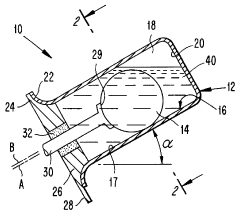
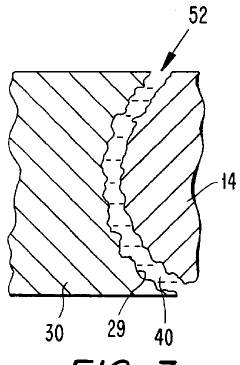
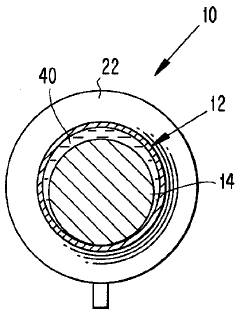
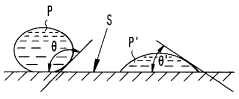
- Incorporating a dielectric liquid with low dipole moment into the switch chamber that is wettable to the electrode surfaces, utilizing surface tension to draw the electrodes close enough for enhanced current flow through quantum tunneling, regardless of surface smoothness or oxide film presence.
Quantum Materials and Fabrication Techniques
The development of quantum tunneling integrations for noise suppression relies heavily on advanced quantum materials and specialized fabrication techniques. Current research focuses on materials exhibiting strong quantum confinement properties, including superconducting materials like niobium nitride (NbN) and aluminum-based compounds, which demonstrate exceptional coherence times at low temperatures. These materials form the foundation for quantum tunneling junctions that can effectively filter noise through quantum mechanical principles.
Semiconductor quantum dots, particularly those based on gallium arsenide (GaAs) and indium arsenide (InAs), have emerged as promising candidates for tunneling barrier implementations. Their precisely controlled energy band structures enable selective electron tunneling while blocking unwanted noise frequencies. Recent advancements in silicon-germanium (SiGe) heterostructures have further improved noise isolation capabilities through enhanced quantum confinement effects.
Fabrication techniques for quantum tunneling devices have evolved significantly, with molecular beam epitaxy (MBE) remaining the gold standard for creating atomically precise layered structures. This technique allows for the deposition of materials with monolayer precision, critical for maintaining quantum coherence across tunneling junctions. Complementary to MBE, atomic layer deposition (ALD) has gained prominence for creating ultra-thin dielectric barriers with precisely controlled thicknesses down to the angstrom level.
Lithographic processes have also advanced to meet the demands of quantum device fabrication. Electron beam lithography now routinely achieves feature sizes below 10 nm, enabling the creation of quantum point contacts and tunneling junctions with unprecedented precision. For more complex three-dimensional structures, focused ion beam milling provides the capability to sculpt quantum devices with nanometer resolution.
The integration of these materials and fabrication techniques presents significant challenges. Interface quality between different materials critically affects tunneling characteristics and noise suppression efficiency. Recent innovations in surface passivation techniques, including hydrogen termination and atomic layer epitaxy, have substantially reduced interface states that contribute to decoherence and noise generation.
Cryogenic compatibility remains a crucial consideration, as most quantum tunneling noise suppression systems operate at millikelvin temperatures. This necessitates materials with matched thermal expansion coefficients and fabrication processes that maintain structural integrity across extreme temperature gradients. Novel approaches using van der Waals heterostructures, particularly those incorporating two-dimensional materials like graphene and hexagonal boron nitride, show promise for creating tunneling barriers with exceptional stability across wide temperature ranges.
Semiconductor quantum dots, particularly those based on gallium arsenide (GaAs) and indium arsenide (InAs), have emerged as promising candidates for tunneling barrier implementations. Their precisely controlled energy band structures enable selective electron tunneling while blocking unwanted noise frequencies. Recent advancements in silicon-germanium (SiGe) heterostructures have further improved noise isolation capabilities through enhanced quantum confinement effects.
Fabrication techniques for quantum tunneling devices have evolved significantly, with molecular beam epitaxy (MBE) remaining the gold standard for creating atomically precise layered structures. This technique allows for the deposition of materials with monolayer precision, critical for maintaining quantum coherence across tunneling junctions. Complementary to MBE, atomic layer deposition (ALD) has gained prominence for creating ultra-thin dielectric barriers with precisely controlled thicknesses down to the angstrom level.
Lithographic processes have also advanced to meet the demands of quantum device fabrication. Electron beam lithography now routinely achieves feature sizes below 10 nm, enabling the creation of quantum point contacts and tunneling junctions with unprecedented precision. For more complex three-dimensional structures, focused ion beam milling provides the capability to sculpt quantum devices with nanometer resolution.
The integration of these materials and fabrication techniques presents significant challenges. Interface quality between different materials critically affects tunneling characteristics and noise suppression efficiency. Recent innovations in surface passivation techniques, including hydrogen termination and atomic layer epitaxy, have substantially reduced interface states that contribute to decoherence and noise generation.
Cryogenic compatibility remains a crucial consideration, as most quantum tunneling noise suppression systems operate at millikelvin temperatures. This necessitates materials with matched thermal expansion coefficients and fabrication processes that maintain structural integrity across extreme temperature gradients. Novel approaches using van der Waals heterostructures, particularly those incorporating two-dimensional materials like graphene and hexagonal boron nitride, show promise for creating tunneling barriers with exceptional stability across wide temperature ranges.
Standardization and Scalability Considerations
The standardization of quantum tunneling integrations for noise suppression represents a critical challenge for widespread industry adoption. Current implementations vary significantly across research institutions and commercial entities, creating interoperability issues that hinder scalable deployment. Establishing unified protocols and interface specifications would enable seamless integration across different quantum computing architectures and conventional electronic systems.
Industry consortia, including the IEEE Quantum Computing Standards Working Group and the International Quantum Industry Consortium (QuIC), have begun developing preliminary standards for quantum tunneling noise suppression techniques. These efforts focus on creating common measurement methodologies, performance metrics, and interface definitions that would allow for consistent evaluation and implementation across platforms.
Scalability considerations must address both technical and manufacturing dimensions. From a technical perspective, quantum tunneling noise suppression systems must maintain their effectiveness when scaled from laboratory demonstrations to commercial applications. This includes preserving coherence properties across larger qubit arrays and ensuring that noise suppression techniques remain effective as system complexity increases.
Manufacturing scalability presents additional challenges, particularly regarding the fabrication of quantum tunneling barriers with consistent properties. Current production methods often rely on highly specialized equipment and processes with limited throughput. Transitioning to industrial-scale production will require significant advances in nanofabrication techniques, including the development of more robust deposition methods for tunneling barrier materials.
Cost considerations also impact scalability, as current implementations often utilize exotic materials and extreme operating conditions. Research into alternative materials that exhibit similar quantum tunneling properties at more accessible temperatures could dramatically improve commercial viability. Similarly, developing integration approaches compatible with existing semiconductor manufacturing infrastructure would significantly reduce implementation barriers.
Standardized testing and certification procedures represent another critical component for scalable deployment. Establishing agreed-upon benchmarks for noise suppression performance would enable objective comparison between different implementations and provide confidence to system integrators. These standards should address both the effectiveness of noise suppression and the impact on other system parameters such as power consumption, latency, and reliability.
Future standardization efforts should also anticipate the evolution of quantum computing architectures, ensuring that noise suppression standards remain relevant as the field advances. This forward-looking approach would protect investments in noise suppression technology while accommodating emerging quantum computing paradigms.
Industry consortia, including the IEEE Quantum Computing Standards Working Group and the International Quantum Industry Consortium (QuIC), have begun developing preliminary standards for quantum tunneling noise suppression techniques. These efforts focus on creating common measurement methodologies, performance metrics, and interface definitions that would allow for consistent evaluation and implementation across platforms.
Scalability considerations must address both technical and manufacturing dimensions. From a technical perspective, quantum tunneling noise suppression systems must maintain their effectiveness when scaled from laboratory demonstrations to commercial applications. This includes preserving coherence properties across larger qubit arrays and ensuring that noise suppression techniques remain effective as system complexity increases.
Manufacturing scalability presents additional challenges, particularly regarding the fabrication of quantum tunneling barriers with consistent properties. Current production methods often rely on highly specialized equipment and processes with limited throughput. Transitioning to industrial-scale production will require significant advances in nanofabrication techniques, including the development of more robust deposition methods for tunneling barrier materials.
Cost considerations also impact scalability, as current implementations often utilize exotic materials and extreme operating conditions. Research into alternative materials that exhibit similar quantum tunneling properties at more accessible temperatures could dramatically improve commercial viability. Similarly, developing integration approaches compatible with existing semiconductor manufacturing infrastructure would significantly reduce implementation barriers.
Standardized testing and certification procedures represent another critical component for scalable deployment. Establishing agreed-upon benchmarks for noise suppression performance would enable objective comparison between different implementations and provide confidence to system integrators. These standards should address both the effectiveness of noise suppression and the impact on other system parameters such as power consumption, latency, and reliability.
Future standardization efforts should also anticipate the evolution of quantum computing architectures, ensuring that noise suppression standards remain relevant as the field advances. This forward-looking approach would protect investments in noise suppression technology while accommodating emerging quantum computing paradigms.
Unlock deeper insights with PatSnap Eureka Quick Research — get a full tech report to explore trends and direct your research. Try now!
Generate Your Research Report Instantly with AI Agent
Supercharge your innovation with PatSnap Eureka AI Agent Platform!