Develop Quantum Tunneling Protocols in Adaptive Systems
SEP 4, 20259 MIN READ
Generate Your Research Report Instantly with AI Agent
PatSnap Eureka helps you evaluate technical feasibility & market potential.
Quantum Tunneling Background and Objectives
Quantum tunneling, a fundamental quantum mechanical phenomenon, has evolved from a theoretical curiosity to a practical tool in modern technology. This phenomenon occurs when particles penetrate energy barriers that would be insurmountable according to classical physics, enabling transitions between quantum states that would otherwise be prohibited. The historical development of quantum tunneling theory began with the early quantum mechanics formulations in the 1920s, pioneered by scientists like Friedrich Hund, who first described tunneling in molecular systems, and George Gamow, who applied it to explain alpha decay in radioactive nuclei.
Over the decades, quantum tunneling has found applications in various technologies, including scanning tunneling microscopy, tunnel diodes, and quantum computing. The integration of quantum tunneling principles into adaptive systems represents a significant frontier in quantum technology development, promising unprecedented capabilities in information processing, sensing, and communication.
The primary objective of developing quantum tunneling protocols in adaptive systems is to harness the probabilistic nature of quantum mechanics to create systems that can dynamically adjust their behavior based on environmental conditions or input parameters. These protocols aim to leverage quantum tunneling's unique properties—such as superposition, entanglement, and quantum coherence—to enable more efficient computation, secure communication, and sensitive detection mechanisms.
Current research focuses on overcoming the inherent challenges of quantum systems, particularly decoherence and error rates, which limit the practical implementation of quantum tunneling in real-world applications. The goal is to develop robust protocols that can maintain quantum coherence for extended periods while operating in variable environments, thereby enabling adaptive responses to changing conditions.
The technological trajectory suggests a convergence of quantum tunneling with machine learning and artificial intelligence, creating systems capable of self-optimization and autonomous decision-making based on quantum principles. This integration could revolutionize fields ranging from materials science to cryptography, offering solutions to problems currently intractable with classical computing approaches.
As quantum technologies continue to mature, the development of standardized quantum tunneling protocols becomes increasingly critical for ensuring interoperability between different quantum systems and facilitating broader adoption across industries. The establishment of these protocols represents not just a technical challenge but also an opportunity to define the architecture of future quantum-enabled adaptive systems.
The ultimate vision is to create a new paradigm of computing and sensing that transcends the limitations of classical systems, opening possibilities for solving complex optimization problems, simulating quantum systems with unprecedented accuracy, and enabling secure communications resistant to quantum attacks.
Over the decades, quantum tunneling has found applications in various technologies, including scanning tunneling microscopy, tunnel diodes, and quantum computing. The integration of quantum tunneling principles into adaptive systems represents a significant frontier in quantum technology development, promising unprecedented capabilities in information processing, sensing, and communication.
The primary objective of developing quantum tunneling protocols in adaptive systems is to harness the probabilistic nature of quantum mechanics to create systems that can dynamically adjust their behavior based on environmental conditions or input parameters. These protocols aim to leverage quantum tunneling's unique properties—such as superposition, entanglement, and quantum coherence—to enable more efficient computation, secure communication, and sensitive detection mechanisms.
Current research focuses on overcoming the inherent challenges of quantum systems, particularly decoherence and error rates, which limit the practical implementation of quantum tunneling in real-world applications. The goal is to develop robust protocols that can maintain quantum coherence for extended periods while operating in variable environments, thereby enabling adaptive responses to changing conditions.
The technological trajectory suggests a convergence of quantum tunneling with machine learning and artificial intelligence, creating systems capable of self-optimization and autonomous decision-making based on quantum principles. This integration could revolutionize fields ranging from materials science to cryptography, offering solutions to problems currently intractable with classical computing approaches.
As quantum technologies continue to mature, the development of standardized quantum tunneling protocols becomes increasingly critical for ensuring interoperability between different quantum systems and facilitating broader adoption across industries. The establishment of these protocols represents not just a technical challenge but also an opportunity to define the architecture of future quantum-enabled adaptive systems.
The ultimate vision is to create a new paradigm of computing and sensing that transcends the limitations of classical systems, opening possibilities for solving complex optimization problems, simulating quantum systems with unprecedented accuracy, and enabling secure communications resistant to quantum attacks.
Market Applications for Quantum Tunneling in Adaptive Systems
Quantum tunneling protocols in adaptive systems are poised to revolutionize multiple market sectors by enabling unprecedented capabilities in computation, communication, and sensing. The healthcare industry represents one of the most promising application areas, where quantum tunneling can enhance medical imaging resolution beyond classical limits. Quantum-enhanced MRI and PET scanning technologies could detect cellular abnormalities at earlier stages, potentially transforming cancer detection and treatment monitoring. Additionally, quantum tunneling protocols could enable real-time adaptive drug delivery systems that respond to molecular-level biological changes.
In the financial sector, quantum tunneling applications are emerging in high-frequency trading and risk assessment models. The ability of quantum systems to process multiple probability scenarios simultaneously offers financial institutions enhanced predictive capabilities for market fluctuations. Several major investment banks have already initiated research partnerships with quantum technology startups, anticipating a competitive advantage in algorithmic trading through quantum-enhanced decision systems.
The telecommunications industry stands to benefit significantly from quantum tunneling protocols in adaptive systems. Next-generation secure communication networks utilizing quantum key distribution (QKD) are being developed by major telecom providers. These systems leverage quantum tunneling properties to create theoretically unhackable encryption methods. Market analysts project the quantum communication sector to grow at a compound annual rate exceeding 20% over the next decade, driven primarily by government and financial institution adoption.
Manufacturing and logistics operations are exploring quantum tunneling applications for supply chain optimization. Adaptive quantum algorithms can process complex distribution networks with variables that overwhelm classical computing systems. Early implementations have demonstrated potential efficiency improvements in routing and inventory management, with several Fortune 500 companies establishing dedicated quantum logistics research divisions.
The energy sector is investigating quantum tunneling for improved battery technology and power grid management. Quantum-enhanced materials science is accelerating the development of more efficient energy storage solutions, while adaptive quantum systems show promise for optimizing electricity distribution across smart grids. Several utility companies have launched pilot programs integrating quantum-based predictive maintenance systems.
Defense and aerospace industries represent another significant market, with quantum tunneling protocols being developed for enhanced navigation systems that operate independently of GPS. These applications leverage quantum sensing capabilities that remain functional in electromagnetically contested environments. Major defense contractors have secured substantial government funding for quantum technology development programs focused on secure communications and sensing applications.
In the financial sector, quantum tunneling applications are emerging in high-frequency trading and risk assessment models. The ability of quantum systems to process multiple probability scenarios simultaneously offers financial institutions enhanced predictive capabilities for market fluctuations. Several major investment banks have already initiated research partnerships with quantum technology startups, anticipating a competitive advantage in algorithmic trading through quantum-enhanced decision systems.
The telecommunications industry stands to benefit significantly from quantum tunneling protocols in adaptive systems. Next-generation secure communication networks utilizing quantum key distribution (QKD) are being developed by major telecom providers. These systems leverage quantum tunneling properties to create theoretically unhackable encryption methods. Market analysts project the quantum communication sector to grow at a compound annual rate exceeding 20% over the next decade, driven primarily by government and financial institution adoption.
Manufacturing and logistics operations are exploring quantum tunneling applications for supply chain optimization. Adaptive quantum algorithms can process complex distribution networks with variables that overwhelm classical computing systems. Early implementations have demonstrated potential efficiency improvements in routing and inventory management, with several Fortune 500 companies establishing dedicated quantum logistics research divisions.
The energy sector is investigating quantum tunneling for improved battery technology and power grid management. Quantum-enhanced materials science is accelerating the development of more efficient energy storage solutions, while adaptive quantum systems show promise for optimizing electricity distribution across smart grids. Several utility companies have launched pilot programs integrating quantum-based predictive maintenance systems.
Defense and aerospace industries represent another significant market, with quantum tunneling protocols being developed for enhanced navigation systems that operate independently of GPS. These applications leverage quantum sensing capabilities that remain functional in electromagnetically contested environments. Major defense contractors have secured substantial government funding for quantum technology development programs focused on secure communications and sensing applications.
Current Quantum Tunneling Challenges and Limitations
Quantum tunneling, a fundamental quantum mechanical phenomenon, presents significant challenges when integrated into adaptive systems. Current implementations face substantial limitations in maintaining quantum coherence over extended periods, particularly in environments with variable conditions. The decoherence problem remains one of the most formidable obstacles, as quantum states are extremely fragile and susceptible to environmental interference, leading to information loss and system failure.
Temperature fluctuations pose another critical challenge, as quantum tunneling protocols require precise thermal conditions to function optimally. Even minor temperature variations can dramatically alter tunneling probabilities and disrupt the delicate quantum states necessary for reliable operation. This sensitivity makes real-world deployment particularly problematic in scenarios where environmental control is limited.
Scalability issues further complicate the development of quantum tunneling protocols for adaptive systems. Current experimental setups typically operate with a limited number of qubits under highly controlled laboratory conditions. Expanding these systems to practical scales while maintaining tunneling efficiency presents significant engineering challenges that have yet to be fully addressed by the scientific community.
The energy requirements for maintaining quantum tunneling states represent another substantial limitation. Current implementations demand considerable power for cooling systems and state preservation mechanisms, making them impractical for many mobile or remote applications where energy efficiency is paramount. This energy constraint severely restricts the potential deployment scenarios for quantum tunneling protocols.
Integration with classical computing infrastructure presents additional complications. The interface between quantum tunneling mechanisms and conventional electronic systems introduces noise and information loss, reducing overall system reliability. Developing robust translation protocols between these fundamentally different computing paradigms remains an active area of research with many unresolved questions.
Measurement and control precision also pose significant challenges. Quantum tunneling protocols require extraordinarily accurate measurement techniques to detect and manipulate quantum states without causing collapse. Current instrumentation approaches often lack the necessary precision for reliable operation in adaptive environments where conditions may change rapidly and unpredictably.
Theoretical models for quantum tunneling in complex adaptive systems remain incomplete. While the basic principles are well understood for simple systems, predicting tunneling behavior in multi-component adaptive architectures involves computational complexity that exceeds current capabilities. This theoretical gap hampers the development of optimized protocols tailored to specific application requirements.
Temperature fluctuations pose another critical challenge, as quantum tunneling protocols require precise thermal conditions to function optimally. Even minor temperature variations can dramatically alter tunneling probabilities and disrupt the delicate quantum states necessary for reliable operation. This sensitivity makes real-world deployment particularly problematic in scenarios where environmental control is limited.
Scalability issues further complicate the development of quantum tunneling protocols for adaptive systems. Current experimental setups typically operate with a limited number of qubits under highly controlled laboratory conditions. Expanding these systems to practical scales while maintaining tunneling efficiency presents significant engineering challenges that have yet to be fully addressed by the scientific community.
The energy requirements for maintaining quantum tunneling states represent another substantial limitation. Current implementations demand considerable power for cooling systems and state preservation mechanisms, making them impractical for many mobile or remote applications where energy efficiency is paramount. This energy constraint severely restricts the potential deployment scenarios for quantum tunneling protocols.
Integration with classical computing infrastructure presents additional complications. The interface between quantum tunneling mechanisms and conventional electronic systems introduces noise and information loss, reducing overall system reliability. Developing robust translation protocols between these fundamentally different computing paradigms remains an active area of research with many unresolved questions.
Measurement and control precision also pose significant challenges. Quantum tunneling protocols require extraordinarily accurate measurement techniques to detect and manipulate quantum states without causing collapse. Current instrumentation approaches often lack the necessary precision for reliable operation in adaptive environments where conditions may change rapidly and unpredictably.
Theoretical models for quantum tunneling in complex adaptive systems remain incomplete. While the basic principles are well understood for simple systems, predicting tunneling behavior in multi-component adaptive architectures involves computational complexity that exceeds current capabilities. This theoretical gap hampers the development of optimized protocols tailored to specific application requirements.
Current Quantum Tunneling Protocol Implementation Approaches
01 Quantum tunneling in semiconductor devices
Quantum tunneling phenomena are utilized in semiconductor devices to enable electron transport through potential barriers that would be classically forbidden. This principle is applied in various electronic components such as tunnel diodes, resonant tunneling diodes, and quantum well structures. These devices leverage quantum mechanical effects to achieve unique electrical characteristics including negative differential resistance and high-speed switching capabilities that conventional semiconductor devices cannot provide.- Quantum tunneling in semiconductor devices: Quantum tunneling is utilized in semiconductor devices to enhance performance and enable novel functionalities. This phenomenon allows electrons to pass through energy barriers that would be classically forbidden, enabling faster switching speeds and reduced power consumption. Various semiconductor structures leverage quantum tunneling effects, including tunnel diodes, resonant tunneling diodes, and quantum well structures. These devices form the foundation for advanced electronic components with applications in high-speed computing and communications.
- Quantum tunneling for secure communications: Quantum tunneling principles are applied to develop secure communication protocols that leverage quantum mechanical properties to ensure data security. These protocols utilize the probabilistic nature of quantum tunneling to create encryption methods that are theoretically impossible to breach without detection. The approach enables quantum key distribution systems and secure transmission channels that can detect eavesdropping attempts through the observation of quantum state changes, providing a foundation for next-generation cryptographic systems.
- Quantum tunneling in network routing protocols: Network routing protocols that incorporate quantum tunneling concepts enable more efficient data transmission across complex networks. These protocols utilize quantum principles to optimize path selection and packet routing, potentially reducing latency and increasing throughput. By applying quantum tunneling algorithms to traditional networking challenges, these systems can dynamically adjust to network conditions and traffic patterns, creating more resilient and adaptive communication infrastructures for both classical and quantum networks.
- Quantum tunneling measurement and control systems: Systems and methods for precisely measuring and controlling quantum tunneling effects enable the development of advanced quantum technologies. These approaches include specialized instrumentation for detecting tunneling currents, calibration techniques for quantum devices, and feedback mechanisms that can manipulate tunneling probabilities. Such measurement and control protocols are essential for quantum computing applications, quantum sensors, and other emerging quantum technologies where precise manipulation of quantum states is required.
- Quantum tunneling protocols for energy applications: Quantum tunneling protocols are being developed for energy generation, storage, and transmission applications. These approaches leverage quantum effects to potentially increase efficiency in energy conversion processes, enhance battery technologies, or create novel energy harvesting methods. By controlling quantum tunneling at interfaces between different materials, these protocols aim to overcome classical limitations in energy systems and enable more sustainable and efficient energy technologies.
02 Quantum tunneling for secure communications
Quantum tunneling principles are applied in secure communication protocols to establish cryptographic systems that are theoretically immune to eavesdropping. These protocols utilize the quantum mechanical properties of particles to detect any unauthorized interception of data. The technology enables the creation of quantum key distribution systems where security is guaranteed by the fundamental laws of quantum physics rather than computational complexity, providing a higher level of security than conventional cryptographic methods.Expand Specific Solutions03 Quantum tunneling in network routing protocols
Network routing protocols that incorporate quantum tunneling concepts enable more efficient data transmission across complex network topologies. These protocols utilize quantum principles to optimize path selection and reduce latency in data packet routing. By implementing quantum-based decision algorithms, these systems can dynamically adjust to network conditions and traffic patterns, providing improved performance compared to classical routing methods, especially in congested or rapidly changing network environments.Expand Specific Solutions04 Quantum tunneling in computing architectures
Computing architectures that leverage quantum tunneling effects enable novel processing capabilities beyond classical computing limitations. These systems utilize quantum mechanical phenomena to perform computational operations that would be inefficient or impossible with traditional binary logic. The architectures incorporate specialized hardware designs that maintain quantum coherence while facilitating controlled tunneling events, allowing for potential exponential speedups in certain classes of computational problems.Expand Specific Solutions05 Quantum tunneling measurement and control protocols
Specialized protocols for measuring and controlling quantum tunneling phenomena enable precise manipulation of quantum states in experimental and practical applications. These protocols include techniques for initializing quantum systems, maintaining coherence during operations, and accurately measuring outcomes. Advanced control mechanisms allow researchers and engineers to harness tunneling effects with high precision, which is essential for applications in quantum sensing, metrology, and the development of next-generation quantum technologies.Expand Specific Solutions
Leading Quantum Technology Companies and Research Institutions
Quantum Tunneling Protocols in Adaptive Systems is emerging as a transformative field at the intersection of quantum physics and adaptive computing. Currently in its early development stage, this market is characterized by significant research investment but limited commercial deployment. The global market potential is estimated to reach $5-7 billion by 2030, driven by applications in secure communications and advanced computing. Leading players include IBM and Huawei, who are pioneering fundamental research, while Google and Samsung focus on practical applications. Academic institutions like Peking University collaborate with industry leaders to bridge theoretical advances with implementation. Companies including Ericsson, Nokia, and Qualcomm are exploring telecommunications applications, while defense-oriented firms like China Aerospace Science & Technology develop specialized security protocols leveraging quantum tunneling properties.
Huawei Technologies Co., Ltd.
Technical Solution: Huawei has developed quantum tunneling protocols for adaptive systems through their Research Institute, focusing on telecommunications applications. Their approach integrates quantum tunneling effects into 5G and future 6G network infrastructure to create self-optimizing communication systems. Huawei's protocols leverage resonant tunneling diodes (RTDs) operating at terahertz frequencies to enable ultra-fast signal processing in adaptive network elements. Their framework incorporates quantum tunneling transistors that significantly reduce power consumption in edge computing devices while enabling more sophisticated adaptive algorithms. Huawei researchers have pioneered quantum tunneling-based random number generators that enhance security in adaptive cryptographic systems. Their protocols include specialized hardware accelerators that simulate quantum tunneling effects for certain optimization problems without requiring full quantum computers. Huawei has demonstrated practical applications in areas such as intelligent network slicing, where quantum tunneling algorithms adaptively allocate network resources based on real-time demand patterns. Their approach also extends to IoT systems, where tunneling-based adaptive protocols enable more efficient energy management and communication.
Strengths: Huawei possesses extensive telecommunications infrastructure expertise, allowing for practical implementation of quantum tunneling protocols in real-world networks. Their solutions demonstrate exceptional energy efficiency compared to conventional approaches. Weaknesses: Their protocols face significant regulatory and market access challenges in Western markets due to geopolitical concerns, limiting global adoption potential.
International Business Machines Corp.
Technical Solution: IBM has pioneered quantum tunneling protocols in adaptive systems through their quantum computing division. Their approach integrates quantum tunneling effects into machine learning frameworks, allowing systems to naturally adapt to changing environments. IBM's Quantum System One architecture leverages quantum tunneling to solve optimization problems that classical computers struggle with. Their protocol utilizes superconducting qubits operating at near absolute zero temperatures to maintain quantum coherence while exploiting tunneling phenomena. IBM has developed specialized quantum gates that manipulate tunneling probabilities between quantum states, enabling more efficient exploration of solution spaces in adaptive systems. Their framework includes error mitigation techniques specifically designed to preserve tunneling effects despite environmental noise and decoherence challenges. IBM's quantum tunneling protocols have demonstrated particular success in materials science simulations and financial modeling applications where adaptive responses to changing parameters are critical.
Strengths: IBM possesses extensive quantum hardware infrastructure and deep expertise in quantum algorithm development. Their protocols show superior performance in complex optimization problems compared to classical approaches. Weaknesses: Their systems require extremely low temperatures for operation, limiting practical deployment scenarios, and still face significant challenges with quantum decoherence affecting tunneling reliability.
Key Quantum Tunneling Patents and Research Breakthroughs
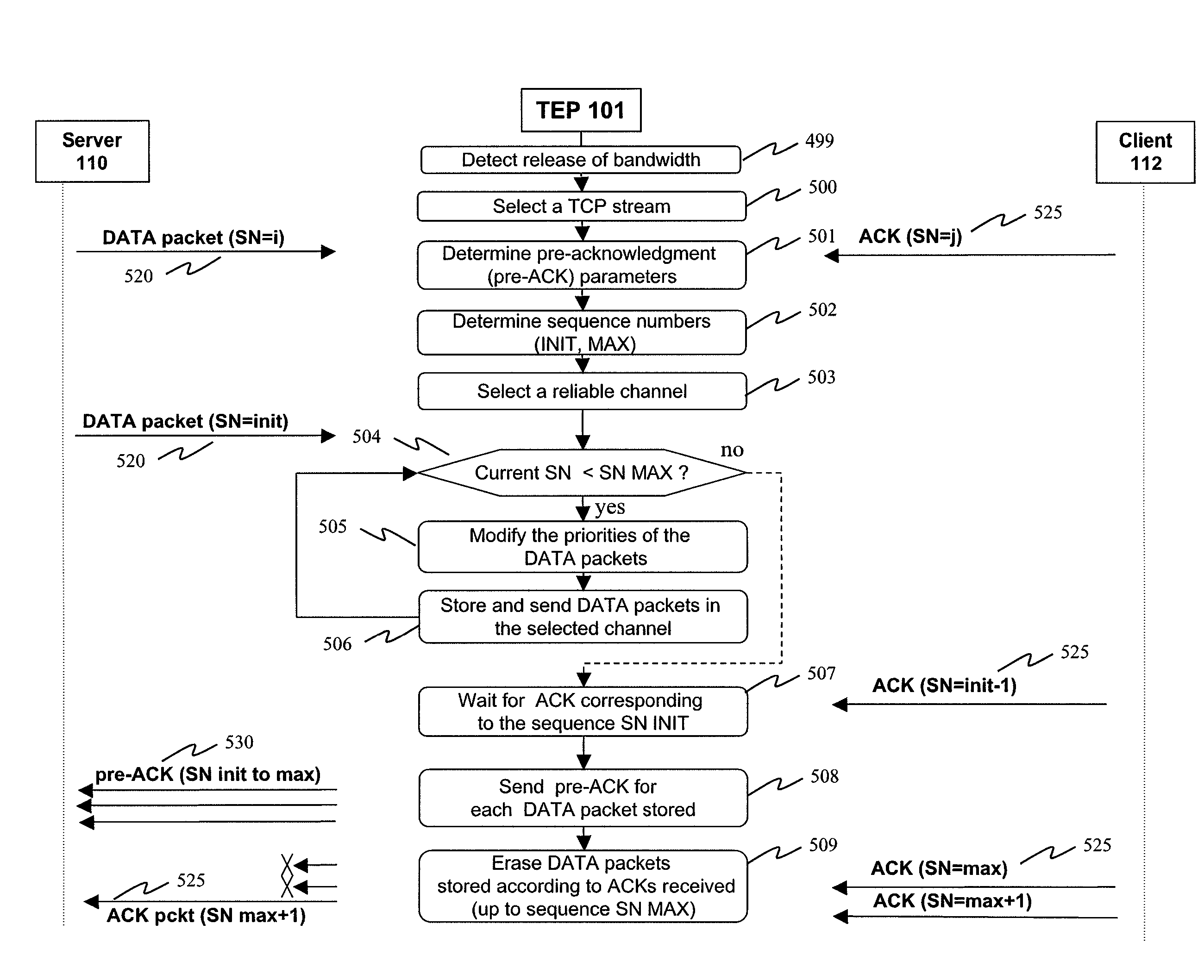
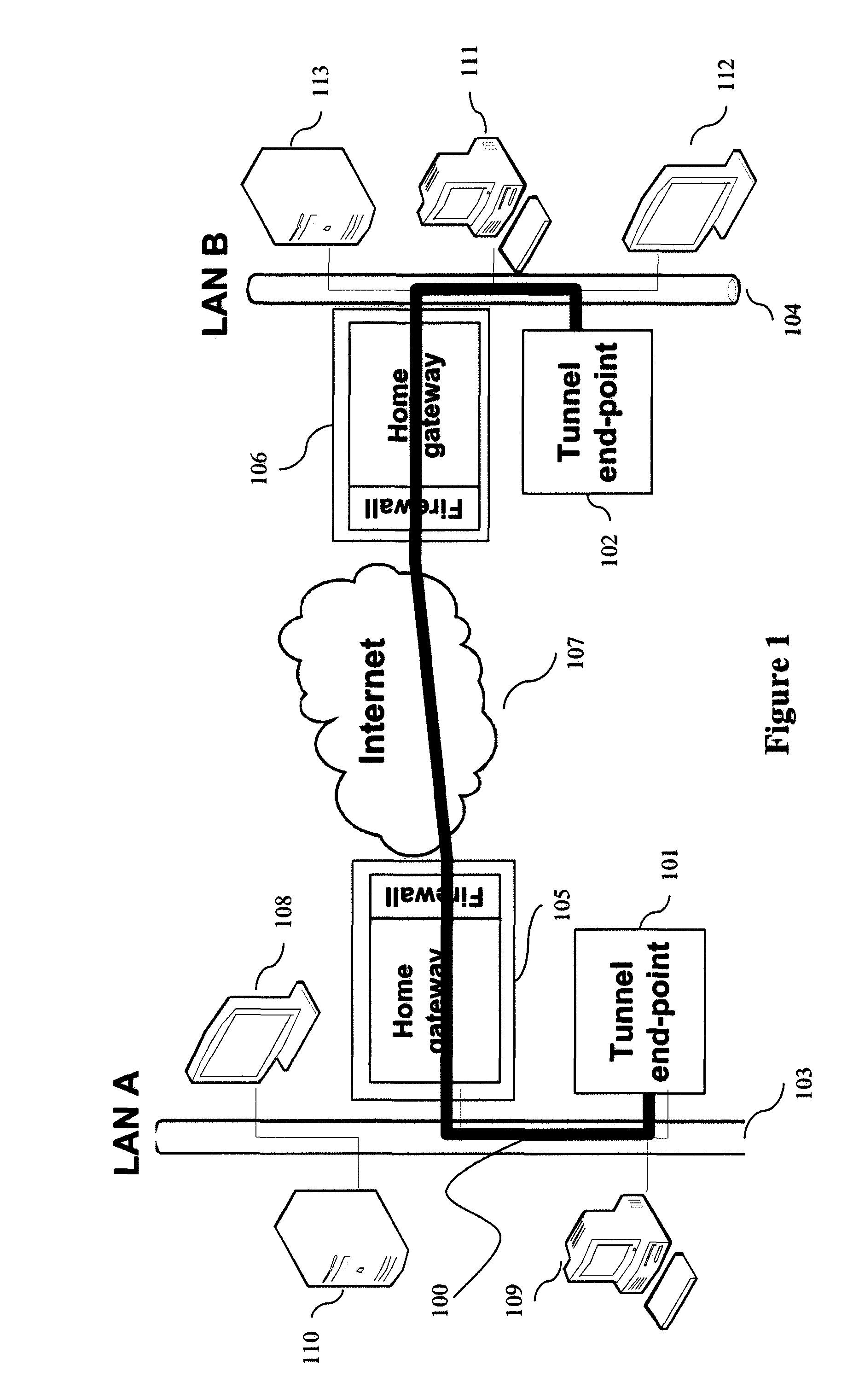
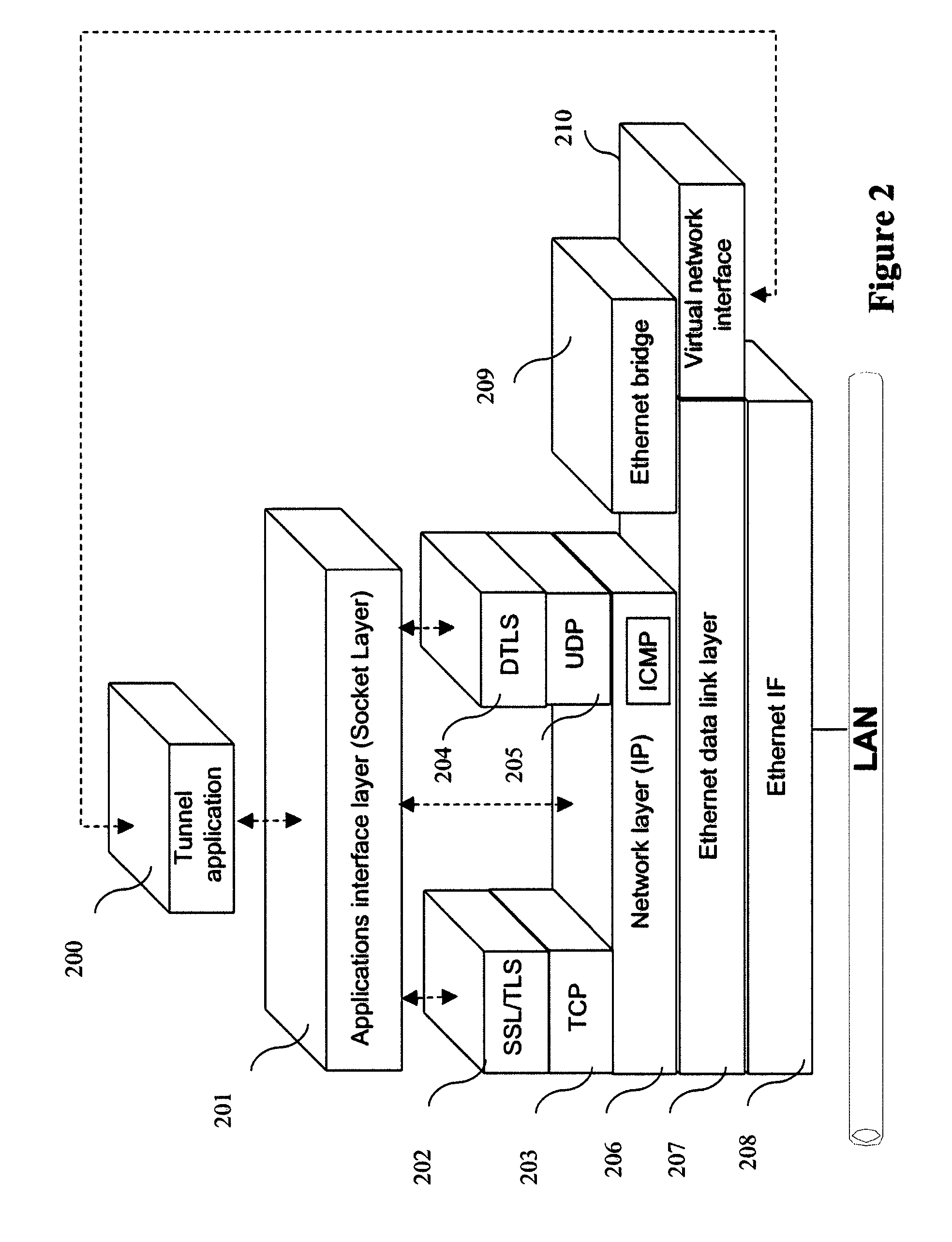
Method for transmitting a data stream with anticipation of acknowledgments, correspondence input device and computer-readable storage medium
PatentActiveUS8169911B2
Innovation
- A method is introduced that involves determining a starting packet without received acknowledgments, selecting packets for anticipated positive acknowledgments based on target bandwidth, and temporarily accelerating throughput by sending anticipated acknowledgments, thereby optimizing bandwidth use without disrupting sender or receiver devices.

Methods and systems for increasing wireless communication throughput of a bonded VPN tunnel
PatentActiveUS20200021459A1
Innovation
- A system and method that dynamically adjust tunnel bandwidth weighting based on observed transfer activity, including decreasing weight values for tunnels with increased packet loss and increasing them for improved bandwidth, using logic circuitry to monitor and modify weights in real-time.


Quantum Computing Integration Opportunities
The integration of quantum tunneling protocols with mainstream quantum computing architectures represents a significant opportunity for advancing adaptive systems. Current quantum computing platforms, including superconducting qubits, trapped ions, and photonic systems, offer varying degrees of compatibility with tunneling-based protocols. Superconducting quantum processors from IBM, Google, and Rigetti provide robust platforms where tunneling effects can be harnessed through careful manipulation of energy barriers between quantum states. These systems offer immediate integration pathways due to their established control mechanisms and scalable architectures.
Trapped ion systems, while offering superior coherence times, present different integration challenges for tunneling protocols. Companies like IonQ and Honeywell are developing architectures where quantum tunneling could enhance state preparation and measurement processes, potentially leading to more efficient quantum algorithms for adaptive decision-making systems. The precise control over ion states provides an excellent foundation for implementing tunneling-based quantum gates with high fidelity.
Photonic quantum computing platforms developed by Xanadu and PsiQuantum offer unique opportunities for implementing tunneling protocols in distributed adaptive systems. The inherent mobility of photons makes them ideal carriers for quantum information across adaptive network nodes, where tunneling effects can facilitate secure information transfer across otherwise impenetrable barriers.
Hybrid quantum-classical systems present perhaps the most promising near-term integration pathway. These architectures allow tunneling protocols to be selectively applied to specific computational problems while leveraging classical processing for system management and control. This approach aligns with the NISQ (Noisy Intermediate-Scale Quantum) era constraints while maximizing the utility of quantum tunneling effects.
From an industry application perspective, financial modeling, materials science, and cybersecurity stand to benefit significantly from integrated tunneling protocols. Financial institutions could leverage these capabilities for more sophisticated risk assessment models, while materials science applications could accelerate the discovery of novel compounds through enhanced quantum simulation capabilities.
The timeline for full integration varies by platform, with superconducting systems likely to incorporate basic tunneling protocols within 2-3 years, while more sophisticated implementations in trapped ion and photonic systems may require 3-5 years of development. Strategic partnerships between hardware providers and algorithm developers will be crucial for accelerating this integration timeline and ensuring practical applications emerge from theoretical possibilities.
Trapped ion systems, while offering superior coherence times, present different integration challenges for tunneling protocols. Companies like IonQ and Honeywell are developing architectures where quantum tunneling could enhance state preparation and measurement processes, potentially leading to more efficient quantum algorithms for adaptive decision-making systems. The precise control over ion states provides an excellent foundation for implementing tunneling-based quantum gates with high fidelity.
Photonic quantum computing platforms developed by Xanadu and PsiQuantum offer unique opportunities for implementing tunneling protocols in distributed adaptive systems. The inherent mobility of photons makes them ideal carriers for quantum information across adaptive network nodes, where tunneling effects can facilitate secure information transfer across otherwise impenetrable barriers.
Hybrid quantum-classical systems present perhaps the most promising near-term integration pathway. These architectures allow tunneling protocols to be selectively applied to specific computational problems while leveraging classical processing for system management and control. This approach aligns with the NISQ (Noisy Intermediate-Scale Quantum) era constraints while maximizing the utility of quantum tunneling effects.
From an industry application perspective, financial modeling, materials science, and cybersecurity stand to benefit significantly from integrated tunneling protocols. Financial institutions could leverage these capabilities for more sophisticated risk assessment models, while materials science applications could accelerate the discovery of novel compounds through enhanced quantum simulation capabilities.
The timeline for full integration varies by platform, with superconducting systems likely to incorporate basic tunneling protocols within 2-3 years, while more sophisticated implementations in trapped ion and photonic systems may require 3-5 years of development. Strategic partnerships between hardware providers and algorithm developers will be crucial for accelerating this integration timeline and ensuring practical applications emerge from theoretical possibilities.
Quantum Security and Standardization Considerations
As quantum tunneling protocols advance in adaptive systems, security considerations become paramount. The integration of quantum technologies introduces unique vulnerabilities alongside enhanced security capabilities. Quantum key distribution (QKD) offers theoretically unbreakable encryption but requires standardization to ensure interoperability across implementations. Current efforts by NIST, ETSI, and ISO are establishing frameworks for quantum-resistant cryptographic algorithms and quantum communication protocols.
The post-quantum cryptography standardization process is critical for adaptive systems utilizing quantum tunneling, as these systems must maintain security even against quantum computing attacks. Quantum tunneling protocols must adhere to emerging standards while maintaining flexibility for system adaptation. This balance presents significant challenges for standardization bodies and implementers alike.
Security vulnerabilities specific to quantum tunneling in adaptive environments include side-channel attacks targeting the physical implementation of quantum systems, entanglement disruption attacks, and quantum state measurement interference. These vulnerabilities necessitate comprehensive security models that account for both classical and quantum attack vectors. Standardized testing methodologies for quantum security assurance are currently under development but remain in nascent stages.
International cooperation on quantum security standards is progressing through initiatives like the Quantum Internet Alliance and the Global Quantum Communication Network. These collaborations aim to establish common security protocols and interoperability standards essential for widespread adoption of quantum tunneling technologies in adaptive systems. However, geopolitical tensions have created competing standardization efforts that may lead to fragmentation of the quantum security landscape.
Privacy considerations present another dimension of quantum security standardization. Quantum tunneling protocols can potentially enhance privacy through perfect forward secrecy and quantum anonymity networks, but require careful implementation to prevent unintended information leakage. Standards must address privacy-preserving mechanisms while maintaining compliance with regional data protection regulations.
Certification frameworks for quantum-secure implementations are emerging, with organizations like the Quantum Economic Development Consortium (QED-C) developing verification methodologies for quantum technologies. These frameworks will be essential for ensuring that adaptive systems implementing quantum tunneling protocols meet minimum security requirements and can be trusted in critical applications. The timeline for comprehensive quantum security certification remains uncertain but will likely accelerate as commercial applications of quantum tunneling in adaptive systems become more prevalent.
The post-quantum cryptography standardization process is critical for adaptive systems utilizing quantum tunneling, as these systems must maintain security even against quantum computing attacks. Quantum tunneling protocols must adhere to emerging standards while maintaining flexibility for system adaptation. This balance presents significant challenges for standardization bodies and implementers alike.
Security vulnerabilities specific to quantum tunneling in adaptive environments include side-channel attacks targeting the physical implementation of quantum systems, entanglement disruption attacks, and quantum state measurement interference. These vulnerabilities necessitate comprehensive security models that account for both classical and quantum attack vectors. Standardized testing methodologies for quantum security assurance are currently under development but remain in nascent stages.
International cooperation on quantum security standards is progressing through initiatives like the Quantum Internet Alliance and the Global Quantum Communication Network. These collaborations aim to establish common security protocols and interoperability standards essential for widespread adoption of quantum tunneling technologies in adaptive systems. However, geopolitical tensions have created competing standardization efforts that may lead to fragmentation of the quantum security landscape.
Privacy considerations present another dimension of quantum security standardization. Quantum tunneling protocols can potentially enhance privacy through perfect forward secrecy and quantum anonymity networks, but require careful implementation to prevent unintended information leakage. Standards must address privacy-preserving mechanisms while maintaining compliance with regional data protection regulations.
Certification frameworks for quantum-secure implementations are emerging, with organizations like the Quantum Economic Development Consortium (QED-C) developing verification methodologies for quantum technologies. These frameworks will be essential for ensuring that adaptive systems implementing quantum tunneling protocols meet minimum security requirements and can be trusted in critical applications. The timeline for comprehensive quantum security certification remains uncertain but will likely accelerate as commercial applications of quantum tunneling in adaptive systems become more prevalent.
Unlock deeper insights with PatSnap Eureka Quick Research — get a full tech report to explore trends and direct your research. Try now!
Generate Your Research Report Instantly with AI Agent
Supercharge your innovation with PatSnap Eureka AI Agent Platform!