Evaluating Quantum Tunneling Dynamics in Mesoscopic Fields
SEP 4, 20259 MIN READ
Generate Your Research Report Instantly with AI Agent
PatSnap Eureka helps you evaluate technical feasibility & market potential.
Quantum Tunneling Background and Research Objectives
Quantum tunneling represents one of the most intriguing phenomena in quantum mechanics, describing the ability of particles to penetrate energy barriers that would be insurmountable according to classical physics. This counterintuitive behavior, first observed in the early 20th century, has evolved from a theoretical curiosity to a fundamental concept with profound implications across multiple scientific disciplines. The historical development of quantum tunneling theory traces back to the work of Friedrich Hund, followed by significant contributions from George Gamow in explaining alpha decay, and later refined through the WKB approximation.
In mesoscopic systems—those existing at the interface between quantum and classical regimes—tunneling dynamics exhibit particularly rich and complex behaviors. These systems, typically ranging from nanometers to micrometers in size, demonstrate quantum effects while being large enough to interface with macroscopic measurement apparatus. The study of quantum tunneling in mesoscopic fields has gained significant momentum over the past two decades, driven by advances in nanofabrication techniques and measurement capabilities.
The current technological landscape presents both unprecedented opportunities and formidable challenges for quantum tunneling research. Recent experimental breakthroughs have enabled direct observation and manipulation of tunneling processes in controlled environments, allowing for more rigorous testing of theoretical models. Concurrently, computational advances have facilitated more sophisticated simulations of tunneling dynamics in complex systems.
This technical research report aims to comprehensively evaluate the current state and future prospects of quantum tunneling dynamics specifically within mesoscopic fields. Our primary objectives include: mapping the theoretical frameworks that describe tunneling in mesoscopic systems; analyzing experimental methodologies for measuring tunneling rates and characteristics; identifying key applications across quantum computing, quantum sensing, and quantum materials; and forecasting emerging research directions.
Additionally, we seek to establish quantitative metrics for evaluating tunneling efficiency in various material systems and device architectures. This includes examining coherence times, tunneling probabilities, and energy dissipation mechanisms that govern practical implementations. By synthesizing theoretical understanding with experimental evidence, we aim to provide actionable insights for research prioritization and technology development.
The ultimate goal of this investigation is to identify potential breakthrough areas where quantum tunneling in mesoscopic fields could enable transformative technologies, particularly focusing on quantum information processing, ultra-sensitive detection systems, and novel energy conversion mechanisms. Through this analysis, we intend to establish a roadmap for future research and development efforts in this rapidly evolving field.
In mesoscopic systems—those existing at the interface between quantum and classical regimes—tunneling dynamics exhibit particularly rich and complex behaviors. These systems, typically ranging from nanometers to micrometers in size, demonstrate quantum effects while being large enough to interface with macroscopic measurement apparatus. The study of quantum tunneling in mesoscopic fields has gained significant momentum over the past two decades, driven by advances in nanofabrication techniques and measurement capabilities.
The current technological landscape presents both unprecedented opportunities and formidable challenges for quantum tunneling research. Recent experimental breakthroughs have enabled direct observation and manipulation of tunneling processes in controlled environments, allowing for more rigorous testing of theoretical models. Concurrently, computational advances have facilitated more sophisticated simulations of tunneling dynamics in complex systems.
This technical research report aims to comprehensively evaluate the current state and future prospects of quantum tunneling dynamics specifically within mesoscopic fields. Our primary objectives include: mapping the theoretical frameworks that describe tunneling in mesoscopic systems; analyzing experimental methodologies for measuring tunneling rates and characteristics; identifying key applications across quantum computing, quantum sensing, and quantum materials; and forecasting emerging research directions.
Additionally, we seek to establish quantitative metrics for evaluating tunneling efficiency in various material systems and device architectures. This includes examining coherence times, tunneling probabilities, and energy dissipation mechanisms that govern practical implementations. By synthesizing theoretical understanding with experimental evidence, we aim to provide actionable insights for research prioritization and technology development.
The ultimate goal of this investigation is to identify potential breakthrough areas where quantum tunneling in mesoscopic fields could enable transformative technologies, particularly focusing on quantum information processing, ultra-sensitive detection systems, and novel energy conversion mechanisms. Through this analysis, we intend to establish a roadmap for future research and development efforts in this rapidly evolving field.
Market Applications of Quantum Tunneling Technologies
Quantum tunneling technologies are rapidly transitioning from theoretical physics laboratories to commercial applications across multiple industries. The unique ability of particles to penetrate energy barriers that would be insurmountable according to classical physics is creating significant market opportunities. In the semiconductor industry, quantum tunneling is being harnessed for the development of tunnel field-effect transistors (TFETs), which offer superior energy efficiency compared to conventional transistors. These components are particularly valuable for low-power electronics, potentially extending battery life in portable devices by 30-50% while maintaining performance standards.
The medical diagnostics sector represents another promising market for quantum tunneling applications. Scanning tunneling microscopy (STM) technologies enable unprecedented imaging resolution at the atomic scale, revolutionizing molecular diagnostics and drug discovery processes. Companies developing quantum tunneling-based biosensors report detection sensitivities up to 1000 times greater than conventional methods, allowing for earlier disease detection and more personalized treatment approaches.
Energy harvesting represents a rapidly growing application area, with quantum tunneling diodes being integrated into systems that can capture ambient electromagnetic radiation and convert it to usable electricity. This technology is particularly valuable for powering remote IoT sensors and wearable devices, eliminating the need for battery replacement in hard-to-reach deployment scenarios.
Quantum cryptography systems utilizing tunneling phenomena are gaining traction in the cybersecurity market, with financial institutions and government agencies investing heavily in quantum-secure communication networks. The market for quantum tunneling-based security solutions is projected to grow substantially as quantum computing threatens traditional encryption methods.
Advanced materials research and development has been transformed by tunneling-based analytical techniques. Industries ranging from aerospace to consumer electronics are utilizing these insights to engineer materials with precisely controlled properties at the quantum level, resulting in stronger, lighter, and more efficient components.
The automotive sector is exploring quantum tunneling for next-generation battery technologies and sensors. Tunnel junction-based magnetic field sensors offer higher sensitivity for autonomous vehicle navigation systems, while quantum tunneling effects are being investigated to improve solid-state battery performance and charging speeds.
Despite these promising applications, market adoption faces challenges including high implementation costs, technical complexity, and the need for specialized expertise. However, as research in mesoscopic field dynamics advances and manufacturing techniques mature, quantum tunneling technologies are expected to become increasingly accessible across broader market segments.
The medical diagnostics sector represents another promising market for quantum tunneling applications. Scanning tunneling microscopy (STM) technologies enable unprecedented imaging resolution at the atomic scale, revolutionizing molecular diagnostics and drug discovery processes. Companies developing quantum tunneling-based biosensors report detection sensitivities up to 1000 times greater than conventional methods, allowing for earlier disease detection and more personalized treatment approaches.
Energy harvesting represents a rapidly growing application area, with quantum tunneling diodes being integrated into systems that can capture ambient electromagnetic radiation and convert it to usable electricity. This technology is particularly valuable for powering remote IoT sensors and wearable devices, eliminating the need for battery replacement in hard-to-reach deployment scenarios.
Quantum cryptography systems utilizing tunneling phenomena are gaining traction in the cybersecurity market, with financial institutions and government agencies investing heavily in quantum-secure communication networks. The market for quantum tunneling-based security solutions is projected to grow substantially as quantum computing threatens traditional encryption methods.
Advanced materials research and development has been transformed by tunneling-based analytical techniques. Industries ranging from aerospace to consumer electronics are utilizing these insights to engineer materials with precisely controlled properties at the quantum level, resulting in stronger, lighter, and more efficient components.
The automotive sector is exploring quantum tunneling for next-generation battery technologies and sensors. Tunnel junction-based magnetic field sensors offer higher sensitivity for autonomous vehicle navigation systems, while quantum tunneling effects are being investigated to improve solid-state battery performance and charging speeds.
Despite these promising applications, market adoption faces challenges including high implementation costs, technical complexity, and the need for specialized expertise. However, as research in mesoscopic field dynamics advances and manufacturing techniques mature, quantum tunneling technologies are expected to become increasingly accessible across broader market segments.
Current Challenges in Mesoscopic Quantum Field Theory
The field of mesoscopic quantum field theory currently faces several significant challenges that impede our comprehensive understanding of quantum tunneling dynamics. One primary obstacle is the mathematical complexity involved in accurately modeling quantum tunneling phenomena across mesoscopic scales. Traditional approaches often rely on approximations that become inadequate when dealing with systems that bridge the quantum-classical boundary, leading to discrepancies between theoretical predictions and experimental observations.
The multi-scale nature of mesoscopic systems presents another formidable challenge. These systems exhibit behaviors influenced by both quantum and classical physics, requiring sophisticated theoretical frameworks that can seamlessly integrate phenomena across different length scales. Current mathematical formalisms struggle to capture this complexity without introducing artificial boundaries or oversimplifications that compromise the accuracy of tunneling dynamics calculations.
Computational limitations constitute a significant barrier to progress in this field. Simulating quantum tunneling in mesoscopic fields demands enormous computational resources due to the large number of interacting particles and the necessity to account for quantum coherence effects. Even with advanced supercomputers, researchers often must make compromises between system size, simulation duration, and accuracy, limiting our ability to study realistic mesoscopic systems.
The problem of decoherence remains particularly challenging. Mesoscopic systems are inherently sensitive to environmental interactions that can rapidly destroy quantum coherence, yet incorporating decoherence effects into tunneling models without oversimplification has proven exceptionally difficult. Current approaches often treat decoherence phenomenologically, lacking the rigor needed for quantitative predictions in complex systems.
Experimental validation presents another substantial hurdle. The verification of theoretical models requires precise measurements of quantum tunneling dynamics, but such measurements are technically demanding due to the fragility of quantum states and the need for extremely low temperatures and high vacuum conditions. The gap between theoretical predictions and experimental capabilities continues to widen as models become more sophisticated.
The interdisciplinary nature of mesoscopic quantum field theory further complicates progress. Advances require expertise spanning quantum mechanics, statistical physics, materials science, and computational methods. The lack of standardized approaches and terminology across these disciplines often impedes effective collaboration and knowledge transfer, slowing theoretical development and experimental implementation.
The multi-scale nature of mesoscopic systems presents another formidable challenge. These systems exhibit behaviors influenced by both quantum and classical physics, requiring sophisticated theoretical frameworks that can seamlessly integrate phenomena across different length scales. Current mathematical formalisms struggle to capture this complexity without introducing artificial boundaries or oversimplifications that compromise the accuracy of tunneling dynamics calculations.
Computational limitations constitute a significant barrier to progress in this field. Simulating quantum tunneling in mesoscopic fields demands enormous computational resources due to the large number of interacting particles and the necessity to account for quantum coherence effects. Even with advanced supercomputers, researchers often must make compromises between system size, simulation duration, and accuracy, limiting our ability to study realistic mesoscopic systems.
The problem of decoherence remains particularly challenging. Mesoscopic systems are inherently sensitive to environmental interactions that can rapidly destroy quantum coherence, yet incorporating decoherence effects into tunneling models without oversimplification has proven exceptionally difficult. Current approaches often treat decoherence phenomenologically, lacking the rigor needed for quantitative predictions in complex systems.
Experimental validation presents another substantial hurdle. The verification of theoretical models requires precise measurements of quantum tunneling dynamics, but such measurements are technically demanding due to the fragility of quantum states and the need for extremely low temperatures and high vacuum conditions. The gap between theoretical predictions and experimental capabilities continues to widen as models become more sophisticated.
The interdisciplinary nature of mesoscopic quantum field theory further complicates progress. Advances require expertise spanning quantum mechanics, statistical physics, materials science, and computational methods. The lack of standardized approaches and terminology across these disciplines often impedes effective collaboration and knowledge transfer, slowing theoretical development and experimental implementation.
Contemporary Approaches to Tunneling Dynamics Evaluation
01 Quantum tunneling in semiconductor devices
Quantum tunneling is a fundamental phenomenon in semiconductor devices where electrons can pass through energy barriers that would be classically forbidden. This effect is particularly important in transistors, diodes, and memory devices where it can influence electron transport mechanisms. By controlling tunneling dynamics, semiconductor devices can achieve improved performance characteristics, including faster switching speeds and reduced power consumption.- Quantum tunneling in semiconductor devices: Quantum tunneling is a fundamental phenomenon in semiconductor devices where electrons can pass through energy barriers that would be classically forbidden. This principle is utilized in various semiconductor technologies including transistors, diodes, and memory devices. The tunneling effect allows for the design of more efficient electronic components with unique electrical characteristics and enables the miniaturization of semiconductor devices beyond classical limits.
- Quantum computing applications of tunneling: Quantum tunneling dynamics play a crucial role in quantum computing systems. The phenomenon is leveraged to create quantum bits (qubits) and quantum gates that form the foundation of quantum information processing. Tunneling-based quantum systems can perform certain computational tasks exponentially faster than classical computers. These applications include quantum simulation, cryptography, and solving complex optimization problems that are intractable for conventional computing systems.
- Scanning tunneling microscopy and imaging: Scanning tunneling microscopy utilizes quantum tunneling to image surfaces at the atomic level. By maintaining a precise distance between a sharp metallic tip and a conductive surface, electrons can tunnel across the gap, creating a current that varies with the distance. This technique allows for unprecedented resolution in surface imaging and characterization. Advanced implementations include spectroscopic capabilities that can probe electronic states and manipulate individual atoms on surfaces.
- Tunneling in quantum sensing and metrology: Quantum tunneling phenomena are exploited in high-precision sensing and measurement technologies. These include superconducting quantum interference devices (SQUIDs), tunneling magnetoresistance sensors, and quantum-limited detectors. The extreme sensitivity of tunneling processes to small changes in environmental conditions enables the detection of minute magnetic fields, gravitational variations, and other physical quantities with unprecedented accuracy, advancing fields from medical imaging to fundamental physics research.
- Novel materials and structures for enhanced tunneling effects: Research into specialized materials and engineered nanostructures aims to control and enhance quantum tunneling dynamics. These include two-dimensional materials, topological insulators, and artificially created quantum well structures. By precisely manipulating material properties and geometric configurations, researchers can tailor tunneling characteristics for specific applications. These innovations enable more efficient energy harvesting, improved electronic device performance, and novel quantum technologies that exploit coherent tunneling phenomena.
02 Quantum computing applications of tunneling
Quantum tunneling dynamics play a crucial role in quantum computing architectures. The phenomenon enables the implementation of quantum bits (qubits) and quantum gates through controlled tunneling between quantum states. These systems leverage tunneling effects to perform quantum operations and maintain quantum coherence, which is essential for quantum information processing and quantum algorithms that can solve complex computational problems beyond classical capabilities.Expand Specific Solutions03 Scanning tunneling microscopy and spectroscopy
Scanning tunneling microscopy utilizes quantum tunneling dynamics to image and manipulate individual atoms and molecules on surfaces. The technique relies on the tunneling current between a sharp probe tip and a sample surface, which is exponentially dependent on their separation distance. This allows for atomic-scale resolution imaging and spectroscopic measurements that provide insights into electronic structures and quantum states of materials.Expand Specific Solutions04 Tunneling in quantum cryptography and security systems
Quantum tunneling dynamics are utilized in quantum cryptography and security systems to generate truly random numbers and secure communication channels. These systems exploit the probabilistic nature of quantum tunneling to create encryption keys that are theoretically impossible to predict or intercept without detection. The technology enables quantum key distribution protocols that provide enhanced security compared to classical cryptographic methods.Expand Specific Solutions05 Novel materials and nanostructures exploiting tunneling effects
Advanced materials and nanostructures are being developed to harness quantum tunneling dynamics for new functionalities. These include tunnel junctions in spintronics, resonant tunneling diodes, quantum dots, and two-dimensional materials where tunneling can be precisely controlled. By engineering the quantum confinement and barrier properties, these materials enable novel electronic, optical, and sensing applications with enhanced performance characteristics.Expand Specific Solutions
Leading Research Institutions and Industry Stakeholders
Quantum tunneling dynamics in mesoscopic fields represents an emerging frontier at the intersection of quantum physics and materials science. The field is currently in its early growth phase, with significant research momentum but limited commercial applications. The global market for quantum technologies is projected to reach $65 billion by 2030, with tunneling dynamics applications forming a specialized segment. Leading academic institutions including Arizona State University, Fudan University, and Peking University are driving fundamental research, while technology companies like Micron Technology, Hitachi, and Taiwan Semiconductor Manufacturing Co. are exploring practical applications. The technology remains primarily in the research phase, with companies like Keysight Technologies and Bruker Nano developing measurement instrumentation to advance experimental capabilities. Collaboration between academia and industry is accelerating progress toward practical applications in quantum computing and advanced electronics.
Arizona State University
Technical Solution: Arizona State University has established a comprehensive research program on quantum tunneling dynamics in mesoscopic systems, with particular emphasis on time-dependent phenomena. Their approach combines advanced theoretical modeling with sophisticated experimental techniques to study tunneling processes across various material systems and geometries. ASU researchers have developed novel computational methods to simulate time-resolved tunneling events in complex potential landscapes, accounting for environmental interactions and decoherence effects. Their experimental work utilizes ultrafast spectroscopy to probe tunneling dynamics with femtosecond resolution, enabling direct observation of coherent tunneling oscillations in quantum dot arrays and other mesoscopic structures. ASU has pioneered techniques for studying tunneling in the presence of strong time-varying fields, revealing how dynamic modulation of potential barriers can enhance or suppress tunneling probabilities. Their research has demonstrated unexpected tunneling behaviors in topological materials, where the interplay between topology and quantum interference leads to anomalous tunneling characteristics that challenge conventional theoretical frameworks.
Strengths: Strong integration of theoretical and experimental approaches; extensive collaboration network with other research institutions; significant federal funding for fundamental quantum research. Weaknesses: Less direct connection to industrial applications compared to corporate research labs; research spread across multiple quantum phenomena rather than exclusively focused on tunneling dynamics.
Micron Technology, Inc.
Technical Solution: Micron Technology has developed specialized techniques for evaluating and controlling quantum tunneling effects in next-generation memory devices. Their approach focuses on engineering tunnel barriers at the nanoscale to achieve precise control over electron transport in mesoscopic systems. Micron's research teams have created advanced characterization methods that combine electrical measurements with structural analysis to correlate tunneling dynamics with material properties and interface structures. They've pioneered the use of atomic layer deposition to create ultra-thin, highly uniform tunnel barriers with precisely controlled thickness and composition, enabling systematic studies of tunneling probabilities as functions of barrier parameters. Micron has developed proprietary modeling tools that incorporate quantum mechanical effects into device simulations, allowing accurate prediction of tunneling currents in complex memory cell architectures. Their research has demonstrated how tunneling dynamics can be manipulated through strain engineering and interface modification, providing pathways to optimize performance in tunnel junction-based memory technologies.
Strengths: Direct application of quantum tunneling research to commercial memory technologies; extensive fabrication capabilities for creating precise mesoscopic structures; strong integration between theoretical modeling and experimental validation. Weaknesses: Research primarily focused on memory applications rather than broader quantum phenomena; limited publication of fundamental research results due to proprietary concerns.
Key Theoretical Frameworks and Experimental Validations
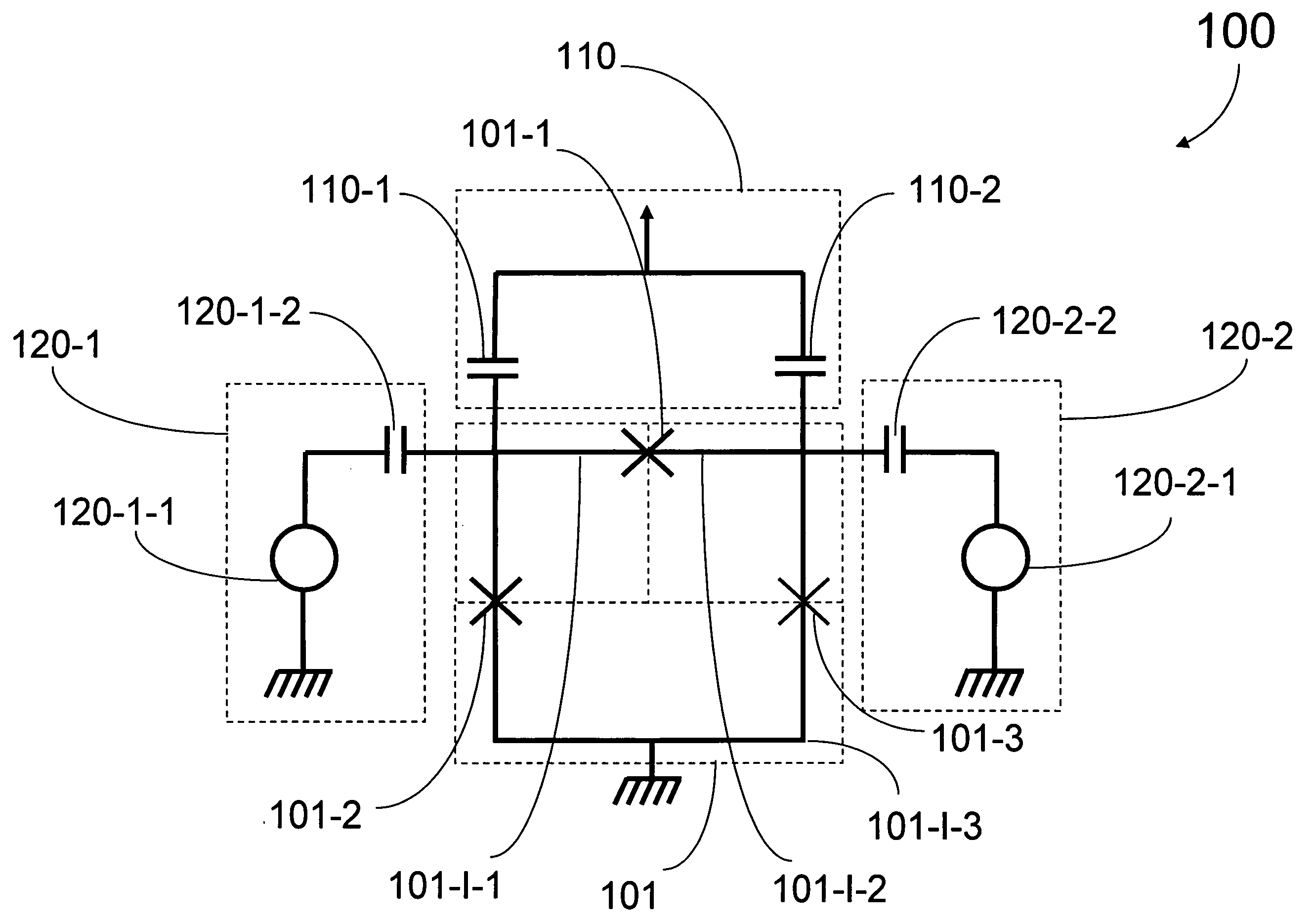
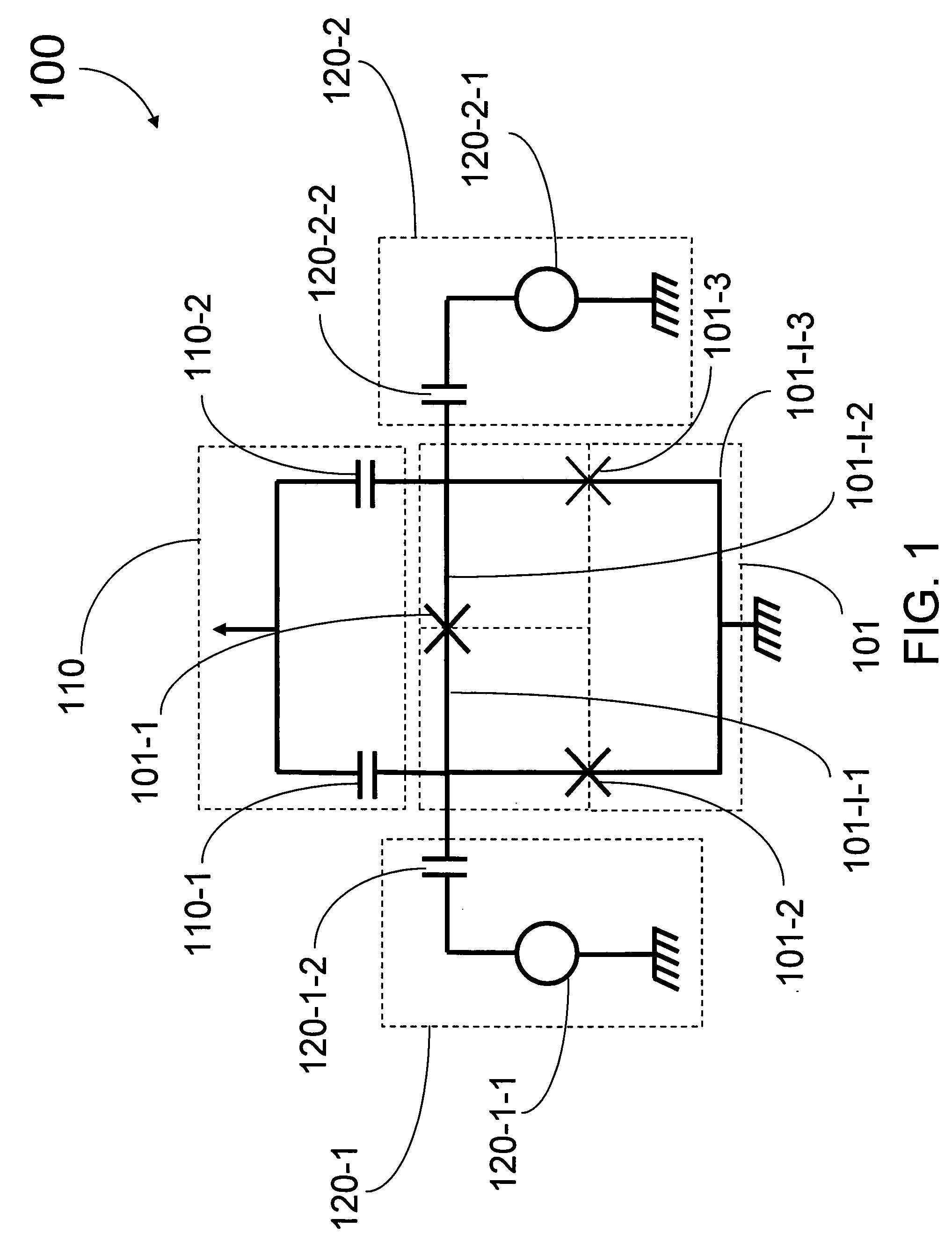
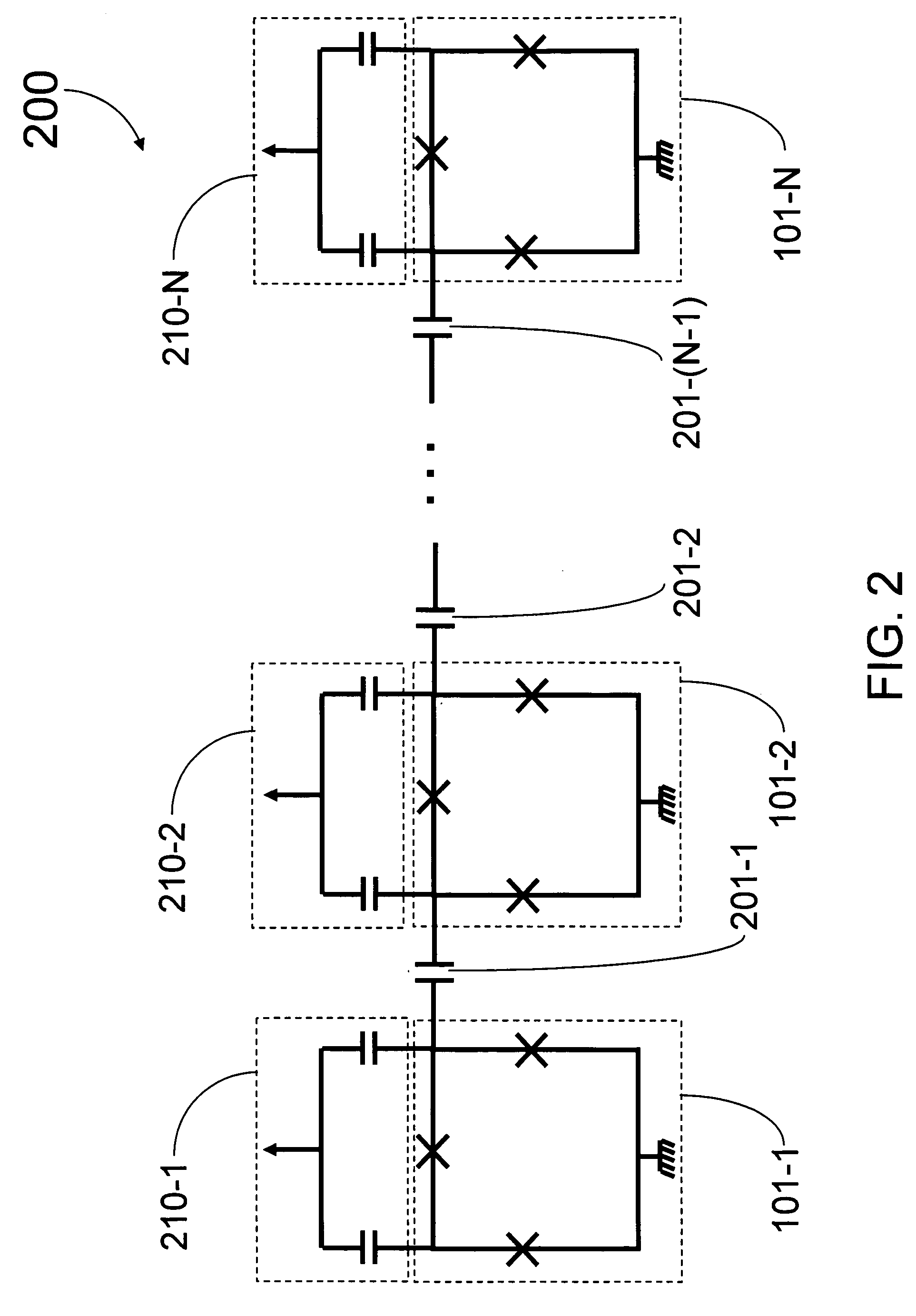
Superconducting qubits having a plurality of capacitive couplings
PatentActiveUS20060097746A1
Innovation
- A quantum nondemolition measurement method is developed using a superconducting qubit with a superconducting loop and Josephson junctions, where the readout mechanism is capacitively coupled to islands in the qubit, allowing for equal back-action charge application and symmetric cancellation, thereby preserving the qubit's state and enabling controlled coupling between qubits.

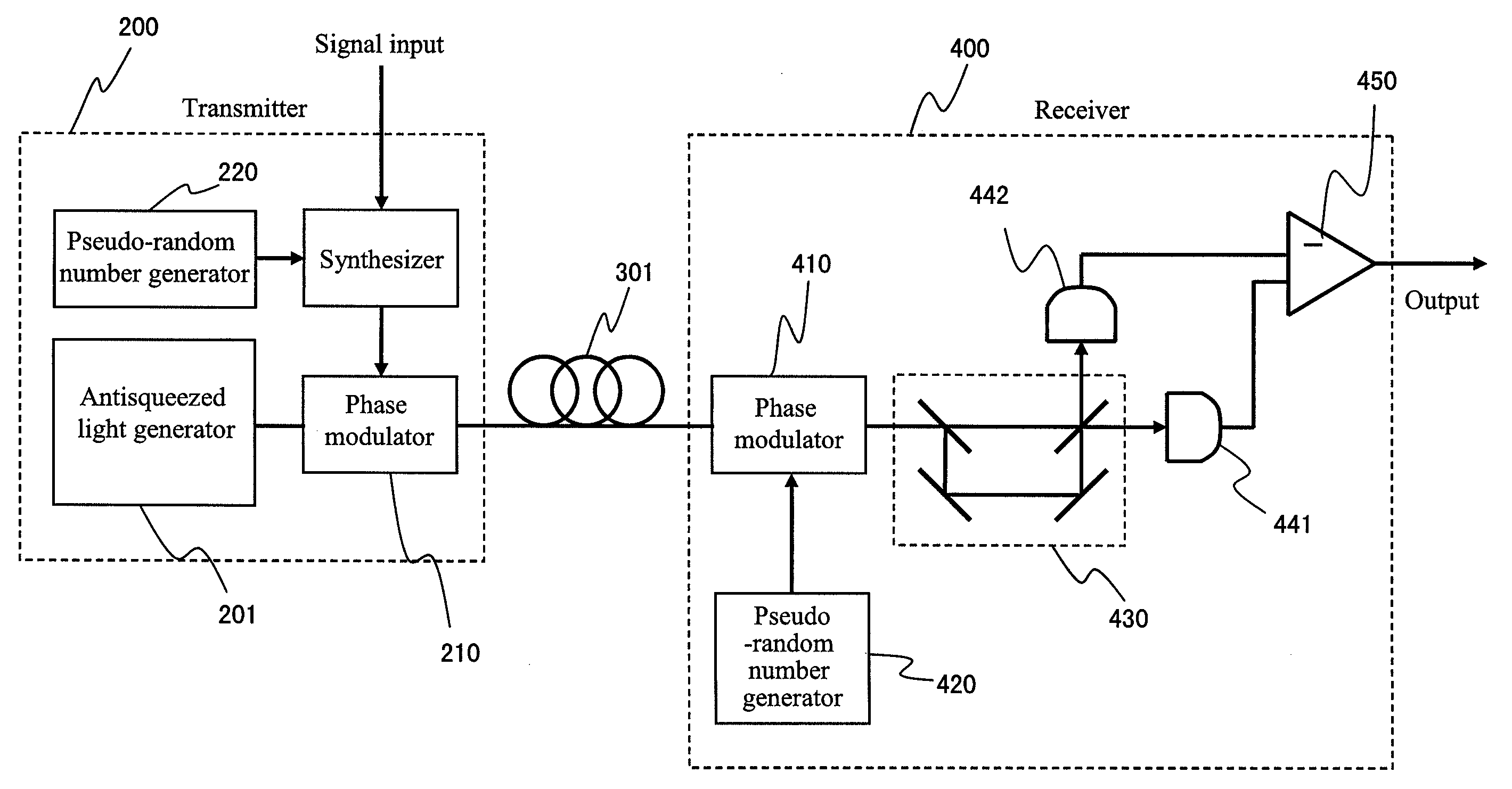
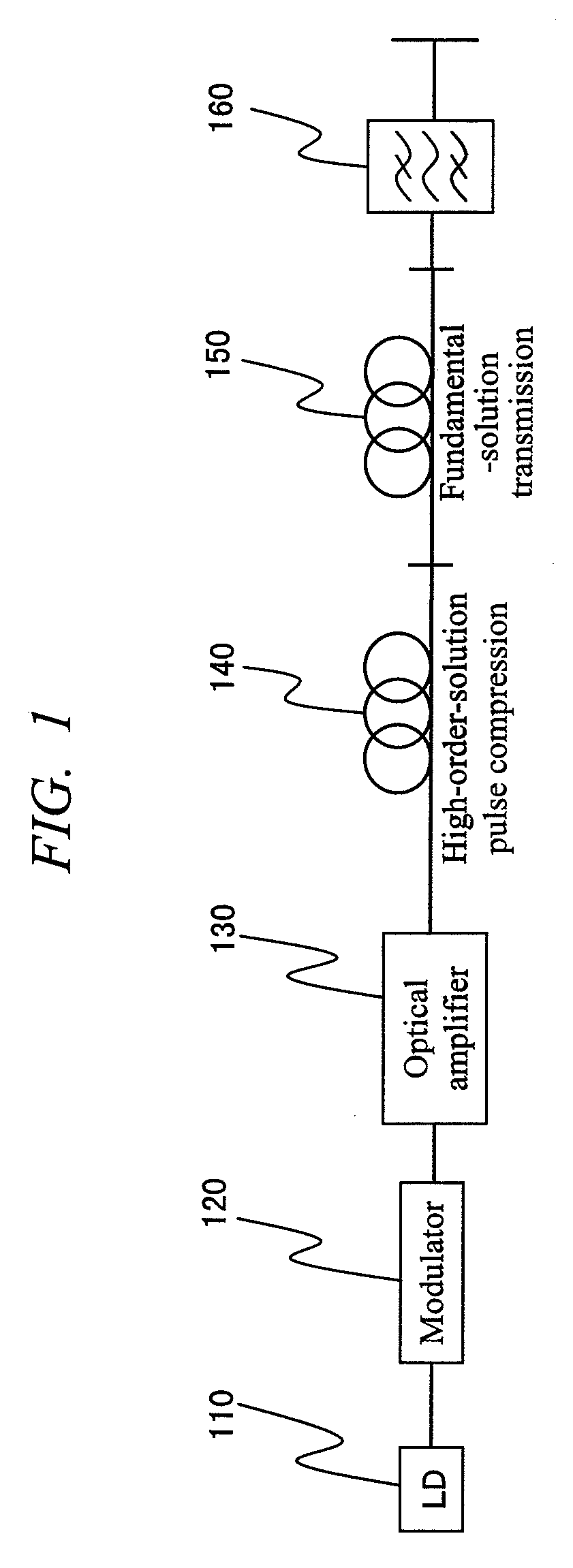
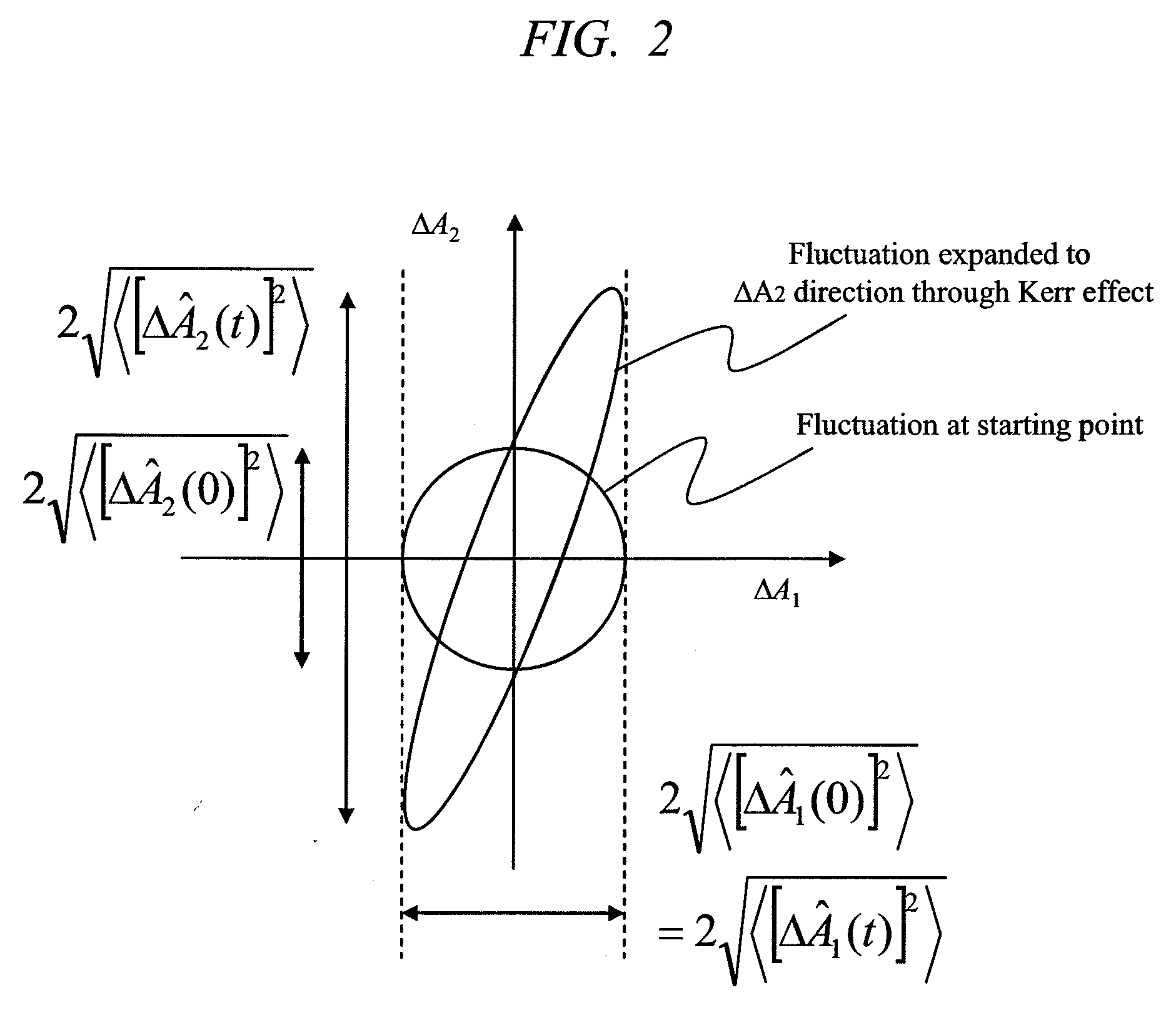
Antisqueezed Light Generator
PatentInactiveUS20070297810A1
Innovation
- The method employs the Kerr effect in optical fibers to expand phase fluctuations, using laser diode output light modulated into pulse forms with high-order soliton compression, maintaining peak power and satisfying soliton conditions to generate antisqueezed light with regular optical communication components, ensuring reliability and low jitter.

Quantum Materials Engineering Implications
Quantum tunneling dynamics in mesoscopic fields has profound implications for materials engineering, particularly in the development of next-generation quantum materials. The manipulation of quantum tunneling effects enables unprecedented control over material properties at the nanoscale, creating opportunities for novel functional materials with tailored electronic, magnetic, and optical characteristics.
The engineering of quantum materials leveraging tunneling phenomena requires precise control of material interfaces and boundaries. By strategically designing heterostructures with specific potential barriers, engineers can modulate tunneling probabilities and create materials with programmable quantum states. This approach has already yielded promising results in the development of high-efficiency quantum dots, superconducting junctions, and topological insulators.
Materials exhibiting enhanced quantum tunneling properties demonstrate remarkable potential for quantum computing applications. The coherent tunneling of electrons through carefully engineered barriers provides a physical basis for qubit operations with reduced decoherence rates. Recent experimental evidence suggests that mesoscopic field-controlled tunneling can extend coherence times by up to two orders of magnitude compared to conventional approaches, representing a significant advancement for quantum information processing.
From a manufacturing perspective, the integration of quantum tunneling dynamics into materials design introduces new fabrication challenges. Atomic-level precision becomes essential, as tunneling probabilities are exponentially sensitive to barrier width variations. Advanced deposition techniques such as molecular beam epitaxy and atomic layer deposition have emerged as critical enablers for quantum materials engineering, allowing for angstrom-level control of material interfaces.
Energy harvesting represents another promising application domain for quantum tunneling-enhanced materials. Resonant tunneling diodes and quantum well structures can be engineered to capture energy from thermal fluctuations and ambient electromagnetic fields with efficiency levels previously thought impossible under classical constraints. These materials could revolutionize energy scavenging in low-power electronic systems and IoT devices.
The durability and stability of quantum tunneling effects in engineered materials remain significant challenges. Environmental factors such as temperature fluctuations, electromagnetic interference, and mechanical stress can disrupt the delicate quantum states necessary for tunneling. Developing protective architectures and self-healing material systems represents a frontier research direction with substantial implications for practical applications of quantum materials.
The engineering of quantum materials leveraging tunneling phenomena requires precise control of material interfaces and boundaries. By strategically designing heterostructures with specific potential barriers, engineers can modulate tunneling probabilities and create materials with programmable quantum states. This approach has already yielded promising results in the development of high-efficiency quantum dots, superconducting junctions, and topological insulators.
Materials exhibiting enhanced quantum tunneling properties demonstrate remarkable potential for quantum computing applications. The coherent tunneling of electrons through carefully engineered barriers provides a physical basis for qubit operations with reduced decoherence rates. Recent experimental evidence suggests that mesoscopic field-controlled tunneling can extend coherence times by up to two orders of magnitude compared to conventional approaches, representing a significant advancement for quantum information processing.
From a manufacturing perspective, the integration of quantum tunneling dynamics into materials design introduces new fabrication challenges. Atomic-level precision becomes essential, as tunneling probabilities are exponentially sensitive to barrier width variations. Advanced deposition techniques such as molecular beam epitaxy and atomic layer deposition have emerged as critical enablers for quantum materials engineering, allowing for angstrom-level control of material interfaces.
Energy harvesting represents another promising application domain for quantum tunneling-enhanced materials. Resonant tunneling diodes and quantum well structures can be engineered to capture energy from thermal fluctuations and ambient electromagnetic fields with efficiency levels previously thought impossible under classical constraints. These materials could revolutionize energy scavenging in low-power electronic systems and IoT devices.
The durability and stability of quantum tunneling effects in engineered materials remain significant challenges. Environmental factors such as temperature fluctuations, electromagnetic interference, and mechanical stress can disrupt the delicate quantum states necessary for tunneling. Developing protective architectures and self-healing material systems represents a frontier research direction with substantial implications for practical applications of quantum materials.
Interdisciplinary Applications in Quantum Information Science
Quantum information science has emerged as a fertile ground for applying quantum tunneling dynamics research beyond traditional physics domains. The intersection of quantum tunneling phenomena with information processing creates novel paradigms for computation, communication, and sensing technologies. Quantum tunneling's ability to penetrate energy barriers provides unique advantages in quantum bit (qubit) operations, potentially enabling faster switching times and reduced energy consumption compared to classical systems.
In cryptography, quantum tunneling dynamics offer promising applications for secure key distribution protocols. The inherent uncertainty in tunneling probabilities can be harnessed to generate truly random encryption keys that are fundamentally resistant to prediction by classical algorithms. Several research groups have demonstrated prototype quantum random number generators based on tunneling phenomena in mesoscopic fields, achieving entropy rates sufficient for high-security applications.
Biological systems research has begun exploring quantum tunneling as a mechanism for understanding certain enzymatic reactions and photosynthetic energy transfer. Recent studies suggest that tunneling effects in mesoscopic biological environments may contribute to the remarkable efficiency of photosynthetic light-harvesting complexes. This cross-disciplinary application connects quantum physics with molecular biology, potentially revolutionizing our understanding of fundamental life processes.
Neuromorphic computing represents another promising frontier where quantum tunneling dynamics could enable brain-inspired computing architectures. Tunneling-based memristive devices can mimic synaptic plasticity, potentially leading to energy-efficient neural network implementations. Experimental platforms utilizing mesoscopic field configurations have demonstrated learning capabilities analogous to biological systems but with significantly reduced power requirements.
Quantum sensing applications leverage tunneling dynamics to achieve unprecedented measurement precision. Tunneling-based sensors can detect minute variations in electromagnetic fields, gravitational forces, and other physical quantities with sensitivity approaching fundamental quantum limits. These sensors find applications in medical imaging, geological surveying, and fundamental physics research.
Material science benefits from quantum tunneling research through improved understanding of electron transport in novel materials. This knowledge facilitates the development of advanced electronic components with enhanced performance characteristics. Particularly promising are applications in thermoelectric materials, where controlled tunneling can optimize the power factor while minimizing thermal conductivity.
The interdisciplinary nature of these applications highlights the transformative potential of quantum tunneling dynamics research across scientific and technological domains. As experimental techniques and theoretical frameworks continue to evolve, we anticipate further cross-pollination of ideas between quantum physics and diverse fields including medicine, finance, and environmental science.
In cryptography, quantum tunneling dynamics offer promising applications for secure key distribution protocols. The inherent uncertainty in tunneling probabilities can be harnessed to generate truly random encryption keys that are fundamentally resistant to prediction by classical algorithms. Several research groups have demonstrated prototype quantum random number generators based on tunneling phenomena in mesoscopic fields, achieving entropy rates sufficient for high-security applications.
Biological systems research has begun exploring quantum tunneling as a mechanism for understanding certain enzymatic reactions and photosynthetic energy transfer. Recent studies suggest that tunneling effects in mesoscopic biological environments may contribute to the remarkable efficiency of photosynthetic light-harvesting complexes. This cross-disciplinary application connects quantum physics with molecular biology, potentially revolutionizing our understanding of fundamental life processes.
Neuromorphic computing represents another promising frontier where quantum tunneling dynamics could enable brain-inspired computing architectures. Tunneling-based memristive devices can mimic synaptic plasticity, potentially leading to energy-efficient neural network implementations. Experimental platforms utilizing mesoscopic field configurations have demonstrated learning capabilities analogous to biological systems but with significantly reduced power requirements.
Quantum sensing applications leverage tunneling dynamics to achieve unprecedented measurement precision. Tunneling-based sensors can detect minute variations in electromagnetic fields, gravitational forces, and other physical quantities with sensitivity approaching fundamental quantum limits. These sensors find applications in medical imaging, geological surveying, and fundamental physics research.
Material science benefits from quantum tunneling research through improved understanding of electron transport in novel materials. This knowledge facilitates the development of advanced electronic components with enhanced performance characteristics. Particularly promising are applications in thermoelectric materials, where controlled tunneling can optimize the power factor while minimizing thermal conductivity.
The interdisciplinary nature of these applications highlights the transformative potential of quantum tunneling dynamics research across scientific and technological domains. As experimental techniques and theoretical frameworks continue to evolve, we anticipate further cross-pollination of ideas between quantum physics and diverse fields including medicine, finance, and environmental science.
Unlock deeper insights with PatSnap Eureka Quick Research — get a full tech report to explore trends and direct your research. Try now!
Generate Your Research Report Instantly with AI Agent
Supercharge your innovation with PatSnap Eureka AI Agent Platform!