Enhance Compression Wave Features for New Discoveries
MAR 9, 20269 MIN READ
Generate Your Research Report Instantly with AI Agent
PatSnap Eureka helps you evaluate technical feasibility & market potential.
Compression Wave Technology Background and Research Objectives
Compression wave technology represents a fundamental branch of wave physics that has evolved significantly since its initial theoretical foundations in the 19th century. Originally conceptualized through the work of pioneers like Lord Rayleigh and George Stokes, compression waves have transitioned from purely academic interest to critical applications across multiple industries. These longitudinal waves, characterized by particle displacement parallel to wave propagation direction, have become indispensable in fields ranging from medical diagnostics to geological exploration.
The historical development of compression wave applications demonstrates a clear trajectory from basic seismic studies in the early 1900s to sophisticated modern implementations. Early petroleum exploration utilized rudimentary compression wave techniques, while contemporary applications encompass advanced ultrasonic imaging, non-destructive testing, and materials characterization. The integration of digital signal processing and machine learning algorithms has revolutionized wave feature extraction capabilities, enabling previously unattainable levels of precision and analysis depth.
Current technological evolution focuses on enhancing feature extraction methodologies to unlock new discovery potential across diverse application domains. Traditional compression wave analysis relied heavily on amplitude and frequency domain characteristics, but emerging approaches emphasize advanced signal processing techniques including wavelet transforms, spectral analysis, and pattern recognition algorithms. These developments aim to extract subtle wave characteristics that were previously masked by noise or considered insignificant.
The primary research objective centers on developing enhanced compression wave feature extraction techniques that can reveal previously undetectable phenomena and patterns. This involves creating sophisticated algorithms capable of identifying minute variations in wave propagation characteristics, enabling breakthrough discoveries in materials science, medical diagnostics, and subsurface exploration. The goal encompasses both improving existing detection sensitivity and developing entirely new analytical frameworks.
Secondary objectives include establishing standardized methodologies for compression wave feature enhancement that can be universally applied across different industries and research domains. This standardization effort aims to create interoperable systems and protocols that facilitate knowledge transfer and collaborative research initiatives. Additionally, the research targets the development of real-time processing capabilities that can support immediate decision-making in critical applications such as structural health monitoring and medical emergency diagnostics.
The historical development of compression wave applications demonstrates a clear trajectory from basic seismic studies in the early 1900s to sophisticated modern implementations. Early petroleum exploration utilized rudimentary compression wave techniques, while contemporary applications encompass advanced ultrasonic imaging, non-destructive testing, and materials characterization. The integration of digital signal processing and machine learning algorithms has revolutionized wave feature extraction capabilities, enabling previously unattainable levels of precision and analysis depth.
Current technological evolution focuses on enhancing feature extraction methodologies to unlock new discovery potential across diverse application domains. Traditional compression wave analysis relied heavily on amplitude and frequency domain characteristics, but emerging approaches emphasize advanced signal processing techniques including wavelet transforms, spectral analysis, and pattern recognition algorithms. These developments aim to extract subtle wave characteristics that were previously masked by noise or considered insignificant.
The primary research objective centers on developing enhanced compression wave feature extraction techniques that can reveal previously undetectable phenomena and patterns. This involves creating sophisticated algorithms capable of identifying minute variations in wave propagation characteristics, enabling breakthrough discoveries in materials science, medical diagnostics, and subsurface exploration. The goal encompasses both improving existing detection sensitivity and developing entirely new analytical frameworks.
Secondary objectives include establishing standardized methodologies for compression wave feature enhancement that can be universally applied across different industries and research domains. This standardization effort aims to create interoperable systems and protocols that facilitate knowledge transfer and collaborative research initiatives. Additionally, the research targets the development of real-time processing capabilities that can support immediate decision-making in critical applications such as structural health monitoring and medical emergency diagnostics.
Market Demand for Enhanced Compression Wave Applications
The global seismic exploration market continues to experience robust growth driven by increasing energy demands and the need for more sophisticated subsurface imaging capabilities. Enhanced compression wave technologies are positioned at the forefront of this expansion, addressing critical limitations in conventional seismic data acquisition and processing methods. The market demand stems primarily from oil and gas exploration companies seeking to improve reservoir characterization accuracy and reduce exploration risks in increasingly complex geological environments.
Traditional seismic surveys often struggle with signal-to-noise ratio challenges and limited resolution in deep formations. Enhanced compression wave features offer significant improvements in data quality, enabling better identification of hydrocarbon reservoirs and structural geological features. This technological advancement is particularly valuable in mature oil fields where enhanced recovery techniques require precise subsurface mapping, as well as in frontier exploration areas where conventional methods may prove insufficient.
The renewable energy sector presents an emerging market segment for enhanced compression wave applications. Geothermal energy development requires detailed understanding of subsurface thermal structures and fracture networks, where advanced compression wave analysis provides crucial insights. Similarly, carbon capture and storage projects demand precise geological characterization to ensure safe and effective CO2 sequestration, creating additional market opportunities for enhanced seismic technologies.
Mining and mineral exploration industries represent another significant demand driver. Enhanced compression wave features enable more accurate ore body delineation and structural mapping, reducing exploration costs and improving resource estimation accuracy. The growing demand for critical minerals and rare earth elements further amplifies the need for advanced geophysical exploration techniques.
Infrastructure development projects increasingly rely on enhanced seismic technologies for site characterization and hazard assessment. Urban development, tunnel construction, and major infrastructure projects require detailed subsurface information to ensure structural integrity and safety. Enhanced compression wave analysis provides superior resolution for detecting geological hazards, groundwater conditions, and foundation characteristics.
The market demand is further accelerated by technological convergence with artificial intelligence and machine learning capabilities. Integration of enhanced compression wave features with advanced data analytics creates new value propositions for clients seeking automated interpretation and real-time decision-making capabilities. This convergence opens opportunities in environmental monitoring, earthquake hazard assessment, and precision agriculture applications where subsurface conditions significantly impact outcomes.
Traditional seismic surveys often struggle with signal-to-noise ratio challenges and limited resolution in deep formations. Enhanced compression wave features offer significant improvements in data quality, enabling better identification of hydrocarbon reservoirs and structural geological features. This technological advancement is particularly valuable in mature oil fields where enhanced recovery techniques require precise subsurface mapping, as well as in frontier exploration areas where conventional methods may prove insufficient.
The renewable energy sector presents an emerging market segment for enhanced compression wave applications. Geothermal energy development requires detailed understanding of subsurface thermal structures and fracture networks, where advanced compression wave analysis provides crucial insights. Similarly, carbon capture and storage projects demand precise geological characterization to ensure safe and effective CO2 sequestration, creating additional market opportunities for enhanced seismic technologies.
Mining and mineral exploration industries represent another significant demand driver. Enhanced compression wave features enable more accurate ore body delineation and structural mapping, reducing exploration costs and improving resource estimation accuracy. The growing demand for critical minerals and rare earth elements further amplifies the need for advanced geophysical exploration techniques.
Infrastructure development projects increasingly rely on enhanced seismic technologies for site characterization and hazard assessment. Urban development, tunnel construction, and major infrastructure projects require detailed subsurface information to ensure structural integrity and safety. Enhanced compression wave analysis provides superior resolution for detecting geological hazards, groundwater conditions, and foundation characteristics.
The market demand is further accelerated by technological convergence with artificial intelligence and machine learning capabilities. Integration of enhanced compression wave features with advanced data analytics creates new value propositions for clients seeking automated interpretation and real-time decision-making capabilities. This convergence opens opportunities in environmental monitoring, earthquake hazard assessment, and precision agriculture applications where subsurface conditions significantly impact outcomes.
Current State and Challenges in Compression Wave Feature Enhancement
Compression wave feature enhancement technology has reached a critical juncture where traditional seismic processing methods are increasingly insufficient for modern exploration demands. Current approaches primarily rely on conventional amplitude-based analysis and frequency domain filtering, which often fail to capture subtle subsurface anomalies that could indicate significant hydrocarbon reserves or mineral deposits. The existing infrastructure predominantly utilizes legacy algorithms developed decades ago, creating a substantial gap between available computational power and actual implementation effectiveness.
The global distribution of compression wave enhancement capabilities reveals significant disparities across regions. North American and European research institutions lead in algorithmic development, while Asia-Pacific regions demonstrate strong implementation capabilities but lag in fundamental research. This geographical imbalance creates technology transfer challenges and limits collaborative advancement opportunities.
Machine learning integration represents the most promising yet challenging frontier in compression wave feature enhancement. While artificial intelligence algorithms show remarkable potential for pattern recognition in seismic data, their implementation faces substantial obstacles including data quality standardization, computational resource requirements, and interpretability concerns. Current neural network approaches often function as black boxes, making it difficult for geophysicists to validate results against established geological principles.
Data acquisition limitations pose another fundamental challenge. Modern seismic surveys generate unprecedented volumes of data, yet the quality and resolution of compression wave measurements remain constrained by physical sensor limitations and environmental factors. Ocean bottom seismometers and land-based arrays struggle with noise interference, spatial sampling irregularities, and temporal consistency issues that directly impact feature enhancement accuracy.
Processing speed bottlenecks significantly hinder real-time analysis capabilities. Current compression wave enhancement workflows require extensive computational time, often taking weeks to process large-scale surveys. This delay prevents timely decision-making in exploration projects and limits the technology's applicability in time-sensitive scenarios such as drilling operations or emergency geological assessments.
Integration challenges between different vendor systems create additional complexity. Seismic processing software from various manufacturers often employs proprietary formats and algorithms, making it difficult to implement unified compression wave enhancement strategies across diverse operational environments. This fragmentation reduces overall efficiency and increases operational costs for exploration companies.
The global distribution of compression wave enhancement capabilities reveals significant disparities across regions. North American and European research institutions lead in algorithmic development, while Asia-Pacific regions demonstrate strong implementation capabilities but lag in fundamental research. This geographical imbalance creates technology transfer challenges and limits collaborative advancement opportunities.
Machine learning integration represents the most promising yet challenging frontier in compression wave feature enhancement. While artificial intelligence algorithms show remarkable potential for pattern recognition in seismic data, their implementation faces substantial obstacles including data quality standardization, computational resource requirements, and interpretability concerns. Current neural network approaches often function as black boxes, making it difficult for geophysicists to validate results against established geological principles.
Data acquisition limitations pose another fundamental challenge. Modern seismic surveys generate unprecedented volumes of data, yet the quality and resolution of compression wave measurements remain constrained by physical sensor limitations and environmental factors. Ocean bottom seismometers and land-based arrays struggle with noise interference, spatial sampling irregularities, and temporal consistency issues that directly impact feature enhancement accuracy.
Processing speed bottlenecks significantly hinder real-time analysis capabilities. Current compression wave enhancement workflows require extensive computational time, often taking weeks to process large-scale surveys. This delay prevents timely decision-making in exploration projects and limits the technology's applicability in time-sensitive scenarios such as drilling operations or emergency geological assessments.
Integration challenges between different vendor systems create additional complexity. Seismic processing software from various manufacturers often employs proprietary formats and algorithms, making it difficult to implement unified compression wave enhancement strategies across diverse operational environments. This fragmentation reduces overall efficiency and increases operational costs for exploration companies.
Existing Solutions for Compression Wave Feature Enhancement
01 Compression wave detection and analysis methods
Technologies for detecting and analyzing compression waves involve various sensing mechanisms and signal processing techniques. These methods capture wave propagation characteristics, amplitude variations, and temporal features to identify and characterize compression wave events. Advanced algorithms process the detected signals to extract meaningful features such as wave speed, pressure profiles, and frequency components for further analysis and interpretation.- Compression wave detection and analysis methods: Technologies for detecting and analyzing compression waves involve various sensor systems and signal processing techniques. These methods capture wave propagation characteristics, measure pressure variations, and analyze temporal and spatial features of compression waves. Advanced algorithms process the detected signals to extract meaningful features such as amplitude, frequency, and phase information for further analysis and interpretation.
- Compression wave generation and control systems: Systems designed to generate and control compression waves utilize mechanical actuators, pneumatic devices, or electromagnetic mechanisms. These systems can produce waves with specific characteristics by controlling parameters such as pressure, timing, and intensity. The generation mechanisms are often integrated with feedback control systems to maintain desired wave properties and ensure consistent performance across different operating conditions.
- Compression wave propagation in materials and structures: The study of how compression waves propagate through different materials and structural configurations involves analyzing wave behavior, reflection, transmission, and attenuation characteristics. This includes examining wave interactions with boundaries, interfaces, and internal structures. Understanding these propagation phenomena is crucial for applications in non-destructive testing, material characterization, and structural health monitoring.
- Compression wave applications in medical diagnostics: Medical diagnostic applications utilize compression wave technology for imaging and therapeutic purposes. These applications include ultrasound imaging, shock wave therapy, and tissue characterization. The technology enables non-invasive examination of internal body structures and can be used for treatment of various medical conditions by focusing compression waves on specific target areas.
- Compression wave measurement and monitoring devices: Specialized devices and instruments are designed to measure and monitor compression wave parameters in real-time. These devices incorporate transducers, data acquisition systems, and processing units to capture wave characteristics with high precision. The monitoring systems can track changes in wave properties over time and provide alerts or feedback for process control and quality assurance applications.
02 Compression wave generation and control systems
Systems designed to generate and control compression waves utilize specific mechanisms to produce desired wave characteristics. These systems incorporate actuators, pressure sources, and control circuits to regulate wave amplitude, frequency, and propagation patterns. The technology enables precise manipulation of compression wave parameters for various applications, including material testing and therapeutic treatments.Expand Specific Solutions03 Compression wave measurement instrumentation
Specialized instrumentation for measuring compression wave properties includes sensors, transducers, and data acquisition systems. These devices capture physical parameters such as pressure fluctuations, displacement, and velocity associated with wave propagation. The measurement systems provide high-resolution data for characterizing wave behavior in different media and environmental conditions.Expand Specific Solutions04 Compression wave propagation modeling
Mathematical and computational models simulate compression wave propagation through various materials and structures. These models account for wave reflection, refraction, attenuation, and interaction with boundaries. Simulation techniques enable prediction of wave behavior under different conditions and facilitate design optimization for applications requiring specific wave characteristics.Expand Specific Solutions05 Compression wave applications in material processing
Compression wave technology is applied in material processing operations including compaction, forming, and surface treatment. The controlled application of compression waves induces specific material responses such as densification, structural modification, or bonding. These processes leverage wave energy transfer mechanisms to achieve desired material properties and product characteristics without conventional mechanical contact.Expand Specific Solutions
Key Players in Compression Wave Research and Industry
The compression wave feature enhancement technology represents an emerging field within the broader signal processing and geophysical exploration market, currently in its early development stage with significant growth potential driven by applications in seismic imaging, medical diagnostics, and defense systems. The market demonstrates fragmented competition across multiple sectors, with established technology giants like Samsung Electronics, LG Electronics, Canon, and Tektronix leveraging their hardware expertise, while specialized firms such as ASELSAN and TKMS ATLAS ELEKTRONIK focus on defense applications. Academic institutions including Xidian University, Ocean University of China, and Southeast University contribute fundamental research, indicating moderate technology maturity with ongoing innovation. The diverse player ecosystem suggests expanding market opportunities as compression wave technologies mature across industrial, medical, and scientific applications.
Tektronix, Inc.
Technical Solution: Tektronix specializes in compression wave feature enhancement for electronic measurement and testing applications. Their technology integrates advanced signal processing algorithms with high-precision measurement instruments to detect and analyze compression artifacts in electronic signals. The company's approach uses proprietary waveform analysis techniques that can identify subtle compression-induced distortions in RF signals, digital communications, and power systems. Their solutions include both hardware-based real-time processors and software analysis tools that enable engineers to discover new phenomena hidden within compressed measurement data.
Strengths: Excellent precision in electronic signal analysis and strong measurement instrument integration. Weaknesses: Primarily focused on electronic testing applications, limited scope for other scientific domains.
Koninklijke Philips NV
Technical Solution: Philips has developed compression wave enhancement solutions primarily for medical imaging and healthcare applications. Their technology focuses on recovering diagnostic information from compressed medical data streams, using proprietary algorithms that can reconstruct critical wave features lost during compression. The system employs adaptive filtering techniques combined with machine learning models trained specifically on medical data patterns. Their approach includes real-time processing capabilities for ultrasound, MRI, and other imaging modalities, enabling healthcare professionals to discover previously hidden diagnostic markers in compressed medical data.
Strengths: Deep expertise in medical applications and regulatory compliance for healthcare use. Weaknesses: Technology primarily optimized for medical domain, limiting broader scientific applications.
Core Innovations in Compression Wave Signal Processing
System and method providing improved data compression via wavelet coefficient encoding
PatentInactiveUS6891974B1
Innovation
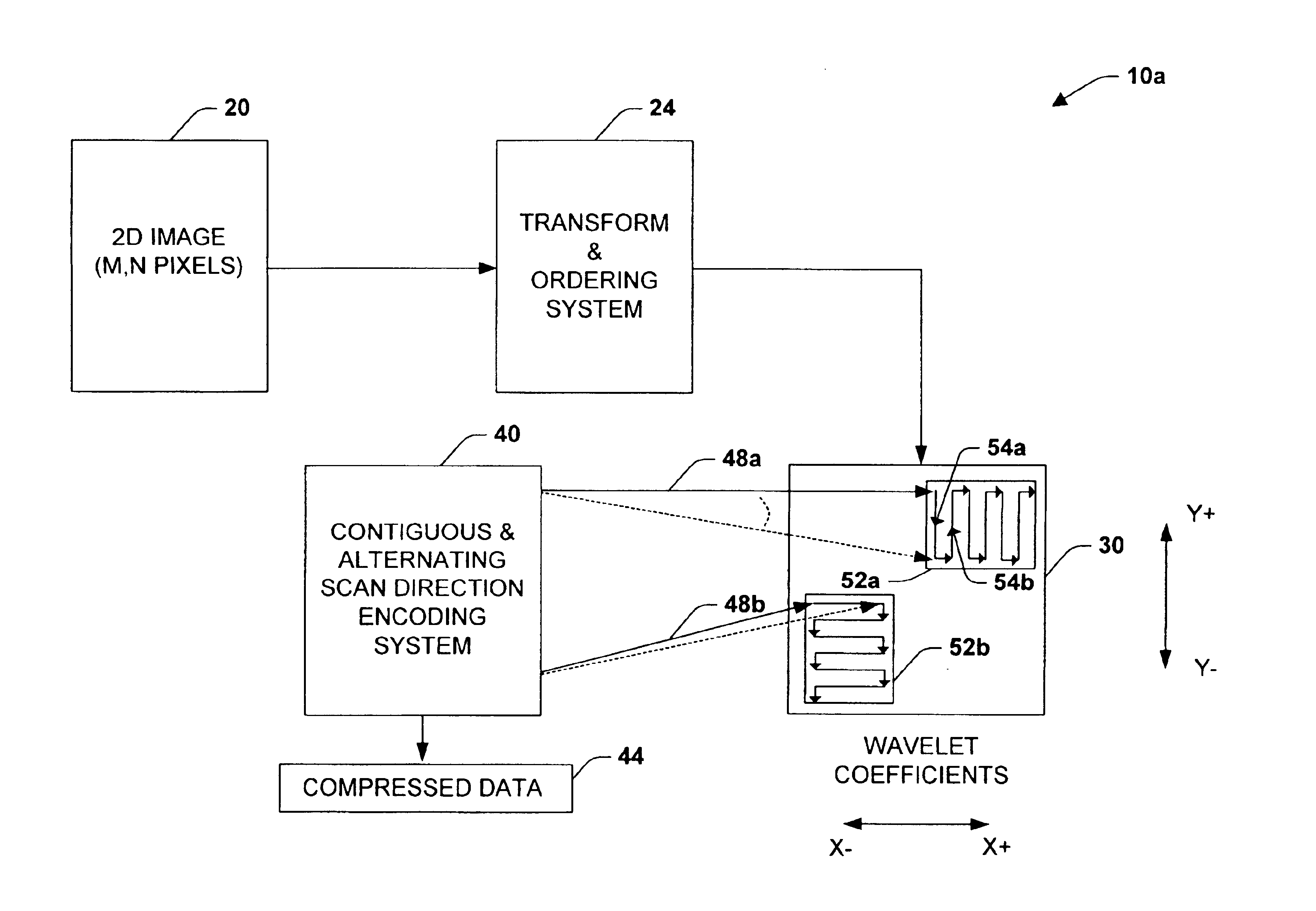
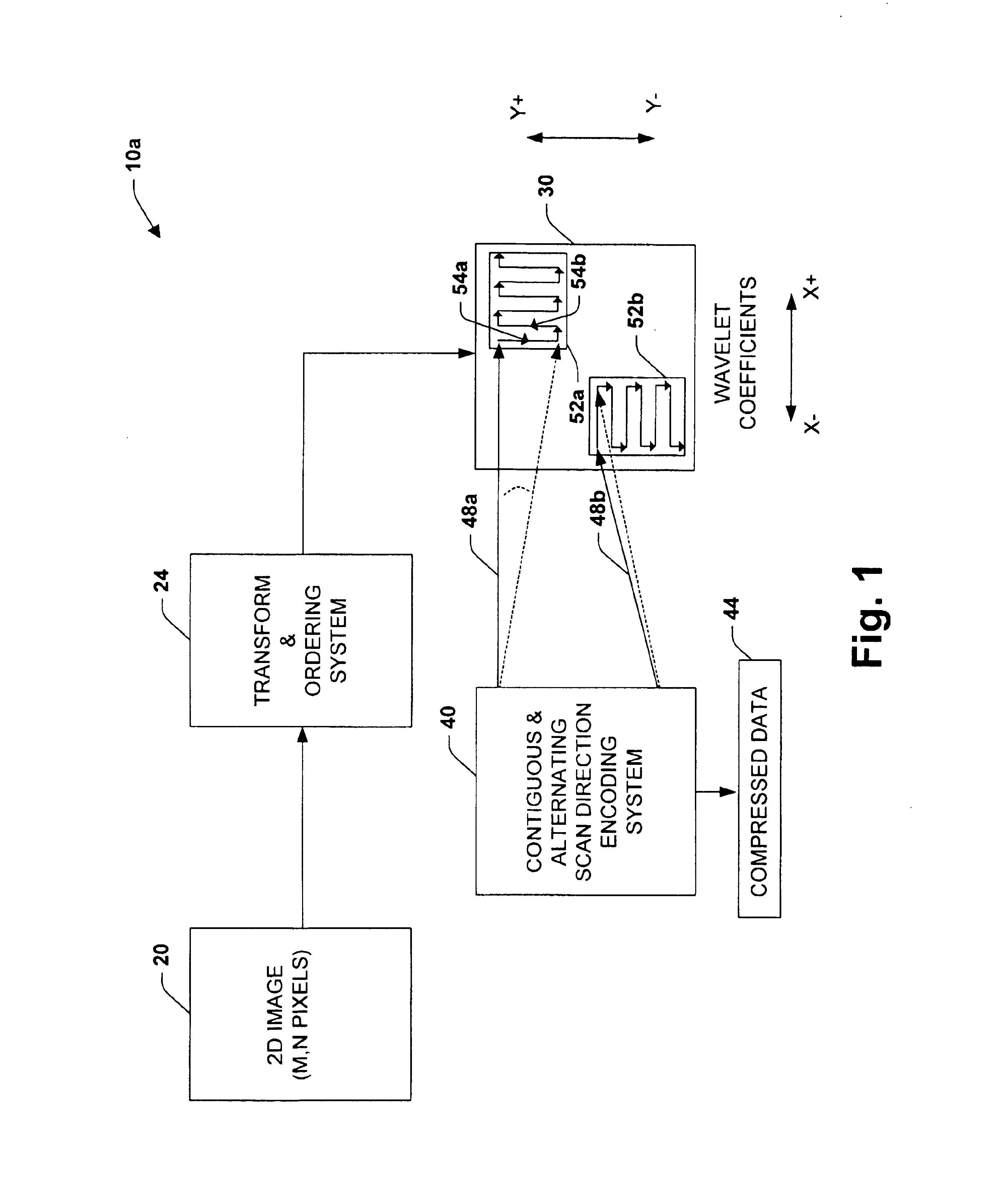
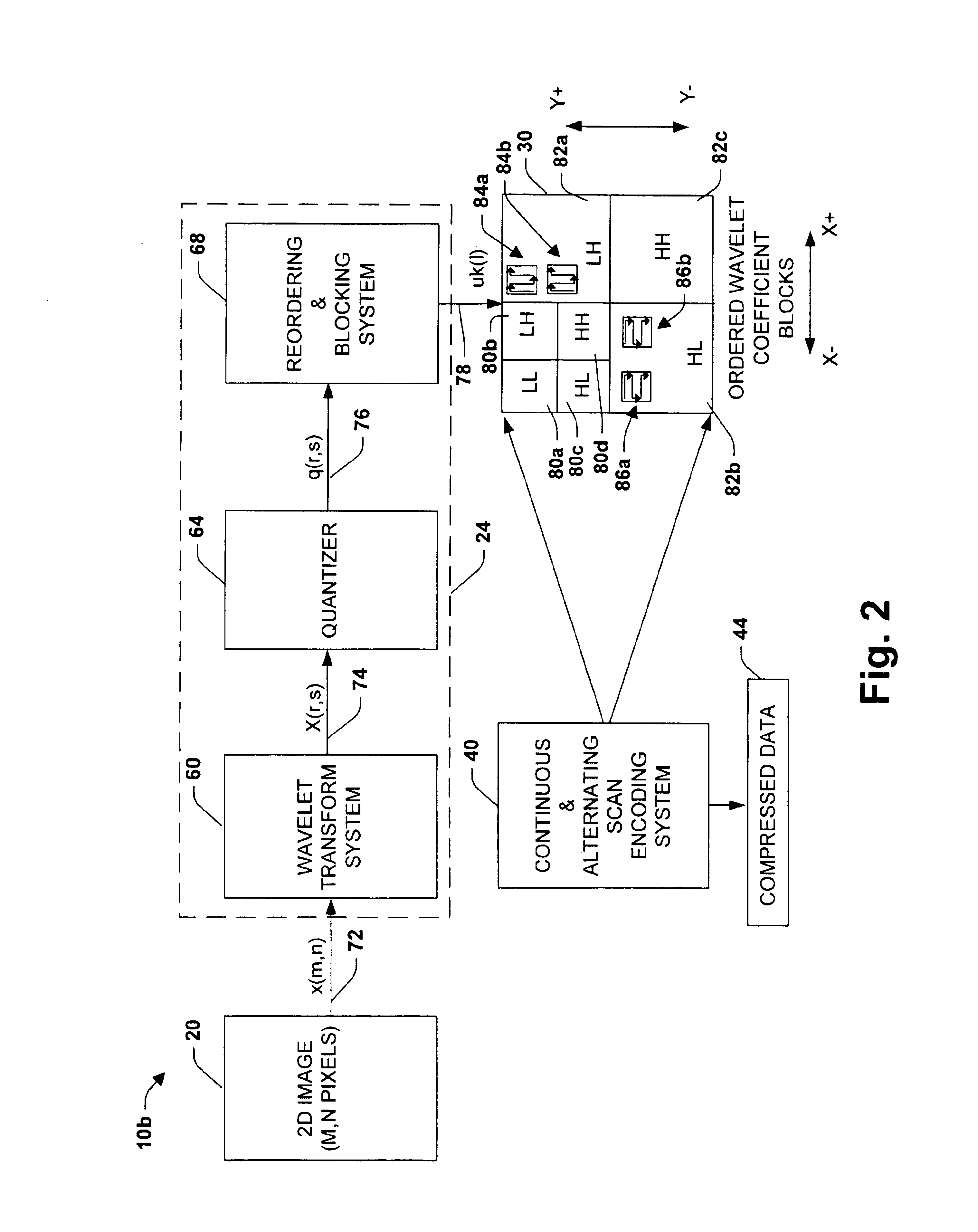
- Implementing a contiguous scanning pattern that alternates between vertical and horizontal directions within defined regions of a transformed image, ensuring that wavelet coefficients are more likely to be correlated, thereby enhancing data compression efficiency.

Data compression for a waveform data analyzer
PatentInactiveUS7477999B2
Innovation
- The solution involves decomposing waveform samples into characteristic states and using customized encoders for each state to compress and decompress waveform data in real-time, allowing for efficient storage and transfer while preserving the ability to reconstruct original samples.


AI-Driven Compression Wave Pattern Recognition
Artificial intelligence has emerged as a transformative force in compression wave pattern recognition, revolutionizing how seismic data is processed and interpreted. Traditional pattern recognition methods, while foundational, often struggle with the complexity and volume of modern seismic datasets. AI-driven approaches leverage machine learning algorithms to identify subtle patterns and anomalies that might escape conventional analysis techniques.
Deep learning architectures, particularly convolutional neural networks (CNNs) and recurrent neural networks (RNNs), have demonstrated exceptional capability in processing compression wave data. These networks can automatically extract hierarchical features from raw seismic signals, eliminating the need for manual feature engineering. The ability to learn complex non-linear relationships within compression wave patterns enables more accurate identification of geological structures and subsurface anomalies.
Supervised learning models trained on extensive labeled datasets have shown remarkable success in classifying different types of compression wave signatures. These models can distinguish between various geological formations, fault systems, and hydrocarbon indicators with unprecedented accuracy. Transfer learning techniques further enhance model performance by leveraging pre-trained networks and adapting them to specific geological contexts.
Unsupervised learning approaches, including clustering algorithms and autoencoders, excel at discovering hidden patterns within compression wave data without requiring labeled training examples. These methods are particularly valuable for identifying novel geological features or detecting anomalous wave propagation characteristics that may indicate previously unknown subsurface structures.
Real-time pattern recognition capabilities represent a significant advancement in seismic monitoring applications. AI systems can process streaming compression wave data and provide immediate alerts for significant geological events or changes in subsurface conditions. This capability is crucial for applications ranging from earthquake early warning systems to continuous reservoir monitoring.
The integration of ensemble methods and hybrid AI architectures combines multiple algorithms to achieve superior pattern recognition performance. These approaches leverage the strengths of different machine learning techniques while mitigating individual algorithm limitations, resulting in more robust and reliable compression wave analysis systems.
Deep learning architectures, particularly convolutional neural networks (CNNs) and recurrent neural networks (RNNs), have demonstrated exceptional capability in processing compression wave data. These networks can automatically extract hierarchical features from raw seismic signals, eliminating the need for manual feature engineering. The ability to learn complex non-linear relationships within compression wave patterns enables more accurate identification of geological structures and subsurface anomalies.
Supervised learning models trained on extensive labeled datasets have shown remarkable success in classifying different types of compression wave signatures. These models can distinguish between various geological formations, fault systems, and hydrocarbon indicators with unprecedented accuracy. Transfer learning techniques further enhance model performance by leveraging pre-trained networks and adapting them to specific geological contexts.
Unsupervised learning approaches, including clustering algorithms and autoencoders, excel at discovering hidden patterns within compression wave data without requiring labeled training examples. These methods are particularly valuable for identifying novel geological features or detecting anomalous wave propagation characteristics that may indicate previously unknown subsurface structures.
Real-time pattern recognition capabilities represent a significant advancement in seismic monitoring applications. AI systems can process streaming compression wave data and provide immediate alerts for significant geological events or changes in subsurface conditions. This capability is crucial for applications ranging from earthquake early warning systems to continuous reservoir monitoring.
The integration of ensemble methods and hybrid AI architectures combines multiple algorithms to achieve superior pattern recognition performance. These approaches leverage the strengths of different machine learning techniques while mitigating individual algorithm limitations, resulting in more robust and reliable compression wave analysis systems.
Cross-Domain Applications of Enhanced Compression Wave Features
Enhanced compression wave features demonstrate remarkable versatility across multiple scientific and industrial domains, extending far beyond traditional seismic exploration applications. The fundamental principles underlying compression wave propagation and feature extraction have proven adaptable to diverse fields where wave-based phenomena play critical roles in material characterization, structural analysis, and discovery processes.
In medical diagnostics, enhanced compression wave features are revolutionizing ultrasonic imaging and therapeutic applications. Advanced signal processing techniques originally developed for geological surveys now enable higher resolution tissue characterization, improved tumor detection capabilities, and more precise guided therapy procedures. The enhanced feature extraction methods allow medical professionals to identify subtle tissue variations that were previously undetectable using conventional ultrasonic approaches.
Materials science represents another significant application domain where compression wave enhancement techniques are driving innovation. Non-destructive testing protocols now incorporate sophisticated wave feature analysis to detect microscopic defects, evaluate composite material integrity, and assess structural health in real-time. These applications leverage the same mathematical frameworks used in seismic data processing but adapted for different frequency ranges and material properties.
The aerospace industry has embraced enhanced compression wave technologies for structural monitoring and quality assurance applications. Aircraft components undergo continuous monitoring using embedded sensor networks that analyze compression wave propagation patterns to detect fatigue, corrosion, or manufacturing defects. The enhanced feature extraction algorithms provide early warning systems that significantly improve safety margins and maintenance scheduling efficiency.
Ocean exploration and marine biology research benefit substantially from cross-domain applications of compression wave enhancement technologies. Underwater acoustic surveys employ advanced signal processing techniques to map seafloor topography, locate mineral deposits, and monitor marine ecosystem dynamics. The enhanced feature detection capabilities enable researchers to distinguish between different biological signatures and geological formations with unprecedented accuracy.
Manufacturing industries are increasingly adopting compression wave-based quality control systems that incorporate enhanced feature analysis for process optimization. Real-time monitoring of production lines using acoustic signature analysis helps identify equipment malfunctions, material inconsistencies, and process variations before they result in defective products. These applications demonstrate the broad applicability of wave enhancement technologies across diverse industrial sectors.
In medical diagnostics, enhanced compression wave features are revolutionizing ultrasonic imaging and therapeutic applications. Advanced signal processing techniques originally developed for geological surveys now enable higher resolution tissue characterization, improved tumor detection capabilities, and more precise guided therapy procedures. The enhanced feature extraction methods allow medical professionals to identify subtle tissue variations that were previously undetectable using conventional ultrasonic approaches.
Materials science represents another significant application domain where compression wave enhancement techniques are driving innovation. Non-destructive testing protocols now incorporate sophisticated wave feature analysis to detect microscopic defects, evaluate composite material integrity, and assess structural health in real-time. These applications leverage the same mathematical frameworks used in seismic data processing but adapted for different frequency ranges and material properties.
The aerospace industry has embraced enhanced compression wave technologies for structural monitoring and quality assurance applications. Aircraft components undergo continuous monitoring using embedded sensor networks that analyze compression wave propagation patterns to detect fatigue, corrosion, or manufacturing defects. The enhanced feature extraction algorithms provide early warning systems that significantly improve safety margins and maintenance scheduling efficiency.
Ocean exploration and marine biology research benefit substantially from cross-domain applications of compression wave enhancement technologies. Underwater acoustic surveys employ advanced signal processing techniques to map seafloor topography, locate mineral deposits, and monitor marine ecosystem dynamics. The enhanced feature detection capabilities enable researchers to distinguish between different biological signatures and geological formations with unprecedented accuracy.
Manufacturing industries are increasingly adopting compression wave-based quality control systems that incorporate enhanced feature analysis for process optimization. Real-time monitoring of production lines using acoustic signature analysis helps identify equipment malfunctions, material inconsistencies, and process variations before they result in defective products. These applications demonstrate the broad applicability of wave enhancement technologies across diverse industrial sectors.
Unlock deeper insights with PatSnap Eureka Quick Research — get a full tech report to explore trends and direct your research. Try now!
Generate Your Research Report Instantly with AI Agent
Supercharge your innovation with PatSnap Eureka AI Agent Platform!