How to Reduce Compression Wave Stress in Structural Studies
MAR 9, 20269 MIN READ
Generate Your Research Report Instantly with AI Agent
PatSnap Eureka helps you evaluate technical feasibility & market potential.
Compression Wave Stress Background and Research Objectives
Compression wave stress represents a fundamental challenge in structural engineering and materials science, arising when dynamic loads generate high-frequency pressure waves that propagate through structural components. These waves create localized stress concentrations that can lead to material failure, fatigue damage, and compromised structural integrity. The phenomenon becomes particularly critical in applications involving impact loading, seismic events, explosive forces, and high-speed mechanical operations.
The historical development of compression wave stress research traces back to early seismological studies in the late 19th century, where scientists first observed the destructive potential of pressure waves in geological formations. The field gained significant momentum during World War II, driven by the need to understand blast effects on military structures. Subsequent decades witnessed substantial advances through aerospace engineering requirements, where spacecraft and aircraft components faced extreme dynamic loading conditions.
Modern structural studies have revealed that compression wave stress manifests across multiple scales, from microscopic crystal lattice disruptions to macroscopic structural deformations. The complexity increases when considering heterogeneous materials, composite structures, and multi-layered systems where wave interactions create unpredictable stress patterns. Advanced computational modeling and experimental techniques have enabled researchers to visualize and quantify these phenomena with unprecedented precision.
Current technological evolution trends indicate a shift toward predictive modeling capabilities, real-time monitoring systems, and adaptive structural designs. The integration of artificial intelligence and machine learning algorithms has opened new possibilities for understanding complex wave propagation patterns and developing proactive mitigation strategies.
The primary research objectives focus on developing comprehensive methodologies to minimize compression wave stress effects while maintaining structural performance and economic viability. Key targets include establishing predictive models that accurately forecast stress distribution patterns under various loading conditions, creating innovative material compositions with enhanced wave absorption properties, and designing structural geometries that naturally dissipate compression wave energy.
Secondary objectives encompass the development of real-time monitoring systems capable of detecting early signs of compression wave damage, formulation of standardized testing protocols for evaluating wave stress resistance, and creation of design guidelines that integrate wave stress considerations into conventional structural analysis frameworks. These objectives collectively aim to transform current reactive approaches into proactive, prevention-oriented strategies that enhance structural safety and longevity across diverse engineering applications.
The historical development of compression wave stress research traces back to early seismological studies in the late 19th century, where scientists first observed the destructive potential of pressure waves in geological formations. The field gained significant momentum during World War II, driven by the need to understand blast effects on military structures. Subsequent decades witnessed substantial advances through aerospace engineering requirements, where spacecraft and aircraft components faced extreme dynamic loading conditions.
Modern structural studies have revealed that compression wave stress manifests across multiple scales, from microscopic crystal lattice disruptions to macroscopic structural deformations. The complexity increases when considering heterogeneous materials, composite structures, and multi-layered systems where wave interactions create unpredictable stress patterns. Advanced computational modeling and experimental techniques have enabled researchers to visualize and quantify these phenomena with unprecedented precision.
Current technological evolution trends indicate a shift toward predictive modeling capabilities, real-time monitoring systems, and adaptive structural designs. The integration of artificial intelligence and machine learning algorithms has opened new possibilities for understanding complex wave propagation patterns and developing proactive mitigation strategies.
The primary research objectives focus on developing comprehensive methodologies to minimize compression wave stress effects while maintaining structural performance and economic viability. Key targets include establishing predictive models that accurately forecast stress distribution patterns under various loading conditions, creating innovative material compositions with enhanced wave absorption properties, and designing structural geometries that naturally dissipate compression wave energy.
Secondary objectives encompass the development of real-time monitoring systems capable of detecting early signs of compression wave damage, formulation of standardized testing protocols for evaluating wave stress resistance, and creation of design guidelines that integrate wave stress considerations into conventional structural analysis frameworks. These objectives collectively aim to transform current reactive approaches into proactive, prevention-oriented strategies that enhance structural safety and longevity across diverse engineering applications.
Market Demand for Advanced Structural Analysis Solutions
The global structural analysis software market has experienced substantial growth driven by increasing complexity in engineering projects across aerospace, automotive, civil engineering, and energy sectors. Traditional finite element analysis tools often struggle with compression wave stress phenomena, creating significant gaps in current analytical capabilities that demand innovative solutions.
Infrastructure modernization initiatives worldwide have intensified the need for advanced structural analysis tools capable of handling dynamic loading conditions. Aging bridges, high-rise buildings, and industrial facilities require sophisticated assessment methods to evaluate compression wave propagation effects under seismic events, impact loads, and operational stresses.
The aerospace industry represents a particularly demanding market segment where compression wave stress analysis is critical for aircraft structural integrity. Modern composite materials and lightweight designs amplify the importance of accurate wave propagation modeling, as traditional analysis methods may underestimate stress concentrations and failure modes.
Automotive manufacturers increasingly require advanced structural analysis solutions to meet stringent safety regulations and optimize crashworthiness performance. The transition toward electric vehicles with unique structural configurations has created new challenges in understanding compression wave behavior through battery housings and lightweight chassis components.
Energy sector applications, particularly in offshore wind turbines and nuclear facilities, demand robust analytical tools for compression wave stress evaluation. These structures face complex loading scenarios where wave propagation effects significantly influence structural response and fatigue life predictions.
Current market solutions exhibit limitations in computational efficiency and accuracy when addressing compression wave phenomena. Existing software packages often rely on simplified assumptions or require extensive computational resources, creating barriers for widespread adoption among engineering consultancies and smaller organizations.
The emergence of high-performance computing platforms and cloud-based analysis services has created opportunities for more sophisticated compression wave stress analysis tools. Organizations seek integrated solutions that combine advanced numerical methods with user-friendly interfaces and reasonable computational costs.
Regulatory compliance requirements across multiple industries continue driving demand for enhanced structural analysis capabilities. Building codes, aerospace standards, and industrial safety regulations increasingly recognize the importance of dynamic stress analysis, including compression wave effects in structural design verification processes.
Infrastructure modernization initiatives worldwide have intensified the need for advanced structural analysis tools capable of handling dynamic loading conditions. Aging bridges, high-rise buildings, and industrial facilities require sophisticated assessment methods to evaluate compression wave propagation effects under seismic events, impact loads, and operational stresses.
The aerospace industry represents a particularly demanding market segment where compression wave stress analysis is critical for aircraft structural integrity. Modern composite materials and lightweight designs amplify the importance of accurate wave propagation modeling, as traditional analysis methods may underestimate stress concentrations and failure modes.
Automotive manufacturers increasingly require advanced structural analysis solutions to meet stringent safety regulations and optimize crashworthiness performance. The transition toward electric vehicles with unique structural configurations has created new challenges in understanding compression wave behavior through battery housings and lightweight chassis components.
Energy sector applications, particularly in offshore wind turbines and nuclear facilities, demand robust analytical tools for compression wave stress evaluation. These structures face complex loading scenarios where wave propagation effects significantly influence structural response and fatigue life predictions.
Current market solutions exhibit limitations in computational efficiency and accuracy when addressing compression wave phenomena. Existing software packages often rely on simplified assumptions or require extensive computational resources, creating barriers for widespread adoption among engineering consultancies and smaller organizations.
The emergence of high-performance computing platforms and cloud-based analysis services has created opportunities for more sophisticated compression wave stress analysis tools. Organizations seek integrated solutions that combine advanced numerical methods with user-friendly interfaces and reasonable computational costs.
Regulatory compliance requirements across multiple industries continue driving demand for enhanced structural analysis capabilities. Building codes, aerospace standards, and industrial safety regulations increasingly recognize the importance of dynamic stress analysis, including compression wave effects in structural design verification processes.
Current Challenges in Compression Wave Stress Management
Compression wave stress management in structural studies faces significant technical barriers that limit the accuracy and reliability of experimental results. The primary challenge stems from the inherent difficulty in controlling wave propagation characteristics during high-strain-rate loading conditions. Current testing methodologies struggle to maintain uniform stress distribution across specimen cross-sections, leading to complex stress states that compromise data interpretation and structural integrity assessments.
Material heterogeneity presents another critical obstacle in compression wave stress reduction. Structural components often exhibit varying mechanical properties throughout their geometry, creating impedance mismatches that generate unwanted stress concentrations and wave reflections. These discontinuities amplify local stress fields beyond design limits, particularly at interfaces between different materials or structural elements, making it challenging to predict failure modes accurately.
Geometric constraints in structural testing configurations introduce additional complexities. The interaction between compression waves and structural boundaries creates standing wave patterns and stress amplification zones that are difficult to predict or control. Sharp corners, notches, and geometric transitions act as stress concentrators, while the finite dimensions of test specimens lead to wave reflection phenomena that interfere with primary loading conditions.
Instrumentation limitations significantly hinder progress in compression wave stress management. Current sensor technologies often lack the temporal resolution required to capture rapid stress variations during dynamic loading events. The physical presence of measurement devices can alter local stress fields, while data acquisition systems struggle to process the high-frequency content characteristic of compression wave phenomena.
Loading rate dependencies create substantial challenges in establishing standardized testing protocols. The relationship between strain rate and material response varies significantly across different structural materials, making it difficult to develop universal stress reduction strategies. Dynamic effects become increasingly prominent at higher loading rates, where inertial forces and wave propagation effects dominate structural behavior.
Computational modeling faces considerable obstacles in accurately predicting compression wave stress distributions. Current numerical methods require extensive computational resources to resolve the fine temporal and spatial scales necessary for wave propagation analysis. Model validation remains problematic due to the difficulty in obtaining reliable experimental data under controlled conditions, creating a circular dependency between experimental and computational approaches.
Material heterogeneity presents another critical obstacle in compression wave stress reduction. Structural components often exhibit varying mechanical properties throughout their geometry, creating impedance mismatches that generate unwanted stress concentrations and wave reflections. These discontinuities amplify local stress fields beyond design limits, particularly at interfaces between different materials or structural elements, making it challenging to predict failure modes accurately.
Geometric constraints in structural testing configurations introduce additional complexities. The interaction between compression waves and structural boundaries creates standing wave patterns and stress amplification zones that are difficult to predict or control. Sharp corners, notches, and geometric transitions act as stress concentrators, while the finite dimensions of test specimens lead to wave reflection phenomena that interfere with primary loading conditions.
Instrumentation limitations significantly hinder progress in compression wave stress management. Current sensor technologies often lack the temporal resolution required to capture rapid stress variations during dynamic loading events. The physical presence of measurement devices can alter local stress fields, while data acquisition systems struggle to process the high-frequency content characteristic of compression wave phenomena.
Loading rate dependencies create substantial challenges in establishing standardized testing protocols. The relationship between strain rate and material response varies significantly across different structural materials, making it difficult to develop universal stress reduction strategies. Dynamic effects become increasingly prominent at higher loading rates, where inertial forces and wave propagation effects dominate structural behavior.
Computational modeling faces considerable obstacles in accurately predicting compression wave stress distributions. Current numerical methods require extensive computational resources to resolve the fine temporal and spatial scales necessary for wave propagation analysis. Model validation remains problematic due to the difficulty in obtaining reliable experimental data under controlled conditions, creating a circular dependency between experimental and computational approaches.
Existing Methods for Compression Wave Stress Reduction
01 Compression wave generation and propagation methods
Technologies focused on generating and controlling compression waves through various mechanisms including mechanical impact, explosive charges, and pneumatic systems. These methods involve precise timing and energy transfer to create controlled stress waves that propagate through materials or structures for testing, processing, or treatment purposes.- Compression wave generation and propagation methods: Technologies focused on generating and controlling compression waves through various mechanisms including mechanical impact, explosive charges, and pneumatic systems. These methods involve precise timing and energy control to produce desired stress wave characteristics for material processing or testing applications.
- Stress wave measurement and monitoring systems: Systems and devices designed to measure, detect, and analyze stress waves propagating through materials. These technologies employ sensors, transducers, and signal processing techniques to characterize wave parameters such as amplitude, frequency, and velocity for quality control and material evaluation purposes.
- Material treatment using compression stress waves: Applications of compression waves for treating and modifying material properties including surface hardening, grain refinement, and residual stress introduction. The stress waves induce plastic deformation and microstructural changes that enhance mechanical properties such as strength, fatigue resistance, and wear resistance.
- Compression wave stress analysis and simulation: Computational and analytical methods for predicting and modeling stress wave behavior in materials under compression loading. These approaches utilize finite element analysis, wave propagation theory, and constitutive models to simulate dynamic stress distributions and material responses during impact or shock loading events.
- Industrial applications of compression stress waves: Practical implementations of compression wave technology in manufacturing and processing operations including metal forming, welding, compaction, and demolition. These applications leverage the controlled delivery of stress waves to achieve specific material deformation, joining, or fracture objectives in industrial settings.
02 Material stress testing using compression waves
Techniques for evaluating material properties and structural integrity by subjecting specimens to compression wave stress. This includes non-destructive testing methods that analyze how materials respond to dynamic compression loading, measuring parameters such as wave velocity, attenuation, and deformation patterns to assess material quality and detect defects.Expand Specific Solutions03 Compression wave stress mitigation and damping
Systems and structures designed to absorb, dissipate, or redirect compression wave energy to protect equipment or materials from stress damage. These solutions incorporate damping materials, geometric configurations, or active control systems that reduce peak stress levels and prevent failure under dynamic compression loading conditions.Expand Specific Solutions04 Industrial applications of compression wave stress
Manufacturing and processing techniques that utilize controlled compression wave stress for material modification, consolidation, or forming operations. Applications include powder compaction, surface treatment, joining processes, and densification where compression waves induce beneficial changes in material structure or properties.Expand Specific Solutions05 Measurement and monitoring of compression wave stress
Instrumentation and sensor technologies for detecting, measuring, and analyzing compression wave stress in real-time. These systems employ various transducers, signal processing algorithms, and data acquisition methods to quantify stress magnitudes, wave characteristics, and temporal variations for research, quality control, or safety monitoring applications.Expand Specific Solutions
Key Players in Structural Engineering and Wave Analysis
The field of reducing compression wave stress in structural studies represents a mature yet evolving technological domain with significant market potential across aerospace, automotive, and industrial applications. The industry has progressed from early-stage research to practical implementation, driven by increasing demands for structural integrity and safety. Major aerospace players like Boeing, Airbus Operations SAS, and Safran SA lead commercial applications, while research institutions including Beijing Institute of Technology, Deutsches Zentrum für Luft- und Raumfahrt, and Sorbonne Université advance fundamental understanding. Industrial giants such as Siemens AG, General Electric Company, and 3M Co. contribute manufacturing and materials expertise. The technology demonstrates high maturity in aerospace applications but remains developing in emerging sectors, with market growth fueled by stringent safety regulations and performance optimization requirements across transportation and energy industries.
The Boeing Co.
Technical Solution: Boeing has developed advanced composite material structures and shock absorption systems to mitigate compression wave stress in aircraft fuselages and wing structures. Their approach includes multi-layered composite designs with energy-absorbing foam cores and strategic placement of damping materials at critical stress concentration points. The company utilizes finite element analysis combined with experimental validation to optimize structural configurations that distribute compression loads more effectively across the airframe. Boeing's solutions also incorporate active vibration control systems and smart materials that can adapt to varying stress conditions during flight operations.
Strengths: Extensive aerospace experience and proven track record in structural engineering. Weaknesses: Solutions primarily focused on aerospace applications with limited cross-industry adaptability.
General Electric Company
Technical Solution: GE has developed comprehensive stress reduction methodologies for turbine blades and engine components subjected to high-frequency compression waves. Their technical approach involves advanced metallurgy with gradient materials that transition from hard surfaces to more compliant cores, effectively dissipating compression wave energy. GE employs sophisticated computational fluid dynamics modeling coupled with structural analysis to predict and mitigate stress concentrations. The company has also pioneered additive manufacturing techniques that allow for internal lattice structures specifically designed to absorb and redirect compression forces while maintaining structural integrity.
Strengths: Strong materials science expertise and advanced manufacturing capabilities. Weaknesses: Solutions are heavily oriented toward high-temperature applications which may not translate to other structural contexts.
Core Innovations in Wave Damping and Structural Design
Device and method for reducing and homogenizing residual stress of a component by array of high-energy elastic waves
PatentActiveUS20210086309A1
Innovation
- A device and method utilizing an array of high-energy elastic waves, delivered through a tubular body with embedded exciting wedges and exciters, which emit waves perpendicularly to the component's surface and interior, controlled by a multi-channel signal amplifier and excitation control module to effectively reduce and homogenize residual stress.
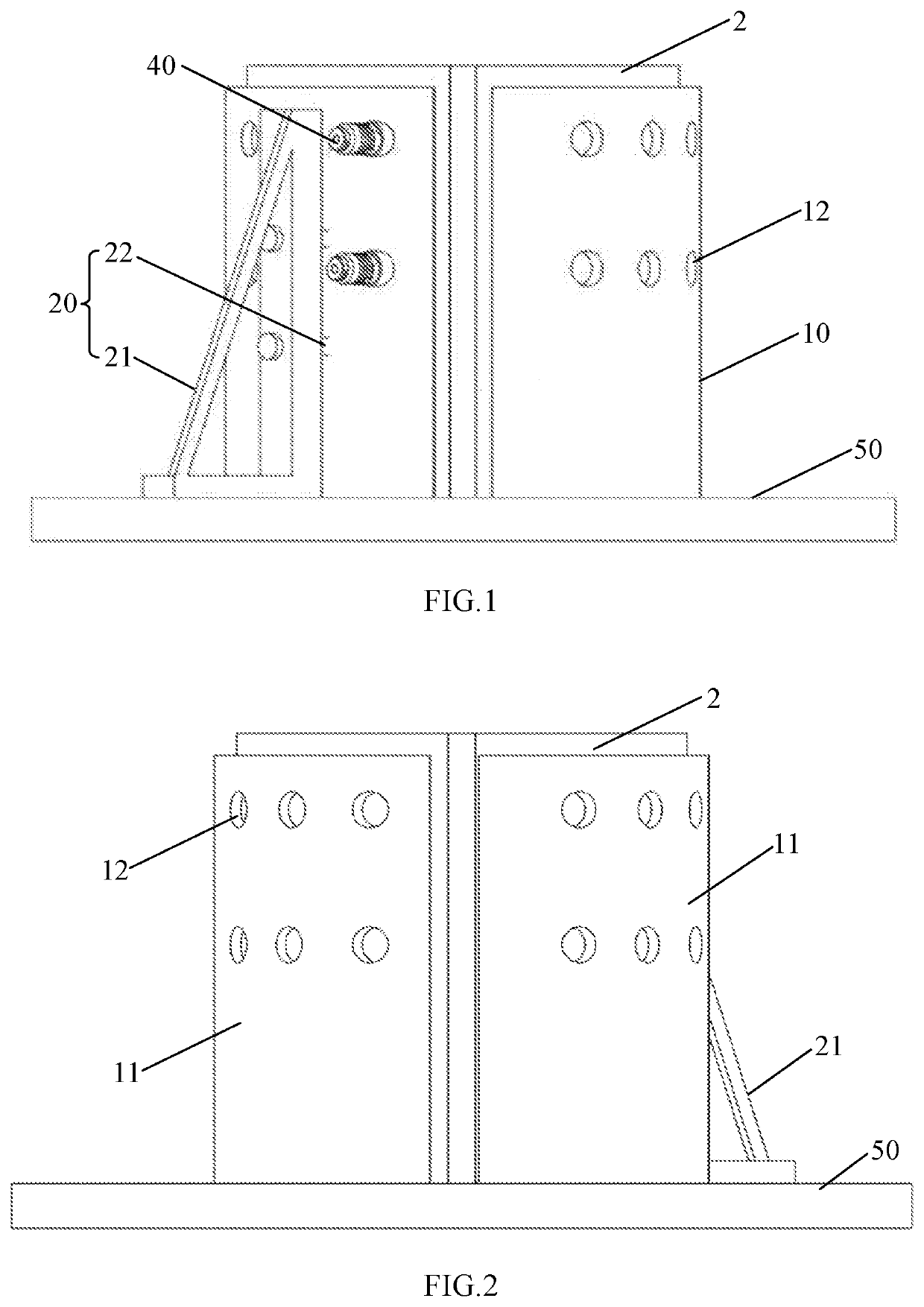
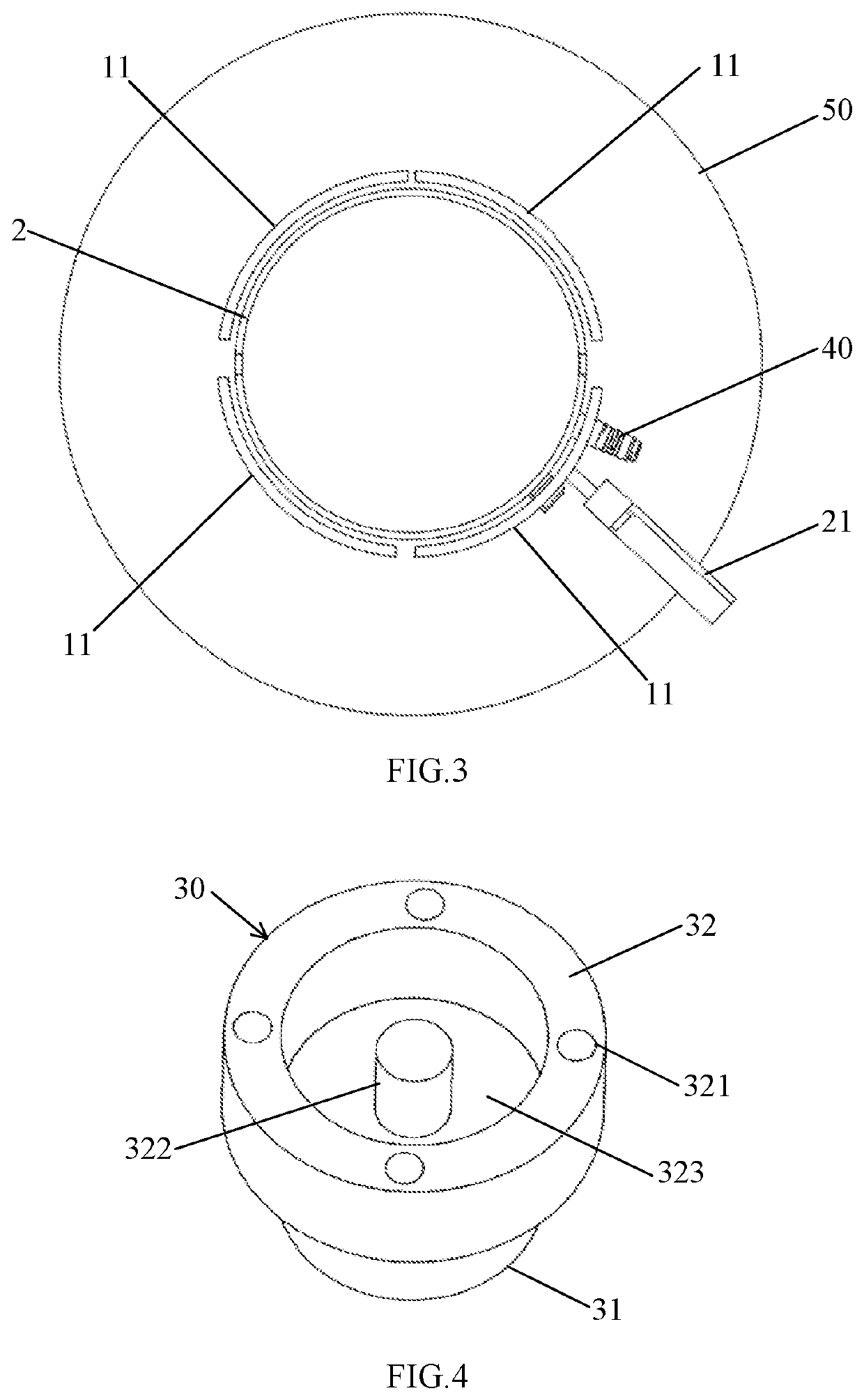
Method and device for reducing and homogenizing residual stress of a component
PatentActiveUS11708619B2
Innovation
- A method involving the use of a fluid medium and acoustic wave generators to emit high-energy elastic or ultrasonic waves towards the component, adjusting frequency and duration based on detected stress values, to effectively reduce and stabilize residual stress without damaging the component.


Safety Standards for Compression Wave Management
The establishment of comprehensive safety standards for compression wave management represents a critical framework for protecting personnel, equipment, and structural integrity during experimental and operational phases. Current international standards, including ISO 12100 and ANSI/AIHA Z10, provide foundational guidelines that must be adapted specifically for compression wave environments. These standards emphasize risk assessment protocols, hazard identification procedures, and the implementation of engineering controls to mitigate potential dangers associated with high-energy wave propagation.
Personnel safety protocols constitute the primary concern in compression wave management systems. Mandatory safety equipment includes specialized hearing protection rated for impulse noise levels exceeding 140 dB, impact-resistant eye protection, and protective clothing designed to withstand sudden pressure differentials. Training requirements mandate that all personnel complete certification programs covering wave physics fundamentals, emergency response procedures, and equipment operation protocols before accessing controlled test environments.
Equipment safety standards focus on structural integrity requirements for test apparatus and containment systems. Pressure vessel regulations, particularly ASME Boiler and Pressure Vessel Code Section VIII, provide essential guidelines for designing chambers capable of withstanding repeated compression wave exposure. Material specifications require high-strength alloys with demonstrated fatigue resistance, while safety factors must account for dynamic loading conditions that exceed static design parameters by significant margins.
Environmental safety considerations encompass both immediate testing areas and surrounding facilities. Exclusion zones must be established based on calculated wave propagation distances and potential debris trajectories. Structural assessments of nearby buildings and infrastructure ensure that compression wave energy dissipation does not compromise adjacent facilities or create secondary hazards through resonance effects or structural fatigue.
Emergency response protocols integrate automated shutdown systems, real-time monitoring networks, and coordinated evacuation procedures. Detection systems continuously monitor pressure levels, structural vibrations, and acoustic emissions to identify potentially dangerous conditions before they escalate. Automated safety interlocks prevent equipment operation when personnel are detected within designated danger zones, while emergency communication systems ensure rapid coordination between test operators and safety personnel during critical incidents.
Personnel safety protocols constitute the primary concern in compression wave management systems. Mandatory safety equipment includes specialized hearing protection rated for impulse noise levels exceeding 140 dB, impact-resistant eye protection, and protective clothing designed to withstand sudden pressure differentials. Training requirements mandate that all personnel complete certification programs covering wave physics fundamentals, emergency response procedures, and equipment operation protocols before accessing controlled test environments.
Equipment safety standards focus on structural integrity requirements for test apparatus and containment systems. Pressure vessel regulations, particularly ASME Boiler and Pressure Vessel Code Section VIII, provide essential guidelines for designing chambers capable of withstanding repeated compression wave exposure. Material specifications require high-strength alloys with demonstrated fatigue resistance, while safety factors must account for dynamic loading conditions that exceed static design parameters by significant margins.
Environmental safety considerations encompass both immediate testing areas and surrounding facilities. Exclusion zones must be established based on calculated wave propagation distances and potential debris trajectories. Structural assessments of nearby buildings and infrastructure ensure that compression wave energy dissipation does not compromise adjacent facilities or create secondary hazards through resonance effects or structural fatigue.
Emergency response protocols integrate automated shutdown systems, real-time monitoring networks, and coordinated evacuation procedures. Detection systems continuously monitor pressure levels, structural vibrations, and acoustic emissions to identify potentially dangerous conditions before they escalate. Automated safety interlocks prevent equipment operation when personnel are detected within designated danger zones, while emergency communication systems ensure rapid coordination between test operators and safety personnel during critical incidents.
Material Science Advances in Wave Absorption
Recent breakthroughs in material science have revolutionized wave absorption capabilities, offering unprecedented solutions for mitigating compression wave stress in structural applications. Advanced metamaterials engineered at the nanoscale demonstrate exceptional energy dissipation properties through carefully designed periodic structures that create destructive interference patterns. These materials exploit phononic bandgaps to selectively attenuate specific frequency ranges, effectively neutralizing harmful compression waves before they can propagate through critical structural components.
Polymer-based composites infused with carbon nanotubes and graphene derivatives have emerged as particularly promising candidates for wave absorption applications. The hierarchical structure of these materials enables multi-scale energy dissipation mechanisms, from molecular-level vibrations to macroscopic deformation patterns. Research indicates that optimally aligned carbon nanotube networks can achieve absorption coefficients exceeding 95% across broad frequency spectra, significantly outperforming traditional damping materials.
Smart materials incorporating shape memory alloys and piezoelectric elements represent another frontier in adaptive wave absorption technology. These materials can dynamically adjust their mechanical properties in response to incoming compression waves, providing real-time optimization of absorption characteristics. Phase-change materials embedded within structural matrices offer temperature-dependent absorption properties, automatically activating enhanced damping mechanisms when thermal conditions indicate potential wave stress accumulation.
Biomimetic approaches have yielded innovative absorption strategies inspired by natural structures such as bone trabecular networks and plant cell walls. These bio-inspired materials feature gradient density distributions and interconnected porous architectures that progressively dissipate wave energy through controlled scattering and internal friction mechanisms. Laboratory demonstrations show that such materials can reduce peak stress concentrations by up to 80% compared to conventional homogeneous structures.
Additive manufacturing technologies have enabled the fabrication of complex lattice structures with precisely controlled geometric parameters for optimal wave absorption. These architectures incorporate resonant cavities and tuned mass dampers at microscopic scales, creating distributed absorption networks throughout the material volume. The ability to customize local material properties through selective laser sintering and multi-material printing opens new possibilities for application-specific wave absorption solutions.
Polymer-based composites infused with carbon nanotubes and graphene derivatives have emerged as particularly promising candidates for wave absorption applications. The hierarchical structure of these materials enables multi-scale energy dissipation mechanisms, from molecular-level vibrations to macroscopic deformation patterns. Research indicates that optimally aligned carbon nanotube networks can achieve absorption coefficients exceeding 95% across broad frequency spectra, significantly outperforming traditional damping materials.
Smart materials incorporating shape memory alloys and piezoelectric elements represent another frontier in adaptive wave absorption technology. These materials can dynamically adjust their mechanical properties in response to incoming compression waves, providing real-time optimization of absorption characteristics. Phase-change materials embedded within structural matrices offer temperature-dependent absorption properties, automatically activating enhanced damping mechanisms when thermal conditions indicate potential wave stress accumulation.
Biomimetic approaches have yielded innovative absorption strategies inspired by natural structures such as bone trabecular networks and plant cell walls. These bio-inspired materials feature gradient density distributions and interconnected porous architectures that progressively dissipate wave energy through controlled scattering and internal friction mechanisms. Laboratory demonstrations show that such materials can reduce peak stress concentrations by up to 80% compared to conventional homogeneous structures.
Additive manufacturing technologies have enabled the fabrication of complex lattice structures with precisely controlled geometric parameters for optimal wave absorption. These architectures incorporate resonant cavities and tuned mass dampers at microscopic scales, creating distributed absorption networks throughout the material volume. The ability to customize local material properties through selective laser sintering and multi-material printing opens new possibilities for application-specific wave absorption solutions.
Unlock deeper insights with PatSnap Eureka Quick Research — get a full tech report to explore trends and direct your research. Try now!
Generate Your Research Report Instantly with AI Agent
Supercharge your innovation with PatSnap Eureka AI Agent Platform!