

Evaluate Chip Package Underfill Material for Enhanced Durability
APR 7, 20269 MIN READ
Generate Your Research Report Instantly with AI Agent
PatSnap Eureka helps you evaluate technical feasibility & market potential.
Chip Package Underfill Background and Durability Goals
Chip package underfill materials have emerged as critical components in modern semiconductor packaging, serving as protective barriers that enhance the mechanical integrity and thermal performance of flip-chip assemblies. These materials, typically epoxy-based polymers, are dispensed into the gap between the chip and substrate to encapsulate solder joints and redistribute mechanical stresses across the entire package structure.
The evolution of underfill technology traces back to the early 1990s when flip-chip packaging gained prominence in high-performance computing applications. Initially developed to address coefficient of thermal expansion (CTE) mismatches between silicon dies and organic substrates, underfill materials have continuously evolved to meet increasingly demanding reliability requirements in consumer electronics, automotive, and aerospace sectors.
Contemporary underfill formulations incorporate advanced filler systems, including silica nanoparticles and thermally conductive additives, to optimize both mechanical properties and thermal management capabilities. The material chemistry has progressed from simple epoxy resins to sophisticated multi-component systems featuring controlled rheology, rapid curing kinetics, and enhanced adhesion promoters.
Current durability challenges stem from the relentless miniaturization of electronic devices and the expansion into harsh operating environments. Modern packages must withstand extreme temperature cycling ranging from -55°C to 150°C, high humidity conditions exceeding 85% relative humidity, and mechanical shock loads up to 1500G acceleration. These conditions create complex stress states that can lead to interfacial delamination, crack propagation, and ultimate package failure.
The primary durability goals for next-generation underfill materials encompass several critical performance metrics. Thermal cycling reliability must demonstrate zero failures through 2000 cycles of temperature extremes, representing a significant improvement over current 1000-cycle standards. Moisture resistance capabilities should maintain structural integrity under 85°C/85% relative humidity conditions for extended periods exceeding 1000 hours without degradation.
Mechanical robustness targets include enhanced fracture toughness values above 1.2 MPa·m^0.5 and improved adhesion strength exceeding 25 MPa at elevated temperatures. Additionally, thermal management objectives focus on achieving thermal conductivity values greater than 1.0 W/mK while maintaining low coefficient of thermal expansion below 30 ppm/°C to minimize thermomechanical stresses during operation.
These ambitious durability targets reflect the industry's commitment to enabling next-generation electronic systems with extended operational lifespans and improved reliability across diverse application environments.
The evolution of underfill technology traces back to the early 1990s when flip-chip packaging gained prominence in high-performance computing applications. Initially developed to address coefficient of thermal expansion (CTE) mismatches between silicon dies and organic substrates, underfill materials have continuously evolved to meet increasingly demanding reliability requirements in consumer electronics, automotive, and aerospace sectors.
Contemporary underfill formulations incorporate advanced filler systems, including silica nanoparticles and thermally conductive additives, to optimize both mechanical properties and thermal management capabilities. The material chemistry has progressed from simple epoxy resins to sophisticated multi-component systems featuring controlled rheology, rapid curing kinetics, and enhanced adhesion promoters.
Current durability challenges stem from the relentless miniaturization of electronic devices and the expansion into harsh operating environments. Modern packages must withstand extreme temperature cycling ranging from -55°C to 150°C, high humidity conditions exceeding 85% relative humidity, and mechanical shock loads up to 1500G acceleration. These conditions create complex stress states that can lead to interfacial delamination, crack propagation, and ultimate package failure.
The primary durability goals for next-generation underfill materials encompass several critical performance metrics. Thermal cycling reliability must demonstrate zero failures through 2000 cycles of temperature extremes, representing a significant improvement over current 1000-cycle standards. Moisture resistance capabilities should maintain structural integrity under 85°C/85% relative humidity conditions for extended periods exceeding 1000 hours without degradation.
Mechanical robustness targets include enhanced fracture toughness values above 1.2 MPa·m^0.5 and improved adhesion strength exceeding 25 MPa at elevated temperatures. Additionally, thermal management objectives focus on achieving thermal conductivity values greater than 1.0 W/mK while maintaining low coefficient of thermal expansion below 30 ppm/°C to minimize thermomechanical stresses during operation.
These ambitious durability targets reflect the industry's commitment to enabling next-generation electronic systems with extended operational lifespans and improved reliability across diverse application environments.
Market Demand for Enhanced Chip Package Reliability
The semiconductor industry faces unprecedented challenges in maintaining chip package reliability as electronic devices become increasingly compact and performance-intensive. Modern consumer electronics, automotive systems, and industrial applications demand higher processing speeds, greater functionality, and extended operational lifespans, all while operating under more severe environmental conditions. This convergence of requirements has created a critical market demand for enhanced chip package reliability solutions.
Mobile device manufacturers represent one of the largest market segments driving demand for improved underfill materials. Smartphones and tablets require chips that can withstand repeated thermal cycling from charging, intensive processing loads, and physical stress from daily handling. The miniaturization trend in these devices has led to higher component density and reduced space for traditional reliability enhancement methods, making advanced underfill materials essential for maintaining product quality and reducing warranty claims.
The automotive electronics sector has emerged as a particularly demanding market segment, with vehicles incorporating an increasing number of electronic control units and advanced driver assistance systems. Automotive chip packages must endure extreme temperature variations, vibrations, and humidity levels while maintaining functionality for vehicle lifespans exceeding fifteen years. This has created substantial demand for underfill materials that can provide superior mechanical protection and thermal stability under harsh operating conditions.
Data center and cloud computing infrastructure represents another significant market driver, where server reliability directly impacts operational costs and service availability. High-performance processors in these environments generate substantial heat and operate continuously, requiring underfill materials that can maintain structural integrity under prolonged thermal stress while facilitating effective heat dissipation.
Industrial automation and Internet of Things applications have further expanded market demand, as these systems often operate in challenging environments with limited maintenance opportunities. Manufacturing equipment, sensor networks, and control systems require chip packages that can function reliably for extended periods without failure, driving demand for enhanced underfill solutions that provide long-term durability and environmental protection.
The growing emphasis on sustainability and reduced electronic waste has also influenced market demand, as manufacturers seek to extend product lifecycles and reduce failure rates. Enhanced chip package reliability through improved underfill materials directly supports these objectives by reducing premature device failures and extending operational lifespans across various application domains.
Mobile device manufacturers represent one of the largest market segments driving demand for improved underfill materials. Smartphones and tablets require chips that can withstand repeated thermal cycling from charging, intensive processing loads, and physical stress from daily handling. The miniaturization trend in these devices has led to higher component density and reduced space for traditional reliability enhancement methods, making advanced underfill materials essential for maintaining product quality and reducing warranty claims.
The automotive electronics sector has emerged as a particularly demanding market segment, with vehicles incorporating an increasing number of electronic control units and advanced driver assistance systems. Automotive chip packages must endure extreme temperature variations, vibrations, and humidity levels while maintaining functionality for vehicle lifespans exceeding fifteen years. This has created substantial demand for underfill materials that can provide superior mechanical protection and thermal stability under harsh operating conditions.
Data center and cloud computing infrastructure represents another significant market driver, where server reliability directly impacts operational costs and service availability. High-performance processors in these environments generate substantial heat and operate continuously, requiring underfill materials that can maintain structural integrity under prolonged thermal stress while facilitating effective heat dissipation.
Industrial automation and Internet of Things applications have further expanded market demand, as these systems often operate in challenging environments with limited maintenance opportunities. Manufacturing equipment, sensor networks, and control systems require chip packages that can function reliably for extended periods without failure, driving demand for enhanced underfill solutions that provide long-term durability and environmental protection.
The growing emphasis on sustainability and reduced electronic waste has also influenced market demand, as manufacturers seek to extend product lifecycles and reduce failure rates. Enhanced chip package reliability through improved underfill materials directly supports these objectives by reducing premature device failures and extending operational lifespans across various application domains.
Current Underfill Material Limitations and Challenges
Current underfill materials in semiconductor packaging face significant thermal expansion mismatch challenges that compromise long-term reliability. The coefficient of thermal expansion (CTE) disparity between silicon chips, organic substrates, and underfill polymers creates substantial mechanical stress during temperature cycling. Traditional epoxy-based underfills typically exhibit CTE values ranging from 25-45 ppm/°C, while silicon maintains approximately 2.6 ppm/°C, resulting in stress concentrations at critical interfaces.
Moisture absorption represents another critical limitation affecting underfill performance. Conventional materials can absorb 2-4% moisture by weight under standard atmospheric conditions, leading to hygroscopic swelling and reduced glass transition temperatures. This moisture uptake significantly degrades adhesion strength and creates pathways for corrosion, particularly problematic in automotive and industrial applications where extended exposure to humid environments is common.
Processing constraints impose additional challenges in underfill material deployment. Current formulations require precise viscosity control during dispensing, with working times often limited to 30-60 minutes at room temperature. The curing process demands carefully controlled temperature profiles, typically requiring 150-175°C for 60-90 minutes, which can stress temperature-sensitive components and limit manufacturing throughput.
Adhesion degradation emerges as a persistent issue, particularly at the chip-underfill and substrate-underfill interfaces. Interfacial delamination frequently occurs due to inadequate surface wetting, contamination sensitivity, and chemical incompatibility with various surface finishes. This problem intensifies with miniaturization trends, where reduced bond line thickness amplifies the impact of any adhesion failures.
Filler distribution and settling present ongoing formulation challenges. Silica fillers used for CTE matching tend to settle during storage and processing, creating non-uniform material properties. Achieving optimal filler loading while maintaining flowability requires careful balance, as excessive filler content increases viscosity and reduces gap-filling capability in ultra-fine pitch applications.
Thermal conductivity limitations restrict heat dissipation efficiency in high-power applications. Standard underfill materials typically exhibit thermal conductivity values below 1 W/mK, creating thermal bottlenecks that can lead to localized overheating and accelerated degradation. This constraint becomes increasingly critical as power densities continue rising in advanced semiconductor packages.
Moisture absorption represents another critical limitation affecting underfill performance. Conventional materials can absorb 2-4% moisture by weight under standard atmospheric conditions, leading to hygroscopic swelling and reduced glass transition temperatures. This moisture uptake significantly degrades adhesion strength and creates pathways for corrosion, particularly problematic in automotive and industrial applications where extended exposure to humid environments is common.
Processing constraints impose additional challenges in underfill material deployment. Current formulations require precise viscosity control during dispensing, with working times often limited to 30-60 minutes at room temperature. The curing process demands carefully controlled temperature profiles, typically requiring 150-175°C for 60-90 minutes, which can stress temperature-sensitive components and limit manufacturing throughput.
Adhesion degradation emerges as a persistent issue, particularly at the chip-underfill and substrate-underfill interfaces. Interfacial delamination frequently occurs due to inadequate surface wetting, contamination sensitivity, and chemical incompatibility with various surface finishes. This problem intensifies with miniaturization trends, where reduced bond line thickness amplifies the impact of any adhesion failures.
Filler distribution and settling present ongoing formulation challenges. Silica fillers used for CTE matching tend to settle during storage and processing, creating non-uniform material properties. Achieving optimal filler loading while maintaining flowability requires careful balance, as excessive filler content increases viscosity and reduces gap-filling capability in ultra-fine pitch applications.
Thermal conductivity limitations restrict heat dissipation efficiency in high-power applications. Standard underfill materials typically exhibit thermal conductivity values below 1 W/mK, creating thermal bottlenecks that can lead to localized overheating and accelerated degradation. This constraint becomes increasingly critical as power densities continue rising in advanced semiconductor packages.
Existing Underfill Material Solutions and Properties
01 Enhanced thermal cycling resistance of underfill materials
Underfill materials can be formulated with specific resin systems and fillers to improve their resistance to thermal cycling stress. These materials are designed to maintain adhesion and mechanical properties under repeated temperature fluctuations, preventing delamination and cracking. The composition typically includes epoxy resins with controlled coefficient of thermal expansion and appropriate curing agents to ensure long-term reliability during thermal stress conditions.- Epoxy-based underfill compositions with enhanced thermal stability: Underfill materials formulated with epoxy resins and specific curing agents demonstrate improved thermal cycling resistance and long-term reliability. These compositions are designed to withstand repeated temperature fluctuations during chip operation, maintaining adhesion strength and preventing delamination. The incorporation of specific hardeners and accelerators enhances the cross-linking density, resulting in superior mechanical properties and reduced coefficient of thermal expansion mismatch between the chip and substrate.
- Silica filler reinforcement for mechanical durability: The addition of silica particles and other inorganic fillers to underfill materials significantly improves mechanical strength and durability. These fillers enhance the modulus of the cured material, reduce shrinkage during curing, and improve resistance to thermal and mechanical stress. The particle size distribution and surface treatment of fillers are optimized to achieve better dispersion and interfacial bonding with the polymer matrix, leading to enhanced crack resistance and extended service life.
- Moisture resistance and adhesion promotion additives: Specialized additives including silane coupling agents and moisture scavengers are incorporated to enhance the durability of underfill materials in humid environments. These components improve interfacial adhesion between the underfill and various substrates while preventing moisture-induced degradation. The formulations are designed to maintain electrical insulation properties and mechanical integrity even after prolonged exposure to moisture and temperature cycling conditions.
- Low-stress underfill formulations with flexible components: Underfill materials incorporating flexible polymer segments or elastomeric modifiers provide stress relief during thermal cycling and mechanical loading. These formulations reduce the stress concentration at critical interfaces, minimizing the risk of solder joint fatigue and substrate cracking. The balanced combination of rigidity for structural support and flexibility for stress accommodation results in improved long-term reliability under various operating conditions.
- Fast-cure underfill systems with maintained durability: Advanced underfill formulations featuring rapid curing characteristics while maintaining excellent long-term durability properties. These systems utilize optimized catalyst combinations and reactive diluents to achieve short processing times without compromising thermal stability, adhesion strength, or resistance to environmental stresses. The formulations are designed to meet high-volume manufacturing requirements while ensuring reliable performance throughout the product lifecycle.
02 Moisture resistance improvement in underfill compositions
Underfill materials can be enhanced with moisture-resistant additives and barrier properties to prevent water ingress and subsequent degradation. These formulations incorporate hydrophobic components and specialized fillers that reduce moisture absorption and maintain electrical insulation properties. The improved moisture resistance helps prevent corrosion, delamination, and electrical failures in chip packages exposed to humid environments.Expand Specific Solutions03 Mechanical stress distribution through filler optimization
The durability of underfill materials can be enhanced by optimizing filler particle size, distribution, and loading levels to improve stress distribution across the chip package. These formulations use combinations of different filler types and sizes to achieve balanced mechanical properties, including flexural strength and impact resistance. Proper filler optimization reduces stress concentration points and improves the overall mechanical reliability of the package assembly.Expand Specific Solutions04 Low-stress underfill materials with controlled shrinkage
Underfill compositions can be designed with low shrinkage characteristics to minimize internal stress generation during curing. These materials utilize specific resin systems and curing profiles that reduce volumetric shrinkage and the resulting mechanical stress on solder joints and chip components. The controlled shrinkage properties contribute to improved long-term reliability by preventing stress-induced failures and maintaining package integrity.Expand Specific Solutions05 Fast-curing underfill systems with enhanced adhesion
Underfill materials can be formulated with rapid curing capabilities while maintaining strong adhesion to various substrate materials. These systems incorporate catalysts and accelerators that enable quick processing times without compromising bond strength or durability. The enhanced adhesion properties ensure reliable attachment to chip surfaces, substrates, and solder bumps, contributing to overall package durability and resistance to mechanical shock and vibration.Expand Specific Solutions
Key Players in Underfill Material and Packaging Industry
The chip package underfill material market is experiencing significant growth driven by increasing demand for enhanced semiconductor durability and miniaturization trends. The industry is in a mature development stage with established supply chains and proven technologies, yet continues evolving toward advanced formulations for next-generation packaging requirements. Market participants span from specialized material suppliers like Darbond Technology, Namics Corp., and LORD Corp. to major semiconductor manufacturers including Intel, TSMC, Samsung Electronics, and Micron Technology who drive technical specifications. Technology maturity varies across segments, with traditional epoxy-based underfills well-established while newer materials for advanced packaging applications like flip-chip and 3D stacking remain in active development phases, creating opportunities for innovation-focused companies like Henkel and emerging players in the Asian markets.
Intel Corp.
Technical Solution: Intel has developed comprehensive underfill material solutions for their advanced processor packaging, including materials for flip-chip BGA and advanced packaging technologies like EMIB and Foveros. Their underfill materials feature low-temperature cure capabilities, excellent gap-filling properties for fine-pitch applications, and superior thermal cycling performance. Intel's approach includes both capillary underfills and molded underfills, with formulations optimized for different package types and reliability requirements. The materials are designed to work with Intel's advanced interconnect technologies and provide enhanced mechanical support for high I/O count packages. Intel collaborates with material suppliers to develop custom formulations that meet their specific performance and reliability criteria for next-generation processors.
Strengths: Leading-edge packaging technology integration, extensive reliability testing, custom material development capabilities. Weaknesses: Primarily focused on internal applications, limited commercial availability of proprietary formulations.
LORD Corp.
Technical Solution: LORD Corporation develops advanced underfill materials that provide enhanced mechanical protection and thermal management for semiconductor packages. Their underfill solutions feature controlled rheology for optimal flow characteristics and void-free filling, even in challenging geometries. LORD's materials incorporate advanced polymer chemistry to achieve low stress properties while maintaining excellent adhesion and durability. The company's underfill products are designed to withstand extreme environmental conditions including wide temperature ranges, humidity, and mechanical shock. LORD's materials are particularly suited for aerospace, defense, and automotive applications where long-term reliability is critical. Their formulations include options for both standard and high-temperature applications with cure temperatures optimized for manufacturing efficiency.
Strengths: Expertise in high-performance materials, proven reliability in demanding applications, strong technical support capabilities. Weaknesses: Higher material costs, longer development cycles for custom formulations.
Core Innovations in Advanced Underfill Materials
Underfill for maximum flip chip package reliability
PatentInactiveUS6956165B1
Innovation
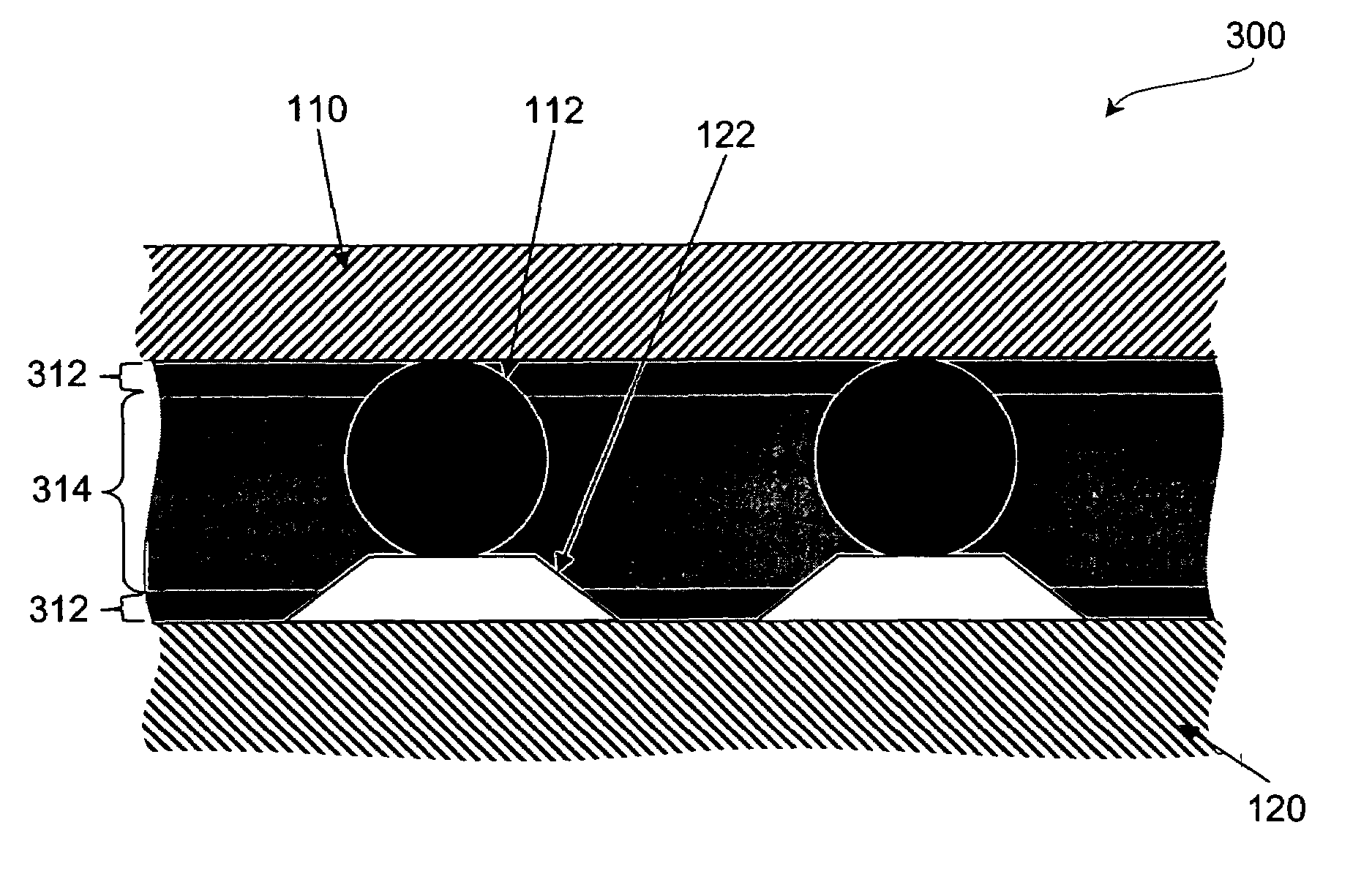
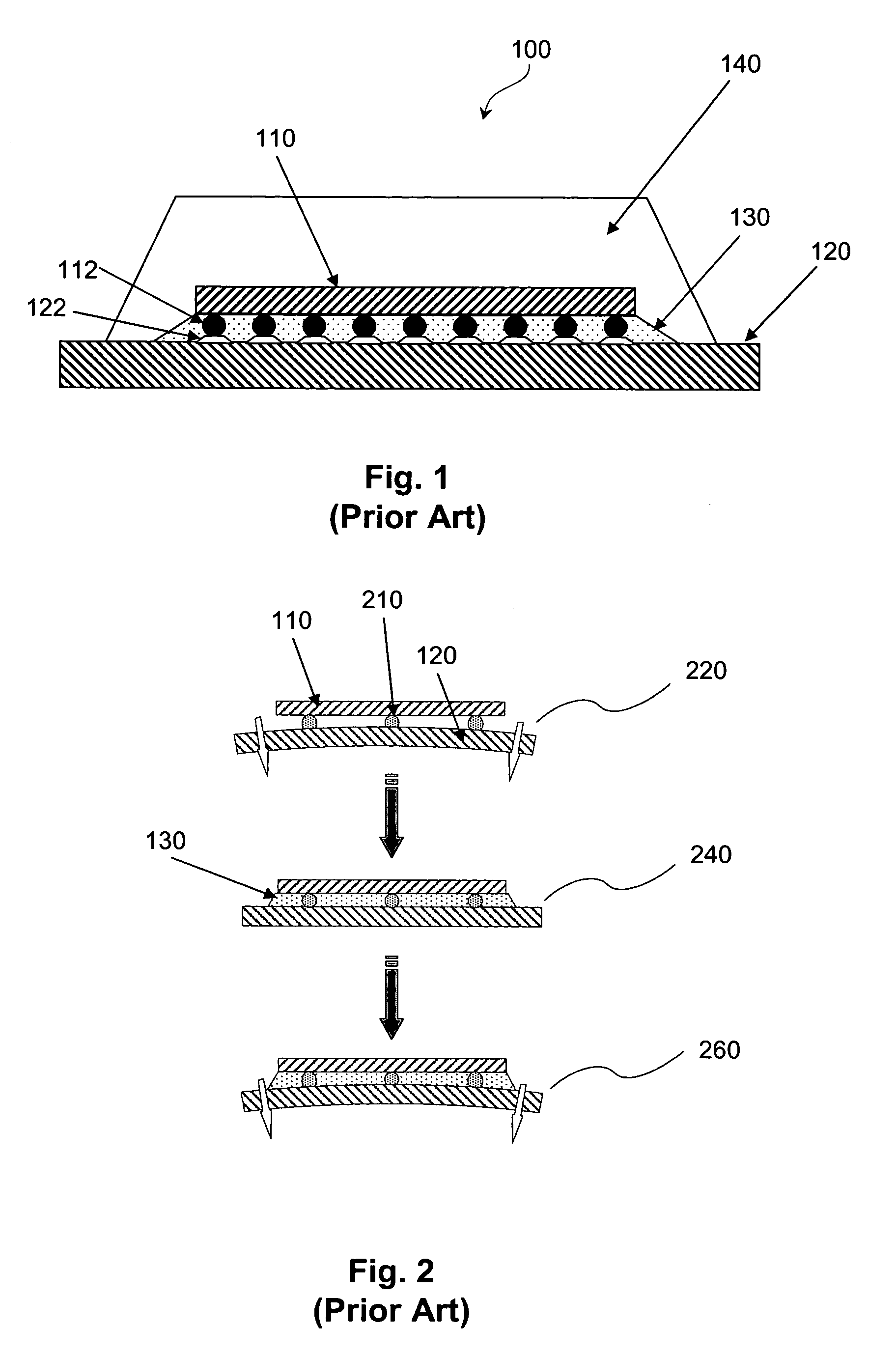
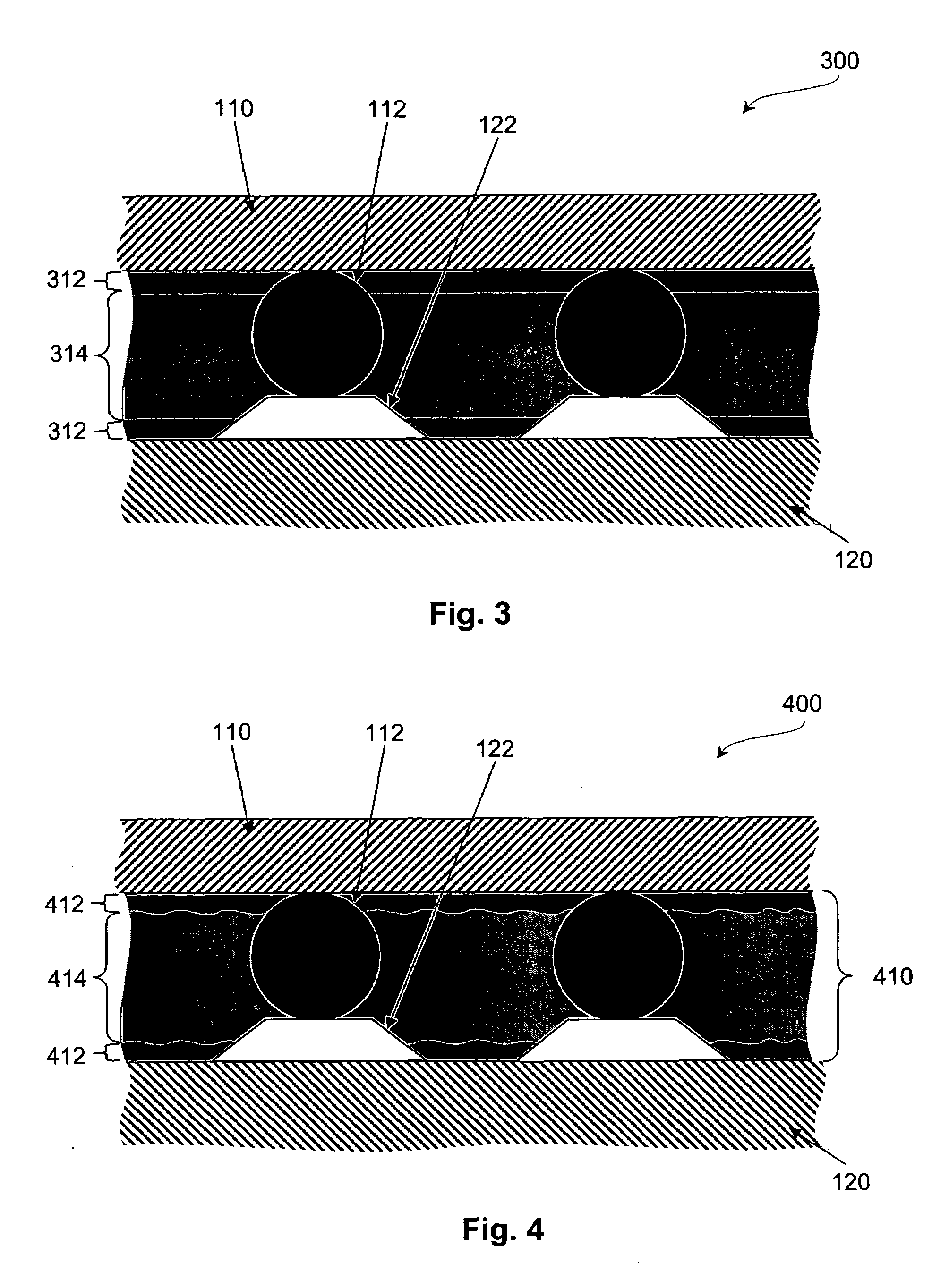
- An underfill material with multiple regions of different stiffness, where the underfill shell contacting the chip and substrate is stiffer than the bulk, providing support and minimizing warpage and shear, while the resilient bulk accommodates strain with lower Young's modulus.
Underfill for high density interconnect FLIP chips
PatentWO2011032120A2
Innovation
- An underfill composition comprising an epoxy resin, a curing agent, and polyhedral oligomeric silsesquioxane, with optional additives such as organo clay, carbon nanotubes, and zinc oxide, which enhances the modulus of elasticity above the glass transition temperature without significantly increasing viscosity or altering the glass transition temperature.


Environmental Compliance for Electronic Packaging Materials
Environmental compliance has become a critical consideration in the development and deployment of chip package underfill materials, driven by increasingly stringent global regulations and growing environmental awareness within the electronics industry. The regulatory landscape encompasses multiple jurisdictions, with the European Union's RoHS (Restriction of Hazardous Substances) directive leading the charge by restricting the use of specific hazardous materials including lead, mercury, cadmium, hexavalent chromium, and various brominated flame retardants in electronic equipment.
The REACH (Registration, Evaluation, Authorization and Restriction of Chemicals) regulation further complicates compliance requirements by mandating comprehensive chemical registration and safety assessments for substances used in electronic packaging materials. Similar regulations have emerged in other major markets, including China's RoHS implementation and various state-level regulations in the United States, creating a complex web of compliance requirements that underfill material manufacturers must navigate.
Traditional underfill formulations often contained substances now classified as hazardous or restricted, necessitating significant reformulation efforts. Brominated flame retardants, commonly used for their fire-resistant properties, have been largely phased out in favor of phosphorus-based alternatives or halogen-free formulations. Lead-containing compounds, once prevalent in electronic materials, have been systematically eliminated from underfill compositions.
The transition to environmentally compliant materials has introduced new technical challenges. Alternative flame retardants may exhibit different thermal decomposition characteristics, potentially affecting the material's performance under high-temperature conditions. Halogen-free formulations often require careful optimization to maintain adequate flame resistance while preserving mechanical and thermal properties essential for underfill applications.
Lifecycle assessment considerations have gained prominence in material selection processes, with manufacturers evaluating not only the immediate environmental impact of raw materials but also end-of-life disposal and recycling implications. This holistic approach has driven innovation in bio-based polymer systems and recyclable underfill formulations, though these alternatives often require extensive validation to ensure reliability in demanding electronic packaging applications.
Compliance verification has become increasingly sophisticated, requiring comprehensive material characterization and documentation throughout the supply chain. Advanced analytical techniques, including X-ray fluorescence spectroscopy and gas chromatography-mass spectrometry, are routinely employed to verify the absence of restricted substances and ensure ongoing compliance with evolving regulatory requirements.
The REACH (Registration, Evaluation, Authorization and Restriction of Chemicals) regulation further complicates compliance requirements by mandating comprehensive chemical registration and safety assessments for substances used in electronic packaging materials. Similar regulations have emerged in other major markets, including China's RoHS implementation and various state-level regulations in the United States, creating a complex web of compliance requirements that underfill material manufacturers must navigate.
Traditional underfill formulations often contained substances now classified as hazardous or restricted, necessitating significant reformulation efforts. Brominated flame retardants, commonly used for their fire-resistant properties, have been largely phased out in favor of phosphorus-based alternatives or halogen-free formulations. Lead-containing compounds, once prevalent in electronic materials, have been systematically eliminated from underfill compositions.
The transition to environmentally compliant materials has introduced new technical challenges. Alternative flame retardants may exhibit different thermal decomposition characteristics, potentially affecting the material's performance under high-temperature conditions. Halogen-free formulations often require careful optimization to maintain adequate flame resistance while preserving mechanical and thermal properties essential for underfill applications.
Lifecycle assessment considerations have gained prominence in material selection processes, with manufacturers evaluating not only the immediate environmental impact of raw materials but also end-of-life disposal and recycling implications. This holistic approach has driven innovation in bio-based polymer systems and recyclable underfill formulations, though these alternatives often require extensive validation to ensure reliability in demanding electronic packaging applications.
Compliance verification has become increasingly sophisticated, requiring comprehensive material characterization and documentation throughout the supply chain. Advanced analytical techniques, including X-ray fluorescence spectroscopy and gas chromatography-mass spectrometry, are routinely employed to verify the absence of restricted substances and ensure ongoing compliance with evolving regulatory requirements.
Thermal Management Considerations in Underfill Design
Thermal management represents a critical design consideration in underfill materials for semiconductor packaging, directly impacting both immediate performance and long-term durability. The thermal properties of underfill materials must be carefully balanced to address heat dissipation requirements while maintaining mechanical integrity under thermal cycling conditions.
The coefficient of thermal expansion (CTE) matching between underfill materials and adjacent components stands as the primary thermal design challenge. Underfill materials typically exhibit CTEs ranging from 25-45 ppm/°C, requiring careful formulation to minimize CTE mismatch with silicon chips (2.6 ppm/°C) and organic substrates (15-20 ppm/°C). This mismatch generates thermal stress during temperature fluctuations, potentially leading to delamination, cracking, or solder joint fatigue.
Thermal conductivity optimization presents another crucial consideration, with modern underfill materials incorporating thermally conductive fillers such as aluminum oxide, boron nitride, or silver particles. Enhanced thermal conductivity, typically ranging from 0.8-3.0 W/mK compared to 0.2-0.4 W/mK for standard formulations, facilitates efficient heat transfer from the die to the substrate and heat spreader components.
Glass transition temperature (Tg) selection significantly influences thermal performance, with higher Tg materials (typically 120-150°C) providing better dimensional stability at elevated operating temperatures. However, excessively high Tg values may increase material brittleness and processing difficulties during assembly operations.
Thermal aging resistance becomes increasingly important as operating temperatures rise in advanced packaging applications. Underfill materials must maintain their thermal and mechanical properties throughout extended exposure to elevated temperatures, typically evaluated through accelerated aging tests at 125-150°C for 500-1000 hours.
The integration of thermal interface materials with underfill formulations represents an emerging approach to address thermal management challenges. These hybrid solutions combine gap-filling capabilities with enhanced thermal conductivity, enabling more efficient heat dissipation pathways while maintaining the protective benefits of traditional underfill materials.
The coefficient of thermal expansion (CTE) matching between underfill materials and adjacent components stands as the primary thermal design challenge. Underfill materials typically exhibit CTEs ranging from 25-45 ppm/°C, requiring careful formulation to minimize CTE mismatch with silicon chips (2.6 ppm/°C) and organic substrates (15-20 ppm/°C). This mismatch generates thermal stress during temperature fluctuations, potentially leading to delamination, cracking, or solder joint fatigue.
Thermal conductivity optimization presents another crucial consideration, with modern underfill materials incorporating thermally conductive fillers such as aluminum oxide, boron nitride, or silver particles. Enhanced thermal conductivity, typically ranging from 0.8-3.0 W/mK compared to 0.2-0.4 W/mK for standard formulations, facilitates efficient heat transfer from the die to the substrate and heat spreader components.
Glass transition temperature (Tg) selection significantly influences thermal performance, with higher Tg materials (typically 120-150°C) providing better dimensional stability at elevated operating temperatures. However, excessively high Tg values may increase material brittleness and processing difficulties during assembly operations.
Thermal aging resistance becomes increasingly important as operating temperatures rise in advanced packaging applications. Underfill materials must maintain their thermal and mechanical properties throughout extended exposure to elevated temperatures, typically evaluated through accelerated aging tests at 125-150°C for 500-1000 hours.
The integration of thermal interface materials with underfill formulations represents an emerging approach to address thermal management challenges. These hybrid solutions combine gap-filling capabilities with enhanced thermal conductivity, enabling more efficient heat dissipation pathways while maintaining the protective benefits of traditional underfill materials.
Unlock deeper insights with PatSnap Eureka Quick Research — get a full tech report to explore trends and direct your research. Try now!
Generate Your Research Report Instantly with AI Agent
Supercharge your innovation with PatSnap Eureka AI Agent Platform!