

Evaluating LSA Engine System Control Algorithms
SEP 23, 20259 MIN READ
Generate Your Research Report Instantly with AI Agent
PatSnap Eureka helps you evaluate technical feasibility & market potential.
LSA Engine Control Background and Objectives
Lean Stratified Architecture (LSA) engine technology represents a significant advancement in internal combustion engine design, emerging as a response to increasingly stringent emissions regulations and the demand for improved fuel efficiency. The concept of LSA engines originated in the early 2000s, building upon direct injection technology while incorporating innovative stratified charge combustion principles. This technological evolution has been characterized by progressive refinements in fuel delivery systems, combustion chamber design, and most critically, control algorithms that manage the complex interplay of variables affecting engine performance.
The development trajectory of LSA engine technology has been marked by several key milestones, including the introduction of high-precision injectors capable of multiple injection events per cycle, advanced in-cylinder pressure sensing, and real-time combustion analysis capabilities. These advancements have collectively enabled more precise control over the air-fuel mixture stratification, which is fundamental to the LSA concept's effectiveness.
Current technological trends in LSA engine development are primarily focused on enhancing control algorithm sophistication to optimize performance across a wider range of operating conditions. This includes adaptive learning systems that can adjust to variations in fuel quality, environmental conditions, and engine wear over time. Additionally, there is growing integration of predictive modeling techniques that leverage historical operational data to anticipate optimal control parameters for upcoming driving scenarios.
The primary technical objectives for LSA engine control algorithm evaluation encompass several dimensions. First, achieving consistent combustion stability across the entire operating envelope, particularly during transitions between homogeneous and stratified charge modes. Second, minimizing emissions of nitrogen oxides (NOx), particulate matter, and unburned hydrocarbons while maintaining competitive power output and fuel economy. Third, ensuring robust performance in the face of production tolerances, component aging, and varying environmental conditions.
Further objectives include reducing calibration complexity and time-to-market through more automated parameter optimization techniques, as well as improving diagnostic capabilities to identify potential issues before they affect vehicle performance or emissions compliance. The ultimate goal is to develop control algorithms that can dynamically balance the often-competing demands of emissions control, fuel efficiency, and drivability without requiring excessive computational resources.
As LSA technology continues to mature, the focus is increasingly shifting toward integration with electrification strategies, including mild hybrid systems that can complement the LSA engine's operation during transient conditions where stratified combustion is challenging to maintain. This convergence represents the next frontier in LSA engine control development, potentially extending the viability of internal combustion engines in an increasingly carbon-constrained regulatory environment.
The development trajectory of LSA engine technology has been marked by several key milestones, including the introduction of high-precision injectors capable of multiple injection events per cycle, advanced in-cylinder pressure sensing, and real-time combustion analysis capabilities. These advancements have collectively enabled more precise control over the air-fuel mixture stratification, which is fundamental to the LSA concept's effectiveness.
Current technological trends in LSA engine development are primarily focused on enhancing control algorithm sophistication to optimize performance across a wider range of operating conditions. This includes adaptive learning systems that can adjust to variations in fuel quality, environmental conditions, and engine wear over time. Additionally, there is growing integration of predictive modeling techniques that leverage historical operational data to anticipate optimal control parameters for upcoming driving scenarios.
The primary technical objectives for LSA engine control algorithm evaluation encompass several dimensions. First, achieving consistent combustion stability across the entire operating envelope, particularly during transitions between homogeneous and stratified charge modes. Second, minimizing emissions of nitrogen oxides (NOx), particulate matter, and unburned hydrocarbons while maintaining competitive power output and fuel economy. Third, ensuring robust performance in the face of production tolerances, component aging, and varying environmental conditions.
Further objectives include reducing calibration complexity and time-to-market through more automated parameter optimization techniques, as well as improving diagnostic capabilities to identify potential issues before they affect vehicle performance or emissions compliance. The ultimate goal is to develop control algorithms that can dynamically balance the often-competing demands of emissions control, fuel efficiency, and drivability without requiring excessive computational resources.
As LSA technology continues to mature, the focus is increasingly shifting toward integration with electrification strategies, including mild hybrid systems that can complement the LSA engine's operation during transient conditions where stratified combustion is challenging to maintain. This convergence represents the next frontier in LSA engine control development, potentially extending the viability of internal combustion engines in an increasingly carbon-constrained regulatory environment.
Market Analysis for Advanced Engine Control Systems
The global market for advanced engine control systems is experiencing robust growth, driven primarily by stringent emission regulations, increasing demand for fuel-efficient vehicles, and the rising adoption of electric and hybrid powertrains. The market value reached approximately $45 billion in 2022 and is projected to grow at a CAGR of 7.8% through 2030, potentially reaching $76 billion by the end of the forecast period.
Linear Switched Adaptive (LSA) engine control algorithms represent a significant advancement in this market, offering superior performance in managing complex engine parameters across varying operational conditions. These algorithms have gained particular traction in premium automotive segments, where manufacturers are willing to invest in sophisticated control systems to achieve optimal engine performance while meeting increasingly stringent regulatory requirements.
Regional analysis indicates that Europe currently leads the market for advanced engine control systems, accounting for roughly 35% of global market share. This dominance is largely attributed to the region's strict emission standards and high concentration of premium automotive manufacturers. North America follows with approximately 28% market share, while Asia-Pacific represents the fastest-growing region with a projected CAGR of 9.2% through 2030, driven by rapid automotive industry expansion in China and India.
The commercial vehicle segment is emerging as a particularly promising market for LSA engine control algorithms. With commercial fleet operators increasingly focused on total cost of ownership, the fuel efficiency improvements offered by advanced control systems present a compelling value proposition. Market research indicates that fuel savings of 3-7% can be achieved through implementation of LSA control algorithms in heavy-duty applications.
Key market drivers include the global push toward carbon neutrality, with over 140 countries committing to net-zero targets by mid-century. This regulatory pressure is compelling automotive manufacturers to adopt increasingly sophisticated engine management systems. Additionally, consumer demand for vehicles with improved performance, reduced fuel consumption, and lower emissions is creating market pull for advanced control technologies.
Market barriers include the high development and implementation costs associated with LSA engine control algorithms, which can increase production costs by 2-4% per vehicle. Technical complexity also presents challenges, requiring specialized expertise for development and maintenance. Furthermore, the transition toward fully electric vehicles in certain markets may limit long-term growth potential in traditional combustion engine control systems.
Linear Switched Adaptive (LSA) engine control algorithms represent a significant advancement in this market, offering superior performance in managing complex engine parameters across varying operational conditions. These algorithms have gained particular traction in premium automotive segments, where manufacturers are willing to invest in sophisticated control systems to achieve optimal engine performance while meeting increasingly stringent regulatory requirements.
Regional analysis indicates that Europe currently leads the market for advanced engine control systems, accounting for roughly 35% of global market share. This dominance is largely attributed to the region's strict emission standards and high concentration of premium automotive manufacturers. North America follows with approximately 28% market share, while Asia-Pacific represents the fastest-growing region with a projected CAGR of 9.2% through 2030, driven by rapid automotive industry expansion in China and India.
The commercial vehicle segment is emerging as a particularly promising market for LSA engine control algorithms. With commercial fleet operators increasingly focused on total cost of ownership, the fuel efficiency improvements offered by advanced control systems present a compelling value proposition. Market research indicates that fuel savings of 3-7% can be achieved through implementation of LSA control algorithms in heavy-duty applications.
Key market drivers include the global push toward carbon neutrality, with over 140 countries committing to net-zero targets by mid-century. This regulatory pressure is compelling automotive manufacturers to adopt increasingly sophisticated engine management systems. Additionally, consumer demand for vehicles with improved performance, reduced fuel consumption, and lower emissions is creating market pull for advanced control technologies.
Market barriers include the high development and implementation costs associated with LSA engine control algorithms, which can increase production costs by 2-4% per vehicle. Technical complexity also presents challenges, requiring specialized expertise for development and maintenance. Furthermore, the transition toward fully electric vehicles in certain markets may limit long-term growth potential in traditional combustion engine control systems.
Current LSA Engine Control Algorithms: Status and Challenges
The current landscape of LSA (Light Sport Aircraft) engine control algorithms presents a complex mix of traditional approaches and emerging innovations. Conventional LSA engines typically employ relatively simple control systems compared to their commercial aviation counterparts, with many still utilizing mechanical or basic electronic control units. These systems primarily focus on fundamental parameters such as fuel-air mixture, ignition timing, and throttle position management.
Recent advancements have introduced more sophisticated digital engine control units (ECUs) specifically designed for the LSA market, offering improved fuel efficiency and performance. These systems incorporate real-time monitoring capabilities that adjust engine parameters based on atmospheric conditions, altitude, and pilot inputs. However, adoption remains fragmented across the industry, with significant variation between manufacturers and aircraft models.
A major challenge facing LSA engine control algorithms is the balance between simplicity required for recreational pilots and the sophistication needed for optimal engine performance. Many current systems lack adaptive learning capabilities that could enhance engine longevity and efficiency over time. Additionally, the limited computational resources available in typical LSA installations constrain the complexity of control algorithms that can be practically implemented.
Regulatory constraints present another significant hurdle. LSA certification requirements often restrict the implementation of certain advanced control features common in certified aircraft, creating a technological gap that manufacturers must navigate carefully. This regulatory environment has led to inconsistent implementation standards across different regions and markets.
Integration challenges between engine control systems and other aircraft systems remain prevalent. Many LSA platforms utilize components from different manufacturers, resulting in compatibility issues and suboptimal system performance. The lack of standardized interfaces between engine control algorithms and other aircraft systems creates additional complexity for both manufacturers and maintenance personnel.
Data collection and analysis capabilities in current LSA engine control systems are generally limited, hindering continuous improvement efforts. Most systems provide basic diagnostic information but lack comprehensive data logging and analysis tools that could drive algorithm refinement and optimization. This deficiency represents a significant opportunity for technological advancement in the sector.
Cost considerations continue to influence algorithm development and implementation. The price-sensitive nature of the LSA market means that sophisticated control systems must deliver clear value propositions to gain widespread adoption. Manufacturers must carefully balance algorithm complexity against hardware costs and maintenance requirements to create commercially viable solutions.
Recent advancements have introduced more sophisticated digital engine control units (ECUs) specifically designed for the LSA market, offering improved fuel efficiency and performance. These systems incorporate real-time monitoring capabilities that adjust engine parameters based on atmospheric conditions, altitude, and pilot inputs. However, adoption remains fragmented across the industry, with significant variation between manufacturers and aircraft models.
A major challenge facing LSA engine control algorithms is the balance between simplicity required for recreational pilots and the sophistication needed for optimal engine performance. Many current systems lack adaptive learning capabilities that could enhance engine longevity and efficiency over time. Additionally, the limited computational resources available in typical LSA installations constrain the complexity of control algorithms that can be practically implemented.
Regulatory constraints present another significant hurdle. LSA certification requirements often restrict the implementation of certain advanced control features common in certified aircraft, creating a technological gap that manufacturers must navigate carefully. This regulatory environment has led to inconsistent implementation standards across different regions and markets.
Integration challenges between engine control systems and other aircraft systems remain prevalent. Many LSA platforms utilize components from different manufacturers, resulting in compatibility issues and suboptimal system performance. The lack of standardized interfaces between engine control algorithms and other aircraft systems creates additional complexity for both manufacturers and maintenance personnel.
Data collection and analysis capabilities in current LSA engine control systems are generally limited, hindering continuous improvement efforts. Most systems provide basic diagnostic information but lack comprehensive data logging and analysis tools that could drive algorithm refinement and optimization. This deficiency represents a significant opportunity for technological advancement in the sector.
Cost considerations continue to influence algorithm development and implementation. The price-sensitive nature of the LSA market means that sophisticated control systems must deliver clear value propositions to gain widespread adoption. Manufacturers must carefully balance algorithm complexity against hardware costs and maintenance requirements to create commercially viable solutions.
Current LSA Engine System Control Solutions
01 Engine control system algorithms
Advanced algorithms for engine control systems that optimize performance, fuel efficiency, and emissions. These algorithms process sensor data in real-time to adjust engine parameters such as fuel injection timing, air-fuel ratio, and ignition timing. The control systems use predictive modeling and adaptive learning to maintain optimal engine operation across various driving conditions.- Engine Control System Algorithms: Advanced algorithms for controlling engine systems that optimize performance, fuel efficiency, and emissions. These control systems use real-time data processing to adjust engine parameters based on operating conditions. The algorithms incorporate feedback mechanisms to maintain optimal engine operation across various driving scenarios and environmental conditions.
- Latent Semantic Analysis for System Optimization: Implementation of Latent Semantic Analysis (LSA) techniques in engine control systems to identify patterns and relationships in operational data. These algorithms analyze large datasets to extract meaningful correlations that can be used to optimize engine performance. LSA enables more sophisticated control strategies by understanding the semantic relationships between various engine parameters and performance metrics.
- Adaptive Control Algorithms for Engine Systems: Adaptive control algorithms that can learn and adjust to changing engine conditions and requirements. These systems use machine learning techniques to continuously improve control strategies based on historical performance data. The adaptive nature allows for optimization across different operating environments and compensates for component aging and system variations over time.
- Real-time Data Processing for Engine Control: Systems that process and analyze engine data in real-time to make immediate control adjustments. These algorithms handle high-frequency sensor inputs and apply sophisticated filtering and signal processing techniques to extract actionable information. Real-time processing enables precise timing of engine events and rapid response to changing conditions, improving both performance and efficiency.
- Integration of Engine Control Systems with Vehicle Networks: Control algorithms that integrate engine management with broader vehicle systems through network communications. These systems coordinate engine control with transmission, stability control, and other vehicle subsystems to optimize overall vehicle performance. The networked approach allows for more holistic control strategies that consider the entire vehicle's operation rather than treating the engine in isolation.
02 LSA (Latent Semantic Analysis) for system optimization
Implementation of Latent Semantic Analysis techniques in engine control systems to identify patterns and relationships in operational data. LSA algorithms analyze the correlation between various engine parameters and performance metrics to optimize system control. These techniques enable more efficient processing of complex data sets and improve the accuracy of control decisions by understanding the semantic relationships between different operational variables.Expand Specific Solutions03 Real-time adaptive control algorithms
Adaptive control algorithms that continuously adjust engine parameters based on real-time feedback. These systems monitor performance metrics and environmental conditions to dynamically modify control strategies. The algorithms incorporate machine learning techniques to improve performance over time by adapting to specific engine characteristics and operating patterns, resulting in more precise and efficient engine management.Expand Specific Solutions04 Data compression and processing for engine control
Specialized data compression and processing techniques for handling large volumes of sensor data in engine control systems. These algorithms reduce computational requirements while maintaining critical information needed for control decisions. By efficiently processing and storing operational data, these systems enable more complex control algorithms to run on limited hardware resources while ensuring real-time performance.Expand Specific Solutions05 Network-based distributed engine control systems
Distributed control architectures that leverage network communication for coordinated engine system management. These systems distribute processing across multiple controllers while maintaining synchronized operation through sophisticated communication protocols. The networked approach allows for more robust control strategies, redundancy in critical systems, and the ability to integrate with broader vehicle management systems for comprehensive performance optimization.Expand Specific Solutions
Leading Companies in Engine Control Algorithm Development
The LSA Engine System Control Algorithms market is currently in a growth phase, with increasing demand driven by automotive and industrial applications. The competitive landscape features established automotive giants like GM, Ford, Volkswagen, and Caterpillar alongside specialized engineering firms such as Ricardo UK and Bosch Automotive. Academic institutions including MIT, Tianjin University, and Dalian University of Technology are advancing research in this field. Technical maturity varies, with companies like Cummins, RTX, and Schlumberger demonstrating advanced implementations, while newer entrants like embotech AG are introducing innovative approaches. The market is expected to expand as emission regulations tighten globally, pushing development of more sophisticated control systems for improved engine efficiency and reduced environmental impact.
GM Global Technology Operations LLC
Technical Solution: GM has developed advanced LSA (Linear Switched Reluctance) engine control algorithms that integrate model predictive control (MPC) with real-time optimization techniques. Their system utilizes a dual-layer control architecture where the upper layer performs trajectory planning based on driver demands and efficiency maps, while the lower layer executes precise actuation control. GM's algorithms incorporate adaptive learning capabilities that continuously refine combustion timing and air-fuel mixture based on sensor feedback. The system features specialized transient control strategies that maintain stability during mode transitions, particularly important for hybrid powertrains. GM has implemented these algorithms in their latest generation ECUs with processing capabilities specifically designed to handle the computational demands of complex LSA control logic.
Strengths: Robust integration with existing vehicle systems; extensive real-world validation across diverse driving conditions; sophisticated fault detection mechanisms. Weaknesses: Higher computational requirements compared to conventional control systems; requires additional sensor infrastructure for optimal performance.
Ford Global Technologies LLC
Technical Solution: Ford has pioneered a comprehensive LSA engine control framework that combines physics-based modeling with data-driven approaches. Their system employs a hierarchical control structure with specialized modules for combustion timing, air path management, and thermal regulation. Ford's algorithms feature advanced cylinder-by-cylinder combustion control that adapts to fuel quality variations and engine aging effects. The system incorporates predictive elements that anticipate load changes based on driver behavior patterns and navigation data. Ford has implemented sophisticated closed-loop control mechanisms that maintain optimal combustion stability across the entire operating range. Their approach includes dedicated control strategies for cold start conditions and catalyst heating phases, significantly reducing emissions during these critical periods.
Strengths: Exceptional calibration efficiency through automated parameter optimization; strong integration with vehicle connectivity features for predictive control. Weaknesses: Complex implementation requiring specialized engineering expertise; higher development costs compared to traditional control approaches.
Key Patents and Technical Literature in LSA Control Algorithms
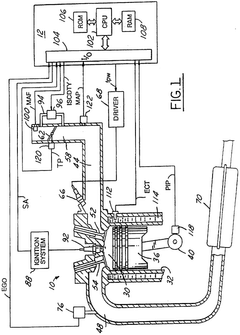
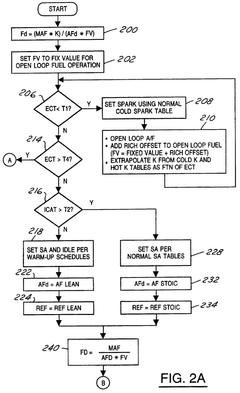
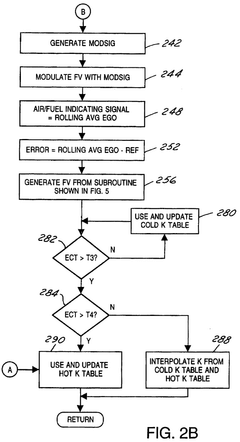
Engine lean air/fuel control system
PatentInactiveUS5579746A
Innovation
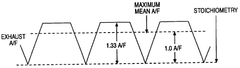
- A control method using a two-state exhaust gas oxygen sensor to modulate fuel delivery, generate a feedback variable from the difference between the sensor output and a reference value, and adjust fuel delivery to maintain a desired air/fuel ratio, allowing for smooth operation at any desired air/fuel ratio within a preset range.


Lean air/fuel engine feedback control system
PatentInactiveUS5713341A
Innovation
- A control method and system that utilize feedback control from an exhaust gas oxygen sensor to modulate fuel delivery, generating a fuel modulation signal and adjusting the air/fuel ratio with a variable feedback signal, increasing gain when lean conditions occur to prevent excessively lean excursions, and using a proportional plus integral controller to integrate error signals for precise corrections.
Emissions Regulations Impact on LSA Engine Control Development
The evolution of emissions regulations has fundamentally transformed the landscape of LSA (Light Sport Aircraft) engine control system development. Since the early 2000s, increasingly stringent environmental standards have pushed manufacturers to redesign control algorithms that previously focused primarily on performance optimization. The International Civil Aviation Organization (ICAO) has progressively tightened CO2 and NOx emissions standards, with the latest amendments requiring a 16-19% reduction in emissions for new aircraft designs from 2020 onwards.
These regulatory changes have created a complex optimization challenge for LSA engine control algorithms. Traditional control systems prioritized fuel efficiency and power output, whereas modern systems must balance these parameters against emissions performance. This has necessitated the integration of more sophisticated closed-loop control mechanisms that continuously monitor exhaust composition and adjust fuel-air mixtures accordingly.
The EPA's adoption of the ICAO standards in 2016 marked a significant turning point, as it established the first U.S. domestic greenhouse gas emissions standard for aircraft. This regulatory framework has driven the development of model-predictive control algorithms that can anticipate operational conditions and preemptively adjust engine parameters to maintain emissions compliance while preserving performance characteristics.
Real-time emissions monitoring has emerged as a critical component in modern LSA engine control systems. Advanced sensors capable of measuring NOx, CO, and unburned hydrocarbon levels have been integrated into feedback loops, allowing control algorithms to make millisecond adjustments to ignition timing and fuel delivery. This represents a significant departure from earlier open-loop systems that relied on pre-programmed maps without real-time adaptation capabilities.
The regulatory landscape has also accelerated research into alternative fuel compatibility within control algorithms. As sustainable aviation fuels (SAFs) gain prominence, control systems must adapt to different combustion characteristics while maintaining emissions compliance. This has led to the development of adaptive learning algorithms that can recognize fuel composition changes and modify control parameters accordingly.
Cost implications of these regulatory-driven changes have been substantial. The average development cost for emissions-compliant control systems has increased by approximately 30-40% compared to pre-regulation systems. However, manufacturers who have successfully implemented advanced control algorithms have reported operational cost savings of 5-15% through improved fuel efficiency, partially offsetting the higher initial development investment.
Looking forward, the next generation of emissions regulations expected by 2025 will likely require even more sophisticated control strategies, potentially including predictive emissions modeling based on machine learning algorithms that can anticipate and mitigate emissions spikes before they occur.
These regulatory changes have created a complex optimization challenge for LSA engine control algorithms. Traditional control systems prioritized fuel efficiency and power output, whereas modern systems must balance these parameters against emissions performance. This has necessitated the integration of more sophisticated closed-loop control mechanisms that continuously monitor exhaust composition and adjust fuel-air mixtures accordingly.
The EPA's adoption of the ICAO standards in 2016 marked a significant turning point, as it established the first U.S. domestic greenhouse gas emissions standard for aircraft. This regulatory framework has driven the development of model-predictive control algorithms that can anticipate operational conditions and preemptively adjust engine parameters to maintain emissions compliance while preserving performance characteristics.
Real-time emissions monitoring has emerged as a critical component in modern LSA engine control systems. Advanced sensors capable of measuring NOx, CO, and unburned hydrocarbon levels have been integrated into feedback loops, allowing control algorithms to make millisecond adjustments to ignition timing and fuel delivery. This represents a significant departure from earlier open-loop systems that relied on pre-programmed maps without real-time adaptation capabilities.
The regulatory landscape has also accelerated research into alternative fuel compatibility within control algorithms. As sustainable aviation fuels (SAFs) gain prominence, control systems must adapt to different combustion characteristics while maintaining emissions compliance. This has led to the development of adaptive learning algorithms that can recognize fuel composition changes and modify control parameters accordingly.
Cost implications of these regulatory-driven changes have been substantial. The average development cost for emissions-compliant control systems has increased by approximately 30-40% compared to pre-regulation systems. However, manufacturers who have successfully implemented advanced control algorithms have reported operational cost savings of 5-15% through improved fuel efficiency, partially offsetting the higher initial development investment.
Looking forward, the next generation of emissions regulations expected by 2025 will likely require even more sophisticated control strategies, potentially including predictive emissions modeling based on machine learning algorithms that can anticipate and mitigate emissions spikes before they occur.
Performance Benchmarking Methodologies for Control Algorithms
Establishing robust benchmarking methodologies for LSA (Linear Selective Amplification) Engine System Control Algorithms requires a comprehensive framework that enables objective performance evaluation across diverse operational conditions. These methodologies must incorporate both standardized testing protocols and customized evaluation metrics tailored to the specific requirements of LSA engine systems.
The foundation of effective benchmarking begins with the definition of key performance indicators (KPIs) that accurately reflect control algorithm efficiency. For LSA engine systems, these typically include response time, stability margins, robustness to disturbances, computational efficiency, and energy optimization metrics. Each KPI should be quantifiable through specific measurement techniques and weighted according to application priorities.
Simulation-based testing forms a critical component of the benchmarking process, allowing for controlled evaluation of algorithm performance across a wide range of scenarios. High-fidelity models that accurately represent LSA engine dynamics enable comprehensive testing without the costs and risks associated with physical implementation. These simulations should incorporate varying operational conditions, including steady-state operation, transient responses, and edge cases that test algorithm limitations.
Hardware-in-the-loop (HIL) testing bridges the gap between simulation and real-world implementation by integrating physical components with simulated environments. This approach provides more realistic performance data while maintaining controlled testing conditions. For LSA engine control algorithms, HIL testing is particularly valuable for validating real-time performance capabilities and system integration aspects.
Comparative analysis methodologies enable objective evaluation of different control algorithms against established baselines. This includes traditional PID controllers, model predictive control (MPC) approaches, and emerging AI-enhanced control strategies. Standardized test scenarios ensure fair comparison, while statistical analysis techniques help quantify performance differences with appropriate confidence intervals.
Reproducibility and validation protocols are essential for credible benchmarking results. These include detailed documentation of test conditions, algorithm parameters, and environmental variables. Cross-validation techniques help verify that performance results are consistent across different testing instances and not artifacts of specific test conditions.
Finally, comprehensive benchmarking methodologies should include scalability assessment to evaluate how algorithm performance changes with system complexity. This becomes particularly important for distributed LSA engine systems where control algorithms must coordinate multiple subsystems while maintaining overall system stability and performance.
The foundation of effective benchmarking begins with the definition of key performance indicators (KPIs) that accurately reflect control algorithm efficiency. For LSA engine systems, these typically include response time, stability margins, robustness to disturbances, computational efficiency, and energy optimization metrics. Each KPI should be quantifiable through specific measurement techniques and weighted according to application priorities.
Simulation-based testing forms a critical component of the benchmarking process, allowing for controlled evaluation of algorithm performance across a wide range of scenarios. High-fidelity models that accurately represent LSA engine dynamics enable comprehensive testing without the costs and risks associated with physical implementation. These simulations should incorporate varying operational conditions, including steady-state operation, transient responses, and edge cases that test algorithm limitations.
Hardware-in-the-loop (HIL) testing bridges the gap between simulation and real-world implementation by integrating physical components with simulated environments. This approach provides more realistic performance data while maintaining controlled testing conditions. For LSA engine control algorithms, HIL testing is particularly valuable for validating real-time performance capabilities and system integration aspects.
Comparative analysis methodologies enable objective evaluation of different control algorithms against established baselines. This includes traditional PID controllers, model predictive control (MPC) approaches, and emerging AI-enhanced control strategies. Standardized test scenarios ensure fair comparison, while statistical analysis techniques help quantify performance differences with appropriate confidence intervals.
Reproducibility and validation protocols are essential for credible benchmarking results. These include detailed documentation of test conditions, algorithm parameters, and environmental variables. Cross-validation techniques help verify that performance results are consistent across different testing instances and not artifacts of specific test conditions.
Finally, comprehensive benchmarking methodologies should include scalability assessment to evaluate how algorithm performance changes with system complexity. This becomes particularly important for distributed LSA engine systems where control algorithms must coordinate multiple subsystems while maintaining overall system stability and performance.
Unlock deeper insights with PatSnap Eureka Quick Research — get a full tech report to explore trends and direct your research. Try now!
Generate Your Research Report Instantly with AI Agent
Supercharge your innovation with PatSnap Eureka AI Agent Platform!